Buying used trucks in bulk is one of the highest-stakes procurement decisions a fleet operator can make. Get the spec wrong, choose the wrong supplier, or skip proper inspection — and that mistake doesn't affect one vehicle. It affects every unit in the order. This article walks through how experienced buyers sequence these decisions to reduce risk at scale.
Buying used trucks in bulk requires more than finding the lowest quoted price. It requires aligning vehicle specs to your operating conditions, verifying supplier capability for multi-unit orders, conducting pre-shipment inspection on every unit, and securing logistics and after-sales support before committing. Each layer of this process protects your fleet investment differently — and skipping any one layer creates compounding cost risk across the entire purchase.
Most fleet buyers start by asking "which brand is best?" or "what's the price per unit?" Those are reasonable questions — but they're the wrong starting point. The right starting point is your operating environment. Once that's locked in, every other decision — spec, brand, supplier, inspection scope — follows a logical sequence rather than a guessing game.
Does Your Fleet Context Determine the Right Truck Spec?
Many procurement managers jump straight to price comparisons without fully mapping their operational requirements first. That shortcut can feel efficient, but it often leads to purchasing trucks that are technically sound — just wrong for the job. Mismatched specs in a bulk order create ongoing maintenance burdens that persist for the life of the fleet.
Your fleet context — route type, load weight, fuel quality, road conditions, and local parts availability — should define your truck shortlist before any price negotiation begins. A truck that performs well on paved highways in Southeast Asia may be a poor fit for off-road mining routes in West Africa, even if the specification sheet looks similar.
Spec selection is not a generic exercise. It is a translation process — converting your operating environment into mechanical requirements. Here is how I approach this with buyers who contact us for fleet procurement consultation.
Route Conditions and Load Type
The single biggest variable is what the truck will actually carry and where. A 6×4 tractor unit optimized for long-haul highway use behaves very differently on unpaved construction site access roads. Similarly, a dump truck running iron ore at full GVW through equatorial heat has very different thermal management needs than a cargo truck making urban deliveries.
When buyers tell me they need "general-purpose trucks," I ask them to define the heaviest load, the worst road surface, and the longest single route. Those three parameters usually narrow the shortlist significantly.
Fuel Quality and Engine Compatibility
This is a point many buyers overlook entirely. Trucks equipped with Euro IV or Euro V emission-compliant engines — common in late-model European used trucks — can suffer accelerated injector wear in markets where low-sulfur diesel is unavailable[1]. In several African and Central Asian markets, fuel sulfur content can be significantly higher than what these engines were designed to tolerate[2].
For those environments, older Euro II or Euro III engines often deliver better long-term reliability. Japanese brands like Hino and Isuzu have a strong track record in these markets for exactly this reason — their mechanically simpler diesel engines are well-matched to fuel quality realities in Southeast Asia, East Africa, and the Middle East.
Brand Parts Availability in Your Market
Parts availability is a fleet management issue disguised as a procurement issue. A truck that requires a specialist import for every repair part will cost far more to operate than its purchase price suggests.
Some practical patterns I observe across our markets:
- HOWO and SHACMAN have strong parts networks across Sub-Saharan Africa and Central Asia due to volume penetration. Spare parts are widely available locally.
- Hino and Isuzu have established dealer and parts infrastructure across Southeast Asia, East Africa, and parts of the Middle East.
- Scania, Volvo, and MAN command higher purchase prices but also benefit from established dealer networks in larger markets. In smaller or more remote markets, parts lead times can be significant.
| Brand | Best-fit Markets | Engine Type | Parts Availability |
|---|---|---|---|
| HOWO | Africa, Central Asia | Sinotruk/Weichai | High in key markets |
| SHACMAN | Africa, Middle East | Cummins/Weichai/Yuchai | Growing network |
| Hino | Southeast Asia, East Africa | Hino diesel (mechanical) | Strong dealer coverage |
| Isuzu | Southeast Asia, Middle East | Isuzu 4HK1/6HK1 | Strong dealer coverage |
| Scania | South America, Eastern Europe | Scania DC series | Good in urban markets |
Select the brand your market can support, not just the brand that quotes lowest per unit.
How Does Bulk Buying Amplify Risk Compared to Single-Unit Purchases?
First-time bulk buyers often approach a 10-unit order with the same decision logic they'd apply to buying one truck. That mental model breaks down quickly. The financial and operational exposure scales with the order size — but not proportionally. It scales with the error multiplied by unit count, extended over the entire service life.
A single misspecified or mechanically compromised truck is a manageable problem. A 10-unit bulk purchase of the same truck creates compounding downtime across your fleet, parallel parts shortages, and accelerated resale loss[3]. The asymmetry between a good bulk decision and a bad one is large enough to justify significantly more due diligence than a single-unit purchase.
This doesn't mean every risk is catastrophic — but it does mean that the cost of under-investing in verification is much higher per dollar spent at bulk scale.
The Compounding Effect of a Shared Flaw
If you buy 15 units and all 15 have the same cooling system issue — perhaps older hoses, a shared batch of refurbished water pumps, or an engine variant with a known EGR problem — you won't discover this during procurement. You'll discover it during the first hot-season operational month when multiple units flag overheating warnings simultaneously.
This is not a hypothetical edge case. It is the most common category of bulk buyer complaint I receive from fleet managers who purchased without sufficient pre-shipment inspection. The flaw is systematic, not random.
How to Think About Risk at Scale
Rather than treating every risk as equally likely, experienced bulk buyers prioritize by:
- Frequency of failure mode — How often does this component fail on this model?
- Cost to repair in-market — Is this a roadside fix or a workshop-down situation?
- Parts lead time — Can this be sourced locally in 48 hours or does it require 3-week import?
- Downtime cost — What does one truck off-road for two weeks cost your operation?
Mapping these four factors against your shortlisted models before you finalize a bulk order is one of the highest-leverage steps a procurement manager can take.
Why Is Pre-Shipment Inspection the Real Buying Decision?
Negotiating price gets most of the attention in bulk procurement conversations. But experienced fleet buyers — especially those who have been through one difficult purchase — will tell you the inspection stage is where the actual buying decision is made. Price is what you agree on paper. Inspection is what confirms whether you're actually getting what you paid for.
Pre-shipment inspection for bulk used truck purchases should cover engine load testing, gearbox function check, axle and differential condition, frame integrity, electrical systems, and fluid analysis on key components. Every unit should be individually assessed, and documentation — including inspection reports and photos — should accompany each vehicle.
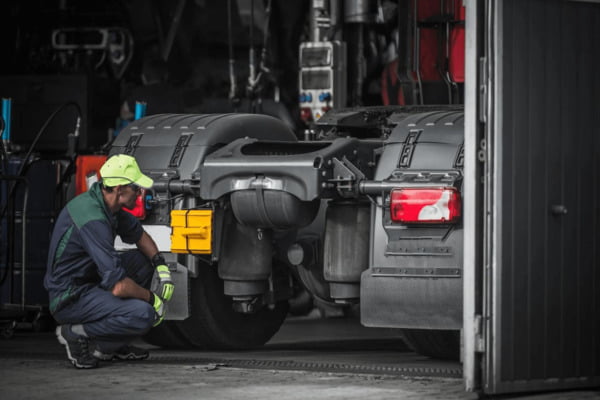
The inspection is not a formality. It is the mechanism by which the supplier's verbal descriptions get converted into verifiable facts. Here's what a credible inspection process should include.
What Inspection Should Actually Cover
Engine load testing is non-negotiable on used commercial vehicles. An engine that starts and idles cleanly can still have compression issues, turbocharger wear, or injector fouling that only appears under load. At our facility, we run engines under load before any unit is cleared for shipment.
Gearbox functional testing should include shifting through all gears under power — not just neutral engagement. Synchromesh wear, selector fork issues, and output seal leaks are common on high-mileage trucks and often invisible during a static inspection.
Frame and chassis inspection should assess for cracks, prior accident repairs, misaligned cross-members, and corrosion on critical structural welds. Cosmetic rust on cab panels is a cosmetic issue; frame corrosion is a structural safety issue. Buyers should understand the difference.
Axle and differential condition matters particularly for trucks destined for high-load or off-road use. Worn pinion bearings and differential backlash outside acceptable operating ranges will show up as drivetrain noise under load — but only if you check for them.
What Documentation Should Travel With Each Unit
Every unit in a bulk order should have:
- Individual inspection report with photos
- Engine hours (odometer reading and/or engine hour meter)
- Records of any maintenance, repairs, or refurbishment performed before sale
- Export customs documents and certificate of origin
- Any applicable compliance documents for the destination market
Buyers should request this documentation as a condition of purchase — not as an afterthought.
What Separates a Reliable Bulk Supplier from a Single-Unit Reseller?
The used truck market includes a wide range of supplier types — from individuals selling one or two vehicles to specialist exporters managing container shipments of 10–50 units. For a bulk fleet purchase, not all suppliers have the operational infrastructure to serve you reliably. Understanding these structural differences is how you qualify a supplier before committing.
A supplier capable of handling bulk fleet orders should demonstrate: ready inventory depth across multiple units of the same spec, documented export licensing and container loading experience, an in-house or contracted inspection process, access to spare parts supply for post-sale support, and a track record in your destination market. Claims should be verified — not accepted at face value.
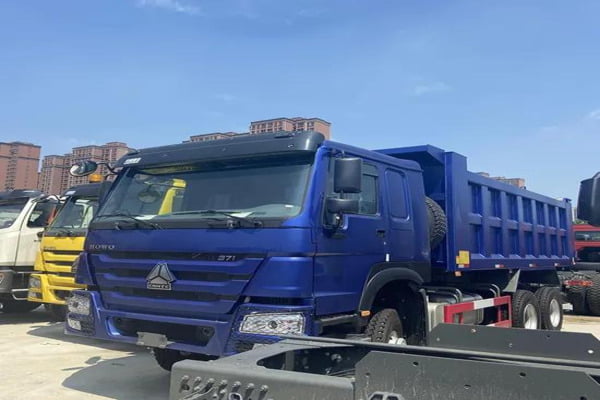
Here is what I recommend buyers evaluate when qualifying a supplier for a multi-unit order.
Inventory Depth and Spec Consistency
A bulk purchase of 15 units requires a supplier with 15 units of comparable spec available — not 3 units now and a promise to source the remainder. Sourcing under time pressure to fulfill a partial inventory creates quality control shortcuts. Ask for a current inventory list with photos, mileage, engine hours, and condition grade for each unit before any deposit is paid.
Export Licensing and Logistics Capability
Commercial vehicle export from China involves customs declaration, commodity inspection, export licensing for certain vehicle categories, and coordination with freight forwarders for container loading[4]. This is not something a casual reseller manages reliably at scale. Ask for documentation of prior export shipments to your region.
Spare Parts Access
This is the after-sales layer that most buyers only think about after their first breakdown. A supplier with integrated spare parts inventory — engines, gearboxes, axles, and common consumable parts — can support your fleet long after the initial purchase. A supplier without parts access cannot.
At Deli Auto, we maintain 1,000+ engines, 1,000+ gearboxes, hundreds of axles, and thousands of spare parts in our 12,000㎡ facility. This is not a marketing claim — it is the structural reason we can offer meaningful after-sales support rather than a general promise.
Questions Worth Asking Any Bulk Supplier
- How many units of this specific model do you have in stock today?
- Can I see individual inspection reports and photos for each unit?
- Who conducts your pre-shipment inspection — in-house engineers or a third party?
- What is your export process and typical lead time for container loading?
- Do you supply spare parts for this model? What parts are currently in stock?
- Can you provide references from buyers in my country or region?
Frequently Asked Questions
How many units is considered a "bulk" purchase of used trucks?
In B2B export markets, bulk typically refers to orders of 5 units or more — enough to fill or partially fill a container shipment or require coordinated logistics planning. Some buyers purchase 2–3 units initially as a trial before committing to larger volumes. Suppliers with strong bulk capability usually serve orders of 10–50+ units efficiently.
Should I buy all the same model or mix truck types in a bulk order?
For fleet management simplicity, same-model orders reduce your parts inventory complexity and make driver training more consistent[5]. Mixing models can make sense if your operations require genuinely different truck types. However, mixing brands within a bulk order should be avoided unless you have confirmed parts availability for each brand in your market.
How do I verify the mileage and engine hours on used trucks before buying?
Mileage verification should combine odometer reading, ECU data (on electronically controlled trucks), visual wear indicators on pedals and seats, and engine hour meter records where available. No single indicator is definitive[6]. A credible supplier will provide multiple data points and allow third-party inspection. Treat any supplier who resists independent inspection as a significant risk signal.
What is the typical lead time from order to delivery for a bulk used truck purchase?
Lead times vary by supplier readiness, inspection scope, container availability, and shipping route. From China to most African or Southeast Asian ports, ocean freight typically runs 20–45 days after loading[7]. Pre-shipment inspection, maintenance, and container loading preparation can add 1–3 weeks before that. Budget 6–10 weeks total from confirmed order to port arrival as a planning baseline.
Is it possible to get spare parts from the same supplier after the purchase?
Yes — but only if the supplier has an integrated spare parts operation. This is worth confirming before purchase, not after. A supplier with a dedicated spare parts inventory for the brands they sell (Hino, Isuzu, HOWO, SHACMAN, and others) can provide ongoing support. This is one of the structural advantages of working with a specialist exporter rather than a general trader.
Conclusion
Buying used trucks in bulk for a growing fleet is not simply a procurement task — it is a risk-sequencing process. Start with your operating environment and let that drive your spec. Understand that bulk orders amplify every decision, good or bad. Treat pre-shipment inspection as the actual buying decision, not a post-negotiation formality. And verify your supplier's structural capability — inventory depth, export experience, inspection process, and spare parts access — before committing to a multi-unit order.
With over 20 years of experience exporting used commercial vehicles and spare parts to Africa, Southeast Asia, the Middle East, and beyond, Deli Auto is equipped to support your bulk fleet procurement from the first inquiry through to after-sales. Contact us today to discuss your fleet requirements and request a current inventory list.
[1] "Reducing the Effect of High Sulfur Content in Diesel Fuel on ...", https://pmc.ncbi.nlm.nih.gov/articles/PMC9608430/. Research on diesel fuel quality and engine compatibility has documented that common-rail injection systems calibrated for ultra-low sulfur diesel (≤10–50 ppm) experience accelerated injector and pump wear when operated on high-sulfur fuels, due to reduced lubricity and increased particulate contamination. Evidence role: mechanism; source type: research. Supports: High sulfur content in diesel fuel accelerates wear in precision fuel injection components designed for ultra-low sulfur diesel, particularly in Euro IV/V common-rail systems. Scope note: Most studies focus on laboratory conditions or specific engine families; field data from developing-market fleet operations is less systematically documented. ↩
[2] "Ultra-low-sulfur diesel", https://en.wikipedia.org/wiki/Ultra-low-sulfur_diesel. The United Nations Environment Programme's Global Fuel Economy Initiative and related fuel quality monitoring programs have documented that diesel sulfur content in numerous Sub-Saharan African and Central Asian countries remains at 500–5,000 ppm, far exceeding the 10–50 ppm thresholds required for Euro IV/V engine compatibility. Evidence role: statistic; source type: institution. Supports: Diesel fuel sulfur levels in many Sub-Saharan African and Central Asian markets substantially exceed the thresholds required by Euro IV/V engine specifications. Scope note: Fuel quality varies significantly within countries and between urban and rural supply chains; national averages may not reflect conditions at specific fleet operating locations. ↩
[3] "UMB Policy on Fleet Vehicle Purchasing", https://www.umaryland.edu/policies-and-procedures/library/financial-affairs/policies/viii-9911.php. Fleet management research has established that unplanned vehicle downtime generates total costs substantially exceeding direct repair expenditure, encompassing lost revenue, substitute vehicle costs, and supply chain penalties; these costs scale with fleet size when a shared mechanical defect affects multiple units simultaneously. Evidence role: general_support; source type: research. Supports: Unplanned downtime in commercial vehicle fleets generates costs that extend beyond direct repair expenses to include lost revenue, driver idle time, and supply chain disruption, which scale with fleet size. Scope note: Published cost figures vary widely by industry sector, vehicle type, and geography; no single study directly models the compounding effect of a shared defect across a bulk-purchased fleet. ↩
[4] "Report Name:Revised Measures for Inspection and ...", https://apps.fas.usda.gov/newgainapi/api/Report/DownloadReportByFileName?fileName=Revised%20Measures%20for%20Inspection%20and%20Quarantine%20Notified_Beijing_China%20-%20People%27s%20Republic%20of_CH2025-0157. China's General Administration of Customs (GACC) and the Ministry of Commerce (MOFCOM) administer export controls and commodity inspection requirements applicable to used vehicles, with specific documentation and licensing obligations that vary by vehicle category and destination market. Evidence role: general_support; source type: government. Supports: Used commercial vehicle exports from China are subject to customs declaration requirements, commodity inspection by relevant authorities, and in certain categories, export licensing controls. Scope note: Regulatory requirements for used vehicle exports from China are subject to periodic revision; buyers should verify current requirements with a licensed Chinese freight forwarder or customs broker at the time of purchase. ↩
[5] "T3CO: Transportation Technology Total Cost of Ownership", https://www.nlr.gov/transportation/t3co. Fleet management research and total cost of ownership frameworks consistently identify vehicle standardization as a cost-reduction lever, noting that homogeneous fleets require fewer unique spare part SKUs, enable bulk parts purchasing, reduce technician training requirements, and allow more predictable maintenance scheduling compared to mixed-model fleets. Evidence role: expert_consensus; source type: research. Supports: Fleet vehicle standardization reduces spare parts inventory carrying costs, simplifies maintenance scheduling, and improves driver familiarity, contributing to lower total cost of ownership. Scope note: The magnitude of standardization benefits depends on fleet size, operational diversity, and parts supply chain characteristics; smaller fleets or those with genuinely varied operational requirements may not realize the same economies. ↩
[6] "Odometer Fraud", https://www.nhtsa.gov/vehicle-safety/odometer-fraud. Consumer protection and vehicle inspection authorities, including the European Commission's studies on odometer fraud, have documented that odometer manipulation is widespread in used vehicle markets and recommend cross-referencing electronic control unit (ECU) stored mileage data, physical wear patterns, and maintenance records as a multi-point verification approach. Evidence role: expert_consensus; source type: government. Supports: Odometer readings alone are insufficient for mileage verification in used vehicles due to the prevalence of tampering, and multi-source verification combining ECU data, physical wear indicators, and service records is recommended practice. Scope note: ECU mileage data can also be manipulated with specialist equipment; no verification method is entirely tamper-proof, and the reliability of each indicator varies by vehicle age and electronic architecture. ↩
[7] "Sea Freight From China: 2026 Rates, Transit Time,Get ...", https://ddpchain.com/sea-freight-from-china/. Shipping industry data from freight rate platforms and port authority records indicate that container transit times from major Chinese export ports (Shanghai, Tianjin, Guangzhou) to principal African ports (Mombasa, Dar es Salaam, Lagos, Durban) range from approximately 20 to 45 days depending on routing, transshipment hubs, and vessel schedules, with Southeast Asian destinations generally at the shorter end of this range. Evidence role: statistic; source type: institution. Supports: Container shipping transit times from Chinese ports to major African and Southeast Asian destination ports typically fall within a 20–45 day range depending on routing and port of destination. Scope note: Actual transit times are subject to variation due to port congestion, vessel scheduling changes, and transshipment delays; the stated range reflects typical conditions rather than guaranteed service levels. ↩