Choosing the right used Isuzu truck is harder than it looks. Buyers in Africa, Southeast Asia, and the Middle East often focus on price and year — then receive vehicles their local mechanics cannot service or their roads will destroy in months. The decision starts long before the purchase order. It starts with the right series, the right engine, and a supplier who can document both.
The right used Isuzu truck matches your payload class, your destination market's parts availability, and a verified mechanical condition — not just a competitive CIF price. Isuzu's commercial range covers several distinct series (NKR, NPR, NQR, FRR, and the heavy-duty 700P and GIGA), each built for different loads, axle configurations, and operating environments. Buying the wrong series is the most common and most expensive sourcing mistake we see.
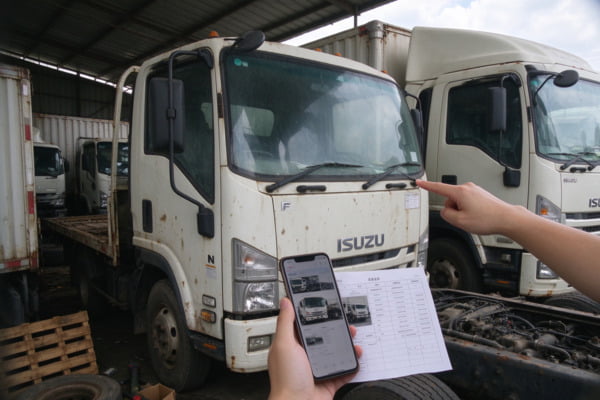
Series confusion, engine mismatch, and hidden mechanical problems are three separate risks — and they compound each other. In the sections below, I'll walk through how to evaluate each one, and how to connect your choice to the market where the truck will actually work.
Which Isuzu Truck Series Is Right for Your Application?
Most buyers already know they want an "Isuzu truck." The problem is that "Isuzu truck" covers a wide range of payload classes and chassis configurations. Choosing the wrong one means your truck is either underloaded (wasted capacity) or overloaded (shortened life). Neither outcome is acceptable when you are buying 5–20 units at a time.
The Isuzu commercial range follows a clear payload ladder. NKR handles light urban work, NPR steps up to medium loads, NQR extends to heavier medium-duty routes, FRR enters the heavy-medium class, and the 700P and GIGA series handle serious heavy haulage[1]. Each series has a different axle configuration, GVW rating, and drivetrain — they are not interchangeable.
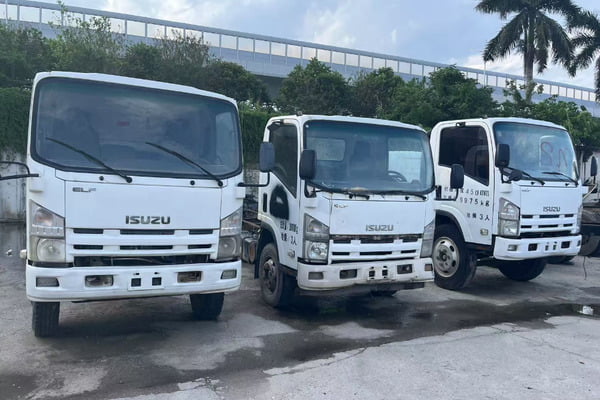
The Light and Medium-Duty Tier: NKR, NPR, and NQR
These three models make up the bulk of the used Isuzu market in Southeast Asia and Sub-Saharan Africa. They share a similar cab profile, which causes buyers to treat them as equivalent. They are not.
NKR (N-series, light-duty)
- GVW typically in the 3.5–5 tonne range[2] (verify against specific year/market variant documentation)
- Common engine: 4JB1 or 4KH1 — both naturally aspirated or lightly turbocharged diesel units[3]
- Best use cases: urban distribution, light cargo, small construction deliveries
- Market fit: excellent in Southeast Asian cities with weight restrictions; common in West African urban routes
NPR (N-series, medium-duty)
- GVW typically in the 5–7.5 tonne range (verify against specific year/market variant documentation)
- Common engine: 4HG1, 4HF1, or 4HK1 depending on year and market
- Best use cases: regional distribution, refrigerated cargo, construction materials on paved routes
- Market fit: strong in East Africa, Southeast Asia logistics networks
NQR (N-series, upper-medium-duty)
- GVW typically in the 7.5–9 tonne range (verify against specific year/market variant documentation)
- Common engine: 4HK1 or 6HK1 depending on configuration
- Best use cases: heavier regional haulage, bulk agricultural goods, inter-city cargo runs
- Market fit: well-suited to East Africa and the Middle East where road quality allows consistent medium-duty operation
Sourcing note: In our experience at Deli Auto, buyers from markets with poor road infrastructure should be cautious with NKR units used for loads closer to the NQR class. We have seen frames and rear axles show stress damage from chronic overloading long before the odometer suggests it.
The Heavy-Duty Tier: FRR, Isuzu 700P, and GIGA (VC66 / VC61)
These are the models we recommend pushing for buyers with serious haulage requirements — and they represent three distinct capability levels.
FRR
- GVW typically in the 9–12 tonne class (verify against specific year/market variant documentation)
- Engine: typically 6HK1 series
- Use cases: medium-heavy construction logistics, container drayage, bulk goods transport
- A solid bridge model between medium-duty and full heavy-duty
Isuzu 700P The 700P is one of the most widely recognized Isuzu models in African and Southeast Asian markets. It sits in the medium-heavy to heavy-duty class, with a GVW typically in the 10–14 tonne range (verify against specific variant documentation), and is commonly fitted with the 6HK1 turbocharged diesel engine.
- Primary use cases: Construction materials haulage, timber transport, inter-city bulk cargo, agricultural produce, and general freight on both paved and unpaved routes
- Why buyers choose it: The 700P has strong parts availability across Sub-Saharan Africa and Southeast Asia. Local mechanics in Kenya, Nigeria, Tanzania, and the Philippines are broadly familiar with its drivetrain[4]. That familiarity translates directly into lower maintenance downtime.
- Key buyer consideration: The 700P's popularity means the used market includes units in very different condition. Year and visual inspection are not enough — compression testing and gearbox engagement checks are essential.
Isuzu GIGA VC66 / VC61 The GIGA is Isuzu's heavy-duty flagship in the Asian and export market. The VC66 and VC61 are two cab and chassis variants within the GIGA family.
- GVW typically in the 20–30+ tonne range, depending on axle configuration (verify against specific model documentation)
- Engine: 6WG1 or 6WF1 series — high-displacement, high-output diesel (fact-check against Isuzu GIGA model documentation)
- Primary use cases: Long-haul tractor-trailer operation, heavy construction transport, mining logistics, port container movements, and large-scale agricultural bulk haulage
- VC66 vs. VC61: These designations reflect cab variants and axle/wheelbase configurations. VC66 is typically associated with the longer wheelbase and higher payload configuration; VC61 covers a slightly different weight class or cab specification. Buyers should confirm the exact axle load rating and intended use with their supplier before purchase.
- Market fit: The GIGA is well-suited to East Africa's long-distance freight corridors, the Middle East's construction sectors, and Southeast Asian mining operations. Parts availability for the 6WG1/6WF1 engine is strong in established Isuzu markets but should be verified locally before committing.
| Model | Typical Use Case | Engine Family | Market Strength |
|---|---|---|---|
| NKR | Urban light delivery | 4JB1 / 4KH1 | SE Asia, West Africa cities |
| NPR | Regional distribution | 4HG1 / 4HK1 | East Africa, SE Asia |
| NQR | Heavy regional cargo | 4HK1 / 6HK1 | East Africa, Middle East |
| FRR | Medium-heavy haulage | 6HK1 | Flexible multi-market |
| 700P | Construction, bulk inter-city | 6HK1 | Africa, SE Asia |
| GIGA VC66 | Long-haul, heavy construction | 6WG1 | East Africa, Middle East, SE Asia |
| GIGA VC61 | Heavy freight, mining logistics | 6WF1 / 6WG1 | East Africa, Middle East |
Does Year and Mileage Actually Tell You the Truck's Condition?
This is the question I wish more buyers asked before placing an order. Year and mileage are the two data points that get shared first in almost every inquiry we receive. They matter — but they are proxies, not truth.
A 2016 NQR with 180,000 km on a well-maintained highway fleet in Japan is a fundamentally different truck from a 2018 NPR with 120,000 km that spent three years on unpaved construction sites in Southeast Asia. The odometer does not record terrain, load behaviour, or maintenance history.
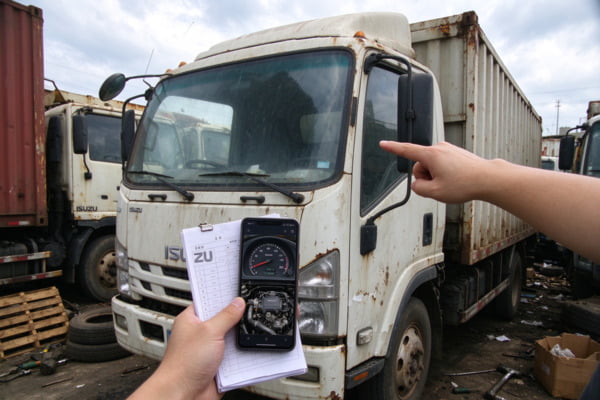
What a Pre-Shipment Inspection Should Actually Cover
At Deli Auto, our inspection process for used Isuzu trucks covers the following areas. I describe these not as a DIY checklist but as what buyers should ask any supplier to document and share before shipment.
Engine condition
- Compression test results — low compression is the clearest sign of internal wear[5]
- Oil pressure readings at idle and under load
- Blow-by check (excessive crankcase pressure indicates worn piston rings)
- Coolant condition — rust or oil contamination signals head gasket or cooling system issues
Gearbox and drivetrain
- Gear engagement test across all ratios — hesitation or grinding in specific gears indicates synchromesh wear
- Clutch bite point and slip check
- Differential noise under load
Chassis and frame
- Frame rail inspection for cracks, welds, and rust penetration — surface rust is common and manageable; structural rust is not
- Cab mounting integrity
- Suspension component condition (leaf springs, bushings, shock absorbers)
Electrical and ancillary systems
- Dashboard warning light status
- Brake system check (hydraulic and air, depending on spec)
- Lighting, instruments, and cab electrics
Our position at Deli Auto: We conduct mechanical inspections and engine tests before shipment. We can share documentation of these checks. However, for application-specific decisions — particularly if you are evaluating units for demanding environments — we recommend having a qualified independent mechanic review the inspection reports or, where possible, conduct their own assessment.
The principle here is straightforward: ask your supplier what they checked, how they checked it, and what the results were. A supplier who cannot answer that question specifically is a supplier whose trucks you are buying blind.
Does the Engine Type Determine Your After-Sales Fate?
Yes — and this is the insight most buyers in emerging markets learn the hard way. The engine is not just a performance spec. It is a long-term maintenance commitment that depends entirely on what parts and skills exist in your local market.
An Isuzu truck with a 4JB1 engine is easy to maintain across most of Sub-Saharan Africa and Southeast Asia. An Isuzu GIGA with a 6WG1 engine requires more specialized parts and mechanical knowledge. Neither engine is inherently better — but one may be far better for your specific situation.
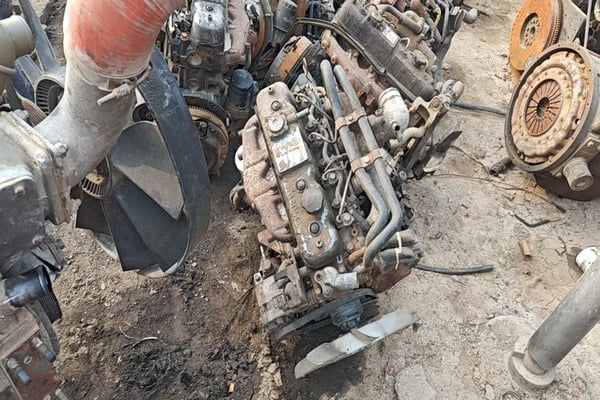
Engine Families and Market-Specific Availability
4JB1 and 4HF1 / 4HG1 (light to medium-duty)
- Found in NKR and NPR models
- Widely available parts across West Africa, East Africa, Southeast Asia
- Mechanical simplicity means local workshops can handle most repairs
- These are low-risk engines for markets with less developed truck service infrastructure
4HK1 and 6HK1 (medium to heavy-duty)
- Found in NPR (upper variants), NQR, FRR, and the 700P
- Strong parts availability in Kenya, Tanzania, Nigeria, South Africa, Philippines, Indonesia
- The 6HK1 is arguably the most widely supported Isuzu engine in the African used truck market — a significant advantage for fleet operators
- Emissions-related components (EGR, DPF on later models) can be difficult to source in some markets — confirm with local dealers before buying later-year models
6WG1 and 6WF1 (GIGA heavy-duty)
- Found in GIGA VC66 and VC61
- Higher output and capability, but parts are less universally stocked
- Recommended markets: Countries with established Isuzu dealer networks or access to import parts distribution (Kenya, UAE, Saudi Arabia, Vietnam, Indonesia)
- Buyers in landlocked or remote markets should assess local parts access before committing to GIGA units
| Engine | Typical Model | Parts Availability in Africa | Parts Availability in SE Asia | Notes |
|---|---|---|---|---|
| 4JB1 | NKR | High | High | Simple, widely known |
| 4HK1 | NPR, NQR | High | High | Workhorse engine |
| 6HK1 | NQR, FRR, 700P | High | High | Most recommended for Africa |
| 6WG1 / 6WF1 | GIGA VC66/VC61 | Medium | Medium-High | Verify local before buying |
Is the Total Cost of a Used Isuzu Truck Really Just the CIF Price?
No — and the difference between CIF price and landed, operational cost is where many bulk buyers get surprised. I have seen buyers negotiate hard on FOB price and then absorb unexpected costs that wiped out the savings entirely.
The price your supplier quotes covers the truck to the port. What happens after the port is a separate cost structure that varies significantly by destination country.
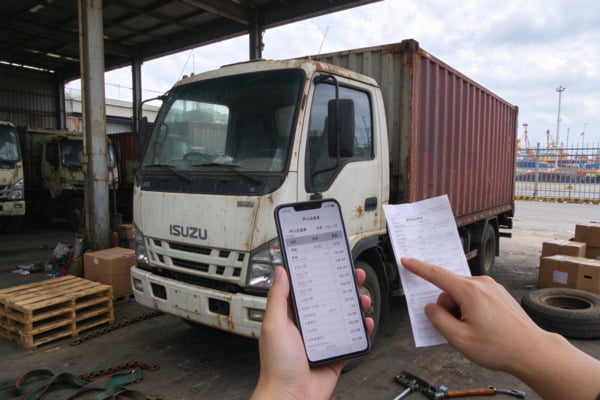
Cost Elements Beyond CIF That Buyers Should Quantify in Advance
Import duties and taxes
- Vary widely by country and HS code classification
- Some countries apply different duty rates based on truck GVW, age, or engine displacement[6]
- A used truck's declared value and year affect customs assessment in most African and Middle Eastern markets
Pre-import inspection certificates
- Countries including Kenya, Tanzania, Ghana, Nigeria, and others require PVOC (Pre-Verification of Conformity) or equivalent certificates
- These must be arranged at the origin country before shipment — not after arrival
- Failure to obtain these certificates results in the truck being held at port or rejected
Emissions and roadworthiness compliance
- Later-year trucks with Euro IV or Euro V emissions systems may require deregistration documentation, emissions compliance certificates, or component modifications to pass local inspection
- Some markets restrict import of trucks above a certain age — confirm destination country regulations before selecting the year range
Post-arrival maintenance
- Budget for a mechanical review and minor repairs after arrival, regardless of pre-shipment inspection quality
- Ocean transit, container loading stress, and humidity can introduce issues that were not present at origin[7]
How Deli Auto handles this: Our one-stop export service covers pre-shipment inspection, PVOC and inspection certificate coordination, container loading, customs clearance at origin, and ocean shipping. We flag destination-country compliance issues before the purchase order is confirmed — not after the truck is on the water. This is not a guarantee against every cost, but it significantly reduces the risk of post-arrival surprises.
Frequently Asked Questions
What is the difference between the Isuzu 700P and the GIGA VC66?
The 700P sits in the medium-heavy class, typically used for construction materials, inter-city cargo, and bulk agricultural haulage. The GIGA VC66 is a full heavy-duty platform designed for long-haul tractor-trailer work, heavy construction, and mining logistics. They serve different payload requirements and require different levels of local service infrastructure.
Which Isuzu engine is easiest to maintain in Africa?
Based on our export experience, the 6HK1 engine (found in NQR, FRR, and 700P models) has the strongest parts availability and workshop familiarity across East and West Africa. The 4HK1 is also well-supported in lighter-duty applications. Buyers should verify local parts availability in their specific country before finalizing engine selection.
How many years old should a used Isuzu truck be for import?
This depends on your destination country's import age restrictions, which vary significantly. Many African markets restrict imports to trucks under 10 or 15 years old[8]. Some Middle Eastern markets have stricter requirements. We recommend confirming your country's current regulations before selecting a year range — rules change, and an experienced exporter should know the current requirements for your market.
What documents should a used Isuzu truck supplier provide?
At minimum, you should expect: a title/ownership document, pre-shipment inspection report, engine test results, pre-export photos and video, bill of lading, commercial invoice, packing list, and any required inspection certificates (PVOC or equivalent) for your destination country. Missing documentation is a red flag at any price point.
Can I mix different Isuzu series in one container order?
Yes, Isuzu trucks across the NKR–FRR range can typically be loaded in mixed configurations depending on container type and dimensions. Heavy-duty units like the GIGA usually require flat rack or open-top containers due to height. We handle container loading planning as part of our export service and can advise on optimal configurations for mixed orders.
Conclusion
Choosing the right used Isuzu truck comes down to three decisions made in the right order: select the correct series for your payload requirements, confirm the engine type matches your destination market's parts and service ecosystem, and then verify the truck's actual mechanical condition — not just its year and mileage. The Isuzu 700P and GIGA VC66/VC61 represent strong options for serious haulage applications, but only when matched to the right route, load, and operating environment.
At Deli Auto, we have spent over 20 years helping B2B buyers in Africa, Southeast Asia, and the Middle East source used Isuzu trucks that work long after the container is unloaded. If you are planning a bulk purchase and want to discuss series selection, engine suitability for your market, or our pre-shipment inspection process, contact our team. We will help you ask the right questions before the order is placed — because that is where the real cost savings happen.
[1] "Compare Isuzu Trucks", https://www.isuzucv.com/en/app/comparison. Isuzu Motors' official commercial vehicle documentation categorizes its truck lineup into N-series (NKR, NPR, NQR) and F-series (FRR) light-to-medium platforms and heavier forward-control models, each rated for distinct gross vehicle weight classes and operational profiles. Evidence role: definition; source type: institution. Supports: The classification of Isuzu commercial trucks into distinct series with corresponding GVW ranges and intended duty cycles. Scope note: Official specifications vary by model year and destination market; regional variants may differ from globally published figures ↩
[2] "How to Choose the Right Isuzu Truck for Your Payload", https://www.jerryseinerisuzu.com/how-to-choose-the-right-isuzu-truck-for-your-payload-needs/?srsltid=AYCX9vIdEkrtF0h1jacHkLsBBEg3deL9LQpwzCjn6w9ZxaxjCVCmu-qE. Isuzu Motors technical documentation for the NKR series specifies gross vehicle weight ratings in the light-duty range, with exact figures dependent on model year, wheelbase, and destination-market configuration. Evidence role: statistic; source type: institution. Supports: The gross vehicle weight rating of the Isuzu NKR light-duty truck series. Scope note: GVW ratings differ across production years and regional variants; the cited range should be verified against the specific unit's compliance plate ↩
[3] "List of Isuzu engines", https://en.wikipedia.org/wiki/List_of_Isuzu_engines. Isuzu Motors engine documentation identifies the 4JB1 as a four-cylinder diesel unit used across light commercial vehicle applications, with turbocharged variants available depending on market specification; the 4KH1 represents a subsequent generation in the same displacement class. Evidence role: definition; source type: institution. Supports: The 4JB1 and 4KH1 engine designations and their fitment in Isuzu light-duty commercial vehicles. Scope note: Engine fitment varies by production year and export market; this citation supports general engine family identification rather than confirming fitment for any specific unit ↩
[4] "Across Sub-Saharan Africa, every market brings unique ...", https://www.facebook.com/ISUZUINTL/posts/across-sub-saharan-africa-every-market-brings-unique-opportunities-working-close/1472083611620282/. Industry analyses of commercial vehicle markets in Sub-Saharan Africa and Southeast Asia document Isuzu as among the leading Japanese truck brands by registered fleet size, a factor that correlates with aftermarket parts availability and technician familiarity in those regions. Evidence role: general_support; source type: research. Supports: Isuzu's commercial vehicle market presence and parts network depth in Sub-Saharan Africa and Southeast Asia. Scope note: Parts availability varies significantly by country and urban versus rural location; market share data does not directly confirm parts stocking levels at the local workshop level ↩
[5] "Compression Test 101: What It Reveals About Engine Health", https://www.autotrainingcentre.com/blog/compression-test-engine-health/. Automotive engineering and diesel engine maintenance literature identifies cylinder compression testing as a standard diagnostic procedure for evaluating piston ring, cylinder bore, and valve seat condition, with below-specification readings indicating internal wear that affects engine performance and longevity. Evidence role: mechanism; source type: education. Supports: Compression testing as a primary diagnostic method for assessing internal wear in diesel engines. Scope note: Compression test interpretation requires comparison against manufacturer-specified values for the specific engine model; a single low reading may reflect a valve seating issue rather than bore wear, requiring further differential diagnosis ↩
[6] "Automotive Motor Vehicle Tariff Codes", https://www.trade.gov/automotive-motor-vehicle-tariff-codes. The World Customs Organization's Harmonized System classifies commercial vehicles under Chapter 87, with subheadings differentiated by GVW thresholds; individual country tariff schedules in Africa and the Middle East apply duty rates and surcharges that further vary by vehicle age and, in some jurisdictions, engine displacement or emissions standard. Evidence role: mechanism; source type: government. Supports: That used commercial vehicle import duties in African and Middle Eastern markets are structured around GVW, vehicle age, and engine displacement classifications. Scope note: Tariff rates and classification rules are subject to national legislative amendment and bilateral trade agreements; buyers should obtain current tariff schedules from the destination country's revenue authority or a licensed customs broker ↩
[7] "How to Reduce Rust Risk During Ocean Shipping for ...", https://www.shipoverseas.com/blog/how-to-reduce-rust-risk-during-ocean-shipping-for-vehicles/. Maritime cargo research documents that enclosed container environments generate significant humidity fluctuations during ocean transit, promoting condensation and accelerated corrosion on metal surfaces; mechanical stress during container loading and sea motion can also affect suspension components, fluid seals, and electrical connections in used vehicles. Evidence role: mechanism; source type: research. Supports: That ocean freight conditions including humidity, condensation, and mechanical stress during container loading can cause or accelerate corrosion and mechanical issues in shipped vehicles. Scope note: The severity of transit-induced deterioration depends on voyage duration, routing, season, and container preparation; pre-shipment desiccant placement and proper securing can mitigate but not eliminate these effects ↩
[8] "Figure of the week: Africa's used vehicle market and ...", https://www.brookings.edu/articles/figure-of-the-week-africas-used-vehicle-market-and-the-environment/. Multiple African governments have enacted regulations limiting the age of imported used vehicles; for example, Kenya's Import Duty Act and associated regulations have historically restricted used vehicle imports to those not exceeding a specified age threshold, with similar policies adopted in Tanzania, Ghana, and other regional markets. Evidence role: historical_context; source type: government. Supports: The existence of used vehicle import age restrictions in African markets. Scope note: Age restriction thresholds and enforcement vary by country and are subject to legislative amendment; buyers must verify current regulations with the destination country's revenue authority or a licensed customs broker ↩