Inspecting a used truck before importing is one of the most consequential decisions a B2B buyer makes — and one of the most mishandled. Most buyers know they should inspect, but they approach it with a generic checklist that misses the risks that actually matter for their specific purchase. There is a better way.
The short answer: inspecting a used truck before importing requires a use-case-driven approach, not a universal checklist. Inspection priorities shift based on vehicle type, age, operating history, and intended application. The goal is not to tick boxes — it is to identify the specific failure modes most likely to surface after delivery, given how that truck will actually be used.
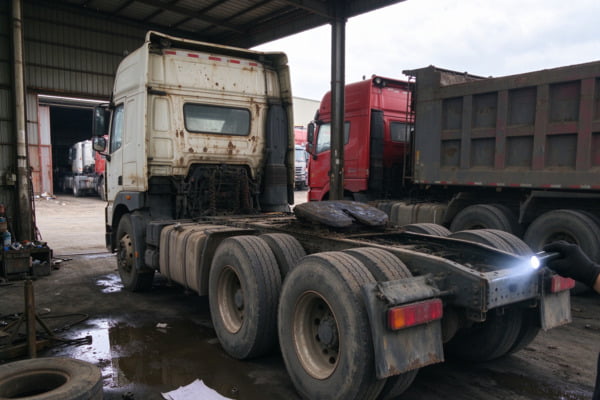
What that means in practice takes a little more unpacking. Because the truck that looks clean in photos is not always the truck that runs reliably six months later — and the gap between those two realities is where import risk lives.
Does Vehicle Type Change What You Inspect First?
Buyers often ask us for "the inspection checklist." We understand the instinct — a clear list feels reassuring. But the truth is, starting with the same checklist for every truck is how buyers miss the defects that matter most. Use case defines risk, and risk defines where to look first.
Inspection priorities are not universal. A tractor truck built for long-haul highway work carries different wear patterns and failure risks than a dump truck used in mining or construction. The vehicle's intended application — not its brand or spec sheet — determines which systems need the closest scrutiny.
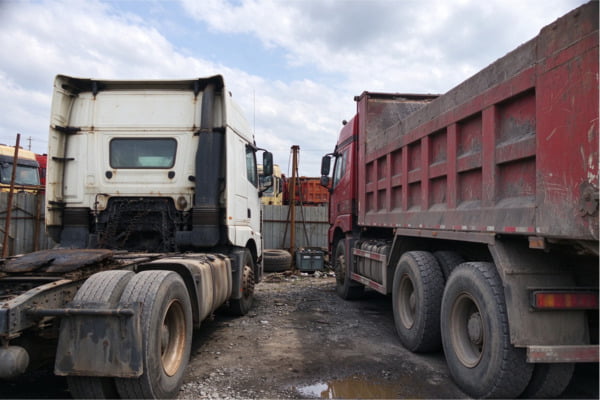
This is something we see play out repeatedly when buyers from Africa, Southeast Asia, and the Middle East come to us with sourcing requests. The questions they ask reveal a lot about whether their inspection approach is calibrated to their actual risk.
Long-Haul Tractor Trucks
For a used Scania, Volvo, or MAN tractor truck – the kind that will clock high annual mileage on regional highways – engine condition and drivetrain wear are the top concerns. These trucks accumulate hours fast. The questions that matter are:
- What is the actual engine mileage, not just the odometer reading?
- Has the engine been overhauled, and if so, with genuine or aftermarket parts?
- What is the turbocharger condition? Turbo wear is one of the earliest indicators of long-term engine stress.[1]
- Does the gearbox shift cleanly across all ranges under load?
A truck that has covered 800,000 km on well-maintained European roads may be in better mechanical condition than one with 400,000 km from a harder operating environment.[2] Mileage is context, not a verdict.
Dump Trucks and Construction Vehicles
For HOWO, SHACMAN, or FAW dump trucks destined for mining or construction work in Africa or South America, the inspection focus shifts significantly. These trucks work under heavy cyclic load – repeated full-load hauls on rough terrain. That stress concentrates in different places:
- Frame and chassis integrity — look for crack repairs, re-welds, and deformation around the rear cross-members
- Rear axle and differential condition — overloading accelerates axle wear faster than almost any other factor
- Hydraulic tipping system — cylinder seals, pump condition, and structural integrity of the tipping body
- Brake system — drum wear, slack adjuster condition, and air system integrity
| Vehicle Type | Top Inspection Priority | Common Hidden Risk |
|---|---|---|
| Tractor truck (Scania, Volvo, MAN) | Engine hours and drivetrain wear | Turbo failure, gearbox wear |
| Dump truck (HOWO, SHACMAN) | Frame integrity, rear axle | Overload damage, crack repairs |
| Mixer truck | Drum drive system, chassis | Cement residue, structural stress |
| Cargo truck | Suspension, body condition | Overloading deformation |
| Tank truck | Tank integrity, valve systems | Corrosion, leak history |
Mixer Trucks and Tank Trucks
These are specialist vehicles, and their inspection requires attention to systems most buyers don't think about until something fails. For mixer trucks, the drum drive — whether hydraulic or mechanical — is the expensive component. For tank trucks, internal corrosion and valve integrity matter as much as the engine[3]. A tank that has carried corrosive liquids may look fine from the outside.
Why Do Cosmetic Checks Miss the Most Expensive Problems?
We see this pattern often enough that it's worth naming directly. Buyers receive photos showing a clean cab, fresh paint, and tidy bodywork — and they feel reassured. Then the truck arrives and shows mechanical fatigue within the first three months. The paint was fine. The engine wasn't.
The most expensive defects in used trucks are almost never visible in photos. Engine smoke behavior at cold start, gearbox shift hesitation, brake system wear, and frame crack history are all invisible in standard inspection photos — and they are the failure modes most likely to affect reliability after import.
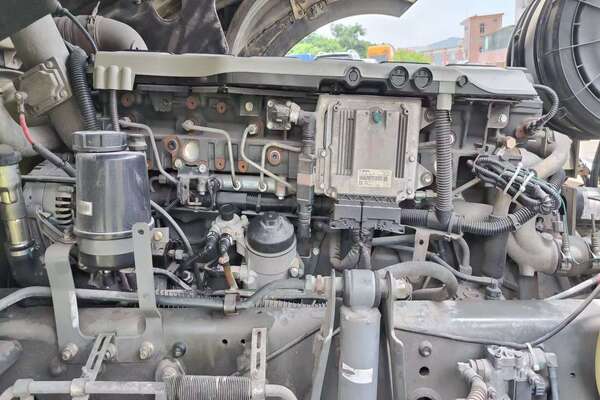
The gap between appearance and mechanical condition is one of the most consistent risks we help buyers navigate. Here is where that gap typically shows up:
Cold Start Behavior
Starting a truck cold — before the engine has warmed up — reveals things a warmed-up engine will hide. Excessive blue or white smoke at cold start can indicate worn piston rings or valve seals. A seller who only demonstrates a truck after it has been running for an hour may not be hiding anything — but the buyer should ask to see a cold start, or ask for video evidence of one.
In our pre-shipment checks, cold start video is one of the first things we document. It takes two minutes to record and provides evidence that would otherwise require a buyer to be physically present.
Gearbox Shift Feel
This is something that cannot be assessed from photos at all. A gearbox with worn synchromesh rings will shift acceptably at low load but grind or jump under full load conditions. The only way to evaluate a gearbox honestly is through a loaded road test.[4] We look for:
- Clean engagement across all gears, including reverse
- No slipping or hesitation under load
- No unusual noise from the transmission housing
Brake System Condition
Brake system problems are common in high-mileage commercial trucks and disproportionately dangerous. The items most worth checking are:
- Air system pressure build-up time
- Slack adjuster condition on drum brakes
- Brake chamber diaphragm integrity
- ABS sensor function (where fitted)
Frame and Structural Integrity
Frame cracks are often repaired and painted over.[5] A visual inspection from a distance will miss them entirely. A proper frame check involves looking at the web and flanges of the main rails with the vehicle lifted or at close range — particularly around the rear suspension mounts and any previous body attachment points.
What Can a Buyer Actually Do Without Being On-Site?
This is the honest question most importers are dealing with. The buyer is in Lagos, Nairobi, Jakarta, or São Paulo. The truck is in Guangzhou. Physical inspection is either impossible or impractical. Remote inspection has real limits — and any supplier who tells you otherwise is not being straight with you.
What buyers can realistically do from a distance is demand, evaluate, and interrogate supplier-provided inspection evidence. That means knowing what good documentation looks like, what questions to ask, and what responses should raise concern.
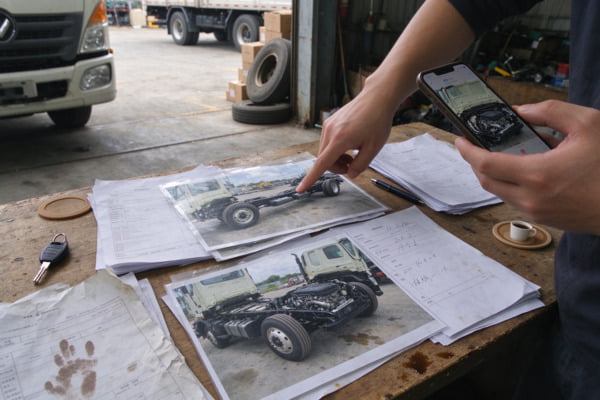
Here is how to approach supplier-provided inspection evidence with the right level of critical thinking:
What Good Inspection Documentation Should Include
A credible pre-shipment inspection should produce more than a single-page "passed inspection" certificate. Look for:
- Engine test report — including cold start behavior, idle RPM, operating temperature, and oil pressure readings
- Gearbox and drivetrain assessment — shift test results, any noted repairs or replacements
- Frame and chassis inspection notes — with photographs at close range
- Brake system check — air pressure test results, component condition
- Undercarriage photos — not just exterior shots
- Video evidence — especially cold start, road test footage, and hydraulic system function for specialist trucks
A supplier who resists providing detailed documentation is telling you something important about their inspection process — or the lack of one.
What Questions Reveal Supplier Credibility
The questions you ask before purchase are as valuable as the documents you receive. Suppliers who have done real inspection work will answer specific questions without hesitation. Ones who haven't will give vague or deflecting answers.
Ask specifically:
- Who conducted the inspection? (In-house engineer, third-party inspector, or neither?)
- When was the engine last serviced, and what was replaced?
- Has the frame been repaired or re-welded at any point?
- What is the gearbox model, and has it been rebuilt?
- Can you provide a cold start video recorded within the last week?
Pattern-based observation: buyers who ask these questions tend to receive much more useful responses — and sometimes discover that the "inspection" was little more than a visual walk-around.
Third-Party Inspection as a Verification Layer
For high-value purchases, commissioning a third-party inspection through a qualified local agent in China is a legitimate option. Companies like SGS, Bureau Veritas, and various independent inspection services operate in Guangzhou and can conduct on-site checks on your behalf.[6] This adds cost — typically a few hundred USD per vehicle — but provides an independent verification layer that is difficult to argue with.
That said, third-party inspectors are only as useful as the brief you give them. A standard cargo inspection is not the same as a mechanical condition assessment.[7] If you use a third-party inspector, provide a specific technical scope — not just "general inspection."
How Do Maintenance Records Factor Into the Inspection?
Spec sheets tell you what a truck was designed to do. Maintenance records tell you what actually happened to it. The distance between those two things is where real mechanical risk accumulates.
Maintenance records are the single most underused evaluation tool in used truck procurement. A truck with complete, consistent service records from a reputable operator is a fundamentally different risk proposition than the same truck with no service history — regardless of how it looks externally.
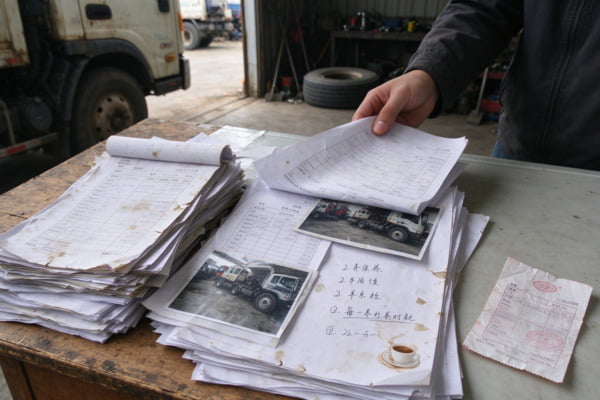
What to Look For in Service Records
- Regular oil change intervals — erratic intervals suggest deferred maintenance
- Component replacement history — injectors, filters, belts, water pump
- Any record of major repairs — engine work, gearbox replacement, frame repairs
- Operator identity — a truck from a large, organized fleet with documented maintenance is more traceable than one with private or unclear ownership history[8]
When Records Are Absent
In the real world, complete service history is not always available — particularly for older Chinese domestic trucks or vehicles sourced through secondary markets. In these cases, physical inspection evidence has to compensate. The inspection scope needs to widen to cover what records cannot confirm.
This is a situation we encounter regularly with HOWO and SHACMAN trucks sourced domestically. Our engineers work through a more detailed physical check when history is limited — focusing on wear indicators that reveal maintenance quality indirectly.
Frequently Asked Questions
Can I inspect a used truck remotely before importing it?
You cannot replicate an on-site inspection from a distance, but you can evaluate supplier-provided documentation intelligently. Ask for engine test reports, cold start video, frame photographs, and a road test record. A supplier with a genuine inspection process will provide these without resistance. Treat vague or incomplete documentation as a risk signal.
What is the most commonly missed defect in used truck imports?
In our experience, drivetrain wear — particularly gearbox condition and turbocharger health — is frequently missed because it doesn't show up in photos. Buyers tend to focus on cosmetic condition. The defects that surface after import are almost always mechanical, not cosmetic. Cold start behavior and loaded road test results are the most useful indicators.
Should I use a third-party inspection service for used truck imports?
For high-value purchases, yes — a third-party inspection adds an independent verification layer. Make sure you provide a detailed technical scope, not just a general inspection brief. Standard cargo inspection and mechanical condition assessment are different services. Specify exactly what systems you need evaluated.
How do I know if a truck's mileage is accurate?
Odometer readings on used trucks can be unreliable.[9] Cross-reference mileage against engine wear indicators, service record intervals, and component condition. Wear patterns on pedals, seats, and steering wheels offer informal clues. For high-stakes purchases, an independent engineer inspection is more reliable than odometer readings alone.
What documents should a supplier provide before shipment?
At minimum: engine test report, pre-shipment inspection certificate, photos of frame and undercarriage, gearbox condition notes, and cold-start video. Depending on the truck type, hydraulic system test results and brake system records should also be included. If you want to know exactly what our documentation package covers, reach out to us directly – we're happy to walk you through it.
Conclusion
Inspecting a used truck before importing is not a task you can reduce to a single checklist. The right approach depends on vehicle type, intended use, operating environment, and the information your supplier is genuinely able to provide. Focus on drivetrain condition over cosmetics, ask questions that reveal whether real inspection work was done, and treat documentation quality as a direct indicator of supplier credibility.
The goal is not a perfect inspection — it is a well-calibrated one. Know what your specific truck is likely to fail at. Ask for evidence that addresses those failure modes. And if something in the documentation doesn't feel right, ask again.
At Deli Auto, our engineers conduct pre-shipment inspections on every vehicle we export — with engine testing, video evidence, and structured documentation included as standard. If you'd like to understand what that process covers for your specific vehicle inquiry, contact us here. We'll give you a straight answer.
[1] "Semi Truck Turbocharger Failure: 8 Warning Signs", https://www.texastruckac.com/post/semi-truck-turbocharger-failure-8-warning-signs. Diesel engine maintenance literature identifies turbocharger bearing wear, shaft play, and compressor wheel erosion as indicators of sustained high-load operation and inadequate lubrication, conditions that also accelerate wear in other engine components, supporting its use as a proxy for overall engine stress history. Evidence role: mechanism; source type: research. Supports: That turbocharger wear patterns in diesel engines reflect cumulative operating stress and can serve as an indicator of broader engine condition.. Scope note: Turbocharger condition is one of several diagnostic indicators; it is not a standalone determinant of engine health and should be assessed alongside oil analysis, compression testing, and service records. ↩
[2] "Effects of Truck Size and Weights on Highway Infrastructure ...", https://ctr.utexas.edu/wp-content/uploads/pubs/2122_1.pdf. Research on heavy vehicle wear and fatigue indicates that road surface quality, load cycles, and operating gradient substantially influence component degradation rates, meaning that equivalent odometer readings can correspond to markedly different mechanical states depending on the operating context. Evidence role: general_support; source type: research. Supports: That operating environment and road conditions are significant determinants of mechanical wear in heavy commercial vehicles, independent of total distance traveled.. Scope note: Direct comparative studies contrasting European highway trucks with trucks from harsher operating environments are limited; this claim is supported by general vehicle dynamics and fatigue literature rather than a single definitive study. ↩
[3] "49 CFR 180.407 -- Requirements for test and inspection of ...", https://www.ecfr.gov/current/title-49/subtitle-B/chapter-I/subchapter-C/part-180/subpart-E/section-180.407. Regulatory frameworks governing the transport of liquids and hazardous materials, including standards from bodies such as the UN Economic Commission for Europe and national transport authorities, specify periodic inspection of tank structural integrity, internal surfaces, and valve systems as mandatory safety requirements, reflecting their recognized importance relative to mechanical drivetrain condition. Evidence role: expert_consensus; source type: government. Supports: That tank integrity, internal corrosion assessment, and valve condition are critical inspection criteria for commercial tank vehicles, particularly those with prior chemical or liquid cargo history.. Scope note: Regulatory inspection requirements apply to in-service vehicles; pre-purchase inspection practices are not uniformly mandated and the equivalence of tank integrity to engine importance is a contextual judgment rather than a codified standard. ↩
[4] "Condition Assessment of Overhead Transmission Line ...", https://ui.adsabs.harvard.edu/abs/2021JEET...16.2981L/abstract. Commercial vehicle inspection standards and fleet maintenance guidance generally specify that transmission condition assessment requires dynamic testing under representative load conditions, as static or low-load checks are insufficient to reveal synchromesh wear or torque-dependent shift anomalies. Evidence role: expert_consensus; source type: institution. Supports: That dynamic load testing under operational conditions is the accepted method for detecting gearbox wear, particularly synchromesh degradation, in heavy commercial vehicles.. Scope note: Specific standards vary by jurisdiction and vehicle category; the claim reflects general industry practice rather than a single universally mandated protocol. ↩
[5] "5.1.6 Frames (393.201) - CSA - Department of Transportation", https://csa.fmcsa.dot.gov/safetyplanner/myfiles/SubSections.aspx?ch=22&sec=64&sub=135. Vehicle inspection guidance from automotive and transport safety bodies notes that repainted or refinished structural components can conceal weld repairs and crack history, and recommends close-range or elevated inspection of frame rails and cross-members as part of any pre-purchase structural assessment. Evidence role: general_support; source type: institution. Supports: That structural repairs to commercial vehicle frames are sometimes obscured by surface treatments, making visual inspection from a distance insufficient for detecting prior damage.. Scope note: Systematic prevalence data on the frequency of concealed frame repairs in used truck markets is limited; the claim reflects practitioner experience and inspection guidance rather than a quantified industry survey. ↩
[6] "Bureau Veritas", https://en.wikipedia.org/wiki/Bureau_Veritas. SGS and Bureau Veritas, both internationally accredited testing and inspection organizations, publish automotive and pre-shipment inspection services for the Chinese market, including operations in major export hubs; buyers are advised to confirm current service scope and geographic coverage directly with the provider. Evidence role: general_support; source type: institution. Supports: That internationally recognized third-party inspection organizations including SGS and Bureau Veritas offer pre-shipment and vehicle inspection services in China.. Scope note: Service availability and specific geographic coverage may change; this citation supports the general existence of such services rather than guaranteeing current availability at a specific location. ↩
[7] "Buying a Used Car From a Dealer", https://consumer.ftc.gov/articles/buying-used-car-dealer. International pre-shipment inspection frameworks, including those referenced by the World Trade Organization and bodies such as ISO, define inspection scope as determined by the contracted brief; standard pre-shipment inspections typically address quantity, packaging, and visible condition rather than mechanical performance, which requires a separately specified technical assessment. Evidence role: definition; source type: institution. Supports: That pre-shipment inspection services are defined by scope, and that standard cargo or quantity inspections do not encompass mechanical condition assessment unless specifically contracted.. Scope note: Specific service definitions vary by inspection company and contract terms; this citation supports the general principle of scope differentiation rather than a universal industry-wide standard. ↩
[8] "Analysis of Fleet Replacement Lifecycle", https://www.sfwmd.gov/sites/default/files/documents/fleet_life_cycle_12-14.pdf. Fleet management research indicates that vehicles operated under structured maintenance regimes, typical of large commercial fleets, exhibit more predictable wear patterns and lower rates of deferred maintenance compared to privately operated vehicles, supporting their use as a lower-risk source in used vehicle procurement. Evidence role: general_support; source type: research. Supports: That commercial vehicles operated within organized fleets with systematic maintenance programs tend to have more consistent service histories and lower deferred maintenance risk than privately operated equivalents.. Scope note: Fleet maintenance quality varies significantly by operator; documented maintenance from a fleet is not a guarantee of condition, and the claim assumes the documentation is authentic and complete. ↩
[9] "Odometer Fraud", https://www.nhtsa.gov/vehicle-safety/odometer-fraud. Regulatory bodies in multiple jurisdictions, including the U.S. National Highway Traffic Safety Administration and the European Commission, have documented odometer fraud as a persistent issue in used vehicle markets, with estimates suggesting a significant proportion of used vehicles have had mileage altered. Evidence role: general_support; source type: government. Supports: That odometer readings on used vehicles, including commercial trucks, are subject to manipulation and cannot be relied upon as sole indicators of vehicle condition.. Scope note: Most documented statistics relate to passenger vehicles; specific data on odometer fraud rates in commercial truck markets is less systematically reported. ↩