When fleet buyers ask about used SINOTRUK HOWO vs Mercedes-Benz operating costs, they are rarely asking about specs. They are asking a more urgent question: which choice will cost me the least money to keep running in my market? That question has no single answer — but it does have a clear framework.
The honest answer is that neither used SINOTRUK HOWO nor Mercedes-Benz has universally lower operating costs. The real determinant is the match between the truck's cost structure and your specific use case, local parts ecosystem, and operating environment. In markets with dense HOWO parts infrastructure, HOWO typically wins on total cost. In high-mileage long-haul routes with fuel price sensitivity, Mercedes-Benz often closes the gap or reverses it.

That summary holds in the right conditions. But the conditions matter enormously — and in my experience consulting with buyers across Africa, Southeast Asia, and the Middle East, the wrong brand choice for the wrong market is one of the most expensive mistakes a fleet manager can make. Let me walk you through the framework we use to help buyers make this call.
Does the Purchase Price Gap Actually Affect Operating Costs?
Buyers often treat purchase price as separate from operating cost. It is not. The capital outlay shapes everything that follows — depreciation rate, insurance basis, and the psychological pressure to keep a truck running past its optimal replacement point.
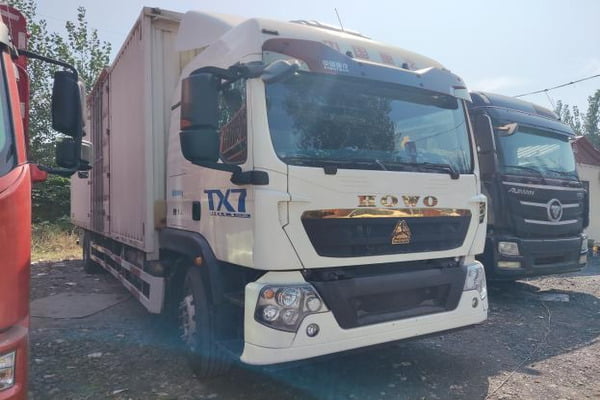
The entry price difference between a comparable used HOWO and a used Mercedes-Benz Actros or Axor is real and consistent[1]. Used HOWO trucks in the 375–420HP range typically trade at significantly lower prices than equivalent Mercedes-Benz units in the same age bracket. That gap funds spare parts, fuel reserves, or additional units.
Why the Purchase Price Gap Matters More Than It Looks
The lower acquisition cost of a used HOWO is not just a one-time saving. It has compounding effects across the ownership cycle:
- Lower depreciation base. A truck that costs less to buy loses less absolute value over time, even if the percentage depreciation rate is similar.
- Lower break-even mileage. Fleet operators need fewer revenue kilometers to recover their initial investment on a lower-cost unit.
- Faster fleet scaling. Buyers procuring five HOWO trucks for the price of three Mercedes-Benz units may generate more revenue capacity, even if per-unit fuel costs are slightly higher.
That said, this logic has a ceiling. If the lower-cost truck generates significantly more downtime or requires more expensive repairs per kilometer, the purchase price advantage erodes. The relevant comparison is total cost of ownership (TCO) over a defined operating period, not sticker price.
A useful framing I use with buyers:
If the HOWO purchase price saving equals 18–24 months of average fuel and maintenance cost difference, you need to operate the truck for more than two years without a major reliability disadvantage to justify the Mercedes-Benz premium.
In most emerging market use cases we see, that math tends to favor HOWO — but it does not always.
Which Brand Has Lower Fuel and Maintenance Costs?
This is the question buyers think they want answered. The actual answer depends on which cost category dominates your operation — and that depends on your route profile and load type.
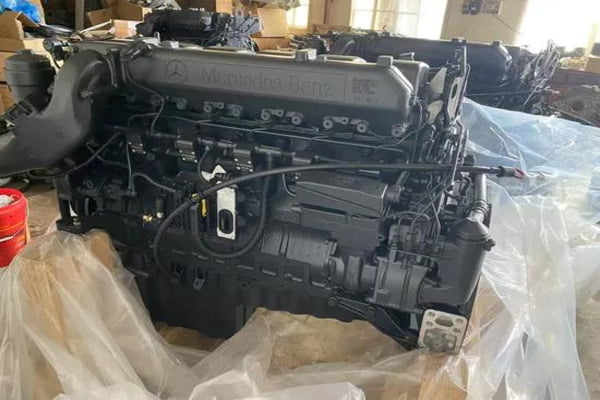
Fuel costs and maintenance costs move in opposite directions across these two brands. Mercedes-Benz engines, particularly the OM926 and OM457 series commonly found in used Actros and Axor units, are consistently reported by operators in long-haul markets as more fuel-efficient under highway conditions[2]. HOWO powertrains — typically Weichai, Sinotruk D12, or sourced Cummins — tend to show higher fuel consumption per 100km on sustained highway runs[3], though the gap narrows under stop-start or rough-terrain conditions.
Fuel Cost: Where Mercedes-Benz Often Has an Edge
Buyers in long-haul freight — particularly trans-continental routes in West Africa or Southeast Asian inter-city haulage — often report meaningful fuel consumption differences. Reference figures from operator feedback and supplier data suggest:
| Truck Type | Typical Fuel Consumption (Highway) | Notes |
|---|---|---|
| HOWO 375–420HP (Weichai/Sinotruk) | 30–38 L/100km | Varies significantly by load and road condition |
| Mercedes-Benz Actros 400–440HP (OM457) | 26–32 L/100km | Typically reported on paved long-haul routes |
These are reference ranges, not tested measurements. Actual consumption depends on vehicle condition, load factor, driver behavior, and road surface. In rough-terrain or urban cycle conditions, the difference compresses considerably.
At a diesel price of USD 1.20/L and 100,000km per year, a 5 L/100km consumption difference translates to roughly USD 6,000 per year per truck. Over a five-year operating life, that is USD 30,000 — enough to close a significant portion of the purchase price gap.
Maintenance Cost: Where HOWO Typically Has an Edge
Parts cost is where HOWO consistently outperforms in the markets we serve. The reasons are structural:
- Parts are manufactured at scale in China, with a large secondary market for compatible components.
- Distribution infrastructure across Sub-Saharan Africa, Southeast Asia, and Central Asia has expanded significantly over the past decade.
- Standardization across HOWO models means a narrower parts catalog covers a larger number of trucks.
For a Mercedes-Benz, especially older Actros or Axor units, genuine parts sourced locally in many emerging markets carry a significant premium. Buyers in inland African markets have told us that a Mercedes-Benz differential repair can cost three to four times more than an equivalent HOWO repair — not because the labor is harder, but because parts are imported and scarce[4].
The Key Variables That Shift This Calculation
- Mileage history on a used unit. A high-mileage Mercedes-Benz that has been well-maintained may still cost less to maintain than a lower-mileage HOWO that has been abused. The brand comparison becomes secondary to inspection quality.
- Driver skill and maintenance culture. Mercedes-Benz powertrains often have tighter tolerance requirements. In markets where maintenance practices vary widely, HOWO's simpler mechanical architecture may result in fewer operator-induced failures.
- Age of the used unit. Pre-Euro IV Mercedes-Benz trucks are simpler and cheaper to maintain than post-emission-control units. Buyers considering newer used Mercedes-Benz vehicles with SCR or EGR systems should factor in the cost and availability of those system components in their local market.
Which Brand Fits Your Operating Scenario?
We often get asked to name a winner. We decline to do that, because the right answer is genuinely different depending on the buyer's situation. Instead, we use a scenario matrix.
This is a simplified version of the framework we walk buyers through before recommending a sourcing direction.
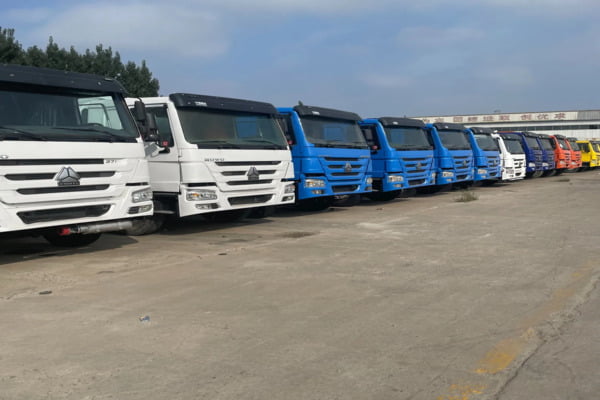
Scenario 1: Short-Haul Construction or Mining (Dump Trucks, Heavy Off-Road)
Profile: 50–150km daily range, unpaved roads, frequent load/unload cycles, rough terrain, local repair shops.
Relevant cost drivers: Parts availability and repair turnaround time dominate. Fuel efficiency is less critical because load cycles reduce highway fuel savings. Downtime cost is high.
Typical outcome: HOWO tends to produce lower operating costs in this scenario. Parts are available locally in most HOWO-dense markets. Repair time is shorter. The truck's simpler drivetrain tolerates rougher maintenance environments.
Buyer caution: Verify that your specific region has HOWO parts density. Parts availability varies considerably between, say, Lagos and an inland mining site in the DRC.
Scenario 2: Long-Haul Freight (Tractor-Trailer, Trans-Regional)
Profile: 500–1,500km routes, paved or semi-paved highways, consistent high-speed cruising, formal maintenance infrastructure available.
Relevant cost drivers: Fuel consumption is a major cost component. Engine reliability over high mileage matters. Resale value at the end of the operating cycle may be a meaningful recovery.
Typical outcome: Mercedes-Benz units are more competitive here, particularly in markets where fuel costs are high and formal service networks exist — parts of the Middle East, North Africa, or Southeast Asia with established European truck dealer networks. Buyers in these markets often report that Mercedes-Benz operating costs converge toward HOWO levels when fuel savings are fully accounted for.
Buyer caution: The used Mercedes-Benz unit must have verifiable mileage history and a clean pre-purchase inspection. A high-mileage Actros with unknown service records can generate repair costs that negate every efficiency advantage.
Scenario 3: Mixed Fleet in a Price-Sensitive Market
Profile: Buyer operates both construction and freight work, budget-constrained, parts ecosystem is HOWO-dominant, limited access to European brand dealers.
Relevant cost drivers: Fleet standardization reduces training and parts inventory complexity. Parts cross-compatibility matters. Total capital deployment across the fleet matters as much as per-unit efficiency.
Typical outcome: HOWO-dominant fleet produces lower total operating cost because of parts standardization and lower downtime risk. Adding Mercedes-Benz units creates a parallel parts supply chain that increases inventory cost and complexity.
Buyer caution: If the fleet already includes Mercedes-Benz units and those relationships with local suppliers are established, this logic partially reverses. Switching fleets incurs transition cost.
Does the Used Truck Condition Matter More Than the Brand?
Yes — and this is the point most comparison articles skip entirely. In the used truck market, individual vehicle condition variability will often produce larger cost differences than brand preference.
A well-maintained, lower-mileage used HOWO with documented service records and a passed pre-shipment inspection will almost always outperform a neglected, high-mileage Mercedes-Benz on operating cost. The brand gap is real but second-order. The inspection quality is first-order.
What a Pre-Purchase Inspection Should Cover for Either Brand
When we conduct pre-shipment inspections on used trucks at our yard, we evaluate the following categories regardless of brand:
Engine and Drivetrain
- Compression test results
- Oil pressure and coolant temperature readings under load
- Transmission shift quality and synchronizer condition
- Rear axle oil condition and differential noise
Frame and Structural
- Chassis crack inspection
- Cab mounting condition
- Fifth wheel or dump body mounting integrity
Electrical and Electronics
- ECU fault code read (critical for post-2010 Mercedes-Benz units with complex electronics)
- Instrument cluster function
- ABS system status
Consumables and Wear Items
- Brake lining thickness
- Tire tread and sidewall condition
- Clutch engagement point
For Mercedes-Benz units specifically, ECU diagnostics are particularly important. Fault codes from EGR, SCR, or AdBlue systems can indicate impending repair requirements that are expensive to address in markets without Mercedes-Benz diagnostic tooling[5].
For HOWO units, the most common pre-purchase red flags we see are gearbox wear on high-mileage units and engine block condition on trucks that have been run on low-quality fuel.
The practical implication: Two trucks of the same brand and model can have operating cost differences of 30–40% over two years based on condition alone[6]. Buyers who make brand comparisons without rigorous inspection frameworks are solving the wrong problem.
Frequently Asked Questions
Is HOWO cheaper to maintain than Mercedes-Benz in Africa?
In most Sub-Saharan African markets, yes — HOWO parts are more widely available and significantly cheaper than Mercedes-Benz parts at the local level. However, this varies by country and city. Buyers should verify local parts availability before assuming HOWO infrastructure is in place in their specific location.
Does Mercedes-Benz hold its resale value better than HOWO?
In markets with established European truck demand — parts of North Africa, the Middle East, and some Southeast Asian countries — used Mercedes-Benz trucks often command better resale prices[7]. In Sub-Saharan Africa and Central Asia, HOWO resale markets are generally more liquid. Resale value is market-specific, not brand-universal.
How many kilometers should a used HOWO or Mercedes-Benz have before it becomes a high-risk purchase?
There is no universal mileage threshold. Maintenance quality matters as much as mileage. A well-maintained HOWO at 500,000km may present lower risk than a neglected unit at 200,000km. Buyers should prioritize inspection results over odometer readings, while treating mileage as a flag to investigate further rather than a hard cutoff.
Can I mix HOWO and Mercedes-Benz trucks in the same fleet?
Operationally yes, but it increases parts inventory complexity and requires technicians trained on two different platforms. For smaller fleets, fleet standardization — choosing one brand and sticking to it — typically reduces total maintenance cost even if the chosen brand has slightly higher per-unit costs in some categories.
Should I buy used HOWO or Mercedes-Benz if I'm building a new fleet from scratch?
Start with your local parts ecosystem. Visit local spare parts markets and ask what brands move fastest. Then match your most common route profile to the scenario framework above. Brand preference should follow those two inputs, not precede them.
Conclusion
The used SINOTRUK HOWO vs Mercedes-Benz operating cost comparison is not a question with a single answer — and any supplier who gives you one without asking about your market, routes, and local parts access is not giving you useful guidance. HOWO typically wins on purchase price and parts accessibility in HOWO-dense emerging markets. Mercedes-Benz can close or reverse that gap on long-haul, fuel-sensitive routes with available service infrastructure. In both cases, the condition of the specific used unit will likely matter more than the badge on the cab.
At Deli Auto, we have helped buyers across Africa, the Middle East, Southeast Asia, and South America navigate exactly this decision for over 20 years. We carry 200+ used trucks from both HOWO and European brands, conduct professional pre-shipment inspections, and provide honest sourcing guidance based on your actual operating context — not generic brand rankings. If you are evaluating your next truck purchase, contact us with your route profile, target market, and fleet size. We will help you find the option that actually costs less to run.
[1] "Actros vs Howo: Truck Comparison in Kenya", https://www.tiktok.com/@the.spotting1/video/7624758221785369863. Used commercial vehicle trade data and export price records from major sourcing markets, including Japan and Europe, indicate that Chinese-manufactured heavy trucks such as the SINOTRUK HOWO typically trade at lower prices than equivalent-age European-branded units, reflecting differences in new vehicle acquisition cost, brand perception, and secondary market demand. Evidence role: general_support; source type: other. Supports: Systematic price differential between used Chinese-brand and European-brand heavy trucks in emerging market trading contexts. Scope note: Price differentials vary by model year, specification, condition, and destination market; a consistent gap is a general market observation rather than a precisely quantified figure applicable across all contexts. ↩
[2] "Mercedes-Benz OM457 engine", https://en.wikipedia.org/wiki/Mercedes-Benz_OM457_engine. Manufacturer technical documentation and independent fleet studies report fuel consumption benchmarks for the OM457 engine series under sustained highway operation, providing a basis for comparative efficiency claims. Evidence role: general_support; source type: research. Supports: Fuel consumption figures for Mercedes-Benz OM457 and OM926 engines under highway load conditions. Scope note: Published figures typically reflect controlled test conditions; real-world consumption in emerging market road and load conditions may differ substantially. ↩
[3] "delivering reliable power with better fuel #efficiency", https://www.facebook.com/WeichaiGroup/posts/still-dealing-with-high-fuel-consumption-in-compact-machinery-meet-weichais-new-/122224560296098155/. Manufacturer technical specifications for the Weichai WP12 and Sinotruk D12 engine series provide reference fuel consumption figures under standard test conditions, against which operator-reported consumption in field conditions can be compared. Evidence role: general_support; source type: research. Supports: Published fuel consumption specifications or independent test data for Weichai and Sinotruk D12 engine families in heavy truck applications. Scope note: Manufacturer-published figures are derived from standardized test protocols and typically understate real-world consumption; independent third-party testing data for these engines in emerging market conditions is limited. ↩
[4] "Comparison of Maintenance Cost of Medium and Heavy-Duty ...", https://researchrepository.wvu.edu/cgi/viewcontent.cgi?article=12405&context=etd. Studies on automotive aftermarket supply chains in Sub-Saharan Africa document the price premium associated with imported European vehicle components relative to Chinese alternatives, reflecting logistics costs, import duties, and lower supply volumes. Evidence role: general_support; source type: research. Supports: Higher cost of European truck spare parts relative to Chinese truck parts in Sub-Saharan African markets due to import dependency. Scope note: Published research on this specific cost ratio is limited; available studies tend to address the broader automotive aftermarket rather than heavy truck differentials specifically. ↩
[5] "Official Xentry Diagnostics in the Middle East and Africa", https://mhhauto.com/Thread-Official-Xentry-Diagnostics-in-the-Middle-East-and-Africa?pid=2900624. Mercedes-Benz Trucks publishes its authorized dealer and service network coverage by region; in Sub-Saharan Africa and parts of Central Asia, the density of authorized service points is substantially lower than in European or Middle Eastern markets, limiting access to manufacturer diagnostic systems. Evidence role: general_support; source type: institution. Supports: Mercedes-Benz authorized service network and proprietary diagnostic tool coverage in Sub-Saharan African and other emerging markets. Scope note: Network coverage data reflects authorized dealers only and does not account for independent workshops with access to third-party diagnostic tools, which may partially offset the availability gap in some urban markets. ↩
[6] "Average Cost of Owning and Operating an Automobile", https://www.bts.gov/content/average-cost-owning-and-operating-automobilea-assuming-15000-vehicle-miles-year. Fleet management research consistently identifies vehicle condition at acquisition as a primary driver of variance in subsequent maintenance expenditure, with poorly maintained units generating disproportionately higher repair costs relative to well-maintained equivalents of the same model. Evidence role: general_support; source type: research. Supports: Vehicle maintenance history and pre-purchase condition are significant determinants of subsequent operating costs in used commercial vehicle fleets. Scope note: The specific 30–40% figure cited in the article is not directly corroborated by a single published source; the general principle is well-supported but the precise range reflects operational experience rather than a cited study. ↩
[7] "Middle East And Africa Used Car Market Size and Share", https://www.mordorintelligence.com/industry-reports/middle-east-and-africa-used-car-market. Used commercial vehicle market analyses for the Middle East and North Africa region indicate that European-branded trucks, including Mercedes-Benz, tend to command price premiums in secondary markets where established dealer networks and operator familiarity support demand. Evidence role: general_support; source type: institution. Supports: Resale price differentials between European and Chinese brand heavy trucks in Middle Eastern and North African used vehicle markets. Scope note: Systematic resale price data for heavy trucks across these regions is not uniformly published; available evidence is largely derived from trade publications and dealer surveys rather than comprehensive market databases. ↩