Which Chinese Truck Brand Is the Best?
Choosing the best Chinese truck brand can feel overwhelming when you're sourcing multiple units for a fleet or dealership overseas. The wrong choice doesn't just cost you the purchase price — it costs you months of downtime, expensive imported parts, and frustrated end-users. The answer isn't a single brand name. It's a decision framework based on your operating environment, parts availability, powertrain preference, and budget.
There is no single best Chinese truck brand. The right choice depends on where the truck will operate, what spare parts are available locally, which engine configuration fits your needs, and how much you can invest upfront. HOWO, SHACMAN, Dongfeng, and FAW each excel in different contexts. Buyers who match brand strengths to their specific market and use case consistently get better long-term value than those chasing a generic "best" label.
I've spent over two decades exporting used Chinese trucks from Guangzhou to Africa, Southeast Asia, the Middle East, and beyond. In that time, I've learned that the buyers who ask "which brand is best?" often end up less satisfied than the ones who ask "which brand is best for my situation?" Below, I'll walk you through the factors that actually determine which Chinese truck brand fits your operation — and how to avoid the most common sourcing mistakes.
Why is there no single best Chinese truck brand?
Every month, I get messages from buyers asking the same question: "Should I buy HOWO or SHACMAN?" They want a simple answer. The problem is that a simple answer leads to simple mistakes — and those mistakes become expensive on the ground.
The best Chinese truck brand varies by destination market, road conditions, cargo type, driver skill level, and local maintenance infrastructure. A brand that performs brilliantly on paved highways in Southeast Asia may underperform on unpaved mining roads in Central Africa. The "best" brand is always relative to context.
The four variables that define "best"
In our experience exporting to over 30 countries, four variables consistently determine which Chinese truck brand delivers the most value:
| Variable | Why It Matters | Example |
|---|---|---|
| Operating environment | Road quality, climate, and terrain directly affect chassis and engine stress | Mining vs. highway freight |
| Spare parts availability | Local parts access determines downtime and long-term cost | HOWO parts widely available in East Africa |
| Powertrain configuration | Engine and gearbox choice affects fuel efficiency, power output, and repair simplicity | Weichai vs. Cummins engines |
| Budget constraints | Purchase price vs. total cost of ownership over 3–5 years | Dongfeng's lower upfront cost vs. higher parts import costs in some regions |
When buyers evaluate Chinese truck brands through these four lenses instead of brand reputation alone, they make purchases they don't regret. I've seen fleet owners save tens of thousands of dollars over a fleet's lifetime simply by matching the right brand to their specific conditions.
Why brand rankings mislead B2B buyers
Online brand rankings often reflect domestic Chinese market share or manufacturer marketing budgets — not export market performance[1]. A brand that sells the most units in China may have minimal dealer or parts presence in your country. What matters is not how many trucks a brand produces globally, but how well that brand is supported where you operate.
Key takeaway: Instead of asking "which Chinese truck brand is the best," ask "which brand gives me the lowest total cost of ownership in my specific market and use case?" That reframing changes the entire purchasing decision.
Which Chinese truck brand has the best spare parts availability?
Parts availability is the single most underrated variable in Chinese truck brand selection. I've seen buyers save $3,000–$5,000 on the purchase price by choosing a less popular brand, only to spend far more on imported replacement parts over the following year. The truck you can't repair locally is the most expensive truck you'll ever own.
Based on what we've seen from buyers across Africa and Southeast Asia, HOWO (Sinotruk) currently has the widest spare parts distribution network in most major export markets[2]. FAW and Dongfeng parts are notably harder to source locally in many African and Southeast Asian countries, which raises total operating costs even when those brands offer lower upfront pricing.
HOWO's parts network advantage
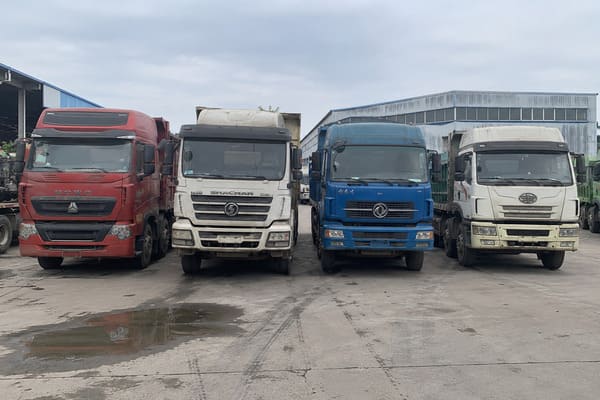
HOWO's dominance in parts availability didn't happen by accident. Sinotruk has exported aggressively for years, and the sheer volume of HOWO trucks running in markets like Tanzania, Mozambique, Nigeria, Ethiopia, the Philippines, and Vietnam[3] has created a self-reinforcing ecosystem. Local traders stock HOWO parts because there's demand. More parts availability attracts more buyers. The cycle continues.
In practical terms, this means:
- Common wear parts (brake pads, filters, clutch kits, alternators) are often available in local markets within hours, not weeks.
- Engine components for popular Weichai-powered HOWO models can be sourced without international shipping delays in many East and West African capitals.
- Cab and body parts are stocked by local fabricators and parts dealers who have built entire businesses around the HOWO platform.
How other brands compare on parts access
| Brand | Parts Availability in Africa | Parts Availability in Southeast Asia | Notes |
|---|---|---|---|
| HOWO | Widely available in most markets | Strong in Philippines, Vietnam, Myanmar | Largest aftermarket ecosystem |
| SHACMAN | Growing, but less established than HOWO | Moderate | Improving as export volumes increase |
| Dongfeng | Limited in many countries | Moderate to good in some ASEAN markets | Stronger in markets with Dongfeng dealer presence |
| FAW | Limited outside a few key markets | Limited | Buyers often need to import parts |
Important note: This table reflects our observed experience at Deli Auto based on buyer feedback and repeat orders — not a formal industry survey. Parts availability can vary significantly between cities within the same country. Always verify local sourcing options before committing to a brand.
The hidden cost calculation
I always tell buyers to think beyond the invoice price. Here's a simplified example:
- Truck A (less common brand): Purchase price $25,000. Average parts import cost per year: $4,000. Annual downtime waiting for parts: 15+ days.
- Truck B (HOWO): Purchase price $28,000. Average local parts cost per year: $1,500. Annual downtime: 3–5 days.
Over three years, Truck B costs significantly less to own and operate — and earns more revenue because it spends more time on the road. Clients who've run these calculations with us consistently choose parts availability over the lowest sticker price.
Which Chinese truck brand is best for mining and construction?
Mining and construction environments are among the harshest conditions any truck will face. Overloaded beds, unpaved roads, steep gradients, dust, and extreme heat all punish chassis, suspension, and drivetrain components relentlessly. Choosing the wrong brand for these conditions leads to cracked frames, premature transmission failure, and constant unplanned maintenance.
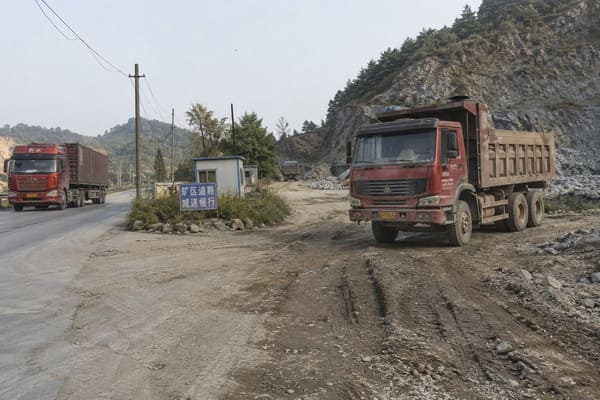
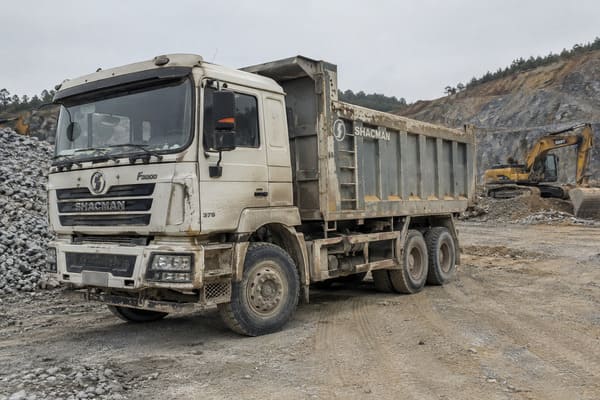
For mining and heavy off-road construction use, SHACMAN has built a strong reputation among our buyers for chassis durability and ruggedness[4]. Its frame design and suspension configuration handle rough terrain and heavy payloads particularly well, which is why we see repeat orders from mining and construction fleet operators in Africa and the Middle East.
Why SHACMAN leads in tough environments
SHACMAN (Shaanxi Automobile Group) has historically positioned itself as a heavy-duty specialist. Based on what we've seen from buyers operating in mining conditions across West Africa and Central Asia, several factors contribute to SHACMAN's performance:
- Reinforced chassis and frame — SHACMAN frames tend to handle sustained overloading better than some competitors, which is critical in markets where payload regulations are loosely enforced.
- Cummins engine availability — Many SHACMAN models are configured with Cummins ISM or ISLe engines, which offer a different torque profile and parts ecosystem compared to Weichai-equipped competitors.
- Proven track record in specific projects — We've supplied SHACMAN dump trucks to mining operations that came back for additional units after 2–3 years of hard use. That kind of repeat order is the most honest product review I know.
HOWO in construction: a competitive alternative
HOWO is no slouch in construction and mining either. The HOWO A7 and newer HOWO T7H platforms have seen extensive use in heavy-duty applications. The deciding factor often isn't chassis quality alone — it's the intersection of chassis performance and local parts access.
| Factor | SHACMAN | HOWO |
|---|---|---|
| Chassis robustness for mining | Excellent — especially 6x4 dump configurations | Very good — competitive with SHACMAN |
| Typical engine options | Cummins, Weichai | Weichai (primary), some Cummins |
| Parts availability in mining regions | Growing but behind HOWO | Stronger overall network |
| Price range (used, export) | Comparable to HOWO | Comparable to SHACMAN |
The practical decision
If your mining site is in a region where SHACMAN parts are accessible — or if you're prepared to stock critical spares in advance — SHACMAN is often the stronger choice for off-road durability. If parts sourcing is uncertain and you need maximum local support, HOWO offers a reliable alternative with a larger aftermarket network. In our experience, the buyers who get this decision right are the ones who evaluate their specific location, not just the brand badge.
Does the engine matter more than the truck brand?
This is the question that separates experienced truck buyers from first-time importers. I can't tell you how many times a buyer has called asking for "a HOWO truck" without specifying an engine preference — and then been surprised to learn that the same HOWO model can come with completely different powertrains that affect fuel economy, maintenance costs, and resale value.
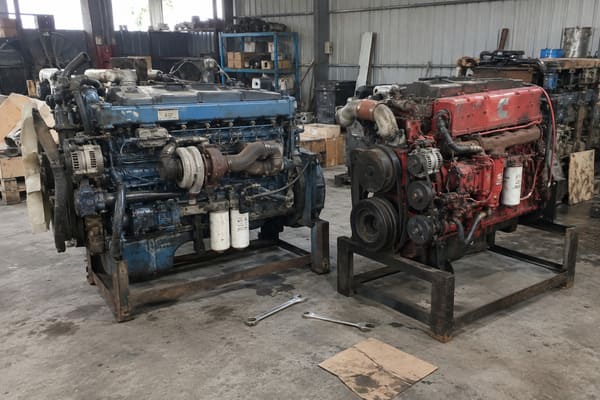
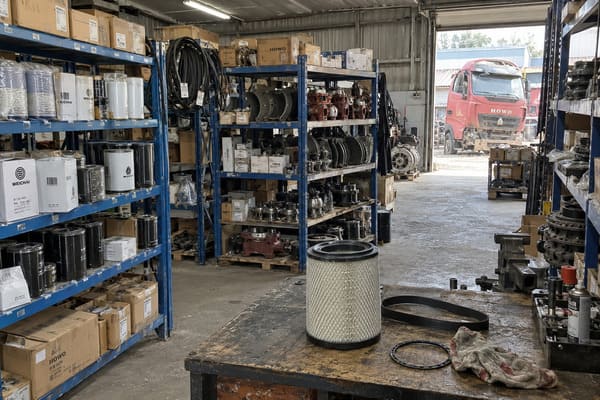
The powertrain — engine, gearbox, and axle configuration — often matters as much as or more than the brand name on the cab. A HOWO with a Weichai WP10 engine and a SHACMAN with a Cummins ISM engine are fundamentally different machines in terms of fuel consumption, torque characteristics, parts sourcing, and repair complexity. Asking about the engine is a sign of a serious buyer.
Weichai vs. Cummins: the core debate
Most Chinese trucks destined for export markets come equipped with either Weichai or Cummins engines. Each has distinct advantages:
Weichai engines (WP10, WP12, WP13 series):
- Dominant in HOWO trucks and widely used across Chinese brands
- Extremely large parts ecosystem, especially in Africa
- Generally lower parts cost
- Well-suited for standard highway and mixed-use applications
- Repair knowledge is widespread among mechanics familiar with Chinese trucks
Cummins engines (ISM, ISLe, ISZ series):
- Common in SHACMAN and some FAW/Dongfeng configurations
- International parts network extends beyond Chinese truck markets
- Often preferred for higher-horsepower heavy-duty applications
- Perceived as more fuel-efficient in some configurations (buyer reports vary)
- Mechanics trained on Cummins equipment from other brands can service these engines
Gearbox and axle considerations
The engine isn't the only powertrain variable. The gearbox and rear axle also significantly affect performance and maintenance:
- FAST gearboxes are the most common in Chinese export trucks and have extensive parts support.
- ZF gearboxes appear in some premium configurations and are valued for smoother shifting and durability, but parts cost more.
- BPW and FUWA axles are both widely used — BPW typically commands a premium but offers longer service intervals.
Pro tip: When requesting a quote from any supplier, specify your preferred engine brand, gearbox type, and axle configuration. This single step prevents mismatched expectations and ensures you receive trucks your local mechanics can maintain.
Why this matters for your purchasing decision
A buyer in Nigeria who has easy access to Weichai parts through local markets may prefer a Weichai-powered HOWO. A buyer in Saudi Arabia whose fleet already runs Cummins engines across multiple vehicle brands may prefer a Cummins-powered SHACMAN for standardized maintenance. The "best" powertrain depends on your existing maintenance ecosystem.
At Deli Auto, when we receive an inquiry, we always ask about the buyer's engine preference before recommending specific trucks from our inventory. This isn't upselling — it's risk reduction. Matching the powertrain to your local repair capacity is one of the most important steps in the procurement process.
Are Chinese trucks as good as European truck brands?
This question comes up in almost every sales conversation I have with first-time buyers. The honest answer requires redefining what "good" means — because the answer changes completely depending on where and how the truck will be used.
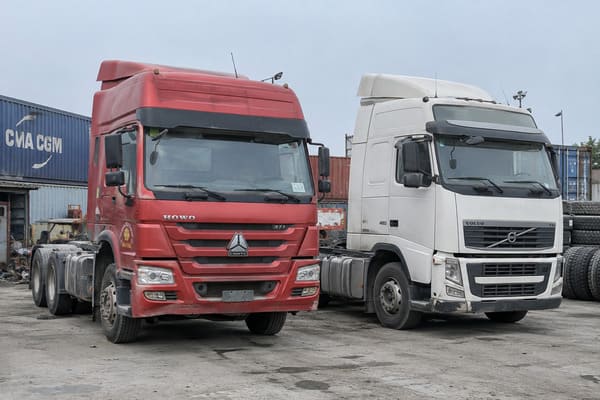
In most B2B export contexts — particularly in Africa, Southeast Asia, and the Middle East — a well-specified Chinese truck with strong local parts support often outperforms a European truck with no nearby service infrastructure. European trucks are engineered for European highway conditions, emission standards, and dealer networks[5]. When those conditions don't exist, the comparison breaks down. "Good" should be measured by uptime, maintainability, and total cost of ownership in your market — not by European highway benchmarks.
When European trucks make sense
European brands like Scania, Volvo, Mercedes-Benz, MAN, and DAF are outstanding trucks. We sell used European trucks too, and for good reason. They make sense when:
- The destination market has established dealer and service networks for the specific brand.
- The operation involves long-distance highway freight on well-maintained roads.
- The buyer can afford higher parts costs and longer parts lead times.
- Emission compliance is legally required in the destination country.
When Chinese trucks outperform
For many of our buyers, the operating reality looks very different:
- Roads are unpaved or poorly maintained — Chinese trucks are often designed with these conditions in mind.
- Overloading is common — Chinese truck frames are generally built to tolerate payload abuse that would void a European truck's warranty.
- Local mechanics have no training on European electronics — A Scania with an advanced ECU is only as good as the nearest technician who can diagnose it. A HOWO with a simpler mechanical configuration can be repaired in a roadside workshop[6].
- Parts must be sourced locally or quickly — A Chinese truck part that costs $50 and arrives in two days beats a European part that costs $300 and takes three weeks.
The real comparison framework
| Factor | Chinese Trucks (HOWO, SHACMAN, etc.) | European Trucks (Scania, Volvo, etc.) |
|---|---|---|
| Purchase price (used) | Significantly lower | Higher |
| Parts cost | Lower, especially for Weichai/FAST components | Higher |
| Local parts availability (Africa, SE Asia) | Strong for HOWO; growing for SHACMAN | Limited outside capital cities |
| Fuel efficiency on highways | Good but generally lower than European | Typically superior |
| Electronics complexity | Simpler — easier field repair | More complex — requires trained technicians |
| Durability on rough roads | Excellent when properly specified | Good, but not always designed for these conditions |
| Resale value in export markets | Strong for popular brands | High but market is smaller |
The bottom line: comparing Chinese and European trucks without defining the operating context is like comparing a pickup truck to a sedan without knowing the road. Both are good. Neither is universally better. Our job at Deli Auto is to help you match the right truck — Chinese or European — to your actual operating conditions.
Frequently Asked Questions
Which Chinese truck brand sells the most in Africa?
Based on our export experience, HOWO (Sinotruk) is currently the most widely sold Chinese truck brand across African markets. Its combination of competitive pricing, proven reliability in harsh conditions, and extensive spare parts availability in local markets has made it the default choice for many African fleet operators and truck dealers.
Is SHACMAN better than HOWO?
Neither is universally better. SHACMAN tends to perform well in mining and heavy construction due to its chassis
[1] "Trends shaping the heavy-duty-truck market in China", https://www.mckinsey.com/industries/automotive-and-assembly/our-insights/a-new-era-trends-shaping-chinas-heavy-duty-trucking-industry. The China Association of Automobile Manufacturers (CAAM) publishes monthly and annual commercial vehicle sales rankings based on domestic registration and production data, which do not incorporate export market performance metrics or after-sales support quality in destination countries. Evidence role: general_support; source type: institution. Supports: Chinese truck market share rankings are based on domestic sales volumes reported by industry associations. Scope note: This source supports the claim that domestic rankings use domestic data, but does not directly address whether marketing budgets influence published rankings. ↩
[2] "Why Sinotruk HOWO Dump Trucks Are the Top Choice for ...", https://sinotruksgroup.com/why-choose-sinotruk-howo-dump-trucks-mining-construction/. Sinotruk's annual reports and trade data from China's Ministry of Commerce document the company's export volumes by region, providing context for aftermarket parts ecosystem development in high-volume markets. Evidence role: general_support; source type: research. Supports: Sinotruk's export volumes and market penetration in African and Southeast Asian markets. Scope note: Export volume data does not directly measure parts network density; aftermarket availability is an indirect inference from fleet size. ↩
[3] "China Bodies for tractors, buses, trucks and special exports by country", https://wits.worldbank.org/trade/comtrade/en/country/CHN/year/2023/tradeflow/Exports/partner/ALL/product/870790. China's General Administration of Customs trade statistics and UN Comtrade data record commercial vehicle export volumes by destination country, providing quantitative context for Chinese truck brand penetration in markets including sub-Saharan Africa and Southeast Asia. Evidence role: statistic; source type: government. Supports: Chinese commercial vehicle export volumes to African and Southeast Asian markets. Scope note: Aggregate trade statistics record vehicles by HS code and country of origin rather than by brand, requiring additional disaggregation to confirm brand-specific fleet size in individual countries. ↩
[4] "Shaanxi Automobile Group", https://en.wikipedia.org/wiki/Shaanxi_Automobile_Group. Shaanxi Automobile Group's published technical documentation and product positioning materials describe the company's engineering focus on heavy-duty and off-road applications, consistent with its historical market segmentation. Evidence role: general_support; source type: institution. Supports: SHACMAN's positioning as a heavy-duty specialist and its chassis engineering specifications for off-road applications. Scope note: Manufacturer technical documentation reflects intended design parameters rather than independently verified field performance under specific operating conditions. ↩
[5] "European emission standards", https://en.wikipedia.org/wiki/European_emission_standards. European Union regulations, including Euro VI emission standards under Regulation (EC) No 595/2009, establish the technical requirements that European truck manufacturers must meet, directly influencing powertrain design and emissions control system complexity. Evidence role: historical_context; source type: government. Supports: European emission and vehicle standards that shape the design requirements for trucks sold in the European market. Scope note: Regulatory compliance requirements explain emissions-related design choices but do not fully account for all engineering decisions related to road conditions or dealer network assumptions. ↩
[6] "Chinese Electric Trucks Enter European Market with ...", https://www.linkedin.com/posts/wolfganglehmacher_european-freight-truck-makers-brace-for-wave-activity-7450845560145776640-DlEU. Research on vehicle technology adoption in developing markets has documented that advanced electronic control systems in commercial vehicles create maintenance barriers in regions with limited technician training and diagnostic equipment availability. Evidence role: general_support; source type: research. Supports: The relationship between vehicle electronics complexity and maintainability in markets with limited technical infrastructure. Scope note: General findings on vehicle complexity and maintainability may not directly compare specific Chinese and European truck models; the gap is narrowing as Chinese trucks adopt more advanced electronics. ↩