Buying a used truck from China looks straightforward until something goes wrong. Buyers focused on price and delivery dates often skip the steps that actually protect them — supplier verification, specification matching, and structured payment. By the time the mistake is visible, the money is usually gone.
Buying a used truck from China is not primarily a product decision. It is a supplier vetting, specification-matching, and risk sequencing decision. The most costly mistakes happen before a specific truck is even chosen. Buyers who understand this reframe their process — and consistently arrive at better outcomes than those who lead with price.
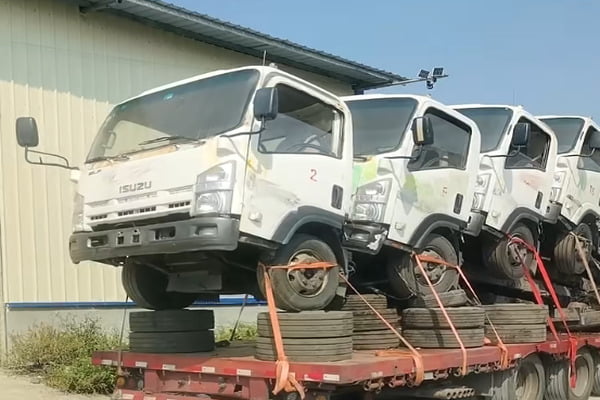
These mistakes are not rare edge cases. They come up repeatedly in the consultation requests and buyer conversations we handle at Deli Auto. What follows is an honest breakdown of where buyers lose money — and why it keeps happening.
Are Photos and Videos Enough to Verify a Used Truck's Condition?
Buyers receive a folder of photos and a short walkthrough video. The truck looks clean. The engine bay looks tidy. The seller answers questions quickly. It feels like enough information to move forward. But once payment clears, that moment of verification is gone permanently.
Photos and videos are marketing materials, not mechanical inspections. They show what a seller chooses to show. They cannot reveal engine compression, transmission wear, frame cracks, or past accident history[1]. Treating seller-provided media as a substitute for third-party or on-site inspection is the single most common source of post-arrival disputes we hear about.
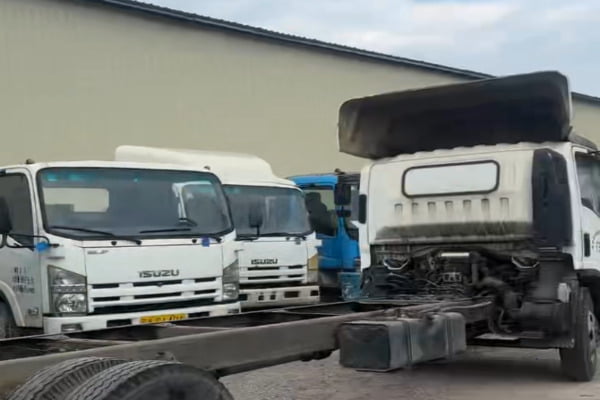
The problem is not that buyers are naive. It is that good-quality photos are genuinely convincing — and sellers know this.
What Photos Cannot Show
From what we consistently see in pre-shipment documentation and buyer feedback, the following issues almost never appear in seller-provided media:
- Engine internal wear — compression loss, oil consumption, and bearing wear are invisible from the outside
- Transmission slippage — a truck can shift smoothly during a short video clip and fail under load
- Frame fatigue or repair welds — particularly common in trucks with heavy construction or mining history
- Electrical faults — dashboard warning lights are easy to clear before filming[2]
- Odometer discrepancy — displayed mileage can be rolled back; wear patterns tell a different story
What a Real Pre-Shipment Inspection Covers
An inspection worth relying on does several things that photos simply cannot replicate:
- Engine running test — checking oil pressure, coolant temperature, and exhaust smoke under load
- Road or yard drive test — assessing transmission engagement, brake response, and steering play
- Visual undercarriage inspection — frame condition, suspension components, axle seals
- Document verification — matching the VIN, engine number, and registration paperwork
- Fluid analysis check — looking for contamination or mixing that indicates hidden repairs
Buyers have two realistic options: arrange an independent third-party inspector in China, or work with a supplier who conducts documented pre-shipment inspections as a standard process. Neither option is perfect, but both are meaningfully better than trusting a video.
From our experience handling pre-shipment processes, the trucks that generate post-arrival complaints are almost always ones where no independent inspection happened before payment.
The decision point is irreversible. Once full payment transfers, your negotiating position disappears. This is worth repeating because buyers regularly tell us they knew inspection was important but assumed the seller was trustworthy. Trust is not a mechanical standard.
Is the Lowest Price Really the Best Deal When Buying from China?
Every buyer wants competitive pricing. That is rational. But in the used truck export market from China, the lowest quote is often not a reflection of better sourcing — it is a signal about what the supplier is and is not capable of delivering.
The lowest quote frequently comes from middlemen with no real stock, no export license, and no logistical infrastructure. The result is not a discount — it is delayed shipment, substituted units, or total payment loss. Supplier vetting should happen before price comparison, not after.
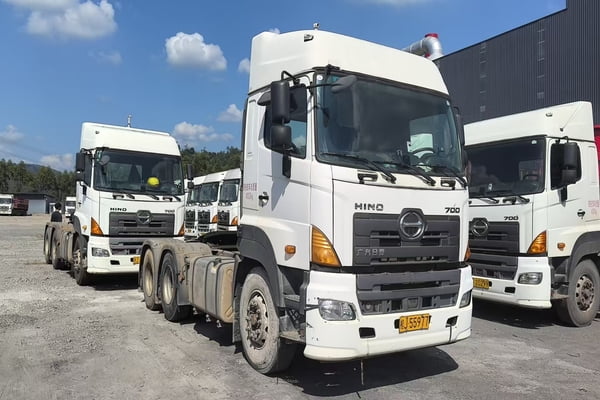
This is one of the patterns we hear about most in first consultations with new buyers. The sequence is almost always the same: buyer finds lowest price, skips verification, pays deposit, then waits.
Why Low-Price Suppliers Create High-Risk Situations
There is a structural reason this happens repeatedly. The used truck export market in China has a significant number of intermediaries — individuals or small trading companies who list trucks they do not physically own[3]. When an order comes in, they attempt to source and fulfill it on the spot. This works occasionally. It fails often enough to be a real pattern.
| Supplier Type | Typical Characteristics | Risk Level |
|---|---|---|
| Verified exporter with warehouse | Own stock, export license, inspection capacity | Lower |
| Trading company with partnerships | Depends on partnership quality, less control | Medium |
| Individual agent or broker | No stock, no logistics, price-focused | Higher |
| Unverified online listing | Unknown structure, no accountability | High |
What to Verify Before Discussing Price
Buyers who've worked with us have learned to ask these questions before entering price negotiation:
- Does the supplier have a physical warehouse? Request address and photos with date-stamped signage.
- Can they show export documentation from previous shipments? Bill of lading copies, customs declarations.
- Are they registered as a trading or import-export company? Chinese business registration is publicly verifiable[4].
- How long have they been exporting used trucks specifically? General trading experience is not the same.
- Can they provide references from buyers in your region?
None of these checks guarantee a perfect transaction. But a supplier who cannot answer these questions has already told you something important. Price negotiation with an unverifiable supplier is not negotiation — it is exposure.
Does It Matter Which Truck Brand You Choose for Your Market?
Buyers often approach brand selection the way they approach consumer purchases — by looking for the most reputable name or the brand they have heard good things about. This logic does not transfer well to commercial vehicle procurement across international markets.
The right question is not "which brand is better?" It is "which brand can actually be maintained where I operate?" A truck with no spare parts availability, no trained mechanics, and no compatible diagnostic tools in your country is a liability regardless of its original build quality.
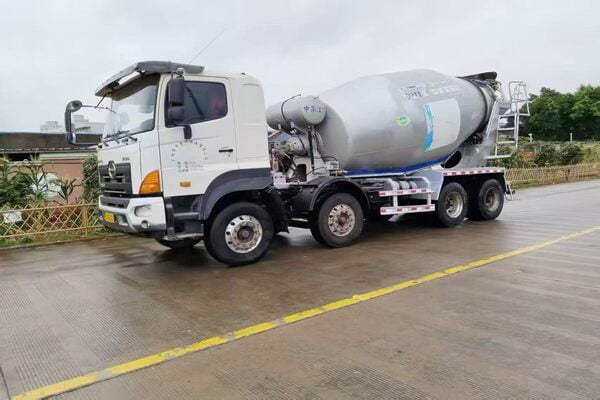
We hear this mistake most often from buyers in Africa and Southeast Asia evaluating Chinese domestic brands for the first time. The issue is not the trucks — it is the fit between the truck and the local support ecosystem.
Brand Familiarity vs. Brand Fit
There is a meaningful difference between these two concepts:
- Brand familiarity is what you know from your home market or from seller recommendations
- Brand fit is whether the truck integrates into your operational reality — parts supply chain, mechanic training, diagnostic tools, and warranty infrastructure
A Scania or Volvo truck may have strong brand familiarity in many markets, but spare parts availability varies significantly by country[5]. Equally, a HOWO or SHACMAN truck may perform well in certain African or Central Asian markets precisely because local distributors have built supply chains around them over years.
Questions to Ask Before Selecting a Brand
Before committing to a brand, buyers should investigate their own market:
- Are spare parts for this brand sold locally, or must they be imported?
- Are there mechanics with specific training or experience with this brand in your region?
- Is there a local dealer or distributor who can support with diagnostics?
- What do other operators in your country run — and why?
- For Chinese domestic brands, has the exporter shipped this brand to your country before?
The fourth question is often the most practical. What fleets currently operating in your market are running tells you something about what actually functions in that environment[6]. This is not a brand ranking exercise — it is an operational fit assessment.
Are Payment Terms Just a Financial Preference?
Many buyers treat payment structure as a negotiation point about cash flow — how much they want to pay upfront versus how much they want to hold back. In reality, payment terms are a risk architecture decision. The structure of a payment determines your options if something goes wrong.
Paying 100% upfront to an unverified supplier with no inspection clause and no contract is a single point of failure[7]. Structured payments tied to documented milestones — pre-shipment inspection, bill of lading, or confirmed container loading — are standard practice in legitimate exports. Skipping this structure leaves buyers with no recourse.
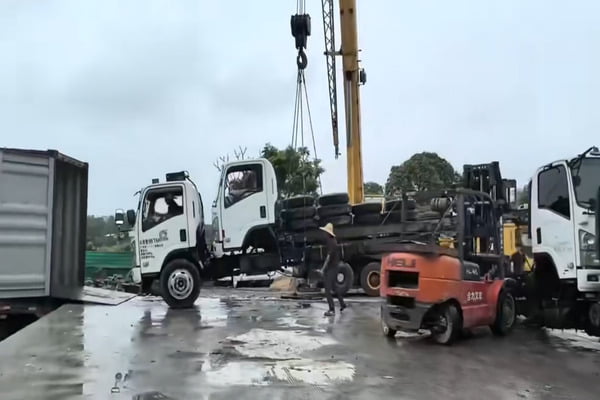
This is perhaps the most uncomfortable mistake to write about because it is also the most financially catastrophic when it occurs. And it occurs regularly.
How Payment Structure Connects to Risk
The function of staged payments is not about trust — it is about maintaining leverage at each stage of a transaction. Consider the difference:
| Payment Structure | Buyer's Position If Problem Occurs |
|---|---|
| 100% upfront, no contract | No leverage, no documentation, no recourse |
| 30% deposit, 70% before shipping | Partial exposure; can halt second payment if inspection fails |
| Deposit + inspection milestone + B/L release | Documented verification at each stage |
| Letter of credit (for large orders) | Bank-mediated release tied to shipping documents |
What Contract and Payment Terms Should Include
From what we handle in export documentation at Deli Auto, a legitimate transaction should include at minimum:
- Written contract specifying truck identification (VIN, engine number), agreed condition standard, and delivery timeline
- Inspection clause — defining who conducts inspection and what constitutes acceptance
- Payment milestones tied to verifiable events, not just calendar dates
- Dispute resolution — even a basic written agreement about what happens if something does not match description
- Bank wire with traceable records — not informal payment channels
Buyers sometimes accept weaker terms because they feel pressure to move quickly or because the seller presents full upfront payment as "how we work." Both are worth treating as warning signals rather than normal conditions.
Frequently Asked Questions
How do I verify a used truck supplier in China without traveling there?
Request their business registration number and verify it through official Chinese company registries. Ask for photos and video of the physical warehouse with current date-stamped signage. Request copies of previous export documents — bill of lading, packing list — from similar shipments. Reputable suppliers provide this documentation without hesitation.
What third-party inspection options exist for used trucks in China?
Several international inspection companies operate in China, including SGS, Bureau Veritas, and CCIC[8]. Independent Chinese inspection agencies also exist. Some exporters conduct their own documented inspections and share reports — buyers should evaluate the depth of these reports rather than treating their existence as automatic verification.
Which Chinese truck brands have the best spare parts availability internationally?
This depends heavily on your specific market. HOWO, SHACMAN, FAW, and Dongfeng have established distribution networks in parts of Africa, the Middle East, and Southeast Asia[9] — but coverage varies significantly by country. Research what brands are already operating in your market before making a selection, and ask any supplier whether they have shipped that brand to your destination before.
Is it safe to buy a used truck from China without visiting in person?
It carries more risk than an on-site visit. If travel is not possible, the risk mitigation options are: independent third-party inspection, working with a supplier who conducts and documents pre-shipment inspection as standard practice, and structured payment terms tied to inspection milestones and shipping documents. No remote process eliminates risk entirely — it only manages it.
What documents should I receive before a used truck from China ships?
At minimum: commercial invoice, packing list, bill of lading, and the truck's title or registration documents. For used trucks, you should also receive the VIN and engine number matched to the paperwork, and an inspection report if one was conducted. Customs clearance in your destination country may require additional certificates — confirm requirements before the truck ships.
Conclusion
Buying a used truck from China involves real, manageable risk — but only if buyers address that risk at the right stage. The most expensive mistakes consistently happen before a truck is selected: skipping supplier verification, relying on photos instead of inspection, choosing a brand without researching local serviceability, and accepting payment terms that leave no recourse. These are not abstract concerns. They come up repeatedly in the conversations and consultation requests we handle at Deli Auto.
The buyers who navigate this process well are not the ones who find the lowest price. They are the ones who vet the supplier first, confirm the specification fits their market, and build payment structure around documented milestones.
If you are evaluating suppliers for your next used truck purchase from China and want to discuss what a properly documented transaction looks like, we are available for consultation — with no obligation to purchase.
[1] "5.2.2 Vehicle Inspections - CSA - Department of Transportation", https://csa.fmcsa.dot.gov/safetyplanner/MyFiles/SubSections.aspx?ch=22&sec=65&sub=148. Industry inspection standards bodies and automotive engineering literature consistently note that internal mechanical conditions—including engine compression, drivetrain wear, and structural fatigue—cannot be reliably assessed through visual or photographic means alone, requiring dynamic testing and physical measurement. Evidence role: expert_consensus; source type: institution. Supports: That visual and photographic inspection of used vehicles is insufficient to detect internal mechanical defects such as compression loss, transmission wear, and structural damage. Scope note: Most published standards address passenger vehicles or general commercial vehicles; heavy truck-specific inspection protocols may differ in scope and terminology. ↩
[2] "Where to file a complaint about your car", https://www.usa.gov/car-complaints. Automotive diagnostic literature and consumer protection guidance note that on-board diagnostic systems allow fault codes to be cleared independently of repair, meaning warning indicators may be absent at the time of inspection despite underlying mechanical faults remaining unresolved. Evidence role: mechanism; source type: research. Supports: That diagnostic warning lights on vehicles can be electronically cleared without resolving the underlying fault, and that this practice is used to misrepresent vehicle condition. Scope note: Published sources typically address this in the context of emissions testing fraud rather than export sales specifically; the mechanism is the same but the commercial context differs. ↩
[3] "China Auto Data Market", https://www.trade.gov/market-intelligence/china-auto-data-market. Research on Chinese export trade structures and used vehicle market organization documents the prevalence of multi-tier intermediary chains in commodity export sectors, including used machinery and vehicles, where trading companies frequently act as brokers between end buyers and physical stock holders without maintaining their own inventory. Evidence role: general_support; source type: research. Supports: That the Chinese used vehicle export market includes a substantial layer of trading intermediaries who do not hold physical inventory and source vehicles on demand after receiving orders. Scope note: Specific quantitative data on the proportion of used truck exporters operating without physical stock is not available in published academic or government sources; the characterization is supported by trade structure research rather than sector-specific measurement. ↩
[4] "China National Enterprise Credit Information System in ...", https://chinesecheck.com/blog/china-enterprise-credit-information-english. China's State Administration for Market Regulation (SAMR) operates the National Enterprise Credit Information Publicity System (国家企业信用信息公示系统), which provides public access to registered company information including business scope, registration status, and legal representative details. Evidence role: general_support; source type: government. Supports: That Chinese business registration records are publicly accessible through official government systems. Scope note: The system is primarily in Chinese; foreign buyers may require translation assistance, and the depth of information available varies by company type and registration jurisdiction. ↩
[5] "🚛 QUALITY SERVICE PARTS FOR SCANIA & VOLVO ...", https://www.facebook.com/QualitySparePartsNAM/posts/-quality-service-parts-for-scania-volvo-truckskeep-your-trucks-moving-with-the-r/122160761432995836/. Studies on commercial vehicle total cost of ownership in developing markets note that after-sales infrastructure—including spare parts availability, authorized service networks, and technician training—varies substantially by country for European truck brands, with coverage concentrated in urban centers and major trade corridors. Evidence role: general_support; source type: research. Supports: That after-sales parts availability for European commercial vehicle brands is uneven across international markets, particularly in developing economies. Scope note: Published research on this topic is limited; most available evidence is from industry reports or development finance institution assessments of transport sector infrastructure rather than peer-reviewed academic sources. ↩
[6] "Category Management Buying Guide", https://www.acquisition.gov/sites/default/files/page_file_uploads/category-management-buying-guide.pdf. Fleet management and transport economics literature identifies after-sales ecosystem compatibility—including parts availability, technician familiarity, and dealer network proximity—as a primary determinant of total cost of ownership for commercial vehicles, supporting the use of locally incumbent brands as a proxy for operational suitability in markets with limited service infrastructure. Evidence role: expert_consensus; source type: research. Supports: That selecting commercial vehicle brands already established in a target market reduces operational risk by leveraging existing parts supply chains, trained mechanics, and service infrastructure. Scope note: This principle is well-supported in fleet management literature generally but is rarely studied specifically in the context of used vehicle imports from China to developing markets. ↩
[7] "What To Know Before You Wire Money", https://consumer.ftc.gov/articles/what-know-you-wire-money. International trade law frameworks, including the UN Convention on Contracts for the International Sale of Goods (CISG), establish that enforceable buyer remedies in cross-border transactions depend substantially on documented contractual terms; absent written agreements specifying condition standards and remedies, buyers face significant practical and legal barriers to recovery following payment. Evidence role: general_support; source type: institution. Supports: That buyers who make full upfront payment without written contracts or inspection clauses have severely limited recourse options in international commercial disputes. Scope note: CISG applicability depends on the jurisdictions of both parties and whether they have opted into the convention; practical enforcement of any remedy across international borders remains difficult regardless of legal framework. ↩
[8] "List of Best Inspection Company in China: Top 16 Quality ...", https://www.testcoo.com/en/blog/list-of-best-inspection-company-in-china. SGS, Bureau Veritas, and CCIC (China Certification & Inspection Group) are internationally recognized testing, inspection, and certification bodies with documented operations in China; their pre-shipment inspection services are used across multiple commodity categories in Chinese export trade. Evidence role: general_support; source type: institution. Supports: That internationally recognized third-party inspection organizations maintain operational presence in China and offer pre-shipment inspection services. Scope note: The availability and scope of used heavy vehicle inspection services specifically may vary by location and must be confirmed directly with each provider; not all branches offer mechanical vehicle inspection. ↩
[9] "Thinking about buying a heavy-duty truck from China? 🇨🇳 ...", https://www.facebook.com/easytradeeasyworld/videos/thinking-about-buying-a-heavy-duty-truck-from-china-here-are-6-chinese-truck-bra/29188268400758607/. Trade and industry research on Chinese commercial vehicle exports documents significant market penetration by brands including HOWO (Sinotruk), SHACMAN, FAW, and Dongfeng in sub-Saharan Africa, the Middle East, and Southeast Asia, supported by authorized distributor networks established over the preceding two decades. Evidence role: general_support; source type: research. Supports: That Chinese heavy truck manufacturers including HOWO, SHACMAN, FAW, and Dongfeng have developed commercial distribution and after-sales infrastructure in African, Middle Eastern, and Southeast Asian markets. Scope note: Distribution network depth varies substantially by country within each region; aggregate export data does not confirm parts availability or service quality at the local level. ↩