Choosing between the Cummins 6BT and 6CT engine is one of the most common decisions heavy truck buyers face — and one of the most misunderstood. Many buyers focus on displacement and rated power, then discover too late that the engine they selected fights their operating environment at every turn. The real risk is not buying a weak engine. It is buying the wrong engine for the wrong duty cycle.
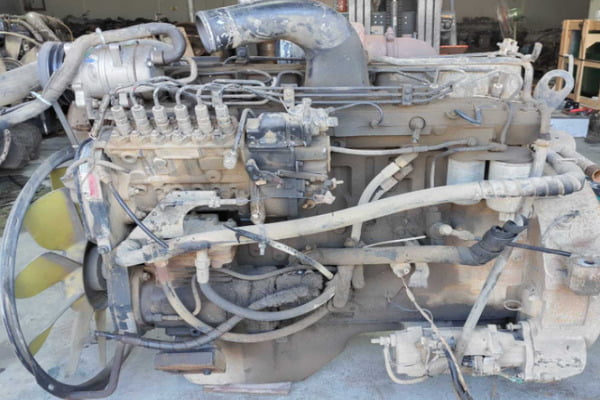
The Cummins 6BT and 6CT are both proven inline-six diesel engines from the B-series family, but they are designed for different load patterns. The 6BT (5.9L) delivers strong low-end torque suited to high-intensity, intermittent heavy-load applications like construction and mining[1]. The 6CT (8.3L) offers higher sustained output suited to long-haul highway operations[2]. Neither is categorically better — the right choice depends entirely on your operating scenario.
Understanding why these two engines behave differently in real-world conditions takes more than reading a datasheet. The differences in displacement, torque curve, wear patterns, and parts availability each carry procurement consequences that only become visible once a truck is running in your market. Let me walk through each of those dimensions carefully.
What Are the Core Differences Between the 6BT and 6CT?
Many buyers approach this question expecting a simple answer: bigger engine, more power, better truck. In practice, the differences between the 6BT and 6CT go beyond the numbers and reflect genuinely different engineering priorities.
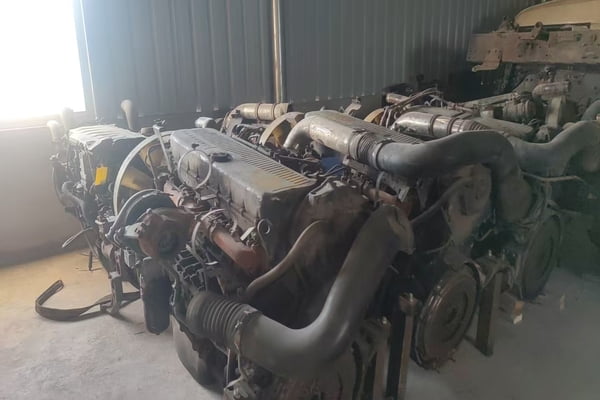
The 6BT (5.9L displacement) and 6CT (8.3L displacement) share a common architecture, but the 6CT's larger bore and stroke produce meaningfully different torque delivery, thermal load, and long-term wear behavior. Knowing which design fits your application is the first step toward a sound procurement decision.
Key Specifications in Context
Rather than presenting the numbers in isolation, here is how the specs translate into operating behavior:
| Parameter | Cummins 6BT | Cummins 6CT |
|---|---|---|
| Displacement | 5.9L | 8.3L |
| Typical rated power | 105–132 kW (140–180 hp) | 150–194 kW (205–260 hp) |
| Peak torque range | 490–678 Nm | 678–1,085 Nm |
| Governed speed | ~2,500 rpm | ~2,100 rpm |
| Engine weight (approx.) | ~430 kg | ~590 kg |
| Common emission standard | Euro II / Euro III | Euro II / Euro III |
The 6BT runs at a higher governed speed and produces its torque across a wider RPM band. This makes it responsive and punchy under sudden load changes — exactly what happens when a dump truck accelerates away from a loading point on a rutted mine road.
The 6CT produces more total torque, but it delivers that torque most efficiently at moderate, sustained RPM. It is calibrated for consistent output over long distances, not for the burst-and-recover pattern of short-cycle heavy work.
What This Means for Vehicle Matching
The 6BT is commonly fitted to:
- Light-to-medium dump trucks (8–15 ton payload class)
- Construction machinery carriers and flatbed rigids
- Short-haul cargo trucks in urban freight
- Medium bus chassis in some markets
The 6CT is commonly fitted to:
- Heavy tractor trucks and semi-trailer combinations
- Heavy dump trucks (20+ ton payload class)
- Long-haul cargo trucks on paved highway networks
- Heavy mixer trucks and pump trucks
This is not a hard boundary. We have inspected 6BT-powered trucks used in long-haul roles and 6CT units deployed in intermittent construction cycles. What we observe consistently is that mismatched pairings accelerate component wear in predictable ways — a topic I will return to in the inspection section below.
How Do the 6BT and 6CT Perform Under Real Operating Conditions?
Spec sheets describe an engine running on a test stand under controlled conditions. Real trucks operate on unpaved African roads, high-altitude Andean routes, and congested Southeast Asian city freight corridors. The gap between rated performance and field performance is where procurement risk lives.
Operating conditions determine how hard an engine works relative to its design load pattern. When an engine routinely operates outside its intended load range, wear accelerates and maintenance intervals shorten — even if the odometer reading looks acceptable.
The 6BT in High-Intensity Short-Cycle Work
In our experience sourcing and inspecting used trucks for buyers in mining, quarrying, and construction sectors, the 6BT consistently performs well under the following pattern:
- Repeated full-load acceleration from a standing or near-standing start
- Frequent gear changes and engine braking on grades
- Irregular idling — engines that sit running between loading cycles
The 6BT's shorter stroke relative to displacement means it achieves its working torque without having to rev excessively. In practical terms, a driver working a mine haul road does not have to push the engine hard to get the truck moving. This reduces thermal stress per cycle, which matters enormously when a truck is completing 30–50 loading cycles per shift.
Buyer note: We have spoken with procurement managers from mining operators in West Africa and Southeast Asia who have standardized on 6BT-powered dump trucks precisely because local drivers understand the engine's behavior and local workshops carry the parts. Familiarity with a platform is an underrated procurement factor.
The 6CT Under Sustained Highway Load
The 6CT is at its best when it has time to reach and hold its optimal thermal operating range. On a long-haul route — say, a 600 km overnight tractor-trailer run on a paved road — the 6CT can sustain its rated output efficiently, maintain stable oil temperature, and deliver consistent fuel consumption.
Where the 6CT underperforms relative to its potential is in stop-start urban freight and short-haul construction roles. Repeated cold or warm starts, extended idling, and frequent partial-load operation prevent the engine from entering its efficient operating zone. Fuel consumption rises. Soot accumulation increases. Carbon deposits build faster.[3]
This is not a defect — it is a design characteristic being used outside its intended context.
What Wear Patterns Should Buyers Inspect for on Each Engine?
This is the section where odometer readings become genuinely misleading. A 6CT at 300,000 km does not present the same residual risk profile as a 6BT at 300,000 km. The two engines wear in different places, at different rates, depending on what application they have been running in.
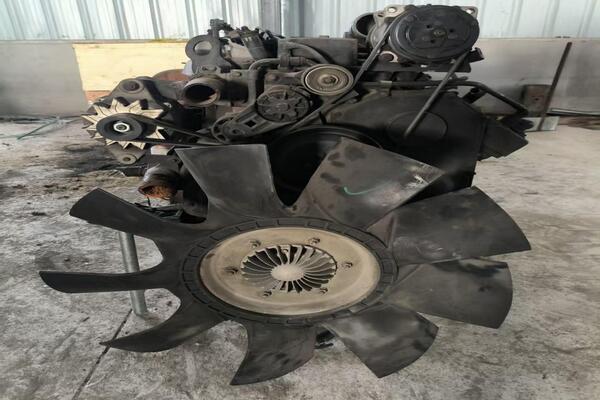
At Deli Auto, our engineering team disassembles and tests hundreds of engines per year. The wear patterns we observe on 6BT and 6CT units are consistent enough across enough units that we consider them model-specific procurement intelligence — not isolated findings.
6BT Wear Patterns We Have Observed
In units we have inspected, the 6BT tends to show its heaviest wear in the following areas when it has been used in high-intensity applications:
- Injector sleeve and injector cup condition: High-frequency load cycling accelerates thermal fatigue at the injector seat. We routinely check for micro-cracks and copper sleeve corrosion on every 6BT we receive.
- Main bearing and connecting rod bearing clearances: The repetitive load shocks of dump-truck and construction use gradually widen bearing clearances[4]. A unit that tests within spec on compression may still show elevated bearing noise under load.
- Cylinder liner wear at TDC: In 6BT units with documented construction or mining histories, we commonly find pronounced ridge wear at the top dead center position — a sign of sustained high-load operation.
- Crankshaft front seal and timing cover: These are relatively minor but predictable wear items that become expensive if ignored in the field. We flag them during pre-shipment inspection.
6CT Wear Patterns We Have Observed
The 6CT shows a different wear signature, particularly in units pulled from long-haul tractor or heavy cargo applications:
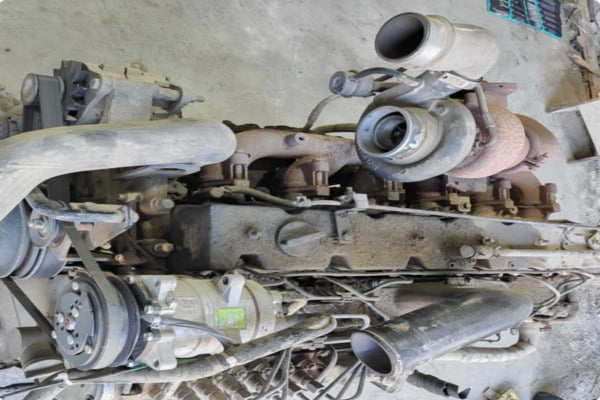
- Turbocharger bearing condition: The 6CT's higher output makes it more dependent on turbocharger efficiency. In units we have tested, turbo bearing play is one of the first indicators of deferred maintenance.
- EGR and intake manifold carbon buildup (where applicable): In higher-emission-spec units, carbon fouling of the intake is significant in units that have spent time in low-speed urban duty cycles — a misapplication scenario we described earlier.
- Valve seat recession: In older high-mileage 6CT units, we check valve seat condition carefully. This is less a design defect and more a consequence of extended high-temperature operation without proper coolant maintenance.
- Coolant system integrity: The 6CT's higher thermal mass means coolant quality history matters more. We test coolant pH and inspect the cylinder head gasket surface on every 6CT before clearing it for shipment.
The Right Inspection Framework
Rather than applying a universal mileage cutoff, buyers should ask their supplier for model-specific inspection data. At minimum, a credible pre-shipment inspection for either engine should include:
- Compression test across all six cylinders
- Oil pressure test at idle and rated RPM
- Turbocharger play measurement (6CT priority)
- Visual inspection of cylinder liner wear ridge (6BT priority)
- Coolant pressure test and head gasket check
- Fuel system pressure and injector return flow check
- Full operational run-up with smoke and temperature monitoring
If a supplier cannot provide documented results for these checks, the mileage figure on the odometer is not a substitute.
How Does Parts Availability Affect the 6BT vs 6CT Decision?
Parts availability is a procurement factor that often gets less attention than engine specs — until a truck breaks down in a location where the right parts are three weeks away. For B2B buyers purchasing multiple units destined for a specific market, this factor can outweigh performance differences entirely.
The right question is not "which engine has better parts availability globally?" It is "which engine has better parts availability in my target operating market?"
Market-by-Market Patterns
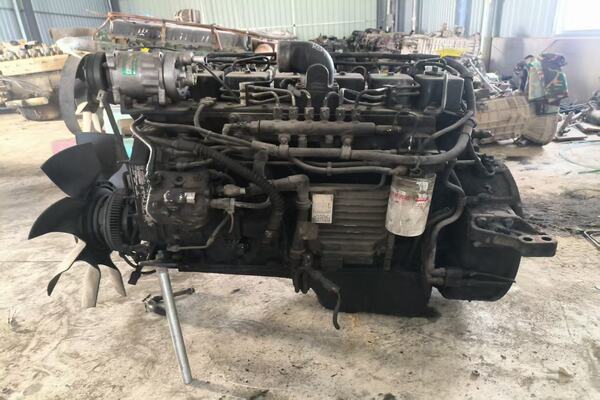
Parts availability for both models varies significantly by region, and blanket claims are unreliable. That said, some general patterns emerge from the buyers we work with:
-
Sub-Saharan Africa: The 6BT has historically had strong parts penetration in markets like Nigeria, Ghana, Kenya, and Tanzania, partly because of its widespread use in medium-duty trucks and construction equipment[5]. In many of these markets, local workshops carry 6BT rebuild kits as a standard stocking item. 6CT availability varies more by country.
-
Southeast Asia: Both models have reasonable coverage in Indonesia, Vietnam, and the Philippines, but the 6CT benefits from its use in heavier Chinese-brand trucks (like HOWO and SITRAK variants), which have expanded their dealer networks in the region[6]. Buyers in remote island or inland locations should verify local availability before committing to either model.
-
Middle East: Parts supply for both models is generally mature in hubs like the UAE and Saudi Arabia. For buyers in less developed markets in the region, 6BT parts tend to move through more distribution channels, which can mean shorter lead times.
-
Central Asia and Eastern Europe: Both models have established coverage, though the 6CT's use in heavy construction and mining equipment gives it reasonable depth in markets with active infrastructure project activity.
Practical advice: Before finalizing your engine model selection, contact local workshops or parts distributors in your target market and ask directly whether they stock the specific model's major rebuild components — liners, rings, bearings, injector cups, head gaskets. This 10-minute conversation can save you significant downstream cost.
Frequently Asked Questions
Is the Cummins 6CT a direct upgrade from the 6BT?
No. The 6CT is a larger engine with higher rated output, but it is not an upgrade in the universal sense. It is designed for heavier, sustained-load applications. Installing a 6CT in a role suited to the 6BT — or vice versa — creates a duty cycle mismatch that accelerates wear and increases operating costs over time.
What truck types are best suited to the Cummins 6BT?
The 6BT is well matched to light-to-medium dump trucks, construction cargo carriers, short-haul freight trucks, and medium buses in the 8–15 ton payload class[7]. Its responsive low-end torque suits intermittent, high-intensity load cycles common in construction and mining support roles.
What truck types are best suited to the Cummins 6CT?
The 6CT performs best in heavy tractor trucks, long-haul cargo trucks, heavy dump trucks above 20 tons payload, and heavy mixer or pump trucks. It is optimized for sustained highway operation at moderate RPM rather than repeated stop-start heavy-load cycles.
How should I evaluate a used Cummins 6BT or 6CT before purchasing?
Do not rely on odometer readings alone. Request a documented pre-shipment inspection covering compression test results, oil pressure data, turbocharger condition, coolant system integrity, and a full operational run-up. Because the two models wear in different components, a model-specific inspection checklist is more reliable than a universal mileage cutoff.
Can I source both 6BT and 6CT engines from the same supplier?
Yes. Reputable B2B exporters with large physical inventory — such as Deli Auto — stock both models and can supply matched engines for container-load orders. Sourcing both models from a single supplier with documented inspection processes simplifies logistics and provides consistent quality control across a mixed fleet purchase.
Conclusion
The Cummins 6BT and 6CT are both reliable, field-proven engines with decades of deployment across demanding global markets. Neither is categorically better. The 6BT engine suits high-intensity, intermittent heavy-load applications — construction, mining, short-haul freight — where responsive low-end torque and a compact footprint matter. The 6CT suits sustained, high-output highway work where consistent torque delivery over long distances is the priority.
The real procurement risk is not choosing an underpowered engine. It is choosing the right engine for the wrong environment — or accepting an odometer reading as a substitute for a proper model-specific inspection. Matching engine character to duty cycle, and verifying parts availability in your specific target market, will do more to protect your investment than any specification comparison.
If you are evaluating Cummins 6BT or 6CT-equipped trucks for your next container order, our team at Deli Auto is ready to discuss your operating scenario, share inspection documentation on available units, and help you build a specification that fits your market — not just your budget.
[1] "Cummins B Series engine", https://en.wikipedia.org/wiki/Cummins_B_Series_engine. Cummins engine technical documentation and emissions certification filings describe the 6BT's rated torque range and governed speed, which inform its suitability for high-cycle load applications. Evidence role: general_support; source type: institution. Supports: The 6BT's displacement, governed speed, and torque output characteristics as published in manufacturer or regulatory documentation. Scope note: Manufacturer specifications describe test-stand performance; real-world duty-cycle suitability involves additional variables not captured in rated figures alone. ↩
[2] "Cummins C Series engine", https://en.wikipedia.org/wiki/Cummins_C_Series_engine. Published Cummins C-series engine specifications indicate the 6CT's higher displacement and lower governed speed relative to the 6BT, consistent with design optimization for sustained-load highway operation. Evidence role: general_support; source type: institution. Supports: The 6CT's displacement, peak torque range, and governed speed as documented in manufacturer or certification sources. Scope note: Manufacturer application guidance may not explicitly categorize the engine by duty cycle in the same terms used in this article. ↩
[3] "Experimental and computational study of soot formation ...", https://dspace.mit.edu/entities/publication/0b02fc4b-4e2d-451d-b36a-d865b230ef24. Research on diesel combustion thermodynamics documents that operation below optimal thermal load results in incomplete fuel combustion, elevated particulate matter output, and accelerated carbon fouling of intake and combustion surfaces. Evidence role: mechanism; source type: research. Supports: The mechanism by which low-load and stop-start diesel engine operation leads to incomplete combustion, increased soot formation, and carbon deposit accumulation. Scope note: Published studies typically address these phenomena in general diesel engine contexts; direct experimental data specific to the 6CT in stop-start urban duty cycles is not widely available in open literature. ↩
[4] "Study on the failure mechanism and improvement measures ...", https://pmc.ncbi.nlm.nih.gov/articles/PMC12644720/. Tribological studies of diesel engine plain bearings document that cyclic dynamic loading accelerates hydrodynamic film breakdown and surface fatigue, progressively increasing bearing clearances over service life. Evidence role: mechanism; source type: research. Supports: The tribological mechanism by which repeated dynamic load cycles accelerate wear and increase clearances in diesel engine plain bearings. Scope note: Published research addresses bearing wear mechanisms generally; studies specific to the Cummins 6BT under construction duty cycles are not available in open academic literature. ↩
[5] "Cummins Engines Are First Choice for the Trucking Industry", https://www.lincolntech.edu/news/automotive/diesel-technology/cummins-engines-are-first-choice-trucking-industry. Industry reports on Sub-Saharan African commercial vehicle markets document the significant penetration of Cummins B-series engines in medium-duty truck and construction equipment segments, which underpins aftermarket parts availability in the region. Evidence role: general_support; source type: institution. Supports: The presence and distribution of Cummins B-series engines in Sub-Saharan African commercial vehicle and construction equipment markets. Scope note: Publicly available market data on parts distribution depth at the country level is limited; the specific availability claims reflect trade experience rather than published market research. ↩
[6] "China National Heavy Duty Truck Group", https://en.wikipedia.org/wiki/China_National_Heavy_Duty_Truck_Group. Trade and industry reporting on Chinese commercial vehicle exports documents the significant growth of brands such as Sinotruk HOWO in Southeast Asian markets, accompanied by the establishment of dealer and after-sales service infrastructure that supports parts availability for fitted engine models. Evidence role: historical_context; source type: institution. Supports: The expansion of Chinese commercial vehicle brands, including Sinotruk HOWO and SITRAK, into Southeast Asian markets and the development of associated dealer and parts networks. Scope note: The direct link between Chinese truck brand dealer expansion and Cummins 6CT parts availability specifically depends on the proportion of those vehicles fitted with Cummins rather than domestic Chinese engines, which varies by model and market. ↩
[7] "Truck classification", https://en.wikipedia.org/wiki/Truck_classification. Regulatory vehicle classification frameworks, such as those published by the United Nations Economic Commission for Europe or national transport authorities, define gross vehicle weight categories that correspond to the payload ranges cited, providing a standardized basis for engine-to-application matching guidance. Evidence role: definition; source type: government. Supports: The definition and boundaries of light-to-medium commercial vehicle payload classes as established by regulatory or standards bodies. Scope note: Vehicle classification standards define GVW categories rather than prescribing specific engine models, so the mapping from payload class to engine suitability involves additional engineering judgment beyond what classification documents alone establish. ↩