How Profitable Is Owning a Dump Truck?
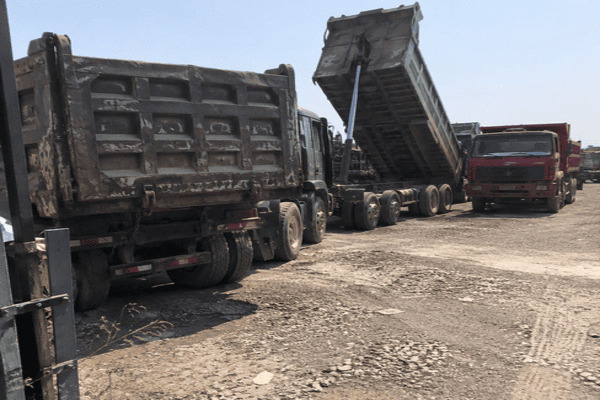
Dump truck profitability looks simple on paper — buy low, sell high — but every used dump truck dealer who has written off a frame-damaged unit or watched a truck sit unsold for four months knows the real answer is more complicated. For cross-border exporters targeting Africa and the Middle East, the question is really this: how do you price the risk before you commit? Get that right, and dump truck trading can return strong margins. Get it wrong, and reconditioning costs and carrying time quietly erase your profit.
The profitability of owning and reselling a dump truck is not a fixed number. In cross-border used truck trading — particularly for Africa and Middle East markets — profit is determined by three variables: how deep your acquisition discount is relative to local resale benchmarks, how quickly you turn inventory, and how tightly you scope your reconditioning to what end-buyers actually value. Based on our own deal logs, gross trading margins on individual units can range from under 5% to over 25%, depending on brand, year, work history, and destination compliance fit.
The sections below break down each factor that shapes that range. If you are a dealer deciding whether to buy a specific unit, or a fleet manager evaluating a seller's pricing logic, the framework here will help you ask better questions — and walk away from the wrong deals before they cost you.
What Does the Margin Distribution Actually Look Like?
Most sellers quote a "typical profit per truck" as if it were a single number. It never is.
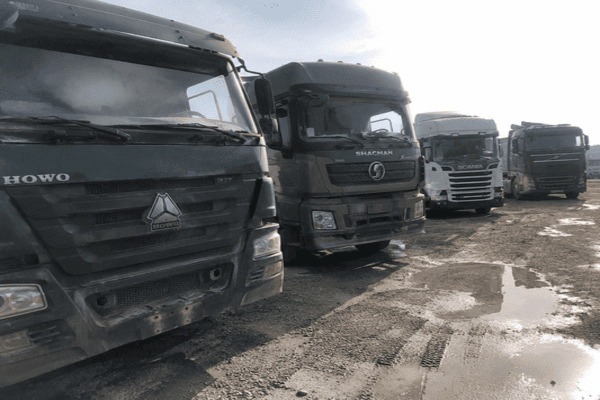
Across the deals we have logged internally — covering Chinese brands like HOWO and Shacman, and European units from Scania and Volvo — gross trading margin distributions are wide and skewed by condition and paperwork status. The median is not the useful number. The tail risk is.
From our own transaction records, the margin picture breaks roughly into three tiers:
| Scenario | Typical Gross Margin Range | Key Driver |
|---|---|---|
| Clean unit, verified history, fast turn (≤45 days) | 18–25%+ | Low reconditioning, strong buyer demand |
| Average condition, partial records, standard turn (60–90 days) | 10–18% | Moderate reconditioning, competitive pricing |
| Problem unit, frame concerns, slow turn (90–120+ days) | Below 5% or loss | Write-down risk, warranty disputes, returns |
These are internal estimates based on our export operations. Your specific numbers will vary by sourcing region, destination country, and current freight rates — all of which should be verified for your own market.
Why Days-to-Turn Matters More Than Gross Price
A truck that lists at a 22% gross margin but sits for 110 days is rarely a better deal than a truck that moves in 35 days at 14%. Here is why:
- Carrying cost accumulates daily. Yard space, insurance, and tied-up capital all have real costs, even if they do not appear on a per-unit invoice.
- Market prices drift. In fast-moving export markets, a truck priced for Q1 conditions may be overpriced by Q2[1].
- Reconditioning exposure grows. The longer a truck sits, the more likely minor issues become visible to buyers — or turn into actual failures.
In our experience, targeting a 45–60 day turn cycle is a reasonable operational benchmark for Chinese mechanical-spec trucks in active African markets. European units sold to specific buyer segments can tolerate longer cycles if the buyer relationship is established — but this requires discipline around pricing from day one.
Hard Walk-Away Rules
No margin model works without defined disqualification criteria. Before any acquisition, our inspection process flags the following as automatic walk-away conditions:
- Frame cracks, welds, or accident straightening — structural integrity cannot be reliably restored to export standard at viable cost
- Missing or inconsistent registration and title documents — customs clearance risk is unquantifiable
- Engine or gearbox with no traceable service history and abnormal compression or noise readings — reconditioning cost uncertainty is too high
- Hydraulic system damage beyond cylinder seals — pump and valve replacement costs in destination markets can exceed the margin buffer
These rules are not flexible. A truck that fails any of these conditions is passed regardless of asking price.
Which Dump Truck Configurations Sell Fastest in Africa and the Middle East?
Buyers and theoretical specs are two different things. Stocking for fast turnover means stocking for what your actual end-buyers can operate and maintain — not what looks impressive on a datasheet.
The wrong inventory sits. The right inventory funds the next deal.
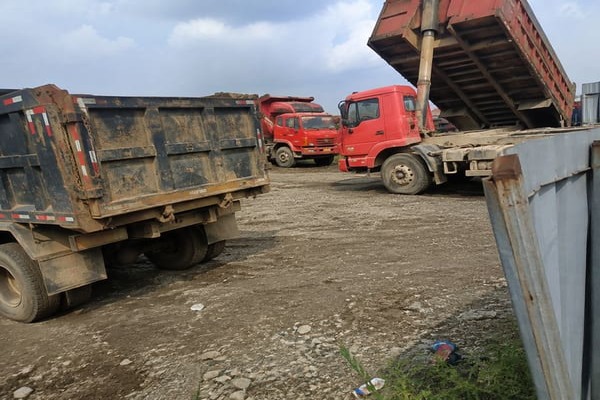
From our sales data, 6×4 configurations in the 20–30 tonne payload range — particularly HOWO and Shacman units with mechanical injection pumps — consistently show the shortest days-to-turn in Sub-Saharan Africa and parts of the Middle East. Scania and Volvo units with verifiable maintenance records sell reliably but to a narrower, more specific buyer segment[2].
Why Chinese Mechanical-Pump Units Move Faster
The answer is not horsepower or brand reputation. It is parts and mechanic familiarity.
- Parts availability: HOWO and Shacman components are widely stocked by local distributors across East and West Africa. A buyer knows they can source a fuel pump or clutch plate within days, not weeks.
- Simple mechanics: Mechanical injection systems can be diagnosed and repaired by local technicians without specialized diagnostic tools[3]. This is a genuine operational advantage in regions where electronic service infrastructure is limited.
- Driver familiarity: In markets where operators have trained on these platforms, driver acceptance and lower initial breakdowns reduce early warranty friction.
- Price point: The acquisition cost is lower, which means the resale price sits within a wider pool of buyer budgets.
Where European Units Fit
Scania and Volvo units are not wrong choices — they are specific choices. They suit buyers who:
- Operate on longer hauls where fuel efficiency matters over a three-to-five year horizon
- Have access to authorized workshop support or experienced European-spec mechanics
- Are running government or NGO-contracted fleets where brand specification is written into the tender
- Can demonstrate to financiers that the unit holds residual value
The margin on a well-documented Scania 6×4 dump can be strong. But the buyer pool is smaller, and the deal takes longer to close. Do not stock European units speculatively in a new market without an identified buyer profile.
Year and Work Condition Matter as Much as Brand
A 2018 HOWO with 180,000 km from a construction site has a different risk profile than a 2018 HOWO with 180,000 km from a quarry application. Quarry duty cycles involve:
- Higher frequency tipping cycles (hydraulic system wear)
- Harder suspension loading (spring and shock wear, frame stress)
- Greater dust ingestion (air filtration and engine wear)
Our parts-cost logs show that quarry-duty units average significantly higher reconditioning spend on hydraulic and suspension components compared to construction-site units with similar odometer readings. Work condition documentation is not optional — it is a pricing input.
How Should Reconditioning Scope Be Decided?
Reconditioning everything to showroom standard is the fastest way to destroy a trading margin. Reconditioning nothing is the fastest way to generate warranty disputes and returns.
The correct scope is determined by the end-user's work type — and by what your own failure logs tell you causes early post-sale problems.


The right reconditioning question is not "what is wrong?" It is "what failure in the first 90 days will cost me a warranty claim or a reputation problem?"
Matching Reconditioning to Buyer Use Case
Different end-user applications have different failure hierarchies. Use those hierarchies to prioritize spend:
City muck-haul and construction fill:
- Prioritize: hydraulic cylinder seals, tipping body hinge pins, brake system
- Lower priority: suspension rebuild, drivetrain deep inspection (lower stress application)
- Typical reconditioning range: moderate — seals and brake components are relatively affordable
Quarry short-haul:
- Prioritize: front axle and leaf spring condition, frame stress points, hydraulic pump condition
- Medium priority: gearbox noise check, clutch wear assessment
- Lower priority: cabin cosmetics (buyers in this segment are unsentimental)
- Typical reconditioning range: higher — suspension and hydraulic components add up quickly
Road construction and earthworks:
- Prioritize: drivetrain durability indicators — transmission, rear axle play, PTO condition
- Medium priority: body capacity and side-wall integrity (volume matters for these buyers)
- Reconditioning range: variable, driven strongly by gearbox and axle condition at inspection
Define a Warranty Before, Not After, the Sale
Every unit we sell carries a defined, narrow warranty — not a general satisfaction guarantee. A specific warranty tied to named components and a fixed time window does two things:
- It protects you from open-ended liability claims
- It signals professionalism to experienced buyers who understand that used trucks are not new trucks
A reasonable structure for export transactions: 30–90 days, covering specific major components inspected and documented pre-shipment (engine, gearbox, main hydraulics), explicitly excluding wear items, operator misuse, and local repair interventions. Pair this with a documented parts plan — either pre-shipped spares or identified in-country distributor contacts — to handle the most common early-failure items.
How Do Compliance and Destination Rules Affect Profitability?
Buying a truck without checking destination compliance is like pricing a deal without knowing your freight cost. The number means nothing until you have confirmed the full landed picture.
Post-sale compliance failures generate returns, re-export costs, or outright write-offs — all of which land below the gross margin line.
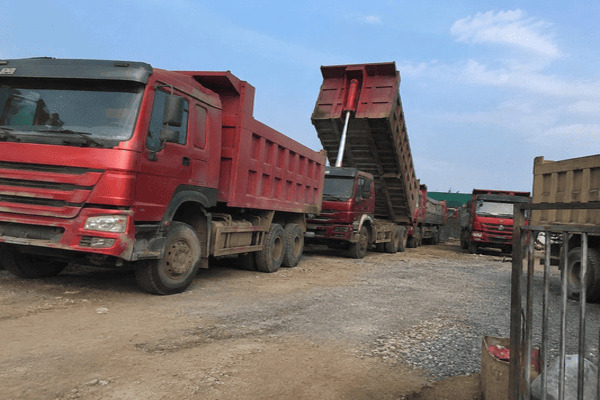
Key compliance checkpoints before acquisition — not after — include:
- LHD vs RHD: Most African markets are RHD; most Chinese and European trucks sourced from mainland China are LHD[4]. Steering conversion costs and local acceptance vary significantly. Verify destination rules before buying.
- Emissions standards: Some Middle Eastern and North African markets are moving toward Euro IV/V acceptance thresholds. Older Euro II/III units may face import restrictions. These rules change — verify with a local agent for the specific destination country and current year.
- Axle load limits: Body size and configuration that is legal in China may exceed permitted axle loads in the destination country. Oversized bodies that require modification eat margin and delay delivery.
- Document authentication: Some destinations require apostilled or notarized title documents, or specific inspection certificates. Confirm requirements before the shipping date, not after.
A truck that clears all mechanical inspections but fails a compliance check at the destination port is a complete trading loss. These rules are non-negotiable and country-specific. We recommend verifying current import regulations with a licensed customs agent or local partner in the destination market for every shipment.
Frequently Asked Questions
What is a realistic gross margin per dump truck for African export?
Based on our internal deal logs, gross trading margins typically range from under 5% on problem units with slow turns to over 25% on clean, well-documented trucks moved in under 45 days. The median in normal conditions sits roughly between 10% and 18%. These are internal estimates — your margin depends on your acquisition cost, reconditioning spend, carrying time, and destination pricing.
Is HOWO or Scania more profitable to trade?
Neither brand is universally more profitable. HOWO and Shacman units in the 20–30t 6×4 range tend to turn faster in most African markets due to parts availability and mechanic familiarity, which reduces carrying cost and early-failure warranty risk. Scania and Volvo can deliver strong margins to specific buyer segments but require a defined buyer profile and longer selling timelines. Stock to your actual market, not to a theoretical spec.
What inspection failures should make me walk away from a dump truck purchase?
Our hard walk-away criteria are: frame damage, cracks, or evidence of structural welding; missing, inconsistent, or unverifiable title documents; abnormal engine compression readings or gearbox noise without traceable service records; and hydraulic system damage beyond standard seal wear. No price discount justifies accepting these risks in an export context.
How do I calculate carrying cost on an unsold truck?
Carrying cost includes yard or warehouse space (priced per square meter per month), tied-up capital cost (opportunity cost or actual financing interest), and any maintenance needed to keep the unit presentable[5]. A simple internal estimate: sum these monthly costs and multiply by the number of months held. Compare this to your projected gross margin to see whether a price reduction to accelerate the sale makes financial sense.
Can small fleet managers use this framework, or is it only for dealers?
The core logic applies to any buyer evaluating a seller's price claim. If a seller quotes you a price, ask what reconditioning was done, what the work history is, whether compliance documents are complete for your country, and what post-sale parts support looks like. The same questions that protect a dealer's trading margin protect a fleet manager's operational investment.
Conclusion
Dump truck profitability in cross-border trading is a risk-priced decision, not a fixed return. The margin range is real and wide — but where your deals land within that range depends on how rigorously you apply four disciplines: buying at a genuine discount to local resale benchmarks, scoping reconditioning to what end-buyers in specific work applications actually value, turning inventory fast enough that carrying costs do not erode the spread, and eliminating compliance and documentation risk before the truck ships.
No single unit defines whether dump truck trading is profitable. A well-sourced, properly inspected, correctly spec'd truck sold to a matched buyer in a compliant destination is a strong business. A speculative purchase on a damaged unit with missing papers is not a business — it is a liability.
At Deli Auto, we work with B2B buyers across Africa and the Middle East who need exactly this kind of structured sourcing approach. If you are evaluating dump truck acquisitions for resale or fleet expansion, we are ready to share our inspection documentation, stock availability, and parts support framework. Contact our team to discuss your requirements and get a matched shortlist from our current inventory.
[1] "Measuring Price Change in the CPI: Used Cars and Trucks", https://www.bls.gov/cpi/factsheets/used-cars-and-trucks.htm. Research on used vehicle markets in emerging economies documents price sensitivity to exchange rate movements, commodity cycle fluctuations affecting construction and mining activity, and seasonal demand patterns, with price changes of meaningful magnitude observable within single quarters in active trading periods. Evidence role: general_support; source type: research. Supports: That used commercial vehicle prices in export markets are subject to meaningful short-term fluctuation driven by supply, demand, and macroeconomic factors. Scope note: Quantitative price volatility data specific to used dump truck export markets in Africa is limited in published literature; the general pattern is supported but precise quarterly movement figures are not well documented. ↩
[2] "China's Truck Market: New Opportunities for Europeans", https://www.bain.com/insights/chinas-truck-market-new-opportunities-for-europeans/. Trade and industry analyses of African commercial vehicle markets document the significant market share gains of Chinese truck manufacturers since the 2000s, with European brands retaining presence primarily in fleet segments requiring higher specifications, longer service life, or compliance with donor-funded procurement standards. Evidence role: general_support; source type: research. Supports: That European commercial vehicle brands occupy a smaller, more specialized market segment in African markets compared to Chinese brands, which have achieved broader volume penetration. Scope note: Market share data varies by country and year; the relative positioning of European and Chinese brands continues to shift as Chinese manufacturers invest in quality improvements and after-sales infrastructure. ↩
[3] "Chapter 5 Diesel Fuel Systems", https://media.defense.gov/2014/Jun/20/2002655897/-1/-1/1/140620-N-ZZ182-6546.pdf. Engineering literature on diesel fuel injection systems distinguishes mechanical injection pumps, which can be adjusted and tested with basic pressure gauges and timing tools, from electronically controlled common-rail systems that require proprietary diagnostic software and hardware for fault diagnosis and calibration. Evidence role: mechanism; source type: research. Supports: That mechanical fuel injection systems have lower diagnostic tool requirements compared to electronic common-rail systems, enabling repair by technicians without specialized equipment. Scope note: Serviceability advantage depends on local technician training levels and tool availability, which vary across markets and are not uniformly documented. ↩
[4] "Left- and right-hand traffic - Wikipedia", https://en.wikipedia.org/wiki/Left-_and_right-hand_traffic. According to documented traffic regulations, approximately 40 of 54 African countries drive on the left side of the road, requiring right-hand drive vehicles, a legacy of British colonial road conventions; mainland China drives on the right, and its domestically produced commercial vehicles are manufactured in left-hand drive configuration. Evidence role: definition; source type: encyclopedia. Supports: That the majority of African countries drive on the left and therefore require right-hand drive vehicles, while mainland Chinese commercial vehicles are manufactured in left-hand drive configuration. Scope note: Country-specific import rules on steering conversion acceptance vary and should be confirmed with local authorities, as some markets permit LHD imports under certain conditions. ↩
[5] "How to Reduce Inventory Holding Costs | AccuTrade", https://www.carscommerce.inc/reduce-inventory-holding-costs/. Inventory management literature defines carrying cost as the aggregate of storage expenses, capital tied up in unsold stock (measured as opportunity cost or financing interest), insurance, and deterioration or maintenance costs, typically expressed as a percentage of inventory value per unit time. Evidence role: definition; source type: education. Supports: That inventory carrying costs comprise storage, capital opportunity cost, and maintenance expenses, and that these should be weighed against margin to evaluate price reduction decisions. Scope note: Standard carrying cost formulas are derived from general inventory management contexts; vehicle-specific carrying cost structures may differ from published general models depending on financing arrangements and storage conditions. ↩