What Is the Best Used Tractor Trailer to Buy?
Every week, a buyer asks me some version of the same question: which used tractor trailer brand should they buy? They want a name. They want me to say HOWO, or SHACMAN, or Volvo, and let them get on with their day. The problem is that answering that question directly would be doing them a disservice — and after 20 years of selling used trucks to fleet operators across Africa, Southeast Asia, the Middle East, and Latin America, I've watched that exact shortcut cost buyers real money.
The best used tractor trailer is the one whose specifications match your actual operating conditions — not the most popular brand, not the cheapest unit, and not whatever your neighbor bought last year. The right truck is defined by your payload weight, your road surface, your daily distance, and the spare parts ecosystem available within reach of your routes. Every other comparison is noise until those four variables are mapped.
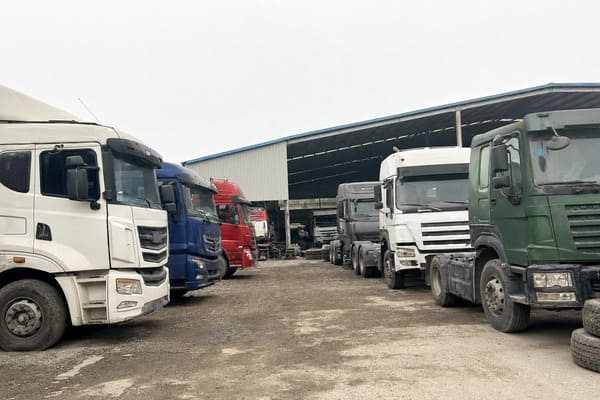
Before I go further, I want to be transparent about something: I sell used trucks for a living. Deli Auto, the company I work with, exports used tractor trailers and spare parts to buyers in emerging markets. That's my commercial interest, and you should weigh everything I say with that in mind. What I can offer is pattern recognition from hundreds of buyer conversations — not lab testing, not engineering credentials, but two decades of watching buyers ask the wrong question and then live with the consequences.
The rest of this article is a framework for asking the right questions. If you finish reading still wanting a brand battle, I haven't done my job.
Are You Buying a Brand or Buying a Mission?
Most buyers come to me having already done their research. They've joined Facebook groups, asked friends at the yard, maybe read a few comparison articles online. By the time they reach out, they're convinced the decision is HOWO versus SHACMAN, or Chinese versus European. They want me to confirm a preference they already hold.
Brand loyalty at the purchase stage is almost always displacement behavior. It is easier to compare badges than to define your own operating profile. Before a brand matters, four things matter more: gross combination weight, terrain type, daily mileage, and local parts availability. A buyer who can answer those four questions clearly is already ahead of most.
When a buyer leads with a brand name, I've learned to treat it as a signal that the real homework hasn't been done yet. The brand conversation is a proxy for the mission conversation — and the mission is the only thing that actually matters when you're making a capital equipment decision with limited room for error.
The Question I Ask Every Buyer First
A fleet owner from West Africa contacted me a while back. He wanted a specific model — told me the exact configuration, told me he'd seen it working well in his neighbor's fleet. I asked him three questions before I said anything about availability or price.
- What is the loaded weight you're pulling, including trailer and cargo?
- What does the road surface look like between your origin and destination?
- How far is the nearest supplier who stocks parts for that model?
He hesitated on the third question. That hesitation told me everything.
Why Mission Mapping Changes the Answer
Here's how the three variables actually drive the specification decision:
| Variable | What It Drives |
|---|---|
| Gross combination weight | Frame rating, axle configuration, suspension type |
| Road surface | Drivetrain configuration, ground clearance, tire spec |
| Daily distance / route type | Engine tuning range, fuel tank capacity, maintenance intervals |
| Parts ecosystem | Which brands are even viable options in your market |
These four inputs should produce a shortlist. A brand name should come last — not first.
Why Cheapest Purchase Price Is the Most Expensive Metric?
This is the conversation I have most often, and it's the one buyers push back on hardest. Everyone knows that cheap trucks cost more in the long run. Everyone knows it, and almost everyone still defaults to the lowest sticker price when the final decision lands.
Optimizing for purchase price alone ignores the real cost driver: downtime. A truck sitting for three weeks waiting for a gearbox or an axle generates zero revenue and accumulates fixed costs. In markets where lead times on spare parts are measured in months, the price difference between two trucks can evaporate after a single extended breakdown.
I'm not arguing against price sensitivity. Buyers in emerging markets operate on tight margins and real capital constraints. But there is a difference between price-conscious and price-blinded.
The True Cost Calculation Most Buyers Skip
A truck that costs $5,000 less upfront but sits idle for 25 days waiting for a hard-to-source part has effectively cost you far more than the savings — depending on what that truck generates per day in your operation.
Most buyers don't run this calculation at purchase time. They run it six months later, when they're on the phone with a supplier trying to locate a part.
What "Parts Availability" Actually Means in Practice
I want to be specific here, because "check parts availability" is advice everyone gives and almost no one follows carefully.
Parts availability is not just whether a part exists somewhere in the world. It means:
- Is the part in stock in your country, or at a nearby regional hub?
- Does your local mechanic know how to fit it correctly?
- Is there more than one supplier, so you're not hostage to a single source?
- For used trucks — are there enough of the same model in your market that parts pull from other vehicles is a realistic fallback?
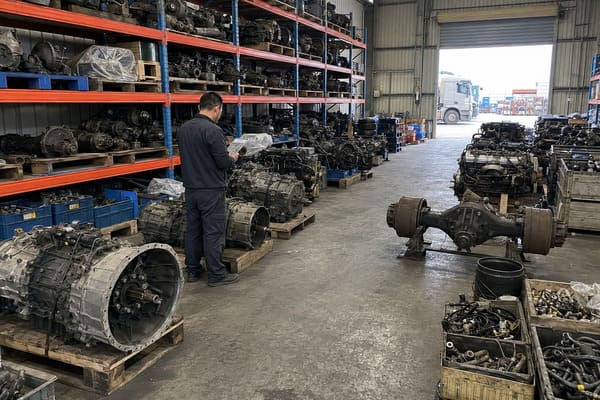
I've spoken to buyers who discovered after purchase that the model they chose was popular in China but rare in their target market. The trucks ran fine until they didn't — and then sourcing became a months-long problem.
Before you choose a brand or model, map the parts ecosystem in your operating region. This is not an afterthought. It is a specification requirement.
Does Road Surface Really Change Which Truck You Should Buy?
Many buyers treat this as a detail rather than a determining factor. I've found it's often the single most important input after gross weight.
Road surface determines drivetrain configuration, ground clearance requirements, and the stress placed on the frame and suspension during loaded operation. A tractor trailer spec'd for smooth paved highway will underperform and wear faster on unpaved or corrugated roads[1] — sometimes failing in ways that are expensive and predictable.
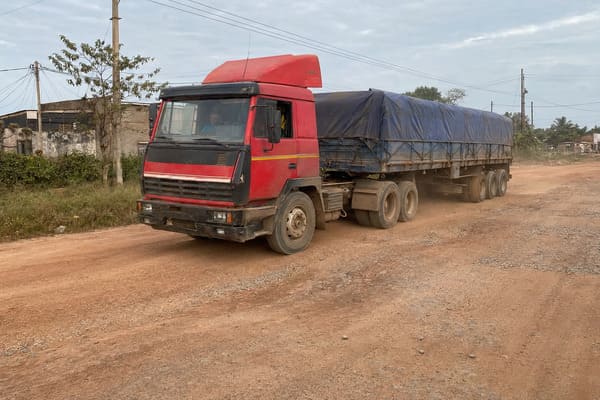
This point is often buried in the brand debate. Buyers compare horsepower numbers and torque ratings while ignoring that the same engine behaves very differently when the truck is bouncing over unpaved surfaces fully loaded versus cruising a paved national highway.
Short-Haul Asphalt vs. Long-Haul Dirt: Two Different Trucks
I see this most clearly when comparing two types of markets I work with regularly.
A buyer operating in a Southeast Asian country with relatively modern road infrastructure has very different requirements from a buyer running routes in sub-Saharan Africa where significant stretches are unpaved, seasonally degraded, or undulating.
The differences show up across almost every component:
- Suspension: A truck tuned for highway comfort can bottom out repeatedly on rough surfaces under load, accelerating frame fatigue.
- Tire configuration: Some axle configurations that work well on tarmac put uneven stress on tires on uneven surfaces, causing premature wear.
- Ground clearance: Matters far more in some markets than buyers initially assume.
- Cab construction: Vibration and shock cycles on rough roads affect cab mounting and driver fatigue differently than smooth-road operation[2].
A Case That Shaped How I Think About This
A buyer came to me wanting a truck he'd seen operating successfully for another importer in his network — same region, similar cargo type. It looked like an obvious match. When I asked about his specific routes, it turned out his operation included a significant section of unpaved road that the other importer's routes avoided entirely.
We adjusted the specification recommendation before the purchase was made. The buyer was skeptical — he wanted what he'd seen work. But the corrected spec held up across his actual routes in a way the original choice would have struggled with. That kind of outcome is only possible when the mission is mapped before the model is chosen.
How Do You Evaluate a Used Tractor Trailer Before Buying?
Even after you've identified the right specification for your mission, a used truck introduces a second layer of evaluation: the condition of the specific unit.
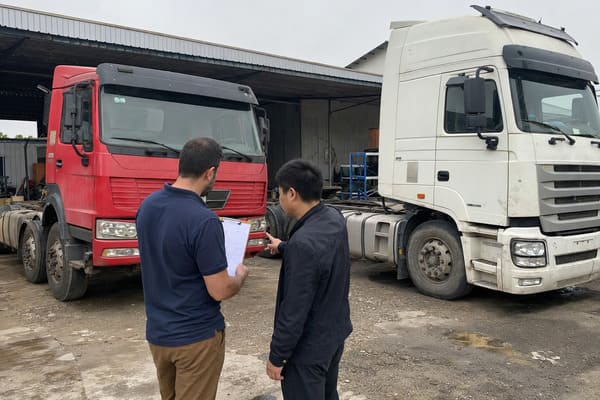
A used tractor trailer should be evaluated across five areas before purchase: engine health (compression, oil consumption, visible leaks), gearbox condition (shift quality, noise under load), frame and chassis integrity (cracks, repairs, corrosion), brake system function, and cab condition. Buyers should request documentation of any pre-shipment inspection and engine test results.
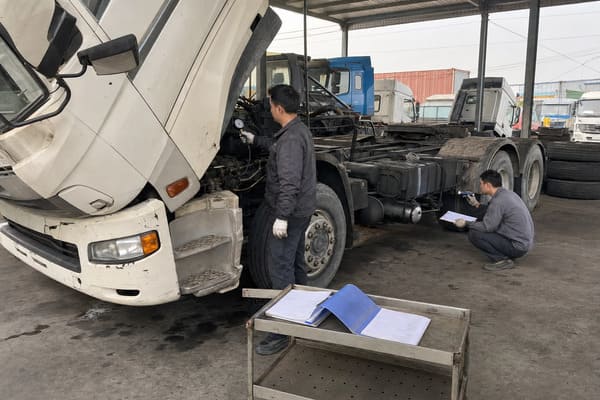
Buying used means accepting some wear — but there is a significant difference between acceptable wear and hidden mechanical problems. Understanding what to look for, or working with a supplier who documents inspections properly, reduces the risk of expensive surprises.
The Pre-Shipment Inspection Checklist Buyers Should Request
When evaluating a supplier's inspection process, I recommend buyers ask for evidence of the following at minimum:
- Engine start-up test — cold start behavior and idle stability
- Compression check — for diesel engines, this is a primary health indicator
- Transmission engagement test — shift through all gears under load where possible
- Visual frame inspection — documented photos of frame rails, crossmembers, and any welded repairs
- Brake check — pad/shoe condition, line integrity, air system function
- Fluid check — engine oil, coolant, gearbox oil, axle oil condition and level
- Mileage verification — where possible, cross-referenced against physical wear indicators
No inspection eliminates risk entirely on used equipment. What an inspection does is shift responsibility and give the buyer information they can act on. A supplier who resists providing inspection documentation is a supplier worth questioning.
Frequently Asked Questions
Is a Chinese-brand tractor trailer as reliable as a European-brand truck?
This depends on where you're operating and what support infrastructure exists. Chinese trucks like HOWO and SHACMAN are widely supported across Africa and parts of Asia, where parts are accessible and mechanics are familiar with them[3]. European trucks may offer different performance characteristics but require a local support network to be viable. Match the brand to your parts ecosystem, not the other way around.
How many kilometers on a used tractor truck is too many?
Mileage alone is a poor indicator of condition. A well-maintained truck at 800,000 km may be in better shape than a neglected unit at 300,000 km[4]. Use mileage as one input, but weigh it alongside engine compression results, service history evidence, and physical inspection of wear components. Qualified mechanical inspection is more reliable than mileage thresholds.
What should I look for in a used tractor trailer supplier?
Look for suppliers who maintain ready stock, provide documented pre-shipment inspection reports, have experience with export logistics to your country, and can supply spare parts or refer you to a local network. Ask for references from buyers in your region. Vague answers about inspection processes or reluctance to share vehicle history details are warning signs.
Is it better to buy a single used truck or order in bulk?
For first-time buyers, starting with one or two units to verify the spec match to your operation before scaling is generally prudent. Bulk purchasing offers better per-unit economics and is more efficient for container loading and logistics, but it amplifies any specification or condition errors. Experienced importers typically pilot a specification before committing to large volumes.
How long does it take to ship a used tractor trailer internationally?
Transit time depends on origin, destination, and shipping route. From China to most African ports, ocean freight typically takes four to eight weeks from container loading[5]. Customs clearance at destination adds variable time depending on local procedures. Factor these lead times into your operational planning — replacement units are not available overnight.
Conclusion
The best used tractor trailer is not a brand name. It is a specification that fits your payload, your roads, your distances, and your local parts supply. Buyers who start with brand loyalty are answering the wrong question. Buyers who optimize for sticker price are measuring the wrong number. The framework that produces the right decision runs in a specific order: define the mission, map the parts ecosystem, evaluate specific units against documented inspection results, then consider price within that shortlist.
I've watched this sequence play out across hundreds of buyer conversations over two decades. The buyers who follow it make fewer expensive mistakes. The ones who skip straight to brand comparisons tend to learn the hard way.
If you're working through a used tractor trailer purchase and want to walk through your operating profile before choosing a specification, Deli Auto's team is available for direct consultation. We maintain stock of 200-plus used trucks and can support pre-shipment inspection, export logistics, and long-term parts supply. Reach out — we're happy to ask you the three questions first.
[1] "AP42, Section 13.2.2 Unpaved Roads - Updated November 2006", https://www.epa.gov/sites/default/files/2020-10/documents/13.2.2_unpaved_roads.pdf. Engineering studies on road-vehicle interaction demonstrate that unpaved and corrugated surfaces generate dynamic load amplification factors substantially higher than paved roads, accelerating wear in suspension components, wheel bearings, and frame structures in vehicles not designed for such conditions. Evidence role: mechanism; source type: research. Supports: That heavy vehicles operated on road surfaces for which they were not specified experience higher rates of component wear and structural fatigue than vehicles matched to their operating environment. Scope note: Quantitative wear rate comparisons depend heavily on specific road profiles, vehicle loading, and speed; generalized findings may not translate directly to the range of conditions encountered in specific emerging market routes. ↩
[2] "Evaluating the Impact of Whole-Body Vibration (WBV) on Fatigue ... - PMC", https://pmc.ncbi.nlm.nih.gov/articles/PMC5158221/. Occupational health research on whole-body vibration in commercial vehicle drivers documents that exposure to vibration from rough or unpaved road surfaces is associated with increased driver fatigue and elevated risk of musculoskeletal disorders, with implications for driver performance and long-term health outcomes. Evidence role: mechanism; source type: research. Supports: That exposure to whole-body vibration from rough road surfaces increases driver fatigue and is associated with musculoskeletal health effects in commercial vehicle operators. Scope note: Published studies on whole-body vibration typically measure exposure in standardized conditions; the interaction between cab mounting design, vehicle load, and specific road surface profiles in emerging market operating environments is less well characterized. ↩
[3] "Best Chinese Heavy Duty Trucks for Africa in 2026", https://www.genronvehicle.com/best-chinese-heavy-duty-trucks-africa-2026.html. Trade and industry analyses of African commercial vehicle markets document substantial growth in Chinese truck brand market share since the 2000s, with Sinotruk and Shaanxi Automobile among the leading exporters, supported by distributor networks and parts depots in multiple African countries. Evidence role: general_support; source type: research. Supports: That Chinese heavy truck manufacturers, including Sinotruk (HOWO) and Shaanxi Automobile (SHACMAN), have achieved significant market penetration in African and Asian markets with corresponding parts and service infrastructure. Scope note: The density and reliability of parts and service networks varies considerably by country and region within Africa; broad characterizations of availability may not reflect conditions in specific operating areas. ↩
[4] "Chapter 2. Mileage Recording Approaches and Their Attributes", https://ops.fhwa.dot.gov/publications/fhwahop19041/ch2.htm. Research on used commercial vehicle valuation and reliability consistently finds that maintenance history, service record documentation, and physical inspection of wear components are stronger predictors of remaining service life than odometer readings alone, which can be affected by tampering, varying duty cycles, and differing operating conditions. Evidence role: expert_consensus; source type: research. Supports: That odometer mileage alone is an insufficient predictor of used heavy vehicle mechanical condition, and that maintenance history and physical inspection provide more reliable condition assessments. Scope note: Most published studies on this topic address passenger vehicles or light commercial vehicles; direct evidence specific to heavy tractor trailers in emerging market contexts is limited. ↩
[5] "Liner Shipping Connectivity Index | World Bank Data360", https://data360.worldbank.org/en/dataset/UNCTAD_LSC. UNCTAD and major shipping line schedules indicate that container transit times from Chinese ports to sub-Saharan African destinations typically range from four to eight weeks depending on routing, transshipment hubs used, and port congestion at destination. Evidence role: general_support; source type: institution. Supports: That container shipping transit times between Chinese ports and major African ports fall within a range of approximately four to eight weeks under normal operating conditions. Scope note: Transit times are subject to significant variation due to port congestion, carrier schedule changes, and geopolitical disruptions; the cited range should be treated as a planning estimate rather than a guarantee. ↩