Every week, I get the same question from African buyers: which US state has the cheapest semi-trucks? It sounds like a smart question. But after 20+ years of exporting used trucks to Africa, I can tell you it is the wrong question — and asking it has cost some buyers far more than they saved.
The cheapest state to buy a semi-truck is not a fixed location — it is wherever your total landed cost is lowest. That calculation includes the truck price, yes, but also inland transport to a US port, export documentation, ocean freight, African port handling, and import duties. In almost every case I have seen, a "cheap inland state" loses badly once all those numbers are added together.
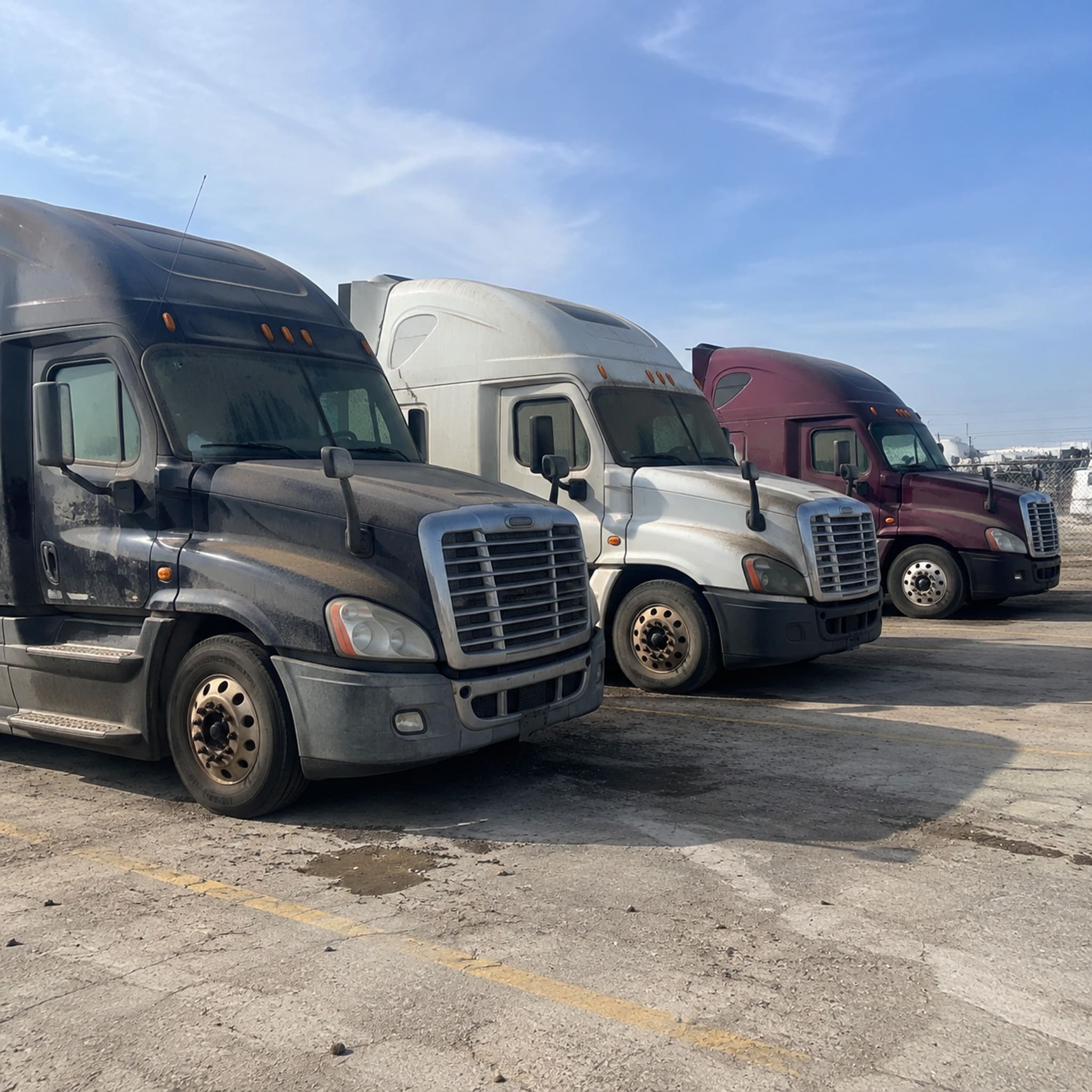
Most buyers read that answer and nod along. Then they go back to searching for the cheapest sticker price in the cheapest state. So let me show you exactly why that instinct keeps costing buyers money — with real examples from customers I have personally worked with.
Is a Low Sticker Price Actually a Good Deal on a Semi-Truck?
The logic seems airtight: find the state with the lowest listed prices, buy there, ship to Africa, done. But what most first-time buyers don't realize is that a low sticker price is almost always a signal, not a reward.
A cheap semi-truck is cheap for a reason. That reason is usually vehicle condition — and poor vehicle condition is the most expensive thing you can import.
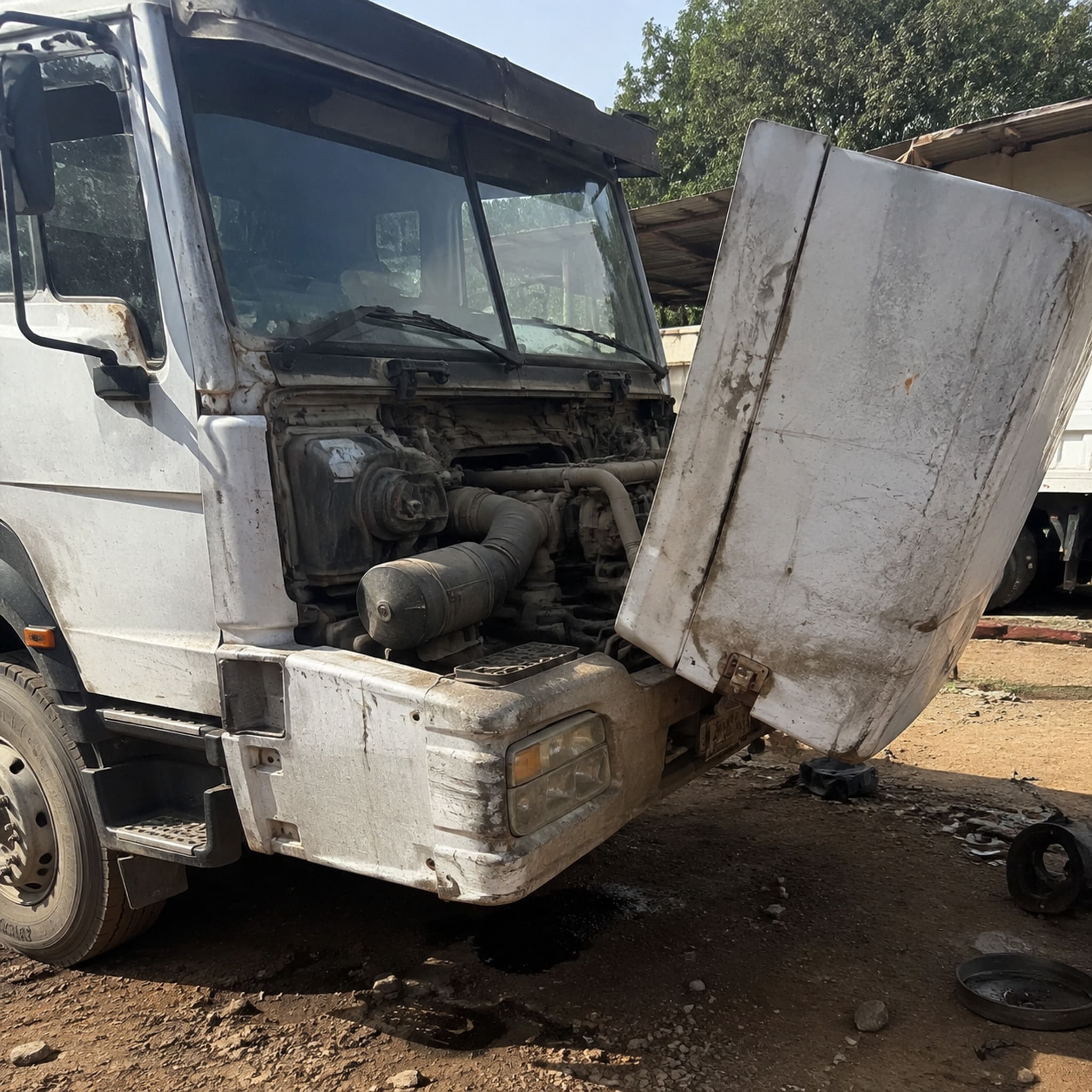
I have watched this play out more times than I can count. A buyer locates a Peterbilt or Kenworth listed at an attractive price in a rural inland state. The photos look acceptable. The mileage seems reasonable. They wire the money, arrange shipping, and three months later the truck is sitting in Lagos or Mombasa with a blown turbocharger, a cracked frame rail, or an engine that barely passed idle.
Why Do Inland States Tend to Have Cheaper Trucks?
Inland and rural states often have lower listing prices for several overlapping reasons:
- Smaller buyer pools. Fewer competing buyers mean less upward pressure on prices.
- Older fleet turnover. Rural fleets often run trucks longer before selling, which means more wear.[1]
- Harsher climate exposure. Temperature extremes in the US interior accelerate seal degradation, rust on undercarriages, and stress on cooling systems.
- Less rigorous maintenance documentation. Smaller operators may not keep full service records, leaving buyers to guess at what has been repaired — and what has not.
What Does "Poor Condition" Actually Cost in Africa?
This is where the math turns brutal. A truck that saves a buyer $3,000 on purchase price may present with:
| Issue | Estimated Repair Cost in Africa |
|---|---|
| Turbocharger replacement | $800–$2,000 |
| Engine overhaul (partial) | $3,000–$6,000 |
| Gearbox rebuild | $2,000–$4,500 |
| Suspension and axle work | $1,500–$3,000 |
| Electrical system faults | $500–$2,000 |
Repair costs in African markets are often lower than in the US, but genuine spare parts are expensive and hard to source quickly. Downtime kills revenue. A truck off the road for six weeks waiting for the right gearbox costs far more than the $3,000 the buyer thought they saved.[2]
I always tell my customers: buy the condition, not the price. The state barely matters if the truck is worn out.
Does It Cost More to Export a Semi-Truck From an Inland State?
This is the hidden cost that almost nobody calculates upfront, and it is the one I spend the most time explaining to buyers who come to me after a bad experience.
Yes — exporting a semi-truck from an inland state costs significantly more than exporting from a coastal or port-proximate state. The difference is not trivial.
The Inland Transport Problem
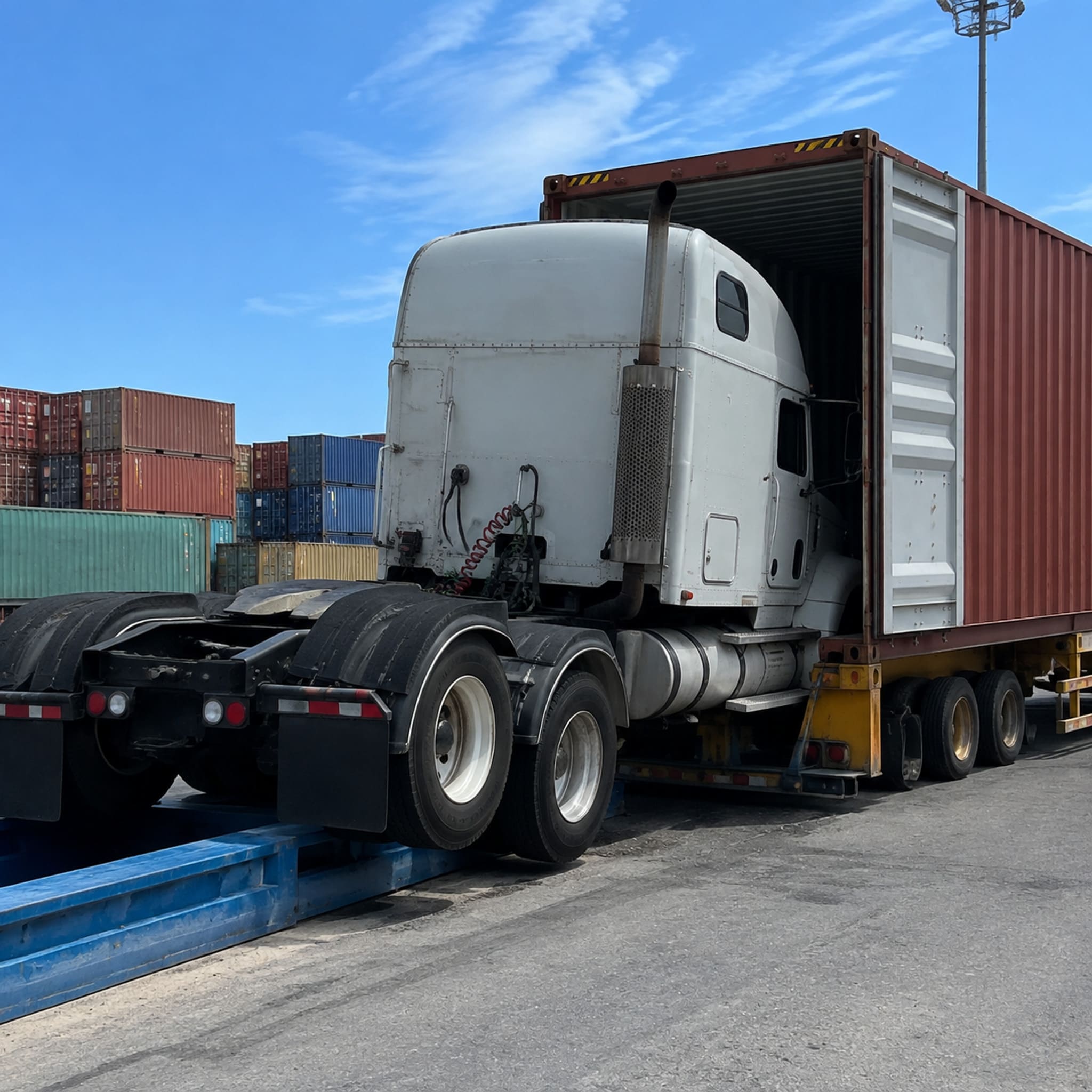
Before your truck touches ocean water, it has to reach a US export port. The major exit points for used vehicles heading to Africa are typically on the East Coast, Gulf Coast, or West Coast. If your truck is sitting in a landlocked state, someone has to drive or haul it there.
Here is what I have seen buyers pay for that leg alone:
- Inland states to East Coast or Gulf ports: $1,500–$4,000+ per truck, depending on distance and transport method.
- Drive-away services (where a driver physically drives the truck to the port): cheaper but adds mileage to an already-used vehicle and requires insurance coordination.
- Flatbed or lowboy hauling: more expensive but protects the truck and mileage — and is often necessary if the truck is not fully roadworthy.
One buyer I worked with purchased two Freightliner trucks in a central US state. The per-truck savings over coastal listings looked like about $2,800. The inland transport quote came back at $3,400 per truck. He was already at a loss before paying ocean freight, port fees, or duties.
Port Congestion and Loading Delays
Not all US export ports are equal. Some ports that serve inland collection routes have slower vehicle processing, higher roll-on/roll-off (RoRo) fees, or less frequent sailing schedules to African destinations. Delays at the US port mean:
- Storage fees (typically charged per day after a free period expires)
- Demurrage if a container booking is missed
- Rebooking fees for ocean freight
A truck sourced near a major RoRo export hub — where African-bound vessels call regularly — saves time and money on this leg, even if the listed price is slightly higher.
Are There Hidden Paperwork Traps When Buying in Certain States?
This is the section I wish I had written five years earlier, because it would have saved several of my customers from very expensive headaches.
State-level title and registration processes in the US vary significantly. What looks like a straightforward purchase can become a documentation nightmare depending on where the truck was registered, who holds the title, and what the state requires before a clean title can be transferred.
What Can Go Wrong With Title and Export Documentation?
I am not a US attorney or a DMV specialist — and I want to be clear about that. But from handling export paperwork on behalf of African buyers for many years, I have seen these problems come up repeatedly:
- Delayed title issuance. Some states take weeks or months to process title transfers. If your vessel booking is in four weeks and the state takes six weeks to issue a clean title, you miss the sailing. Storage and rebooking fees start immediately.
- Lien releases. Trucks purchased from dealers or fleets that used financing may have liens that were not fully discharged. A liened title cannot be exported. Clearing a lien requires coordination with the lender, which takes time.
- Odometer and salvage disclosures. Some states have stricter requirements around salvage titles and odometer disclosure for export. Trucks with a salvage designation may face complications at African customs even if they are mechanically sound.
- Broker and agent fees. Buyers who are not physically present in the US (which describes most of my African customers) typically need a local agent or customs broker to handle title transfer, port delivery, and export customs filing. These costs are real and recurring.
One customer I worked with bought a truck in a state with a notoriously slow title processing system. He assumed the paperwork would clear in two weeks. It took eleven. By the time the truck reached the export port, he had paid four weeks of storage, missed two vessel sailings, and rebooked ocean freight at a higher rate. His "cheap" purchase ended up costing him more than a comparable truck I had available from a port-adjacent market.
The Export Readiness Test
Before fixating on price by state, experienced buyers ask a different set of questions:
- Is the title clean and in the seller's name?
- Are there any liens on the vehicle?
- How long does this state take to process a title transfer for export?
- Is the seller experienced with export sales, or is this their first time?
- What is the truck's distance from the nearest RoRo or container export port?
If you cannot get clear answers to all five questions, the price does not matter yet.
What Is the Right Question African Buyers Should Be Asking?
Here is what I tell every new customer who comes to me asking about the cheapest US state: you are solving for the wrong variable.
The variable that matters is total cost to landed-in-Africa. That number has many components, and the truck's listed price in a particular state is only one of them — and often not the dominant one.
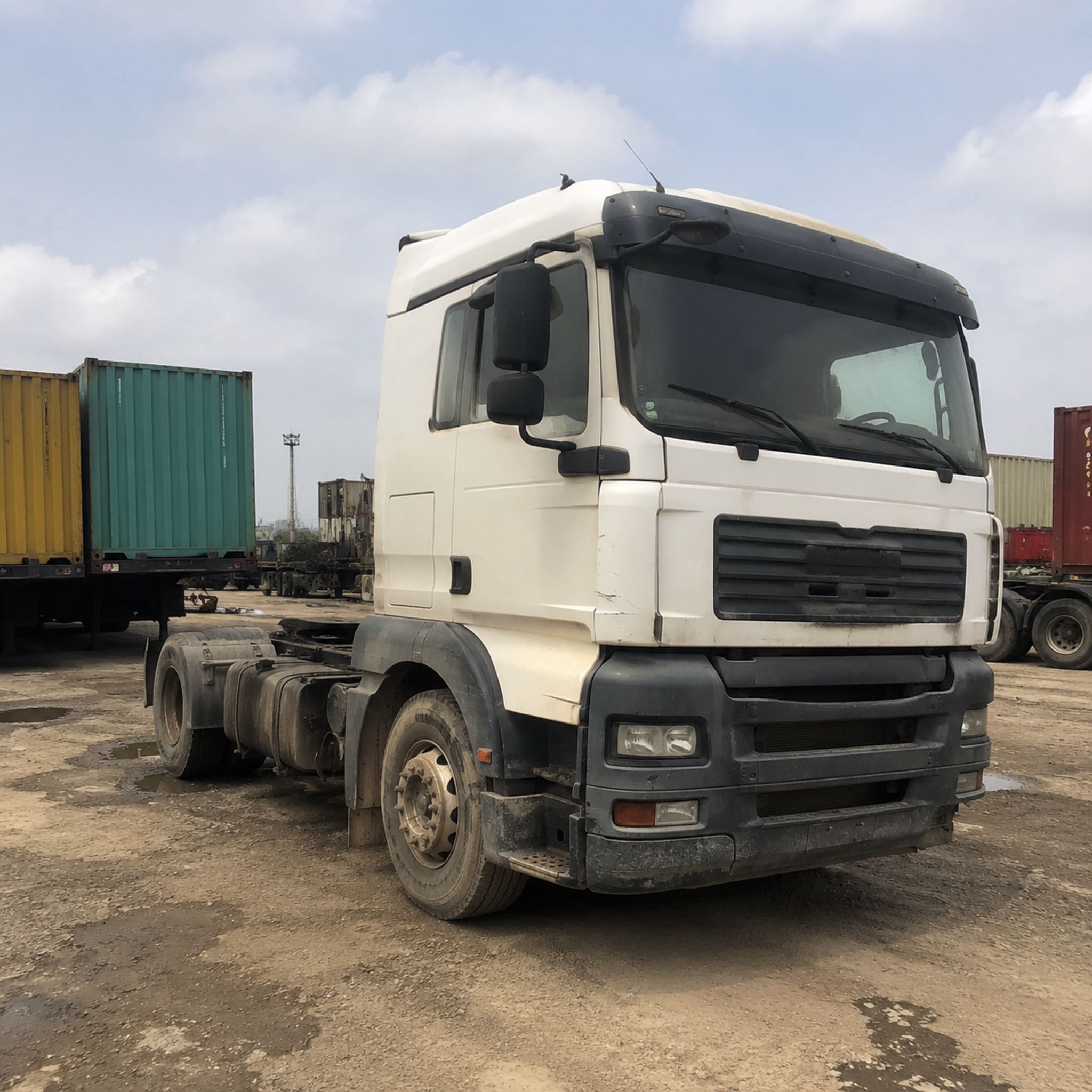
The Full Cost Stack for Importing a Used Semi-Truck to Africa
Here is how I walk buyers through the real calculation:
| Cost Component | Typical Range | Notes |
|---|---|---|
| Truck purchase price | $15,000–$60,000+ | Varies by brand, age, condition |
| Pre-purchase inspection | $300–$800 | Never skip this |
| Inland transport to port | $0–$4,500 | Zero if buying near a port |
| US export documentation | $500–$1,500 | Title, EEI filing, broker fees |
| Ocean freight (RoRo or container) | $1,500–$4,000 | Varies by route and port |
| African destination port charges | $500–$2,000 | Varies by country |
| Import duty and taxes | 5–35% of CIF value | Varies significantly by country |
| First-year repair and maintenance | $500–$8,000+ | Entirely dependent on truck condition |
When you lay it out this way, it becomes obvious: a $3,000 sticker price difference between states is noise compared to the $10,000–$20,000 swing in duties alone, or the $6,000 swing in first-year repairs between a well-maintained truck and a neglected one.
What Actually Drives Total Cost Down?
From my experience working both sides of this trade, the factors that genuinely reduce total landed cost are:
- Buying a truck in verified mechanical condition with documented maintenance history
- Sourcing near an export port to minimize inland transport
- Working with a seller experienced in export procedures to avoid title and documentation delays
- Choosing the right destination port in Africa (some have faster clearance and lower handling fees than others)
- Getting the import duty classification right — the difference between a truck classified correctly and incorrectly at African customs can be thousands of dollars[3]
None of those factors have anything to do with which US state has the lowest average listing price.
Frequently Asked Questions
Which US state has the cheapest used semi-trucks?
There is no single answer that applies to all buyers. Inland and rural states sometimes show lower average listing prices, but those savings are typically offset by higher inland transport costs to export ports, older or harder-used fleet stock, and slower title processing. Total landed cost — not sticker price — is the number that matters for export buyers.
How much does it cost to ship a semi-truck from the US to Africa?
Ocean freight for a used semi-truck from the US to Africa typically ranges from $1,500 to $4,000, depending on the route, vessel type (RoRo vs. container), origin port, and destination port. This is separate from inland transport within the US, port handling fees, and African import duties, which add significantly to the total.
Do I need a local agent to buy a semi-truck in the US for export?
Most African buyers who are not physically present in the US will need a local agent, broker, or trusted representative to handle physical inspection, title transfer, port delivery, and export customs filing. These services add cost but are generally necessary — and skipping them creates far larger risks.
Is it better to buy used semi-trucks from the US or from China for African markets?
Both markets have advantages. US-sourced trucks (often Peterbilt, Kenworth, Freightliner) can be well-priced but require careful condition verification and complex export logistics. China-sourced trucks (HOWO, SHACMAN, Dongfeng, FAW, SITRAK) are increasingly competitive, with better parts availability across Africa[4] and simpler export procedures from Chinese ports. The right choice depends on budget, brand preference, parts ecosystem in the destination country, and application.
What inspection should I require before buying a used semi-truck for export?
At minimum, require a third-party mechanical inspection covering engine compression and oil condition, gearbox and driveline function, frame and chassis integrity, braking system, electrical systems, and tire condition[5]. An engine running test and a recent oil sample analysis add significant confidence. Never purchase for export without independent inspection — photos are not a substitute.
Conclusion
The cheapest state to buy a semi-truck is not a place on a map — it is the result of a calculation. After two decades of exporting used trucks and handling African buyers who have made every mistake in the book, the pattern is clear: buyers who chase the lowest sticker price in the lowest-tax state almost always spend more overall. Semi-truck procurement for export is a total-cost problem, and the state of purchase is one of the smallest variables in that equation.
What actually moves the needle is vehicle condition, proximity to an export port, clean documentation, and a supplier who knows how to get a truck from a US lot to an African yard without expensive surprises along the way.
If you are sourcing used semi-trucks for your fleet or business in Africa, I would encourage you to start with the full cost stack — not the listing price. We are happy to walk you through the numbers based on your destination country, target brands, and volume. Contact Deli Auto to speak with our team about sourcing, inspection, and export logistics.
[1] "Average Age of Automobiles and Trucks in Operation in the ...", https://www.bts.gov/content/average-age-automobiles-and-trucks-operation-united-states. Fleet management research and commercial vehicle remarketing data suggest that smaller owner-operators and rural carriers typically exhibit longer vehicle retention cycles than large national fleets, which tend to follow structured replacement schedules tied to depreciation and warranty considerations. Evidence role: general_support; source type: research. Supports: That rural or smaller trucking operations tend to retain commercial vehicles for longer periods before remarketing, compared to large urban or national fleet operators. Scope note: Systematic comparative data specifically contrasting rural and urban semi-truck replacement cycles in the US are limited; this finding is more robustly supported for passenger vehicles than for Class 8 commercial trucks. ↩
[2] "Spare Parts Logistics Market: by Type, Capacity, Propulsion", https://www.maximizemarketresearch.com/market-report/spare-parts-logistics-market/187889/. Studies on transport logistics and fleet management in sub-Saharan Africa document that parts supply chain limitations for non-locally-supported vehicle brands contribute materially to extended downtime and elevated total operating costs for fleet operators. Evidence role: general_support; source type: research. Supports: That spare parts availability for imported commercial vehicles is a significant operational challenge in African markets, resulting in extended vehicle downtime and revenue loss. Scope note: Available research tends to address the African trucking sector broadly rather than quantifying downtime costs specific to US-origin semi-truck brands versus other origins. ↩
[3] "South Africa - Import Tariffs", https://www.trade.gov/country-commercial-guides/south-africa-import-tariffs. World Customs Organization guidance and national customs authority regulations document that the tariff classification of commercial vehicles under the Harmonized System determines the applicable duty rate, and that misclassification—whether involving vehicle category, age, or use—can result in material differences in assessed duties as well as penalties for underpayment. Evidence role: general_support; source type: institution. Supports: That incorrect Harmonized System tariff classification of imported commercial vehicles can result in substantially different duty assessments, with potential for significant financial liability. Scope note: The magnitude of duty differences arising from misclassification depends on the specific classification dispute and the tariff schedule of the importing country; the claim of 'thousands of dollars' is plausible but reflects the article author's experiential estimate rather than a documented average. ↩
[4] "Automotive industry in South Africa", https://en.wikipedia.org/wiki/Automotive_industry_in_South_Africa. Market analyses of the African commercial vehicle sector document the rapid expansion of Chinese truck brands, including Sinotruk, SHACMAN, and Dongfeng, and note that accompanying investments in parts distribution infrastructure have improved after-sales support availability in multiple African regions. Evidence role: general_support; source type: research. Supports: That Chinese commercial vehicle brands have established growing parts distribution and after-sales networks across Africa, contributing to competitive total operating costs. Scope note: Parts availability varies significantly by country and region within Africa; the relative advantage over US-brand parts networks depends on the specific destination market. ↩
[5] "5.2.2 Vehicle Inspections", https://csa.fmcsa.dot.gov/safetyplanner/MyFiles/SubSections.aspx?ch=22&sec=65&sub=148. Commercial vehicle inspection standards, including frameworks referenced by the Commercial Vehicle Safety Alliance (CVSA) and industry fleet management guidance, enumerate engine, drivetrain, frame, brake, electrical, and tire assessments as core components of a thorough commercial vehicle condition evaluation. Evidence role: expert_consensus; source type: institution. Supports: That a comprehensive pre-purchase inspection of a used Class 8 commercial truck should include assessment of engine condition, drivetrain, frame integrity, braking systems, electrical systems, and tires. Scope note: Published inspection standards are primarily designed for roadworthiness and safety compliance rather than specifically for pre-export condition assessment; export-oriented buyers may require additional criteria beyond standard checklists. ↩