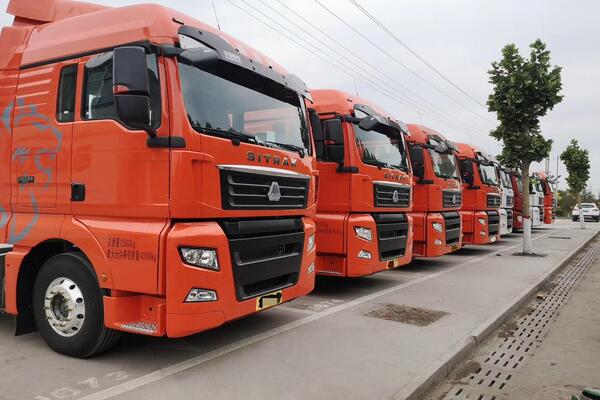
Transport efficiency sounds simple until your truck breaks down 300 kilometers from the nearest workshop. For fleet operators in Africa, Southeast Asia, and similar emerging markets, SINOTRUK vehicles keep appearing in procurement shortlists — not because they dominate every spec sheet, but because the real cost of running a fleet includes repair time, parts access, and driver downtime, not just engine output.
SINOTRUK helps global fleets improve transport efficiency primarily in markets where acquisition cost, parts availability, and standardized maintenance matter more than premium build quality. In Africa, Southeast Asia, the Middle East, and similar regions, SINOTRUK's HOWO range delivers competitive payload capacity, widely available spare parts ecosystems, and lower total cost of ownership — making it a practical fit for high-mileage haulage, construction logistics, and fleet operations running on tighter margins.
But "practical fit" depends heavily on your specific scenario. A buyer running refrigerated cargo on paved highways has very different needs from a contractor hauling construction materials on unpaved routes at altitude. The sections below break down where SINOTRUK earns its position — and where buyers should think twice.
What Does Transport Efficiency Actually Mean for Fleet Operators?
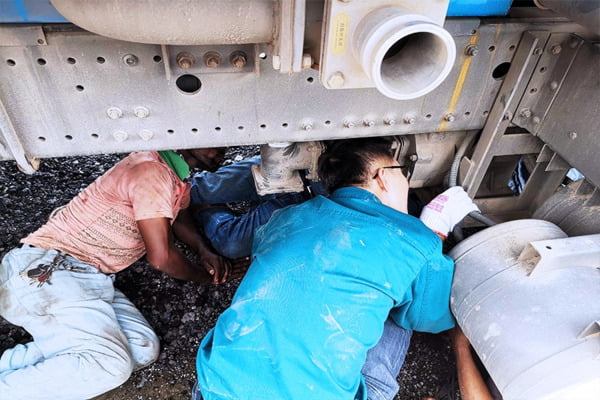
Many buyers ask us directly: "Is SINOTRUK fuel-efficient?" It's a reasonable starting point, but it misses most of the picture. A truck that burns 5% less fuel but sits idle for two weeks waiting on an imported injector pump doesn't improve your fleet's efficiency — it destroys it.
Transport efficiency for a commercial fleet is the combined result of vehicle uptime, load utilization, fuel consumption, maintenance turnaround time, and total cost per kilometer. For fleets operating in markets with limited dealer infrastructure, the weight of each factor shifts — uptime and repair speed often matter more than headline fuel figures.
Most buyers we speak with have learned this through experience, not theory. Once you understand efficiency as a system rather than a single number, evaluating SINOTRUK changes considerably.
Why "Efficiency" Means Different Things in Different Markets
In Western European fleet management, efficiency often centers on telematics integration, driver assistance systems, and fuel optimization software. Those metrics make sense when fuel costs are high, labor costs are higher, and dealership networks are dense.
In the markets where SINOTRUK sells most heavily — sub-Saharan Africa, Southeast Asia, Central Asia, parts of the Middle East[1] — the efficiency equation looks different:
- Fuel costs matter, but they're often partially offset by lower-grade diesel pricing or subsidized fuel schemes
- Parts lead time is critical — a two-week wait for a proprietary European component is a logistics failure in markets where delivery windows are tight
- Driver skill levels vary widely, and trucks that require complex diagnostics or specialized tooling increase dependency on rare technicians
- Road conditions are harsh — unpaved routes, river crossings, extreme heat, and heavy dust loads stress mechanical components differently than motorway driving
SINOTRUK's design philosophy aligns more closely with the second scenario than the first. That's not a criticism — it's a positioning statement. Knowing this helps buyers make faster, more confident decisions.
The Total Cost of Ownership Framework
When we work with procurement managers evaluating a SINOTRUK order, we often build out a rough TCO picture together. The framework typically includes:
| Cost Category | SINOTRUK Position | Notes |
|---|---|---|
| Acquisition cost | Lower than European equivalents | Significant advantage in budget-sensitive markets |
| Fuel consumption | Competitive in class | Real-world variation depends on load and terrain |
| Spare parts cost | Low to moderate | Wide parts ecosystem, many locally produced components |
| Parts availability | Strong in target markets | High concentration in Africa, SEA, and Middle East |
| Maintenance complexity | Moderate | Simpler mechanical systems, lower specialist dependency |
| Resale value | Lower than premium brands | Less relevant for high-utilization fleets |
| Financing access | Accessible through Chinese banks and export credit | Relevant for government or large fleet buyers |
No single number tells the story. The table tells it better.
Which Load Types and Routes Suit SINOTRUK Best?
Buyers regularly ask us whether SINOTRUK can handle their specific cargo. It's the right question. Not every chassis, axle configuration, or powertrain suits every application — and we've seen buyers choose the wrong spec and blame the brand when the real issue was a mismatch between vehicle and use case.
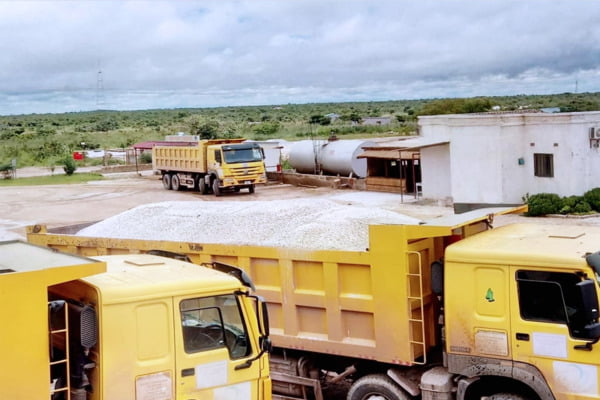
SINOTRUK HOWO trucks are best suited to heavy haulage, bulk construction materials, mining support logistics, agricultural cargo, and general freight in markets where roads range from paved highways to compacted dirt tracks. Applications requiring precise temperature control, air-suspension ride quality, or long-distance highway operation at sustained high speed may demand more specialized equipment.
Understanding the right fit starts with honest application mapping, not brand loyalty.
High-Fit Applications
Based on the orders we've handled and the pre-shipment inspection records we maintain, the following use cases consistently work well with SINOTRUK:
Construction and Infrastructure Projects
- Dump trucks (8x4 and 6x4 configurations) are among our most frequently exported SINOTRUK units[2]
- Buyers cite load capacity, chassis robustness, and parts availability at project sites
- Common in West Africa, East Africa, Southeast Asia, and government infrastructure contracts
Bulk Agricultural Haulage
- Cargo trucks with standard flatbed or enclosed bodies handling grain, fertilizer, and produce
- Routes often include unpaved rural roads where ride quality matters less than durability
Mining Support Logistics
- Water tankers, fuel tankers, and tipper trucks serving remote mining camps
- Buyers prioritize access to local mechanics who already know the HOWO platform
Port and Urban Distribution Logistics
- Short-to-medium haul routes where cumulative mileage is high but individual runs are not extreme
Lower-Fit Applications
Being direct serves buyers better than overpromising:
- Long-distance international highway haulage (e.g., Trans-African corridor routes with 24-hour driving cycles) — European trucks often outperform here due to driver comfort, fuel efficiency at highway speeds, and safety system integration[3]
- Refrigerated cargo with precise temperature management — requires purpose-built reefer specifications beyond standard SINOTRUK offerings
- High-altitude mountain routes with extreme grade — powertrain selection matters significantly here; buyers should seek professional technical guidance for these conditions
How Does SINOTRUK's Parts Ecosystem Reduce Fleet Downtime?
Downtime cost is invisible on a spec sheet and devastating on a balance sheet. One of the most common pain points we hear from fleet managers — particularly those who switched from European brands — is the cost and wait time involved in sourcing genuine parts outside major cities.
SINOTRUK's parts ecosystem reduces fleet downtime through a combination of high parts standardization across model generations, a large global distribution network concentrated in Africa and Southeast Asia, lower individual part costs compared to European brands, and a wide base of mechanics trained on HOWO platforms across target markets.
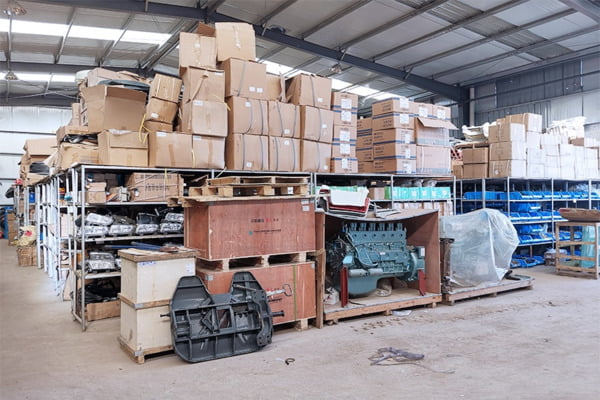
This ecosystem advantage is one of the most concrete reasons buyers in emerging markets return to the platform.
Why Parts Standardization Matters More Than You Might Think
SINOTRUK has maintained relatively consistent component architecture across its HOWO series for years[4]. This means:
- Cross-compatibility between model years for many common wear parts
- Local workshops can stock fewer SKUs while covering a wider range of trucks
- Training a mechanic on one HOWO generation often transfers to newer units
In the orders we've handled for buyers running mixed-age fleets, this standardization has consistently come up as a practical advantage. A fleet running HOWO A7 units alongside older T7H models can often use the same mechanic, the same tooling, and overlapping parts inventories.
Parts Supply in Key Markets
The concentration of SINOTRUK parts distribution aligns closely with the brand's sales footprint:
- Sub-Saharan Africa: High availability in Nigeria, Kenya, Tanzania, Ghana, Ethiopia, and South Africa. Many markets have both official distributor channels and parallel aftermarket supply.
- Southeast Asia: Strong presence in Myanmar, Vietnam, Cambodia, and Indonesia. Parts are increasingly locally stocked by regional distributors[5].
- Central Asia and Middle East: Established distribution hubs, particularly in Kazakhstan, UAE, and Iraq.
Buyers should always verify local distributor coverage for their specific operating region before purchasing. Parts availability varies between major cities and remote areas, and this due diligence belongs in procurement planning.
The Counterfeit Parts Risk
One caution we always raise with buyers: the same open parts ecosystem that makes SINOTRUK easy to maintain also attracts counterfeit and substandard components. In high-volume aftermarkets like West Africa, not every "HOWO part" on the shelf is genuine or quality-controlled.
Buyers sourcing spare parts should:
- Request documentation tracing parts to verified manufacturers
- Work with suppliers who can provide part numbers and brand references
- Treat unusually low pricing as a warning sign, not a deal
- Consider consolidating parts procurement through a trusted export supplier with inspection capability
What Should Buyers Verify Before Purchasing Used SINOTRUK Trucks?
Used SINOTRUK trucks make up a significant portion of the export orders we handle. Buyers often ask us whether a used HOWO is a smart buy — and the honest answer is: it depends on what was done to it and what was done with it.
Before purchasing a used SINOTRUK truck, buyers should verify engine hours and condition through physical inspection and test run, check gearbox and axle wear, review maintenance records where available, confirm chassis structural integrity, and ensure the unit matches the declared specification for their intended application.
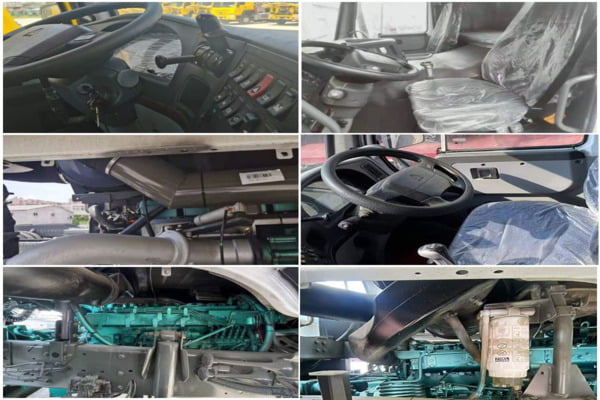
Cutting corners on pre-purchase inspection is how buyers end up with trucks that underperform from day one.
A Practical Pre-Shipment Inspection Checklist
Based on the inspection protocols our technical team follows, buyers should confirm the following before any used SINOTRUK unit ships:
Engine:
- Cold start and warm-up behavior
- Oil pressure and coolant temperature under load
- Exhaust smoke color and volume (blue smoke signals oil burning; black signals fueling issues)
- Evidence of recent overhaul or patch repairs masking underlying problems
Drivetrain:
- Gearbox shifting under load — listen for grinding or slipping
- Axle condition and differential play
- PTO condition if fitted
Chassis and Structure:
- Frame straightness — twist or cracks indicate hard use or accident history
- Suspension condition, spring pack wear
- Cab mount integrity
Documentation:
- Vehicle identification matches paperwork
- Engine number matches chassis record
- Customs clearance eligibility for destination country
We handle this inspection in-house for every unit we export. Buyers who cannot be present should require video documentation and a written inspection report before authorizing payment.
Frequently Asked Questions
Is SINOTRUK suitable for African road conditions?
SINOTRUK HOWO trucks are widely used across sub-Saharan Africa precisely because their mechanical design tolerates rough roads, dust, and heat reasonably well. That said, application and spec selection matter — a fully loaded tipper on unpaved mining tracks stresses the drivetrain differently than urban cargo work. Consult a supplier who understands your specific route before ordering.
How does SINOTRUK compare to European trucks for long-haul operations?
For long-haul at highway speeds with high driver comfort requirements, European brands like Volvo, Scania, or Mercedes-Benz generally offer advantages in fuel efficiency, safety systems, and cab ergonomics. SINOTRUK competes on acquisition cost, parts availability, and lower maintenance complexity — advantages that matter more in shorter-cycle, high-load, infrastructure-limited markets.
What is the typical lifespan of a SINOTRUK HOWO truck with proper maintenance?
Manufacturer data and operator reports from our customer base suggest well-maintained HOWO units can operate productively for 800,000 to 1,000,000 kilometers or more[6], depending on load type and road conditions. Real-world outcomes vary significantly based on maintenance discipline. These figures should be treated as indicative, not guaranteed.
Can I source genuine SINOTRUK spare parts through Deli Auto?
Yes. We stock a range of SINOTRUK-compatible spare parts and can source additional components through verified supply channels. We recommend buyers specify their exact truck model, engine code, and part numbers to ensure accurate matching and avoid fitment errors.
What engine options are common in SINOTRUK trucks exported to emerging markets?
The most commonly exported HOWO configurations use WD615, MC11, and MC13 series engines (Weichai-manufactured) or Steyr-derived powerplants[7]. Engine choice affects parts availability in your region — buyers should confirm local distributor coverage for their specific engine variant before purchasing.
Conclusion
Transport efficiency means different things depending on where your trucks operate, what they carry, and what your maintenance infrastructure looks like. SINOTRUK doesn't help every fleet improve efficiency — but for operators in Africa, Southeast Asia, and similar markets running heavy haulage, construction logistics, or bulk cargo on a disciplined budget, the combination of lower acquisition cost, accessible spare parts, and a widely understood mechanical platform creates a genuine operational advantage[8].
The buyers who get the most from SINOTRUK are those who match the right spec to their actual application and invest in pre-shipment inspection rather than buying blind. At Deli Auto, we've supported buyers through exactly this process for over 20 years — from initial specification matching to pre-shipment inspection, container loading, and long-term parts supply.
If you're evaluating SINOTRUK for your fleet, contact us directly. Tell us your routes, load types, and local maintenance situation, and we'll give you an honest assessment of whether SINOTRUK is the right fit — and which spec to start with.
[1] "Sinotruk profile and market insights | StockCounterparts", https://www.stockcounterparts.com/companies/sinotruk. Trade and industry analyses of Chinese commercial vehicle exports consistently identify sub-Saharan Africa, Southeast Asia, and Central Asia as primary destination regions, reflecting both price sensitivity and infrastructure development demand in those markets. Evidence role: statistic; source type: research. Supports: That sub-Saharan Africa, Southeast Asia, and Central Asia represent the dominant export destinations for Chinese heavy-duty trucks including SINOTRUK. Scope note: Aggregate Chinese truck export data may not isolate SINOTRUK's brand-specific market share from other Chinese manufacturers such as Dongfeng or FAW. ↩
[2] "Sub-Saharan Africa Trade Summary 2023 | WITS | Text", https://wits.worldbank.org/CountryProfile/en/Country/SSF/Year/LTST/Summarytext. Chinese customs and UN Comtrade data on heavy vehicle exports indicate that tipper and dump truck configurations constitute a substantial share of commercial vehicle exports to sub-Saharan Africa, aligned with ongoing infrastructure and construction sector growth in recipient countries. Evidence role: statistic; source type: government. Supports: That dump trucks represent a major category of Chinese heavy vehicle exports to sub-Saharan Africa and Southeast Asia, consistent with infrastructure development demand. Scope note: Publicly available trade statistics classify vehicles by HS code category rather than brand, making it difficult to isolate SINOTRUK-specific export volumes for dump truck configurations. ↩
[3] "Fuel efficiency technology in European heavy-duty vehicles", https://theicct.org/publication/fuel-efficiency-technology-in-european-heavy-duty-vehicles-baseline-and-potential-for-the-2020-2030-timeframe/. Independent fleet assessments and regulatory compliance reviews have consistently found that European heavy truck manufacturers such as Volvo, Scania, and Mercedes-Benz lead in fuel efficiency at sustained highway speeds, advanced driver assistance system integration, and cab ergonomic standards relative to Chinese-manufactured equivalents. Evidence role: expert_consensus; source type: research. Supports: That European heavy truck manufacturers lead in fuel efficiency optimization, advanced driver assistance systems, and cab ergonomics for long-haul highway operations. Scope note: The performance gap between European and Chinese trucks has narrowed in recent model generations; comparative data specific to SINOTRUK HOWO versus named European models on identical routes is not widely published. ↩
[4] "Genuine vs. OEM vs. Aftermarket Sinotruk HOWO Parts", https://www.truckragreat.com/news-insights/genuine-vs-oem-vs-aftermarket-sinotruk-howo-parts.html. Technical documentation from SINOTRUK and third-party parts suppliers indicates that the HOWO platform has retained common component families across successive generations, particularly for drivetrain and chassis wear parts, though compatibility is not universal across all model variants. Evidence role: mechanism; source type: other. Supports: That SINOTRUK's HOWO platform has maintained sufficient component standardization across generations to allow meaningful parts cross-compatibility. Scope note: Comprehensive independent verification of cross-generational parts compatibility across all HOWO variants is not publicly available; buyers should confirm specific part interchangeability with a qualified supplier before relying on this assumption. ↩
[5] "Five Reputable Sinotruk Global Distributors in 2026", https://www.einpresswire.com/article/943894662/five-reputable-sinotruk-global-distributors-in-2026-advancing-the-global-commercial-vehicle-distribution-industry. Industry analyses of the ASEAN commercial vehicle aftermarket have noted the expansion of Chinese truck brand distribution networks in Vietnam, Myanmar, Cambodia, and Indonesia, driven by growing fleet penetration and demand for locally stocked components. Evidence role: general_support; source type: institution. Supports: That Chinese heavy truck brands including SINOTRUK have established parts distribution networks across major Southeast Asian markets. Scope note: Parts availability varies significantly between urban centers and rural or remote areas within each country; the characterization of coverage as 'strong' should be verified against specific operating locations rather than assumed at a national level. ↩
[6] "China National Heavy Duty Truck Group", https://en.wikipedia.org/wiki/China_National_Heavy_Duty_Truck_Group. Industry benchmarks for heavy-duty commercial trucks generally place productive service life in the range of 800,000 to over 1,000,000 kilometers under disciplined maintenance regimes, though actual outcomes depend heavily on load cycles, road conditions, and maintenance quality. Evidence role: general_support; source type: other. Supports: That heavy-duty trucks with proper maintenance can achieve service lives in the range of 800,000 to 1,000,000 kilometers. Scope note: Published lifespan data for SINOTRUK HOWO specifically in emerging market operating conditions is limited; figures cited in the article should be treated as indicative estimates rather than manufacturer guarantees. ↩
[7] "China National Heavy Duty Truck Group", https://en.wikipedia.org/wiki/China_National_Heavy_Duty_Truck_Group. SINOTRUK's powertrain history includes engines derived from Austrian Steyr technology licensed in the 1980s, as well as Weichai-manufactured units including the WD615 series and later MC11 and MC13 platforms; this lineage is documented in Chinese automotive industry histories and manufacturer technical literature. Evidence role: historical_context; source type: encyclopedia. Supports: That SINOTRUK's engine lineup includes Weichai-manufactured units and powerplants derived from licensed Steyr technology transferred to China. Scope note: Engine specifications and availability vary by export market and model year; buyers should confirm the specific engine fitted to any unit under consideration rather than relying on general platform descriptions. ↩
[8] "Analysis of Fleet Replacement Lifecycle", https://www.sfwmd.gov/sites/default/files/documents/fleet_life_cycle_12-14.pdf. Fleet economics research in emerging markets has found that total cost of ownership calculations for commercial vehicles are heavily influenced by parts availability and maintenance turnaround time, often offsetting initial price differences between vehicle tiers when dealer infrastructure is sparse. Evidence role: general_support; source type: research. Supports: That lower acquisition cost and parts accessibility can produce favorable total cost of ownership outcomes for commercial vehicles in markets with limited dealer infrastructure. Scope note: Published TCO comparisons specifically benchmarking SINOTRUK against European brands in African or Southeast Asian operating conditions are not widely available in peer-reviewed literature; the TCO advantage described is plausible but not independently verified for this brand. ↩