Managing a used truck fleet without the right spare parts on hand is a gamble you will almost certainly lose. One failed fuel injector in a remote job site, no local supplier, and your truck sits idle for days — or weeks.[1] The question is not whether to stock spare parts, but which parts actually protect your fleet from costly downtime.
Building a spare parts stock for a used truck fleet starts with a single question: which parts, if unavailable, will strand your trucks? Prioritize those first. Consumables that cause immediate stoppage — injectors, air compressor components, water pumps, clutch components — must be stocked regardless of cost. Parts that only degrade performance can typically be sourced on-demand without serious operational risk.
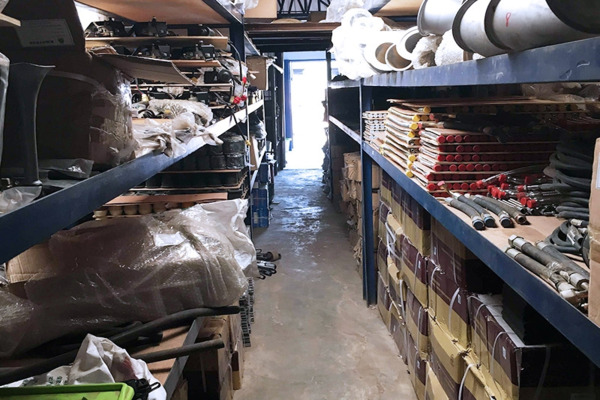
Getting this logic right before you place your first order makes a measurable difference. The sections below walk through the key decisions: how to think about downtime risk, why used trucks don't follow OEM service schedules, and why your stocking depth should differ depending on the brands in your fleet.
Is Downtime Risk the Right Way to Prioritize Your Spare Parts List?
Most fleet buyers approach parts procurement like a shopping list problem. They look at price, they look at brand, and they guess at quantity. That approach reliably produces the wrong stock.
The correct filter is downtime risk: sort every part by what happens to the truck if that part fails and no replacement is available. Parts that strand the vehicle immediately belong in your initial stock. Parts that reduce efficiency but allow the truck to keep moving can be managed reactively. This single reframing prevents the most expensive stocking mistakes.
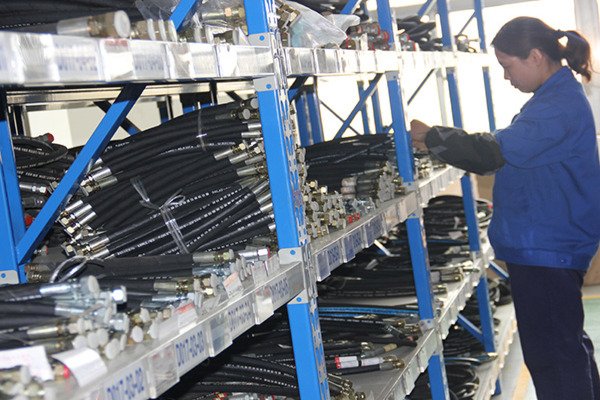
Reframing parts procurement as a risk decision rather than a cost decision also changes which conversations you have with your supplier — and which questions you should be asking before you ship.
What Makes a Part "Mission-Critical"?
A mission-critical part has two properties:
- Failure causes immediate immobilization. The truck cannot move or complete its load without it.
- Replacement is not fast in your operating market. Local dealers either don't stock it, or lead time exceeds your operational tolerance.
Both conditions must apply. A part that fails and immediately grounds the truck is manageable if your local market can supply it within 24 hours. The problem is when both conditions align — the truck is down and the part is unavailable locally.
The Tier Structure That Actually Works
A practical approach is to sort your parts list into three tiers before you order anything:
| Tier | Criteria | Stocking Decision |
|---|---|---|
| Tier 1 — Ground Stop | Failure = truck cannot operate | Stock at origin. Order with the vehicles. |
| Tier 2 — Performance Degraded | Failure = reduced capacity, still moves | Source locally on-demand, or stock small quantities |
| Tier 3 — Preventive Maintenance | Replacement on schedule, not on failure | Replenish at regular intervals as needed |
Examples of Tier 1 parts across most truck types include:
- Fuel system components: injectors, fuel lift pumps, fuel filters
- Air system components: air compressor, air dryer, brake valve components
- Cooling system: water pump, thermostat, radiator hoses
- Drivetrain: clutch disc and pressure plate, propeller shaft universal joints
- Electrical: alternator, starter motor, relay clusters
Note: This list is a starting point, not a parts catalog. Your actual Tier 1 list depends on your specific truck models, engine types, and operating environment. Always cross-reference against model-specific documentation before placing orders.
Do Used Trucks Follow OEM Service Intervals?
This is one of the most common and consequential assumptions buyers bring to their first fleet purchase. Many procurement managers download the manufacturer's service manual and build their parts list directly from it. That approach works well for a new vehicle. It is systematically misleading for a used one.
Used trucks with high mileage — commonly 500,000 km or more at export[2] — do not consume wear parts at factory-scheduled intervals. Seals, gaskets, filters, and high-friction components wear faster on aging engines. Buyers who plan against OEM intervals will under-stock the parts they need most and overstock items they rarely use.
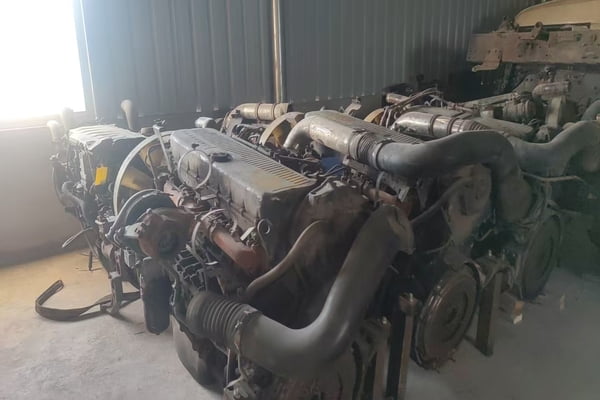
The practical implication is not complicated, but it requires a deliberate adjustment. Plan for compressed maintenance cycles, not factory ones.
How Mileage Changes Your Stocking Assumptions
An engine with 600,000 km of service history behaves differently from the same engine at 100,000 km. Wear clearances have increased. Seals are older and more prone to weeping. The cooling system has accumulated deposits regardless of how well the truck was maintained.
Specific adjustments experienced buyers make:
- Oil seals and gaskets: Order multiples. A front crankshaft seal that factory schedule suggests at 200,000 km intervals may need replacement within 60,000–80,000 km on a high-mileage engine.
- Fuel filters: Double or triple your planned interval quantity. Sediment levels in fuel supplies across many African and Southeast Asian markets accelerate filter fouling[3].
- Air filters: Same logic. Dusty road conditions in target markets compound normal wear significantly[4].
- Injector sealing washers and O-rings: Often overlooked, frequently needed. Any injector work on a high-mileage engine typically requires a full set.
- Turbocharger oil feed lines: Brittle with age. Rarely listed in standard parts catalogs but a common source of problems on trucks above 500,000 km.
A Practical Adjustment Multiplier
Buyers we work with who operate used European trucks in African markets often find it useful to apply a rough multiplier to filter and seal quantities: assume 1.5x to 2x the OEM-suggested interval consumption for the first 12 months of operation. This is not a precise engineering figure — it is a risk buffer drawn from recurring patterns across fleet buyer inquiries and refurbishment experience.
After 12 months of operating your specific fleet in your specific environment, you will have real consumption data to refine your stock planning. Until then, under-stocking seals and filters is a known and avoidable mistake.
Does the Brand in Your Fleet Change What You Should Stock?
Yes, significantly. This is the asymmetry that catches the most buyers off guard, and it is worth stating directly.
European truck brands — Scania, Volvo, Mercedes-Benz, MAN — often have thin local dealer stock in many African and Southeast Asian markets[5], particularly for older model years. Chinese truck brands — HOWO, SHACMAN, FAW, Dongfeng — generally have better parts availability in these same markets through distributor networks[6]. This difference should directly determine how deep your initial stock needs to be by brand.
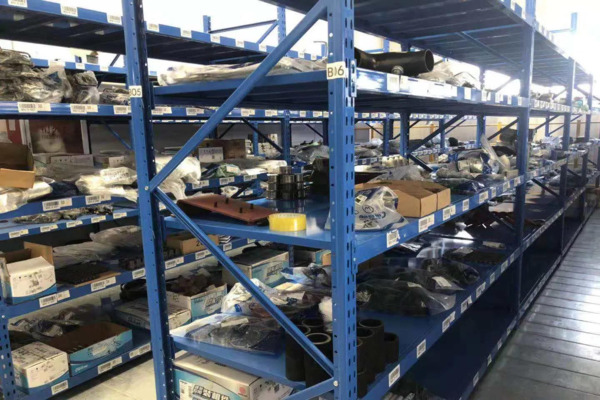
This is not a quality argument. It is a logistics reality that buyers must verify and plan around.
Verifying Local Availability Before You Decide What to Stock
The mistake is assuming. Before you finalize any stocking decision, verify the following for your specific market:
- Is there an authorized dealer or distributor for your truck brand in your country?
- Do they stock parts for your specific model year? A Scania dealer who stocks parts for 2015–2019 models may carry nothing for 2008–2012 vehicles.
- What is their typical lead time for non-shelf items? "We can order it" is not the same as "we have it in stock."
- Are there independent parts importers covering your brand? For European brands in particular, independent importers sometimes carry deeper stock than official dealers.
Buyers who complete this verification before ordering will often discover that locally "available" parts for their European-brand fleet are actually 3–6 week imports. That lead time changes the risk tier of many parts from Tier 2 to Tier 1.
Stocking Depth Comparison by Brand Type
| Brand Category | Examples | Local Availability (Africa/SE Asia) | Recommended Initial Stock Depth |
|---|---|---|---|
| European premium | Scania, Volvo, MAN, Mercedes-Benz | Often limited, model-year dependent | High — stock Tier 1 and key Tier 2 items at origin |
| Chinese major brands | HOWO, SHACMAN, FAW, Dongfeng | Generally better through distributor networks | Moderate — Tier 1 only; Tier 2 often sourceable locally |
| Japanese mid-range | Hino, Isuzu | Variable by country | Verify locally before deciding |
These are general patterns observed across buyer inquiries, not audited dealer surveys. Verify conditions in your specific country and city before relying on them.
Should You Build One Stock List for a Mixed-Brand Fleet?
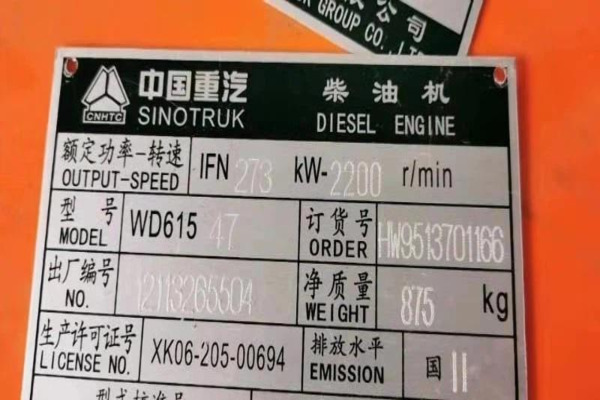
A frequent mistake we see in first-time fleet buyers is ordering parts based on brand-wide catalogs rather than specific model codes. A Scania R-series fleet and a Scania P-series fleet share some parts — but not the critical ones. Two MAN trucks of different model years and engine variants may have incompatible injectors, different clutch disc diameters, and entirely different gearbox oil capacities.
Your spare parts stock must be built around exact model specifications: engine code, gearbox type, axle configuration, and model year. Brand-level purchasing without model-level cross-referencing leads to wrong fitment, wasted capital, and the very downtime you were trying to prevent.
The Information You Need Before You Order a Single Part
Before approaching any supplier, gather the following for each truck in your fleet:
- Engine code and displacement (not just brand — e.g., Cummins ISM, Cummins ISX, Weichai WP10, WP12 are different families with different parts[7])
- Gearbox model (ZF 16S, FAST 12JSD, Eaton Fuller variants all use different synchronizer kits and seals[8])
- Axle manufacturer and ratio (BPW, FUWA, and brand-specific axles require different bearing kits)
- Model year and production series (many brands changed specifications mid-series)
- Fuel system type (mechanical injection vs. common rail changes the entire injector supply category)
A supplier who asks you for this information before offering you a parts list is doing you a service. One who offers you a generic "Scania parts bundle" without asking these questions is not a supply partner — they are a risk you are paying to take on.
Frequently Asked Questions
How many units of each critical part should I stock per truck?
There is no universal answer, but a reasonable starting baseline for Tier 1 consumables is one full replacement set per 3–5 trucks for parts like water pumps and alternators, and 2–3 replacement cycles per truck per year for filters and seals. Adjust based on your operating intensity, road conditions, and verified local availability.
Can I build my stock list after the trucks arrive?
You can, but it increases your risk window. The period immediately after fleet delivery is when operational pressure to use the vehicles is highest and lead time for parts shipment is longest. Ordering key parts alongside the vehicles eliminates that exposure.
Is it better to buy OEM parts or aftermarket parts for a used fleet?
For Tier 1 mission-critical parts, prioritize verified-genuine or OEM-equivalent parts from known suppliers. For Tier 2 and Tier 3 items, quality aftermarket parts are often acceptable and significantly more cost-effective. The key is knowing which tier you are buying for, and working with a supplier who can confirm the part's origin and compatibility.
How do I handle spare parts for a fleet with multiple brands?
Segment your stock list by brand and model before you start. Do not merge part numbers across brands even when descriptions appear similar. Mixed-brand fleets require more disciplined cross-referencing, not less. Some buyers designate one person responsible for parts identification per brand to prevent cross-contamination errors.
What is the biggest mistake buyers make when ordering spare parts with used trucks?
Based on the patterns we see repeatedly: buying parts for the wrong spec. Ordering by brand name instead of by exact model and engine code is the most common and most expensive mistake. The second most common is assuming local availability without verifying it — and discovering the gap only after the truck is already down.
Conclusion
Building a spare parts stock for a used truck fleet is a downtime risk decision, not a purchasing checklist. Start by identifying the parts that will strand your trucks if unavailable. Adjust your consumption assumptions for high-mileage vehicles — used trucks wear components faster than OEM schedules suggest. Verify local availability for your specific brand and model year before deciding what to stock at origin. And always build your list around exact model specifications, not brand-wide catalogs.
At Deli Auto, we work with fleet buyers across Africa, South America, the Middle East, and Southeast Asia who are making these decisions alongside their vehicle purchases. If you are planning a fleet acquisition and need help cross-referencing parts to your specific truck models, contact our team for a model-specific parts consultation before you finalize your order.
[1] "Mining Fleet Maintenance & Haul Truck Uptime", https://fleetrabbit.com/blogs/post/mining-fleet-maintenance-uptime. Fleet management research has documented that unplanned mechanical downtime in supply-constrained environments can extend significantly beyond 24 hours when replacement parts must be sourced from distant suppliers, with some studies noting multi-day idle periods as common in remote industrial operations. Evidence role: general_support; source type: research. Supports: Unplanned downtime durations for heavy vehicles when critical parts are unavailable, particularly in remote or supply-constrained environments. Scope note: Most published downtime studies focus on mining or construction fleets in developed markets; direct data for used truck fleets in African or Southeast Asian markets is limited in peer-reviewed literature. ↩
[2] "Figure of the week: Africa's used vehicle market and ...", https://www.brookings.edu/articles/figure-of-the-week-africas-used-vehicle-market-and-the-environment/. Reports from international trade bodies and vehicle import regulators in recipient countries have noted that used commercial vehicles entering African and Asian markets frequently carry high accumulated mileage, reflecting extended service lives in origin countries before resale. Evidence role: statistic; source type: institution. Supports: Typical odometer readings or service life of used commercial trucks at the point of export to developing markets. Scope note: Precise average mileage figures at export are not consistently published in a single authoritative source; available data tends to be country- or corridor-specific rather than globally representative. ↩
[3] "Diesel fuel and the environment - U.S. Energy Information ...", https://www.eia.gov/energyexplained/diesel-fuel/diesel-and-the-environment.php. The United Nations Environment Programme (UNEP) and the Partnership for Clean Fuels and Vehicles have documented significant variation in diesel fuel quality across African and Asian markets, with many countries maintaining higher permissible sulfur levels and less stringent contamination controls than European or North American standards. Evidence role: general_support; source type: institution. Supports: Diesel fuel quality in African and Southeast Asian markets, including contamination, sediment, and sulfur content relative to European standards. Scope note: Published data focuses primarily on sulfur content as a regulated metric; sediment and particulate contamination levels in retail diesel are less systematically documented across these regions. ↩
[4] "Impact of road dust on local air pollution: a case study ... - PMC", https://pmc.ncbi.nlm.nih.gov/articles/PMC12315149/. Studies on ambient particulate matter concentrations in sub-Saharan African and Southeast Asian road environments have documented PM10 levels substantially exceeding WHO guidelines, with vehicle filtration research indicating that higher ambient dust loads proportionally reduce air filter service intervals and increase ingestion-related engine wear. Evidence role: mechanism; source type: research. Supports: That elevated road dust and particulate matter concentrations in African and Southeast Asian environments reduce air filter service life and accelerate engine wear. Scope note: Direct studies correlating specific regional PM concentrations with quantified reductions in truck air filter service life are limited; the mechanism is well-established in filtration engineering literature, but region-specific multipliers are not consistently published. ↩
[5] "Automotive in South Asia - Open Knowledge Repository", https://openknowledge.worldbank.org/server/api/core/bitstreams/b4bf478d-bc15-5c40-b9b6-ba07946afd63/content. Industry analyses of automotive after-sales markets in sub-Saharan Africa and Southeast Asia have noted that authorized dealer and parts distribution networks for European commercial vehicle brands are concentrated in major urban centers, with coverage declining significantly in secondary cities and rural areas. Evidence role: general_support; source type: institution. Supports: The relative scarcity of authorized dealer networks and parts stock for European truck brands in African and Southeast Asian markets compared to their home markets. Scope note: Comprehensive, brand-specific dealer network coverage data for these regions is not consistently published in open academic or government sources; available evidence is largely from trade press and market entry reports rather than peer-reviewed studies. ↩
[6] "South Africa - Automotive | export.gov", https://legacy.export.gov/article?id=South-Africa-automotive. Trade data from the China Association of Automobile Manufacturers and reports from the International Trade Centre have documented rapid growth in Chinese commercial vehicle exports to African and Southeast Asian markets, accompanied by investment in local distributor and after-sales infrastructure by major brands including SINOTRUK (HOWO) and SHACMAN. Evidence role: general_support; source type: institution. Supports: The expansion of Chinese truck brand distributor and parts networks in African and Southeast Asian markets alongside growing vehicle export volumes. Scope note: Parts availability depth and distributor stock reliability vary substantially by country and brand; aggregate export and network expansion data does not directly measure parts-on-shelf availability at the local level. ↩
[7] "Genuine Cummins Parts", https://www.cummins.com/en-na/parts. Cummins and Weichai technical service manuals classify the ISM, ISX, WP10, and WP12 as separate engine platforms with distinct displacement, bore, stroke, and fuel system specifications, resulting in non-interchangeable injectors, seals, and gasket sets across families. Evidence role: definition; source type: other. Supports: That the Cummins ISM, ISX, and Weichai WP10/WP12 are distinct engine families with non-interchangeable components. Scope note: Detailed parts compatibility data is contained in proprietary OEM service documentation; open-source technical references provide general engine specification differences but do not exhaustively catalog parts incompatibilities. ↩
[8] "ZF gearbox synchronizer. Whatsapp:008615253103530 ...", https://www.facebook.com/sinotruckFASTtransmissionGearbox/posts/zf-gearbox-synchronizer-whatsapp008615253103530zf-16s150-16s151-16s181-16s221-16/892338696241642/. Technical documentation from ZF Friedrichshafen, Shaanxi Fast Gear, and Eaton Corporation identifies each manufacturer's heavy-duty transmission lines as proprietary platforms with unique internal geometry, requiring brand- and model-specific synchronizer assemblies, bearing kits, and seal sets. Evidence role: definition; source type: other. Supports: That ZF, FAST, and Eaton Fuller heavy truck gearboxes are distinct platforms requiring separate, non-interchangeable internal components. Scope note: Comprehensive cross-brand parts incompatibility data is not consolidated in a single open-access source; verification requires consulting individual OEM parts catalogs for each transmission model. ↩