If you've ever received a used truck quote and wondered why one supplier sent you a FOB price while another sent CIF, you're not alone. This difference between FOB and CIF confuses first-time importers constantly — and the confusion is expensive. Choosing the wrong Incoterm based on the wrong comparison can cost you thousands of dollars in unexpected freight charges, inadequate insurance coverage, or unresolved cargo disputes.
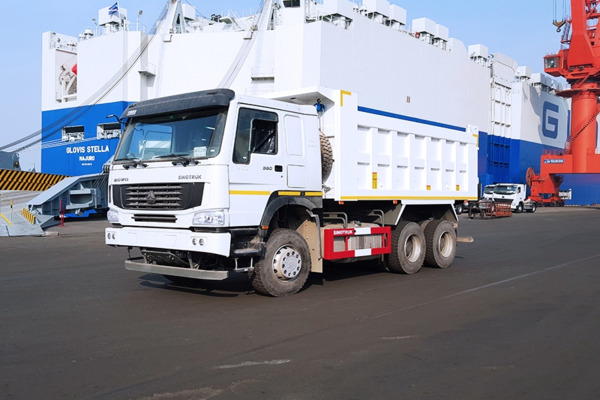
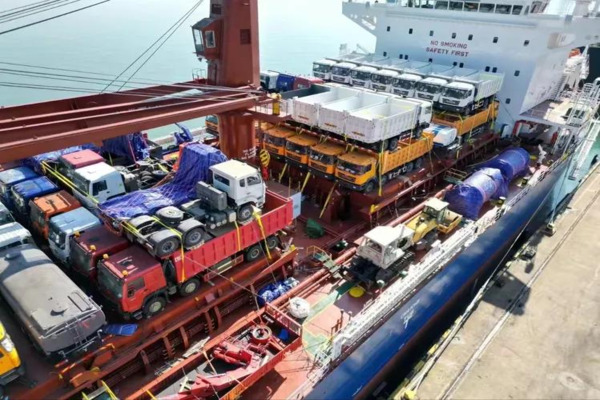
FOB (Free On Board) and CIF (Cost, Insurance, and Freight) are the two most common shipping terms used in international used truck transactions[1]. FOB means the seller's responsibility ends once the truck is loaded onto the vessel at the origin port[2] — you arrange and pay for freight and insurance from that point. CIF means the seller includes ocean freight and marine insurance in the quoted price, covering the cargo to your destination port[3]. Neither term is universally better. The right choice depends on your logistics capability, your destination market, and whether you've done the full cost math.
Most buyers make this decision by looking at the headline number alone. That's the wrong approach. The real question is: when you convert both quotes to the same cost base, which option actually costs you less — and which one leaves you more exposed if something goes wrong at sea?
How Do FOB and CIF Actually Divide Risk and Cost?
Many buyers assume the difference between FOB and CIF is simply a price gap. It isn't. It's a question of who controls the freight, who holds the insurance policy, and who bears the risk when the cargo is in transit.
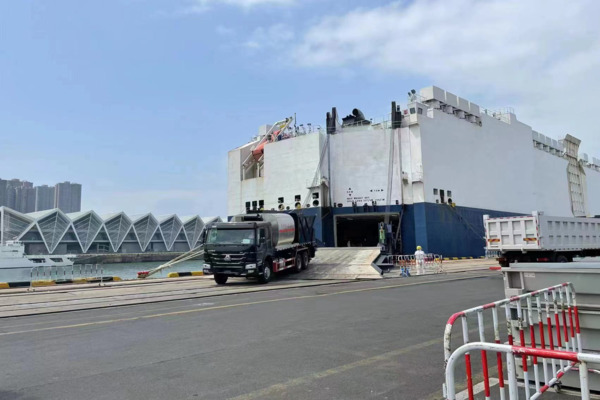
Under FOB, risk transfers to you — the buyer — the moment the truck is on board the vessel at the origin port. Under CIF, the seller retains that responsibility through to the named destination port, bundling in the freight and a basic marine insurance policy. The moment the goods are discharged at your port, both terms hand control back to you.
Here's where buyers consistently get tripped up. FOB and CIF don't just divide cost — they divide who makes the logistics decisions and who absorbs the consequences when those decisions go wrong.
What FOB Actually Means for You as a Buyer
Under FOB, once the truck clears the origin port and is on the vessel:
- You pay ocean freight — directly to your chosen freight forwarder or shipping line
- You arrange marine insurance — through your own insurer or broker
- You control the shipping schedule — you decide the carrier, the routing, and the timeline
- You bear the risk — if the vessel is delayed, damaged in transit, or the cargo is lost, you manage the claim
The advantage is control. Experienced importers with established freight forwarder relationships in their destination country often prefer FOB precisely because they can negotiate better freight rates than a seller in China can, and they can choose an insurance policy with coverage terms they've actually read.
The risk is exposure. If your local freight forwarder is unreliable, or if you're importing into a port where you have no existing contacts, FOB puts you in a difficult position mid-shipment. We've seen buyers in West Africa receive FOB shipments where their local agent couldn't clear customs efficiently, leading to weeks of demurrage charges at the destination port[4]. That cost wasn't in anyone's original quote.
What CIF Actually Means for You as a Buyer
Under CIF, the seller includes ocean freight and marine insurance in the quoted price:
- You pay one bundled number — freight and basic insurance are folded into the truck price
- The seller arranges logistics — using their established freight forwarder and insurer
- Your risk begins at the destination port — in principle, cargo damage or loss during transit is the seller's problem to handle, up to the point of discharge
CIF is often more convenient, especially for first-time importers who don't yet have a freight forwarder relationship or who are unfamiliar with shipping costs on a specific lane. It reduces the number of moving parts you need to manage before the truck arrives.
But convenience comes with a trade-off, which we'll cover in detail below.
Are You Comparing FOB and CIF on the Same Cost Basis?
This is the question most buyers never ask — and it's where the most common mistake happens.
A FOB quote looks cheaper than a CIF quote for the same truck. Of course it does. It doesn't include freight or insurance. But that lower number is incomplete. You cannot compare a FOB price to a CIF price without adding the missing components.
The only valid comparison is:
FOB price + your freight cost + your insurance cost = does this total beat the CIF price?
If the answer is yes, FOB is the better deal for you. If the CIF total is lower, or if you can't reliably estimate your freight cost, CIF may be the more cost-rational choice.
A Simple Illustrative Example
The following numbers are for illustration only — actual freight and insurance costs vary significantly by route, cargo weight, and market conditions. Use this as a framework, not a quote.
| Cost Component | FOB Scenario | CIF Scenario |
|---|---|---|
| Truck price (seller's quote) | $18,000 FOB Guangzhou | $20,200 CIF Lagos |
| Ocean freight (buyer-arranged) | $1,800 (illustrative) | Included |
| Marine insurance (buyer-arranged) | $250 (illustrative) | Included |
| Total before destination costs | $20,050 | $20,200 |
In this illustrative scenario, FOB is slightly cheaper — but only if the buyer can actually secure freight at that rate. If their freight forwarder quotes $2,500 instead of $1,800, the math flips entirely.
The point isn't which term is cheaper in principle. The point is that you need to run your own numbers with your actual freight and insurance costs before making a decision.
Why First-Time Importers Often Get This Wrong
In our experience quoting to buyers across Africa, Southeast Asia, and South America, first-time importers frequently:
- Accept the CIF quote without checking whether the insurance terms are adequate (more on this below)
- Assume FOB is always cheaper without verifying local freight costs
- Don't account for destination port handling, which is separate from and additional to both FOB and CIF terms
- Forget that CIF ends at the destination port — you still pay for local inland transport, port handling, and customs duties regardless of the Incoterm
Neither FOB nor CIF covers everything. Both terms end at the port.
Does CIF Insurance Actually Cover the Full Value of Your Truck?
This is the most underappreciated risk in the entire FOB vs. CIF conversation, and I want to be direct about it: standard CIF insurance is often not enough to fully cover a used truck in the event of a serious loss[5].
Here's why. When a seller quotes CIF and arranges marine insurance, the insurance premium is typically calculated on a base value — and in many cases, that base is the FOB value of the cargo, not the full CIF value or the truck's actual replacement cost. Buyers should verify this directly with the insurer, because the coverage mechanics vary by policy and provider.
The Coverage Gap Problem in Practice
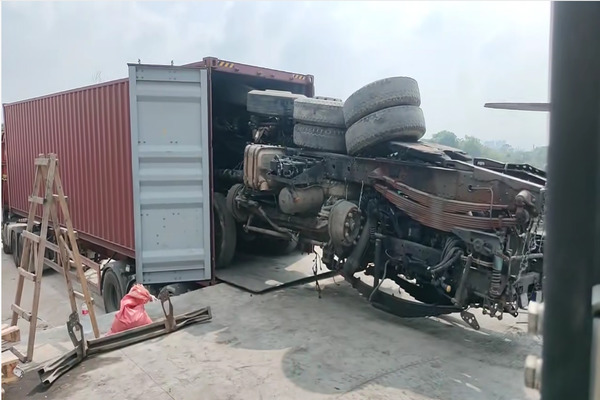
We've encountered situations where buyers received a CIF shipment, the cargo was significantly damaged in transit, and they filed a claim — only to find out that the insured value was considerably lower than the price they paid for the truck. The shortfall wasn't a fraud issue. It was a gap between what the seller's insurance policy was structured to cover and what the buyer assumed it would cover.
This matters most in two scenarios:
- Total loss — if the truck is lost at sea or destroyed, the payout may not cover what you paid
- Major damage — if the truck requires substantial repair after a transit incident, the insurance may cover only a portion of the actual repair cost
What Buyers Should Ask Before Accepting CIF
Before accepting a CIF quote, ask your supplier these specific questions:
- What is the insured value? Is it the FOB value, the CIF value, or the full invoice value?
- Who holds the insurance policy? Is it in the buyer's name or the seller's name?
- What does the policy cover? All-risk marine coverage is broader than basic ICC (C) coverage — they are not equivalent[6]
- What is the claims process? If something goes wrong, can you as the buyer file a claim directly?
- Is the insurance provider reputable? A policy from an insurer with no local presence in your country can be very difficult to enforce
At Deli Auto, when we arrange CIF shipments, we provide buyers with the insurance certificate and encourage them to review the terms with a local insurance professional before the vessel departs. We're not insurance advisors — but we believe buyers deserve to understand what they're covered for before the ship leaves port.
When Should You Choose FOB vs. CIF?
There is no universal answer. But based on two decades of handling these transactions for buyers across multiple markets[7], here's how I'd frame the decision.

Choose FOB If:
- You have an established, trusted freight forwarder at the destination port
- You have an existing relationship with a marine insurance broker who can offer competitive coverage
- You've imported trucks before and are comfortable managing logistics from the origin port forward
- You've done the math and your freight + insurance total comes in below the CIF premium
- You want maximum control over the shipping timeline and carrier selection
Choose CIF If:
- You are importing for the first time and don't have a local freight forwarder relationship
- You are in a market where freight costs are difficult to estimate in advance
- You prefer one consolidated payment and fewer logistics parties to manage
- The CIF total, after your comparison math, is genuinely competitive
- You have verified the insurance terms and are comfortable with the coverage provided
The Middle Ground Many Buyers Miss
Some buyers negotiate a partial arrangement — accepting the seller's CIF freight rate but arranging their own marine insurance independently. This is less common, but worth discussing with your supplier if you have concerns about the seller's default insurance coverage. Not every supplier will accommodate this, but it's a legitimate conversation to have.
Frequently Asked Questions
Does FOB or CIF affect import duties at the destination?
Yes, in many countries. Some customs authorities calculate import duties on the CIF value of the cargo — meaning freight and insurance are included in the taxable base. If you import on FOB terms, you may still need to declare a CIF equivalent value for customs purposes. Always confirm the duty calculation basis with your customs broker before finalizing the Incoterm.
Can I negotiate the Incoterm with my supplier?
In most cases, yes. At Deli Auto, we routinely provide both FOB and CIF quotes for the same trucks when buyers request it. A supplier who refuses to offer both options is limiting your ability to make an informed decision. Request both quotes, do the comparison math, and choose based on your actual situation.
Who is responsible if the truck is damaged during ocean transit under FOB?
Under FOB, once the truck is on board the vessel, you as the buyer bear the risk. If the truck is damaged in transit and you arranged marine insurance, you file the claim with your insurer. If you did not arrange insurance, you bear the loss directly. This is why cargo insurance is not optional under FOB — it's your primary financial protection.
Is CIF always more expensive than FOB?
Not necessarily. Sellers who ship large volumes may negotiate freight rates that are more competitive than what an individual buyer can access independently[8]. In some trade lanes and for some cargo types, a CIF quote from an experienced exporter may genuinely be cost-competitive or even cheaper than a buyer-arranged FOB alternative. The only way to know is to run the full comparison.
What happens after the truck arrives at the destination port under both terms?
Both FOB and CIF end at the destination port. From that point forward, you are responsible for port handling fees, customs clearance, import duties, and inland transportation regardless of which term you used. These destination costs are often underestimated by first-time importers and can represent a significant addition to your total landed cost.
Conclusion
The difference between FOB and CIF when buying a used truck is not simply a price difference — it's a decision about who controls the freight, who holds the insurance, and who absorbs the risk when something unexpected happens at sea. Buyers who compare only the headline numbers without converting both quotes to the same cost base routinely make the wrong choice. The right Incoterm depends on your logistics capability, your market, and the actual insurance terms on offer. Never accept a CIF quote without asking what the insured value is. Never accept a FOB quote without verifying your freight and insurance costs in advance.
Before you choose between FOB and CIF on your next used truck purchase, ask yourself:
- Have I converted both quotes to a common total cost basis?
- Do I have a trusted freight forwarder at the destination port?
- Have I confirmed the insured value and policy terms — not just the existence of an insurance certificate?
- Have I accounted for destination port handling and customs separately from both terms?
- Am I making this decision based on my actual situation, or just the lower headline number?
At Deli Auto, we provide both FOB and CIF pricing on request and offer full transparency on the freight and insurance arrangements we use. If you've received a quote and want help understanding how to compare your options, contact our team — we've helped buyers across Africa, Southeast Asia, the Middle East, and South America work through exactly this decision, and we're happy to walk through the numbers with you.
[1] "Know Your Incoterms", https://www.trade.gov/know-your-incoterms. Surveys conducted by the International Chamber of Commerce and affiliated trade bodies have consistently identified FOB and CIF as among the most widely used Incoterms in international commercial transactions, particularly in commodity and bulk goods trade. Evidence role: expert_consensus; source type: institution. Supports: That FOB and CIF are among the most frequently used Incoterms in international goods trade. Scope note: Available data typically covers trade broadly and may not isolate used vehicle transactions specifically. ↩
[2] "Know Your Incoterms", https://www.trade.gov/know-your-incoterms. Under the International Chamber of Commerce Incoterms 2020 rules, FOB (Free On Board) specifies that risk passes from seller to buyer at the moment the goods are placed on board the vessel at the named port of shipment. Evidence role: definition; source type: institution. Supports: That under FOB (Incoterms 2020), risk transfers from seller to buyer when the goods are placed on board the named vessel at the port of shipment. Scope note: The Incoterms 2020 revision introduced minor clarifications; older contracts may reference Incoterms 2010, where the risk transfer point is substantively the same but described differently. ↩
[3] "Know Your Incoterms", https://www.trade.gov/know-your-incoterms. The ICC Incoterms 2020 rules define CIF (Cost, Insurance and Freight) as requiring the seller to contract for and pay the costs of carriage and marine insurance to bring the goods to the named port of destination, with insurance coverage meeting at least the minimum standard under Institute Cargo Clauses (C). Evidence role: definition; source type: institution. Supports: That under CIF (Incoterms 2020), the seller is obligated to contract and pay for carriage and a minimum level of marine insurance to the named destination port. Scope note: Incoterms rules govern contractual allocation of cost and risk but do not override applicable national law or the specific terms of individual insurance policies. ↩
[4] "Publication: Why Cargo Dwell Time Matters in Trade", https://openknowledge.worldbank.org/entities/publication/5f915f45-f27c-559c-9f6e-31abe18b7c6c. World Bank Logistics Performance Index reports and regional port efficiency studies have documented above-average dwell times and customs clearance delays at several major West African ports, contributing to elevated demurrage exposure for importers relative to more efficient port environments. Evidence role: general_support; source type: institution. Supports: That customs clearance delays at West African ports are a documented risk that can result in substantial demurrage costs for importers. Scope note: Port performance varies significantly by specific port, time period, and cargo type; aggregate regional data may not reflect conditions at any individual port. ↩
[5] "CIF & CIP Incoterms® 2020 explained: Key differences", https://academy.iccwbo.org/incoterms/article/incoterms-2020-cip-or-cif/. Under Incoterms 2020, CIF mandates that the seller obtain insurance complying with Institute Cargo Clauses (C) or similar clauses, which represents the minimum level of cover and excludes many perils covered under broader all-risk (ICC A) policies; the insured value is typically 110% of the CIF invoice value. Evidence role: mechanism; source type: institution. Supports: That CIF requires only minimum insurance under Institute Cargo Clauses (C), which provides narrower coverage than all-risk policies and may not cover the full commercial value of the cargo. Scope note: Actual coverage adequacy depends on the specific policy wording, the insurer, and the declared value; this general standard does not account for individual policy variations. ↩
[6] "INSTITUTE CARGO CLAUSES COMPARISON", https://aciscargo.com/Library/ICC%20COMPARISON%20[2009%20clauses].pdf. The Institute Cargo Clauses, published by the Lloyd's Market Association and the International Underwriting Association, define three tiers of marine cargo coverage: ICC (A) provides all-risk cover subject to named exclusions, while ICC (C) covers only a restricted list of named perils including major casualties such as vessel sinking or stranding but excluding many common causes of damage. Evidence role: definition; source type: institution. Supports: That Institute Cargo Clauses (A) provides all-risk coverage while ICC (C) covers only a named set of perils, making them materially different in scope. Scope note: Specific exclusions and conditions vary by policy; the clauses provide a framework but individual insurer wordings may differ. ↩
[7] "Figure of the week: Africa's used vehicle market and ...", https://www.brookings.edu/articles/figure-of-the-week-africas-used-vehicle-market-and-the-environment/. UN Comtrade and UNCTAD trade statistics document significant flows of used commercial vehicles from major exporting countries including Japan and China to importing markets across Sub-Saharan Africa, Southeast Asia, and South America, reflecting the scale and geographic diversity of the used truck trade described. Evidence role: general_support; source type: institution. Supports: That used truck and commercial vehicle trade between Asia and markets in Africa, Southeast Asia, and South America is a substantial and well-documented trade flow. Scope note: Aggregate trade statistics do not capture transaction-level detail on Incoterm usage or logistics arrangements within this trade flow. ↩
[8] "Negotiating Ocean Freight Rates for Your Business", https://www.sekologistics.com/en/resource-hub/knowledge-hub/negotiating-ocean-freight-rates-for-your-business/. Research on ocean freight markets and shipping economics has documented that freight rate outcomes are significantly influenced by shipper volume and contract tenure, with high-volume shippers consistently securing rates below spot market levels available to infrequent or small-volume buyers. Evidence role: mechanism; source type: research. Supports: That large-volume shippers typically secure lower per-unit ocean freight rates than small or infrequent shippers due to negotiating leverage with carriers. Scope note: The magnitude of the volume discount varies by trade lane, market conditions, and carrier; this general principle does not guarantee that any specific seller's CIF rate will be more competitive than a buyer's independently arranged rate. ↩