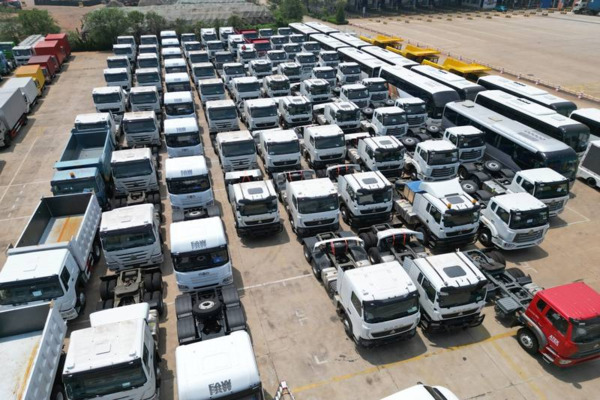
Buying a SINOTRUK truck from China feels straightforward until the documents arrive. Too many importers — especially first-time buyers in Africa, the Middle East, and Southeast Asia — pay in full, wait weeks for shipment, and then discover at the destination port that their document set is incomplete. The result: delays, fines, or a truck they cannot legally register.
The SINOTRUK truck export document package has two distinct layers. The first layer covers standard Chinese export paperwork: commercial invoice, packing list, bill of lading, customs declaration, and Certificate of Origin. The second layer — the one most buyers underestimate — covers used-vehicle-specific documents including the original vehicle registration certificate, deregistration proof, and lien-free documentation. Missing either layer will cause problems. Missing the second layer is where buyers get stuck.
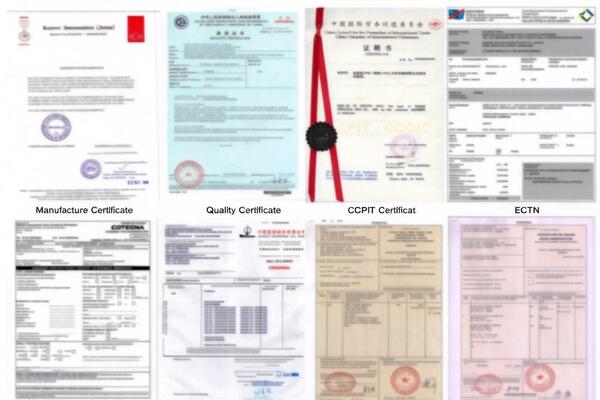
Understanding both layers is not just about having the right papers. It is about knowing why each document exists, when it must be secured during the export process, and what happens if you skip one. I have spent over 20 years handling export shipments from Guangzhou. The patterns I describe below come from real shipments — not from a customs textbook.
What Is the Standard SINOTRUK Export Document Package?
Buyers who have imported goods before often assume they already know what documents an export involves. That assumption is usually correct for general cargo. For used commercial vehicles, it is only half right.
The standard Chinese export package for a SINOTRUK truck includes five core documents: a commercial invoice, a packing list, a bill of lading, a Chinese customs export declaration, and a Certificate of Origin (CO). These documents are required by every destination country we ship to and form the legally recognized proof of the transaction and the shipment.
These five documents are necessary — but they are not sufficient for a used truck. Think of them as the foundation. The structure you need to build on top of that foundation depends entirely on the fact that the vehicle has a previous registration history in China.
Commercial Invoice
The commercial invoice is the financial record of the transaction. It states the buyer, seller, vehicle description, chassis number, engine number, and transaction value. Every customs authority at the destination will reference this document when calculating import duties.
One important point I want to state plainly: the invoice must reflect the actual transaction value. We consistently see buyers ask suppliers to declare a lower value to reduce import duty. This is not a strategy — it is a risk. Destination customs authorities, particularly in East Africa and the Middle East, are increasingly cross-referencing declared values against regional market data. A vehicle declared at an unusually low value triggers inspection. Inspections cause delays. In some jurisdictions, undervaluation results in seizure or penalty. At Deli Auto, our invoices reflect what was actually paid. Buyers who need a compliant, defensible document set appreciate this. Buyers who do not are not the right fit for us.
Packing List
For a single truck shipped on a roll-on/roll-off (RoRo) vessel, the packing list is straightforward. For trucks loaded into containers — often stripped of cab mirrors, antennas, or spare tires for space — the packing list becomes more important[1]. It documents every component included in the shipment. If a buyer later disputes what was shipped, this document is the reference.
Bill of Lading (B/L)
The bill of lading is the shipping carrier's receipt and the document of title. Original B/Ls are required to take delivery of the vehicle at the destination port[2]. We always confirm the consignee details with the buyer before the B/L is issued — errors in consignee name or notify party are a common and entirely avoidable cause of port delays.
Chinese Customs Export Declaration
The 报关单 is the official record that the vehicle legally departed China. Some destination customs authorities require this document as proof that Chinese export duties (if applicable) were settled[3] and that the vehicle was not smuggled out. Buyers in Southeast Asia and Central Asia in particular have asked us for this document during their destination customs clearance process.
Certificate of Origin (CO)
The CO certifies that the vehicle was manufactured in China. For SINOTRUK HOWO trucks, this is typically issued by the China Council for the Promotion of International Trade (CCPIT) or a local chamber of commerce. For buyers importing under trade agreements that offer preferential tariff rates — such as certain African countries with China bilateral agreements — the CO format and issuing body matter[4]. Government project contractors should confirm with their local procurement office which CO format their import authority will accept.
What Extra Documents Does a Used SINOTRUK Truck Require?
This is where most first-time buyers run into problems. New trucks have no prior registration history. Used trucks do — and that history must be formally closed in China before the vehicle can legally leave.
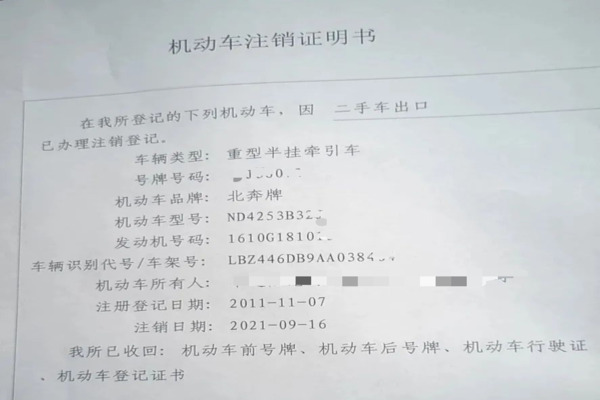
A used SINOTRUK truck requires three additional documents beyond the standard export package: the original Chinese vehicle registration certificate, proof of deregistration or cancellation , and lien-free documentation confirming the vehicle carries no outstanding financial claims. These documents prove the vehicle has been legally released from its previous owner and can be exported without encumbrance.
Buyers who conflate new and used truck documentation — or who assume the seller's compliance certificates cover everything — routinely discover the gap too late. The three documents below are specific to used vehicles and must be in hand before the truck ships.
Original Vehicle Registration Certificate
The 行驶证 is the Chinese equivalent of a vehicle title. It contains the chassis number, engine number, registered owner, vehicle category, and original issue date[5]. Buyers use this document at the destination to verify the vehicle's identity matches what was invoiced and to begin the local registration process.
We always cross-check the chassis number on the 行驶证 against the physical chassis plate before accepting a vehicle into our yard. Mismatches — caused by engine swaps, plate replacements, or administrative errors during previous ownership — create serious problems downstream. A chassis number discrepancy between the physical vehicle and the registration certificate will be flagged at destination customs. Resolving it from abroad is extremely difficult.
Deregistration Proof
When a vehicle is exported from China, it must first be formally deregistered with the local vehicle management office (车辆管理所)[6]. The is the official confirmation that the registration has been cancelled. Without it, the vehicle technically still exists as a registered road vehicle in China.
This document must be obtained before the vehicle is loaded. It cannot be issued retroactively once the truck has left China. This is one of the earliest steps in the export preparation sequence — and it is one of the most commonly delayed by sellers who are sourcing vehicles from third parties rather than managing their own inventory. When buyers work with us, this step is built into our standard pre-shipment process. We track it as a hard prerequisite to loading approval.
Lien-Free Documentation
The 除款底档 confirms that the vehicle has no outstanding loans, leases, or financial claims registered against it in China. Used trucks purchased from fleet operators or leasing companies may still carry a financing lien from the original purchase. If that lien is not formally discharged and documented, the vehicle is encumbered — and in some destination countries, an encumbered vehicle cannot be registered[7].
Buyers from East Africa and the Gulf region have specifically asked us for this document when preparing their import files. We secure it during the same administrative window as the deregistration proof, since both are obtained from the same local traffic authority.
What Role Does the CCC or CCOC Engine Certificate Play?
Buyers — especially those importing SINOTRUK trucks with Weichai or Sinotruk-brand engines for the first time — sometimes present the CCC mark or CCOC engine type approval certificate as their main compliance document. It is worth clarifying exactly what these marks represent.
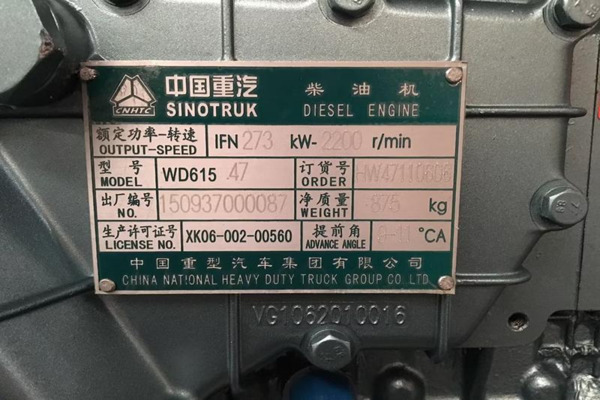
The CCC (China Compulsory Certification) mark and CCOC (China Compulsory Certification for Vehicles) engine type approval are Chinese domestic compliance marks[8]. They certify that a vehicle or engine model met Chinese national standards at the time of manufacture. They are not import approval documents and are not recognized as entry permits by destination customs authorities in Africa, the Middle East, or Southeast Asia.
What CCC and CCOC Actually Cover
| Document | Issuing Authority | Scope | Recognized At Destination? |
|---|---|---|---|
| CCC Mark | CNCA (China) | Chinese domestic product safety standard | No — domestic only |
| CCOC Engine Type Approval | MIIT (China) | Chinese vehicle emission/type standard | No — domestic only |
| Certificate of Origin | CCPIT / Chamber of Commerce | Country of manufacture | Yes — required for customs |
| Inspection Certificate | SGS / BV / third-party | Pre-shipment condition | Varies by country |
Some destination countries — particularly those with their own type approval requirements — may ask importers to provide additional technical documentation, local conformity assessments, or roadworthiness certificates. These requirements vary significantly by country and are outside what any Chinese exporter can guarantee compliance with. We strongly recommend that buyers confirm destination-country import requirements with a licensed local customs agent or freight forwarder before finalizing any purchase.
Pre-Shipment Inspection Certificates
Several African countries — including those participating in the PVOC (Pre-Export Verification of Conformity) program — require a pre-shipment inspection certificate issued by an accredited body such as SGS, Bureau Veritas, or Intertek before a used vehicle can be cleared. These inspections must be arranged in China, before loading.
We coordinate with inspection bodies directly and have handled PVOC and similar inspections for shipments to Kenya, Tanzania, Nigeria, and other markets. Buyers should confirm their country's specific program requirements early — these inspections have lead times that affect the overall shipment schedule.
What Is the Correct Sequence for Preparing SINOTRUK Export Documents?
Document preparation is not a checklist you complete in any order. Certain documents must be obtained before others are even possible. Getting the sequence wrong causes delays, L/C discrepancies, and missed vessel bookings.
The correct preparation sequence for a used SINOTRUK truck export begins with securing the original and completing lien clearance, then obtaining the , followed by physical inspection, invoice finalization, CO application, and finally B/L issuance after loading confirmation. Steps cannot be reversed without causing delays.
Step-by-Step Preparation Timeline
Here is the sequence we follow at Deli Auto for every used SINOTRUK export:
-
Confirm vehicle identity — Cross-check chassis number, engine number, and against the physical vehicle. Any discrepancy must be resolved before proceeding.
-
Clear outstanding liens — Request and verify the. If a lien exists, the seller must discharge it with the financing institution and obtain a release letter before deregistration is possible.
-
Apply for deregistration — Submit to the local vehicle management office. Processing time varies by city, but typically takes three to ten business days. This step cannot be rushed or bypassed.
-
Arrange mechanical inspection and maintenance — Our engineering team conducts engine testing, brake inspection, and fluid checks. Any pre-shipment maintenance is completed during this window.
-
Arrange third-party pre-shipment inspection (if required by destination country) — SGS, BV, or similar body. Inspection must occur before loading.
-
Finalize commercial invoice and packing list — These must reflect the actual agreed transaction value and accurate vehicle details.
-
Apply for Certificate of Origin — Submitted to CCPIT or chamber of commerce. Typically two to five business days.
-
Complete Chinese customs export declaration — Filed electronically. The truck cannot legally load without customs clearance.
-
Loading and container seal — Confirm loading with the freight forwarder.
-
Obtain original Bill of Lading — Issued after vessel departure confirmation. Original B/Ls are sent to the buyer via courier.
Important: Buyers using Letters of Credit (L/C) as the payment method must provide the exact consignee name, notify party, and document requirements to the seller before Step 6. L/C document discrepancies — such as a name mismatch between the invoice and the B/L — are one of the most common causes of payment delays we see[9]. A discrepancy in an L/C shipment may require a bank amendment, which adds cost and time.
Frequently Asked Questions
Can Deli Auto guarantee that my SINOTRUK truck will clear customs at the destination port?
No. We prepare a complete, accurate export document package from the Chinese side — including all used-vehicle-specific documents. Destination customs clearance depends on your country's import regulations, local agent handling, and the importing entity's compliance status. We recommend working with a licensed local customs agent who knows your country's specific requirements.
How long does the full document preparation process take for a used SINOTRUK truck?
From the moment a vehicle is confirmed and payment received, the full document package typically takes two to four weeks to complete. The longest step is usually obtaining the deregistration proof, which depends on the local vehicle management office. Buyers with tight shipping schedules should factor this into their planning.
What happens if the chassis number on the registration certificate does not match the physical vehicle?
This is a serious issue that must be resolved before export. The discrepancy must be investigated and corrected through the Chinese vehicle management authority — a process that can take several weeks. We check this at intake, before any buyer payment is involved. If a mismatch is found during our inspection, we notify the buyer immediately and do not proceed until it is resolved.
Do I need a pre-shipment inspection certificate for every country?
Not always. Requirements vary significantly by destination country. Countries operating under PVOC or similar conformity programs — including several in East Africa — require an accredited inspection certificate before customs clearance. Other countries do not mandate it but may still request it. Confirm with your local agent or freight forwarder before purchase.
Is the Certificate of Origin the same as a type approval or import permit?
No. The Certificate of Origin proves where the vehicle was manufactured. It is required for customs duties calculation and, in some cases, for accessing preferential tariff rates under trade agreements. It is not a type approval, a roadworthiness certificate, or an import permit. These are separate documents governed by destination-country regulations.
Conclusion
Getting a SINOTRUK truck legally cleared and registered at the destination requires more than a standard shipping package. The five core export documents — commercial invoice, packing list, bill of lading, customs declaration, and Certificate of Origin — are the necessary foundation. But for any used truck, the are equally critical, and they must be secured in the right sequence before the truck leaves China.
The most expensive mistakes in SINOTRUK truck export documentation happen early: missed lien checks, skipped deregistration steps, or invoice values that draw customs scrutiny at the destination. At Deli Auto, our export preparation process is built around catching these issues before they become your problem at port.
If you are planning a SINOTRUK truck import and want to review your document requirements before committing to a purchase, contact our team. We have shipped to over 30 countries across Africa, the Middle East, Southeast Asia, and beyond — and we are happy to walk through what a complete document package looks like for your specific destination.
[1] "Intermodal container", https://en.wikipedia.org/wiki/Intermodal_container. Standard ISO shipping containers impose fixed internal height and width constraints that frequently require protruding vehicle components — including mirrors, antennas, and roof-mounted equipment — to be removed prior to loading, a practice documented in freight forwarding guidance for containerized vehicle shipments. Evidence role: general_support; source type: other. Supports: That commercial vehicles shipped in standard ISO containers often require partial disassembly to meet dimensional constraints, with removed components documented in the packing list. Scope note: No single authoritative standard governs this practice universally; specific disassembly requirements depend on vehicle dimensions, container type, and carrier instructions. ↩
[2] "Bill of lading", https://en.wikipedia.org/wiki/Bill_of_lading. Under established international shipping law and instruments such as the Hague-Visby Rules, a negotiable bill of lading functions simultaneously as a receipt for goods, evidence of the contract of carriage, and a document of title, with the carrier obligated to deliver goods only upon presentation of an original. Evidence role: definition; source type: institution. Supports: That a negotiable bill of lading serves as a document of title in international shipping, with surrender of the original required to obtain delivery of goods at the port of destination. Scope note: Sea waybills and straight bills of lading do not carry the same document-of-title function; the specific instrument used in a given shipment governs the delivery obligation. ↩
[3] "Report Name:GACC Announcement 277 - Regulation on ...", https://apps.fas.usda.gov/newgainapi/api/Report/DownloadReportByFileName?fileName=GACC%20Announcement%20277%20-%20Regulation%20on%20Declaration%20Management%20of%20Import%20and%20Export%20Goods_Beijing_China%20-%20People%27s%20Republic%20of_CH2025-0069. Under the Customs Law of the People's Republic of China and regulations administered by the General Administration of Customs (GAC), the export customs declaration (出口报关单) is the official record of a consignment's lawful clearance through Chinese customs, confirming compliance with export licensing, duty payment, and inspection requirements. Evidence role: definition; source type: government. Supports: That the Chinese customs export declaration (报关单) is the official document issued by China Customs confirming that goods have been lawfully declared for export and cleared Chinese customs control. Scope note: Whether a specific destination country's customs authority requires presentation of the Chinese export declaration as part of import clearance depends on that country's own import regulations and is not governed by Chinese law. ↩
[4] "FTA Certificates of Origin", https://www.trade.gov/fta-certificates-origin. Under successive Forum on China-Africa Cooperation (FOCAC) frameworks, China has offered zero-tariff treatment on specified goods from eligible least developed African countries, with preferential Certificates of Origin issued under MOFCOM-designated procedures required to claim the reduced rates. Evidence role: historical_context; source type: government. Supports: That China has extended preferential tariff arrangements to certain African countries, with Certificate of Origin requirements governing eligibility for reduced duty rates. Scope note: Preferential tariff schedules and eligible product categories are periodically revised; commercial vehicles may or may not be included depending on the specific bilateral arrangement and current schedule. ↩
[5] "Vehicle registration plates of China", https://en.wikipedia.org/wiki/Vehicle_registration_plates_of_China. The vehicle registration certificate (行驶证) is issued by the public security traffic management authority under the Road Traffic Safety Law of the People's Republic of China and its implementing regulations, with standardized fields including vehicle type, chassis number, engine number, registered owner, and registration date as prescribed by Ministry of Public Security standards. Evidence role: definition; source type: government. Supports: That the Chinese vehicle registration certificate (行驶证) is a standardized document issued by the public security authority containing specified vehicle identity and ownership fields including chassis number, engine number, and registered owner. Scope note: The exact field layout and terminology may differ slightly across document generations or administrative regions; the article's enumeration reflects the standard fields but is not drawn from a cited regulatory text. ↩
[6] "Chinese used vehicle exporting", https://en.wikipedia.org/wiki/Chinese_used_vehicle_exporting. Under China's Road Traffic Safety Law and implementing regulations administered by the Ministry of Public Security, registered motor vehicles must undergo formal deregistration (注销登记) at the local vehicle management office (车辆管理所) prior to export, with the cancellation certificate (消除证明) serving as official confirmation of the completed process. Evidence role: mechanism; source type: government. Supports: That Chinese law requires vehicles to be formally deregistered with the public security vehicle management authority before export, with a cancellation certificate issued as proof. Scope note: Specific procedural requirements and processing timelines may vary by municipality; the article's characterization of three to ten business days is an operational estimate not drawn from a uniform national standard. ↩
[7] "Moving To SC - Vehicle - SCDMV - South Carolina", https://dmv.sc.gov/vehicle-owners/moving-to-sc. Vehicle registration statutes in numerous jurisdictions condition registration on the applicant demonstrating clear title or providing evidence that any security interest has been discharged, reflecting the principle that registration confers legal ownership recognition that cannot coexist with an unresolved prior claim. Evidence role: general_support; source type: other. Supports: That many jurisdictions require proof of clear title or lien discharge as a condition of vehicle registration, meaning an encumbered vehicle may be refused registration. Scope note: Specific registration requirements vary substantially by country; the article's claim applies broadly across destination markets without citing the laws of any particular jurisdiction. ↩
[8] "China Standards for Trade", https://www.trade.gov/china-standards-trade. China Compulsory Certification (CCC), administered by the Certification and Accreditation Administration of China (CNCA) under the 2001 Regulations on Compulsory Product Certification, is a domestic market access requirement; it does not carry mutual recognition status with the type approval or conformity assessment regimes of most importing countries. Evidence role: definition; source type: government. Supports: That China Compulsory Certification (CCC) is a domestic market access requirement administered by CNCA and does not constitute an internationally recognized import approval or type approval for destination countries. Scope note: Some bilateral mutual recognition agreements may affect the evidentiary weight of CCC documentation in specific jurisdictions; this should be verified on a country-by-country basis. ↩
[9] "International Trade and Letters of Credit: A Double-Edged ...", https://pmc.ncbi.nlm.nih.gov/articles/PMC8728483/. International Chamber of Commerce (ICC) surveys on trade finance have consistently found that a significant proportion of first-presentation letter of credit documents contain discrepancies, with mismatches in party names, descriptions, and amounts among the most frequently cited defects under UCP 600. Evidence role: statistic; source type: institution. Supports: That documentary discrepancies are a frequent occurrence in letter of credit transactions, often resulting in delayed or refused payment. Scope note: Published ICC discrepancy rate figures cover all commodity types and may not reflect the specific rate for used vehicle shipments; the article's characterization as 'one of the most common causes' is based on the author's operational experience rather than a cited study. ↩