How to Buy a Used Semi-Truck?
Buying a used semi-truck can be a good way to start a trucking business or expand an existing fleet without paying the full price of a new truck.
However, buying a used truck is very different from buying an ordinary passenger vehicle. A semi-truck is a working machine, and its condition can have a direct impact on maintenance costs, downtime, fuel consumption, and business profits.
So, how do you buy a used semi-truck safely and choose the right one?
The key is to look beyond the asking price. Before buying, you should compare the truck's age, mileage, engine, transmission, chassis, maintenance history, configuration, and overall condition.
> Quick Answer: To buy a used semi-truck, first determine your budget and transportation needs, then compare suitable trucks, inspect the mechanical condition, review maintenance records, take a test drive, verify the documents, and negotiate the price based on the truck's actual condition.
Step 1: Determine Your Budget
The first step is to decide how much you can realistically spend.
Do not use your entire budget for the purchase price. A used semi-truck may require maintenance or replacement parts shortly after purchase, especially if it is an older vehicle.
Your budget should include:
- Purchase price
- Transportation costs
- Registration and documentation
- Insurance
- Initial maintenance
- Tires
- Brake repairs
- Unexpected repairs
- Import or customs costs if applicable
For example, if your total budget is $60,000, spending the entire $60,000 on the truck may leave you with little money for necessary repairs.
A better approach is to leave some money available for maintenance and unexpected expenses.
> Tip: Your purchase budget should include more than the truck's advertised price.
Step 2: Decide What Type of Truck You Need
Before looking at specific trucks, determine what kind of work the vehicle will perform.
Different transportation jobs require different truck configurations.
Consider whether you need the truck for:
- Long-distance transportation
- Regional transportation
- Heavy-load transportation
- General cargo
- Construction-related work
- Container transportation
- Special transportation
- Short-distance delivery
You should also consider the roads and operating environment.
A tractor used mainly on highways may have different requirements from one working on rough roads or carrying heavy loads.
Step 3: Choose the Right Brand and Model
Once you understand your application, you can start comparing brands and models.
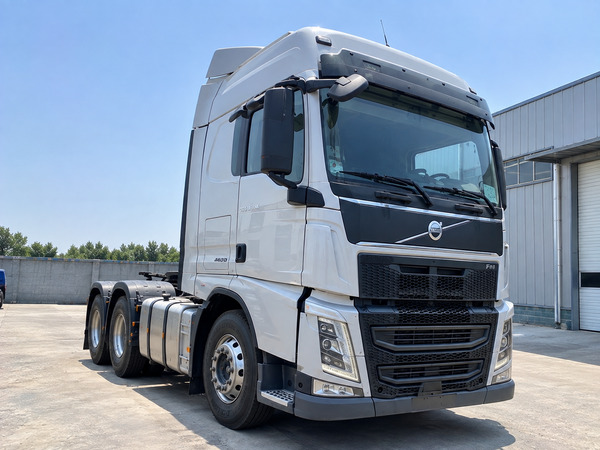
In different international markets, buyers may consider brands such as Volvo, Scania, MAN, Sinotruk, SITRAK, and Isuzu.
Each manufacturer has different models, engines, configurations, and price levels.
Instead of asking which brand is universally the best, ask which model is the best fit for your operation.
| Brand | Common Strengths | Consider When |
|---|---|---|
| Volvo | Comfort, safety, efficiency | Long-distance transportation |
| Scania | Durability and performance | Heavy-duty and long-haul work |
| MAN | Practical operation and efficiency | Regional and long-distance use |
| Sinotruk | Competitive price and practical maintenance | Budget-conscious buyers |
| SITRAK | Performance and value | Heavy-duty transportation |
| Isuzu | Reliability and versatility | Regional and commercial use |
Brand reputation is important, but the condition of the individual truck is even more important.
A well-maintained used truck can provide better value than a newer truck that has been neglected.
Step 4: Compare Model Year and Mileage
After choosing the type of truck, compare the model year and mileage.
Generally, newer trucks cost more, while older trucks are usually less expensive.
However, mileage should not be considered by itself.
For example, a well-maintained tractor with 600,000 kilometers may be a better purchase than a poorly maintained tractor with 400,000 kilometers.
Look at both:
- Model year
- Mileage
- Engine hours
- Maintenance history
- Previous repairs
- Operating conditions
A truck that has spent most of its life on highways may have a different wear pattern from one that has frequently operated on construction sites or rough roads.
Step 5: Check the Maintenance History
Maintenance records are one of the most valuable things to review before buying a used semi-truck.
A service history can help you understand how the previous owner treated the vehicle.
Look for records showing:
- Engine oil changes
- Transmission service
- Cooling-system maintenance
- Brake repairs
- Suspension repairs
- Tire replacement
- Engine repairs
- Transmission repairs
- Electrical repairs
- Major component replacement
If a seller can provide detailed and consistent maintenance records, you have more information to evaluate the truck.
If there are no records available, you should be more careful and arrange a thorough inspection.
> Important: A clean-looking truck is not necessarily a well-maintained truck. Service records provide much more useful information than appearance alone.
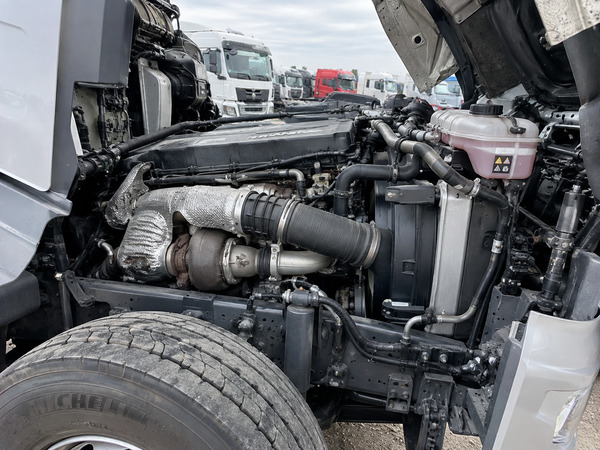
Step 6: Inspect the Engine
The engine is one of the most important components of a used semi-truck.
An engine problem can result in a very large repair bill, so it should be carefully inspected before purchase.
Check for:
- Oil leaks
- Coolant leaks
- Excessive smoke
- Unusual engine noise
- Cooling problems
- Damaged belts
- Worn hoses
- Turbocharger problems
- Warning lights
- Abnormal engine vibration
If possible, inspect and start the engine when it is cold.
A cold start can reveal problems that may not be obvious after the engine has already warmed up.
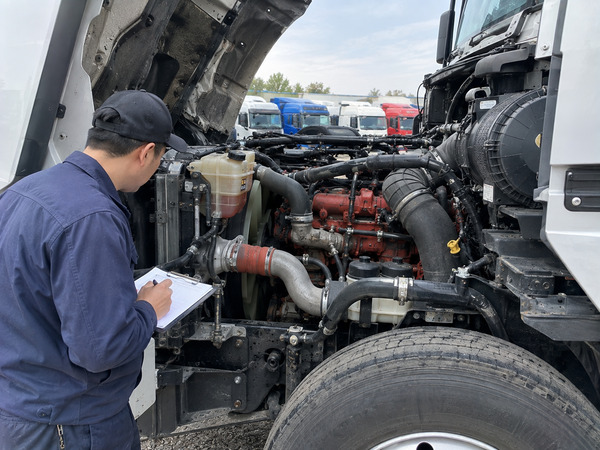
You should also check the engine's performance during a road test.
If you are not experienced with heavy-truck engines, consider having a qualified mechanic inspect the vehicle before completing the purchase.
Step 7: Inspect the Transmission
The transmission is another major component that should be checked carefully.
During inspection and testing, pay attention to:
- Gear shifting
- Clutch operation
- Unusual noises
- Oil leaks
- Delayed engagement
- Vibration
- Transmission warning lights
The exact inspection process depends on whether the truck uses a manual or automated transmission.
A transmission that shifts smoothly and operates normally is important for both reliability and driving comfort.
Step 8: Check the Chassis and Frame
The chassis carries many of the truck's major components, so its condition is critical.
Look carefully for:
- Cracks
- Bends
- Corrosion
- Previous welding
- Structural damage
- Damaged suspension mounts
- Uneven frame alignment
A truck may look good from the outside while having hidden damage underneath.
If the truck has previously carried extremely heavy loads or operated in difficult conditions, pay particular attention to the frame and suspension.
Step 9: Inspect the Tires and Brakes
Tires and brakes are important safety components and can also create immediate maintenance expenses after purchase.
Check:
- Tire tread depth
- Uneven tire wear
- Tire sidewall damage
- Tire age
- Brake components
- Brake lines
- Air system
- Brake pads or linings
- Signs of air leaks
If the tires are close to replacement, include the replacement cost when calculating the real price of the truck.
The same applies to worn brakes.
A truck that appears inexpensive may become much more expensive once tires and brake components need to be replaced.
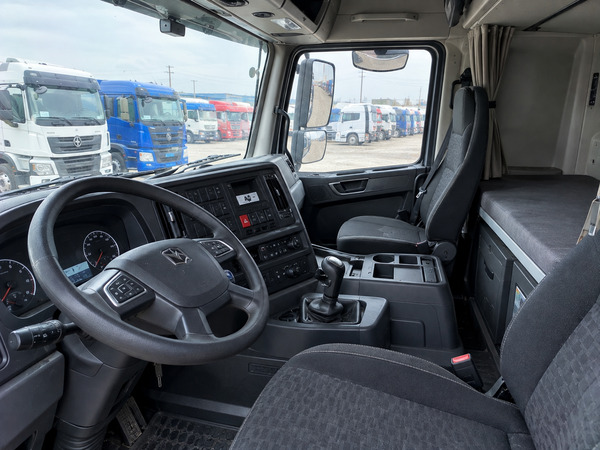
Step 10: Check the Cab and Interior
The condition of the cab can tell you a lot about how the truck was used.
Inspect:
- Driver's seat
- Steering wheel
- Dashboard
- Gauges
- Air conditioning
- Heating system
- Windows
- Mirrors
- Lights
- Electrical controls
- Sleeper area
- Door seals
- Interior water damage
You should also check the dashboard for warning lights.
A heavily worn interior does not necessarily mean that the truck has mechanical problems, but it can provide clues about the vehicle's overall use.
Step 11: Take the Truck for a Test Drive
A test drive is one of the best ways to understand how a used semi-truck actually operates.
During the test drive, pay attention to:
- Engine performance
- Acceleration
- Gear shifting
- Steering
- Braking
- Suspension
- Vibration
- Unusual sounds
- Warning lights
- Temperature
- Air pressure
Try to operate the truck under different conditions if possible.
Listen carefully for unusual noises and pay attention to anything that feels different from normal.
If the seller does not allow a reasonable inspection or test drive, consider why.
Step 12: Check the Truck's Documents
Never overlook the paperwork when buying a used semi-truck.
The exact documents required depend on the country and market, but buyers should generally verify:
- Vehicle identification information
- Registration documents
- Ownership information
- Model year
- Mileage
- Service records
- Inspection records
- Import documents when applicable
- Accident or repair history
The information on the documents should match the actual truck.
If the truck's identification information, mileage, or ownership history cannot be verified, proceed carefully.
> Warning: Never send a large payment for a used truck before verifying the vehicle, seller, and required documents.
Step 13: Compare Several Used Trucks
Do not buy the first truck you see.
Try to compare several similar vehicles.
For example, you can compare three trucks based on:
| Factor | Truck A | Truck B | Truck C |
|---|---|---|---|
| Model year | |||
| Mileage | |||
| Engine | |||
| Transmission | |||
| Tires | |||
| Maintenance history | |||
| Accident history | |||
| Asking price | |||
| Expected repairs |
This makes it easier to identify which truck provides the best overall value.
The cheapest truck is not necessarily the best truck.
A slightly more expensive truck may be a better choice if it has better maintenance records, newer tires, a healthier engine, and fewer expected repairs.
Step 14: Calculate the Real Cost
The purchase price is only the beginning.
When comparing used semi-trucks, estimate the total cost of getting the truck ready for work.
For example:
Real Cost = Purchase Price + Transportation + Registration + Initial Repairs + Tires + Other Required Expenses
This calculation can change the way you compare trucks.
A $40,000 truck that needs $10,000 in repairs may effectively cost much more than a $45,000 truck that is ready to work.
Step 15: Negotiate the Price
Once you have completed your inspection, you can negotiate based on actual problems or expenses.
Useful negotiation points may include:
- High mileage
- Worn tires
- Brake repairs
- Oil leaks
- Missing service records
- Cosmetic damage
- Suspension wear
- Previous repairs
- Upcoming maintenance
Avoid negotiating only by saying that another truck is cheaper.
A stronger negotiation is based on specific evidence.
For example, if the tires need replacement soon, you can calculate the estimated cost and use that information when discussing the final price.
Step 16: Understand the Difference Between Cheap and Good Value
There is a big difference between a cheap used semi-truck and a good-value used semi-truck.
A cheap truck may have a low purchase price but require significant repairs.
A good-value truck may cost more initially but require less work before it can start operating.
When comparing trucks, consider:
- Purchase price
- Mechanical condition
- Maintenance history
- Mileage
- Parts availability
- Fuel efficiency
- Expected repair costs
- Expected service life
> Tip: The goal is not to buy the cheapest truck. The goal is to buy the truck that gives you the best value for your budget.
Used Semi-Truck Buying Checklist
Before completing the purchase, use this checklist to review the most important areas.
Before Inspection
- ☐ Determine your total budget
- ☐ Decide what type of work the truck will perform
- ☐ Choose suitable truck specifications
- ☐ Compare several trucks
- ☐ Check the model year and mileage
- ☐ Ask for maintenance records
Mechanical Inspection
- ☐ Inspect the engine
- ☐ Check for oil and coolant leaks
- ☐ Inspect the transmission
- ☐ Check the chassis and frame
- ☐ Inspect the suspension
- ☐ Check the fifth wheel
- ☐ Inspect tires
- ☐ Check brakes
- ☐ Test electrical systems
- ☐ Check the cooling system
Road Test
- ☐ Start the truck from cold
- ☐ Check engine performance
- ☐ Test gear shifting
- ☐ Test braking
- ☐ Check steering
- ☐ Check suspension
- ☐ Listen for unusual noises
- ☐ Check dashboard warning lights
Documents
- ☐ Verify vehicle identification
- ☐ Check ownership information
- ☐ Verify mileage
- ☐ Review service records
- ☐ Check inspection records
- ☐ Check accident history
- ☐ Verify all required documents
Before Payment
- ☐ Agree on the final price
- ☐ Confirm what is included
- ☐ Confirm transportation arrangements
- ☐ Confirm payment terms
- ☐ Complete the required paperwork
- ☐ Keep copies of important documents
Common Mistakes When Buying a Used Semi-Truck
Many used-truck buyers make the same mistakes.
Choosing Only by Price
The lowest-priced truck can be tempting, but it may have hidden repair costs.
Choosing Only by Model Year
A newer truck is not automatically better if it has been poorly maintained.
Ignoring Maintenance Records
Service history can reveal problems that are not visible during a quick inspection.
Skipping the Mechanical Inspection
A professional inspection can help identify expensive problems before you buy.
Forgetting About Tires and Brakes
These components can create immediate expenses after purchase.
Not Checking Parts Availability
A truck may be reliable, but if replacement parts are difficult to obtain in your market, downtime can become a problem.
Spending the Entire Budget
Always keep some money available for repairs and operating expenses.
Where Should You Buy a Used Semi-Truck?
Buyers can find used semi-trucks through different channels.
Common options include:
- Used-truck dealers
- Truck exporters
- Fleet sales
- Auctions
- Private sellers
- Online truck marketplaces
Each option has advantages and disadvantages.
A dealer may provide more information, inspection, preparation, or after-sales support.
An auction may offer lower prices but can involve greater uncertainty.
When buying internationally, transportation, export documents, customs, and local regulations should also be considered.
Is Buying a Used Semi-Truck Worth It?
For many businesses, buying a used semi-truck can make financial sense.
The biggest advantage is the lower initial investment compared with buying a new truck.
A properly inspected and maintained used tractor can still provide many years of productive service.
However, the right truck depends on your specific situation.
If you need a truck for long-distance transportation, prioritize reliability, fuel economy, driver comfort, and service support.
If you need a truck for heavy-duty work, focus more on engine power, torque, chassis strength, axle configuration, suspension, and braking capability.
If your budget is limited, focus on overall condition and expected repair costs rather than simply choosing the cheapest truck.
Final Thoughts: How to Buy a Used Semi-Truck
So, how do you buy a used semi-truck?
The process is straightforward when you break it into several steps:
- Set your total budget.
- Determine your transportation needs.
- Choose the right truck configuration.
- Compare brands and models.
- Check model year and mileage.
- Review maintenance records.
- Inspect the engine and transmission.
- Check the chassis, tires, brakes, and suspension.
- Inspect the cab and electrical systems.
- Take the truck for a test drive.
- Verify the documents.
- Calculate expected repair costs.
- Compare several trucks.
- Negotiate the final price.
- Complete the purchase only after the truck and documents have been verified.
The best used semi-truck is not necessarily the newest or cheapest one.
The best choice is a truck that matches your work, fits your budget, has a reliable mechanical condition, and can be maintained easily in your market.
If you take the time to inspect the truck carefully and compare its total cost, you can greatly reduce the risk of buying a vehicle that creates unexpected expenses after the purchase.
For buyers looking for a reliable used tractor, always compare condition, maintenance history, mileage, specifications, price, and long-term operating costs before making the final decision.