Choosing a used diesel engine for a heavy-duty truck sounds like a matching exercise — find the right horsepower, confirm the displacement, check the brand. But in our experience handling bulk B2B orders from Africa, Southeast Asia, and the Middle East, the buyers who get burned are rarely uninformed. They are asking the wrong questions at the wrong stage of the process.
A used diesel engine purchase for a heavy-duty truck is a risk management decision, not a spec-matching exercise.[1] The right engine must match the vehicle's ECU and transmission architecture, suit the terrain and load conditions of actual operation, pass a documented pre-shipment test covering idle, load, oil pressure, smoke, and temperature behavior, and remain maintainable in the buyer's target market. Horsepower alone tells you almost nothing.
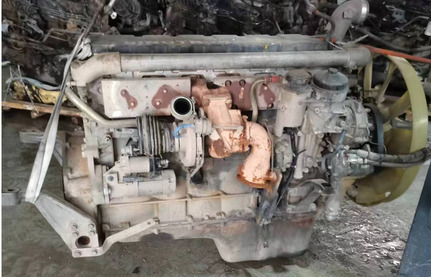
Most sourcing mistakes happen in the gap between what a supplier confirms on paper and what a buyer discovers when the engine arrives. The sections below break down where that gap opens — and what questions close it before money moves.
Are Horsepower and Displacement the Right Starting Point?
Most buyers open with horsepower. It feels logical. But in practice, we regularly see engines with identical nameplate power fail in the field — not because they were defective, but because their torque curve didn't match how the truck was actually being used[2].
Horsepower is a peak output figure. Torque delivery across the operating RPM range is what actually moves a loaded truck.[3] Getting this wrong doesn't cause an immediate breakdown — it causes chronic underperformance, overheating under load, and shortened service life.
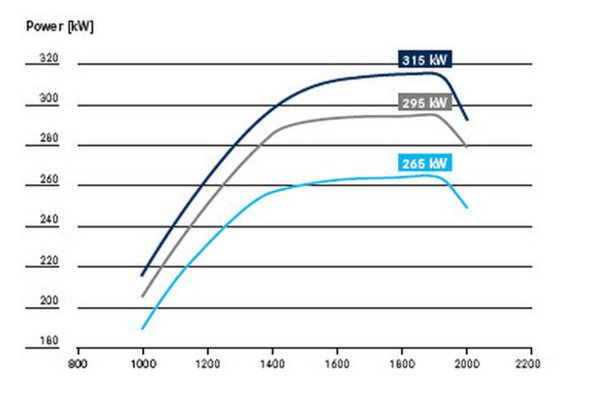
An engine rated at 420 hp optimized for flat-road long-haul logistics behaves very differently from a 420 hp engine built for stop-start loaded operation in hilly terrain. The numbers match. The application doesn't.
What to Ask Instead of "What's the Horsepower?"
Before requesting an engine spec sheet, buyers should answer two operational questions:
- What is the gross vehicle weight and payload the truck will carry regularly? Not the theoretical maximum — the typical working load.
- What are the road and terrain conditions? Flat highways, urban construction access, mountain routes, and unpaved mine tracks each demand a different torque profile.
Once you have clear answers to both, the engine selection conversation becomes much more specific. A Cummins ISM series, for example, is well-regarded for highway freight work in East Africa and Southeast Asia — it delivers strong mid-range torque and has a broad service network in those regions. A Weichai WP12 or WP13 is frequently chosen for construction and mining applications in the Middle East and Central Asia because of its high torque output at lower RPM and widely available parts.
Why Buyers Keep Starting With Horsepower
The honest reason is that horsepower is easy to compare on a quotation sheet. It creates the appearance of an apples-to-apples comparison between suppliers. But a quotation sheet doesn't show you the torque curve, the ECU calibration history, or the operating conditions the engine was pulled from.
A common pattern we see: Buyers sourcing for mixed-fleet resale will specify "400–450 hp diesel engines" and treat any engine in that bracket as equivalent inventory. The trucks in their buyers' fleets may span three different transmission configurations. What looks like interchangeable stock becomes a matching problem the moment a specific vehicle comes in for fitment.
The fix is to work backward from the application, not forward from the spec sheet.
Does "Same Brand" Mean the Engine Will Fit?
This is the question that generates the most expensive mistakes in bulk sourcing. The assumption — that buying the same brand as the original engine means compatibility — is wrong often enough to cause real financial damage.
A Volvo D13 from 2012 is not the same engine as a Volvo D13 from 2017. Same name. Different ECU architecture, different emissions calibration, different wiring harness specifications.[4] Swapping them without ECU validation can result in a truck that starts but runs in limp mode — or doesn't communicate with the vehicle's electronic systems at all.
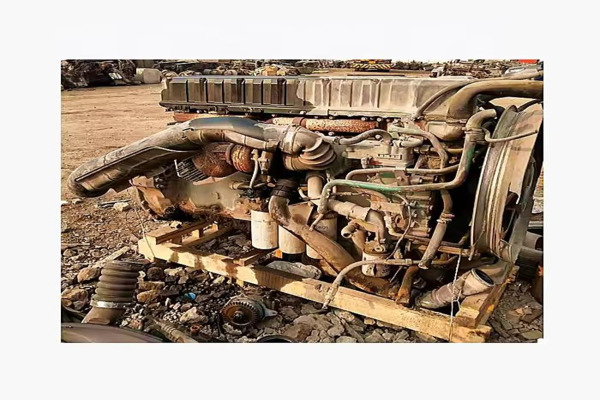
We have handled cases where this exact scenario played out. A buyer sourced a batch of used Volvo D-series engines based on confirmed brand and displacement. The engines were genuine, reasonably priced, and visually clean. After shipment, buyers in the destination market found that several units had ECU versions incompatible with the specific truck year they were fitting. The result was return shipping costs, rework delays, and a damaged relationship with downstream buyers — all from a mismatch that wasn't visible on a spec sheet.
What "Same Brand" Actually Covers — and Doesn't
| What Brand Confirms | What Brand Does NOT Confirm |
|---|---|
| General engine family | ECU version and software compatibility |
| Physical block dimensions (roughly) | Wiring harness connector type |
| Manufacturer's original spec range | Emissions standard calibration |
| Parts family (sometimes) | Mounting point variances across model years |
| General service history availability | Compatibility with specific truck VIN/year |
How to Pressure-Test a Supplier's Matching Claim
When a supplier confirms "this engine fits your truck model," ask for three things:
- The engine serial number and production year. Not just the model designation — the actual serial. This lets you cross-reference the sub-series and ECU generation.
- The original vehicle it was pulled from. Make, model, year, and ideally the chassis number. A supplier who cannot provide this is selling you an engine identity, not an engine history.
- ECU compatibility confirmation from someone who has physically validated the connection — not just a catalogue match. This is especially important for European engine platforms (Volvo, Scania, DAF, Mercedes-Benz) where electronic integration is tightly coupled to vehicle year.
For buyers purchasing in bulk for resale, this matters even more. A container of 20 engines that are genuinely compatible with 15 different truck configurations sounds like versatile stock. But if 5 of those engines have ECU versions that only work with a specific year range your buyers don't have, you are carrying inventory risk that wasn't priced into the purchase.
Can You Trust Low Mileage and a Clean Exterior?
Short answer: no. We say this not to be cynical but because the pattern comes up consistently in inquiries we handle from buyers who have had bad experiences with previous suppliers.
A used diesel engine with declared low mileage and a clean, recently cleaned exterior can still have degraded piston rings, injectors running outside calibration tolerance, or cooling passages with partial blockage. None of that is visible on a photo. Mileage can be misrepresented at the odometer level, and commercial vehicles in certain markets run harder per kilometer than their mileage suggests[5].
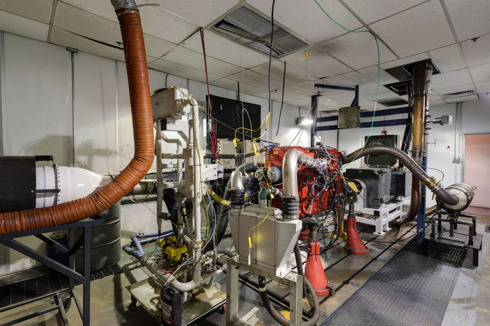
What a Credible Pre-Shipment Test Actually Covers
When we conduct pre-shipment testing at our facility, the process covers several specific performance checkpoints. Buyers should ask any supplier to confirm which of these are included — and get the results documented, not just verbally confirmed.
What a meaningful pre-shipment test should include:
- Cold start behavior — does the engine start cleanly from ambient temperature without excessive cranking or white smoke?
- Idle stability — does it hold a consistent idle RPM without hunting or stalling after warm-up?
- Oil pressure at idle and operating RPM — measured values, not just "passes"
- Coolant temperature behavior — does it reach and hold normal operating temperature without spiking?
- Smoke output under load — excessive black or blue smoke indicates combustion or oil consumption problems
- Loaded RPM test — engine performance under a simulated load, not just free-running
What even a thorough bench test cannot confirm:
- Long-term injector wear that only shows up after 50+ hours of operation
- Internal bearing wear that is within tolerance now but will accelerate under field conditions
- ECU fault codes that only trigger under specific operating conditions
This distinction matters. A good inspection reduces the risk of shipping a defective engine — it does not eliminate all uncertainty about long-term performance. Any supplier who claims otherwise is overstating what pre-shipment testing can do.
Questions to Ask Before Accepting "Tested and Good"
Buyers should ask their supplier to specify:
- Was the test a bench test or a vehicle-mounted test?
- What was the test duration under load?
- Are oil pressure and temperature readings documented with actual numbers?
- Is a written inspection report available, and does it include photos of the test?
A "tested and good" statement without documented readings is not a test result. It is a verbal assurance. These are not the same thing.
Does the Local Market Matter When Choosing an Engine Brand?
This is probably the most underweighted factor in procurement decisions, particularly for buyers supplying into sub-Saharan Africa, rural Southeast Asia, or similar markets. The condition and specification of the engine matters at the point of purchase. The availability of parts and mechanics determines what happens over the next two years of operation.
An engine that is technically superior by any European standard but requires specialized diagnostic tools and imported-only parts becomes a liability in a market where neither exists. We have seen buyers in West Africa pay more upfront for a reputable Euro 5 engine platform, only to find that routine maintenance parts — EGR valves, DPF components, specific injector sets — are either unavailable locally or have lead times that take trucks off the road for weeks[6].
A Practical Brand-to-Market Fit Overview
This is not a ranking — it is a summary of patterns we observe through the orders we handle and the feedback we receive from buyers in different regions.
| Engine Brand/Series | Strong Market Fit | Reason |
|---|---|---|
| Cummins ISM / ISX | East Africa, Southeast Asia | Wide service network, parts availability, familiar to local mechanics |
| Weichai WP10 / WP12 | Middle East, Central Asia, West Africa | Strong parts ecosystem in Chinese truck markets; growing dealer presence |
| Volvo D-series | Southern Africa, parts of Southeast Asia | Good for fleet buyers with their own service capability; harder in rural areas |
| Scania DC-series | East Africa (established fleets) | Excellent durability; requires Scania-trained mechanics |
| Mercedes-Benz OM series | Middle East, North Africa | Strong brand presence; aftermarket parts available through distributors |
| HOWO / Sinotruk engines | Sub-Saharan Africa, South America | High parts availability; competitive pricing; suited to high-volume resale |
The practical advice here: before confirming an engine brand with your supplier, check with your downstream buyers or fleet operators whether that engine platform already exists in their market. If it does, local mechanics know it, parts are stocked, and your end customer's total cost of ownership goes down. That makes your product easier to sell and your after-sales exposure smaller.
Frequently Asked Questions
How do I verify that a used diesel engine matches my specific truck model before purchasing?
Request the engine serial number and original vehicle information from the supplier. Cross-reference the ECU sub-series and production year against your truck's chassis specifications. For European engine platforms, ECU version compatibility is especially important. A catalogue match by brand and displacement is not sufficient for final confirmation.
What is a reasonable operating test for a used heavy-duty diesel engine before shipment?
A meaningful test should include cold start, idle stability after warm-up, oil pressure readings at idle and operating RPM, coolant temperature behavior, smoke output assessment under load, and a loaded RPM run. Ask for documented readings — not just a pass/fail statement. Test duration under load should be at least 30 minutes to surface temperature-related issues.
Why does the year of a used engine matter if the brand and model designation are the same?
Engine families are updated across production years. Changes in ECU software, emissions calibration, wiring harness connectors, and sensor configurations mean that engines with identical model names may not be electronically compatible with vehicles from different years. This is particularly significant for Volvo, Scania, DAF, and Mercedes-Benz platforms.
Is a lower mileage used engine always a better purchase?
Not necessarily. Mileage is one data point, not a condition assessment. A lower-mileage engine with no documented service history, no load test records, and an unknown operating environment may carry more risk than a higher-mileage engine from a documented source with clean test results. Evaluate the inspection documentation alongside the mileage claim.
Which used diesel engine brands are easiest to maintain in African markets?
Based on orders we handle for buyers in sub-Saharan and East Africa, Cummins ISM/ISX and Weichai WP-series engines consistently have better parts availability and more locally familiar service infrastructure than Euro 5 European platforms. Chinese truck engine platforms — including those used in HOWO and SHACMAN trucks — also have growing parts networks in the region[7]. Availability varies by country, so confirming with local contacts before committing to a brand is advisable.
Conclusion
Choosing the right used diesel engine for a heavy-duty truck means working through four decisions in sequence: match the torque profile to the actual operating conditions, confirm ECU and sub-series compatibility beyond brand name, insist on documented pre-shipment test results rather than verbal assurances, and evaluate whether the engine platform is maintainable in your target market. Getting any one of these wrong can turn a competitive price into an expensive problem after shipment.
At Deli Auto, we work with buyers across Africa, Southeast Asia, the Middle East, and beyond — handling real matching decisions on bulk engine orders every day. We carry 1,000+ used engines in stock from brands including Cummins, Weichai, Volvo, Scania, and others, with pre-shipment inspection and documentation as standard. If you are sourcing used diesel engines for heavy-duty trucks and want to pressure-test a supplier's compatibility claims before committing, contact our team directly. We will tell you honestly what we can confirm — and what requires your own verification.
[1] "Heavy-Duty Industry Overview Heavy- ...", https://www.energy.gov/sites/default/files/2022-10/Chapter_3-Heavy_Duty_Vehicles.pdf. Literature on used capital equipment procurement and total cost of ownership analysis identifies condition uncertainty, compatibility with existing systems, and post-purchase maintenance access as risk dimensions that specification-based selection criteria alone do not adequately address. Evidence role: general_support; source type: research. Supports: That used capital equipment procurement, including diesel engines, involves risk dimensions beyond technical specification, including compatibility, condition uncertainty, and lifecycle maintainability.. Scope note: Academic literature on this topic tends to address industrial machinery or fleet management broadly; studies specific to used diesel engine procurement in B2B export contexts are limited. ↩
[2] "Development of In-use engine speed/torque heat", https://www.osti.gov/servlets/purl/1810539. Commercial vehicle engineering literature establishes that engine-to-vocation matching requires alignment between the torque curve shape and the operating RPM range demanded by the application, with mismatches producing sustained operation outside the engine's efficiency range, elevated exhaust temperatures, and reduced component service life. Evidence role: mechanism; source type: research. Supports: That engine selection for commercial vehicles requires matching the torque curve to the vocation's load and speed demands, and that mismatches result in chronic underperformance, thermal stress, and accelerated wear even in mechanically sound engines.. Scope note: Published studies typically address new engine selection; the specific failure modes described in used engine resale contexts are supported by inference from engineering principles rather than direct empirical studies of used engine procurement outcomes. ↩
[3] "40 CFR Part 86 Subpart A -- General Provisions for Heavy- ...", https://www.ecfr.gov/current/title-40/chapter-I/subchapter-C/part-86/subpart-A. Engineering literature on internal combustion engines distinguishes peak power output from torque delivery across the operating range, noting that tractive effort at the wheels is a function of torque rather than horsepower, making torque curves the more operationally relevant metric for loaded vehicle performance. Evidence role: mechanism; source type: research. Supports: That torque across the operating RPM range, rather than peak horsepower, determines practical tractive effort and load-moving capability in heavy-duty diesel applications.. Scope note: Most sources address this in the context of new engine design; direct application to used engine procurement decisions is inferential. ↩
[4] "ANNEX: EMISSION STANDARDS FOR LIGHT- AND HEAVY ...", https://www.ncbi.nlm.nih.gov/books/NBK294251/. Regulatory transitions between emissions standards (e.g., Euro IV to Euro V and Euro VI) required OEMs to revise engine management systems, sensor configurations, and aftertreatment integration, meaning engines sharing a model name across these transitions may be electronically incompatible with vehicles calibrated for a different standard. Evidence role: mechanism; source type: institution. Supports: That successive production years of the same engine family designation incorporate changes to ECU software, emissions calibration, and electronic interface specifications driven by evolving regulatory standards.. Scope note: Publicly available sources document regulatory requirements and general OEM responses; specific ECU version incompatibility between Volvo D13 model years requires manufacturer documentation not always publicly accessible. ↩
[5] "Overload control practices in Eastern and Southern Africa", https://documents.worldbank.org/en/publication/documents-reports/documentdetail/992341468113055298. Research on commercial vehicle durability indicates that engine wear rates are influenced by load factor, road surface quality, and thermal cycling frequency, such that vehicles operating under high load-to-capacity ratios on poor road surfaces accumulate mechanical wear at rates disproportionate to recorded mileage. Evidence role: general_support; source type: research. Supports: That engine wear in commercial vehicles correlates with load intensity and operating conditions, not solely with distance traveled, making odometer readings an incomplete condition indicator.. Scope note: Peer-reviewed studies on this topic typically address fleet management in high-income contexts; direct data from sub-Saharan African or Southeast Asian commercial vehicle markets is limited in the academic literature. ↩
[6] "Top 3 Causes of EGR and DPF Failure: What Every Diesel ...", https://blog.duramaxtuner.com/blog/top-3-causes-of-egr-and-dpf-failure-what-every-diesel-owner-needs-to-know. Reports from international development and transport sector organizations have documented that the availability of specialized diesel aftertreatment components in sub-Saharan African markets is constrained by limited authorized dealer networks and import logistics, resulting in extended vehicle downtime for fleets dependent on such parts. Evidence role: general_support; source type: institution. Supports: That advanced emissions-related components for Euro 5 and Euro 6 diesel engines face supply chain constraints in sub-Saharan African markets, contributing to extended vehicle downtime.. Scope note: Comprehensive quantitative data on parts lead times by component type and country is not consistently published; available evidence is largely qualitative and drawn from fleet operator surveys or transport sector assessments. ↩
[7] "HOWO vs SHACMAN which is better for Africa", https://www.shacman-group.com/news/howo-vs-shacman-which-is-better-for-africa/. Reports from international trade bodies and African development institutions document the rapid growth of Chinese commercial vehicle imports into sub-Saharan African markets over the past decade, with brands such as Sinotruk and SHACMAN establishing distributor agreements and parts supply chains in multiple countries across the region. Evidence role: historical_context; source type: institution. Supports: That Chinese commercial vehicle brands including Sinotruk (HOWO) and SHACMAN have expanded their market presence in sub-Saharan Africa, accompanied by the development of parts distribution and after-sales service infrastructure.. Scope note: The maturity and reliability of these networks varies significantly by country; aggregate import growth data does not directly measure parts availability depth or service quality at the operator level. ↩