Sourcing an Isuzu KV100 refrigerated truck without first evaluating its cold chain compatibility is one of the most common and costly mistakes buyers make. The refrigerated truck market is full of vehicles that look operationally sound but quietly fail once they hit high-heat environments. If your business depends on consistent temperature control, that failure is not just an inconvenience — it's spoiled cargo, broken contracts, and damaged reputation[1].
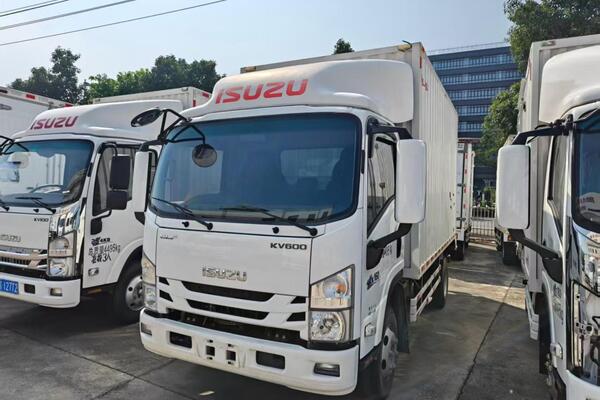
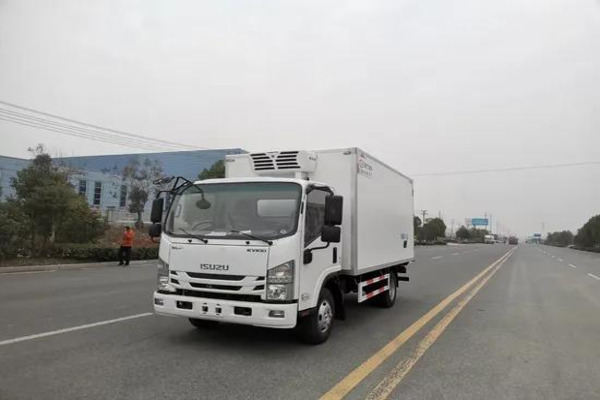
The Isuzu KV100 is a light-to-medium refrigerated truck well-suited for urban food distribution and regional fresh cargo lanes. Its compact body, reliable chassis, and Japanese engineering pedigree make it a practical choice for city markets, supermarkets, and restaurant supply routes in tropical markets. However, its refrigeration unit specifications — not its cargo bay size — determine whether it actually fits your cold chain operation.
The honest answer above is a starting point, not a shopping decision. Getting the KV100 right means understanding where it performs reliably, where it struggles, and what a proper pre-shipment inspection should actually cover. The sections below break all of that down.
What Makes the Isuzu KV100 Suitable for Refrigerated Transport?
Buyers evaluating used refrigerated trucks often default to comparing load capacity and body volume. That's a reasonable starting point, but it misses the more important question: does this specific truck's refrigeration unit match the cargo and operating environment?
The Isuzu KV100 is a medium-duty truck that strikes a practical balance between payload capacity and urban maneuverability. Its insulated cargo body, combined with a mounted refrigeration unit, makes it a common choice for fresh food logistics across Southeast Asia, parts of Africa, and the Middle East. But compatibility isn't guaranteed — it has to be evaluated truck by truck.
Chassis and Body Basics
Before reaching the refrigeration unit, it's worth understanding the physical platform:
- Payload range: Typically 3–5 tonnes depending on body configuration and market spec
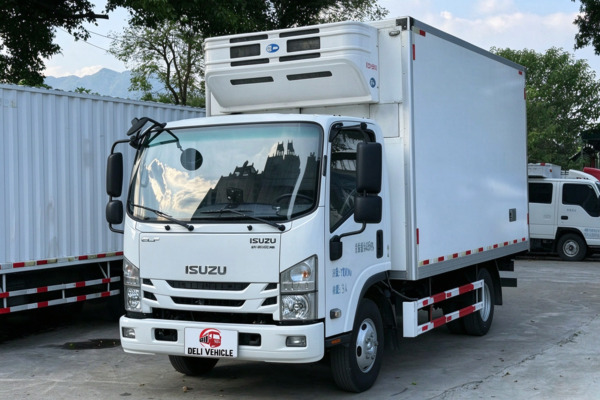
- Cargo body: Insulated box body with polyurethane foam panels, usually 15–25cm wall thickness on well-maintained units[2]
- Body length: Generally in the 4.5–6.5 metre range depending on wheelbase variant
- Drive configuration: Standard rear-wheel drive, appropriate for paved urban and regional roads
The KV100's size makes it genuinely useful in markets where narrow roads, dense traffic, and mixed loading points are daily realities. Buyers in West Africa and Southeast Asia have consistently told us this matters as much as payload.
Why the Refrigeration Unit Is the Real Variable
Here's what most product pages won't tell you clearly: the refrigeration unit fitted to any given KV100 varies. Used trucks in the secondhand market arrive with original-fit cooling units from brands like Thermo King, Carrier, or Mitsubishi Heavy Industries — but those units may have been repaired, replaced, or downgraded at some point in the truck's service history.
In our inspection experience, the refrigeration unit is frequently the weakest link in an otherwise sound KV100. The chassis may show 200,000 km with no major issues. The engine may start cleanly and run well on the dyno. But the cooling unit — if it hasn't been tested under sustained load — can tell a very different story when ambient temperatures climb above 35°C.
Key refrigeration unit factors to verify:
| Parameter | What to Check | Why It Matters |
|---|---|---|
| Brand and model | Confirm original or replacement unit | Affects parts availability and performance benchmarks |
| Temperature range | Verify rated low-end temperature | Determines cargo compatibility (fresh vs. frozen) |
| Refrigerant type | R404A, R134a, or newer alternatives | Older refrigerants have phaseout and service cost implications |
| Compressor condition | Test under load, not just at idle | Idle performance can mask degradation that shows up at full demand |
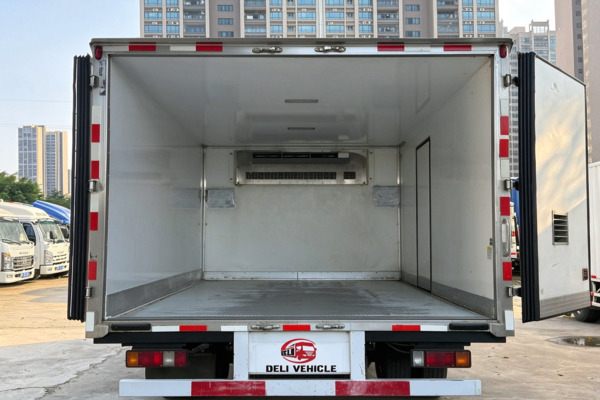
| Insulation integrity | Check panel joints, door seals, floor | A well-functioning unit can still fail if insulation is compromised |
This is not a checklist you can complete with a walk-around. It requires a technician who knows refrigeration systems, not just truck mechanics.
What Cold Chain Applications Does the Isuzu KV100 Actually Fit?
Buyers sometimes approach used refrigerated trucks as though a "refrigerated truck" is a universal tool. It isn't. Temperature requirements, dwell times, ambient conditions, and route profiles all shape whether a given truck is appropriate. The KV100 has a real sweet spot — and real limits.
The KV100 is most reliably matched to fresh food urban distribution and short-to-medium regional fresh cargo lanes. Outside that range, buyers should be cautious and verify refrigeration unit specifications carefully before committing.
Where the KV100 Performs Well
Urban fresh food distribution is the KV100's clearest fit. This means:
- Wet markets, supermarkets, and hypermarket supply
- Restaurant and hotel kitchen delivery routes
- Dairy, produce, and chilled beverage distribution
- Short-haul fresh meat and seafood lanes (not deep-frozen)
For these applications, the typical KV100 configuration — a cooling unit rated to around 0°C to +5°C, with reasonably well-maintained insulation — does the job. Routes are short, doors are opened frequently, and cargo is never held at sustained deep-freeze temperatures.
Regional fresh cargo transport is a secondary strong fit, particularly for routes under 400–500 km. Trucks we've sourced and prepared for buyers in Southeast Asia and East Africa have served these lanes well when the refrigeration unit has been inspected and confirmed functional.
Where the KV100 Has Limitations
Sustained deep-freeze cargo is not the KV100's natural territory. Moving frozen meat, frozen fish, or ice cream at -18°C to -25°C on long hauls demands:
- Heavier wall insulation (typically 100mm+)
- A higher-capacity refrigeration unit with stronger compressor output
- A body design optimized for minimal heat infiltration over extended transit times
A typical KV100 configuration is not built around these requirements. Some units exist with more robust cooling specs, but they need to be identified and tested individually — not assumed.
High-heat ambient environments amplify all of the above risks. Buyers in markets where ambient temperatures regularly exceed 38–40°C should treat refrigeration unit evaluation as the first step[3], not the last. In our inspection experience, cooling systems on used Japanese trucks imported into tropical Africa and Southeast Asia often show accelerated wear that isn't visible during a standard visual check[4]. The unit may hold temperature in a temperate warehouse setting and fall short on a midday delivery run in Lagos or Phnom Penh.
How Should You Inspect a Used Isuzu KV100 Refrigerated Truck Before Purchase?
Most buyers ask what to look for in a used refrigerated truck. The better question is: what does the inspection actually need to test? Visual checks and mileage figures are not enough to assess cold chain fitness.
A used Isuzu KV100 that hasn't been tested under realistic refrigeration load is an unknown quantity. The inspection process should eliminate that uncertainty before shipment, not leave it for the buyer to discover in the field.
The Inspection Framework We Apply
At Deli Auto, our engineers inspect the refrigeration system as a separate scope from the chassis and powertrain inspection. The two systems behave differently, degrade differently, and require different expertise to assess.
Chassis and powertrain checks (standard scope):
- Engine cold start and warm running assessment
- Transmission shift quality and clutch engagement
- Brake system: pedal feel, response time, and brake pad condition
- Frame inspection for cracks, previous repairs, or corrosion
- Axle and suspension check under loaded and unloaded conditions
- Tire condition and remaining tread depth
Refrigeration system checks (critical scope):
- Refrigeration unit brand and model identification — confirm against original spec where records exist
- Refrigerant charge check — low refrigerant is a common and silent performance killer
- Compressor load test — run the unit to operating temperature and monitor performance over 30+ minutes
- Temperature pull-down test — measure how quickly the unit drops from ambient to target temperature; a slow pull-down in a temperate environment is a red flag for tropical use
- Insulation panel inspection — press-check all panels for moisture infiltration, delamination, and soft spots
- Door seal condition — worn or compressed door gaskets are among the most common causes of temperature drift
- Floor integrity — particularly important in trucks that have carried fresh fish or wet produce; floor damage accelerates thermal loss
What Poor Inspections Miss
A buyer told us once that he'd inspected a used refrigerated truck at a yard in Guangzhou and confirmed it "ran cold." That's not an inspection. Running cold means the unit turns on. It says nothing about whether the unit sustains temperature under door-opening cycles, solar heat load, and 40°C ambient air — the actual conditions of daily use.
The difference between a truck that works and a truck that works in your market is what a proper inspection establishes.
How Does the Isuzu KV100 Compare with Other Used Refrigerated Trucks in Its Class?
Buyers evaluating the KV100 usually have at least two or three alternatives on the shortlist. Comparing refrigerated trucks fairly requires using the same evaluation criteria across all options — not comparing chassis specs from one and refrigeration specs from another.
The most common alternatives in the used truck export market are the Hino 300 series, the Mitsubishi Fuso Canter, and increasingly, Chinese medium-duty refrigerated trucks like HOWO and Dongfeng variants.
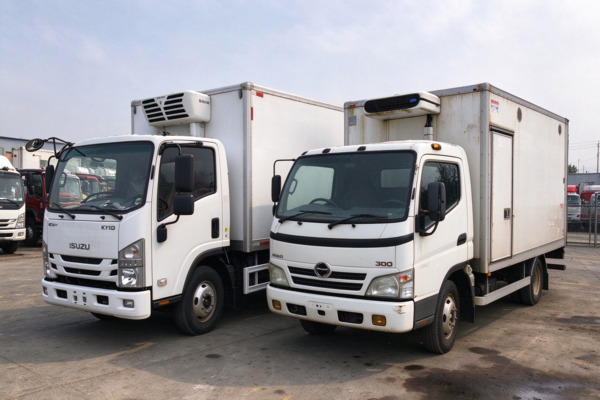
Comparative Overview
| Feature | Isuzu KV100 | Hino 300 Series | Mitsubishi Fuso Canter | HOWO Light Refrigerated |
|---|---|---|---|---|
| Country of origin | Japan | Japan | Japan | China |
| Typical payload | 3–5 t | 3–5 t | 3–5 t | 4–6 t |
| Parts availability in Africa/SE Asia | Good | Good | Moderate | Growing |
| Refrigeration unit variance | High (varies by unit) | High (varies by unit) | High (varies by unit) | High (varies by unit) |
| Chassis reputation in tropical use | Strong | Strong | Strong | Variable |
| Price point (used, FOB China) | Competitive | Comparable | Comparable | Lower |
| Resale value in target markets | High | High | Moderate | Lower |
A few honest notes on this comparison:
- Japanese brands hold their resale value better in Africa and Southeast Asia, partly due to buyer familiarity and partly due to genuine parts availability networks.
- Refrigeration unit variance applies equally to Isuzu, Hino, and Fuso. Buying any Japanese used refrigerated truck without testing the cooling system is the same risk regardless of the badge on the cab.
- Chinese refrigerated trucks offer a lower entry price but buyers should verify parts availability and refrigeration unit quality independently. We've supplied HOWO and Dongfeng refrigerated trucks to buyers who've had good results, but the inspection standard should not drop because the price is lower.
Where the KV100 Has an Advantage
The KV100 specifically tends to have better documentation trails in the Japanese used truck market compared to some alternatives. Japanese domestic truck records (shaken certificates, maintenance logs) are more consistently available on Isuzu units in our sourcing experience[5], which helps pre-shipment inspection accuracy.
It's not a universal advantage, and it doesn't substitute for a full refrigeration system inspection. But it does reduce some of the guesswork in condition assessment.
Frequently Asked Questions
What temperature range can an Isuzu KV100 refrigerated truck maintain?
This depends on the specific refrigeration unit fitted, not the chassis. Typical KV100 configurations with standard cooling units maintain 0°C to +5°C reliably for fresh food applications. Some units support down to -10°C or -18°C, but buyers must verify the fitted unit's rated temperature range before assuming deep-freeze capability.
Is the Isuzu KV100 suitable for use in hot climates like West Africa or Southeast Asia?
It can be, but tropical suitability depends entirely on the refrigeration unit's condition and rated capacity. Ambient temperatures above 38°C accelerate cooling system degradation and increase compressor load significantly. A pre-shipment load test under realistic conditions is non-negotiable for tropical markets. Do not rely on a visual check alone.
How do I know if the refrigeration unit on a used KV100 has been replaced or repaired?
Request the truck's maintenance records and inspect the unit's serial number and brand label. A mismatched refrigeration unit brand relative to original factory records is a signal to investigate further. Have a refrigeration technician run a load test and refrigerant charge check regardless of the unit's apparent condition.
What cargo is the Isuzu KV100 refrigerated truck best suited for?
Fresh produce, dairy products, chilled beverages, fresh meat, seafood, and pharmaceutical products requiring chilled (not frozen) transport. The KV100 is best matched to urban distribution and regional short-to-medium hauls. It is generally not recommended for sustained frozen cargo transport without verifying the specific refrigeration unit's deep-freeze capability.
What should I ask a supplier before buying a used Isuzu KV100 refrigerated truck?
Ask for the refrigeration unit brand, model, and rated temperature range. Ask for a refrigerant charge report and a temperature pull-down test result. Ask for insulation panel condition notes and door seal assessment. Ask whether the inspection was conducted by a refrigeration technician or only a general mechanic. If the supplier cannot answer these questions specifically, that tells you something important.
Conclusion
The Isuzu KV100 refrigerated truck is a credible, practical option for urban food distribution and regional fresh cargo logistics — particularly in markets across Africa, Southeast Asia, and the Middle East where Japanese truck reliability and parts availability carry real value. But the buying decision cannot stop at the chassis. The refrigeration unit specification, condition, and cold chain compatibility are what determine whether the truck actually protects your cargo in a 40°C operating environment.
In our experience sourcing, inspecting, and exporting these trucks, the buyers who get the best long-term results are the ones who treat the cooling system as the primary evaluation criterion — not a footnote. Volume is easy to measure. Temperature performance under load is what requires real inspection depth.
If you're evaluating used Isuzu KV100 refrigerated trucks for export or fleet procurement, we're glad to share what we've seen on specific units. Contact Deli Auto directly to discuss available stock, inspection reports, and cold chain fit for your operation.
[1] "Cold Chains in Developing Economies", https://documents1.worldbank.org/curated/en/768601637124616069/pdf/Cold-Chains-in-Developing-Economies-A-Techno-Socio-Economic-Structural-Development-Challenge-Background-Paper.pdf. The Food and Agriculture Organization of the United Nations estimates that approximately one-third of food produced globally is lost or wasted, with inadequate cold chain infrastructure identified as a primary driver of post-harvest losses in low- and middle-income countries, particularly for perishable products in tropical regions. Evidence role: statistic; source type: institution. Supports: Inadequate cold chain infrastructure and equipment failures contribute substantially to post-harvest food losses, with significant economic consequences for food distribution businesses in tropical developing markets. Scope note: FAO figures represent aggregate food loss estimates and are not disaggregated by cause to isolate refrigerated vehicle failure specifically; the link between truck-level cold chain failure and broader food loss statistics is directionally supported but not directly quantified. ↩
[2] "Agreement on the International Carriage of Perishable ...", https://www.ams.usda.gov/rules-regulations/transportation/international. The Agreement on the International Carriage of Perishable Foodstuffs (ATP) and industry technical standards describe insulated vehicle body construction, including the use of polyurethane foam cores and minimum thermal resistance requirements that inform panel thickness specifications. Evidence role: general_support; source type: institution. Supports: Polyurethane foam is the predominant insulation material in refrigerated transport bodies, and typical panel thicknesses for light-to-medium refrigerated vehicles. Scope note: ATP standards define thermal performance classes rather than prescribing specific wall thicknesses; the 15–25cm range cited in the article is not directly verifiable from a single authoritative source. ↩
[3] "Protecting Perishable Foods During Transport by Truck or Rail", https://ask.ifas.ufl.edu/publication/HS1328. Engineering literature on vapor-compression refrigeration cycles demonstrates that rising ambient (condensing) temperatures increase compressor discharge pressure and reduce the coefficient of performance, placing greater thermal and mechanical stress on compressor components over time. Evidence role: mechanism; source type: research. Supports: Elevated ambient temperatures increase the condensing pressure and compressor work in vapor-compression refrigeration systems, reducing cooling capacity and accelerating component wear. Scope note: Quantitative wear-rate data specific to truck-mounted refrigeration units operating in tropical climates is limited in publicly available research; the mechanism is well-established but field degradation rates depend on maintenance practices and unit age. ↩
[4] "Protecting Perishable Foods During Transport by Truck", https://www.ams.usda.gov/sites/default/files/media/TransportPerishableFoodsbyTruck%5B1%5D.pdf. Engineering studies on refrigeration system reliability indicate that sustained operation at high ambient temperatures increases thermal cycling stress on compressor components, refrigerant seals, and condenser coils, contributing to wear mechanisms that manifest as performance degradation before producing visible physical damage. Evidence role: general_support; source type: research. Supports: Refrigeration equipment operated in high-ambient-temperature environments experiences accelerated component degradation, particularly in compressors and sealing materials, that may not be apparent from visual examination. Scope note: Peer-reviewed studies specifically quantifying wear acceleration rates for truck-mounted refrigeration units in tropical import markets are limited; the underlying thermodynamic mechanisms are well-established but field failure rate data for this specific application is not widely published. ↩
[5] "Motor-vehicle inspection (Japan)", https://en.wikipedia.org/wiki/Motor-vehicle_inspection_(Japan). Under Japan's Road Transport Vehicle Act, commercial trucks are subject to mandatory periodic roadworthiness inspections (shaken) administered by the Ministry of Land, Infrastructure, Transport and Tourism; these inspections generate official certificates that provide verifiable records of a vehicle's safety compliance at each inspection interval. Evidence role: definition; source type: government. Supports: Japan's mandatory periodic vehicle inspection system (shaken) requires commercial vehicles to pass safety and emissions checks at regular intervals, generating official records that document a vehicle's compliance history. Scope note: Shaken certificates confirm that a vehicle passed inspection at a given date but do not constitute a comprehensive maintenance log; they do not cover refrigeration unit condition, which is outside the scope of standard shaken inspection criteria. ↩