Finding a reliable used truck supplier in China feels like a search problem — but it isn't. Buyers who spend hours browsing Alibaba listings or comparing price sheets often end up with the wrong trucks, missing documents, or a supplier who disappears after payment. The real challenge is risk qualification, not research volume.
Finding a reliable used truck supplier in China means identifying a supplier who can demonstrate — not just claim — real inventory, verifiable inspection capability, and a proven track record in export logistics. That means looking past marketing language and evaluating whether the supplier owns the vehicles, employs qualified mechanics, provides pre-shipment documentation with photos and video, and has handled customs and shipping to your specific market before.
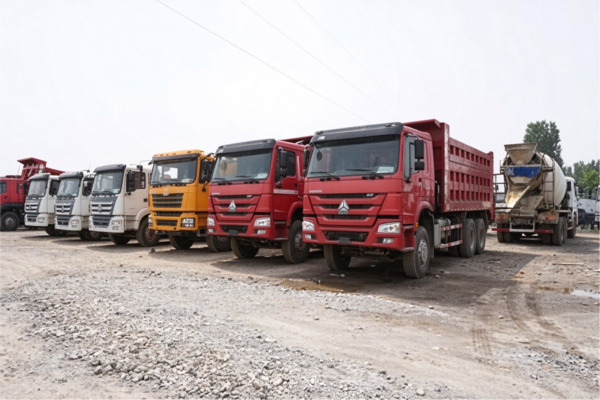
The difference between a reliable supplier and a problematic one is rarely obvious from a website or a price list. It becomes obvious after you've wired the deposit. The sections below break down exactly how to read the signals before that moment arrives.
Are You Solving the Right Problem?
Most buyers come to us at Deli Auto after a frustrating experience: a supplier who showed them catalog photos, confirmed the trucks were "in good condition," then delivered vehicles with hidden engine faults or incomplete documentation. This isn't bad luck. It's what happens when buyers optimize for price before qualifying the supplier.
The right question isn't "who offers the cheapest used trucks in China?" It's "which supplier has the operational infrastructure to deliver what they promise?" Those are very different filters — and they produce very different shortlists.
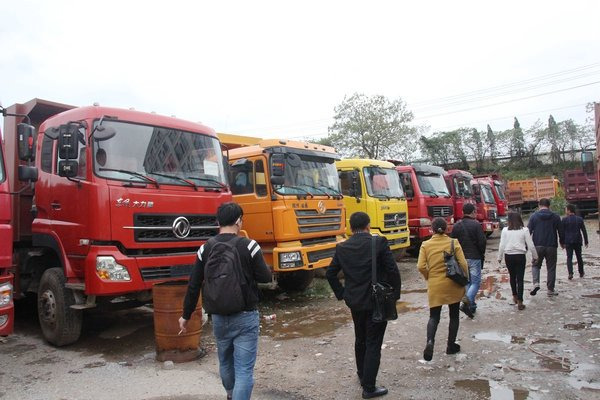
I've watched buyers from Africa, Southeast Asia, and South America make the same mistake repeatedly in consultations: they treat supplier selection like product selection[1]. They compare unit prices across five suppliers, ask for the "best price," and pick the lowest quote. What they don't compare is the inspection process, the inventory reality, or the export handling capability. By the time the container lands, the price difference is irrelevant.
Why "Reliable" Is a Contextual Word
What "reliable" means depends entirely on what you're buying and why.
A used truck dealer buying 10 trucks for resale needs:
- Accurate condition grading (so resale pricing holds)
- Flexible lot purchasing with matching paperwork
- Fast turnaround on containers
- Consistency across repeated orders
A fleet operator buying 3 trucks for construction or long-haul logistics needs:
- Thorough mechanical inspection with documented test results
- Confidence that the engine and drivetrain will hold up under daily load
- Clear warranty or after-sales support terms
- Spare parts availability for the specific models purchased
A procurement manager justifying a purchase internally needs:
- Paper trail: inspection reports, photos, certificates
- Supplier credentials that survive internal review
- Transparent pricing with no hidden charges
None of these buyers should use the same checklist. But all of them should ask the same foundational questions about supplier qualification — because the risks at that level are shared.
What Type of Supplier Are You Actually Dealing With?
This is where most buyers have a blind spot. "Used truck supplier in China" covers at least four fundamentally different business types — and each carries a different risk profile.
Understanding what kind of supplier you're talking to is one of the most important early steps in the evaluation process. The supplier type determines what they can verify, what they're responsible for, and what risks they're able to manage on your behalf.
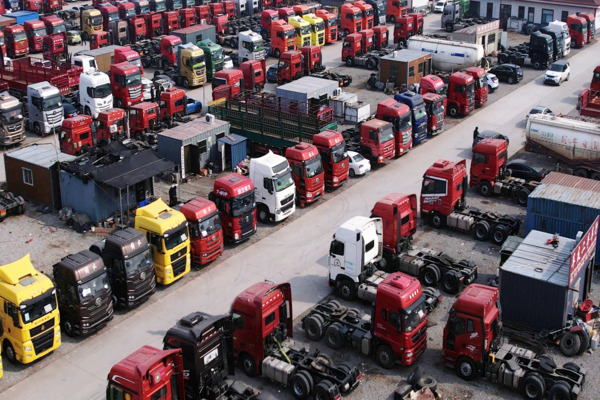
Here's a plain breakdown:
The Four Supplier Types
| Supplier Type | What They Do | Key Risk |
|---|---|---|
| Trading company / broker | Connects buyers to stock they don't own | No direct control over inspection or condition |
| Dismantler / parts yard | Breaks trucks for parts; may sell whole vehicles | Vehicles may be near end-of-life or incomplete |
| Yard owner / vehicle trader | Owns used trucks but limited export capability | May lack export licensing, documentation support |
| One-stop exporter | Owns or directly sources vehicles, handles full export | Higher margin, but more accountability and capability |
None of these types is automatically bad. A good trading company with strong supplier relationships and genuine inspection partners can serve buyers well. But you need to know which type you're dealing with — because it changes the questions you should ask.
A supplier who is vague about whether they own the vehicles, or who can't tell you where a specific truck came from, is not being transparent.[2] That's worth noting.
In our experience at Deli Auto, buyers from first-time sourcing markets — parts of West Africa, Central Asia, some South American countries — often don't realize they're talking to a broker who is working from someone else's photos. They ask "can I see the truck?" and the answer is a confident yes. But the photos that arrive were taken weeks ago, by a third-party yard, and the actual condition hasn't been verified since.
A reliable supplier — whatever their type — should be able to tell you:
- Whether they physically have the vehicle on-site
- When it was last inspected
- Who performed the inspection and what their qualifications are
- What documentation currently exists for that vehicle
If they hesitate on any of these, that's a signal.
How Do You Distinguish Real Inspection Capability from Claims?
"Strict quality control" is probably the most recycled phrase in Chinese export marketing. Every supplier says it. It means nothing without specifics.
A supplier with genuine inspection capability can describe their process in detail: who inspects the trucks, what tools and tests they use, what a completed inspection report looks like, and what happens when a vehicle fails inspection. If a supplier can't answer those questions clearly, the "quality control" claim is marketing language, not operational reality.
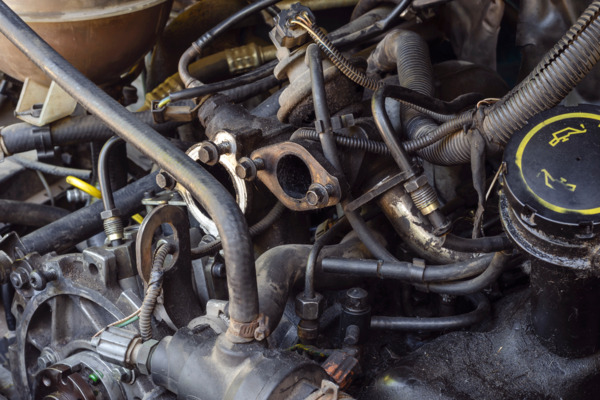
This is an area where I'll speak directly from our own operations, not to promote Deli Auto, but to give you a concrete benchmark for what real inspection infrastructure looks like — so you can ask comparable questions of any supplier you evaluate.
What Genuine Inspection Infrastructure Looks Like
A supplier with actual inspection capability should have:
In-house mechanic team Not outsourced. Not "we work with inspection companies." Full-time engineers who physically examine the vehicles, run engine tests, and can describe what they found in a specific truck. At Deli Auto, our engineers test engines under load before any vehicle is confirmed for sale — that's a verifiable operational detail, not a marketing phrase.
Documented inspection reports An inspection report worth trusting includes:
- Engine start-up video with the inspector visible
- Photos of the frame, cab interior, tires, and undercarriage
- Notes on existing faults and what has been repaired
- Odometer reading with photo evidence
- Confirmation of which parts are original and which have been replaced
If a supplier sends you a one-page PDF with five bullet points and three stock photos, that is not an inspection report. It's a formatting exercise.
Clear disclosure of faults, not just strengths This is a subtle but important signal. A reliable supplier will tell you what's wrong with a truck — worn brake pads, a patched cab, a replaced gearbox — alongside what's working well. A supplier who describes every vehicle as "perfect condition, everything normal" is either not inspecting properly or not being honest. Used trucks have histories. Pretending otherwise is a red flag.
Willingness to do buyer-requested inspection If a buyer requests a third-party inspection through SGS, Bureau Veritas, or a local agent in China[3], a confident supplier will say yes. A supplier who pushes back on this — citing "extra cost," "not necessary," or "we already inspected" — is worth questioning.
What Does a Real Inventory Look Like vs. a Catalog?
One of the most common frustrations I hear from overseas buyers is some version of this: "They had 50 trucks on their website. When I asked about a specific one, suddenly it was sold. Then another one was sold. Then they offered me something completely different."
A supplier with real ready-stock can provide live photos, current VIN numbers, and specific vehicle details on request — quickly.[4] A supplier working from a catalog or sourcing externally will give vague timelines, substitute vehicles, or inconsistent information. The difference between real inventory and a catalog is verifiable specificity.
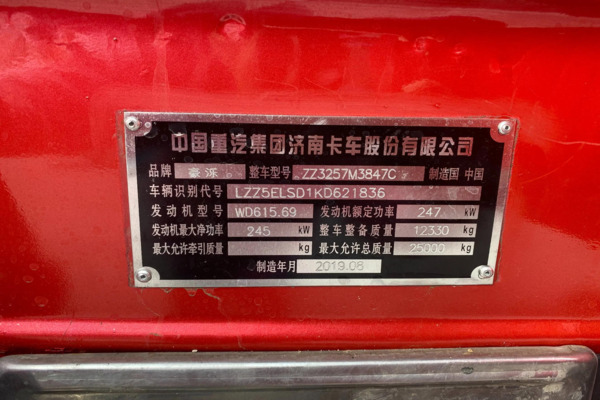
Here's what to do when evaluating inventory claims:
How to Test Inventory Reality
Ask for live photos with today's date Not the professional shots on the website. Ask a supplier to send a quick phone photo of a specific truck with that day's date written on a piece of paper visible in the frame. It sounds basic. Suppliers with real stock do this without hesitation. Suppliers working from old photos will stall.
Ask for the VIN or chassis number A real vehicle has a chassis number. Ask for it early. Then ask where the vehicle is located right now. If the answer is vague or keeps changing, the vehicle may not exist in the form described.
Ask about minimum order and mix options A supplier with genuine large inventory — like a 12,000㎡ yard with 200+ trucks — can usually accommodate mixed container loads of different brands or types. A broker working from a small stock will push you toward what they happen to have available, often framing it as "what we recommend."
Ask about lead time, specifically Not "how long does shipping take to [country]?" — that's a shipping question. Ask: "If I confirm purchase today, how long before the trucks are ready for container loading?" A supplier with ready stock answers in days or one to two weeks. A supplier who needs to source externally might say two to four weeks — but won't volunteer that explanation.
How Do You Evaluate Export Experience?
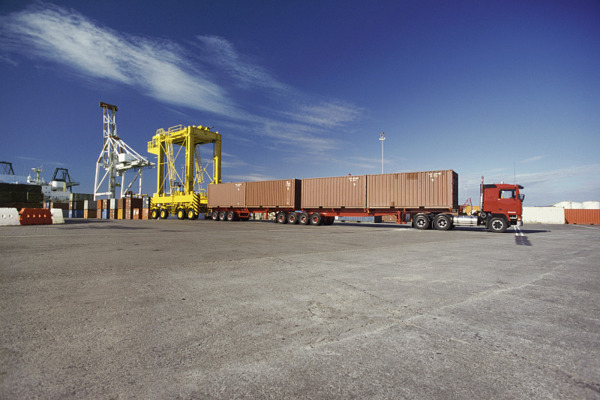
A supplier can have excellent vehicles and poor export capability — and the result is still a failed transaction. Shipping used trucks from China to overseas markets involves export licensing, customs declaration, bill of lading, certificate of origin, deregistration documents[5], and in some cases destination-country import compliance. Getting any of these wrong causes delays, additional costs, or vehicles stuck at port.
Export experience means more than "we ship worldwide." It means the supplier understands the documentation requirements for your specific destination market, has handled customs clearance before, and can coordinate container loading, ocean freight, and post-arrival support without routing everything through a third-party freight forwarder who doesn't know trucks.
What to Ask About Export Capability
Ask these questions directly — and pay attention to how specifically they answer:
-
"Have you exported trucks to [my country] before?" A supplier with real experience names specific ports, common shipping routes, typical transit times, and any import restrictions they've encountered. A supplier guessing says "yes, we ship everywhere."
-
"What export documents do you provide?" The answer should include at minimum: commercial invoice, packing list, bill of lading, certificate of origin, and deregistration certificate. For some markets, additional certifications apply. A capable supplier knows this.
-
"Do you handle customs clearance internally or through an agent?" Either is acceptable. But if the answer is "we work with a freight forwarder" and the supplier can't tell you who that partner is or how the process works, that's a gap in their accountability chain.
-
"What happens if there's a documentation problem after shipment?" This question separates suppliers with real after-sales processes from those who disappear after the container leaves port.
Frequently Asked Questions
Is it safe to buy used trucks from China without visiting the supplier in person?
It's possible, but requires more rigorous documentation and communication. At minimum, request engine start-up video, full photo sets with the chassis number visible, and an inspection report. Many buyers in Africa and Southeast Asia successfully purchase remotely — but they don't skip due diligence. Consider hiring a local inspection agent in China if the order value justifies it.
What red flags should I watch for when first contacting a supplier?
Watch for vague answers to specific questions, reluctance to provide chassis numbers or live photos, overly polished catalogs with no real inventory details, and pressure to move quickly or pay a deposit before you've seen documentation. A supplier who is defensive about inspection requests or third-party verification is a signal worth taking seriously.
How important is the supplier's location in China?
For used trucks, location matters practically. Suppliers based near major ports — Guangzhou (near Nansha/Huangpu), Shanghai, or Tianjin — typically have more efficient shipping logistics.[6] Inland suppliers may have cheaper prices but longer pre-loading lead times. Guangzhou is particularly active for used commercial vehicle exports to Africa, Southeast Asia, and the Middle East.[7]
Should I always request a third-party inspection?
For high-value orders or new supplier relationships, a third-party inspection (SGS, Bureau Veritas, or a trusted local agent) adds a layer of verification beyond the supplier's own report.[8] It costs money, but significantly reduces the risk of condition misrepresentation. If a supplier refuses a third-party inspection without a clear reason, treat that as a red flag.
What's the difference between "used" and "refurbished" in Chinese truck listings?
This varies by supplier and isn't standardized. Generally, "used" means the truck is in operational condition with no major repairs, while "refurbished" or "reconditioned" implies specific work has been done — engine overhaul, cab repair, repainting. Always ask what specific work was performed, by whom, and whether parts used were genuine OEM or aftermarket. Don't accept vague terms at face value.
Conclusion
Finding reliable used truck suppliers in China is ultimately a risk-qualification exercise, not a price comparison. The buyers who succeed are the ones who look past marketing language and ask verifiable, specific questions about inspection processes, real inventory, and export capability. They understand that supplier type determines accountability, that "quality control" means nothing without documentation, and that the cheapest quote rarely survives the first mechanical problem.
If you're evaluating Chinese suppliers — including us at Deli Auto — apply the same framework to everyone. Ask for live photos. Ask for chassis numbers. Ask what the inspection report actually contains. Ask whether they've shipped to your market before and what documents they provide. A supplier worth working with will answer clearly and confidently.
We're happy to show you exactly how we do it. Contact Deli Auto to request our standard pre-shipment inspection package, current ready-stock list, or a consultation with our engineering team.
[1] "Figure of the week: Africa's used vehicle market and ...", https://www.brookings.edu/articles/figure-of-the-week-africas-used-vehicle-market-and-the-environment/. Trade analyses of China's used vehicle export flows consistently identify sub-Saharan Africa, Southeast Asia, and parts of South America as primary destination regions, reflecting demand for affordable commercial transport in markets with lower new-vehicle purchasing power. Evidence role: statistic; source type: research. Supports: That Africa, Southeast Asia, and South America represent major destination markets for used commercial vehicles exported from China.. Scope note: Behavioral claims about buyer decision-making patterns in these regions are not directly verifiable through trade statistics and reflect practitioner observation rather than empirical research. ↩
[2] "Commerce Finalizes Rule to Secure Connected Vehicle ...", https://www.bis.gov/press-release/commerce-finalizes-rule-secure-connected-vehicle-supply-chains-foreign-adversary-threats. Research on used vehicle export supply chains from China has identified intermediary opacity—where brokers present third-party inventory as their own—as a recurring source of buyer disputes and post-shipment condition discrepancies. Evidence role: general_support; source type: research. Supports: That intermediary opacity and misrepresentation of inventory ownership are documented risks in Chinese used vehicle export supply chains.. Scope note: Direct academic literature on this specific practice is limited; support may be drawn from broader trade fraud or supply chain transparency studies rather than used-truck-specific research. ↩
[3] "Best Pre-Shipment Inspection Companies In The World", https://www.qima.com/blog/inspection/best-pre-shipment-inspection-companies. SGS and Bureau Veritas are internationally accredited testing, inspection, and certification organizations recognized by customs authorities in numerous importing countries; both offer pre-shipment inspection programs applicable to used vehicles exported from China. Evidence role: definition; source type: institution. Supports: That SGS and Bureau Veritas are internationally accredited inspection and certification bodies that offer pre-shipment inspection services for vehicles exported from China.. Scope note: The scope and depth of vehicle-specific inspection protocols vary by service tier and destination-country requirements; accreditation does not guarantee detection of all latent mechanical faults. ↩
[4] "Vehicle identification number", https://en.wikipedia.org/wiki/Vehicle_identification_number. China's vehicle identification number system conforms to the ISO 3779 standard, with VINs assigned at manufacture and recorded in national vehicle registration databases administered by the Ministry of Public Security, enabling identity verification of individual vehicles. Evidence role: mechanism; source type: government. Supports: That vehicle identification numbers (VINs) in China follow a standardized format that can be used to verify vehicle identity and registration status.. Scope note: Access to China's national vehicle registration database is generally restricted to domestic authorities; overseas buyers typically cannot independently query VIN records without engaging a local agent or authorized service. ↩
[5] "Exporting a Motor Vehicle", https://www.cbp.gov/trade/basic-import-export/motor-vehicle. China's General Administration of Customs and Ministry of Commerce regulations governing used vehicle exports specify mandatory documentation including export licenses, customs declarations, certificates of origin, and vehicle deregistration certificates as conditions for lawful export. Evidence role: definition; source type: government. Supports: That Chinese customs and export regulations require specific documentation—including export licensing, customs declaration, bill of lading, certificate of origin, and deregistration certificate—for used vehicle exports.. Scope note: Specific documentary requirements may vary by destination country, vehicle category, and applicable bilateral trade agreements; regulations are subject to periodic revision. ↩
[6] "Developing China's Ports", https://documents1.worldbank.org/curated/en/099355105182214741/pdf/IDU0252045cf029fb04b3c0a3b8015c08103310d.pdf. Chinese customs and port authority data indicate that Guangzhou, Shanghai, and Tianjin collectively account for a substantial share of used vehicle export throughput, reflecting their proximity to major vehicle trading markets and established freight infrastructure. Evidence role: statistic; source type: government. Supports: That Guangzhou (Nansha/Huangpu), Shanghai, and Tianjin handle the majority of China's used commercial vehicle exports.. Scope note: Publicly available port-level breakdowns specifically for used commercial vehicles may be aggregated with broader automotive export categories, limiting precision. ↩
[7] "Figure of the week: Africa's used vehicle market and ...", https://www.brookings.edu/articles/figure-of-the-week-africas-used-vehicle-market-and-the-environment/. Trade data from Chinese customs authorities and international automotive market analyses identify Guangzhou as a principal origin hub for used commercial vehicle flows to sub-Saharan Africa, Southeast Asia, and the Middle East, driven by proximity to vehicle trading clusters and port access. Evidence role: statistic; source type: institution. Supports: That Guangzhou serves as a primary export hub for used commercial vehicles shipped to African, Southeast Asian, and Middle Eastern markets.. Scope note: Destination-specific breakdowns by origin city are not always disaggregated in publicly available customs data; figures may reflect broader Guangdong province rather than Guangzhou specifically. ↩
[8] "Increasing the Effectiveness of Preshipment Inspection Services", https://openknowledge.worldbank.org/entities/publication/cdf2398f-dbfd-5156-9910-cbf082e10015. Research on pre-shipment inspection programs in international trade has found that independent third-party verification reduces the frequency of quality disputes and condition misrepresentation claims, though effectiveness varies with inspector qualification and the scope of the inspection protocol. Evidence role: general_support; source type: research. Supports: That independent pre-shipment inspections reduce the incidence of quality and condition disputes in cross-border used vehicle or goods procurement.. Scope note: Most empirical studies on pre-shipment inspection effectiveness focus on new goods or agricultural commodities rather than used vehicles specifically; direct evidence for the used truck context is limited. ↩