Choosing between the MAN TGX and MAN TGS is one of the most common questions we hear from buyers who have already decided on MAN but haven't committed to a model. Get this decision wrong, and you're either paying for capability you'll never use — or pushing a truck past its design limits in conditions it was never built to survive.
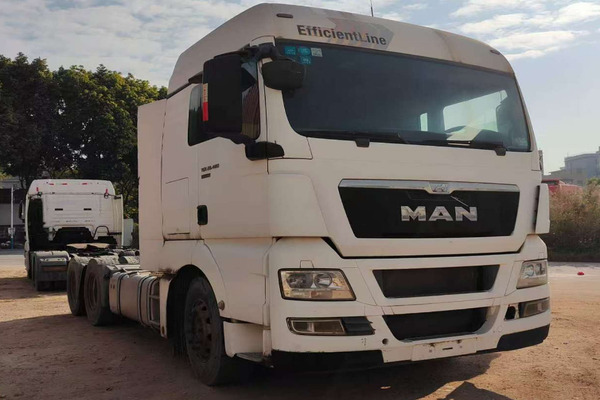
The MAN TGX and MAN TGS are both heavy-duty trucks from the same manufacturer, but they are built for fundamentally different operating environments. The TGX is engineered for long-haul highway efficiency, while the TGS is designed for mixed terrain and demanding work cycles. The right choice depends almost entirely on where your truck will actually operate — not on which model looks better on paper.
Most buyers who reach out to us have already seen the spec sheets. What they haven't done is map their own routes against those specs. That's where the real decision lives — and that's exactly what this article will help you work through.
Does Road Type Actually Determine Which MAN Truck You Need?
Buyers often start the conversation by asking about payload or horsepower. After 20 years of sourcing and inspecting used MAN trucks, we've found that those are almost never the deciding factors. The question that matters most is: what does the road between your loading point and your destination actually look like?
Road type is the single most important variable in the MAN TGX vs. MAN TGS decision.[1] The TGX is optimized for paved, high-speed highway operations where aerodynamic efficiency and fuel economy matter most. The TGS is built to handle mixed terrain — unpaved roads, construction sites, port yards, and rural infrastructure routes — where chassis strength and ground clearance matter more than aerodynamics.[2]
What "Highway Optimized" Actually Means for the TGX
The TGX sits lower to the ground than the TGS. Its cab is designed with aerodynamics as a priority. At sustained highway speeds, this design reduces air resistance and, by extension, fuel consumption.[3] Buyers operating regular runs between major ports, logistics hubs, or distribution centers on well-maintained roads will find this efficiency genuinely valuable over time.
The TGX is typically configured for:
- Long-distance container haulage on sealed national highways
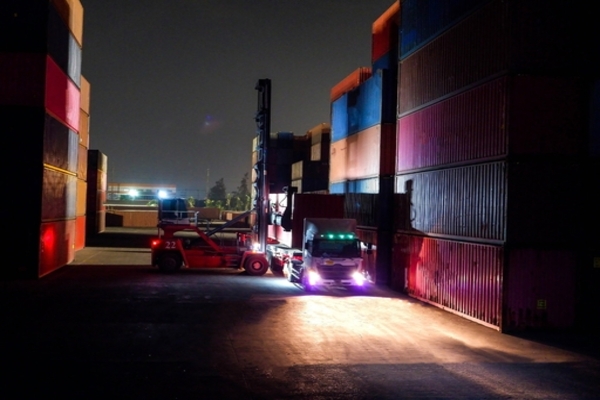
- Port-to-warehouse corridor runs with predictable road surfaces
- Refrigerated or high-value cargo transport where smooth ride matters
- High-frequency routes where fuel cost per kilometer compounds quickly
One buyer we work with regularly moves goods between a coastal port and an inland distribution center in West Africa. The route is roughly 90% sealed tarmac. For that buyer, the TGX made clear sense — the fuel efficiency advantage over thousands of kilometers adds up to real money.
What "Mixed Terrain" Actually Means for the TGS
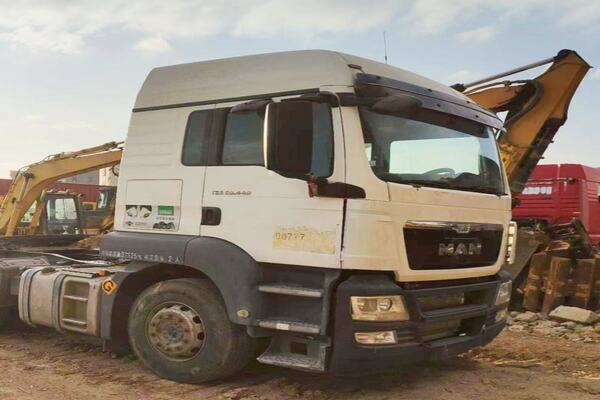
The TGS is a different animal. It sits higher. Its chassis is built with more structural flexibility for uneven loading and rough surfaces. The suspension geometry handles the kind of punishment that comes from construction site access roads, mining haul routes, and rural delivery runs where the "road" is more of a suggestion.
The TGS is typically suited for:
- Construction material haulage to sites with unpaved access
- Mining support operations with rough or gradient roads
- Infrastructure project supply chains in developing regions
- Mixed-route operations where even one segment is significantly unpaved
Our engineers have found that buyers who try to use a TGX on rough terrain don't just wear out the truck faster — they damage specific components (suspension, cab mounts, front axle geometry) in ways that are expensive to repair[4] and hard to source parts for in markets far from Europe.
The comparison is not about which truck is "heavier duty." Both are serious machines. The comparison is about which truck's design assumptions match your actual operating environment.
| Operating Condition | Recommended Model |
|---|---|
| Paved national highways, long-haul | MAN TGX |
| Mixed paved/unpaved routes | MAN TGS |
| Construction site access roads | MAN TGS |
| Port corridor haulage, sealed roads | MAN TGX |
| Mining or aggregate transport | MAN TGS |
| High-frequency fuel-sensitive routes | MAN TGX |
| Rural infrastructure delivery | MAN TGS |
Does Payload Capacity Decide Between TGX and TGS?
Many buyers assume the TGS carries more because it looks more robust. Others try to use gross train weight ratings as the deciding factor. Neither approach gets to the right answer, and buyers in markets like Sub-Saharan Africa or Southeast Asia have told us this assumption has led to costly mistakes.
Both the TGX and TGS can handle heavy loads. The difference is not how much they carry — it's what happens to the truck when it carries that load across difficult terrain. A TGX carrying the same gross weight as a TGS on a rough road will experience stress its chassis was not designed to absorb.

Load Type Matters More Than Load Weight
Consider two buyers with identical gross train weight requirements — say, 40 tonnes.
Buyer A is hauling containerized cargo from a port to an inland logistics park. The road is sealed. The load is uniform. The truck runs the same route five days a week.
Buyer B is hauling aggregate from a quarry to a road construction site. The access road to the quarry is gravel and gradient. The load shifts. The return leg is often empty, but the full-load segment is punishing.
Both buyers need 40-tonne GTW capacity. But Buyer A and Buyer B need entirely different trucks. Putting a TGX on Buyer B's route is not a cost-saving decision — it's a maintenance problem waiting to happen.
Why "Which Is Cheaper" Is the Wrong Question
We hear this regularly: "The TGX is a bit cheaper right now — can't we just use it for our routes?"
Sometimes yes. Often no. Here's the honest breakdown of why sticker price is not the right frame:
- A used TGX purchased at a lower price and operated on rough terrain will likely require more frequent suspension and front-end repairs
- Component wear accelerates non-linearly on unsuitable terrain — meaning the cost curve gets steep quickly
- In markets with limited MAN dealer networks, repair downtime is a major cost factor that doesn't appear in the purchase price
- A TGS on the right terrain will typically deliver a longer service life before major overhaul
The right question is: what is the total operating cost per kilometer over the expected service life, on your specific routes? We can't give you that number precisely — it depends on your conditions, your drivers, and your maintenance capacity. But we can tell you that buying on purchase price alone, without considering route type, is one of the most common mistakes we see from first-time MAN buyers in export markets.
What Should You Inspect When Buying a Used MAN TGX or TGS?
Pre-purchase inspection is where good decisions get made or bad ones get locked in. This is the part of the process we care about most, because a truck with the right model designation but the wrong condition history can still destroy your operating budget.
The used MAN TGX and TGS have different inspection priorities because they typically come from different duty cycles. TGX units in the used market are often ex-European long-haul fleet trucks with high mileage but relatively predictable wear patterns. TGS units may come from more varied backgrounds — some from construction projects, some from mixed fleet operations — so the inspection scope should reflect that variation.

Key Inspection Points for Used TGX Units
Because the TGX is a highway truck, its wear pattern is concentrated in high-cycle, high-mileage components:
- Engine condition and mileage history — TGX units often have high odometer readings. Have an engineer verify that engine performance matches the declared mileage and that there are no signs of rolled-back meters.
- Transmission and gearbox wear — High-mileage highway trucks will show gearbox wear. Check for smooth shifting across all ranges and inspect for oil leaks around seals.
- Differential and driveline — Inspect for play, noise, and seal condition.
- Cab and sleeper condition — Long-haul TGX units often have driver-worn interiors. Check cab mounts for fatigue cracks.
- Exhaust and emissions systems — European fleet trucks may have DPF or AdBlue systems that require specific fuels and maintenance. Verify compatibility with your market's fuel quality and confirm the emissions system is functional.
Key Inspection Points for Used TGS Units
Because TGS units may come from heavier work environments, the inspection priorities shift:
- Chassis frame inspection — Look carefully for cracks, unauthorized repairs, and stress points, particularly around the rear suspension mounts and subframe brackets.
- Suspension system — Check spring condition, shock absorbers, and axle alignment. Construction-use trucks can show significant suspension fatigue.
- Front axle and steering geometry — Rough terrain use puts stress on steering components. Check for play in the steering system and inspect kingpin wear.
- Body and tipping gear (if applicable) — On tipper-configured TGS units, inspect the hydraulic system, tipping frame, and body condition independently.
- Underbody condition — Look for impact damage, particularly to the fuel tank, brake lines, and crossmembers.
What Our Engineers Do Before Shipment
At Deli Auto, every used MAN unit we process goes through a mechanical inspection before it leaves our yard. For MAN trucks specifically, our engineers run engine load tests and check gearbox operation under power. We document findings and share them with the buyer before confirming shipment. For buyers in markets where post-sale repairs are expensive or slow, this inspection documentation is not optional — it's the foundation of a sound procurement decision.
If a supplier cannot provide inspection documentation, engine test records, and photo evidence of chassis condition, that is a significant risk signal — regardless of model or price.
Which Markets Typically Need TGX vs. TGS?
Geography and infrastructure are closely linked in this decision. Buyers in different regions tend to cluster around one model for predictable reasons — and understanding those patterns can help you pressure-test your own assumptions.
The MAN TGX tends to suit buyers in markets where road infrastructure is reasonably developed, while the MAN TGS is more commonly requested from markets with significant off-highway or mixed-terrain operations.
Patterns We See in Our Export Markets
West and East Africa: We see strong demand for TGS units from buyers running supply chains to mining operations, construction projects, and rural agricultural routes[5]. The road conditions in many inland corridors make the TGS's chassis resilience a practical necessity, not a luxury.[6] TGX units do move in these markets — but typically to buyers with dedicated sealed highway routes or port logistics operations.
Southeast Asia: Buyers in countries with ongoing infrastructure development often ask for TGS units for project logistics. Where urban or inter-city highway haulage is the primary use case, TGX interest is higher.
Middle East: We work with buyers running both models here. Highway freight corridors suit the TGX well. Cross-border or construction-linked supply chains in less-developed road networks tend toward TGS.
Central Asia and Eastern Europe: Mixed terrain and variable road quality tend to push buyers toward TGS for safety margin. Highway-dominant buyers in this region sometimes prefer TGX for fuel economy on long international corridor runs.
These are directional observations based on buyer conversations and sales patterns — not hard statistics. Your specific route, cargo, and infrastructure are what matter for your decision.
Frequently Asked Questions
Is the MAN TGX more fuel efficient than the TGS?
The TGX is designed with aerodynamics as a priority, which typically gives it an advantage in fuel consumption on sustained highway runs. However, fuel efficiency figures depend heavily on load, speed, driver behavior, and road conditions. We recommend treating this as a directional advantage on highway routes — not a guaranteed percentage improvement. Always verify with MAN's official documentation for specific figures.
Can a MAN TGS be used for long-haul highway transport?
Yes — a TGS can physically operate on highway routes. But you would be paying for chassis capability and ground clearance that you don't need, while potentially giving up some of the aerodynamic fuel efficiency the TGX offers on those same routes. It's not a mechanical problem; it's a cost optimization problem.
What mileage is acceptable for a used MAN TGX or TGS?
There is no universal answer. Mileage acceptability depends on maintenance history, the type of work the truck has done, and what overhaul work has been completed. A well-maintained TGX with 800,000 km can be a better purchase than a neglected unit with 400,000 km.[7] Engine testing and inspection documentation matter far more than the number on the odometer.
Are spare parts for MAN trucks available in Africa and Southeast Asia?
Availability varies significantly by country and city. MAN has dealer networks in some markets, but coverage in rural or less-developed areas can be limited[8]. When we advise buyers in these markets, we recommend confirming local parts availability for critical components — particularly engine parts, gearbox components, and injectors — before committing to a purchase.
Does Deli Auto stock both MAN TGX and TGS units?
Yes. We maintain a yard of 200+ used trucks, and MAN units across both model lines appear regularly in our inventory. Availability changes with stock rotation, so we recommend contacting us directly with your specific requirements — model, configuration, power output range, and intended use — so we can match you to the right unit from current stock.
Conclusion
The MAN TGX vs. MAN TGS decision comes down to one honest question: where is your truck going to work? The TGX is a strong, efficient platform for buyers operating on paved highway corridors where fuel economy and high-mileage reliability matter most. The TGS is the right choice for buyers whose routes include construction sites, mining access roads, or any terrain that demands chassis resilience over aerodynamic efficiency.
Don't let purchase price be the deciding variable. A mismatched truck — the wrong model for the wrong terrain — will cost you more in maintenance, downtime, and shortened service life than the difference in sticker price will ever save you. Total operating cost on your specific routes is the only number that matters.
At Deli Auto, we've processed used MAN trucks across both model lines and worked with buyers in Africa, the Middle East, Southeast Asia, and beyond. We can help you evaluate your route requirements, inspect units from our current stock, and match you with the right truck for your operating environment. Contact our team with your route details and cargo requirements — and we'll give you an honest recommendation based on what we've seen work in the field.
[1] "SURFACE MINE ROAD DESIGN HAULAGE STUDY", https://stacks.cdc.gov/view/cdc/206528/cdc_206528_DS1.pdf. Transport engineering and fleet management literature consistently identifies the operating environment — including road surface type, gradient, and surface quality — as a foundational input in heavy vehicle specification, as it determines the structural, suspension, and powertrain requirements that define vehicle suitability and lifecycle cost. Evidence role: expert_consensus; source type: research. Supports: That operating environment and road surface conditions are primary inputs in heavy commercial vehicle specification and selection. Scope note: While operating environment is widely recognized as a critical selection factor, published frameworks may weight multiple variables simultaneously; the claim that road type is the single most important factor represents a practical simplification rather than a universally ranked criterion. ↩
[2] "MAN TG-range", https://en.wikipedia.org/wiki/MAN_TG-range. MAN Truck & Bus product documentation positions the TGS series as a versatile heavy-duty platform engineered for demanding work cycles including construction, mining support, and mixed-terrain logistics, with chassis geometry and suspension specifications distinct from the long-haul-optimized TGX series. Evidence role: general_support; source type: other. Supports: That the MAN TGS is designed with chassis and ground clearance specifications suited to mixed terrain and construction environments, differentiating it from the highway-optimized TGX. Scope note: Precise ground clearance and chassis strength figures require reference to current MAN technical specifications, which may vary by configuration, axle arrangement, and model year. ↩
[3] "DOE's Effort to Improve Heavy Vehicle Fuel Efficiency ...", https://energy.gov/sites/prod/files/2014/07/f17/vss006_salari_2014_o.pdf. Research on heavy vehicle aerodynamics consistently demonstrates that cab height and frontal area are primary determinants of aerodynamic drag, with drag force increasing as the square of vehicle speed, making aerodynamic optimization particularly impactful on sustained highway operations. Evidence role: mechanism; source type: research. Supports: That aerodynamic cab design in heavy trucks reduces air resistance and improves fuel efficiency at sustained highway speeds. Scope note: General aerodynamic principles apply broadly to heavy trucks; model-specific drag coefficient comparisons between TGX and TGS would require manufacturer or independent test data. ↩
[4] ""Finite Element Model Validation and Testing of an Off-Road ...", https://commons.erau.edu/edt/444/. Vehicle dynamics and structural fatigue research identifies suspension components, cab mounting systems, and steering axle geometry as the primary load paths for road-induced vibration and shock inputs, with fatigue life in these components highly sensitive to the frequency and amplitude of surface irregularities exceeding design parameters. Evidence role: mechanism; source type: research. Supports: That suspension systems, cab mounts, and front axle geometry are primary stress concentration points when highway-designed vehicles are operated on rough terrain. Scope note: Published research addresses general vehicle structural dynamics; direct experimental comparison of TGX-specific component failure rates on paved versus unpaved surfaces is not available in open literature. ↩
[5] "The future of Africa's transport sector", https://www.brookings.edu/articles/the-future-of-africas-transport-sector/. Market analyses of Sub-Saharan African commercial vehicle sectors, including reports from the African Development Bank and industry research firms, identify mining, infrastructure construction, and agricultural supply chains as primary drivers of heavy truck demand, with road network quality in these sectors frequently requiring vehicles with robust off-highway capability. Evidence role: general_support; source type: institution. Supports: That demand for heavy-duty trucks in Sub-Saharan Africa is driven significantly by mining, construction, and agricultural logistics sectors operating on mixed or unpaved road networks. Scope note: Regional market reports vary in methodology and coverage; demand patterns for specific truck models are not typically disaggregated in publicly available industry data. ↩
[6] "Publication: Road Sector Performance Indicators for African ...", https://openknowledge.worldbank.org/entities/publication/e09a1684-1449-5f9b-9a68-d3ba2d95531c. World Bank and African Development Bank infrastructure assessments have documented that a substantial proportion of the road network in Sub-Saharan Africa remains unpaved, with paved road density and surface quality declining significantly outside major urban centers and primary highway corridors, creating challenging operating conditions for freight vehicles on inland supply chain routes. Evidence role: historical_context; source type: institution. Supports: That road infrastructure quality in many inland Sub-Saharan African corridors is characterized by significant proportions of unpaved or poorly maintained surfaces that impose demanding conditions on freight vehicles. Scope note: Road quality varies considerably by country, corridor, and recent investment; aggregate regional statistics may not reflect conditions on specific routes relevant to individual buyers. ↩
[7] "Used-Truck Mileage vs. Age: Which Questions Matter More?", https://bonhamchrysler.com/blog/used-truck-mileage-vs-age-maintenance-history. Fleet management literature and vehicle lifecycle analyses consistently identify maintenance compliance and service record completeness as primary determinants of residual mechanical condition, with mileage serving as a secondary proxy that can be misleading in the absence of documented service history. Evidence role: expert_consensus; source type: research. Supports: That maintenance history is a stronger predictor of remaining vehicle service life than odometer reading alone. Scope note: General fleet management principles support this claim; heavy-truck-specific longitudinal studies comparing maintenance history versus mileage as predictors of failure rates are less commonly published in open literature. ↩
[8] "Premiere: MAN showcases high-quality chassis solutions at ...", https://press.mantruckandbus.com/corporate/premiere-man-showcases-high-quality-chassis-solutions-at-busworld-southeast-asia-2026/. Industry assessments of commercial vehicle markets in Sub-Saharan Africa and Southeast Asia have noted that after-sales service infrastructure, including authorized dealer networks and genuine parts distribution, is concentrated in major urban centers, with coverage declining significantly in rural and inland regions. Evidence role: general_support; source type: institution. Supports: That commercial vehicle manufacturer service and parts networks have limited coverage in rural and less-developed regions of Africa and Southeast Asia. Scope note: Network coverage changes over time as manufacturers expand; current dealer locator data from MAN Truck & Bus would provide more precise and up-to-date geographic coverage information than general industry assessments. ↩