Buying a used SCANIA engine sounds straightforward until the engine arrives and fails within the first month. Many buyers across Africa, Southeast Asia, and the Middle East come to us with the same starting question — "what should I check?" — but the honest answer is that the right checks depend heavily on who you are, what you're using the engine for, and whether you can even inspect it in person. Getting this wrong is expensive.
The short answer: buyers should check engine series identification, compression and oil pressure test results, turbo condition, ECU fault code history, and blow-by levels — but the priority order changes depending on application and risk tolerance. Remote buyers, who represent the majority, should focus less on "how to inspect" and more on "how to evaluate whether a supplier's inspection report is trustworthy and complete."
The checklist approach feels reassuring. It gives buyers something to print out and tick off. But in our experience working with used truck dealers and fleet procurement managers across West Africa, Southeast Asia, and the Middle East, the buyers who rely purely on a checklist are often the ones who miss the risks that actually matter for their specific situation. So let's work through this properly.
Does the Engine Series Actually Matter Before You Check Anything Else?
Most buyers search for a "used SCANIA engine" as if the brand name alone defines what they're getting. It doesn't. And skipping this step causes sourcing problems that no inspection can fix later.
SCANIA produces several distinct engine families — the DC9, DC13, and DC16 are among the most commonly traded in the used market[1]. Each has different displacement, power output, emissions rating, and known failure tendencies. More importantly, each has different parts availability and compatibility profiles depending on which generation of truck you're fitting it into.
Identifying the correct engine series before evaluating condition saves buyers from a scenario we've seen repeatedly: a buyer receives an engine that is mechanically sound but incompatible with their target vehicle because the generation doesn't match.
Why Series Identification Affects Everything Downstream
The engine series determines:
- Which replacement parts are locally available in your market
- Which vehicle generations the engine is compatible with — not just by brand, but by wiring harness, ECU protocol, and mounting configuration
- Which known failure modes you should weight more heavily during inspection
- Emissions compliance — a Euro 3 engine and a Euro 5 engine from SCANIA carry completely different operational restrictions in regulated markets
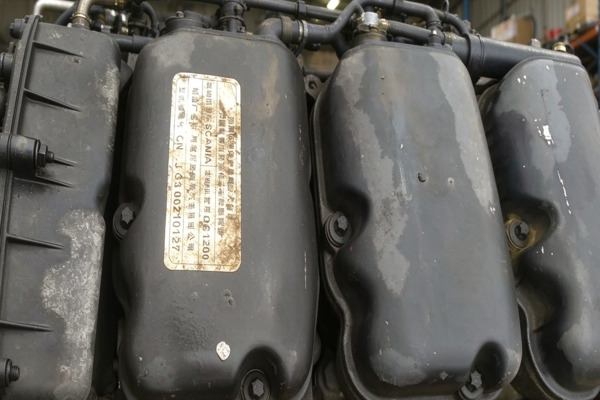
Before asking about compression numbers or turbo condition, confirm the exact engine model number, series, and emissions standard. Ask the supplier for the engine nameplate photograph and cross-reference it against SCANIA's own technical documentation.
Practical Identification Steps
- Request the engine serial number and model designation — not just "SCANIA DC13"
- Verify the generation (e.g., DC13 covers multiple sub-generations with different injection systems)
- Confirm emissions tier: Euro 3, Euro 4, Euro 5, or Euro 6
- Cross-reference compatibility with your target vehicle's chassis and ECU system
Buyer note: SCANIA's EuroConnector and CAN-bus architecture evolved significantly across generations[2]. A used engine supplier who cannot tell you the specific sub-variant beyond the series name is giving you incomplete information.
What Are the Inspection Checks That Actually Differentiate Quality?
Here is where most buyer guides go wrong. They list every possible check equally — from visual rust to oil leaks to compression — as if each item carries the same weight. They don't.
The checks that genuinely differentiate a reliable used SCANIA engine from a problematic one are the ones that require equipment, experience, or data access to perform. They're also the ones most commonly skipped, misrepresented, or summarized away with vague language in supplier inspection reports.
The surface-level checks are the easiest to fake. A cleaned engine with fresh paint and a low-mileage claim costs a supplier almost nothing to present. Buyers who evaluate condition primarily on appearance are evaluating the supplier's presentation effort, not the engine's mechanical integrity.
The Checks That Matter Most — And Why
Compression Test Results
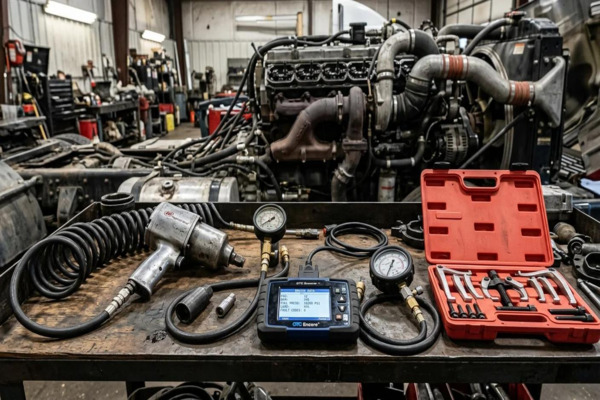
Compression testing across all cylinders reveals internal wear, ring condition, and head gasket integrity in a way that no visual inspection can replicate. Uneven compression between cylinders is a stronger signal than absolute values alone — it points to localized wear or damage[3].
We don't publish specific pass/fail thresholds here because acceptable ranges vary by engine series and specification version. Buyers should verify target values against SCANIA's official service data for the specific model. What matters is that the supplier can produce actual per-cylinder data, not a summary statement like "compression is good."
Ask for: A table showing per-cylinder compression readings, not just a pass/fail declaration.
Oil Pressure Under Load
An engine can show adequate oil pressure at idle while exhibiting low pressure under working load — which is the condition that actually causes bearing damage in service. Static oil pressure readings at idle are not sufficient for high-utilization applications like long-haul trucking or construction.
Buyers in high-utilization contexts — particularly fleet operators running trucks in West Africa or construction companies in Southeast Asia — should prioritize this check explicitly.
Turbo Shaft Play and Condition
Turbocharger condition is one of the most consequential checks for a used SCANIA engine, and also one of the most frequently glossed over in supplier reports[4]. Worn turbo shaft bearings cause oil contamination of the intake system and, if left unaddressed, accelerate combustion chamber wear.
What to check:
- Axial and radial shaft play (measured with the turbo removed or through access points depending on design)
- Blade condition — look for contact marks indicating the impeller has been touching the housing
- Oil seals — check for oil on the compressor side of the housing
A turbo replacement on a SCANIA DC13 or DC16 is not a cheap repair. Buyers should weight this check heavily against purchase price.
Blow-By Test
A blow-by test measures combustion gas escaping past piston rings into the crankcase. High blow-by is one of the clearest indicators of internal wear. It directly affects oil consumption, emissions output, and the remaining service life of the engine.
In our experience with buyers across Africa and Southeast Asia, this is the check most commonly absent from supplier inspection reports — either because it requires specialist equipment or because the results are unflattering. Its absence from a report is itself worth noting.
ECU Fault Code History
Modern SCANIA engines — particularly those with SCANIA's EMS (Engine Management System) — log fault codes that persist even after the engine is reset[5]. A current-state diagnostic scan that shows no active codes is not the same as a clean fault code history.
Ask for: A full diagnostic report showing both active and stored (historical) fault codes, run through a compatible SCANIA diagnostic tool or a reputable equivalent.
Fault code patterns reveal more than individual codes. Recurring injector faults, repeated DPF-related codes on Euro 5 engines, or persistent coolant temperature warnings tell a story about how the engine was operated and what wear patterns to expect.
How Should Remote Buyers Evaluate a Supplier's Inspection Report?
This is the question most guides skip entirely. The majority of international buyers purchasing a used SCANIA engine from a Chinese exporter cannot travel to Guangzhou, cannot bring their own technician, and cannot run their own diagnostic tests. They are entirely dependent on the supplier's pre-shipment inspection report.
This is a structurally different problem from hands-on inspection, and it deserves a direct answer.
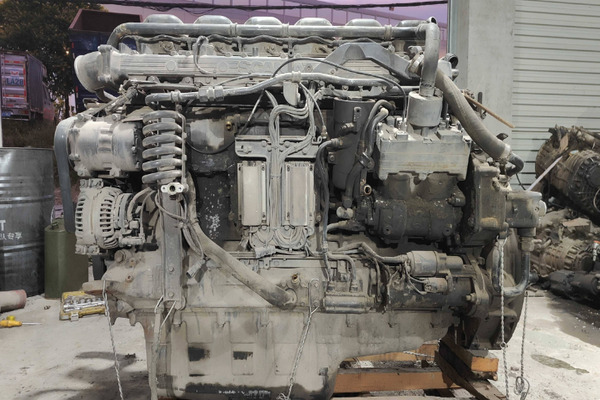
The question isn't just "is the engine good?" The question is: can I trust this supplier's report, and does the report contain what I actually need to make a decision?
What a Trustworthy Supplier Inspection Report Should Include
A credible pre-shipment inspection report for a used SCANIA engine should contain the following, at minimum:
| Inspection Category | What to Look For in the Report |
|---|---|
| Engine identification | Full serial number, model, generation, emissions rating |
| External condition | Photographs of all sides, block, oil pan, head, connectors |
| Compression test | Per-cylinder readings with test date |
| Oil pressure test | Readings at idle and under load conditions |
| Turbo inspection | Shaft play measurement, visual condition photos |
| Blow-by test | Result with measurement method noted |
| ECU diagnostic | Full fault code readout, active and stored |
| Coolant system | Pressure test result, evidence of contamination |
| Oil and fluid analysis | Visual inspection at minimum; lab analysis if available |
| Run test | Video or documentation of engine running under load |
Questions That Reveal Whether a Supplier Is Serious
Remote buyers should ask suppliers these questions before purchase:
- "Can you send me the per-cylinder compression readings, not just a summary?" — A supplier who can only give a summary doesn't have the data or doesn't want to share it.
- "What diagnostic tool did you use for the ECU scan, and can you share the full report file?" — This is verifiable. Vague answers signal a cosmetic inspection.
- "Can you provide a video of the engine running under load, not just at idle?" — Idle footage is easy to produce. Load footage reveals oil pressure behavior, smoke, and noise.
- "What was replaced or refurbished before the inspection?" — Knowing what was done is as important as knowing current condition.
- "What is your policy if the engine fails within the first 30 days of operation?" — The answer tells you everything about the supplier's confidence in their own assessment.
The Red Flags in Supplier Reports
We've seen this issue repeatedly when buyers send us competitor reports for comparison: vague language is a risk signal, not a neutral one.
Red flags include:
- "Engine in good working condition" with no supporting data
- Compression described as "normal" without readings
- ECU section showing only active codes (no stored fault history)
- Photographs only of the cleaned external surfaces
- No run test documentation
In our experience: A supplier who provides complete, data-backed reports upfront is demonstrating something about their internal process — not just their communication effort. The willingness to be specific is itself a quality signal.
How Does the Buyer's Application Change What to Prioritize?
A used SCANIA engine going into a long-haul fleet truck covering 100,000 km per year in West Africa operates under very different stress conditions than one going into a workshop as a parts engine. Treating these two situations with the same checklist wastes time on irrelevant checks and misses the ones that matter.
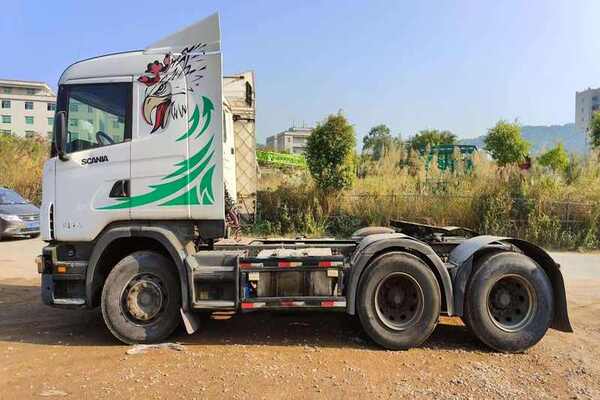
Situation 1: Fleet Operator — Long-Haul or Heavy Duty Application
Risk profile: High. Engine failure in service causes vehicle downtime, delivery failures, and potentially stranded vehicles in remote locations.
Priority checks:
- Oil pressure under load (critical — not optional)
- Blow-by test (wear indicator for remaining service life)
- Turbo condition (high-cost repair if it fails in service)
- Full ECU fault code history (pattern analysis of past failures)
- Coolant system integrity (overheating is a leading cause of engine failure in hot-climate markets[6])
For fleet operators, the inspection cost is cheap relative to the downtime cost. Buyers in this category should require a third-party inspection if they cannot send their own technician.
Situation 2: Parts Distributor or Workshop Buyer
Risk profile: Moderate. A partially worn engine still has value as a parts source. Total failure of one system doesn't eliminate all value.
Priority checks:
- Block integrity (cracks, sleeve wear — this affects whether the block is usable at all)
- Head condition (warping, crack testing on combustion face)
- Individual cylinder and injector condition
- Identifying which sub-systems are serviceable vs. beyond viable repair
For this buyer, a detailed per-system condition breakdown matters more than overall engine "pass/fail." An engine with a failed turbo but excellent block and injection components still has significant parts value.
Situation 3: Used Truck Dealer Reselling Complete Vehicles
Risk profile: Reputational. The dealer's customer will judge them by the engine's performance.
Priority checks:
- Start, run, and no-load idle behavior — basic operational confidence
- External presentation and oil leak status
- Fault code clarity — no active codes that the downstream buyer will immediately see
- Documentation completeness for resale credibility
Dealers in this position often buy in volume. They're not inspecting every engine forensically — they're qualifying a supplier's overall quality consistency. The supplier's inspection process and documentation standards matter more than any single engine.
Frequently Asked Questions
How do I verify a used SCANIA engine's mileage claim?
Mileage claims on used engines are very difficult to verify independently. ECU data can hold operational records, but these can be altered. The more reliable approach is to assess engine wear through compression test results, blow-by measurements, and injector condition rather than relying on stated mileage. In our experience, buyers who treat mileage as a primary quality indicator are easier to mislead.
What is the difference between a DC13 and DC16 SCANIA engine for buyers?
The DC13 is SCANIA's mid-range inline six-cylinder engine, widely used in long-haul tractor trucks. The DC16 is a larger V8 configuration with higher output, used in heavy haulage[7] and high-specification applications. Parts availability, pricing, and compatibility profiles differ significantly between the two. Buyers should confirm which series fits their vehicle and market before sourcing.
Should I request a third-party inspection for a used SCANIA engine from China?
For high-value purchases or fleet applications where downtime risk is significant, third-party inspection by a qualified mechanical inspector adds an independent layer of verification. It is not always practical for smaller orders or lower-price-point engines. As an alternative, requiring the supplier to provide full data-backed documentation — including per-cylinder compression readings, ECU diagnostic reports, and run-test video — raises the accountability standard without the full cost of independent inspection.
What are the most common failure modes in used SCANIA engines?
Based on what we observe across our inventory and buyer feedback, common issues include injector wear (particularly on high-mileage DC13 engines)[8], turbocharger bearing failure, coolant contamination of oil due to liner seal issues, and EGR system faults on Euro 4 and Euro 5 models. These patterns vary by engine series and operating environment. Buyers should ask suppliers specifically about known issues for the engine model they're evaluating.
How important is the emissions rating when buying a used SCANIA engine?
Critically important in some markets, irrelevant in others. Euro 5 and Euro 6 engines carry additional components — DPF systems, EGR circuits, SCR systems — that add maintenance complexity and cost[9]. In markets without emissions enforcement, these systems often create more problems than they solve. Buyers should match the emissions rating to their operating environment and their ability to service emissions-related components locally.
Conclusion
Purchasing a used SCANIA engine is not a checklist problem — it's a risk management decision that depends on who you are, what the engine will do, and how much you can trust the information in front of you. The core checks — engine series identification, compression data, oil pressure under load, turbo condition, blow-by results, and ECU fault code history — are the ones that actually separate reliable used SCANIA engines from expensive mistakes. For remote buyers, the real skill is evaluating whether a supplier's inspection report is complete and credible, not just reassuring.
At Deli Auto, we hold over 1,000 used engines in our Guangzhou warehouse, including SCANIA models across multiple series. Our inspection process produces the kind of documentation described in this article — not because regulations require it, but because our buyers depend on it to make decisions thousands of kilometres away. If you're sourcing a used SCANIA engine and want to understand what our inspection reports include, contact our team directly for a consultation and stock availability check.
[1] "DC09 085A. 257 kW (350 hp)", https://www.scania.com/content/dam/www/market/master/products/power-solutions/engine-pdfs/industrial/DC09-085A_257kW_SCR.pdf. SCANIA's official technical documentation describes the DC9, DC13, and DC16 as separate engine families differentiated by displacement, cylinder configuration, and intended application, supporting the claim that they represent meaningfully distinct product lines within the SCANIA range. Evidence role: general_support; source type: institution. Supports: The DC9, DC13, and DC16 represent distinct SCANIA engine families with differing displacement and application profiles. Scope note: Official manufacturer documentation confirms technical distinctions but does not directly quantify used-market trade volumes for each series. ↩
[2] "CAN bus", https://en.wikipedia.org/wiki/CAN_bus. Research on controller area network (CAN) bus implementation in heavy commercial vehicles documents protocol and architecture changes across vehicle generations, which can produce integration challenges when pairing engines and chassis from different production periods. Evidence role: mechanism; source type: research. Supports: CAN-bus protocols in heavy commercial vehicles have evolved across generations, creating potential incompatibilities when mixing components from different production periods. Scope note: General CAN-bus literature may not address SCANIA-specific EuroConnector implementations directly; SCANIA proprietary service documentation would provide more precise confirmation. ↩
[3] "Continental Compression Test Service Bulletin", https://data.ntsb.gov/Docket/Document/docBLOB?ID=40442222&FileExtension=.PDF&FileName=Continental%20Compression%20Test%20Service%20Bulletin-Master.PDF. Engine diagnostic literature and SAE technical papers on internal combustion engine condition assessment identify inter-cylinder compression variation as a key indicator of localized mechanical degradation, including ring wear and valve seating issues, often more informative than absolute pressure values alone. Evidence role: expert_consensus; source type: research. Supports: Differential compression readings across cylinders are diagnostically significant and can indicate localized wear, ring failure, or head gasket compromise. Scope note: Specific threshold values for acceptable variation differ by engine series and specification; general diagnostic literature provides the principle but not model-specific pass/fail criteria. ↩
[4] "Diesel Turbocharger Oil Contamination: Causes & Fixes", https://vfidiesel.com/turbocharger-oil-contamination-diesel/?srsltid=AYCX9vIs1ETA5T1mN5JlKs1zOWE13MyX-SvCy9nHBVIkg9qPJRyjn4Yt. Engineering literature on turbocharger failure modes documents that degraded shaft bearing seals permit lubricating oil to migrate into the compressor and turbine housings, resulting in oil ingestion through the intake system, increased carbon deposits on intake valves and combustion chambers, and progressive acceleration of internal engine wear. Evidence role: mechanism; source type: research. Supports: Worn turbocharger shaft seals allow oil to enter the intake and exhaust systems, leading to oil consumption, carbon deposit formation, and accelerated wear of combustion chamber components. Scope note: The severity and rate of downstream damage depend on operating conditions and engine design; the mechanism is well-established but quantitative wear progression data is engine-specific. ↩
[5] "ON-Board Diagnostic Trouble Codes", https://www.dmv.de.gov/VehicleServices/inspections/pdfs/dtc_list.pdf. Documentation on heavy vehicle engine management systems describes the distinction between active and stored (historical) diagnostic trouble codes, noting that stored codes remain in non-volatile ECU memory after reset and provide a record of past fault events relevant to assessing engine operational history. Evidence role: mechanism; source type: research. Supports: Modern engine management systems in heavy commercial vehicles store historical fault codes in non-volatile memory that persists after active code clearing. Scope note: The specific memory architecture and code retention behavior of SCANIA EMS may differ from general OBD/OBD-II implementations described in publicly available literature; SCANIA proprietary diagnostic documentation would provide definitive confirmation. ↩
[6] "THERMAL MANAGEMENT IN HEAVY VEHICLES", https://www.osti.gov/servlets/purl/12369. Engineering research on diesel engine thermal management documents that elevated ambient temperatures reduce cooling system efficiency margins, increasing the frequency of overheating events and associated engine damage including head gasket failure, liner distortion, and bearing damage in fleet operations conducted in hot climates. Evidence role: general_support; source type: research. Supports: High ambient temperatures increase thermal stress on diesel engine cooling systems and are associated with elevated rates of overheating-related engine damage in fleet operations. Scope note: Quantitative failure rate data specific to West Africa or Southeast Asia operating conditions is limited in publicly available literature; findings from general thermal stress research provide mechanistic support rather than direct regional statistics. ↩
[7] "Scania PRT-range", https://en.wikipedia.org/wiki/Scania_PRT-range. SCANIA's published engine specifications confirm the DC13 as an inline six-cylinder unit and the DC16 as a V8 configuration, with the latter positioned for heavy haulage and high-gross-weight applications requiring elevated torque and power output. Evidence role: definition; source type: institution. Supports: The SCANIA DC13 is an inline six-cylinder engine used in long-haul applications, while the DC16 is a V8 configuration designed for heavy haulage and high-output requirements. Scope note: Manufacturer specifications describe design intent and rated performance; actual application distribution in used-market trade is not addressed by technical documentation. ↩
[8] "Decoding Common Rail Injector Problems", https://www.g2dieselproducts.com/blog-resources/common-rail-diesel-injector-failure-symptoms. Technical literature on common rail fuel injection systems identifies injector nozzle wear, needle seat erosion, and internal leakage as progressive failure modes in high-mileage diesel engines, with wear rates accelerated by fuel contamination, extended service intervals, and operation on lower-quality fuels. Evidence role: general_support; source type: research. Supports: Fuel injector wear is a documented failure mode in high-mileage common rail diesel engines, with wear rates influenced by fuel quality, operating hours, and maintenance history. Scope note: Published injector wear data typically covers common rail systems generally rather than SCANIA DC13-specific components; the general mechanism is well-supported but DC13-specific failure rate data would require access to SCANIA service records or independent fleet studies. ↩
[9] "European emission standards", https://en.wikipedia.org/wiki/European_emission_standards. Fleet cost analyses and engineering assessments of Euro 5 and Euro 6 heavy-duty vehicles document that diesel particulate filters, selective catalytic reduction systems, and exhaust gas recirculation circuits introduce additional maintenance intervals, component replacement costs, and fault diagnosis requirements not present in Euro 3 and earlier configurations. Evidence role: general_support; source type: research. Supports: Aftertreatment systems required for Euro 5 and Euro 6 compliance, including DPF, SCR, and EGR, increase vehicle maintenance complexity and lifecycle costs relative to pre-emissions-control configurations. Scope note: Cost impact varies substantially by operating environment, fuel quality, and fleet management practices; figures from European or North American studies may not translate directly to markets with different fuel standards or service infrastructure. ↩