Sourcing the correct gearbox model for a heavy-duty truck sounds straightforward — until the part arrives and doesn't fit. Buyers across our markets in West Africa, Southeast Asia, and the Middle East face this exact problem every year. A mismatched gearbox means a truck sitting idle, a container that shipped the wrong part, and a cost that the buyer almost always absorbs alone.
Identifying the correct gearbox model for a heavy-duty truck requires more than matching a model number. You need to cross-check the gearbox nameplate or casting code, the engine model and rated torque, the truck's application type, and the OEM configuration for that specific chassis version. Each of these checks catches a different category of mismatch — and skipping any one of them is how expensive errors happen.
Most buyers we work with already understand this risk in theory. The problem is that they don't know which specific information to gather, or why each piece matters. The sections below walk through the full identification process — and explain the reasoning behind each step, so you can apply it even when the truck in question isn't in our catalog.
Why Does Getting the Gearbox Model Wrong Happen So Often?
The assumption that there is one correct gearbox for each truck model is the most common reason buyers end up with the wrong part. This sounds like a reasonable assumption. It turns out to be wrong in most real procurement situations.
The same truck platform — say, a Sinotruk HOWO T7H or a Volvo FH — may leave the factory fitted with several different gearbox variants. The variant installed depends on the engine torque rating specified for that chassis, the application the truck was built for (tractor head, dump truck, mixer), and the regional market specification. Two HOWO trucks with the same model designation can carry gearboxes with different input shaft splines, different gear ratios, and different maximum torque ratings.
This is not unusual or exceptional. It is the normal reality of commercial vehicle manufacturing. Original equipment manufacturers build trucks to order, and powertrain combinations are configured based on customer requirements[1]. The gearbox model number stamped on the nameplate is the only reliable record of exactly which variant was installed.
Why Catalogs and Spec Sheets Are Not Enough
Suppliers — including us — list gearboxes by simplified model names. A listing for a "FAST 12JSD200TA gearbox" covers a product family, not a single part. Within that family, buyers will find:
- Variants with different input shaft spline counts — typically 10-spline or 16-spline configurations
- Variants with different output flange bolt patterns — affecting driveshaft connection
- Variants with different gear ratios — affecting performance under load
- Variants with different torque input ratings — the most critical mismatch risk
A gearbox that is physically installable on a truck is not the same as a gearbox that is correctly matched to it. The physical installation often succeeds. The failure comes later, under working load, when a gearbox rated below the engine's torque output begins to fail in service.
In our experience receiving inquiries from fleet buyers and spare parts distributors across Africa and Southeast Asia, roughly half of all first-contact requests contain only the truck model name and an approximate year. That information alone is not enough to confirm the correct gearbox. Our first response is always to ask for more — and this article explains exactly what that "more" consists of.
The Real Cost of Getting This Wrong
It is worth being direct about the risk before moving to the process.
A gearbox for a heavy-duty truck weighs between 150 kg and over 300 kg depending on the model[2]. Ocean freight from China to West Africa or Southeast Asia typically takes three to six weeks. Customs clearance adds time on top of that. If the wrong gearbox arrives on site, the buyer faces:
- A truck that remains out of service for an additional two to three months minimum
- Return shipping costs that are rarely reimbursed in used-parts transactions
- The cost of sourcing and re-shipping the correct unit
- Lost revenue from the idle vehicle throughout this period
This is not a recoverable situation in most cases. Prevention before the order ships is the only practical solution.
What Information Do You Actually Need Before Placing an Order?
The correct identification process is a cross-check, not a single lookup. Each piece of information filters out a different class of matching error. Collecting all four eliminates the majority of preventable mismatches.
The four pieces of information you need are: (1) the gearbox nameplate data or casting code, (2) the engine model and rated torque output, (3) the truck's primary application and duty cycle, and (4) the OEM chassis configuration record where available. Together, these confirm compatibility across physical fit, torque capacity, gear ratio suitability, and factory build specification.
Here is why each piece matters independently — and what it catches that the others do not.
1. The Gearbox Nameplate or Casting Code
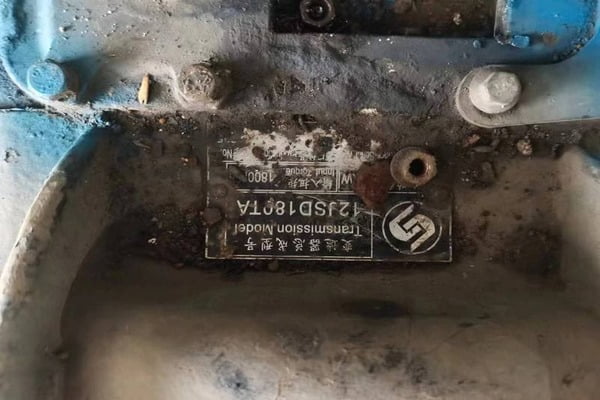
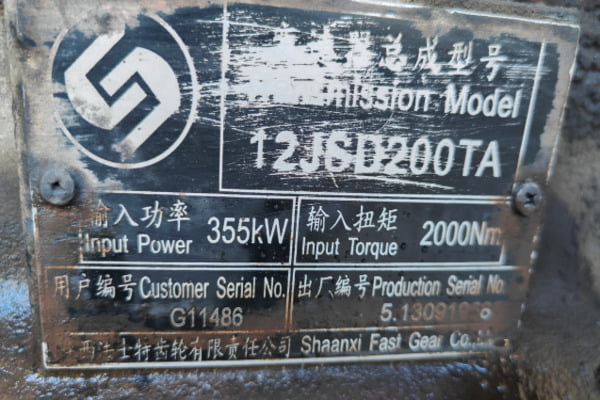
The nameplate is the most reliable single source of truth for identifying what is actually installed. It is stamped or riveted to the gearbox housing and records the manufacturer's model designation, serial number, and in most cases the production date or batch code.
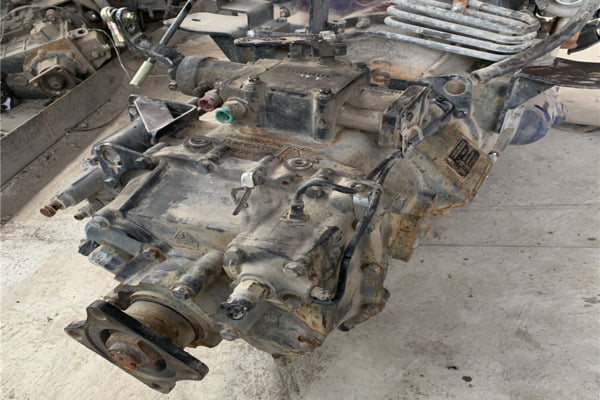
The casting code is a secondary identifier. It is pressed into the metal of the gearbox housing during manufacturing and does not change even if the nameplate is missing or damaged. For buyers sourcing replacement gearboxes for used trucks, the casting code becomes essential when the nameplate has been lost or corroded.
What to request from the seller's side: A clear photograph of the nameplate and the casting code from the gearbox currently fitted in the truck. The photograph should include enough light to read individual digits. Partial or blurry photos are not usable — a single digit difference in a model code can indicate an entirely different variant.
Common nameplate data points to record:
| Field | Example | Why It Matters |
|---|---|---|
| Model designation | FAST 12JSD200TA | Identifies the product family |
| Variant suffix | TA vs. TB | Indicates specific configuration |
| Serial number | 2019XXXXXXXX | Confirms production period and spec |
| Input spline designation | 10T or 16T | Must match engine output shaft |
| Rated torque | 2000 N·m | Must be equal to or greater than engine torque |
2. Engine Model and Rated Torque Output
The gearbox must be matched to the engine's maximum torque output. This sounds obvious, but in practice it is frequently skipped because the buyer focuses on finding a gearbox that fits the truck chassis rather than one that suits the engine driving it.
The engine model number is typically found on a plate on the engine block or in the vehicle's original documentation. The rated torque is expressed in Newton-metres (N·m) and should appear on the same plate or in the engine datasheet.
The gearbox's rated input torque must equal or exceed the engine's maximum torque output. A gearbox rated at 1800 N·m paired with an engine producing 2100 N·m will operate under constant overload in working conditions. Premature failure is the predictable result.[3]
For buyers working with Chinese truck brands — HOWO, SHACMAN, FAW, SITRAK — the same chassis may be offered with Weichai, Yuchai, or Cummins engines across different production runs[4], each with different torque outputs. The truck model name does not tell you which engine is fitted. The engine plate does.
3. Application Type and Duty Cycle
A gearbox suited for a long-haul tractor truck running at highway speed is not the same as one suited for a tipper truck operating in a quarry under constant load and frequent gear changes. Both might carry the same nominal model designation and be sold as correct for the same truck chassis.
The difference lies in gear ratios and the gearbox's intended operating profile.
- Long-haul tractor trucks benefit from higher overdrive ratios that reduce engine speed at highway cruise, improving fuel economy and reducing drivetrain wear.
- Dump trucks and tipper applications require lower first-gear ratios to move heavy loads from rest on inclines. Torque multiplication at low speed matters more than overdrive efficiency.
- Mixer trucks operate under near-constant load with frequent directional changes. The gearbox must handle sustained torque input without thermal management issues.
When a buyer describes a truck only as a "HOWO A7 dump truck," they are describing the chassis. The gearbox identification still requires knowing the engine torque and the specific operating environment — a quarry tipper running loaded 30 tonnes up a 15% grade has a very different gearbox requirement than a municipal construction tipper making short urban deliveries[5].
4. OEM Configuration Record
Where available, the original vehicle identification number (VIN) can be used to retrieve the factory build record from the manufacturer. This confirms the exact powertrain specification — engine variant, gearbox model, and axle ratio — as originally fitted.
For used trucks, this record may not always be accessible. In those cases, the nameplate, engine spec, and application description together provide sufficient information for an experienced supplier to confirm or flag the match before shipping.
How Do Experienced Buyers Approach This Process?
Procurement managers and fleet buyers who have made gearbox mismatch errors once tend to approach subsequent purchases very differently. The change is not in their technical knowledge — it is in the information they collect and send before placing an order.
Experienced buyers send a nameplate photo, the engine model and torque specification, and a brief description of the truck's primary use before asking for a price. This combination allows a supplier to confirm or flag a potential mismatch before any transaction takes place — not after the container has shipped.
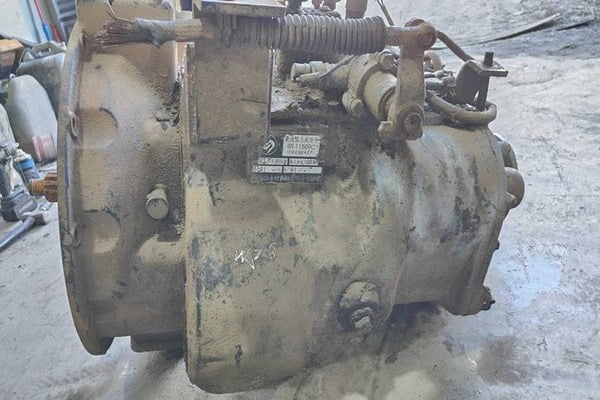
We regularly work through this exact process with fleet buyers in markets where truck downtime has a direct and measurable impact on project timelines. A construction contractor in West Africa running a fleet of eight dump trucks cannot afford to have two units idle for two months because of a parts mismatch. That buyer sends photos before asking prices.
What We Ask When an Inquiry Comes In
When a buyer contacts us with a gearbox request, here is what we ask for — and why each question exists:
-
"Can you send a photo of the nameplate on the current gearbox?" — This is the first filter. A clear nameplate photo resolves 60–70% of identification questions immediately.
-
"What is the engine model, and do you have the rated torque figure?" — This confirms whether the torque rating of the gearbox in our stock matches the engine currently fitted.
-
"What does this truck do day to day — highway transport, quarry, construction site?" — This tells us whether the gear ratios in the available unit suit the actual application.
-
"Is this a direct replacement for the gearbox that failed, or is this for a different chassis?" — This catches cases where a buyer assumes the same gearbox fits two trucks that happen to share a brand name but have different powertrain specs.
These questions are not bureaucratic. They are the minimum information needed to confirm compatibility before committing to a shipment.
A Note on Trusting Model Names Alone
It is worth being explicit about one specific risk that experienced buyers have learned to watch for: two gearboxes sold under the same model name can have meaningfully different specifications.
This happens because gearbox manufacturers — including FAST, ZF, and Eaton — designate product families rather than exact single configurations under one model name[6]. The suffix letters and numbers after the base model name carry specific technical meaning. A FAST 12JSD200TA and a FAST 12JSD200TB are not interchangeable. Neither are variants with different input spline counts even if they carry identical base model designations.
A buyer relying on a supplier who says "yes, we have the 12JSD200" without confirming the variant suffix, input spline, and torque rating has not confirmed compatibility. They have confirmed that the supplier has a product with a similar name.
Frequently Asked Questions
Can I identify a gearbox model from the truck's VIN alone?
In some cases, yes. The VIN encodes the vehicle's original factory specification, including powertrain configuration[7]. However, used trucks may have had their gearboxes replaced previously, meaning the currently installed unit may not match the original VIN record. Always verify against the actual nameplate on the installed gearbox.
What if the gearbox nameplate is missing or unreadable?
Look for the casting code pressed into the gearbox housing — usually on the main casing near the input shaft end. This is more durable than a stamped plate. If both are missing, an experienced supplier or mechanic can sometimes identify the unit from housing geometry, mounting bolt pattern, and external dimensions, but this introduces more uncertainty. Request professional on-site identification before ordering a replacement.
How do I know if a gearbox's torque rating matches my engine?
The gearbox nameplate or manufacturer datasheet lists the rated input torque in N·m. Your engine plate or datasheet lists the maximum torque output in N·m. The gearbox rated input torque must be equal to or higher than the engine's maximum torque output. If the figures are not available, contact the engine or gearbox manufacturer's technical support line with the model numbers.
Why do two gearboxes with the same model name sometimes have different spline counts?
Gearbox manufacturers produce variants within a family to suit different engine output shaft configurations. The input shaft spline count must match the engine's output spline exactly. Different engine families — even those with similar torque ratings — may use different spline standards.[8] This is why nameplate confirmation and engine model matching are both necessary steps, not alternatives to each other.
Is it safe to use a gearbox with a higher torque rating than my engine produces?
Generally, yes — a higher-rated gearbox will not cause mechanical problems simply because it exceeds the engine's torque output. However, ensure that the gear ratios, input spline configuration, and output flange interface still match your specific application and driveline. Over-specified gearboxes sourced from heavier-duty applications may have different ratio spreads that affect vehicle performance in ways unrelated to torque capacity.
Conclusion
Identifying the correct gearbox model for a heavy-duty truck is a matching problem with four inputs — not a catalog lookup. The nameplate or casting code tells you what is actually fitted. The engine torque confirms the load the gearbox must handle. The application type determines whether the gear ratios suit the duty cycle. And the OEM configuration record, where accessible, closes any remaining gaps.
Buyers who skip any one of these checks accept a measurable risk of receiving a gearbox that installs but fails, or one that does not install at all. The cost of that error — idle truck, return freight, re-sourcing time — is rarely recoverable after the container ships.
At Deli Auto, we work through this exact identification process with every gearbox inquiry before confirming availability. If you have a gearbox requirement and want to verify compatibility before placing an order, send us your nameplate photo, engine spec, and application description — and we will give you a clear answer before any commitment is made.
[1] "Medium- and Heavy-Duty Vehicle Electrification - INFO", https://info.ornl.gov/sites/publications/Files/Pub136575.pdf. Research on commercial vehicle manufacturing practice documents that major truck OEMs employ modular platform architectures allowing multiple engine and transmission combinations to be specified per chassis, with the installed configuration recorded at the vehicle identification number level. Evidence role: mechanism; source type: research. Supports: That heavy commercial vehicle OEMs offer multiple powertrain configurations on a single platform, resulting in variant-specific gearbox fitments. Scope note: The degree of configurability varies by manufacturer and market; some regional markets receive limited-variant builds rather than full build-to-order flexibility. ↩
[2] "List of ZF transmissions", https://en.wikipedia.org/wiki/List_of_ZF_transmissions. Technical documentation from major commercial vehicle transmission manufacturers, including ZF Friedrichshafen and FAST Gear, lists dry weights for heavy-duty multi-speed gearboxes in the range of approximately 150 kg to over 300 kg depending on speed configuration and torque class. Evidence role: general_support; source type: research. Supports: The mass range of heavy-duty commercial vehicle gearboxes across common product families. Scope note: Exact weights vary significantly by model family and configuration; the cited range reflects published product data rather than a single standardized measurement. ↩
[3] "Torque Limiter Finds Drive Problem During Machine Test", https://diequa.com/torque-limiter-finds-drive-problem-during-machine-test/. Mechanical engineering literature on gear fatigue establishes that cyclic loading above design torque ratings accelerates surface fatigue, pitting, and tooth root bending failure in gear sets, with service life reduction proportional to the degree of overload according to established fatigue models such as those in ISO 6336. Evidence role: mechanism; source type: research. Supports: That sustained operation of a transmission above its rated input torque accelerates component fatigue and leads to premature mechanical failure. Scope note: The specific rate of life reduction depends on material properties, lubrication, and duty cycle; the cited standard addresses gear fatigue generally rather than complete transmission assemblies. ↩
[4] "Sinotruk MAN MC13 540hp Weichai, Howo ...", https://www.facebook.com/61585951403580/posts/sinotruk-man-mc13-540hpweichai-howo-sinotruk-cummins-xichaiused-diesel-and-natur/122137956963198380/. Published product specifications from Sinotruk, Shaanxi Automobile Group, and FAW document that their heavy truck platforms are offered with engine options from multiple suppliers — including Weichai Power, Guangxi Yuchai, and Cummins — with powertrain selection varying by market, application, and customer order. Evidence role: general_support; source type: other. Supports: That major Chinese heavy truck platforms are available with multiple engine supplier options, including Weichai, Yuchai, and Cummins, across different market specifications. Scope note: Engine availability by market and production year changes over time; specific combinations should be verified against current OEM documentation for the relevant model year. ↩
[5] "Transmission speed and ratio optimization for heavy-duty ...", https://pmc.ncbi.nlm.nih.gov/articles/PMC9399168/. Vehicle dynamics engineering establishes that the tractive effort required to ascend a grade is proportional to vehicle gross weight and grade angle, with the required first-gear ratio determined by the relationship between engine peak torque, drivetrain efficiency, tire rolling radius, and the target gradeability; significant differences in these parameters necessitate different transmission ratio specifications. Evidence role: mechanism; source type: research. Supports: That gross vehicle weight and road gradient are primary determinants of required drivetrain torque multiplication, resulting in different transmission ratio requirements across operating conditions. Scope note: The analysis assumes steady-state grade climbing; dynamic factors such as rolling resistance variation and driver technique also influence effective gearbox requirements in practice. ↩
[6] "ZF 8HP transmission", https://en.wikipedia.org/wiki/ZF_8HP_transmission. Published product literature from FAST Gear (Shaanxi Fast Auto Drive Group), ZF Friedrichshafen, and Eaton Corporation documents that their heavy-duty transmission model numbering systems use base designations to identify a product family, with alphanumeric suffixes encoding specific configuration parameters such as input torque rating, spline specification, and ratio set. Evidence role: general_support; source type: other. Supports: That transmission manufacturers use base model designations to identify product families, with suffix characters indicating specific configuration variants within those families. Scope note: Suffix coding conventions differ between manufacturers and have evolved across product generations; interpretation requires current manufacturer documentation for the specific model series. ↩
[7] "Welcome to VIN Decoding :: provided by vPIC", https://vpic.nhtsa.dot.gov/decoder/. ISO 3779 and ISO 3780 define the international standard structure for vehicle identification numbers, with the Vehicle Descriptor Section (positions 4–9) used by manufacturers to encode model, body, engine, and transmission information according to manufacturer-specific decoding schemes. Evidence role: definition; source type: institution. Supports: That vehicle identification numbers are structured identifiers that can encode factory build specifications including powertrain configuration. Scope note: The specific powertrain data encoded in positions 4–9 varies by manufacturer and is not universally standardized; decoding requires manufacturer-specific documentation or OEM build record access. ↩
[8] "cvsa enhanced commercial motor vehicle inspection ...", https://downloads.regulations.gov/FMCSA-2018-0037-0325/attachment_1.pdf. SAE International standards, including SAE J498 and related drivetrain interface specifications, define multiple spline configurations for heavy-duty powertrain connections, with tooth count, pitch, and fit class varying across engine and transmission families; correct interface matching is required to ensure torque transmission without fretting or fatigue failure. Evidence role: definition; source type: institution. Supports: That multiple spline interface standards exist for heavy-duty transmission input shafts, and that compatibility requires exact matching between engine output and transmission input spline specifications. Scope note: SAE standards define common configurations but do not cover all proprietary spline specifications used by individual manufacturers, particularly Chinese OEMs who may use non-SAE standards. ↩