Sourcing a replacement truck engine sounds straightforward until the unit arrives and does not fit. Misidentifying the correct truck engine model is one of the most costly and preventable mistakes in commercial vehicle procurement. Buyers lose time, money, and trust — and the engine goes back in a crate.
Identifying the correct truck engine model requires cross-checking at least three independent sources: the engine nameplate and serial number, the vehicle VIN or chassis documentation, and the application context including the country's emission standard, fuel specification, and duty cycle. No single source is sufficient on its own. A model name alone — without confirming power rating, emissions tier, and mounting configuration — is not a complete specification.
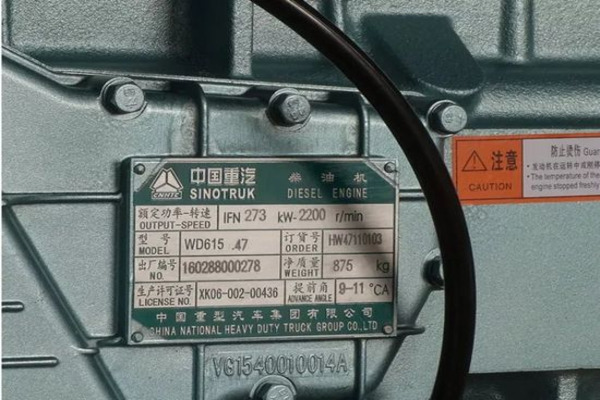
We have handled sourcing inquiries for over 20 years at Deli Auto. Right now, our warehouse in Guangzhou holds over 1,000 engines — Cummins, Weichai, Deutz and others. But a large stock does not guarantee a correct match. What guarantees a correct match is precise communication from the buyer's side, backed by verified documentation. This article walks you through exactly how to do that.
Why Does the Same Engine Model Name Cause So Many Wrong Shipments?
Buyers often assume an engine model name is a unique identifier. It is not. And that gap between assumption and reality is where most sourcing disputes begin.
The same model code — for example, Cummins ISM or Weichai WP12 — can describe engines with different power outputs, different emissions standards, different fuel system types, and different mounting configurations. Ordering by name alone almost guarantees a mismatch.
One Name, Many Engines
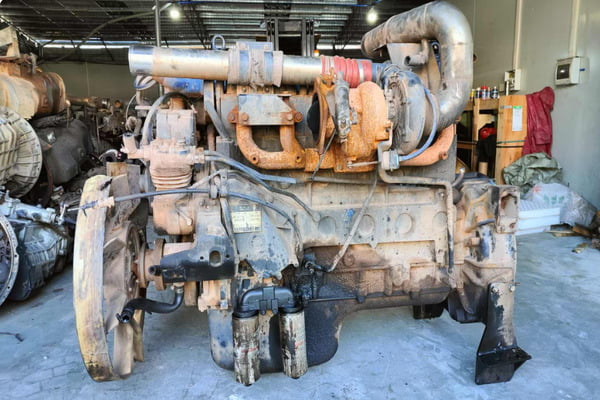
Consider the Weichai WP12. This family covers a range from roughly 336 hp to 430 hp. It includes Euro II, Euro III, and Euro IV variants. Some versions use mechanical injection; others use common rail[1]. The aftertreatment systems differ. The ECU calibrations differ. The mounting brackets can differ.
A buyer in West Africa operating a HOWO tractor on long-haul routes sends us an inquiry: "I need a WP12 engine." That tells us the family. It does not tell us which engine.
The same problem appears with:
- Cummins ISM / ISMe / ISM11 / QSM11 — different power ratings, different ECU generations, Euro II vs. Euro III vs. EPA2010
- Yuchai YC6MK / YC6M — mechanical vs. electronic variants, different bore and stroke in some cases
- Deutz BF6M / BF8M — different cylinder counts and configurations under a similar naming convention
- Scania DC13 / DC16 — different displacement, different power bands, often confused by workshop staff who only see the Scania badge
Why Buyers Make This Mistake
In our experience handling sourcing inquiries, buyers fall into a few predictable patterns:
-
They describe the truck brand, not the engine brand. "I have a Volvo FH" does not tell us whether the engine is a D13A, D13C, or D13K — three different generations with different mounting and electronic architectures.
-
They assume the same truck model always uses the same engine. It does not. Assembly plants in different countries, different production years, and fleet contracts with different power specs all create variation within a single truck model line[2].
-
They trust a local mechanic's verbal description over documentation. A workshop might say "it's the 375 horsepower Cummins." There are multiple Cummins engines near that power rating. "Near" is not a specification.
-
They send a photo of a nameplate with partial numbers obscured by dirt or damage. We receive these often. When the serial number is incomplete, we cannot confirm the variant.
None of these buyers are making careless decisions. They are working with the information they have. The problem is that their information is not enough — and this article is about how to get enough.
How Do You Read and Use an Engine Nameplate Correctly?
The engine nameplate is your primary source. But reading it correctly requires knowing what each field means and what to do when it is damaged or missing.
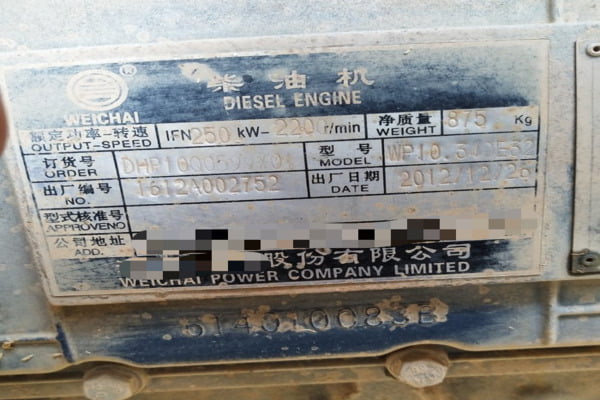
Most buyers photograph the nameplate and send it to us. That is the right instinct. The problem is that a partial or damaged nameplate creates false confidence — the buyer feels they have provided information, but the supplier cannot confirm what they actually have.
What to Look for on the Nameplate
A complete engine nameplate typically contains:
| Field | What It Tells You | Common Problem |
|---|---|---|
| Engine Model Code | Family and variant designation | Often truncated or worn |
| Serial Number | Unique unit identifier | Partially obscured by grease |
| Power Rating (kW or hp) | Confirms which variant | Sometimes omitted on older plates |
| Emissions Standard | Euro II / III / IV or equivalent | Absent on many pre-2000 units |
| Manufacturing Date / Year | Helps narrow ECU generation | Faded on high-age units |
| Country of Manufacture | Indicates regional spec | Often overlooked by buyers |
The Serial Number Is More Important Than the Model Code
Here is something most buyers do not realize: the serial number — not the model code — is what allows a supplier or OEM parts system to confirm the exact build specification.
At Deli Auto, when buyers provide a complete serial number, our team can cross-check it against documented specs for that unit. This reduces misidentification risk significantly. When buyers provide only the model code, we are working with a category, not a confirmed specification.
What to do if the nameplate is damaged:
- Check the engine block itself — many manufacturers stamp or cast the model code directly into the block
- Check the engine bay firewall for a vehicle-side identification sticker
- Request the original build spec from the previous operator or fleet manager
- Cross-reference against the chassis document or vehicle registration certificate
How Does the Vehicle VIN Help Confirm the Engine Specification?
The VIN is often underused by buyers who are focused on the engine itself. But the chassis document is one of the most reliable cross-checks available — especially when the engine nameplate is incomplete.
Many fleet managers send us the engine model but forget that the vehicle registration document often encodes the original engine specification. When the engine has been swapped before, the VIN cross-check can reveal the discrepancy immediately.
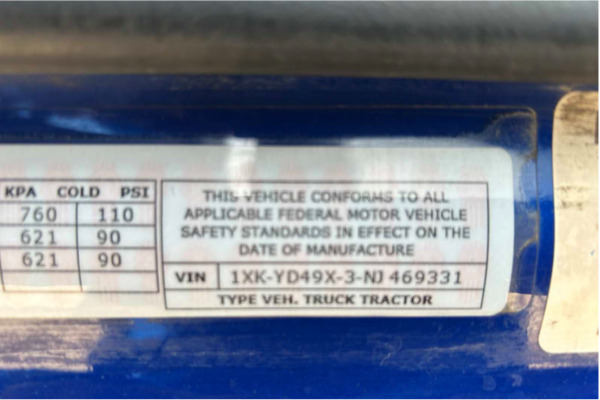
What the VIN Encodes
A 17-character VIN contains positional codes for:
- Country of manufacture (positions 1–3)
- Manufacturer and vehicle line (positions 4–8)
- Model year (position 10)
- Plant code (position 11)
- Production sequence (positions 12–17)
Positions 4–8 — the Vehicle Descriptor Section — often encode the powertrain specification, including the engine family. Different manufacturers use different conventions, but for major truck brands like Scania, Volvo, MAN, Mercedes-Benz, and HOWO, the VIN can confirm the original factory-specified engine.
Using the VIN in Practice
In our sourcing consultations, we ask buyers to provide:
- The full 17-character VIN — not just the last six digits
- A photo of the vehicle registration document or logbook
- The chassis number if stamped separately on the frame
When these three items match, and they align with the engine nameplate data, we have a high-confidence identification. When they do not match — which happens when an engine has been previously replaced with a non-original unit — we flag the discrepancy before quoting.
A note from our experience: Buyers in East Africa and Southeast Asia often receive trucks that have already had engines swapped once or twice before reaching them[3]. The nameplate on the engine may not correspond to the VIN-registered specification. This is exactly why cross-checking matters.
Why Does Application Context Change Which Engine Is the Right Choice?
This is the variable most buyers skip — and it causes the most preventable mismatches we see.
Even when a buyer correctly identifies the engine model and variant, the operating context determines whether that unit is actually suitable. The same engine configuration that works perfectly in one country may be problematic in another.
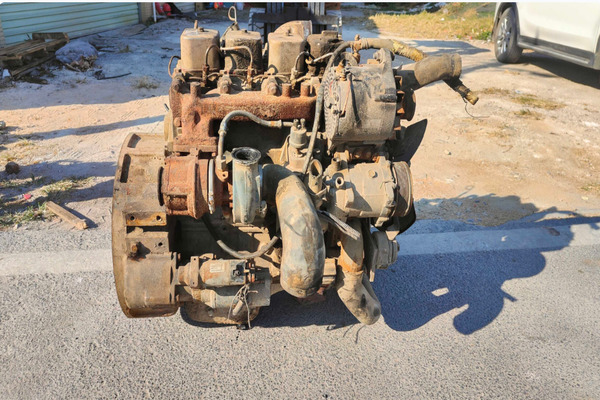
The Three Application Variables That Matter
1. Emission Standard and Country Regulation
Different markets enforce different emission standards. An engine meeting Euro IV may have an aftertreatment system — like a DPF or SCR — that requires ultra-low-sulfur diesel (ULSD) to function correctly. In markets where fuel sulfur content is higher, that system will clog and fail within months[4].
Buyers operating in markets with high-sulfur diesel — common in parts of Sub-Saharan Africa, some South Asian countries, and certain Central Asian markets — often need Euro II or Euro III units without aftertreatment systems. Sending them a Euro IV unit is technically a "correct" engine model match that will create an operational failure.
2. Fuel System Type
Mechanical injection engines and common-rail electronic engines have very different maintenance requirements, parts availability profiles, and tolerance for fuel quality variation[5]. In markets where workshop capability is limited, a mechanical injection engine may be a more practical choice even at a lower power rating.
3. Duty Cycle and Load Profile
An engine built for long-haul highway operation has different thermal management characteristics than one built for construction site use with frequent idling and variable load[6]. Mounting configurations, cooling system connections, and PTO provisions can all differ between "highway" and "vocational" variants of the same engine family.
How to Communicate Application Context to a Supplier
When you send an inquiry, include:
- Country of operation — not just region
- Fuel sulfur specification available locally (if known)
- Vehicle application — long haul, urban delivery, construction, mining
- Original OEM specification if available from the vehicle documentation
At Deli Auto, when buyers provide this context alongside their engine identification documents, our team can flag potential compatibility concerns before shipping — not after. That is the difference between a sourcing consultation and a catalog order.
Frequently Asked Questions
Can I identify a truck engine correctly from a photo alone?
A clear photo of the full nameplate — showing the complete model code, serial number, and power rating — is a useful starting point. However, a photo alone is rarely sufficient. You still need to cross-check against the vehicle VIN and confirm the application context, especially the emission standard and fuel specification relevant to your operating market.
What if the engine has already been swapped and the nameplate does not match the vehicle?
This is common in second-hand trucks. Cross-check the current engine nameplate against the VIN-registered specification in the chassis document. If they differ, document both. When sourcing a replacement, decide whether you are matching the current installed engine or reverting to the original factory specification — these can be different decisions with different technical implications.
Is a higher-horsepower variant of the same engine always a better replacement?
Not necessarily. A higher-rated variant may have different fuel system calibration, different mounting hardware, or different ECU requirements that create integration problems. It may also require changes to the driveline or cooling system[7]. Always verify that the power rating matches the original specification unless you are intentionally respecifying the vehicle.
How do I verify that a supplier's stock unit matches my specification before shipping?
Request the full nameplate data — model code, serial number, manufacturing year, and power rating — for the specific unit the supplier proposes to ship. Ask for photographs of the nameplate, the engine mounts, and the flywheel housing. For high-value shipments, a pre-shipment inspection report from an independent inspector or the supplier's own engineering team adds an additional verification layer.
Does a larger supplier inventory mean more accurate matching?
No. Stock volume confirms availability across a range of options. It does not mean that any given unit will automatically match your specification. Accurate matching depends on precise communication of your requirement — including serial number, VIN, emission standard, and application context — and a supplier's willingness to cross-check rather than just confirm availability.
Conclusion
Identifying the correct truck engine model is not a simple lookup. It is a multi-step verification process that requires the engine nameplate and serial number, the vehicle VIN and chassis documentation, and a clear understanding of your operating context — including emission standard, fuel quality, and duty cycle. Relying on any single source, or on a model name alone, exposes you to a mismatch that no supplier's stock volume can prevent.
At Deli Auto, we hold over 1,000 engines across major brands including Cummins, Weichai, Deutz. Our team reviews buyer inquiries against all three identification layers before confirming a match. If you are sourcing a replacement engine and want to verify your specification before committing to a shipment, contact our technical team with your nameplate data, VIN, and application details — and we will help you get the right unit the first time.
[1] "WP12 Engine for Special-purpose Vehicle - Weichai Power", https://en.weichaipower.com/eportal/ui?pageId=c1ba1ab9217240e791deec19e8d9ac06&articleKey=8dc80e81200440338e882c9baf62d133&columnId=b418d85492c549f89a0238793546e8ae. Weichai Power Co. technical documentation for the WP12 engine series lists multiple power ratings and emissions-compliant configurations, supporting the claim that the family encompasses both mechanical and common-rail injection variants across Euro II, III, and IV tiers. Evidence role: general_support; source type: institution. Supports: The Weichai WP12 engine family's power output range and the existence of multiple emissions-tier and fuel-system variants. Scope note: Manufacturer-published specifications are subject to revision and may not reflect all regional or export variants; independent third-party verification of the full variant matrix is not readily available in open literature. ↩
[2] "Highlights of the Automotive Trends Report", https://www.epa.gov/automotive-trends/highlights-automotive-trends-report. Commercial vehicle manufacturer product documentation and academic studies on global automotive production localization confirm that OEMs routinely adapt powertrain specifications by market to meet local emissions regulations, fuel quality constraints, and customer requirements, resulting in the same model designation covering multiple distinct engine configurations across production years and assembly locations. Evidence role: historical_context; source type: institution. Supports: That commercial truck manufacturers offer or have offered different engine configurations for the same vehicle model depending on market, production year, and customer specification. Scope note: The extent of variation is brand- and model-specific; some manufacturers maintain more standardized global powertrain strategies than others, and the claim is supported by general industry practice rather than a single comprehensive dataset. ↩
[3] "Figure of the week: Africa's used vehicle market and the environment", https://www.brookings.edu/articles/figure-of-the-week-africas-used-vehicle-market-and-the-environment/. Reports from the United Nations Environment Programme (UNEP) on used vehicle imports to developing markets note that imported second-hand vehicles frequently lack complete maintenance histories and may have undergone undocumented mechanical modifications, consistent with the article's observation about engine swaps in East African and Southeast Asian markets. Evidence role: general_support; source type: institution. Supports: That used commercial vehicles imported into East African and Southeast Asian markets commonly have non-original or previously replaced engines. Scope note: UNEP reporting focuses on vehicle age and emissions standards rather than specifically quantifying engine swap prevalence; the claim is supported contextually rather than by direct statistical evidence. ↩
[4] "Update on Diesel Exhaust Emission Control Technology and Regulations", https://www.energy.gov/sites/prod/files/2014/03/f9/2004_deer_johnson2.pdf. Research on diesel aftertreatment systems, including studies published by the International Council on Clean Transportation (ICCT), documents that DPF and SCR systems are sensitive to fuel sulfur content, with elevated sulfur levels causing catalyst poisoning and accelerated filter plugging, consistent with the article's claim about operational failure in high-sulfur fuel markets. Evidence role: mechanism; source type: research. Supports: That diesel particulate filters and selective catalytic reduction systems used in Euro IV and higher engines require low-sulfur fuel and are damaged by high-sulfur diesel. Scope note: The rate of degradation varies by system design, duty cycle, and sulfur concentration; 'within months' is an approximation and specific failure timelines depend on operating conditions. ↩
[5] "Common rail", https://en.wikipedia.org/wiki/Common_rail. Engineering literature on diesel fuel injection systems documents that common-rail systems operate at significantly higher injection pressures (up to 2,000 bar) with tighter component tolerances, making them more susceptible to damage from fuel contamination, water ingress, and sulfur-related corrosion than mechanically governed injection systems. Evidence role: mechanism; source type: research. Supports: That common-rail fuel injection systems are more sensitive to fuel quality variation, particularly sulfur content and contamination, compared to mechanical injection systems. Scope note: The relative parts availability advantage of mechanical systems is market-specific and not universally quantified in published literature; the claim is supported by technical principles rather than direct comparative field studies. ↩
[6] "Control of Air Pollution from New Motor Vehicles: Heavy-Duty Engine ...", https://www.regulations.gov/document/EPA-HQ-OAR-2019-0055-0001. Engine application engineering guidelines published by manufacturers and referenced in SAE technical papers document that vocational engines are typically calibrated for higher sustained torque at lower speeds, with cooling systems sized for high idle-load fractions, whereas highway engines are optimized for sustained high-speed operation at lower specific load, resulting in distinct thermal management architectures. Evidence role: mechanism; source type: research. Supports: That diesel engines are engineered with duty-cycle-specific thermal management, cooling capacity, and load-handling characteristics for highway versus vocational applications. Scope note: The degree of differentiation varies by manufacturer and engine family; some platforms share core architecture across applications with only calibration differences. ↩
[7] "Building a Cooling System for High-Performance Truck Applications", https://precisionoff-road.com/blog/building-a-cooling-system-for-high-performance-truck-applications. Vehicle systems engineering literature documents that increasing engine power output in a commercial vehicle typically requires reassessment of transmission torque capacity, driveshaft ratings, and cooling system thermal capacity, as these subsystems are matched to the original engine's output envelope during vehicle design. Evidence role: mechanism; source type: research. Supports: That installing a higher-rated engine variant may necessitate modifications to the driveline, cooling system, and electronic control architecture due to differing torque output and thermal load. Scope note: The specific modifications required depend on the magnitude of the power increase and the original design margins; not all higher-rated variants will necessarily require driveline changes. ↩