
We often hear buyers ask this question right after a fleet unit goes down and the repair budget is tight. A failed engine under cost pressure creates urgency — and urgency creates bad purchasing decisions. Used MAN engines are widely available on the export market, but "available" and "worth buying" are two very different things. The right framework makes the difference.
A used MAN engine is worth buying when three conditions are met: the mechanical condition has been professionally verified through compression testing and engine-start checks, the sourcing history is transparent and traceable to a legitimate dismantler or fleet vehicle, and the engine series matches what your local technicians can service. When those conditions are present, a used MAN engine offers proven diesel durability at a fraction of new-unit cost. When they are absent, the risk is real — regardless of brand.
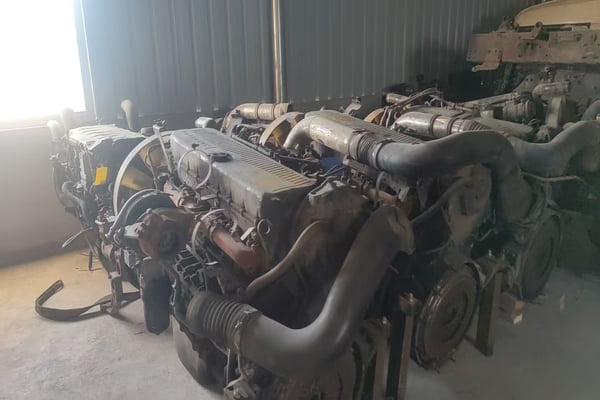
Most buyers who get burned on a used MAN engine weren't let down by the product — they were let down by the process. The sections below break down how to evaluate a used MAN engine the way an experienced inspector would, which engine series to consider for your application, and when a used engine is simply the wrong call.
Is Mileage Actually a Reliable Indicator for a Used MAN Engine?
Many buyers open with one question: "What's the mileage?" It feels like a safety check, but relying on mileage alone is one of the most common mistakes we see in used engine procurement. A number on a document tells you how far the engine traveled — not how hard it worked or how well it was maintained.
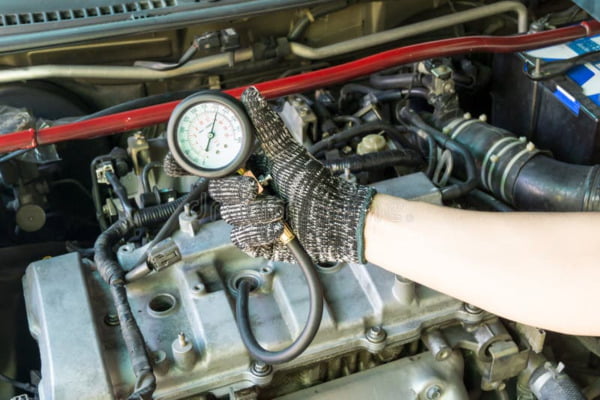
Mileage is a proxy signal. Mechanical condition tests are the real data. A compression test, an oil pressure reading, and a visual inspection of the cylinder head and turbocharger assembly will tell you more about an engine's remaining service life than an odometer reading ever will.[1]
Why Operating Conditions Matter More Than Distance
In our experience handling hundreds of used MAN engines sourced from European fleets and domestic Chinese trucks, we consistently find that two engines with identical mileage can be in completely different mechanical states. The reasons come down to operating environment and load history:
- Highway vs. construction site cycles: A MAN D26 engine that spent 400,000 km on European motorways at steady RPM accumulates far less wear on turbo bearings and piston rings than the same engine running 200,000 km in stop-start construction haulage with frequent overloading.
- Climate and dust exposure: Engines operated in sandy or high-temperature environments — common in parts of Africa and the Middle East — show accelerated air filter bypass wear, which shortens cylinder bore life regardless of total mileage.[2]
- Maintenance history: A fleet-maintained engine with documented oil change intervals is a fundamentally different product from one sourced through unknown channels with no service records.
What Condition Signals Actually Matter
When we inspect a used MAN engine before shipment, we focus on the following indicators:
| Inspection Point | What It Reveals | Red Flag |
|---|---|---|
| Compression test (each cylinder) | Piston ring and valve seat condition | More than 10% variance between cylinders[3] |
| Engine oil pressure at idle | Main bearing and oil pump condition | Below spec at warm idle |
| Coolant condition and color | Head gasket integrity, cooling system health | Milky or brown discoloration |
| Turbocharger shaft play | Bearing wear, boost reliability | Visible radial or axial play |
| Crankcase blowby | Ring seal condition | Excessive smoke from oil filler |
| ECU data readout | Fault codes, calibration history | Active fault codes or tampered mileage data |
| Engine-start video | Real-world startup behavior | Rough idle, blue/white smoke on start |
Buyer tip: Before committing to any used MAN engine, ask your supplier for an engine-start video with the camera held near the exhaust and oil filler opening. This one step eliminates a significant share of problematic units.
Which MAN Engine Series Should You Consider — and for Which Trucks?
MAN produces a range of diesel engines across different displacement classes, and each series has a distinct application profile. Choosing the right series for your truck model and use case is as important as the condition of the individual unit.
The most commonly traded used MAN engine series on the export market today are the D0836, D2866, D20, D26, and MC11. Each has specific strengths, known wear points, and vehicle fitment profiles that buyers should understand before purchasing.
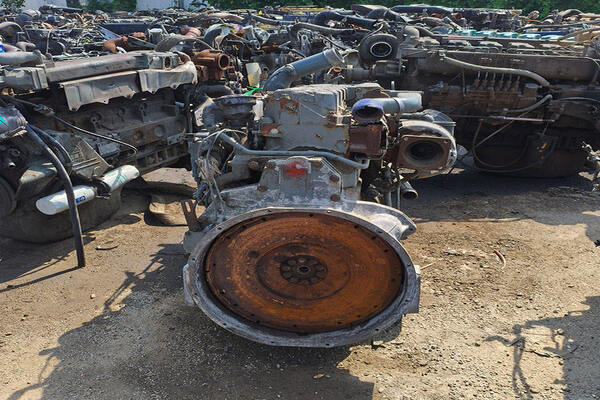
MAN D08 Series — Compact Workhorse for Medium-Duty Applications
The D08 is a compact inline-6 diesel available in displacements from roughly 6.9L, producing between 150 and 280 hp depending on configuration. It fits MAN TGL and TGM trucks — medium-duty platforms used for urban delivery, municipal work, and light construction.
Why buyers choose D08 units:
- Physically smaller and lighter than the D20/D26, making container packing and local installation easier
- Simpler injection systems on pre-Euro 4 variants reduce local repair complexity
- Lower acquisition cost than large-displacement units
- Widely used in TGL 8–18 tonne trucks, making replacement demand consistent
Known wear points to check: Injector return lines on high-mileage units, EGR valve condition on Euro 4 and above, and timing chain tensioner on older variants.
MAN D0836 Series — The Mid-Range Engine With a Strong Track Record
The MAN D0836 engine is one of the most popular mid-range diesel units we supply. It is a 6-cylinder, 6.87L engine producing between 220 and 320 hp, fitted across a broad range of MAN trucks including the TGM and certain TGL heavy variants, as well as coach and bus applications.
Why buyers choose D0836 units:
- Strong power-to-displacement ratio for its class
- Common-rail fuel injection on later variants improves fuel efficiency
- Widely fitted on MAN buses and coaches, making it relevant for passenger transport fleet operators
- Parts availability is generally better than less common series
Key inspection notes for D0836: Check the high-pressure fuel pump condition on common-rail variants and inspect the intercooler for oil contamination — a sign of turbo seal wear.
MAN MC11 Series — Heavy Haulage Engine for TGX and TGS Trucks
The MAN MC11 engine is a 10.6L inline-6 heavy-duty diesel producing between 360 and 480 hp. It is fitted in MAN TGX and TGS heavy tractor trucks, making it the engine of choice for long-haul haulage, bulk freight, and heavy construction transport.
The MC11 is particularly relevant for buyers in Africa and the Middle East who are sourcing used MAN TGX tractor trucks or need a drop-in replacement for failed units within existing fleets.
Why buyers choose MC11 units:
- High torque output (up to 2,400 Nm) supports heavy-load and gradient-heavy routes[4]
- Robust cast-iron block construction is well-suited to demanding operating environments
- Proven in European long-haul fleets with high accumulated mileage, meaning properly maintained units have demonstrated durability
- Compatible with MAN's MAN TipMatic automated gearbox systems, which are common in TGX fleets
Known wear points to check on MC11: EGR cooler condition on Euro 5 units, injector seating and return flow rate, and turbocharger oil feed line condition.
MAN D20 and D26 Series — Large Displacement for the Heaviest Trucks
The D20 (10.5L) and D26 (12.4L) are MAN's top-tier heavy-duty engines, fitted in MAN TGA, TGX, and TGS trucks configured for the most demanding applications — heavy haulage, bulk tipper, and long-distance freight.
| Engine | Displacement | Power Range | Typical Fitment |
|---|---|---|---|
| D20 | 10.5L | 320–480 hp | MAN TGA, TGS heavy freight |
| D26 | 12.4L | 400–560 hp | MAN TGX flagship tractor trucks |
Buyer advantage of D20/D26 units:
- Longest service life potential when properly maintained — European fleet operators regularly achieve 1,000,000+ km with planned overhauls
- High torque at low RPM reduces drivetrain strain on heavy-load routes
- Strong used parts ecosystem due to high production volumes
Inspection priority for D26: Cylinder liner wear at top dead centre, main bearing clearance, and exhaust manifold crack inspection — a known issue on high-mileage Euro 4 units that ran in high-temperature environments[5].
What Inspection Steps Give Buyers Real Protection?
This is where most buyers lose leverage. They accept a supplier's verbal assurance instead of asking for specific, verifiable outputs from the inspection process. Professional pre-shipment inspection translates into a short list of concrete questions any buyer can ask before committing.
The inspection process is your primary risk management tool when buying a used MAN engine. A supplier who cannot answer these questions clearly is a supplier you should not buy from.
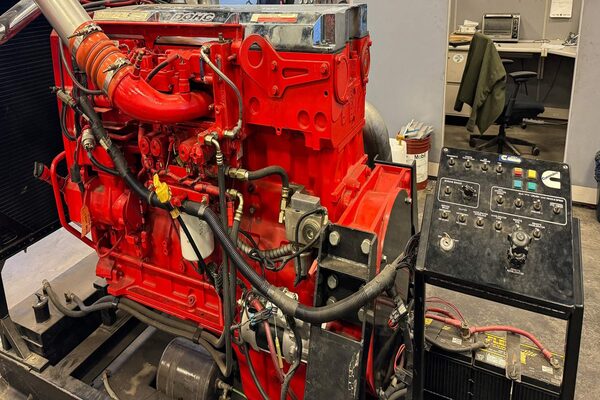
The Buyer's Inspection Checklist — Questions to Ask Your Supplier
Before you place an order, request the following:
- Compression test results — per cylinder, with values recorded. Ask for a photo of the gauge.
- Engine-start video — filmed from idle to 1,500 RPM, with camera near exhaust and oil cap.
- Oil pressure reading at warm idle — a single number that confirms bearing condition.
- ECU fault code scan — ask for a screenshot or printout from a diagnostic tool.
- Photos of key wear surfaces — cylinder head, turbocharger inlet, and valve cover interior.
- Sourcing documentation — was this engine pulled from a known fleet vehicle or a verified dismantler? Can the supplier confirm the donor vehicle?
- Match confirmation — verify that the engine serial number and ECU calibration are compatible with your truck's chassis and transmission.
In our pre-shipment process at Deli Auto, we run engine-start tests, record compression readings, and conduct visual inspection of turbocharger, cooling system, and fuel system components before any unit ships. We can provide video documentation for buyers who request it. This is the minimum standard any serious buyer should expect from a used engine supplier.
When a Used MAN Engine Is NOT the Right Choice
Being honest about this is important. A used MAN engine is the wrong purchase in the following situations:
- No local MAN service capability: If your location has no technicians familiar with MAN's common-rail systems or ECU architecture, early failures become very expensive very quickly.[6]
- The application demands zero-risk reliability: Mining haul trucks, emergency fleet vehicles, or trucks under penalty-clause contracts cannot absorb the risk of premature engine failure, even with good inspection.
- The price gap is too small: If the used unit is priced at 70–80% of a remanufactured or low-hour alternative, the risk-adjusted value disappears.[7]
- The supplier cannot provide inspection documentation: No documentation means no accountability. Walk away.
Frequently Asked Questions
How many kilometres is too many for a used MAN engine?
There is no universal mileage cutoff. A well-maintained MAN D26 from a European motorway fleet at 600,000 km can be a better buy than a 250,000 km unit with no service history from a high-stress operating environment. Focus on compression test results and oil pressure readings, not the odometer.
Can a used MAN engine be matched to any MAN truck model?
Not directly. Engine series, ECU calibration, and mounting configurations vary by truck model and production year. Before purchasing, confirm the engine serial number and donor vehicle model against your truck's chassis plate and ECU. Mismatched specs are one of the most common causes of post-installation problems.
What is the typical price range for a used MAN engine?
Pricing varies significantly by series, condition grade, and sourcing region. In general, D08 units start lower than D20 or D26 units, and Euro 3 variants are priced below Euro 5 equivalents. Contact your supplier for current stock pricing — and treat unusually low prices as a reason to ask more questions, not fewer.
How do I verify that a used MAN engine hasn't been tampered with?
Request an ECU diagnostic scan output. Modern MAN engines log operating data that a qualified technician can read to detect anomalies such as mileage discrepancies, recent fault clearing, or calibration changes.[8] This is one of the most effective tamper-detection steps available to a non-specialist buyer.
Do used MAN engines come with any warranty?
This depends entirely on the supplier. At Deli Auto, we provide after-sales technical consultation for engines we supply. Formal warranties on used engines are limited and vary by supplier — verify the terms in writing before purchase, and treat vague assurances as a warning sign.
Conclusion
A used MAN engine is worth buying — but only when the right conditions are present. The primary keyword here is not brand reputation; it is verified condition. MAN's D08, D0836, D20, D26, and MC11 series all represent proven diesel engineering, but no brand name substitutes for a compression test, an engine-start video, and a supplier who can document what they are selling. Identify your truck model fitment, confirm local service capability, and ask specific inspection questions before you commit.
At Deli Auto, we maintain over 1,000 used engines in our Guangzhou warehouse, including multiple MAN series ready for export. Our engineering team conducts pre-shipment inspection and can provide documentation for buyers who need it. Contact us directly to check current MAN engine stock, request inspection records, or discuss fitment for your specific truck model.
[1] "Understanding the Relative Compression Analysis", https://autoditex.com/page/relative-compression-test-67-1.html. Compression pressure testing is widely recognized in diesel engine diagnostics as a direct measure of combustion chamber integrity, reflecting piston ring seal and valve seating condition in ways that accumulated mileage figures cannot capture. Evidence role: expert_consensus; source type: research. Supports: Compression testing is an established diagnostic method for assessing internal engine wear, including piston ring and valve seat condition, independent of odometer readings.. Scope note: Most technical sources address compression testing as a general diagnostic tool; direct comparative studies ranking it against mileage as a predictive metric are limited. ↩
[2] "Experimental Dust Absorption Study in Automotive Engine ...", https://pmc.ncbi.nlm.nih.gov/articles/PMC11242612/. Studies on diesel engine wear in high-particulate environments document that abrasive dust ingestion, whether through filter bypass or inadequate filtration, is a primary driver of accelerated cylinder bore and piston ring wear, independent of total operating hours or distance. Evidence role: mechanism; source type: research. Supports: Particulate ingestion through air filtration systems is a documented cause of accelerated abrasive wear on cylinder bores and piston rings in diesel engines operating in dusty environments.. Scope note: Research typically quantifies wear under laboratory-controlled dust ingestion conditions; field data specific to African or Middle Eastern truck fleet operations is less systematically published. ↩
[3] "How to Do an Engine Compression Test and Read ...", https://blog.amsoil.com/how-to-test-engine-compression/. Diesel engine service literature and diagnostic guidelines commonly cite an inter-cylinder compression pressure variance threshold of approximately 10% as the boundary beyond which differential wear on piston rings or valve seats is considered diagnostically significant. Evidence role: definition; source type: institution. Supports: A maximum allowable inter-cylinder compression variance of approximately 10% is a commonly cited threshold in diesel engine diagnostic practice for identifying ring or valve wear.. Scope note: Exact thresholds vary by engine manufacturer and model; the 10% figure represents a general industry reference rather than a MAN-specific published specification. ↩
[4] "Man", https://en.wikipedia.org/wiki/Man. MAN Truck & Bus technical specifications for the MC11 engine series document peak torque outputs suited to heavy tractor applications; the specific maximum figure varies by power variant and emissions calibration generation. Evidence role: definition; source type: institution. Supports: The MAN MC11 engine is rated at torque outputs consistent with heavy haulage requirements, with peak torque figures cited in manufacturer specifications.. Scope note: The 2,400 Nm figure should be verified against the specific MC11 variant and production year, as torque ratings differ across the engine family's power output range. ↩
[5] "Research on the performance degradation and failure ... - PMC", https://pmc.ncbi.nlm.nih.gov/articles/PMC12875450/. Engineering literature on diesel engine exhaust system durability identifies thermal fatigue as the primary mechanism of exhaust manifold cracking in high-mileage heavy-duty applications, with failure risk elevated in engines subjected to sustained high exhaust gas temperatures characteristic of high-load or high-ambient-temperature operation. Evidence role: mechanism; source type: research. Supports: Exhaust manifold cracking in high-mileage diesel engines is a documented thermal fatigue failure mode associated with repeated high-temperature thermal cycling.. Scope note: Published failure mode data specific to the MAN D26 Euro 4 exhaust manifold is not widely available in open literature; the general thermal fatigue mechanism is well-documented but the specific claim about this engine variant is based on field observation rather than published research. ↩
[6] "Diesel Systems Technician - PSAV", https://www.hcfl.edu/academics/subjects/diesel-systems-technician-psav. Fleet management research and development institution reports on vehicle procurement in emerging markets consistently identify local service capability as a critical determinant of total cost of ownership, with technician unfamiliarity with advanced fuel injection and engine management systems cited as a driver of elevated repair costs and extended downtime. Evidence role: general_support; source type: research. Supports: Inadequate local service infrastructure for advanced diesel engine systems is associated with higher total repair costs and longer vehicle downtime in markets with limited technician training.. Scope note: Quantitative cost data specific to common-rail MAN engine repairs in markets with limited service infrastructure is not systematically published; the general relationship between service capability and repair cost is well-supported but the specific claim is contextual. ↩
[7] "Analysis of Fleet Replacement Lifecycle", https://www.sfwmd.gov/sites/default/files/documents/fleet_life_cycle_12-14.pdf. Fleet procurement and lifecycle cost analysis literature establishes that the economic case for used versus remanufactured powertrain components depends on the probability-weighted cost of premature failure, including downtime and secondary damage, such that a small nominal price advantage may be offset by elevated failure risk when inspection standards cannot be fully verified. Evidence role: general_support; source type: research. Supports: The price differential between used and remanufactured engines must account for differential failure risk and associated downtime costs to yield a valid risk-adjusted comparison.. Scope note: The specific 70–80% threshold cited in the article is a practical heuristic rather than a figure derived from published cost-benefit research; actual break-even ratios depend on application-specific downtime costs and failure probability estimates. ↩
[8] "Odometer Fraud", https://www.nhtsa.gov/vehicle-safety/odometer-fraud. European regulatory frameworks governing commercial vehicle tachographs and engine management systems require the logging of operational data in tamper-evident formats; ECU diagnostic protocols used by technicians can reveal discrepancies between stored operational histories and presented mileage figures. Evidence role: mechanism; source type: government. Supports: Heavy commercial vehicle ECUs store operational data including fault code histories and engine parameter logs that can be interrogated to identify anomalies consistent with odometer manipulation or fault clearing.. Scope note: The specific data retention and tamper-evidence capabilities vary by ECU generation and manufacturer implementation; not all MAN engine variants across all model years offer equivalent forensic data depth. ↩