Choosing between HINO and HOWO trucks is one of the most common decisions buyers come to us with — and it's also one of the most misunderstood. Frame it as a quality contest, and you'll probably make the wrong call. Frame it as a fit-and-serviceability question, and the answer becomes much clearer.
The short answer: neither HINO nor HOWO is universally better. The right choice depends on your destination market's parts ecosystem, your jobsite conditions, and how far you are from a qualified service network. HINO generally offers stronger engineering refinement and fuel efficiency for highway operations. HOWO offers wider parts penetration and lower entry cost in high-volume markets like Africa and parts of Southeast Asia. Picking based on brand name alone is how buyers end up with trucks they can't maintain.
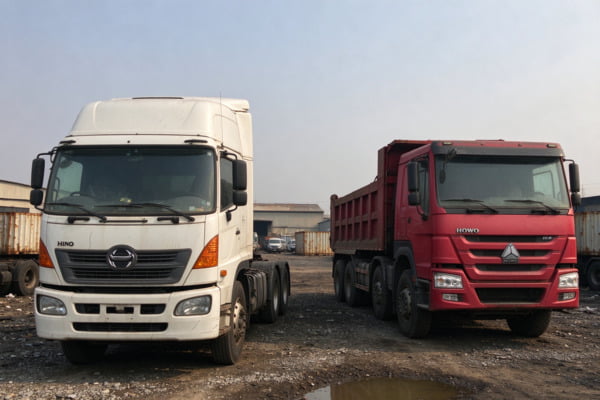
Both brands have earned their place in global commercial transport. But in our 20+ years of exporting trucks to Africa, Southeast Asia, the Middle East, and beyond, we've watched buyers make costly mistakes in both directions. The sections below break down exactly where each brand wins — and where it doesn't.
Is Parts Availability the Real Deciding Factor Between HINO and HOWO?
We hear this question constantly: "Which brand is more reliable?" But in most of the markets we serve, the more important question is: "Which brand can I actually fix when something breaks?"
Parts availability is often the single most important variable in the HINO vs HOWO decision. A mechanically superior truck that sits idle for three weeks waiting for a replacement part costs far more than a simpler truck repaired the same day. Before committing to either brand, buyers should audit in-country parts availability and local mechanic familiarity with the specific engine platform.
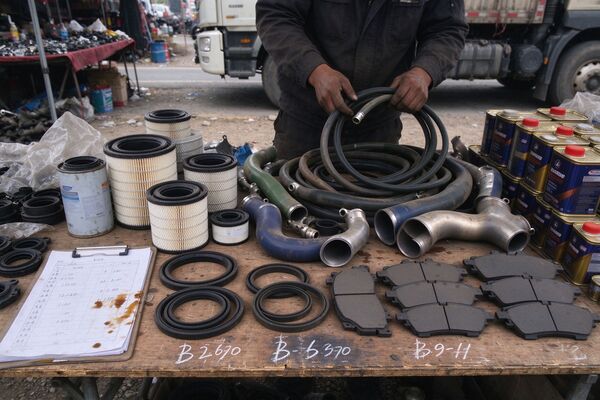
This is the insight that spec-sheet comparisons always miss. Let's go deeper.
Why Parts Availability Outweighs Brand Prestige in Remote Markets
When customers in West Africa or inland Southeast Asia choose HINO for its reputation, the first problem we often see is a parts supply gap. HINO has strong dealer networks in Japan, Australia, some Gulf states, and parts of East Africa[1] — but coverage becomes inconsistent once you move into secondary cities or landlocked regions.
HOWO, as part of China National Heavy Duty Truck Group (CNHTC), has pushed deep into African and Southeast Asian markets over the past 15 years[2]. In many of these locations, HOWO parts are stocked by local distributors, available at open markets, and familiar to roadside mechanics. That ground-level penetration is a genuine operational advantage — not a marketing claim.
Here's a practical checklist buyers should run before choosing a brand:
- Can you name a local parts supplier for this brand's engine? If the answer is "I'll order from abroad," your downtime risk is high.
- Do local mechanics know the engine platform? A Weichai or HOWO engine is widely understood in many African markets. HINO's J08 or A09 series may require a specialist.
- What is the average lead time for a major component (injector, turbo, clutch) if ordered from the nearest regional hub?
- Is the brand officially represented in your country, or are you dependent on grey-market spare parts?
The Cost of Ignoring This Step
Buyers we've worked with in East Africa have reported waiting two to four weeks for HINO engine components that weren't stocked locally[3]. During that window, the vehicle earns nothing. The "premium" brand became the more expensive choice — not because of the purchase price, but because of operational downtime.
HOWO buyers in the same region typically report faster access to parts, though quality consistency across aftermarket suppliers is a genuine concern. That's a separate risk to manage — and we cover it in the spare parts section below.
| Factor | HINO | HOWO |
|---|---|---|
| Parts availability in Africa | Moderate — stronger in East Africa | High — widely distributed across sub-Saharan markets |
| Parts availability in Southeast Asia | Strong in Thailand, Indonesia; uneven elsewhere | Strong in Vietnam, Cambodia, Myanmar, and growing elsewhere |
| Local mechanic familiarity | Requires more specialized knowledge | Generally more widely understood in high-penetration markets |
| Official dealer network in export markets | Present but geographically concentrated | Broader local-level distribution |
| Aftermarket parts quality risk | Lower (fewer counterfeit channels) | Higher (large aftermarket ecosystem, inconsistent quality) |
What Applications Is HINO Better Suited For?
Buyers often ask us this when they already have some loyalty toward Japanese engineering. The honest answer is: HINO earns its reputation in specific contexts — not across all use cases.
HINO trucks are generally better suited to long-distance highway cargo, urban distribution, and operations where fuel efficiency and driver comfort matter over a high annual mileage. The HINO 700 Series in particular is built around a robust powertrain with refined on-highway performance, making it a strong choice for fleets that run predictable routes with access to a service network.
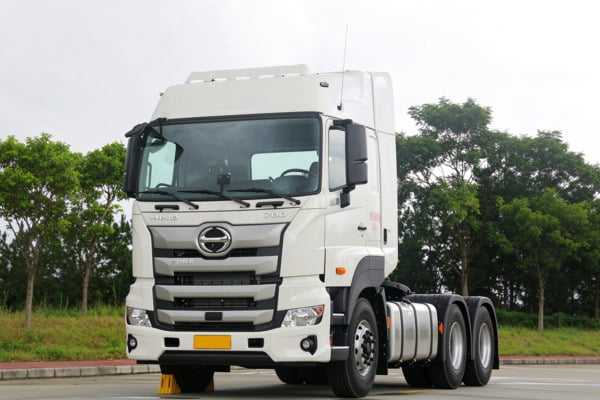
If you're evaluating highway tractor units or heavy cargo trucks for structured logistics corridors, the HINO 700 Series is worth a close look in your shortlist.
Where HINO Performs Strongly
HINO's engineering heritage goes back to Toyota Group, and it shows in the attention to fuel economy, drivetrain calibration, and cab ergonomics. These are not trivial advantages for fleet operators running high-mileage routes.
Key operational strengths of HINO trucks:
- Fuel efficiency on highway routes. In our delivery experience, HINO trucks consistently draw positive feedback from fleet operators running structured long-haul corridors. Fuel savings at scale — over a fleet of 20 or 30 vehicles — are meaningful.
- Driver-friendly cab design. For fleets where driver retention matters, HINO's cab comfort and visibility reduce fatigue on long runs.
- Engine reliability on maintained roads. HINO's engines are precision-built for consistent performance on paved or semi-paved surfaces where load cycles are predictable.
- Residual value in certain markets. In markets where HINO has strong brand recognition — parts of East Africa, the Middle East, Southeast Asia — used HINO trucks hold value better than equivalent Chinese-brand trucks[4].
Where HINO Has Limitations
- Irregular or extreme terrain. HINO trucks are not optimized for the kind of sustained off-road punishment that mining hauls or construction sites in rough terrain deliver. Buyers in these applications often find suspension and drivetrain components under stress faster than expected.
- Markets with weak dealer support. If your country of operation doesn't have a HINO-authorized service point within a reasonable distance, the engineering refinement becomes hard to protect.
- Initial purchase cost. Used HINO trucks — especially the 700 Series — typically command a premium over comparable HOWO models. That premium needs to be justified by the operational context.
What Applications Is HOWO Better Suited For?
We often hear procurement managers from construction companies ask us: "Is HOWO tough enough for what we're doing?" In most cases, the answer is yes — provided they've matched the right HOWO configuration to the job.
HOWO trucks are generally well-suited to heavy-duty construction, mining haul, dump truck operations, and mixed-terrain work in markets where parts are locally available. The HOWO T7H stands out as a capable highway tractor unit that competes credibly with European and Japanese alternatives on total cost of ownership in price-sensitive markets.
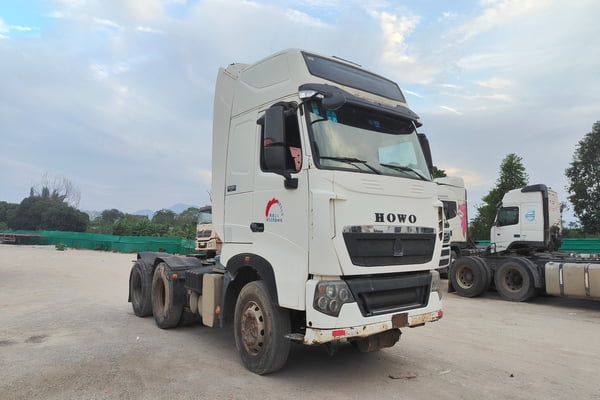
If your operation involves high-volume hauling in a cost-sensitive market, the HOWO T7H represents one of the strongest value propositions in the current used truck market.
Where HOWO Performs Strongly
HOWO's engineering has matured considerably over the past decade. The T7H generation, in particular, represents a significant step up in cab quality, engine options, and drivetrain robustness compared to earlier HOWO generations[5] that earned mixed reviews.
Key operational strengths of HOWO trucks:
- Load tolerance in demanding applications. Buyers we've worked with in mining and construction across Southern and West Africa report HOWO dump and tipper configurations handling sustained heavy loads reliably[6].
- Parts supply depth in target markets. As noted above, this is HOWO's strongest structural advantage in many of the markets our customers operate in.
- Lower total acquisition cost. Used HOWO trucks typically cost less than equivalent-spec HINO units, which matters for buyers assembling a fleet of 10 or more vehicles.
- Engine options with local support. HOWO configurations fitted with Weichai or HOWO's own engine series benefit from widespread mechanic familiarity in African and Asian markets.
- Configuration flexibility. HOWO is available in dump truck, tractor, cargo, mixer, and tipper variants — making it easier to source multiple body types from one supplier.
Where HOWO Has Limitations
- Highway fuel economy vs. HINO. On long, consistent highway runs, HOWO trucks generally don't match HINO's fuel efficiency — a gap that compounds over high annual mileage.
- Cab quality and driver comfort. Earlier HOWO generations lagged behind HINO on cab finish and ergonomics. The T7H closes this gap significantly, but it's still a relevant consideration for driver-sensitive fleets.
- Aftermarket parts quality risk. HOWO's parts ecosystem is large, which means counterfeit or substandard components are a real risk[7]. Buyers sourcing spare parts should work with verified suppliers who can confirm genuine or quality-controlled inventory.
Application Fit Summary
| Use Case | Better Fit | Notes |
|---|---|---|
| Long-haul highway cargo | HINO 700 Series | Fuel efficiency and reliability on paved routes |
| Construction site / dump operations | HOWO T7H | Load tolerance and parts availability advantage |
| Mining haul (rough terrain) | HOWO (with correct spec) | Verify drivetrain spec for load cycle and gradient |
| Urban distribution fleet | HINO | Driver comfort and fuel economy at scale |
| Mixed-use fleet in Africa | HOWO | Parts infrastructure advantage in most sub-regions |
| Fleet in Southeast Asia (Thailand, Indonesia) | Either, with local dealer verification | HINO network is stronger here than in Africa |
How Should You Evaluate a Used HINO or HOWO Before Buying?
Buyers sometimes assume that choosing the right brand is the hardest part. In our experience, verifying the actual condition of the specific vehicle in front of you is equally important.
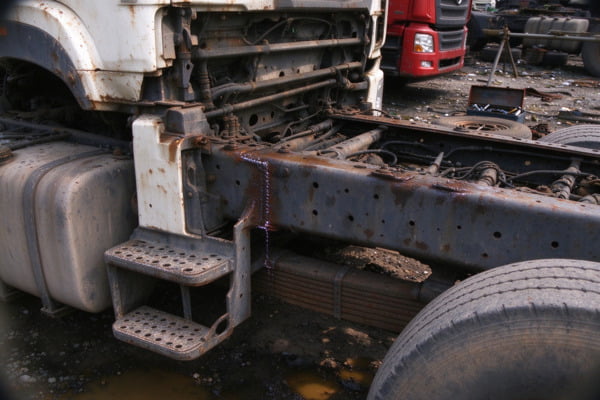
When evaluating a used HINO or HOWO truck, buyers should prioritize engine compression testing, gearbox condition assessment, chassis and frame inspection for stress fractures, and verification of the vehicle's actual working hours or mileage[8] — not just the odometer reading. A pre-shipment inspection by a qualified engineer is the most reliable way to reduce purchase risk.
What a Proper Inspection Should Cover
In our warehouse and yard operations, every used truck we prepare for export goes through a structured assessment process. Here's what buyers should expect from any serious supplier:
Engine and drivetrain:
- Compression test on all cylinders
- Oil pressure and temperature checks under load
- Visual inspection of injectors, turbocharger, and cooling system
- Gearbox engagement check across all ratios
- Axle and differential oil condition
Chassis and body:
- Frame inspection for cracks, especially around the fifth wheel or tipper pivot points
- Brake system function and lining condition
- Suspension integrity — leaf springs, bushings, and U-bolts
- Cab structural condition and sealing
Documentation:
- Engine number and chassis number match verification
- Previous maintenance records (where available)
- Compliance documents for the destination country
Buyers who skip pre-shipment inspection and rely solely on photos or seller assurances carry substantially higher risk — regardless of brand.
Frequently Asked Questions
Is HINO more reliable than HOWO?
Reliability depends on the operating context. HINO's engineering is generally more refined for on-highway use. HOWO is considered reliable for heavy-duty and construction applications in markets where parts and mechanics are locally available. In regions with limited HINO service infrastructure, HOWO often proves more practically reliable due to faster repair turnaround.
Which brand has better spare parts availability in Africa?
HOWO has broader parts distribution across most of sub-Saharan Africa, particularly in West, Central, and Southern Africa. HINO has stronger coverage in East Africa and parts of the Middle East. Buyers should verify in-country stock with local distributors before committing to either brand.
Can I mix HINO and HOWO trucks in the same fleet?
Yes, but it increases spare parts stocking complexity and requires mechanics familiar with both platforms. Fleets in markets with strong coverage for both brands can manage this. In remote or single-brand-dominant markets, standardizing on one platform typically reduces maintenance cost and complexity.
What is the price difference between used HINO and HOWO trucks?
Price varies significantly by model, year, condition, and configuration. In general, used HINO trucks — particularly the 700 Series — are priced higher than comparable HOWO models. The gap can range from 10% to 30% depending on specification and market conditions. Contact us directly for current inventory pricing on specific configurations.
How do I know if a used HOWO T7H has been refurbished or just repainted?
Ask for pre-inspection documentation, including engine compression test results and photos of the engine bay, chassis, and cab interior before refurbishment work. A reputable exporter should be able to provide before-and-after inspection records. If a seller can only offer post-refurbishment photos, treat that as a risk flag.
Conclusion
The HINO vs HOWO question doesn't have a universal answer — and that's exactly the point. Buyers who treat it as a quality ranking often end up with a truck that's technically sound but operationally stranded. The right decision starts with your destination market's parts infrastructure, your specific application, and the total cost of ownership over the truck's working life in your operation.
HINO — especially the HINO 700 Series — is a strong fit for highway-focused fleets in markets with accessible service networks. HOWO — particularly the HOWO T7H — offers compelling value for heavy-duty and construction applications in parts-dense markets like much of Africa and Southeast Asia.
At Deli Auto, we stock both brands and have exported them across Africa, the Middle East, Southeast Asia, and beyond. If you're working through this decision for your fleet or import business, reach out to our team. We'll help you match the right truck to your operation — not just the one that looks good on paper.
[1] "Hino Motors", https://en.wikipedia.org/wiki/Hino_Motors. HINO Motors' corporate disclosures and international operations documentation indicate an authorized dealer and service presence across multiple regions, with historically stronger infrastructure in Japan, Australia, and established export markets; coverage in secondary African and Asian markets is acknowledged as less uniform. Evidence role: general_support; source type: institution. Supports: The geographic concentration of HINO's authorized sales and service network, with stronger presence in Japan, Australia, and select international markets. Scope note: Network coverage data changes as HINO expands or restructures its international distribution; the article's characterization reflects a general pattern rather than a current verified count of service points. ↩
[2] "HOWO Trucks 2025 Market Share Analysis | Journal", https://vocal.media/journal/howo-trucks-2025-market-share-analysis. CNHTC (Sinotruk), the parent group of the HOWO brand, has been documented as one of China's leading heavy truck exporters, with significant sales growth recorded in sub-Saharan Africa and Southeast Asia from the mid-2000s onward; precise market-share figures vary by source and year. Evidence role: historical_context; source type: research. Supports: CNHTC's geographic expansion of HOWO truck sales into African and Southeast Asian markets over the past decade and a half. Scope note: Aggregate export statistics may not distinguish HOWO from other CNHTC product lines, and figures differ across reporting bodies. ↩
[3] "(PDF) Determining supply chain practices of vehicle ...", https://www.academia.edu/85402504/Determining_supply_chain_practices_of_vehicle_manufacturers_in_South_Africa. Research on automotive aftermarket supply chains in sub-Saharan Africa has identified parts availability and lead time as primary drivers of vehicle downtime, particularly for brands without established in-country distribution networks. Evidence role: general_support; source type: research. Supports: Extended lead times for imported spare parts for non-locally-distributed truck brands in East African markets. Scope note: Published studies may not isolate HINO specifically; findings are likely drawn from broader commercial vehicle or automotive sector analyses. ↩
[4] "Will Chinese cars hold their value in the long run? As ...", https://www.facebook.com/georgemienie.co.za/videos/will-chinese-cars-hold-their-value-in-the-long-run-as-chinese-brands-continue-to/1631695115242795/. Industry analyses of used commercial vehicle markets in East Africa and the Middle East have noted that Japanese-origin trucks, including HINO, tend to command higher resale prices than Chinese-manufactured equivalents, attributed in part to brand perception and established service networks; however, this gap has been narrowing as Chinese brands gain market acceptance. Evidence role: general_support; source type: research. Supports: Higher residual values for Japanese-brand commercial vehicles relative to Chinese-brand equivalents in select export markets. Scope note: Residual value data is market-specific and time-sensitive; no single published study covers all markets referenced in the article. ↩
[5] "The 2024 Sinotruk HOWO T7H, 2024 SHACMAN X6000 ...", https://www.facebook.com/100090850945079/posts/the-2024-sinotruk-howo-t7h-2024-shacman-x6000-2024-faw-jiefang-j7-and-2024-foton/1054587410912947/. The HOWO T7H, introduced by Sinotruk (CNHTC), incorporated revised cab architecture, updated engine options, and drivetrain refinements compared to the preceding A7 generation; these changes have been noted in trade press and manufacturer documentation, though independent third-party engineering assessments are limited. Evidence role: general_support; source type: other. Supports: Technical and design improvements introduced in the HOWO T7H generation relative to earlier HOWO models. Scope note: Most available comparative information originates from manufacturer or distributor sources rather than independent technical evaluations. ↩
[6] "Performance and Demand for Heavy Duty HOWO Dum", https://natlawreview.com/press-releases/analytical-report-performance-and-demand-heavy-duty-howo-dump-truck-china. Sector reports on mining and construction logistics in sub-Saharan Africa have noted the growing adoption of Chinese-brand heavy trucks, including HOWO configurations, for dump and tipper applications, with operators citing load capacity and parts availability as primary selection factors; independent reliability benchmarking against other brands is limited. Evidence role: case_reference; source type: research. Supports: HOWO dump and tipper truck reliability in heavy-load mining and construction applications in African operating environments. Scope note: Operational reliability data is largely anecdotal or sourced from industry trade bodies rather than independent engineering assessments. ↩
[7] "Falsified and substandard medicines trafficking: A wakeup call ...", https://pmc.ncbi.nlm.nih.gov/articles/PMC9461548/. International bodies including Interpol and the OECD have documented the widespread circulation of counterfeit automotive components in developing-market aftermarket supply chains, with sub-Saharan Africa and parts of Southeast Asia identified as high-risk regions; Chinese-brand vehicles with large aftermarket ecosystems are noted as particularly susceptible due to the volume of non-OEM parts in circulation. Evidence role: general_support; source type: institution. Supports: The prevalence of counterfeit or substandard automotive spare parts in African and Southeast Asian aftermarket supply chains. Scope note: Published reports address the broader automotive aftermarket rather than HOWO specifically; the degree of risk varies significantly by country and supplier. ↩
[8] "5.2.2 Vehicle Inspections - fmcsa csa", https://csa.fmcsa.dot.gov/safetyplanner/MyFiles/SubSections.aspx?ch=22&sec=65&sub=148. Recognized vehicle inspection frameworks, including those referenced by organizations such as the Society of Automotive Engineers (SAE) and national transport authorities, identify powertrain compression testing, drivetrain assessment, structural frame inspection, and odometer/hour-meter verification as core elements of used commercial vehicle evaluation. Evidence role: expert_consensus; source type: institution. Supports: Industry-standard components of a pre-purchase or pre-shipment mechanical inspection for used heavy commercial vehicles. Scope note: Specific inspection standards vary by jurisdiction and vehicle class; no single universal protocol governs used heavy truck pre-shipment inspections across all export markets. ↩