Is It Worth Buying a Used Semi-Truck?
Buying a used semi-truck can be a smart way to enter the trucking business or expand an existing fleet without taking on the cost of a brand-new truck.
However, a lower purchase price does not always mean a lower overall cost. The truck's age, mileage, maintenance history, condition, and expected repair costs all play an important role in determining whether a used semi-truck is actually a good investment.
Quick Answer: Yes, a used semi-truck can be worth buying if it has been properly maintained, passes a thorough inspection, and fits your operating needs. The key is to evaluate the truck based on its total cost of ownership, not just its advertised price.
Before making a purchase, buyers should look beyond the advertised price and determine whether the truck can reliably perform the required work at a reasonable total cost.
Why Consider Buying a Used Semi-Truck?
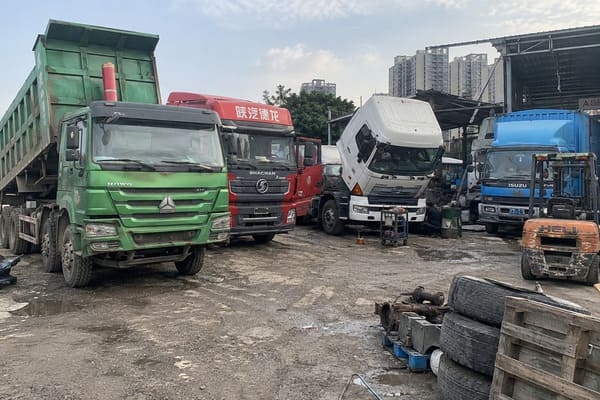
For many owner-operators and small trucking companies, buying used can provide a more affordable way to get a truck on the road.
A new semi-truck requires a significant upfront investment. A used truck may offer a lower purchase price while still providing many years of useful service if it has been properly maintained.
1. Lower Purchase Price
The biggest advantage of buying used is usually the lower initial cost.
A well-maintained older truck can cost substantially less than a comparable new model. This can make it easier for a new owner-operator to enter the trucking industry or for an established carrier to add another truck without taking on a large payment.
2. Less Depreciation
New trucks typically experience their biggest depreciation during the early years of ownership.
When you purchase a used semi-truck, some of that initial depreciation has already occurred. This can make a properly priced used truck a more attractive option for buyers who plan to keep the vehicle for several years.
3. More Affordable Entry Into Trucking
For small businesses, controlling upfront costs is important.
A used semi-truck may allow an owner to allocate money toward other business expenses, such as:
- Insurance
- Registration
- Fuel
- Maintenance
- Tires
- Emergency repairs
- Working capital
Used vs. New Semi-Truck: What Is the Difference?
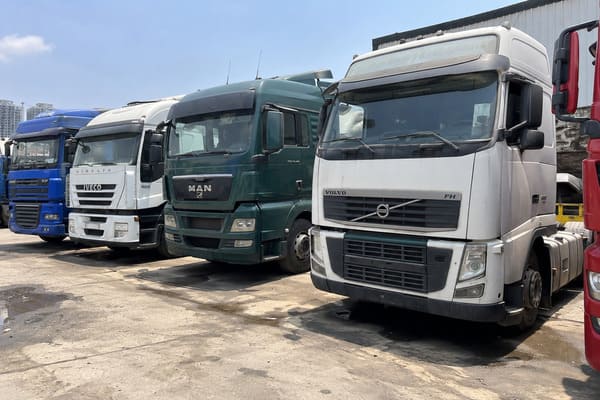
The right choice depends on your budget, operating requirements, and tolerance for potential repairs.
| Factor | Used Semi-Truck | New Semi-Truck |
|---|---|---|
| Purchase price | Usually lower | Usually higher |
| Depreciation | Generally lower | Higher during early ownership |
| Warranty | May be limited or expired | Usually more comprehensive |
| Maintenance | Can be higher depending on condition | Usually lower initially |
| Repair risk | Higher on older trucks | Generally lower initially |
| Financing | Depends on age and condition | Often easier to finance |
| Technology | Older equipment | Latest technology |
| Initial investment | Lower | Higher |
Tip: A used truck is not automatically the cheaper option. A low purchase price can become expensive if the truck requires major engine, transmission, emissions, or suspension repairs shortly after purchase.
What Should You Check Before Buying a Used Semi-Truck?
A visual inspection is only the first step.
Before purchasing a used semi-truck, buyers should inspect the truck's major mechanical systems and review its maintenance history.
Engine
The engine is one of the most important components to inspect.
Look for:
- Excessive smoke
- Oil leaks
- Coolant leaks
- Unusual engine noises
- Hard starting
- Poor idle quality
- Signs of overheating
- Maintenance records
A truck with high mileage is not necessarily a bad purchase if it has a strong maintenance history. In contrast, a lower-mileage truck with poor maintenance records can present significant risks.
Transmission
The transmission should shift smoothly and consistently.
During a test drive, pay attention to:
- Delayed shifting
- Hard shifting
- Grinding
- Slipping
- Unusual noises
- Warning lights
Transmission repairs can be expensive, so any unusual behavior should be investigated before completing the purchase.
DPF and Emissions System
Emissions equipment is another important consideration when buying an older diesel truck.
Depending on the truck's age and engine configuration, repairs to components such as the DPF, EGR system, or SCR system can become expensive.
Ask for maintenance and repair records and check whether the truck has experienced repeated emissions-related problems.
Used Semi-Truck Inspection Checklist
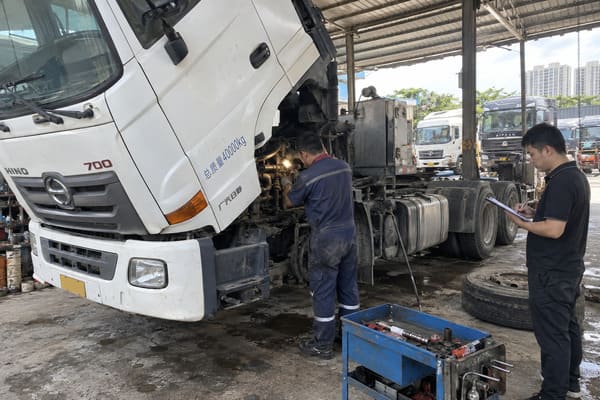
Before purchasing, use a checklist instead of relying only on a test drive.
Exterior
- ☐ Check the frame for cracks or damage
- ☐ Inspect body panels for accident damage
- ☐ Check headlights and other exterior lights
- ☐ Inspect mirrors
- ☐ Look for signs of rust or corrosion
- ☐ Check the condition of the fifth wheel
Tires and Brakes
- ☐ Check tire tread depth
- ☐ Look for uneven tire wear
- ☐ Inspect tire sidewalls
- ☐ Check brake condition
- ☐ Inspect brake lines and components
- ☐ Check for air leaks
Engine Compartment
- ☐ Look for oil leaks
- ☐ Check coolant levels and condition
- ☐ Inspect belts and hoses
- ☐ Check for signs of overheating
- ☐ Inspect batteries
- ☐ Look for damaged or modified wiring
Cab and Interior
- ☐ Check seats and controls
- ☐ Test the HVAC system
- ☐ Check dashboard warning lights
- ☐ Test windows and other electrical equipment
- ☐ Inspect the sleeper area
- ☐ Check for water leaks
Records
- ☐ Review maintenance records
- ☐ Check repair history
- ☐ Verify mileage
- ☐ Check ownership history
- ☐ Review inspection records
- ☐ Ask about previous major repairs
What Are the Risks of Buying a Used Semi-Truck?
Buying used can save money, but it also comes with additional risks.
Higher Repair Costs
Older trucks may require more frequent repairs.
Even a truck that looks good on the outside may have worn components that need attention after purchase.
Potential expenses can include:
- Engine repairs
- Transmission repairs
- Suspension components
- Brake repairs
- Electrical problems
- Cooling system repairs
- Emissions-system repairs
Unknown Maintenance History
One of the biggest risks is purchasing a truck without reliable service records.
A truck may look clean and run well during a short test drive while still having a history of deferred maintenance.
Warning: If the seller cannot provide reasonable maintenance or repair records, treat the truck more cautiously. A missing service history does not automatically mean the truck is bad, but it increases the uncertainty of the purchase.
Older Technology
Older trucks may not have the same technology, fuel efficiency, safety features, or driver-assistance systems found on newer models.
Whether that matters depends on how and where the truck will be used.
When Does Buying a Used Semi-Truck Make Sense?
A used semi-truck may be a good choice when several of the following conditions are met:
- The purchase price fits your budget
- The truck has a documented maintenance history
- The engine and transmission are in good condition
- The truck passes a professional inspection
- Major components have reasonable remaining service life
- The truck meets your operating requirements
- You have money available for unexpected repairs
For an experienced owner-operator who understands maintenance costs, a well-maintained used truck can offer excellent value.
When Should You Avoid a Used Semi-Truck?
A low price should not be the only reason to buy.
Consider walking away when:
- The seller refuses an independent inspection
- Maintenance records are unavailable
- The truck has serious warning lights
- The engine shows signs of major problems
- The transmission performs poorly
- The frame has significant damage
- The truck has extensive rust or corrosion
- Major repairs are clearly overdue
- The estimated repair cost eliminates the price advantage
Remember: Saving money at the time of purchase is not helpful if the truck immediately requires expensive repairs and spends significant time out of service.
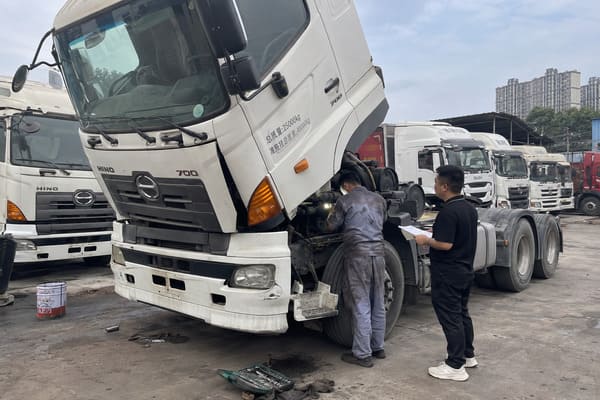
Why a Professional Inspection Matters
Even experienced truck buyers can miss problems during a quick inspection.
A professional inspection can help identify mechanical issues that may not be obvious during a test drive.
A qualified technician should evaluate the major systems of the truck and provide an independent assessment of its condition.
This is especially important when buying an older truck or a truck with high mileage.
How Much Should You Budget for Repairs?
The purchase price is only one part of the cost of owning a used semi-truck.
Before buying, consider creating a budget that includes:
| Cost Category | What to Consider |
|---|---|
| Purchase price | Initial cost of the truck |
| Financing | Monthly payment and interest |
| Insurance | Commercial insurance costs |
| Fuel | Expected fuel consumption |
| Maintenance | Routine service and parts |
| Repairs | Unexpected mechanical problems |
| Tires | Replacement and tire maintenance |
| Registration | Registration and licensing costs |
| Downtime | Lost revenue during major repairs |
A truck that costs less upfront may have higher operating costs.
The goal is not necessarily to find the cheapest truck. The goal is to find the truck that provides the best balance between purchase price, reliability, operating cost, and expected service life.
Questions to Ask the Seller
Before buying a used semi-truck, ask the seller specific questions about its history.
Important Questions
- How many miles are on the truck?
- Do you have complete maintenance records?
- What major repairs have been completed?
- Has the engine or transmission been rebuilt?
- Has the truck had any major accidents?
- Has it experienced recurring emissions-system problems?
- Why is the truck being sold?
- How long has the current owner had it?
- Can I have the truck inspected by an independent mechanic?
- Are there any current warning lights or known mechanical problems?
Clear answers and supporting documentation can make it easier to determine whether the asking price is reasonable.
Used Semi-Truck Buying Checklist
Before signing a purchase agreement, make sure you have completed these steps:
- ☐ Determine your operating requirements
- ☐ Set a realistic total budget
- ☐ Compare several trucks
- ☐ Review maintenance records
- ☐ Check the truck's mileage and history
- ☐ Inspect the engine
- ☐ Inspect the transmission
- ☐ Check the emissions system
- ☐ Inspect tires and brakes
- ☐ Check the frame
- ☐ Test the electrical systems
- ☐ Take the truck for a proper test drive
- ☐ Have an independent mechanic inspect it
- ☐ Estimate potential near-term repair costs
- ☐ Compare the total cost with other trucks
- ☐ Review the purchase agreement before signing
Is It Worth Buying a Used Semi-Truck?
Yes, in many cases.
A used semi-truck can be a worthwhile investment when the truck is properly maintained, fairly priced, and capable of performing the work you need.
The most important thing is to avoid judging a truck solely by its purchase price.
Instead, consider:
Purchase Price + Maintenance + Repairs + Fuel + Downtime = Total Cost of Ownership
A slightly more expensive used truck with a strong maintenance history may ultimately be a better investment than a very cheap truck with unknown problems.
For buyers willing to do their research, inspect the truck carefully, and plan for maintenance, buying used can be an effective way to control the cost of getting a semi-truck on the road.
Final Takeaway
The best used semi-truck is not necessarily the cheapest one. It is the one that offers the right combination of price, condition, maintenance history, reliability, and expected operating costs.
Take your time, inspect the truck carefully, review the records, and consider getting a professional inspection before making the final decision.