When buyers ask us about Scania trucks, the first question is rarely about the engine. It's about the price. Used Scania trucks cost more upfront than comparable Chinese or Eastern European alternatives — and in markets with limited workshop infrastructure, that gap feels even riskier. So is the premium actually worth it?
The short answer is: for the right buyer, yes. Scania trucks — particularly the G440 and G380 — consistently deliver lower per-kilometer operating costs over a 3–5 year holding period than many cheaper alternatives[1]. The higher purchase price is often offset by longer engine life, better fuel efficiency, stronger resale value, and fewer unplanned breakdowns. The biggest risk isn't the truck itself — it's buying the truck without securing parts supply at the same time.
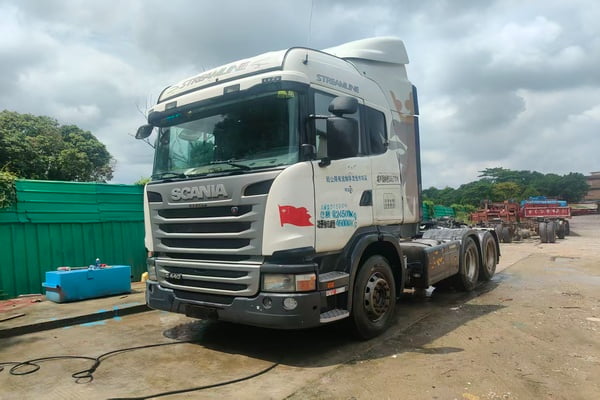
But the full picture is more nuanced than any one-sentence answer. Whether a used Scania makes financial sense for your market depends on the specific model, the truck's remaining service life, your local road and load conditions, and how you plan to handle maintenance. The sections below break down each of these factors so you can make a confident sourcing decision — not just a hopeful one.
Most dealers we speak with already know Scania costs more. What they want to know is whether that cost difference compounds or shrinks over time.
The premium is worth it when the truck's operating life is long enough to amortize the upfront gap. For long-haul tractor applications under moderate to heavy loads, a well-maintained used Scania G440 or G380 typically returns lower cost-per-kilometer than cheaper alternatives across a 3–5 year operating window — assuming parts supply is managed correctly.
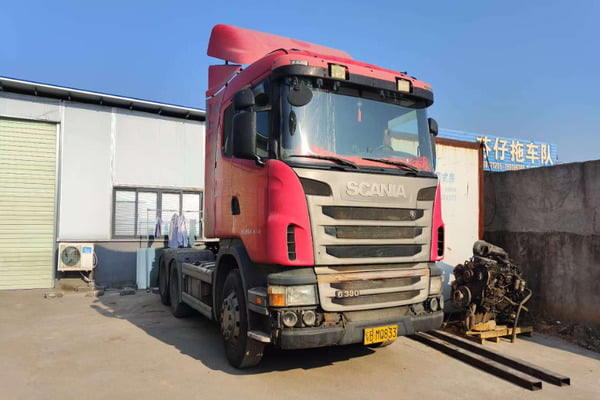
The purchase price is only one variable in the total cost of ownership equation. Buyers who focus only on acquisition cost often discover the real costs later — in fuel, in unplanned downtime, and in resale value that erodes faster than expected.
Breaking Down Total Cost of Ownership
Total cost of ownership (TCO) for a used truck typically includes:
- Purchase price — the upfront acquisition cost
- Fuel cost — per-kilometer fuel consumption over the operating period
- Scheduled maintenance — oil, filters, wear items, tyre rotation
- Unplanned repair costs — component failures, engine work, drivetrain repairs
- Downtime cost — revenue lost while the truck is off the road
- Resale value — what the truck is worth at the end of your holding period
Scania's advantage shows up most clearly in fuel and resale value. The DC13 engine in the G440 and G380 is designed for long-haul efficiency[2], and Scania's resale market — even in Africa and Southeast Asia — remains stronger than many alternatives because buyers recognize the brand[3].
A Rough Indicative Comparison
I won't fabricate specific numbers, but I can share what we've seen across deals. Buyers who purchased used Scania G440s from us for operation in East Africa and Central Asia have generally reported:
- First major mechanical repair typically deferred past 3 years of operation when the truck was pre-screened for mileage relative to overhaul interval
- Fuel savings versus comparable Chinese heavy trucks in the range of 8–15%, depending on load and road conditions — dealers' own estimates, not lab figures
- Resale prices at end of a 3–4 year holding period that retained a higher percentage of purchase price than lower-tier alternatives
One dealer in East Africa who purchased a batch of R460s from us a few years ago came back specifically because the trucks had run past the 300,000 km mark with no major drivetrain intervention. That kind of outcome doesn't happen by accident — it starts with selecting the right trucks before shipping.
What makes the Scania G440 and G380 strong choices for export markets?
Buyers sometimes ask us why we specifically recommend the G440 and G380 over other Scania models. It's a fair question — Scania produces a wide range — and the answer comes down to the match between engine specification, market conditions, and parts commonality.
The Scania G440 and G380 are both built around proven DC13 engine architecture with established long-distance overhaul intervals, well-documented common failure points, and strong parts availability across export markets. The G440 suits heavier payload routes; the G380 offers a cost-efficient entry point for buyers with lighter load profiles or tighter budgets.
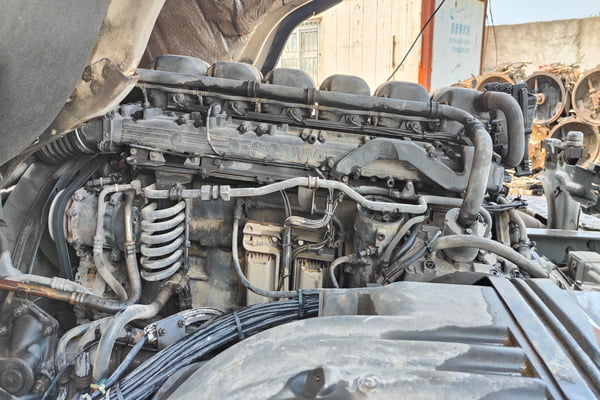
Both models have accumulated enough field history — in Africa, Southeast Asia, and the Middle East — that experienced buyers and mechanics in those regions already know them. That familiarity reduces risk at the workshop level, which matters more than most buyers initially realize.
Scania G440 vs. G380: Key Differences
| Feature | Scania G440 | Scania G380 |
|---|---|---|
| Engine output | 440 hp | 380 hp |
| Engine family | DC13 | DC13 |
| Ideal application | Heavy long-haul, steep terrain | Medium-haul, moderate loads |
| Fuel consumption profile | Moderate–high under load | Lower under equivalent load |
| Relative purchase price | Higher | Lower |
| Parts commonality | High (shared DC13 components) | High (shared DC13 components) |
| Resale market strength | Strong | Moderate–strong |
The shared DC13 engine architecture is important for a practical reason: parts for both models overlap significantly. If you're stocking a small parts inventory alongside your trucks — which we always recommend — you don't need to manage two completely separate parts lists.
Which Model Fits Your Market?
From conversations with dealers across our main export markets, the pattern tends to go like this:
- G440 is the default recommendation for buyers operating on long-haul corridors with heavy payload requirements — think East African highway routes, Middle East logistics, or Central Asian cross-border freight. The extra power pays back in maintained speed under load and reduced drivetrain stress on inclines.
- G380 suits buyers who need to hit a lower acquisition price point, operate shorter routes, or work in markets where the resale premium for higher-horsepower trucks is limited. It's also a reasonable choice for buyers entering the Scania market for the first time who want to test operator and mechanic familiarity before scaling up.
The wrong answer is choosing based on purchase price alone without considering what the truck will actually haul and over what terrain.
How do you assess remaining reliable life in a used Scania truck?
This is the question most dealers don't ask loudly enough before buying — and the one that separates a profitable purchase from an expensive mistake. Scania's long potential service life is an asset only if the truck you're buying still has a meaningful portion of that life remaining.
The most reliable signals of remaining usable life in a used Scania are: mileage relative to the DC13 engine's recommended overhaul interval, the condition of the EGR system and turbocharger, and the operational history of the gearbox. A truck that has been maintained on schedule and hasn't yet reached its first major overhaul window is significantly lower risk than one that has been deferred.
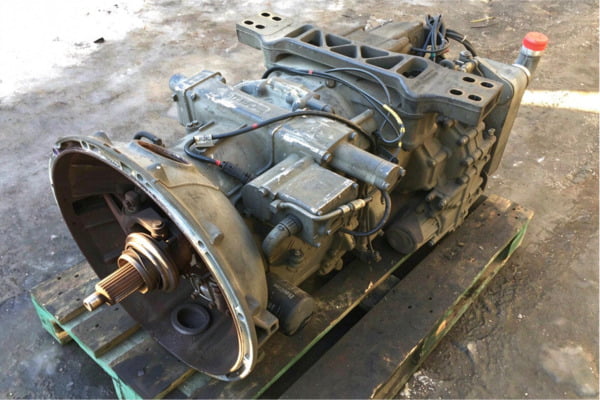
Buyers often tell us they don't have the technical expertise to evaluate these things themselves — and that's exactly why inspection by an experienced engineer before shipment matters so much.
Three Inspection Signals That Actually Matter
1. Mileage Relative to Overhaul Interval
The Scania DC13 engine is generally rated for a first major overhaul in the range of 1,000,000–1,200,000 km[4] under normal operating and maintenance conditions. That said, real-world figures vary significantly based on load profile, fuel quality, and maintenance discipline.
When we evaluate trucks here in our yard, we flag:
- Low remaining interval risk: trucks below 600,000 km with documented maintenance history
- Mid-range: 600,000–900,000 km — acceptable with closer inspection of oil consumption, EGR function, and blowby
- High caution zone: trucks approaching or past 900,000 km without evidence of interim engine work — these may still be viable, but require a detailed mechanical assessment and realistic pricing
Mileage alone doesn't tell the whole story. A truck with 700,000 km that hauled light loads on flat roads is a different proposition from one that hauled overweight containers up mountain passes at the same reading.
2. EGR System and Turbocharger Condition
The EGR (exhaust gas recirculation) system is the most common trouble area we see on used DC13 engines imported from European markets. Deposits, valve sticking, and cooler fouling are routine issues — none of them catastrophic if caught and addressed, but expensive if ignored and left to cascade.
We test EGR function as part of our pre-shipment engine check. Buyers evaluating trucks elsewhere should ask whether EGR cleaning and inspection has been performed within the last service cycle.
Turbocharger shaft play and seal condition are quick physical checks that indicate how the engine has been run. Excessive play or oil tracking around the compressor housing are worth flagging before purchase.
3. Gearbox Operational History
Scania's Opticruise automated gearbox — common on G440 and G380 export units — is a strong system but sensitive to fluid discipline and correct clutch adjustment[5]. We test gearboxes under load in our yard before shipment. Specific points we check:
- Smooth engagement across all range positions
- No slipping or delay under load application
- Absence of fault codes stored in the gearbox ECU
- Clutch wear indicator status where accessible
If you're sourcing trucks without a mechanical inspection step, these are the questions to put directly to your supplier. Any supplier who can't answer them confidently is a sourcing risk.
Is parts availability a real problem for Scania trucks in Africa and Southeast Asia?
This is the objection we hear most often — and I want to address it directly rather than brush past it. It's a legitimate concern. And in some situations, it's a real problem.
Parts availability for Scania trucks in emerging markets is a sourcing and logistics problem, not an inherent brand problem. Genuine Scania components are available, but supply chains to remote African or Southeast Asian markets are inconsistent. The practical solution is to purchase key spare parts — particularly engines, gearboxes, and high-wear items — alongside the trucks in the same shipment, so critical inventory is already in-market before it's needed.
Buyers who arrive at this conclusion early avoid most of the downtime risk that gives Scania's detractors their case studies.
Why Parts Feel Scarce — and What Actually Fixes It
Scania's authorized dealer and parts distribution network is concentrated in Western Europe and major urban markets[6]. Outside those zones — in East Africa, West Africa, Central Asia, or the Indonesian archipelago — the authorized channel thins out quickly.
That creates three practical problems:
- Long lead times when ordering through formal channels
- Price volatility when parts pass through multiple intermediaries
- Counterfeit risk when buyers source from informal local suppliers
None of these problems are unique to Scania. Every European truck brand faces the same distribution reality in these markets. The difference is that buyers who plan ahead can eliminate all three risks with a single sourcing decision.
The Container Approach to Parts Security
At Deli Auto, we stock over 1,000 used Scania-compatible engines, 1,000+ gearboxes, and thousands of genuine spare parts — all held in our 12,000㎡ warehouse in Guangzhou. We specifically build container loads that pair trucks with their most likely failure-mode parts.
For a G440 or G380 buyer operating 5–10 trucks in a fleet, a sensible parts package alongside the trucks might include:
- Spare DC13 engine or engine components (long block or short block, depending on budget)
- Opticruise gearbox or key internal components
- EGR valves, coolers, and gaskets
- Turbocharger unit
- Fuel system components (injectors, high-pressure pump)
- Clutch assembly
- Filters, belts, and consumables for 2–3 years of scheduled maintenance
When these travel in the same container as the trucks, the buyer arrives in their market as a self-sufficient operator — not dependent on the local supply chain for at least the first 2–3 years of operation. That fundamentally changes the risk calculation.
Frequently Asked Questions
How many kilometers is too many for a used Scania G440 or G380?
There is no hard cutoff, but we generally recommend caution above 800,000–900,000 km without documented maintenance history. The DC13 engine can run well beyond 1,000,000 km with proper servicing. What matters more than the odometer reading is whether scheduled maintenance was followed and whether the truck has been inspected by a qualified engineer before purchase.
Can Scania trucks handle the road conditions in Africa and Southeast Asia?
Yes, with the right spec. The G440 and G380 are designed for heavy-duty long-haul use and perform well on mixed-quality road surfaces. High-load, rough-road environments accelerate wear on suspension and drivetrain components, which is why stocking relevant spare parts before deployment matters. We always recommend buyers discuss their specific operating routes with us before we finalize the truck and parts package.
What is the typical resale value of a used Scania G440 after 3–4 years of operation?
Resale values vary significantly by market, condition, and mileage at time of resale. In our experience, Scania trucks retain resale value better than most competing brands in African and Middle Eastern used truck markets, largely due to brand recognition and perceived reliability among local buyers[7]. We recommend buyers verify current local resale prices in their specific market before making purchase decisions.
Is it possible to source Scania trucks and spare parts from the same supplier?
Yes — and we recommend it strongly. At Deli Auto, we supply both used Scania trucks and a wide range of compatible parts from the same stock. Buyers can load trucks and spare parts into the same container, which reduces total shipping cost and ensures critical inventory is available from day one of operation.
How do I know if a used Scania has been refurbished or had its odometer altered?
This is a real risk in the used truck market. We address it through our pre-shipment inspection process, which includes engine testing, fault code reading, and a physical mechanical assessment by our experienced engineers. We also advise buyers to request inspection reports and engine test results before confirming any purchase — from us or any other supplier.
Conclusion
Scania trucks — and the G440 and G380 in particular — represent a genuine value proposition for used truck dealers and fleet operators in Africa, Southeast Asia, the Middle East, and Central Asia. The higher purchase price is real. But so is the longer engine life, the stronger resale market, and the lower per-kilometer operating cost when the trucks are correctly selected and supported. The key risks — remaining service life and parts availability — are both manageable with the right sourcing approach. Buying trucks and spare parts together, from a supplier with the inventory and inspection capability to back up the transaction, removes most of the uncertainty that makes used Scania trucks feel risky.
If you're evaluating Scania G440 or G380 trucks for your next order, contact us at Deli Auto. We'll walk you through available stock, inspection reports, and a parts package matched to your operating conditions — and help you make a purchase decision you can explain confidently to your own customers.
[1] "The Current and Future Performance and Costs of Battery ...", https://rosap.ntl.bts.gov/view/dot/62539/dot_62539_DS1.pdf. Research on heavy vehicle lifecycle costing consistently identifies fuel consumption, maintenance frequency, and residual value as dominant cost drivers that can offset higher purchase prices over multi-year operating periods; see, e.g., studies published by the International Transport Forum or equivalent transport economics bodies. Evidence role: general_support; source type: research. Supports: That total cost of ownership over a multi-year holding period can favor higher-quality trucks despite greater upfront acquisition cost. Scope note: Direct model-specific comparisons between Scania and Chinese-manufactured trucks in emerging markets are rarely available in peer-reviewed literature; general TCO frameworks provide structural support rather than direct proof of the specific claim. ↩
[2] "Scania's next generation DC13 and DC11 engines for ...", https://www.facebook.com/scaniausa/posts/scania-is-raising-the-bar-with-our-next-generation-dc13-dc11-engines-built-for-t/1177732557697283/. Scania's published engine specifications and independent automotive engineering reviews describe the DC13 as a high-displacement inline-six diesel optimized for sustained highway operation under heavy load, with design features including variable geometry turbocharging and high-pressure common-rail fuel injection. Evidence role: general_support; source type: institution. Supports: The technical design characteristics of the Scania DC13 engine family, including its intended application in long-haul heavy transport. Scope note: Manufacturer-published specifications are primary sources with an inherent promotional interest; independent dynamometer or fleet fuel consumption studies would provide stronger neutral support. ↩
[3] "Vehicle Residual Value Analysis by Powertrain Type and ...", https://publications.anl.gov/anlpubs/2022/07/176711.pdf. Research on used vehicle markets in Sub-Saharan Africa and Southeast Asia indicates that brand reputation and parts availability perceptions are significant determinants of residual value for commercial vehicles, which would support the claim that established European brands command resale premiums over less-recognized alternatives. Evidence role: general_support; source type: research. Supports: That brand recognition and perceived reliability influence used commercial vehicle residual values in emerging market contexts. Scope note: Market-specific resale price data for Scania versus competing brands in these regions is not systematically published; the claim relies on general market dynamics rather than documented transaction-level evidence. ↩
[4] "Time between overhauls", https://en.wikipedia.org/wiki/Time_between_overhauls. Scania's service documentation and fleet maintenance guidelines specify recommended major overhaul intervals for the DC13 engine family; independent fleet operators and transport industry publications have reported real-world overhaul intervals consistent with the 1,000,000 km range under favorable operating and maintenance conditions. Evidence role: statistic; source type: institution. Supports: The manufacturer-rated or industry-recognized major overhaul interval for the Scania DC13 engine series. Scope note: Actual overhaul intervals vary substantially with fuel quality, load profile, and maintenance discipline; the stated range reflects best-case conditions and should not be treated as a universal guarantee. ↩
[5] "Volvo I-Shift 12-Speed Automated Manual Transmission", https://rosap.ntl.bts.gov/view/dot/79092. Scania's service documentation for the Opticruise system specifies fluid change intervals and clutch adjustment procedures as critical maintenance items; engineering literature on automated manual transmissions in heavy commercial vehicles identifies fluid degradation and clutch wear as primary failure precursors in this transmission category. Evidence role: mechanism; source type: institution. Supports: That automated manual transmission systems in heavy trucks, including the Scania Opticruise, have documented sensitivity to lubrication quality and clutch wear management. Scope note: Publicly available independent reliability studies specifically on the Opticruise system are limited; the maintenance sensitivity claim is primarily supported by manufacturer service documentation rather than independent fleet failure analysis. ↩
[6] "Scania AB", https://en.wikipedia.org/wiki/Scania_AB. Scania's publicly available dealer locator and annual reports document the distribution of its authorized service network, which is substantially denser in Western Europe than in Sub-Saharan Africa or Southeast Asia; this geographic imbalance is consistent with broader patterns of automotive aftermarket infrastructure in developing economies documented by the International Finance Corporation and similar bodies. Evidence role: general_support; source type: institution. Supports: The geographic concentration of Scania's authorized service and parts distribution infrastructure relative to emerging market regions. Scope note: Network density data changes over time as Scania expands in emerging markets; the claim reflects a general structural pattern rather than a precise current count of service points. ↩
[7] "An experimental study of consumers' brand personality ...", https://scholarship.rollins.edu/cgi/viewcontent.cgi?article=1042&context=as_facpub. Studies on used vehicle market dynamics in developing economies indicate that buyer perceptions of brand reliability, parts availability, and workshop familiarity are significant price determinants in the absence of standardized vehicle history reporting, supporting the claim that established brands with strong reputations command residual value premiums. Evidence role: mechanism; source type: research. Supports: That brand reputation and perceived reliability are significant determinants of used commercial vehicle pricing in emerging market contexts. Scope note: The cited mechanism is supported by general used vehicle market research; Scania-specific resale price data for African and Middle Eastern markets is not systematically available in published academic literature. ↩