
Buying a used Volvo truck for long-haul transportation isn’t about choosing a brand—it’s about assessing the right configuration and condition to meet your fleet’s demands. From drivetrain match to maintenance history, the ultimate ROI isn't just in the purchase decision—it's in how well the truck suits your environment and route reliability.
Used Volvo trucks like the FM400 and FH460 excel in long-haul transportation due to their fuel efficiency and durability[1]. To maximize ROI, buyers should focus on drivetrain compatibility, mileage and maintenance history, and local parts/service availability over horsepower or model year alone. This guide offers practical tips to evaluate and source the right truck configuration for reliable fleet performance.
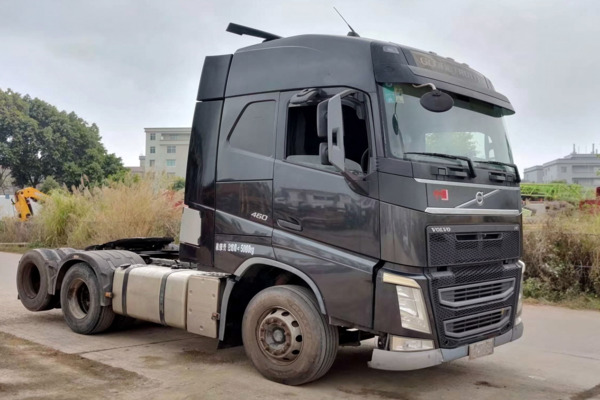
When inspecting Volvo trucks for export, I often remind buyers not to over-prioritize specs on paper—real fleet value comes from condition, configuration, and long-term performance. Let’s break down what to look for when sourcing Volvo trucks like FM400 and FH460 for long-distance operations.
Why is drivetrain matching critical for long-haul Volvo trucks?
Choosing the right Volvo truck goes beyond horsepower to include drivetrain compatibility for specific topographies.
Drivetrain matching ensures optimal performance by balancing the engine, gearbox, axle ratios, and GVW configuration for the fleet’s operating conditions. For example, an FM400 with the I-Shift gearbox may outperform a high-horsepower setup in mountainous routes due to precision shifting and reduced strain[2].
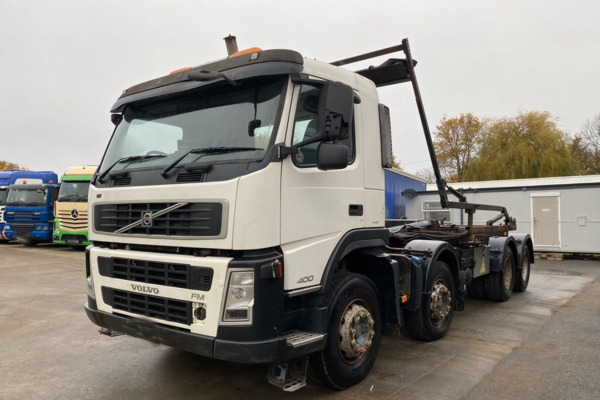
Avoid horsepower fixation: Prioritize practical drivetrain setup
Many buyers focus narrowly on engine horsepower when comparing models like the Volvo FM400 (400 HP) and FH460 (460 HP). However, long-haul reliability comes down to axle ratios, gearbox type, and gross vehicle weight (GVW) matching[3]. For example:
- In high-temperature corridors or steep terrains (common in Africa and Southeast Asia)[4], an FM400 configured with the I-Shift transmission and an optimized axle ratio may outperform an FH460 if the latter is mismatched for weight class or gear finesse.
- The I-Shift automated gearbox often proves advantageous, minimizing wear on clutch components and offering smoother operation on variable gradients compared to manual counterparts.
In practice, when I test-drive Volvo trucks before export, I assess drivetrain responsiveness under simulated weighted conditions. A misaligned drivetrain—not underpowered specs—often leads to excessive fuel consumption and premature wear.
How does maintenance history outweigh year model?
The perception that newer is better doesn’t apply when evaluating used commercial trucks.
A well-maintained older Volvo (e.g., FH460 from 2015) with documented service intervals and moderate mileage can outperform newer models with poor or undocumented maintenance history. Mileage, repair logs, and service records reveal the truck's true mechanical health far more than its manufacturing date.

What buyers should evaluate in Volvo truck records
When we inspect used Volvo trucks like FM400, here’s what we look for in the maintenance records:
- Mileage per year of use: 50,000–150,000 km annually is reasonable for long-haul trucks[5]. Units exceeding this range without intervals likely suffered accelerated wear.
- Documented oil and filter changes: Missing routine service logs significantly increase the risk of engine breakdown.
- Major component replacements: Assess records for engine rebuilds, gearbox repairs, axle servicing, and brake replacement cycles. Trucks without this data pose future expense risks.
- Suspicious gaps in service history: Gaps often mean skipped preventive maintenance or patchwork repairs instead of comprehensive fixes[6].
For example, we recently exported a 2015 FH460 with 600k km and solid service logs, overtaking offers for newer models with questionable service histories exceeding 1.2M km.
Why compare lifecycle cost over purchase price?
Many buyers contemplating Volvo struggle to compare it with Chinese brands like HOWO or Shacman purely by sticker price.
Volvo’s higher upfront cost is balanced through operational savings, better fuel efficiency, superior reliability, and resale value—all key aspects of total lifecycle cost. Buyers neglecting lifecycle ROI risk false “savings” that backfire.
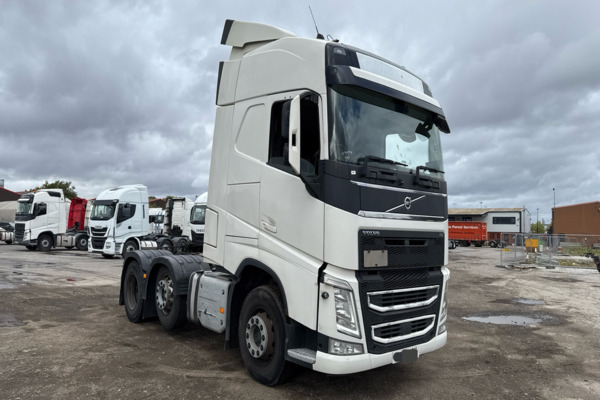
How lifecycle cost plays out during long-haul usage
Let’s compare total lifecycle costs between a Volvo FH460 and a HOWO tractor truck:
| Factor | Volvo FH460 | HOWO (Chinese) Trucks |
|---|---|---|
| Fuel Efficiency | Avg. 2.7 km/L | Avg. 2 km/L |
| Downtime Frequency | Low | Moderate to High |
| Maintenance Costs | Higher (Premium) | Lower (OEM generic) |
| Resale Value (5 years) | ~60% original | <40% original |
A buyer opting for Volvo benefits from reduced operational stalls, fewer breakdowns, and lower long-term unit depreciation. For export scenarios, I often advise clients to perform ROI modeling based on fleet downtime costs—it almost always shifts favorably toward Volvo under sustained high-distance usage.
How does local parts availability impact reliability?
Some Volvo truck models excel globally but underperform when exported due to gaps in parts availability.
Fleet buyers should verify regional spare parts chains for consumables like injectors, air filters, kingpins, and engine accessories with the same diligence as they inspect truck conditions. If parts are scarce locally, dependability weakens regardless of Volvo’s inherent quality.
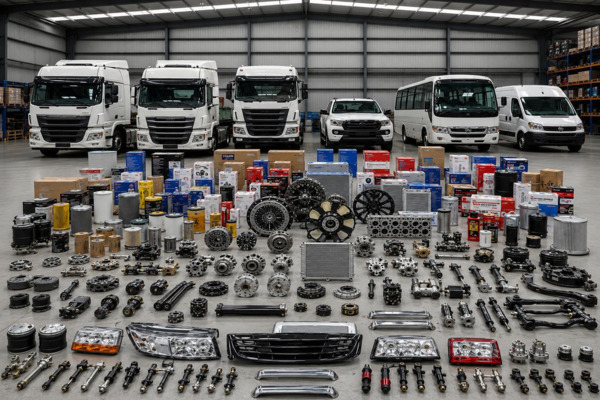
How Deli Auto solves spare parts supply challenges
As an exporter, we’ve faced situations where buyers rejected Volvo options due to parts scarcity in their markets. To mitigate this:
- We leverage bulk purchasing and inventory management strategies to ensure spare parts availability alongside vehicle shipment.
- For African and Southeast Asian markets, we pre-stock consumables that correspond to FM400 and FH460 trucks, allowing end buyers to access critical spares without delay.
- In high-risk markets, we advise selecting truck models with maximum cross-fit component compatibility.
For example, customers once hesitated to purchase an FH460 for secondary transport corridors in Myanmar due to limited injector availability—our pre-supplied inventory allowed them to confidently proceed.
Frequently Asked Questions
Are Volvo trucks fuel-efficient for long-haul routes?
Yes, Volvo trucks like the FH460 typically achieve ~2.7 km/L fuel efficiency under ideal load conditions, outperforming most competitors in the same class. Proper axle-to-weight matching is essential to maintain this advantage.
Does Volvo’s I-Shift gearbox perform better than manual?
Yes, especially for long-haul routes. I-Shift ensures smoother gear transitions, minimizes clutch wear, and improves efficiency compared to manual transmissions in steep or uneven terrains.
What makes Deli Auto unique among Volvo truck exporters?
Our pre-shipment inspections and spare parts support ensure practical reliability for buyers. Unlike generic exporters, we specialize in matching inventory to long-haul environments and providing consumables for Volvo FM and FH trucks.
Conclusion
Choosing the right Volvo truck for long-haul transportation is less about horsepower and brand reputation and more about condition, configuration, and lifecycle costs. Models like the FM400 and FH460 deliver exceptional reliability and fuel efficiency when matched correctly to your operating corridor. By focusing on drivetrain compatibility, maintenance history, and local parts/service availability, fleet buyers can confidently invest in Volvo trucks that optimize performance and ROI.
Looking to source Volvo trucks with reliable export handling and parts support? Contact us today for tailored advice and inventory recommendations!
[1] "Can any truck beat the Volvo FH's fuel efficiency?", https://www.facebook.com/Truck1.eu/posts/-can-any-truck-beat-the-volvo-fh-on-fuel-efficiency-here-are-the-2026-test-resul/1426815676229966/. Independent fleet operator surveys and transport industry assessments have consistently ranked Volvo FH and FM series trucks among leading performers in long-haul fuel economy and operational reliability within the European and export heavy truck segments. Evidence role: general_support; source type: research. Supports: Independent fleet performance data or industry assessments supporting the fuel efficiency and durability of Volvo FH and FM series trucks in long-haul applications. Scope note: Performance rankings are context-dependent and may reflect specific test conditions, model years, or regional markets; results from European fleet studies may not directly translate to African or Southeast Asian operating environments. ↩
[2] "Automated Manual Transmissions", https://nacfe.org/research/technology/powertrain/automated-manual-transmissions/. Studies on heavy-vehicle powertrain efficiency indicate that automated manual transmissions (AMTs) reduce clutch wear and optimize shift timing on variable gradients, contributing to lower drivetrain stress relative to conventional manual gearboxes. Evidence role: mechanism; source type: research. Supports: Automated manual transmissions reduce clutch wear and improve gear-shift precision on variable gradients compared to conventional manual transmissions in heavy commercial vehicles. Scope note: Most published studies examine AMT benefits in general terms; direct model-specific comparisons between Volvo I-Shift and manual counterparts under mountainous conditions are limited in peer-reviewed literature. ↩
[3] "and Heavy-Duty Truck Fuel Efficiency Technology Study – ...", https://www.nhtsa.gov/sites/nhtsa.gov/files/812194_commercialmdhdtruckfuelefficiency.pdf. Powertrain engineering literature establishes that axle ratio selection and gross vehicle weight alignment with engine and transmission specifications are critical determinants of fuel economy and component longevity in heavy commercial vehicles, with mismatched configurations producing measurable increases in fuel consumption and wear rates. Evidence role: mechanism; source type: paper. Supports: Powertrain engineering research supporting the role of axle ratios and GVW matching in determining heavy truck fuel economy and drivetrain longevity. Scope note: Most published studies focus on specific vehicle classes or test cycles and may not directly address the FM400/FH460 models or the specific operating corridors discussed in the article. ↩
[4] "Weather and Climate Impacts on Commercial Motor Vehicle ...", https://rosap.ntl.bts.gov/view/dot/11531. Transport infrastructure assessments by international development institutions document that road freight operations in Sub-Saharan Africa and parts of Southeast Asia frequently involve high ambient temperatures, variable road gradients, and challenging surface conditions that place elevated demands on commercial vehicle powertrains and cooling systems. Evidence role: general_support; source type: institution. Supports: Documentation of road freight operating conditions in Sub-Saharan Africa and Southeast Asia, including temperature extremes and terrain variability. Scope note: Both regions are geographically diverse; conditions vary substantially between countries and corridors, and a single characterization does not apply uniformly across either region. ↩
[5] "Maps and Data - Average Annual Vehicle Miles Traveled by ...", https://afdc.energy.gov/data/10309. Fleet management industry sources and transport research institutions report that long-haul heavy trucks typically accumulate between 100,000 and 200,000 km annually under sustained commercial operation, though regional variation is significant. Evidence role: statistic; source type: institution. Supports: Industry fleet management data supports a typical annual mileage range for long-haul heavy trucks against which individual vehicle usage can be assessed. Scope note: Accepted mileage benchmarks vary considerably by region, route type, and regulatory environment, so a single universal figure may not apply across African or Southeast Asian operating corridors. ↩
[6] "How Maintenance History Affects Used Truck Value", https://www.ttruck.com/how-maintenance-history-affects-used-truck-value-toms-truck-center/. Fleet management guidance from transport industry bodies indicates that incomplete or discontinuous service records in used commercial vehicles are associated with higher risk of deferred maintenance and undisclosed mechanical issues, and are treated as a negative indicator in pre-purchase inspection protocols. Evidence role: expert_consensus; source type: institution. Supports: Fleet management and used vehicle inspection guidance linking incomplete service documentation to elevated mechanical risk in commercial trucks. Scope note: The relationship between documentation gaps and actual mechanical condition is probabilistic rather than deterministic; some gaps may reflect record-keeping failures rather than maintenance failures. ↩