If you're evaluating used Volvo vs. Scania trucks for your fleet, you've probably already spent hours reading comparisons that don't quite answer your question. The frustration is real — both brands look impressive on paper, prices vary wildly, and nobody seems to give you a straight answer. Here's the framework that actually helps buyers make the right call.
Used Volvo and Scania trucks are both strong choices for commercial fleet operations — but neither is universally better than the other. The right brand depends almost entirely on your local market conditions: specifically, which brand has spare parts available in your region and which one your local mechanics have actually worked on. Brand prestige means very little if your truck breaks down 400 km from the nearest qualified workshop.
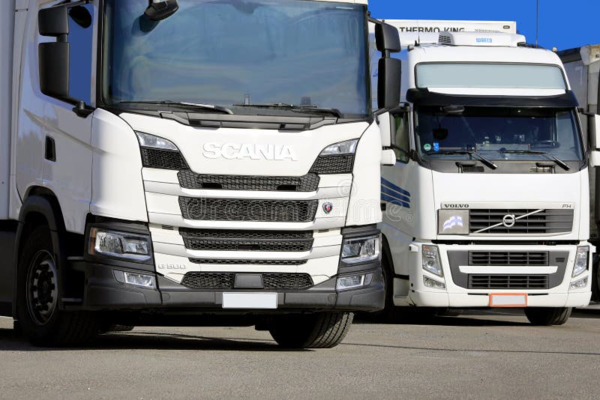
Most buyers frame this as a quality question. It isn't. It's a logistics question, a parts-availability question, and a total-cost question. Let's break it down properly.
Are Used Volvo Trucks a Good Choice for African Fleet Operations?
Volvo trucks have a strong reputation in global markets, and buyers often ask about them first. But reputation alone doesn't keep your truck on the road — parts availability and workshop coverage do.
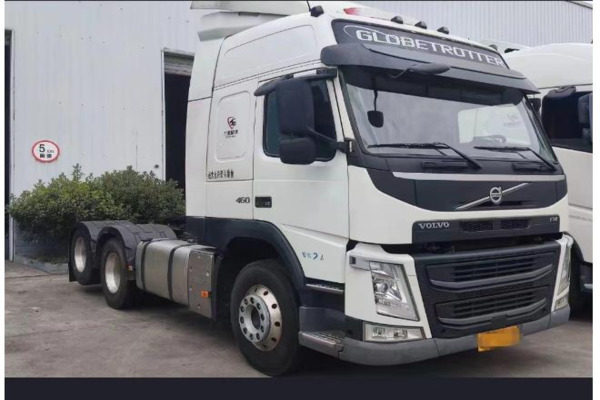
Used Volvo FH and FM series trucks are well-engineered, widely exported, and available at competitive price points in the used truck market. They suit heavy haulage, long-distance freight, and demanding road conditions. However, their practical value depends heavily on whether Volvo support infrastructure exists in your specific operating territory.
What Makes Volvo Trucks Appealing to Fleet Buyers?
Volvo's FH and FM series are among the most traded used heavy trucks in the world. That global trading volume creates a secondary market effect: used parts circulate more freely, and more refurbishers have experience with Volvo components.
Key reasons buyers consider used Volvo trucks:
- Wide availability — Volvo trucks are sourced from Europe, the Middle East, and Southeast Asia in large volumes, which keeps purchase prices competitive
- Recognized drivetrain — Volvo's D13 and D16 engines are well-documented, and engine-out repairs are familiar territory for many experienced truck mechanics globally[1]
- Established brand presence in certain corridors — In parts of Southern Africa and East Africa, Volvo has had formal dealer representation for decades, which means some regions have genuine parts supply chains
Where Volvo Trucks Create Risk for Buyers
From the buyer conversations we've had, Volvo-specific risks tend to cluster around two issues.
First: electronic systems. Newer Volvo models rely heavily on proprietary electronics and diagnostic software[2]. A mechanical failure that could be diagnosed manually on an older truck may require a dealer-level scan tool on a 2010+ Volvo FH. If your workshop doesn't have that tool or access to one, a minor electrical issue becomes a major downtime event.
Second: parts pricing. Genuine Volvo parts are expensive. Aftermarket alternatives exist, but quality varies, and incorrect parts matching is a persistent problem for buyers sourcing parts remotely. We've seen buyers stranded not because Volvo is unreliable, but because sourcing the right part to the right country took longer than expected.
A practical note: When evaluating a used Volvo, ask your supplier specifically about electronic system condition, not just the engine and gearbox. Wiring harness condition and ECU function are often overlooked in basic inspections but are expensive to fix in markets with limited diagnostic infrastructure.
Used Volvo Truck Models Commonly Available for Export
| Model | Common Configuration | Typical Use Case |
|---|---|---|
| Volvo FH12 / FH16 | 6×4 tractor, 420–520 HP | Long-haul freight, heavy haulage |
| Volvo FM12 | 6×4, 340–420 HP | Regional distribution, medium haulage |
| Volvo FH13 | 6×4 tractor, 460–500 HP | Highway freight, container transport |
| Volvo FM400 | 4×2 / 6×4 | Medium-duty freight |
Are Used Scania Trucks a Good Choice for African Fleet Operations?
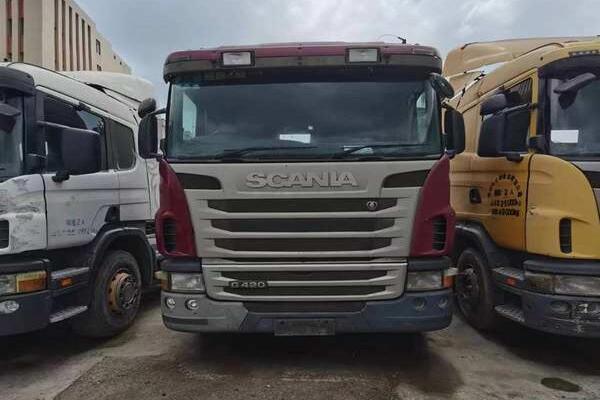
Scania has a fiercely loyal buyer base in many African markets, and that loyalty isn't irrational. In several West African and East African corridors, Scania trucks genuinely dominate — which creates a self-reinforcing ecosystem of parts, mechanics, and institutional knowledge.
Used Scania R-series and G-series trucks are known for their modular build philosophy, which means many components are interchangeable across different model years. This modularity has practical benefits in markets where you can't always get the exact part you need and need a workaround.
What Makes Scania Trucks Appeal to Fleet Operators?
Scania's modular system is a real operational advantage[3]. Because Scania engines, gearboxes, and axle components were designed to share dimensions and interfaces across product generations, an experienced Scania mechanic can often adapt a component from a different model year when the exact part isn't in stock. This isn't a theoretical benefit — in markets we serve in West Africa, buyers have specifically cited Scania's adaptability as a reason they keep coming back to the brand.
Other buyer-cited advantages include:
- Stronger mechanic familiarity in Scania-dominant markets — In countries where Scania has long been the preferred fleet brand, the pool of trained mechanics is larger and repair turnaround is faster
- Active Scania Africa presence — Scania has invested in African market infrastructure over decades, including certified workshops in several major commercial hubs[4]
- Fuel efficiency reputation — Multiple fleet operators have told us Scania trucks perform well on fuel consumption on long highway runs, though we always remind buyers that engine condition on a used unit matters far more than the nameplate
Where Scania Trucks Create Risk for Buyers
Scania trucks are not without procurement risk.
Higher entry price. Used Scania trucks typically command a premium over comparable Volvo units, especially the R-series[5]. For buyers on tighter acquisition budgets, this price gap is real and affects how many units can be purchased per shipment.
Parts cost for newer models. Scania's newer SCR emission systems and electronic injection components are expensive to replace outside of authorized workshops. If you're buying a 2015+ Scania with an SCR system for a market where AdBlue is inconsistently available[6] or where workshop staff aren't familiar with emissions systems, you are creating a maintenance problem that will compound over time.
Counterfeit parts exposure. In markets where Scania is popular, counterfeit Scania parts also circulate. Buyers sourcing parts locally need to be cautious about verifying part origin[7] — this is true for Volvo as well, but the problem tends to be more acute for the dominant brand in any given market.
Used Scania Truck Models Commonly Available for Export
| Model | Common Configuration | Typical Use Case |
|---|---|---|
| Scania R420 / R440 | 6×4 tractor, 420–440 HP | Long-haul heavy freight |
| Scania R500 / R560 | 6×4 tractor, 500–560 HP | High-capacity haulage, mining routes |
| Scania G420 | 6×4, 420 HP | Regional freight, varied terrain |
| Scania P-series | 4×2 / 6×2 | Distribution, urban freight |
How Should You Compare Total Cost of Ownership, Not Just Purchase Price?
The question we hear most often is: "Which one is cheaper?" It's the wrong question. The right question is: "Which one costs less to operate over three years in my specific market?"
Purchase price is a one-time number. Total cost of ownership is what determines whether a fleet purchase was actually a good decision.
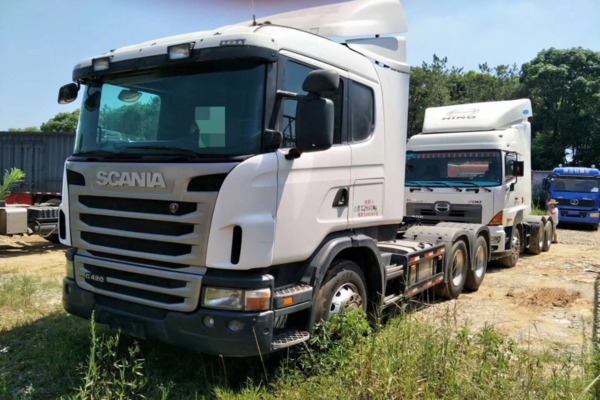
Why Purchase Price Alone Misleads Buyers
A buyer who saves $3,000 per unit on purchase price but loses $500 per week to breakdowns and parts delays has made a poor financial decision. We've watched this happen. A fleet operator in West Africa once bought a batch of trucks based purely on price point — wrong brand for his corridor, no local parts supply, mechanics unfamiliar with the platform. The trucks sat idle more than they ran.
The Real Cost Variables to Evaluate Before You Buy
1. Parts availability in your city or region
This is the most important variable and the one buyers most consistently underweight. Before committing to either brand, do the following:
- Contact two or three local parts dealers and ask what's in stock
- Ask your drivers and workshop staff which brand they've worked on most
- Check which brand's trucks you see most frequently on the roads you operate on — market presence correlates with parts availability
2. Mechanic familiarity
A Volvo specialist in a Scania-dominant market is rare. A Scania-trained mechanic in a Volvo-dominant corridor may not exist locally. The labor cost of flying in a specialist or sending a truck to a distant city for diagnosis adds up quickly.
3. Vehicle age and service history, not just model name
A 2008 Volvo FH and a 2012 Scania R420 are not comparable on spec sheets. They're different age vehicles with different wear conditions and different histories. The specific unit's engine hours, service records, and pre-shipment inspection results matter more than the brand badge.
4. Downtime cost per breakdown
For a truck operating on a commercial freight route, every day off-road has a revenue cost. If your Volvo has better parts support in your corridor, its downtime cost per breakdown will be lower — and vice versa for Scania. This calculation should drive brand selection, not horsepower comparisons.
5. Resale value in your local market
The dominant brand in your market tends to hold resale value better locally. A Scania truck in a Scania-dominant corridor will be easier to sell at a reasonable price when the time comes. That matters for fleet operators who rotate stock regularly.
Which Specific Markets Favor Volvo, and Which Favor Scania?
This is where the "it depends" answer gets specific. From buyer conversations we've had across African markets, broad patterns emerge — though these are market observations, not authoritative data, and local conditions change.
The question buyers should be asking is not "which brand is better?" but "which brand has established operational infrastructure in my specific country and freight corridor?"
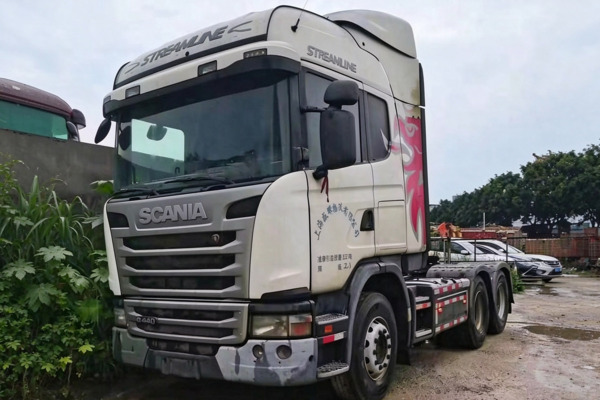
Regional Patterns We've Observed
West Africa (Nigeria, Ghana, Côte d'Ivoire, Senegal): Scania has historically had a strong presence here, particularly in Nigeria and Ghana. Fleet operators and dealers in Lagos and Accra frequently request Scania R-series units. That said, Volvo FM units also move well in this region, particularly for buyers with existing Volvo relationships.
East Africa (Kenya, Tanzania, Uganda, Ethiopia): Both brands operate in this corridor. Kenya has established service infrastructure for both Volvo and Scania[8]. Buyers here tend to be more sophisticated and often ask about specific model years and engine variants rather than just brand names.
Southern Africa (South Africa, Zimbabwe, Zambia, Mozambique): South Africa has formal dealership infrastructure for both brands[9]. This is one of the few African markets where either brand can be supported at a relatively high level. Buyers operating cross-border routes in this region have more flexibility in brand selection.
Central and Sahel regions: Parts supply chains are thinner here. In these markets, the brand that mechanics locally know — often accumulated through secondhand knowledge passed between generations of mechanics — matters most. Buyers in these regions benefit from asking very specific questions about workshop capability before committing to either brand.
How to Use This Information
Don't treat these regional patterns as fixed rules. They shift over time as dealer networks expand and contract. Use them as a starting point for your own local research. The specific town or corridor where your trucks will operate matters more than the country-level average.
Frequently Asked Questions
Is Volvo or Scania more reliable for heavy haulage?
Both Volvo and Scania are premium European heavy truck brands with strong engineering reputations. Neither is categorically more reliable. Real-world reliability for a used truck depends on the individual unit's condition, service history, and how well the brand is supported in your operating region. A well-maintained truck of either brand, with local parts and mechanics available, will outperform the other brand in poor local support conditions.
Which brand has cheaper spare parts in Africa?
Parts pricing varies significantly by country, parts category, and whether you're sourcing genuine or aftermarket parts. Generally, the brand with stronger local market presence in your specific region tends to have more competitive parts pricing due to greater supply availability. We recommend checking with local parts dealers in your area before making a brand decision based on assumed parts cost.
Can I mix Volvo and Scania trucks in the same fleet?
You can, but it complicates fleet management. Mixed fleets increase parts inventory complexity, mechanic training requirements, and diagnostic tool investments. Fleet operators with strong workshop capability can handle mixed brands. Smaller operations generally benefit from standardizing on one brand — whichever has the strongest support in their corridor.
What should I look for in a pre-shipment inspection for used European trucks?
A thorough pre-shipment inspection for used Volvo or Scania trucks should include engine start and load testing, gearbox function, brake system condition, chassis and frame inspection, electrical and ECU system check, and turbocharger condition. At Deli Auto, our engineers conduct mechanical inspection and engine testing before shipment. We recommend that buyers also request full photographic documentation of the inspection.
What year of used Volvo or Scania truck should I target for African market operations?
This depends on your market's emission regulation requirements and workshop capability. Generally, pre-2010 models with mechanical injection systems are easier to service in markets with limited diagnostic infrastructure. Post-2010 models with SCR and electronic management systems require more sophisticated workshop support. Discuss this with your supplier based on your specific corridor requirements.
Conclusion
The used Volvo vs. Scania trucks debate doesn't have a universal winner — and any supplier who tells you otherwise is oversimplifying. What matters for African fleet operators is a clear-eyed evaluation of three things: which brand your local mechanics can service, where spare parts are actually available in your market, and what the total operating cost looks like over time — not just the purchase price.
Both brands are credible choices. The right one is the one that keeps your trucks running in your specific corridor, with parts you can source and mechanics who've actually worked on the platform before.
If you're evaluating a bulk purchase of used Volvo or Scania trucks for your fleet, we're happy to walk through the options based on your destination market. At Deli Auto, we carry both brands in stock and can advise based on what we've actually seen work for buyers in your region. Contact us to discuss your requirements.
[1] "Volvo FH", https://en.wikipedia.org/wiki/Volvo_FH. Volvo Trucks' published technical documentation describes the D13 and D16 as the primary engine families deployed across the FH and FM series over multiple production generations, supporting claims of broad mechanic familiarity in markets where these trucks are widely traded. Evidence role: general_support; source type: institution. Supports: Technical specifications and production history of Volvo D13 and D16 engine families. Scope note: Mechanic familiarity in specific regional markets is not directly measurable from manufacturer documentation alone. ↩
[2] "On-board diagnostics", https://en.wikipedia.org/wiki/On-board_diagnostics. Research on right-to-repair issues in commercial vehicles has documented that OEM-controlled diagnostic platforms, including those used by major European truck manufacturers, restrict independent workshop access to fault codes and calibration functions, consistent with the article's claim about Volvo's electronic systems. Evidence role: mechanism; source type: research. Supports: The role of proprietary diagnostic software in limiting independent repair access for modern heavy trucks. Scope note: Published research tends to address the broader heavy vehicle sector rather than Volvo-specific systems in African market contexts. ↩
[3] "Scania PRT-range", https://en.wikipedia.org/wiki/Scania_PRT-range. Scania has publicly described its modular product system as a core engineering philosophy since the 1980s, enabling shared engine, gearbox, and axle interfaces across vehicle generations, which underpins claims of cross-model-year component adaptability. Evidence role: mechanism; source type: institution. Supports: Scania's modular product system and its design principle of shared components across model generations. Scope note: The degree of practical interchangeability in field conditions, particularly in markets with limited parts availability, is not uniformly documented. ↩
[4] "Scania AB", https://en.wikipedia.org/wiki/Scania_AB. Scania's corporate reporting and regional market communications have referenced Africa as a strategic growth market, with authorized dealer and workshop networks established in countries including South Africa, Kenya, Nigeria, and Ghana, supporting the article's characterization of long-term infrastructure investment. Evidence role: historical_context; source type: institution. Supports: Scania's documented commercial presence and authorized service network in African markets. Scope note: The depth and consistency of workshop coverage varies significantly by country and is subject to change as dealer agreements evolve. ↩
[5] "Volvo FH vs Scania R Series: Long-Haul Truck Comparison", https://www.truck1.eu/blog/volvo-fh-vs-scania-r-series-long-haul-truck-comparison-t36030?srsltid=AYCX9vJNWkyTcsFYsYKVn7NE1vOUaYkgeSzw4Alf0uh4unkhkRFDknVK. Used truck trade publications and auction data from European markets have generally reflected a price premium for Scania R-series units relative to comparable Volvo FH configurations, attributable to strong demand in export markets where Scania holds dominant fleet share. Evidence role: statistic; source type: other. Supports: Relative pricing of used Scania R-series versus used Volvo FH trucks in European export markets. Scope note: Pricing differentials fluctuate with market conditions, vehicle age, and specification, and no single authoritative dataset covers all export corridors. ↩
[6] "Diesel exhaust fluid", https://en.wikipedia.org/wiki/Diesel_exhaust_fluid. Reports from international transport and logistics bodies have noted that AdBlue supply infrastructure in sub-Saharan Africa remains underdeveloped relative to the growing penetration of Euro IV and V compliant vehicles, creating operational risk for fleet operators dependent on SCR systems. Evidence role: general_support; source type: institution. Supports: Inconsistent availability of AdBlue/DEF in African transport markets and its implications for SCR-equipped vehicles. Scope note: Availability conditions vary substantially by country and corridor, and comprehensive regional data is limited. ↩
[7] "Counterfeit Auto Parts — IPRCenter", https://www.iprcenter.gov/file-repository/counterfeit-auto-parts-psa.pdf/view. Reports from international trade bodies and automotive industry associations have identified counterfeit spare parts as a significant problem in African automotive markets, with enforcement agencies in several countries documenting seizures of fake components including filters, brake parts, and engine components bearing major OEM brand markings. Evidence role: general_support; source type: institution. Supports: The prevalence of counterfeit automotive and truck spare parts in African markets. Scope note: Publicly available data on counterfeit parts tends to cover the broader automotive sector rather than heavy trucks specifically. ↩
[8] "Dealer Network | Volvo Trucks USA", https://www.volvotrucks.us/our-difference/uptime-and-connectivity/dealer-network/. Both Volvo Trucks and Scania have listed authorized dealer and service partners in Kenya through their respective African regional operations, consistent with the article's characterization of Kenya as a market with established infrastructure for both brands. Evidence role: case_reference; source type: institution. Supports: The presence of authorized Volvo and Scania dealer and service networks in Kenya. Scope note: The depth of workshop coverage outside Nairobi and major urban centers may be substantially more limited than national-level dealer listings suggest. ↩
[9] "Dealer Network | Volvo Trucks USA", https://www.volvotrucks.us/our-difference/uptime-and-connectivity/dealer-network/. Volvo Trucks Southern Africa and Scania Southern Africa both maintain documented dealer and service center networks in South Africa, with coverage across major commercial and industrial centers, supporting the article's characterization of South Africa as a market where either brand can be serviced at a relatively high standard. Evidence role: case_reference; source type: institution. Supports: The presence of established Volvo and Scania commercial vehicle dealer and service networks in South Africa. Scope note: Service quality and parts availability in cross-border corridors extending into Zimbabwe, Zambia, and Mozambique may differ substantially from South Africa's domestic infrastructure. ↩