Choosing the right Volvo heavy duty truck for bulk import feels straightforward until the first shipment goes wrong. Buyers locked into the wrong model — wrong axle rating, wrong emission standard, wrong chassis spec — face resale headaches, customs delays, and maintenance surprises that no horsepower figure on a spec sheet ever warned them about.
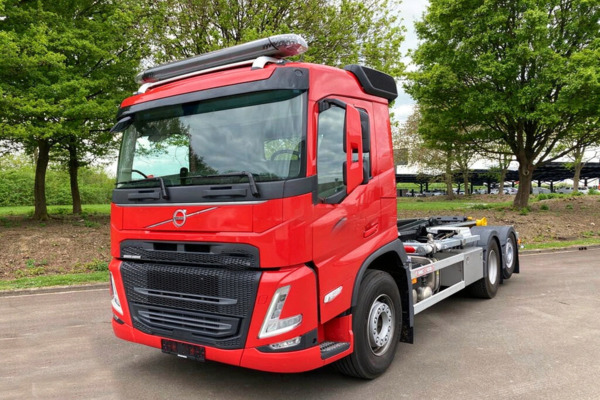
Volvo heavy duty trucks span three main commercial series — FH, FM, and FMX — each optimized for a different operational profile. The FH and FH16 suit long-haul highway traction at high gross combination weights.[1] The FM handles regional distribution and urban delivery where lower unladen weight and tighter maneuverability matter. The FMX targets construction and off-road cycles with reinforced chassis and higher ground clearance. Matching the right model to your route, load, and import market is the core procurement decision — not chasing the newest model year or the highest horsepower output.
Understanding why these models differ matters far more than memorizing their published specs. The sections below break down each series as a buyer decision, not a product brochure. I'll cover common mismatches we see from buyers across Africa, Southeast Asia, and the Middle East — and what to confirm before you shortlist any unit.
FH, FM, or FMX: Which Volvo Series Fits Your Operation?
Buyers often treat the Volvo series lineup as a prestige ladder — FH at the top, FM in the middle, FMX for heavy work. That framing costs money.
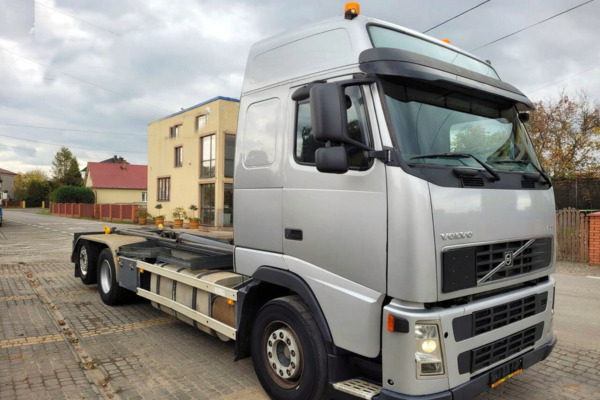
The FH, FM, and FMX are use-case splits, not rankings. The FH is built for long-haul traction at high gross combination weights, often 40–44 tonnes GCW in highway configuration[2]. The FM is optimized for regional and urban routes where lower unladen weight improves payload efficiency. The FMX adds reinforced frame, higher ground clearance, and suspension tuned for construction cycles. Choosing the wrong series for your route creates either overspend or underperformance — sometimes both.
This is a decision I walk buyers through almost every week. The model name on an inquiry form rarely tells the full story. Here is how I think about the split in practice.
The FH: Built for the Highway Corridor
The Volvo FH — including the high-output FH16 variant — is engineered around one primary scenario: sustained long-distance traction at or near maximum legal GCW. Engine outputs in the FH range typically run from around 420 hp up to 750 hp in FH16 configuration, with the D13 and D16 engines covering different payload tiers.[3]
For buyers running livestock transport corridors in East Africa, bulk grain haulage in Southeast Asia, or inter-city freight lanes in the Middle East, the FH matches that cycle well. The cab design also prioritizes driver comfort over long distances — a practical factor when you are managing driver retention across multi-day routes.
What buyers get wrong: Specifying FH for mixed urban and construction routes. The FH's larger turning radius and higher unladen weight become liabilities the moment your route leaves the highway. We worked with one construction procurement manager who initially specified FH16 units for a road-building project in West Africa. After reviewing the actual duty cycle — short haul, steep gradients, rough surface — we matched him to FMX units instead. The FMX chassis handled the load cycles without the frame stress that an FH would have absorbed badly on that terrain.
The FM: The Underestimated Workhorse
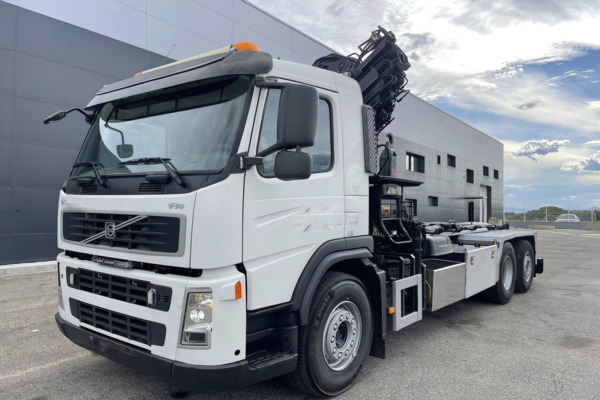
The FM is frequently overlooked in favor of the FH because it carries lower headline horsepower options. That is the wrong lens. The FM's value is in its lower unladen weight, shorter wheelbase options, and adaptability to body-building — making it the natural choice for distribution, tanker, or municipal applications.
In our experience, FM units in the 330–420 hp range are among the most consistently in-demand models we source for buyers in Southeast Asian markets, particularly for FMCG distribution fleets and regional logistics companies.[4] Parts compatibility is broad, and the FM's operational versatility keeps residual values relatively stable.
The FMX: When the Job Site Is the Route
The FMX is explicitly designed for construction, mining, and off-highway cycles. The key differentiators are not horsepower — they are:
- Reinforced chassis frame rated for higher bending stress
- Increased ground clearance compared to on-road FH/FM variants
- Suspension tuned for unladen return cycles on rough terrain
- Protective body panels for undercarriage and cab in high-impact environments
If your buyers are contractors, quarry operators, or mining fleet managers, the FMX is frequently the correct answer — even if its published engine output looks similar to an FM on paper. The chassis spec and suspension setup do the real work.
A note on availability: In our stock, FH and FM units in the 2015–2019 range are more consistently available in bulk than FMX units, which tend to source in smaller quantities. If FMX is your confirmed requirement, flag this early in your inquiry so we can confirm current availability rather than substituting on model.
Why Does Model Year Matter Less Than Buyers Expect?
Newer trucks should be better trucks — that logic feels sound. In the used export market, it creates expensive mistakes.
In the used Volvo heavy duty truck market, 2015–2019 FH and FM units frequently offer the best combination of Euro 5 emission compliance, parts availability, price stability, and ECU simplicity. Post-2020 models are harder to source in bulk, carry higher acquisition costs, and introduce software and telematics complexity that raises maintenance barriers in many target markets.[5] Buyers should evaluate model year relative to their specific market needs, not as an absolute proxy for quality.
This is one of the most consistent mismatches I see from first-time importers. Here is why the 2015–2019 window tends to hold up well under scrutiny.
Parts Availability: A Real Operational Concern
Volvo parts are genuinely well-manufactured. They are also genuinely expensive in many African and Southeast Asian markets, and lead times from regional distributors can stretch when specialized components are involved. This is not a criticism of the brand — it is a procurement reality that buyers need to factor into total cost of ownership.
The 2015–2019 generation of FH and FM trucks sits in a sweet spot:
| Factor | Pre-2015 Units | 2015–2019 Units | Post-2020 Units |
|---|---|---|---|
| Parts availability | Broad but aging | Broad, well-stocked | Growing but limited |
| Emission standard | Often Euro 3–4 | Typically Euro 5 | Euro 6 |
| ECU/software complexity | Simple | Moderate | High |
| Acquisition price (used) | Low | Moderate | High |
| Bulk sourcing in China | Moderate | Strongest | Limited |
ECU Complexity and Market Maintenance Capacity
Post-2020 Volvo trucks carry more sophisticated telematics and engine management systems. In markets where truck workshops have strong Volvo dealer support, this is manageable. In markets where field maintenance is handled by independent mechanics without specialized diagnostic tools, ECU complexity adds real downtime risk.
Buyers in rural West Africa or inland Southeast Asian provinces often tell us that simpler engine management systems are worth more in operational uptime than the marginal efficiency gains from newer platforms.[6] That feedback shapes what we recommend for those markets.
Emission Standards: Confirm Before You Shortlist
Euro standard compliance is not a footnote. It is a checkpoint that can block import clearance, disqualify units from government project tenders, or reduce resale value in markets moving toward stricter standards.
Before shortlisting any unit, confirm:
- What emission standard does your import country currently require or accept?
- Does your end buyer's application (government contract, logistics tender, urban operation) carry additional emission requirements?
- If Euro 5 is required, verify this on the vehicle's CoC (Certificate of Conformity) — not on the seller's verbal assurance.
- Understand that Euro 3 units may still be accepted in some markets but may face restrictions within 3–5 years as standards tighten.[7]
We treat emission standard verification as a standard step in our pre-shipment documentation process, but buyers should confirm their market requirements before the inquiry stage — not after a unit has been selected.
Is Horsepower the Right Metric for Heavy Load Applications?
Buyers comparing 420 hp to 500 hp options often believe they are making a meaningful performance decision. For heavy-load applications, they usually are not.
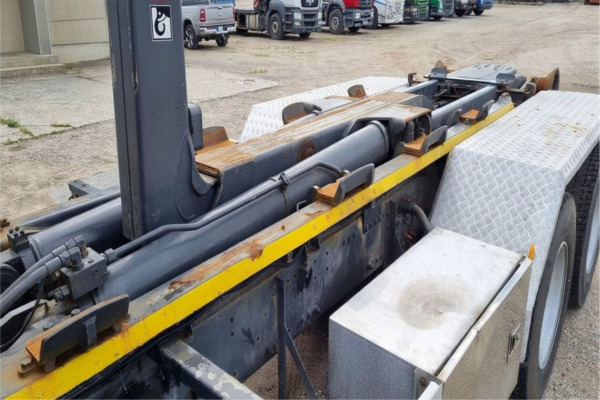
For heavy-load commercial applications, axle load rating, rear suspension specification, and chassis frame reinforcement are more operationally significant than headline horsepower output. A higher-horsepower engine mounted on a standard rear axle rated below your load requirement will underperform and wear faster than a correctly specified lower-horsepower configuration. Confirm chassis spec before engine output when evaluating used Volvo heavy duty trucks for demanding routes.
This is the insight that saves buyers from the most expensive configuration mismatches. Here is how to think about it practically.
What Axle Load Rating Actually Controls
The rear axle load rating determines the maximum legal and mechanical load your drive axle can sustain. On a 6×4 Volvo FM or FH configuration, rear tandem axle ratings typically range across different specifications depending on the build year and market destination.
What matters for buyers:
- A higher rear axle rating supports heavier payloads without accelerating differential wear.
- Air suspension rear axles offer better load distribution and reduced cargo damage — relevant for buyers running fragile goods or operating in markets with legal suspension requirements for certain road categories.
- Bogie axle arrangements on 8×4 or 8×2 configurations expand legal payload capacity but affect maneuverability and may require different licensing categories in some markets.
The Case for Matching, Not Upgrading
A composite case from our sourcing work illustrates the point clearly. A West African construction buyer approached us specifying FH16 units — attracted by the brand recognition and high horsepower output — for a quarry haulage application. After reviewing his load cycle (20-tonne payload, 15 km haul, unpaved surface, frequent gradient changes), we ran through the actual requirements:
- Rear axle rating needed for that payload at gradient: required a heavy-spec rear bogie
- Suspension type needed for unpaved surface return cycles: air or heavy leaf
- Frame reinforcement needed for the load impact cycle: construction-grade
- Cab protection needed for the operating environment: FMX-spec underrun protection
The FH16 he specified would have delivered the horsepower he wanted while failing on chassis durability for that specific cycle. We matched him to FMX units with the correct rear axle and suspension configuration. The engine output was lower. The truck lasted longer.
What to Verify at Inspection (Not on a Spec Sheet)
Factory specifications are reference figures. Used truck condition is what our engineers actually confirm at pre-shipment inspection. For heavy-load applications, the inspection checklist we apply includes:
- Rear differential condition and play — worn differentials are a common used-truck failure point under heavy load
- Suspension bush and spring condition — particularly on units sourced from operators who ran overloaded
- Frame crack inspection — especially at cross-member joints on construction-spec trucks
- Brake system function under load — including air system integrity on vehicles equipped with trailer braking
- Engine oil and coolant contamination — indicators of head gasket or internal condition
- Gear engagement quality across all forward ratios
None of these are visible on a configuration listing. All of them affect the truck's suitability for heavy-load cycles more directly than the engine output figure.
Frequently Asked Questions
What is the difference between Volvo FH and FH16?
The Volvo FH16 is a higher-output variant within the FH series, fitted with Volvo's D16 engine producing up to 750 hp in top specification. Standard FH models use the D13 engine platform. The FH16 targets applications with very high GCW requirements or demanding gradients. For most highway freight applications, standard FH configurations in the 420–500 hp range are adequate and more commonly available in the used market.
Are used Volvo heavy duty trucks Euro 5 compliant for African import markets?
Euro 5 compliance depends on the specific vehicle's build year, market of original sale, and configuration. It is documented in the vehicle's Certificate of Conformity — not reliably confirmed from VIN alone. Buyers should request CoC documentation and verify against their target country's current import emission requirements before purchase. Requirements vary significantly across African markets and are tightening in several countries.
What is the typical mileage range for used Volvo FH or FM trucks available for export?
In the used export market, FH and FM units commonly range from 400,000 km to 900,000 km. Mileage alone is not a reliable condition indicator — service history, operating environment, and load cycle matter as much. A well-maintained 700,000 km unit from a European fleet operator can outperform a neglected 400,000 km unit.[8] Pre-shipment inspection is the confirmation step, not the odometer reading.
How difficult is it to source Volvo spare parts in West Africa or Southeast Asia?
Parts availability varies significantly by country and urban access. Major Volvo distributor networks in countries like South Africa, Nigeria, Kenya, Thailand, and Malaysia maintain reasonable stock of common wear parts.[9] Remote or landlocked markets face longer lead times and higher landed costs. Buyers operating in these environments should factor parts cost and lead time into total fleet economics — and may benefit from ordering common consumables as part of the initial shipment.
Can I mix FH and FM units in a single container order?
Truck units at this size class typically ship as roll-on/roll-off (RoRo) cargo or in flat-rack and open-top container configurations depending on port and destination options. Mixing models within a single shipment is operationally possible and common for buyers consolidating fleet orders. We handle mixed-model shipments regularly. The key requirement is confirming each unit's documentation is complete individually, as customs clearance processes each vehicle on its own records regardless of how they are consolidated for shipping.
Conclusion
Selecting the right Volvo heavy duty truck for bulk commercial import comes down to three honest decisions: matching the series to your operational cycle, choosing a model year range that suits your market's emission requirements and maintenance capacity, and verifying chassis spec rather than relying on headline horsepower. The FH, FM, and FMX are genuinely different tools for different jobs — and the used market in the 2015–2019 range offers the strongest balance of compliance, parts support, and price stability for most buyers in Africa, Southeast Asia, and the Middle East.
At Deli Auto, we have spent over 20 years sourcing, inspecting, and exporting Volvo trucks to buyers in exactly these markets. We carry standing inventory of FH and FM units and work with our engineering team to match configuration to your specific route, load, and import requirements before we confirm any shipment.
If you are evaluating Volvo heavy duty trucks for your next container order or fleet expansion, contact us directly with your route requirements, payload target, and destination market. We will tell you honestly what we have in stock, what fits your application, and what to watch for — before you commit.
[1] "Volvo FH", https://en.wikipedia.org/wiki/Volvo_FH. Volvo Trucks' official product literature positions the FH series as engineered for long-distance, high-GCW highway operations, distinguishing it from the FM and FMX on the basis of cab design, powertrain tuning, and chassis configuration. Evidence role: general_support; source type: institution. Supports: The Volvo FH series is designed and marketed for long-haul highway applications at high gross combination weights.. Scope note: Manufacturer positioning materials are promotional in nature; independent fleet performance data would provide stronger operational validation. ↩
[2] "Volvo FH", https://en.wikipedia.org/wiki/Volvo_FH. European Union Directive 96/53/EC and its amendments establish maximum authorized weights for road vehicles in international traffic, with articulated combinations permitted up to 40–44 tonnes depending on axle configuration and national derogations; the Volvo FH is designed to operate within these regulatory ceilings. Evidence role: mechanism; source type: government. Supports: The 40–44 tonne GCW range cited for highway configuration reflects regulatory weight limits in major truck markets rather than solely a vehicle design parameter.. Scope note: GCW limits differ substantially across African, Southeast Asian, and Middle Eastern markets; the EU framework cited here may not apply directly to the import markets discussed in the article. ↩
[3] "Volvo FH", https://en.wikipedia.org/wiki/Volvo_FH. Volvo Trucks' published product specifications document the FH series as available with D13 and D16 engine platforms, with the FH16 D16 reaching up to 750 hp in top configuration; these figures are subject to market-specific homologation and model year. Evidence role: general_support; source type: institution. Supports: The D13 and D16 engine designations and their associated power output ranges within the Volvo FH and FH16 series.. Scope note: Manufacturer specifications may vary by market destination and model year; used-market units may not reflect current production outputs. ↩
[4] "ASEAN Commercial Vehicles Market Statistics & Size, 2031", https://www.mordorintelligence.com/industry-reports/asean-commercial-vehicles-market. Commercial vehicle market analyses for Southeast Asia document strong demand for medium-specification heavy trucks in distribution and logistics applications, driven by urbanization, e-commerce growth, and the operational requirements of fast-moving consumer goods supply chains in the region. Evidence role: general_support; source type: research. Supports: Medium-duty heavy trucks in the 330–420 hp range are well-suited to FMCG distribution and regional logistics applications in Southeast Asia, where route characteristics and payload requirements differ from long-haul highway operations.. Scope note: Publicly available market data specific to Volvo FM demand in Southeast Asian FMCG logistics is limited; broader commercial vehicle demand figures may not disaggregate by brand or horsepower band. ↩
[5] "Africa's auto advantage: Strategies to seize emerging ...", https://www.brookings.edu/articles/africas-auto-advantage-strategies-to-seize-emerging-market-potential/. Research on technology transfer and automotive aftermarket development in sub-Saharan Africa and Southeast Asia documents a persistent gap between the diagnostic capabilities required by modern vehicle management systems and the tooling available to independent repair workshops in these regions. Evidence role: general_support; source type: research. Supports: Advanced electronic and telematics systems in modern commercial vehicles create maintenance barriers in markets where independent mechanics lack specialized diagnostic tools and dealer network coverage is limited.. Scope note: Published research on this specific issue for heavy trucks is limited; most available literature addresses passenger vehicles or light commercial vehicles, and findings may not translate directly to heavy-duty truck maintenance contexts. ↩
[6] "Ensuring American Leadership in Automated Vehicle ...", https://www.transportation.gov/sites/dot.gov/files/2020-02/EnsuringAmericanLeadershipAVTech4.pdf. Studies on commercial vehicle total cost of ownership in sub-Saharan Africa and comparable low-infrastructure markets identify maintenance accessibility and technician capability as significant determinants of fleet uptime, with vehicle technology complexity identified as a factor that can increase downtime when dealer support networks are sparse. Evidence role: general_support; source type: research. Supports: In markets with limited technical support infrastructure, the diagnostic and repair complexity of advanced engine management systems can reduce operational uptime relative to simpler platforms, offsetting efficiency gains.. Scope note: Peer-reviewed studies specifically comparing operational uptime outcomes by engine management system generation for heavy trucks in these markets are scarce; available evidence is largely practitioner-reported or derived from broader transport sector analyses. ↩
[7] "European emission standards", https://en.wikipedia.org/wiki/European_emission_standards. The United Nations Environment Programme's Global Fuel Economy Initiative and related vehicle standards programs have documented a trend toward adoption of Euro 4 and Euro 5 equivalent standards across African and Asian markets, with several countries announcing phased implementation timelines that would restrict Euro 3 vehicle imports. Evidence role: historical_context; source type: institution. Supports: Emission standard requirements for imported vehicles are progressively tightening across African and Southeast Asian markets, with several countries moving toward Euro 4 or Euro 5 minimum thresholds.. Scope note: Regulatory timelines vary significantly by country and are subject to political and economic factors; the 3–5 year estimate in the article is a generalization that may not apply uniformly across the diverse markets referenced. ↩
[8] "Collaborative multiview time series modeling for vehicle ...", https://pmc.ncbi.nlm.nih.gov/articles/PMC12003688/. Fleet lifecycle and residual value research in the commercial vehicle sector consistently identifies maintenance regime, load cycle intensity, and operating environment as primary determinants of mechanical condition, with odometer mileage serving as a secondary indicator that can be misleading without accompanying service documentation. Evidence role: general_support; source type: research. Supports: Maintenance history and operating environment are stronger predictors of used heavy truck condition and remaining service life than odometer mileage alone.. Scope note: Peer-reviewed research specifically quantifying the relative predictive weight of service history versus mileage for heavy trucks is limited; much available evidence is practitioner-based rather than from controlled studies. ↩
[9] "Dealer Network | Volvo Trucks USA", https://www.volvotrucks.us/our-difference/uptime-and-connectivity/dealer-network/. Volvo Trucks' published dealer and distributor locator confirms authorized service and parts network presence in South Africa, Nigeria, Kenya, Thailand, and Malaysia, though coverage density and parts stockholding depth vary by location and are not uniformly documented in publicly available sources. Evidence role: general_support; source type: institution. Supports: Volvo Trucks maintains authorized distributor and parts supply networks in major African and Southeast Asian markets including South Africa, Nigeria, Kenya, Thailand, and Malaysia.. Scope note: Authorized network presence does not guarantee parts availability for all model years or component types; actual stockholding levels are not publicly disclosed and may vary substantially between urban and regional locations. ↩