Sourcing FUWA trailer axles sounds straightforward — until the wrong spec arrives in a container and fails a port inspection on the other side of the world. For procurement managers and fleet buyers across Africa, Southeast Asia, and the Middle East, choosing between FUWA 13T and 16T axles is not simply a capacity question. It is a compliance decision with real financial consequences.
FUWA 13T and 16T trailer axles are not interchangeable variants of the same product. They differ in beam cross-section, hub geometry, brake drum size, and bearing load path — meaning components do not swap between specs. The right choice depends on three things: the maximum legal axle load in your destination market, your trailer's design GVW and suspension type, and whether you are sourcing a replacement or speccing a new build.
Over the past two decades working directly with B2B buyers on trailer axle procurement, I have watched both specs cause problems — not because FUWA makes a bad product, but because buyers chose the wrong one for their specific market and application. What follows is the decision framework that keeps those mistakes from happening at your end.
Are FUWA 13T and 16T Axles Just Different Sizes of the Same Thing?
Many buyers approach this comparison assuming the 16T axle is simply a beefier version of the 13T — a safe upgrade if you want more capacity. That assumption has cost buyers money on more than a few shipments I have been involved in.
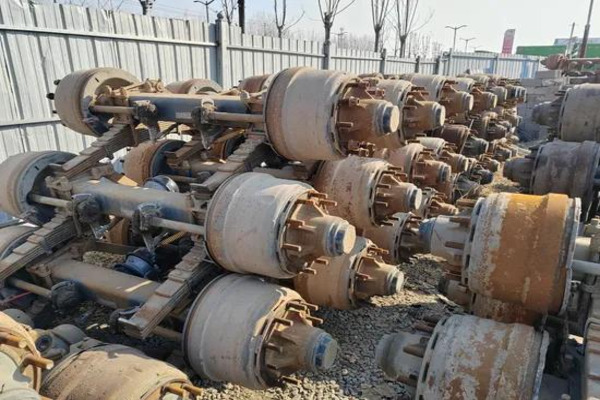
FUWA 13T and 16T trailer axles are structurally distinct products. They share a brand and a general design philosophy, but differ in beam dimensions, hub and spindle geometry, brake drum diameter, and bearing arrangement.[1] These differences mean the two specs do not share serviceable components, and a fleet running mixed specs carries a hidden maintenance liability.
Why the Structural Gap Matters More Than the Load Gap
The 3-tonne difference in rated capacity between these two axles is the visible number. The invisible consequences show up in the workshop.
Component incompatibility in mixed fleets
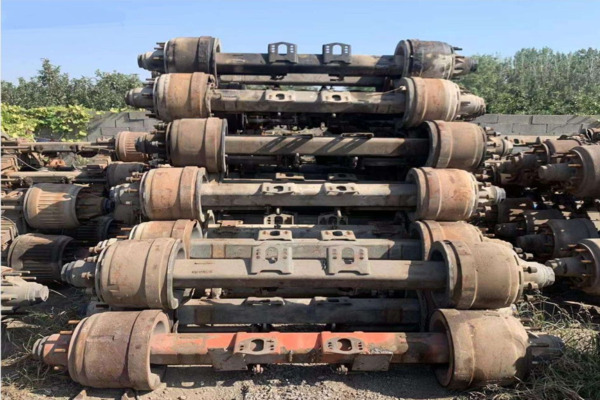
When a fleet runs both 13T and 16T axles — sometimes across different trailer generations — procurement and maintenance teams often discover that brake drums, hub caps, wheel studs, and bearings do not cross over. A workshop that stocks parts for one spec cannot substitute for the other in a roadside breakdown. In remote markets where parts availability is already tight, this creates serious downtime exposure.
Hub and spindle geometry differences
The 16T axle carries a larger hub face and a wider spindle to distribute load across a greater bearing surface. This is not cosmetic engineering — it reflects a different load path from tyre contact patch to axle beam.[2] Trying to fit 13T hubs onto a 16T spindle, or vice versa, is not a field repair; it is a rebuild.
Brake drum sizing
The 16T spec uses a larger brake drum diameter to generate the stopping force required at higher gross loads. This directly affects the size of brake chambers and S-cam geometry.[3] A buyer sourcing replacement axles for an existing trailer must match the brake drum spec to the existing ABS and air brake configuration — not just the load rating.
Beam cross-section and deflection characteristics
The 16T axle beam is dimensionally larger in cross-section. At operating loads well below the rated maximum, this makes little practical difference. But under sustained heavy-haul conditions — which is exactly the environment most buyers in Africa and the Middle East are operating in — the stiffer beam affects suspension interaction and tyre wear patterns. Over-speccing with a 16T axle on a trailer designed around 13T suspension geometry can shorten tyre life and introduce vibration at highway speeds.[4] I have had customers report exactly this after assuming heavier was always safer.
Which Spec Does Your Destination Market Actually Allow?
This is the question that should come before any other in your buying process, and it is the one most buyers skip.
Axle load regulations are set by national transport authorities, not by axle manufacturers. The rated capacity on a FUWA axle tells you what the axle can handle structurally. It does not tell you what your destination country permits on public roads.[5] In markets I work with regularly across Africa, Southeast Asia, and the Middle East, those two numbers are often different — and the gap creates compliance exposure.
The legal GVW limit in your destination market determines which axle spec is usable. A trailer running a 13T-rated axle on a route with a legal axle load ceiling below 13T may still face overload violations based on actual load distribution.[6] Conversely, a 16T axle on a trailer not registered for that GVW tier can trigger roadworthiness inspection failures.
What I Have Observed Across Key Markets
I want to be direct here: I am not a transport lawyer, and axle load regulations vary not just by country but by road classification, axle grouping, and cargo type. What I can share is what I have consistently seen in buyer feedback and inspection outcomes across the markets we serve.
Important: The observations below are drawn from buyer-reported experience and general market knowledge. Always confirm current legal axle load limits with local transport authorities or a qualified regulatory consultant before finalising your procurement spec.
Africa (sub-Saharan markets)
Many sub-Saharan African countries follow axle load regulations influenced by SADC or ECOWAS standards, with single-axle limits commonly in the 8T–10T range for standard roads and higher limits on gazetted heavy haulage routes. In practice, enforcement varies. Some buyers in these markets have selected 16T axles to build in perceived tolerance, only to find that their trailer's registered GVW does not support the higher spec during port entry inspection.
Southeast Asia
Thailand, Vietnam, Indonesia, and the Philippines each have distinct axle load frameworks. Thailand, for example, enforces axle load limits quite strictly on its national highways, and overloading penalties are significant. Several buyers I have worked with in this region were sourcing axles to replace worn units on existing trailers — meaning spec had to match exactly, not approximate.
Middle East
GCC countries generally permit higher gross vehicle weights than many African markets, and construction and logistics applications in Saudi Arabia, UAE, and Iraq often run heavier trailer configurations.[7] Here, the 16T spec is frequently the correct choice — but buyers still need to confirm that their trailer's suspension design and registered GVW are aligned with the axle rating they are purchasing.
The Practical Decision Hierarchy
Before you place an order, work through these three questions in sequence:
-
What is the maximum legal single-axle load in your destination market? This sets the ceiling. If the legal limit is below 13T, neither spec gives you compliance headroom — the issue is trailer loading, not axle rating. If the legal limit sits between 13T and 16T, you need 13T at minimum. If you are operating at or near 16T legal loads, only the 16T spec is appropriate.
-
What is your trailer's design GVW and suspension specification? An axle rating must be consistent with the trailer's overall design load rating. Fitting a 16T axle to a trailer rated at 30T GVW on a triaxle configuration is a different calculation from a single-axle application. Consult your trailer manufacturer's design spec.
-
Are you replacing an existing axle or speccing a new build? Replacement procurement is the stricter case — you must match the existing spec precisely to maintain hub, brake, and suspension compatibility. New builds give you more flexibility, but the starting point is still the legal load limit, not personal preference.
What Are the Real Costs of Getting the Spec Wrong?
Specification errors on trailer axles are recoverable before shipment. After the container sails, the cost curve changes sharply.
Over-speccing with 16T when 13T is the correct choice means paying a higher unit price, carrying unnecessary weight on the trailer, and potentially facing fitment incompatibility with existing hubs and suspension components. Under-speccing with 13T on a 16T application creates compliance liability: failed roadworthiness inspections, overload penalties, and in some markets, trailer detention.
The two most common buyer mistakes I have seen follow a clear pattern:
| Mistake | Trigger | Consequence |
|---|---|---|
| Assumed 16T is always the safer choice | No local regulation check | Higher cost, suspension mismatch, fitment rejection |
| Chose 13T on price | Did not confirm route or customer spec requirement | Failed inspection, return shipment, urgent re-sourcing |
Both mistakes happen at the same point in the procurement process: before the buyer has confirmed the destination market's legal axle load limit and the trailer's design spec. Both are preventable.
A word on lead time and rework. In several cases I have been involved in, buyers who discovered a spec mismatch after shipment faced two bad options: sell the axles at a discount into an alternative market, or absorb the cost of return shipping and re-sourcing[8]. Neither is a comfortable outcome on a container load. The due diligence investment upfront — confirming local regulations, getting the trailer spec sheet, clarifying whether the application is replacement or new build — costs nothing compared to either outcome.
Frequently Asked Questions
Can I use FUWA 13T and 16T axles on the same trailer?
No. Mixing axle specs on a multi-axle trailer creates asymmetric load distribution and component incompatibility across hubs, brake drums, and bearings.[9] This introduces maintenance complexity and potential compliance issues. If you are building or rebuilding a tandem or triaxle trailer, all axles should carry the same rating and spec.
Are FUWA 13T axle components interchangeable with 16T parts?
They are not interchangeable. The two specs differ in spindle diameter, hub face dimensions, brake drum size, and bearing configuration. Using 13T components on a 16T axle — or vice versa — is not a recognised repair or substitution and creates structural reliability risk.
How do I confirm the correct axle load limit for my country?
Contact your national roads or transport authority directly, or work with a local logistics or regulatory consultant. Load limits can vary by road classification, axle grouping type, and cargo category. Deli Auto can advise based on buyer-reported experience in specific markets, but always verify current regulations locally before finalising your spec.
Does a higher-rated axle mean better durability in rough road conditions?
Not necessarily. Durability depends on the axle being operated within its design parameters — which includes suspension compatibility and load distribution, not just rated capacity. A 16T axle operated consistently below 10T load on a trailer with 13T-spec suspension geometry is not inherently more durable than a correctly matched 13T setup.
What documentation should I request when sourcing FUWA axles from a supplier?
Request the product specification sheet confirming axle rating, beam dimensions, hub type, brake drum diameter, and applicable certifications. For export procurement, also request the packing list and country-of-origin documentation. If you are sourcing replacements, have your existing axle's part number or spec sheet on hand for direct comparison.
Conclusion
Choosing between FUWA 13T and 16T trailer axles is a compliance and fitment decision before it is a capacity decision. The two specs are structurally distinct products with non-interchangeable components — selecting the wrong one carries real costs in inspection failures, rework, and fleet downtime.
The right framework starts with your destination market's legal axle load limits, moves to your trailer's design GVW and suspension spec, and then considers whether you are sourcing a replacement or speccing a new build. Both FUWA axle ratings are correct answers in the right context. The goal is matching spec to application, not defaulting to the higher number.
At Deli Auto, we stock FUWA axles and work directly with buyers across Africa, Southeast Asia, and the Middle East to confirm spec before shipment — not after. If you are sourcing FUWA 13T or 16T axles and want to verify the right spec for your market and application, contact our team. We will help you get it right before the container loads.
[1] "13t 16t High Quality Trailer American Type Outboard Axle Fuwa Axle", https://qdjinlibo.en.made-in-china.com/product/kEpUMQKPJqRX/China-13t-16t-High-Quality-Trailer-American-Type-Outboard-Axle-Fuwa-Axle.html. Manufacturer technical datasheets or industry engineering standards bodies such as SAE International document load-rating-specific dimensional requirements for trailer axle assemblies, including beam cross-section, spindle diameter, and brake drum sizing, which govern component compatibility across rated capacities. Evidence role: general_support; source type: institution. Supports: That heavy-duty trailer axles of different load ratings differ in structural dimensions including beam cross-section, hub geometry, and brake drum sizing, making components non-interchangeable across ratings.. Scope note: Direct FUWA-specific dimensional data would require the manufacturer's published specification sheets; general engineering standards provide contextual support rather than product-specific confirmation. ↩
[2] "Based Standards as the Basis for Truck Size and Weight Regulation ...", https://www.intrans.iastate.edu/wp-content/uploads/2018/03/performance_based_truck.pdf. Engineering literature on heavy vehicle axle design, including SAE technical papers on trailer axle systems, documents the relationship between rated load capacity and dimensional requirements for hub face area, spindle diameter, and bearing configuration, as these parameters govern the load path from wheel contact to axle beam. Evidence role: mechanism; source type: research. Supports: That higher-rated trailer axles require larger hub face dimensions and wider spindles to distribute increased loads across a greater bearing surface area, reflecting fundamental load path engineering principles.. Scope note: General engineering principles support this mechanism; product-specific confirmation for FUWA axles would require the manufacturer's engineering documentation. ↩
[3] "Federal Motor Vehicle Safety Standards; Air Brake Systems", https://www.federalregister.gov/documents/2009/07/27/E9-17533/federal-motor-vehicle-safety-standards-air-brake-systems. Federal Motor Carrier Safety Administration (FMCSA) brake performance standards and SAE recommended practices for air brake systems document the relationship between vehicle gross weight, brake drum diameter, and brake chamber sizing requirements, establishing that higher load ratings necessitate larger braking components to meet stopping distance requirements. Evidence role: mechanism; source type: institution. Supports: That higher axle load ratings require larger brake drum diameters to achieve adequate stopping force, and that drum diameter affects brake chamber sizing and S-cam geometry in air brake systems.. Scope note: Regulatory standards cited are US-based; equivalent relationships apply in other jurisdictions under UNECE Regulation No. 13 or national equivalents, but specific dimensional requirements vary by regulatory framework. ↩
[4] "Reducing Tyre Wear Emissions of Automated Articulated Vehicles ...", https://pmc.ncbi.nlm.nih.gov/articles/PMC11125368/. Research on heavy vehicle dynamics and tyre-road interaction, including studies published by transport research institutions such as the Transport Research Laboratory (TRL), documents that suspension-axle compatibility affects dynamic load distribution, which in turn influences tyre wear rates and vehicle vibration characteristics at highway speeds. Evidence role: mechanism; source type: research. Supports: That mismatching axle stiffness or load rating with trailer suspension design parameters can adversely affect tyre wear patterns and introduce vibration at operating speeds.. Scope note: Available research addresses suspension-tyre interaction in general terms; direct experimental evidence specific to FUWA 13T/16T axle substitution scenarios is not available in open literature. ↩
[5] "Weight Limitation | Caltrans - CA.gov", https://dot.ca.gov/programs/traffic-operations/legal-truck-access/weight-limitation. National road transport legislation in most jurisdictions, including frameworks modelled on UNECE agreements on road traffic and vehicle regulations, establishes maximum permissible axle loads as a function of road classification and vehicle configuration, independently of the structural load ratings assigned by axle manufacturers. Evidence role: definition; source type: government. Supports: That legal axle load limits on public roads are established by national transport authorities independently of manufacturer-rated axle capacities, and that compliance is determined by regulatory limits rather than structural ratings.. Scope note: The specific regulatory frameworks vary substantially by country; this citation supports the general principle rather than providing jurisdiction-specific load limits. ↩
[6] "Weight Limitation | Caltrans - CA.gov", https://dot.ca.gov/programs/traffic-operations/legal-truck-access/weight-limitation. Road transport enforcement frameworks, including those administered by national transport authorities and documented in UNECE guidelines on vehicle weight enforcement, assess overloading based on measured axle loads at weigh stations or portable enforcement points, with violations triggered when measured loads exceed the legally prescribed limit regardless of the axle's manufacturer-rated structural capacity. Evidence role: mechanism; source type: government. Supports: That overload violations are determined by the actual load measured on each axle at enforcement points, not by the structural rating of the axle, meaning a lower-rated axle can still be overloaded relative to the legal limit even if operating below its structural capacity.. Scope note: Enforcement procedures and measurement methodologies vary by jurisdiction; this citation supports the general regulatory principle rather than confirming specific enforcement practices in any particular country. ↩
[7] "Chapter 1: Current Truck Size and Weight Regulations in the United ...", https://ops.fhwa.dot.gov/freight/sw/map21tswstudy/technical_rpts/vol1technicalsummary/01current_tsw_regs.htm. National transport authorities in GCC member states, including Saudi Arabia's General Authority of Civil Aviation and the UAE's Federal Transport Authority, publish vehicle weight and dimension standards that govern permissible gross vehicle weights and axle loads for commercial trailers operating on their road networks. Evidence role: general_support; source type: government. Supports: That GCC member states permit gross vehicle and axle load limits for commercial trailers that differ from those common in sub-Saharan African markets.. Scope note: GCC member states maintain distinct national regulations rather than a single harmonised standard; the comparative claim relative to African markets is directional and should be verified against current national authority publications for each destination country. ↩
[8] "Import Refusals", https://www.fda.gov/industry/fda-import-process/import-refusals. International trade and logistics literature, including guidance published by the International Chamber of Commerce (ICC) and freight industry bodies, documents that post-shipment specification non-conformance typically results in either acceptance at a negotiated price reduction or return freight at the buyer's or seller's expense, with associated demurrage, inspection, and re-sourcing costs. Evidence role: general_support; source type: institution. Supports: That specification errors discovered after international shipment result in significant financial consequences including discounted resale or return freight costs.. Scope note: General trade guidance addresses the commercial consequences of non-conforming goods broadly; cost figures specific to trailer axle specification errors are not available in published literature and would vary substantially by shipment size and destination. ↩
[9] "Comprehensive Truck Size and Weight Study Volume 3 Chapter 3", https://www.fhwa.dot.gov/reports/tswstudy/vol3-chapter3.pdf. Trailer design standards, including those published by the European Tyre and Rim Technical Organisation (ETRTO) and national vehicle standards bodies, address axle group load distribution requirements and specify that axles within a tandem or triaxle group should be matched in rating and geometry to achieve designed load sharing and maintain component compatibility. Evidence role: mechanism; source type: institution. Supports: That installing axles of different load ratings on a multi-axle trailer group produces unequal load sharing between axles, creating asymmetric load distribution and structural compatibility issues.. Scope note: Standards documentation addresses design requirements rather than providing experimental data on the specific consequences of mixed FUWA axle ratings; the claim is supported by engineering principle rather than direct empirical study of this product combination. ↩