Sourcing a used truck axle feels straightforward until it isn't. Buyers searching for a used truck axle often focus on brand name and price — only to discover after shipment that the axle doesn't fit the truck, the gear ratio kills fuel economy, or the load rating falls short of what the route demands. These mistakes are expensive, and they're almost always avoidable.
Choosing the right used truck axle comes down to parameter matching, not brand recognition. The critical variables are axle type (drive, steer, or tag), load capacity relative to your GVW, gear ratio compatibility with your drivetrain, brake type, and hub/flange dimensions. A used axle that matches all five of these parameters to your specific truck model and application will outperform a better-known brand axle that doesn't — every time.
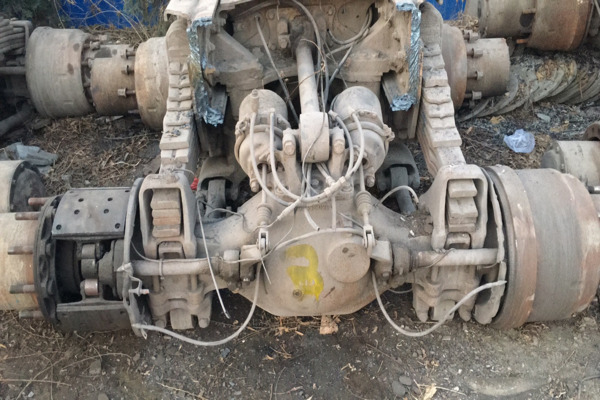
Knowing what to match is only half the work. The other half is knowing whether the used axle in front of you is actually serviceable — and whether your supplier can confirm both. The sections below break down each part of that evaluation.
Do You Know Which Type of Axle You Actually Need?
Buyers often come to us with a simple request: "I need an axle for my truck." The problem is that most commercial trucks have more than one axle, and each position has a completely different function. Ordering the wrong type doesn't just cause a fitment problem — it creates a safety risk.
A drive axle transmits torque from the driveshaft to the wheels and carries a large portion of the loaded vehicle weight.[1] A steer axle controls directional input and must meet specific geometry requirements. A tag axle (also called a pusher or trailing axle) adds load distribution without drive function.[2] These three types are not interchangeable, and fitting the wrong type to a position compromises vehicle handling, braking, and structural integrity.
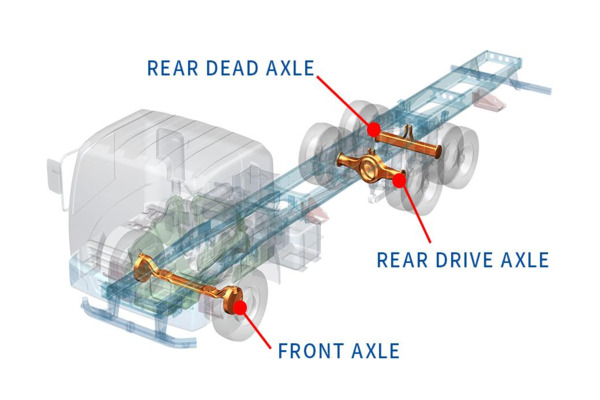
Understanding which position you're replacing is the first question any credible supplier should ask you. If they don't ask, that's a warning sign worth noting.
Why Axle Type Confusion Is the Most Costly Mistake
We've seen this scenario more than once: a buyer needs to replace a rear drive axle on a heavy tractor truck. They find an axle from the same brand, roughly the same era, and at the right price. It looks correct. It ships. It arrives. And then the workshop discovers the differential housing is configured for a tag axle position — it doesn't have the torque transmission components required for a live drive axle.
The result is a part that cannot do the job, a delayed truck, and a re-shipment cost that often exceeds the original purchase price.
Here's a simple reference for the three primary axle types on heavy commercial trucks:
| Axle Type | Primary Function | Driven? | Key Identification Feature |
|---|---|---|---|
| Steer Axle (Front) | Steering geometry and front load support | No | Kingpin assembly, steering arm mounts |
| Drive Axle (Rear) | Power transmission + load bearing | Yes | Differential housing, driveshaft flange |
| Tag / Trailing Axle | Additional load distribution | No | No differential, often liftable |
Before you request a quote, confirm:
- Which axle position you are replacing (front steer, rear drive, tandem rear, tag)
- Whether your configuration is single reduction or hub reduction
- Whether the original axle is a live axle or dead axle
Bring this information to your supplier. If they can work with it, you're dealing with someone who understands what they're selling.
Are You Matching the Right Technical Parameters — Not Just the Brand?
This is the question most buyers skip. Brand names like Mercedes-Benz, BPW, HOWO, and SHACMAN carry real weight in procurement decisions — and for good reason. These are manufacturers with established quality histories. But brand is a proxy signal, not a matching criterion. Two axles from the same manufacturer, even the same production line, can have completely different gear ratios, load ratings, and flange dimensions.
The five parameters that actually determine whether a used axle is right for your truck are: (1) axle load capacity relative to your truck's GVW, (2) gear ratio (speed ratio) matched to your engine and gearbox, (3) brake type and dimensions compatible with your existing brake system, (4) hub/flange bolt pattern and dimensions, and (5) axle width and suspension mounting points. Matching these to your specific truck model and operating application is non-negotiable.
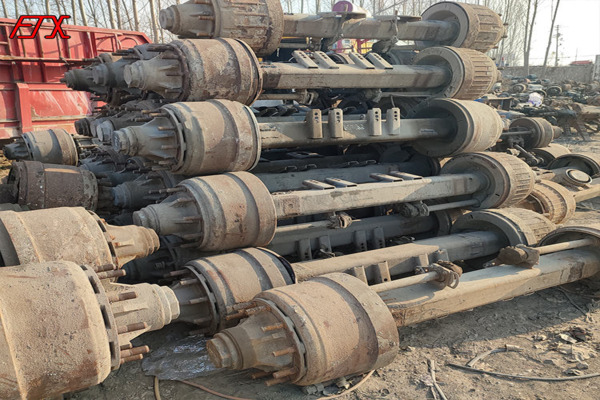
Each of these parameters has a real consequence if mismatched. Here's how each one plays out in practice.
1. Axle Load Capacity vs. GVW
Every axle has a rated load capacity — the maximum weight it is designed to carry at that position. This rating must be compatible with your truck's Gross Vehicle Weight (GVW) and your typical payload.
Underrating is the more dangerous mistake. Buyers operating heavy payloads on routes in mining, construction, or long-haul freight — common in markets across Africa, Southeast Asia, and the Middle East — sometimes source axles rated for lighter commercial vehicles. Under sustained overload, housing cracks, bearing failure, and wheel separation become realistic outcomes.
Overrating is less dangerous but still a commercial mistake: you pay a premium for an axle designed for a heavier platform, with no operational benefit.
2. Gear Ratio and Drivetrain Matching
The gear ratio of your rear axle determines the relationship between driveshaft rotation speed and wheel rotation speed. If this ratio doesn't match your engine's power band and your gearbox ratios, the drivetrain is out of balance.
A common scenario we've encountered: a buyer replaces a rear axle on a long-haul tractor with an axle pulled from a construction or tipper application. The construction axle often has a numerically higher (shorter) gear ratio optimized for torque at low speed. Fitted to a highway truck, it forces the engine to run at higher RPM for the same road speed — increasing fuel consumption, accelerating engine wear, and reducing top speed.
A gear ratio mismatch of even 10–15% can measurably degrade fuel efficiency and drivetrain service life over a fleet's operating cycle.[3]
3. Brake Compatibility
Drum brake vs. disc brake, brake drum diameter, and S-cam or wedge actuation type must all match your existing system. Mixing brake specifications across axles creates uneven braking force distribution — a direct safety concern, particularly on loaded vehicles operating on grades or in wet conditions.[4]
4. Hub and Flange Dimensions
Bolt circle diameter, stud count, and hub face dimensions must match your wheels. Even a small dimensional mismatch means your existing wheels won't mount — or worse, will mount but not seat correctly.
5. Axle Track Width
The axle's end-to-end width must match your vehicle's chassis width and existing suspension geometry. An axle that is too narrow or too wide will misalign wheel tracking, increase tire wear, and stress chassis mounting points.
What Does a Credible Inspection of a Used Axle Actually Cover?
Here's a reality that experienced buyers learn quickly: a clean exterior means nothing about internal condition. A used axle can look presentable — fresh paint, no visible damage — and still have worn bearings, degraded oil seals, and differential wear that will cause failure within months of service.
A credible pre-shipment inspection of a used truck axle should cover: bearing condition and play, differential gear wear and backlash, oil seal integrity (leaks and seating), housing inspection for cracks or weld repairs, brake component wear (drums, shoes, cams), and an operational test where possible. Visual inspection alone is insufficient for a used axle going into working service.
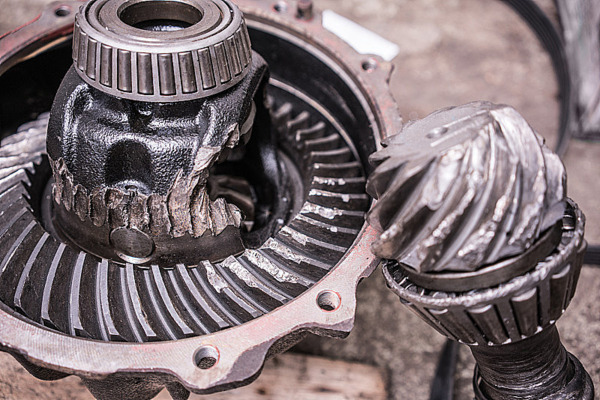
This is an area where supplier practice varies enormously — and where buyers absorb the risk when suppliers cut corners.
What Our Inspection Process Covers
At Deli Auto, our inspection process for used axles checks the following before any unit is offered for sale or shipment:
- Bearing condition: We check for play, roughness, and signs of heat damage. Worn bearings are a primary cause of axle failure in service.
- Differential assembly: We inspect gear tooth wear, backlash, and housing sealing. We look for signs of previous oil starvation or overheating.
- Oil seals: We check seal condition and seating at both hub ends and the differential housing. Failed seals lead to lubricant loss and rapid bearing degradation.
- Housing integrity: We visually inspect the housing and carrier for cracks, impact damage, and any signs of previous weld repair — which may indicate a prior overload event.
- Brake components: We assess drum wear, shoe thickness, and cam condition where these are part of the axle assembly.
- Mileage and usage history: Where documentation exists, we review it. Where it doesn't, we assess component wear to form an honest picture of service history.
We carry stock across brands including Mercedes-Benz, BPW, HOWO, and SHACMAN axles — and each unit goes through this process before it's listed or recommended to a buyer.
We don't claim our inspection is equivalent to a rebuild or factory certification. What we do claim is that we won't knowingly ship a unit with a known defect — and that our engineers have enough experience to recognize the signs of one.
Red Flags to Watch For When Evaluating Any Supplier
If a supplier can't answer the following questions, treat that as a compatibility risk:
- Can you confirm the axle type (drive/steer/tag) and configuration?
- What is the gear ratio?
- What is the rated axle load capacity?
- What inspection was performed, and can you document it?
- Does this axle match [specific truck model, year, and position]?
A supplier who answers these questions with confidence and documentation is managing your risk. One who redirects to photos and price is transferring that risk to you.
Does Your Supplier Have the Matching Capability — Not Just the Inventory?
A large inventory is a starting point, not a guarantee. The real question is whether your supplier can confirm compatibility between the axle they're selling and the specific truck you're fitting it to. This requires more than a parts catalog — it requires application experience.
Supplier matching capability means the ability to verify axle compatibility with your truck's make, model, year of manufacture, axle position, and operating requirements before shipment. Without this, buyers carry the full financial and operational risk of a wrong-part shipment — including re-sourcing costs, downtime, and return logistics.
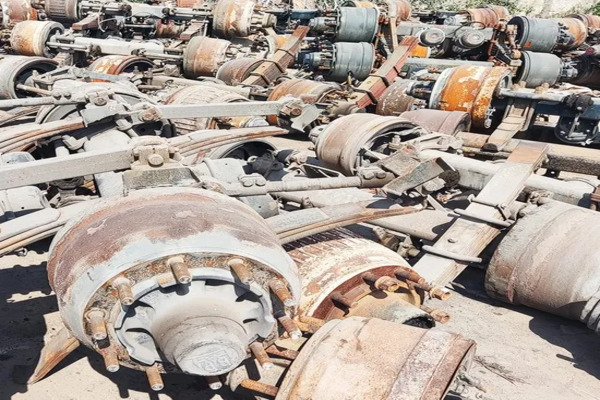
Matching capability is built on three things: depth of inventory experience across truck platforms, engineers who understand drivetrain compatibility, and a willingness to ask the right questions before confirming a sale.
What Happens When the Supplier Can't Verify the Match
The financial exposure is real. Consider a buyer sourcing axles for a fleet of eight trucks. They place an order based on brand and approximate spec. The supplier ships from stock without confirming gear ratios or hub dimensions. Two of the eight axles don't fit. One fits but has a gear ratio mismatch that only becomes apparent after the trucks return to service.
The re-sourcing cost, re-shipment expense, and workshop labour — combined with fleet downtime — frequently exceed the total value of the original order.[5] We've heard versions of this story from buyers in multiple markets. It's not an edge case; it's a predictable outcome of incomplete matching.
Questions to Ask Your Supplier Before You Order
Before placing an order for a used truck axle, verify these points with your supplier:
- Can they cross-reference the axle to your truck's VIN or model specification?
- Can they provide a gear ratio specification with documentation or measurement?
- Can they confirm axle load rating?
- Will they provide pre-shipment photos, inspection notes, or a condition report?
- What is their policy if the axle does not match on arrival?
Suppliers with real matching capability will welcome these questions. Suppliers who can't answer them are asking you to take on a risk they should be carrying.
Frequently Asked Questions
How do I find the gear ratio of a used axle before I buy?
A reputable supplier should be able to measure or document the gear ratio from the axle assembly itself. On many axles, it is stamped on the differential housing or carrier tag. You can also calculate it by rotating the driveshaft flange and counting wheel revolutions. Always confirm the ratio matches your existing drivetrain before purchase.
Can I replace just one axle in a tandem rear axle configuration?
Yes, but the replacement axle must have an identical gear ratio to the remaining axle. Mismatched gear ratios in a tandem configuration create driveline wind-up — torsional stress that damages both axles, the gearbox output shaft, and the inter-axle differential.[6] This is a common and preventable mistake.
What is the difference between single reduction and hub reduction axles?
A single reduction axle has one gear reduction at the differential. A hub reduction axle has an additional planetary reduction at each wheel hub, allowing a higher torque output for heavy-duty or off-road applications.[7] These two configurations are not interchangeable — the mounting geometry, ride height, and torque characteristics are different.
How do I know if a used axle has been overloaded in its previous service life?
Overload leaves physical evidence: housing deformation, abnormal bearing wear patterns, ring gear tooth damage, and sometimes weld repairs to cracked housing.[8] A thorough pre-shipment inspection by an experienced engineer can identify most of these indicators. Mileage documentation — where available — provides supporting context.
Are used axles from Chinese truck brands compatible with European truck platforms?
Generally, no. Chinese commercial truck axles (such as those from HOWO or SHACMAN) and European axles (such as Mercedes-Benz or BPW) use different hub dimensions, bolt patterns, flange standards, and suspension geometry.[9] Cross-platform compatibility requires precise verification and is rarely straightforward. Always specify your truck's make, model, and country of operation when requesting a quote.
Conclusion
Choosing the right used truck axle is a parameter-matching decision above everything else. Axle type, load capacity, gear ratio, brake compatibility, and hub dimensions must all align with your specific truck model and operating conditions — before price or brand enters the conversation. A used axle that passes a credible pre-shipment inspection and matches your drivetrain specifications will serve your fleet reliably. One that doesn't will cost you far more than you saved.
At Deli Auto, we've built our axle sourcing practice around exactly this discipline — stocking Mercedes-Benz, BPW, HOWO, and SHACMAN axles across truck platforms, and backing every unit with hands-on inspection and application-specific matching support. If you're sourcing used truck axles for your fleet or distribution network, contact us with your truck model, axle position, and load requirements. We'll work from your specification — not ours.
[1] "Axle", https://en.wikipedia.org/wiki/Axle. Drive axles serve the dual function of transmitting rotational torque from the driveshaft to the driven wheels while simultaneously bearing a significant portion of the vehicle's gross weight, as described in standard automotive engineering references. Evidence role: definition; source type: encyclopedia. Supports: The mechanical function of a drive axle in transmitting torque and supporting vehicle load. Scope note: General encyclopedic sources may describe passenger vehicle axles; applicability to heavy commercial truck axles should be confirmed with a heavy-vehicle-specific reference. ↩
[2] "What Is a Pusher Axle and When Do You Need One?", https://www.forgetruckcenters.com/what-is-a-pusher-axle-and-when-do-you-need-one. Tag axles, sometimes referred to as pusher or trailing axles depending on their position relative to the drive axle, are non-driven axles fitted to increase load distribution capacity; their terminology and configuration standards are addressed in commercial vehicle engineering and regulatory literature. Evidence role: definition; source type: institution. Supports: The definition and functional role of tag, pusher, and trailing axles in commercial vehicle configurations. Scope note: Terminology for auxiliary axle types varies between North American, European, and Asian regulatory frameworks, so a single source may not cover all regional usages. ↩
[3] "and Heavy-Duty Truck Fuel Efficiency Technology Study – Report #2", https://www.nhtsa.gov/sites/nhtsa.gov/files/812194_commercialmdhdtruckfuelefficiency.pdf. Research on commercial vehicle powertrain optimization indicates that axle gear ratio selection materially affects engine operating point, fuel consumption, and component wear rates, with mismatched ratios forcing engines outside their optimal efficiency range. Evidence role: mechanism; source type: research. Supports: The relationship between axle gear ratio selection and fuel consumption or drivetrain wear in commercial vehicles. Scope note: The specific 10–15% threshold cited in the article is not directly verified by a single published study; supporting sources may quantify the effect differently depending on vehicle type, load, and duty cycle. ↩
[4] "Field Testing & Analysis of Braking Performance of In-Service Trucks", https://rosap.ntl.bts.gov/view/dot/17214/dot_17214_DS1.pdf?. Vehicle safety regulations governing commercial vehicles, including UN ECE Regulation No. 13 on braking, specify requirements for braking force distribution across axles to ensure vehicle stability under loaded and emergency braking conditions. Evidence role: expert_consensus; source type: government. Supports: That mismatched brake specifications across axles produce uneven braking force, posing a safety risk on commercial vehicles. Scope note: Regulatory sources establish performance requirements rather than directly testing the consequences of mixed brake specifications on used axle replacements. ↩
[5] "The importance of cost optimization in fleet management for public ...", https://dr.lib.iastate.edu/bitstreams/68fe14a3-b21f-4ef4-b652-14cd7ea239a2/download. Fleet operations research and total cost of ownership analyses for commercial vehicles consistently identify unplanned downtime and parts procurement errors as disproportionately costly events, with daily downtime costs for heavy trucks often exceeding the value of individual replacement components when lost revenue and secondary labour are included. Evidence role: general_support; source type: research. Supports: That incorrect parts procurement generates total costs — including downtime, re-sourcing, and labour — that can exceed the original part value in commercial fleet operations. Scope note: Published downtime cost figures vary substantially by vehicle type, market, and operational context; the claim that these costs 'frequently exceed' the original order value is directionally supported but not universally quantified in the literature. ↩
[6] "Chapter 11 Drive Lines, Differentials, Drive Axles, and Power Train ...", https://media.defense.gov/2014/Jun/20/2002655909/-1/-1/1/140620-N-ZZ182-6551.pdf. In tandem axle configurations, differing gear ratios between the forward and rear drive axles cause the driveshafts to rotate at incompatible speeds, inducing torsional stress known as driveline wind-up, which accelerates wear in axle assemblies, inter-axle differentials, and transmission output shafts. Evidence role: mechanism; source type: education. Supports: The mechanical mechanism by which mismatched gear ratios in tandem axle configurations produce driveline wind-up and associated component damage. Scope note: Engineering textbook descriptions of this phenomenon typically address design principles; direct empirical data on failure rates from ratio mismatches in used axle replacements is less commonly published. ↩
[7] "Portal axle", https://en.wikipedia.org/wiki/Portal_axle. Hub reduction axles incorporate a planetary gear set at each wheel end in addition to the central differential reduction, increasing available torque and ground clearance; this configuration is distinct from single reduction axles and is commonly employed in heavy-duty off-road and mining vehicles. Evidence role: definition; source type: encyclopedia. Supports: The structural and functional distinction between single reduction and hub reduction (portal) axle configurations in commercial vehicles. Scope note: Encyclopedic sources may describe the general principle without addressing the specific interchangeability constraints relevant to used axle procurement. ↩
[8] "ROLLER BEARING FAILURE MECHANISMS TEST AND WHEEL ...", https://railroads.dot.gov/sites/fra.dot.gov/files/fra_net/15067/Roller_Bearing_Failure.pdf. Failure analysis literature on commercial vehicle drivetrain components documents characteristic physical signatures of overload events, including plastic deformation of axle housings, spalling and abnormal wear patterns on bearing races, pitting or fracture of ring and pinion gear teeth, and evidence of field weld repairs to fatigue cracks. Evidence role: mechanism; source type: research. Supports: That prior axle overloading produces identifiable physical evidence in housing geometry, bearing wear patterns, and gear tooth condition. Scope note: Distinguishing overload damage from normal wear or other failure causes requires experienced inspection; published diagnostic criteria are typically developed for specific axle designs rather than as universal standards. ↩
[9] "Chapter 1: Current Truck Size and Weight Regulations in the United ...", https://ops.fhwa.dot.gov/freight/sw/map21tswstudy/technical_rpts/vol1technicalsummary/01current_tsw_regs.htm. Chinese commercial vehicles are manufactured to GB (Guobiao) national standards, while European vehicles conform to ISO and manufacturer-specific standards; these parallel standardization frameworks produce differing hub bore dimensions, bolt circle diameters, and flange interface geometries that generally preclude direct cross-platform axle substitution. Evidence role: general_support; source type: institution. Supports: That Chinese and European commercial vehicle axles conform to different dimensional and interface standards, limiting cross-platform interchangeability. Scope note: Some Chinese heavy truck platforms have adopted components with dimensions closer to international standards; blanket incompatibility statements should be verified against specific model specifications. ↩