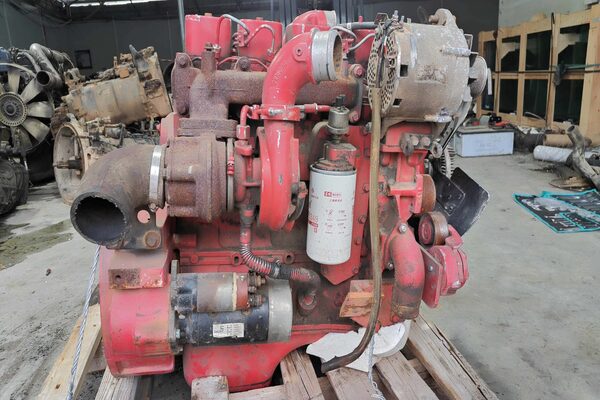
Choosing between Cummins vs Weichai engines is one of the most common questions we hear from used truck buyers across Africa, Southeast Asia, and Central Asia. Get it wrong, and you don't just overpay — you end up with a truck sitting idle for weeks because nobody within 500 kilometers stocks the right injector. That's a real cost that no spec sheet ever shows.
The honest answer is that neither Cummins nor Weichai is universally "better" for heavy-duty trucks. The better engine is the one that fits your market's parts supply chain, your fleet's maintenance capacity, and your total cost of ownership over two to three years. For buyers in regions dominated by Chinese truck fleets, Weichai often wins on operational uptime. For buyers working alongside Western fleets with established independent mechanics, Cummins may carry a practical advantage. The decision is a supply chain question, not an engineering one.
That framing probably challenges what you expected to read. Most comparison articles hand you a spec table and pick a winner. We're going to do something more useful: walk through the variables that actually determine which engine serves your operation better — and what to verify before you commit to either one.
Does Brand Reputation Actually Reflect Field Performance in Used Trucks?
Many buyers assume Cummins automatically means better quality, and that assumption carries a price premium. But is that assumption reliable when you're buying a used engine with 400,000 kilometers already on it?
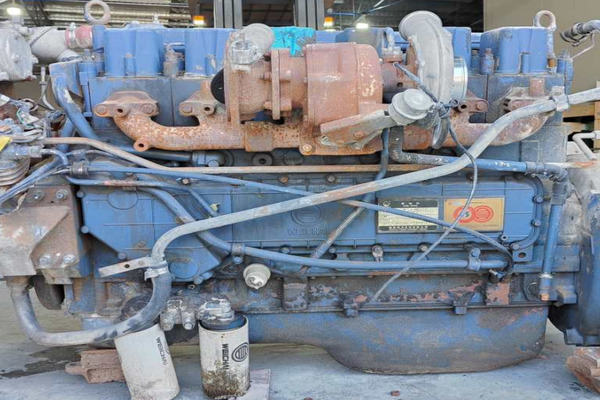
For used heavy-duty truck engines, brand reputation reflects factory engineering standards — not the specific unit's history. A used Cummins ISM that was run hard on overloaded routes without proper oil changes may underperform a well-maintained Weichai WP12 from a managed fleet. Condition and service history outweigh the badge when you're buying used.
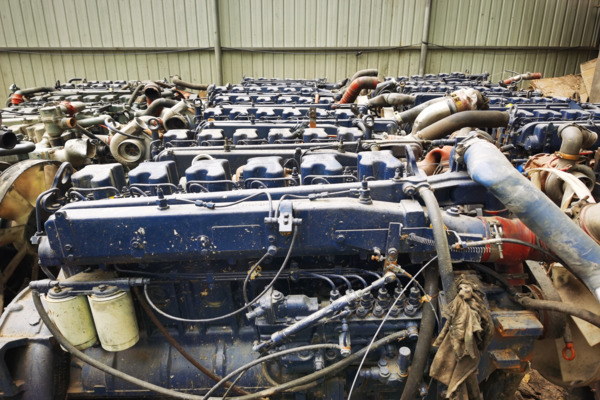
We hold over 1,000 engines in our Guangzhou facility, including both Cummins and Weichai units across multiple series. What we see repeatedly is that buyers fixate on brand while underweighting the inspection record. That's a costly habit.
What "Brand Quality" Actually Means for a Used Engine
When buyers say "Cummins is better quality," they're usually referencing one or more of the following:
- Engineering pedigree — Cummins has decades of global development across military, construction, and long-haul applications[1]
- Cross-platform recognition — independent mechanics worldwide recognize Cummins architecture
- Diagnostic infrastructure — INSITE software and global dealer networks provide structured fault diagnosis[2]
These are real advantages. But they apply to the brand at scale. They do not automatically apply to the specific used unit sitting in a yard.
What "Weichai Quality" Means in the Field
Weichai's WP10 and WP12 series engines[3] power tens of thousands of HOWO, SHACMAN, and FAW trucks currently operating across sub-Saharan Africa, Central Asia, and Southeast Asia. That market penetration has practical consequences:
- Local technicians have hands-on experience with these engines from daily exposure
- Aftermarket parts networks have developed organically around Chinese truck ecosystems
- Generic components — filters, belts, common sensors — are often stocked locally without special ordering
Buyers who've taken Weichai-powered fleets into markets like Ethiopia, Kenya, or Uzbekistan frequently report faster turnaround on repairs simply because parts are physically present. That's not an engineering advantage — it's a supply chain reality.
The Verification Checklist Before Buying Either Engine
Regardless of brand, here are the specific items we recommend verifying on any used engine purchase:
| Inspection Item | Why It Matters |
|---|---|
| Compression test results | Reveals cylinder wear and ring condition |
| Oil analysis or sludge inspection | Indicates maintenance history and thermal stress |
| Turbocharger condition | High replacement cost; common failure point |
| Injector and fuel pump status | Directly affects performance and emissions compliance |
| Engine hours or odometer correlation | Checks for odometer rollback on the host vehicle |
| Visible crack or weld repairs on block | Indicates prior catastrophic failure |
| Cold-start behavior | Reveals injector wear and compression issues before load |
A Cummins engine that passes all of these checks is a reliable purchase. A Weichai engine that passes all of these checks is equally reliable. The brand is the starting point, not the conclusion.
How Does Parts Availability Affect Your Real Cost of Ownership?
Buyers often calculate cost of ownership as: purchase price + fuel + scheduled maintenance. That calculation ignores the most expensive line item in real-world fleet operations — unplanned downtime.
Parts availability is the hidden multiplier in total cost of ownership. A single week of downtime on a loaded truck hauling goods between cities can cost more than the difference in purchase price between a Cummins and Weichai unit[4]. The "better" engine is frequently the one with the shorter wait time when it fails.
This is where the Cummins vs Weichai decision becomes genuinely market-specific. Let's break it down by region.
Parts Availability by Region: A Practical Comparison
Sub-Saharan Africa (Kenya, Ethiopia, Tanzania, Ghana, Nigeria)
Chinese commercial vehicles have achieved dominant market share across East and West Africa over the past 15 years. HOWO and SHACMAN trucks running Weichai engines are present in enormous numbers. As a result:
- Weichai WP10/WP12 parts are routinely stocked by local dealers and independent suppliers
- Local mechanics have practical experience diagnosing and repairing these engines
- Genuine and aftermarket Weichai parts arrive faster via Chinese export channels
Cummins parts are available in major urban centers through authorized distributors, but lead times for non-standard components can extend to several weeks. Buyers operating in secondary cities or remote corridors face greater exposure.
Central Asia (Kazakhstan, Uzbekistan, Kyrgyzstan, Tajikistan)
This region presents a mixed picture. Russian and European trucks (many running Cummins variants) have historical presence, but Chinese truck imports have expanded rapidly since 2015[5]. In our export experience, customers sourcing trucks for Central Asian operations increasingly report Weichai parts availability improving in line with Chinese fleet growth. Cummins availability remains strong in Kazakhstan's larger cities but thins out in landlocked secondary markets.
Southeast Asia (Vietnam, Indonesia, Philippines, Myanmar)
Southeast Asia is heterogeneous. Vietnam and Indonesia have established Cummins distributor networks and significant exposure to Chinese trucks simultaneously. Buyers here often have access to both ecosystems, which makes the choice less decisive on parts grounds. Myanmar and other less-developed corridors lean more heavily on Chinese parts supply chains.
Middle East (UAE, Saudi Arabia, Iraq, East Africa via Gulf)
The Middle East hosts a genuinely mixed fleet environment. Cummins is well-supported through GCC distributor networks, and independent mechanics here are often experienced with both brands. For buyers operating mixed Western-Chinese fleets in this corridor, Cummins' cross-platform recognition among experienced mechanics is a real advantage.
The 50-Kilometer Rule
A useful internal question to ask before choosing: Within 50 kilometers of where this truck will primarily operate, can a local mechanic source a turbocharger, an injector set, or a fuel pump for this engine within 48 hours?
If the answer is yes for Weichai and uncertain for Cummins, that uncertainty has a dollar value. Fleet managers should price that risk into the purchase decision.
Which Engine Series Should You Actually Compare?
Broad brand comparisons obscure important differences within each manufacturer's lineup. Cummins and Weichai both produce a range of engines with significantly different performance profiles and application fits.
Not all Cummins or Weichai engines are equal. The ISX15 and the ISF2.8 are both Cummins engines, but comparing them to a Weichai WP12 is meaningless. For heavy-duty truck applications, the relevant comparison is between engines in the same displacement and duty class.
The Engines That Actually Compete Head-to-Head
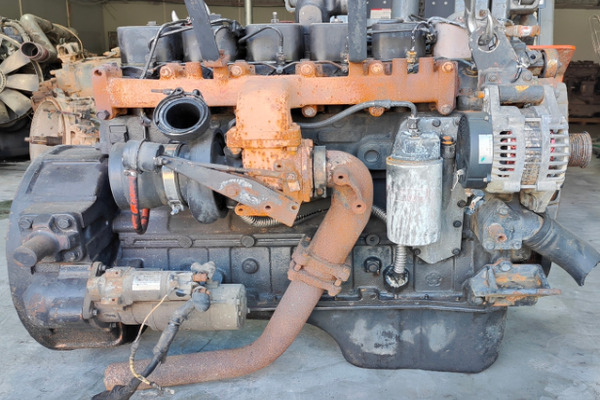
For heavy-duty tractor trucks, dump trucks, and long-haul cargo trucks, the realistic head-to-head comparison sits between:
Cummins ISM / ISX series vs. Weichai WP12 / WP13 series
Here's a reference comparison based on published manufacturer specifications:
| Specification | Cummins ISM (reference) | Weichai WP12 (reference) |
|---|---|---|
| Displacement | 10.8L | 11.6L |
| Power range | 280–400 hp | 336–430 hp |
| Torque range | 1,220–1,900 Nm | 1,520–2,000 Nm |
| Emission standard | Euro III–V variants | Euro III–V variants |
| Application | Long-haul, construction | Long-haul, dump trucks |
| Common host vehicles | Volvo, Kenworth, various | HOWO, SHACMAN, FAW |
Important note: These figures are reference points from published specifications. Used engine performance depends on actual condition, service history, and application. Treat these as a starting framework, not a purchase guarantee.
Cummins ISX vs. Weichai WP13 for Very Heavy Duty
For the heaviest duty cycles — overloaded dump trucks on rough terrain, long-distance tractor-trailers with consistent high loads — buyers sometimes compare the Cummins ISX (up to 600 hp)[6] with the Weichai WP13. Both engines operate in demanding conditions reliably when properly maintained.
The practical difference in this segment often comes down to:
- Emissions compliance requirements at destination (some markets require Euro IV or V)
- Host vehicle platform — a used Scania or Volvo will come with Cummins or its own proprietary engine; a used HOWO will carry Weichai
- Rebuild ecosystem — ISX rebuilds are well-documented; WP13 rebuild parts are increasingly available through Chinese aftermarket channels
A Note on Cummins Engines in Chinese Trucks
This is a nuance many buyers miss: some Chinese trucks — particularly certain Dongfeng and earlier SITRAK models — were fitted with Cummins engines under joint venture arrangements[7]. If you're sourcing a used Chinese truck, verify which engine series it actually carries. "Cummins-powered Chinese truck" is a real category with distinct parts sourcing characteristics.
What Should You Actually Inspect Before Buying a Used Engine?
Understanding brand characteristics is useful context. But at the moment of purchase, a used Cummins and a used Weichai both require the same fundamental scrutiny.
The most expensive mistake used engine buyers make is letting brand confidence substitute for inspection. We've seen buyers pay a premium for a Cummins unit, skip thorough testing, and absorb a major repair bill within three months. Brand is not a warranty on a used engine.
Pre-Purchase Inspection Protocol
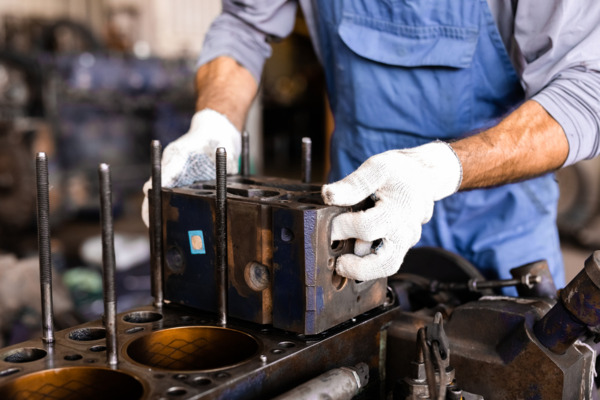
Here is the inspection sequence we recommend for any used heavy-duty engine, regardless of brand:
Step 1: Documentation review
- Request service records if available
- Cross-reference engine hours with vehicle odometer where possible
- Check for prior accident reports on the host vehicle
Step 2: Visual inspection
- Inspect the block for cracks, weld repairs, or signs of overheating
- Check oil condition in the pan — sludge or metallic particles are red flags
- Examine coolant for oil contamination (indicates head gasket or liner issues)
- Inspect external hoses, seals, and turbocharger housing for wear or damage
Step 3: Operational testing
- Cold start observation: excessive smoke color (white, blue, or black) indicates specific problems
- Load test where possible: check oil pressure, temperature, and exhaust behavior under load
- Listen for knocking, rattling, or abnormal valve noise at idle and under acceleration
Step 4: Component-level checks
- Injector condition and spray pattern (requires injector tester)
- Compression test per cylinder
- Turbocharger shaft play
- Fuel pump output and pressure consistency
Step 5: Emissions and compliance check
- Confirm the engine's emission standard matches destination country requirements
- Some markets (parts of Southeast Asia, newer Middle East regulations) are tightening enforcement on Euro II and below
At Deli Auto, every engine we prepare for export goes through operational testing by experienced truck engineers before shipment. We share inspection reports with buyers because we've seen what happens when documentation is absent — disputes that damage both sides.
Frequently Asked Questions
Is Cummins more reliable than Weichai for heavy-duty trucks?
Neither brand is universally more reliable. Reliability in used truck engines depends primarily on the specific unit's condition and service history. Cummins carries stronger brand recognition among Western-trained mechanics. Weichai often has deeper aftermarket support in Chinese truck-dominant markets. The more useful question is: which engine can I get repaired fastest where I operate?
Which engine has better fuel economy — Cummins or Weichai?
Published specifications show comparable fuel efficiency in the same duty class[8]. Real-world fuel consumption depends on vehicle loading, driving conditions, driver behavior, and engine tune — not brand alone[9]. A well-maintained Weichai WP12 in a properly loaded truck will typically match or approach a comparable Cummins ISM in fuel consumption.
Can I replace a Cummins engine with a Weichai engine in the same truck frame?
Engine swaps require compatibility verification across mounting dimensions, driveline torque rating, cooling system, and electrical integration. It's technically possible in some cases but requires qualified mechanical evaluation. We don't recommend assuming interchangeability without a professional assessment of the specific chassis and engine combination.
How do I know if a used Weichai engine has been rebuilt or repaired previously?
Request documentation if available, but physical evidence is more reliable. Look for fresh paint on the block (a common sign of recent overhaul), mismatched bolt heads (indicating component replacement), or uneven gasket surfaces. An independent mechanical inspection before purchase is the most reliable verification method.
Where can I source used Cummins and Weichai engines for export?
Established B2B exporters with live inventory, documented inspection processes, and engine testing capabilities are the lower-risk sourcing option compared to unverified trading platforms. Verify that the supplier holds physical stock, can provide inspection reports, and has documented export experience to your destination region.
Conclusion
The Cummins vs Weichai engine debate doesn't have a universal winner — and buyers who expect one are asking the wrong question. What matters for your fleet is parts availability in your operating market, the specific condition of the used engine you're buying, and your total cost of ownership across the first two to three years of operation.
Cummins carries genuine advantages in cross-platform mechanic recognition and structured diagnostic support. Weichai carries real advantages in aftermarket penetration across Chinese truck-dominant markets in Africa, Central Asia, and parts of Southeast Asia. Neither advantage is absolute. Both depend on where you operate.
The honest evaluation starts with inspection, not brand. At Deli Auto, we stock and test both Cummins and Weichai engines and work with buyers to match the right unit to their market conditions. If you're evaluating used engines or used trucks for export, contact our team for a current inventory list and inspection documentation — we'd rather help you make the right decision than a fast one.
[1] "Cummins", https://en.wikipedia.org/wiki/Cummins. According to encyclopedic and corporate historical records, Cummins Inc., founded in 1919, has supplied diesel engines across military, construction, marine, and long-haul trucking sectors for over a century. Evidence role: historical_context; source type: encyclopedia. Supports: Cummins Inc.'s multi-decade history of diesel engine development across diverse heavy-duty applications including military, construction, and long-haul transport. Scope note: General historical sources confirm the breadth of application but do not quantify comparative engineering quality relative to competitors. ↩
[2] "INSITE™", https://www.cummins.com/en-na/support/digital-products-and-services-support/insite-support. Cummins Inc. technical documentation describes INSITE as a PC-based diagnostic software tool enabling fault code reading, parameter adjustment, and performance monitoring across Cummins engine platforms via authorized service networks. Evidence role: mechanism; source type: institution. Supports: The function and global availability of Cummins INSITE as a proprietary engine diagnostic platform used by authorized dealers and technicians. Scope note: Coverage depth of the dealer network varies significantly by region and is not uniformly documented in publicly available sources. ↩
[3] "Weichai Group", https://en.wikipedia.org/wiki/Weichai_Group. Weichai Power Co. technical documentation identifies the WP10 and WP12 as inline six-cylinder turbocharged diesel engines in the 10–12 litre displacement class, designed for heavy-duty truck applications and produced in Euro III through Euro V emission variants. Evidence role: definition; source type: institution. Supports: The technical identity and application positioning of the Weichai WP10 and WP12 engine series within the heavy-duty commercial vehicle segment. Scope note: Manufacturer-published specifications represent design targets; independent third-party validation of field performance figures is limited in publicly available literature. ↩
[4] "Publication: Transport Costs and Prices in Lao PDR", https://openknowledge.worldbank.org/entities/publication/85d25e3f-fcaf-5fcf-808e-bbf2d1743500. Fleet management research and transport economics studies document that unplanned heavy vehicle downtime generates direct revenue losses and indirect costs—including driver wages, contract penalties, and cargo delays—that can substantially exceed routine maintenance expenditures over short periods. Evidence role: statistic; source type: research. Supports: The financial impact of unplanned heavy truck downtime on fleet operating costs in commercial freight operations. Scope note: Published downtime cost figures are typically derived from North American or European fleet studies and may not directly reflect cost structures in African or Central Asian freight markets. ↩
[5] "South Caucasus and Central Asia: The Belt and Road Initiative Kazakhstan ...", https://documents1.worldbank.org/curated/en/471731593499938164/pdf/South-Caucasus-and-Central-Asia-The-Belt-and-Road-Initiative-Kazakhstan-Country-Case-Study.pdf. Chinese customs export statistics and UN Comtrade data record a measurable increase in heavy commercial vehicle exports from China to Central Asian markets during the period following 2015. Evidence role: statistic; source type: government. Supports: The increase in Chinese commercial vehicle or truck exports to Central Asian countries such as Kazakhstan and Uzbekistan after 2015. Scope note: Publicly available trade data tracks vehicle exports by HS code rather than engine brand, so brand-level conclusions require additional inference. ↩
[6] "Cummins X Series engine", https://en.wikipedia.org/wiki/Cummins_X-series_engine. Cummins Inc. technical specifications for the ISX15 platform document power ratings ranging from approximately 400 to 600 hp depending on calibration and application, with peak torque outputs exceeding 2,000 Nm in higher-rated configurations. Evidence role: definition; source type: institution. Supports: The power output range of the Cummins ISX engine series, including variants rated at or near 600 hp. Scope note: Specific power ratings vary by model year, emission certification level, and regional market variant; the 600 hp figure applies to select ISX15 configurations rather than the entire ISX family. ↩
[7] "Dongfeng Automobile Company", https://en.wikipedia.org/wiki/Dongfeng_Automobile_Company. Cummins Inc. has operated joint ventures in China, including Dongfeng Cummins Engine Co. (DCEC), established to produce Cummins-designed engines for Chinese commercial vehicle manufacturers, as documented in Cummins corporate filings and industry records. Evidence role: historical_context; source type: institution. Supports: The existence of joint venture arrangements between Cummins Inc. and Chinese truck or engine manufacturers resulting in Cummins-branded or Cummins-derived engines in Chinese commercial vehicles. Scope note: The specific vehicle models and production years covered by these arrangements require verification against manufacturer documentation, as joint venture scope has changed over time. ↩
[8] "ISM for Motorhome (EPA 07)", https://www.cummins.com/engines/products/ism-epa-07?v=546&application=Motorhome%20and%20RV%20Engines. Engineering analyses of heavy-duty diesel engine performance indicate that thermal efficiency in modern turbocharged diesel engines of equivalent displacement and emission standard tends to converge within a narrow range, with real-world fuel consumption differences driven primarily by application, load, and calibration rather than brand. Evidence role: general_support; source type: research. Supports: That heavy-duty diesel engines of similar displacement and technology generation from different manufacturers produce broadly comparable fuel consumption figures under equivalent load conditions. Scope note: Direct head-to-head fuel consumption comparisons between Cummins ISM and Weichai WP12 under standardized test conditions are not widely available in peer-reviewed literature. ↩
[9] "and Heavy-Duty Truck Fuel Efficiency Technology Study – Report #1", https://www.nhtsa.gov/sites/nhtsa.gov/files/812146-commercialmdhd-truckfuelefficiencytechstudy-v2.pdf. Transport engineering research consistently identifies vehicle load factor, driver behavior, road gradient, and ambient conditions as the dominant determinants of heavy vehicle fuel consumption, with engine brand differences within equivalent technology generations accounting for a comparatively small share of real-world variation. Evidence role: expert_consensus; source type: research. Supports: That operational variables including load, driving behavior, road conditions, and vehicle specification have a greater influence on heavy truck fuel consumption than engine brand differences within the same technology class. Scope note: Most cited studies focus on European or North American fleet conditions; direct evidence from African or Central Asian operating environments is less systematically documented. ↩