Sourcing used gearboxes from China is one of the most common purchasing decisions truck dealers in emerging markets make — and one of the most frequently mishandled. The problem is rarely the product itself. More often, it comes down to incomplete specifications, unverified supplier claims, and questions that never got asked before the wire transfer went through.
Used gearboxes from China can represent strong value for truck dealers — but only when the buyer approaches sourcing as a specification and supplier-qualification exercise, not a price-comparison exercise. The dealers who run into problems are almost never victims of random bad luck. They skipped verification steps that would have caught the issue before the container left port.
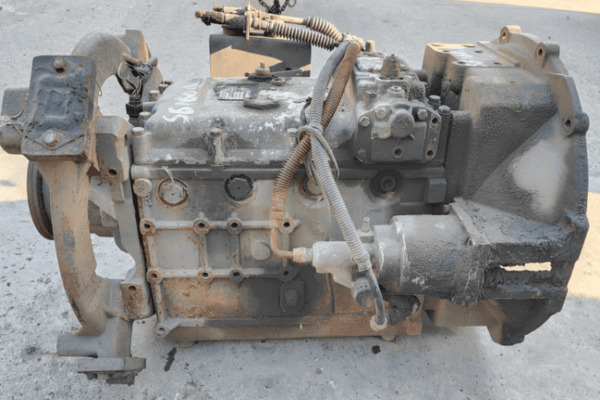
Over the years, I've seen the same sourcing mistakes repeat themselves across buyers from West Africa, Southeast Asia, the Gulf states, and South America. The geography changes. The mistake pattern doesn't. What follows is what I'd tell any dealer who's evaluating Chinese suppliers for used gearboxes — not from an engineering standpoint, but from the perspective of someone who has watched real transactions go right and wrong.
Does a Matching Model Number Mean the Gearbox Will Fit?
You found a gearbox listed with the right model number. The price looks good. The supplier says it's in stock. This should be straightforward — but buyers who stop here are setting themselves up for a costly installation failure.
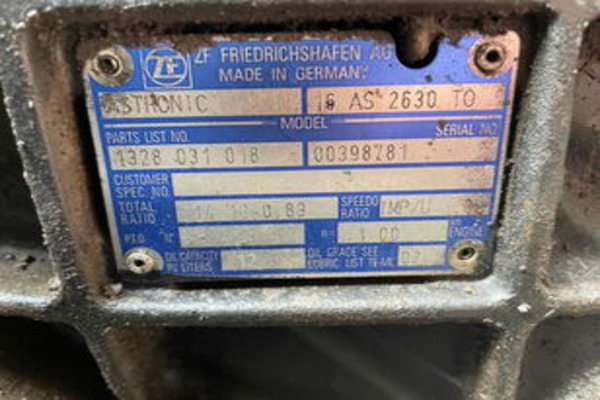
A model number narrows the field. It does not close it. The same gearbox series can be produced in multiple gear ratio variants, with different PTO port configurations, different mounting flanges, and different production year specifications — none of which will show up in a model number alone.[1]
Why Model Numbers Alone Are Insufficient
The gearbox market in China is large and genuinely well-stocked. Warehouses here hold units from dozens of truck manufacturers — European, Japanese, and Chinese domestic brands.[2] That variety is a real advantage for buyers. But it also means that a single model designation like "ZF 16S" or "FAST 12JSD" can cover a family of variants with meaningfully different technical specifications.
Here are the specification points that most commonly cause post-arrival installation problems:
- Gear ratio — Even within the same gearbox family, ratios can vary. A unit pulled from a long-haul tractor will often have different ratios than one pulled from a construction truck or a tipper.
- PTO port configuration — Present or absent, single or dual, top or side-mounted. If your customer's truck uses a PTO-driven hydraulic system, this is not a minor detail.
- Input and output shaft spline count — Affects coupling to the engine and driveshaft. This needs to match the specific vehicle, not just the gearbox family.
- Mounting pattern and crossmember dimensions — Especially relevant for older trucks that may have been modified or locally rebuilt.
- Applicable engine and truck production year — Manufacturers update mating components over production runs. A 2008-spec gearbox may not seat correctly against a 2015-spec engine bell housing, even if both carry the same model designation.[3]
What Buyers Should Confirm Before Placing an Order
| Specification Point | Why It Matters | How to Confirm |
|---|---|---|
| Gear ratio (full sequence) | Affects vehicle performance profile | Request spec plate photos, ask supplier to quote the full ratio set |
| PTO port type and position | Determines hydraulic system compatibility | Provide the supplier with your existing unit's photos |
| Input shaft spline count | Direct coupling to engine | Cross-reference against the OEM parts manual |
| Mounting bolt pattern | Physical installation fit | Compare against existing gearbox or service documentation |
| Production year applicability | Ensures compatibility with your specific truck | Provide the VIN or truck year to the supplier |
A supplier who can answer these questions from their own records — not just forward a catalog page — is demonstrating a level of technical fluency that matters. If a supplier can only tell you the model name and the price, treat that as a warning sign, not a shortcut.
What Does a Low Price on a Used Gearbox Actually Signal?
Every dealer wants competitive pricing. That's not the issue. The issue is treating price as the primary filter when evaluating used gearboxes from an overseas supplier you haven't worked with before.
When a used gearbox price is significantly below the market rate for that specification, it rarely means you found a great deal. It usually means something about the unit's sourcing, condition, or testing history is being left out of the conversation.
Where Below-Market Gearboxes Typically Come From
In the used parts trade, pricing reflects a combination of factors: how the unit was sourced, what condition assessment was done, what refurbishment (if any) was performed, and what documentation accompanies the unit. When a price undercuts the market noticeably, one or more of those factors is usually compromised.
Common situations I've seen behind suspiciously low quotes:
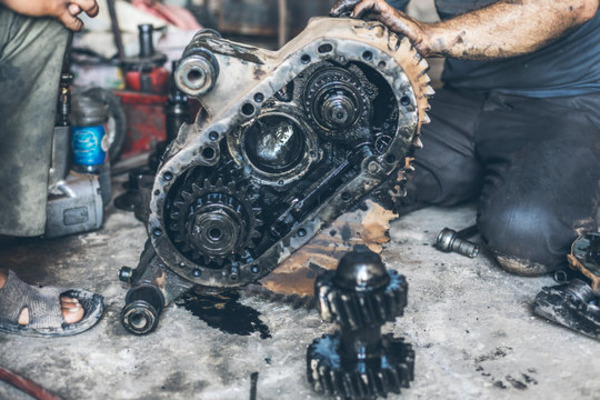
- Untested units — The gearbox has been pulled from a vehicle, cleaned up for photos, and listed without any functional check. It may work. It may not. Nobody has verified it.
- Undisclosed refurbishment of worn components — Seals replaced, housing repainted, but internal wear not assessed. The unit looks presentable in photos but hasn't been evaluated for internal condition.
- Misrepresented grade or condition — Condition grading in the used parts market is not standardized across suppliers.[4] "Good condition" means different things to different people.
- Specification mismatch that the seller knows about — Occasionally, a unit is priced low precisely because it doesn't match the buyer's stated requirement exactly, and the seller is hoping the buyer won't notice until it's already paid for and shipped.
The Better Questions to Ask
Instead of "what's the best price you can offer?", experienced buyers reframe the conversation:
- Where was this unit sourced from? What vehicle did it come off?
- What testing or inspection was done before listing?
- What is the actual mileage or service history of the donor vehicle?
- What does your condition grading system mean, specifically?
- Can you provide photos of the gearbox identification plate, housing, and shift mechanism?
These questions serve two purposes. They give you useful information. They also reveal quickly whether the supplier has access to that information — which tells you a lot about how they operate.
A supplier who can answer sourcing and testing questions in detail is showing you that they have traceability. Traceability is what separates a supplier you can hold accountable from one who disappears after payment.
How Do You Identify a Supplier Worth Working With?
The supplier qualification question is where most dealers underinvest their time. It's also where most of the real risk in China sourcing sits — not in the product category itself, but in who you're buying from.
Two supplier characteristics, more than any other, reduce the most common sourcing failures: visible, verifiable inventory and genuine technical matching capability.
Visible Inventory: What It Tells You and What It Doesn't
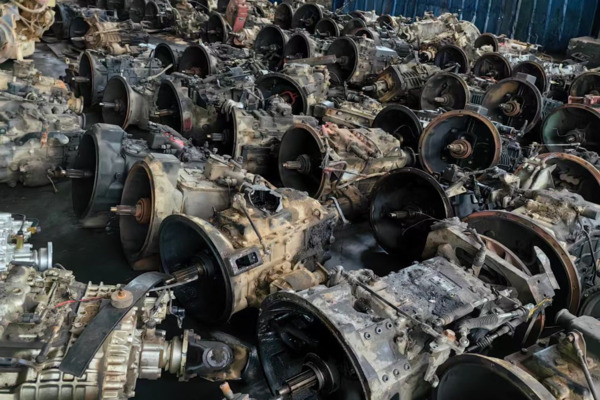
A supplier with a physical warehouse and photographable, real-time inventory is signaling something important: the stock they're quoting actually exists. This sounds basic. It isn't, in a market where brokers list units they haven't physically inspected — or don't yet own — and source them only after a buyer commits.
When evaluating a supplier's inventory claims, ask for:
- Live warehouse photos with visible unit identification — Not catalog images. Not stock photography. Photos of the actual unit with the spec plate visible.
- Video of the unit on the warehouse floor — A short clip showing the housing, serial number area, and shift linkage costs the supplier five minutes and gives you significant reassurance.
- Confirmation that the unit is physically on hand — Ask directly: "Is this unit in your warehouse today, or do you source it after order confirmation?"
Technical Matching Support: Why It's the Real Differentiator
The second filter matters just as much. A supplier who can cross-reference a gearbox against a specific truck model, production year, and engine combination — without requiring the buyer to provide a complete engineering specification — is absorbing a significant portion of the buyer's risk.
This capability doesn't come from a catalog. It comes from accumulated transactional experience across many truck models and buyers. When a supplier has fielded hundreds of inquiries across Scania, Volvo, HOWO, Dongfeng, MAN, and FAST configurations, they build a working knowledge of which variants fit which applications.
How to test this capability before committing:
- Provide the supplier with your truck's make, model, year, engine code, and your current gearbox identification.
- Ask them to confirm compatibility from their end, not just take your word for it.
- Ask if they've previously supplied the same specification to other buyers and to what markets.
- Ask what happens if the unit arrives and doesn't fit — what's the process?
A supplier who engages seriously with these questions, provides reasoned answers rather than reassurances, and can describe a real process for handling post-shipment issues is a fundamentally different category of counterparty than one who simply says "no problem, we can supply."
What Does Pre-Shipment Inspection Actually Cover?
Pre-shipment inspection is often presented by suppliers as a quality guarantee. It isn't — and understanding the distinction will help you use it correctly as a risk-reduction tool rather than a substitute for your own due diligence.
Inspection at origin serves a specific and limited purpose: it reduces the probability that you receive the wrong item, a visibly damaged item, or an item that doesn't match the agreed specification on delivery. It doesn't evaluate internal mechanical condition under load. It doesn't replace your own specification verification before the purchase order is placed.
What a Standard Pre-Shipment Inspection Typically Covers
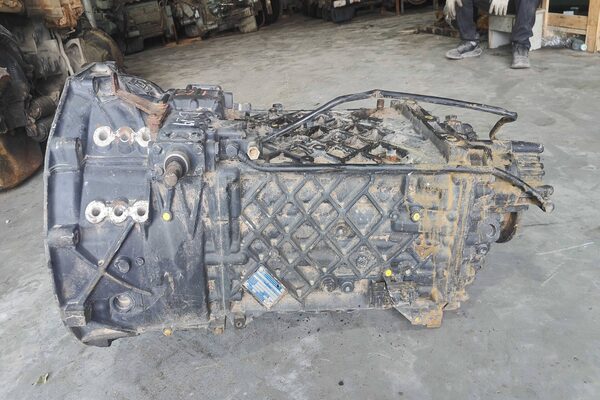
This varies by supplier and inspection protocol, but professional practice at origin generally includes:
- Visual inspection of the housing — Cracks, impact damage, corrosion, oil leak evidence
- Verification of the identification plate — Confirming the serial number and spec plate match the agreed purchase order
- Shift mechanism check — Manual cycling through gear positions to identify seized or damaged selectors
- Oil drain inspection — Looking for metallic particles that indicate internal wear
- Mounting surface and flange condition — Checking for damage that would prevent installation
What Inspection Does Not Cover
| What inspection checks | What inspection cannot determine |
|---|---|
| Correct item was shipped | Internal bearing condition under load |
| Visible physical damage | Synchronizer wear stage |
| Specification plate match | Whether the unit will perform to full service life |
| Flange and mounting surface condition | Seal longevity under operating conditions |
| Gear selector mechanical function | Exact mileage or service history |
The practical implication: get inspection done, but don't treat it as a substitute for the specification verification work that needs to happen before the order is placed. A correctly identified, undamaged gearbox that doesn't match your truck's configuration is not a good outcome — and inspection won't catch that failure if the buyer didn't specify correctly to begin with.
Frequently Asked Questions
How do I verify a used gearbox supplier in China without visiting in person?
Request live warehouse photos and video of your specific unit showing the identification plate. Ask technical matching questions that require application-specific knowledge — not just catalog lookups. Check whether the supplier can describe their sourcing and inspection process in concrete terms. Vague or reassurance-only answers are a red flag.
What's the difference between a used gearbox and a remanufactured one?
A used gearbox has been removed from a vehicle and may have been cleaned, inspected, and had consumable parts replaced, but its core components are original and unrebuilt. A remanufactured unit has had internal components disassembled, measured, and replaced to defined tolerances. For most used truck dealers in emerging markets, well-inspected used units represent better value — but the condition assessment process matters significantly.
Which gearbox brands are most commonly stocked by Chinese exporters?
Chinese exporters typically carry strong stock of FAST (Shaanxi Fast), ZF (both European-spec and China-assembled variants), Eaton, and Qijiang units for Chinese-brand trucks.[5] For European trucks, availability of genuine used ZF and Volvo gearboxes varies by supplier. Always confirm actual physical stock rather than assuming catalog listings represent ready inventory.
How long does it typically take to ship a used gearbox from China to Africa or Southeast Asia?
Ocean freight transit times generally range from 20 to 45 days depending on the destination port, shipping line, and routing.[6] Lead time before shipment — including sourcing confirmation, inspection, and container loading — adds additional time and varies by supplier. Build this into your procurement planning and confirm the supplier's realistic shipment timeline before committing.
What documentation should accompany a used gearbox shipment?
Standard export documentation includes a commercial invoice, packing list, and bill of lading.[7] Depending on destination country requirements, a certificate of origin and inspection certificate may also be required. For spare parts, confirm whether your destination's customs authority requires any additional classification documentation to avoid clearance delays.
Conclusion
Sourcing used gearboxes from China comes down to two disciplines: specification verification and supplier qualification. Dealers who get the right parts, in usable condition, at competitive prices are not simply lucky — they ask better questions before the purchase order is placed. They confirm more than the model number. They evaluate whether the supplier has real stock and real technical knowledge. They treat pre-shipment inspection as a useful risk-reduction step, not a guarantee. And they recognize that a price below market is a question to investigate, not a reason to move faster.
If you're evaluating used gearbox suppliers in China and want to understand what a qualified supplier's inventory and inspection process actually looks like, we're happy to walk you through what we do and answer specific sourcing questions for your truck models. Contact us directly with your truck make, model, year, and current gearbox specification — and we'll tell you exactly what we have and whether it fits.
[1] "List of ZF transmissions", https://en.wikipedia.org/wiki/List_of_ZF_transmissions. OEM technical documentation for major gearbox families such as the ZF 16S series confirms that a single model designation encompasses numerous sub-variants differentiated by gear ratio set, PTO port arrangement, and input/output shaft specification, none of which are fully distinguished by the base model number alone. Evidence role: general_support; source type: institution. Supports: That a single gearbox model designation covers multiple technical variants differing in gear ratio, PTO configuration, and mounting specification.. Scope note: Direct OEM documentation may be proprietary; publicly available service manuals or parts catalogues provide contextual rather than exhaustive coverage of all variant distinctions. ↩
[2] "China National Heavy Duty Truck Group", https://en.wikipedia.org/wiki/China_National_Heavy_Duty_Truck_Group. China's commercial vehicle market has historically included both domestically manufactured trucks (HOWO, Dongfeng, FAW, Foton) and imported or jointly produced European and Japanese models (Volvo, Scania, MAN, Isuzu, Hino), with the accumulated fleet of these vehicles constituting the source pool from which used gearboxes and drivetrain components enter the secondary parts market. Evidence role: historical_context; source type: research. Supports: That China's heavy truck fleet includes vehicles from European, Japanese, and domestic manufacturers, generating a correspondingly diverse used parts supply pool.. Scope note: Market composition data reflects new vehicle sales and registered fleet statistics; the proportion of each brand represented in the used parts export supply chain is not directly documented in public sources. ↩
[3] "List of Ford bellhousing patterns", https://en.wikipedia.org/wiki/List_of_Ford_bellhousing_patterns. Automotive engineering literature on powertrain integration documents that OEMs implement dimensional and fastener-pattern revisions to engine-transmission interfaces during production runs in response to NVH improvements, supplier changes, or regulatory updates, with the result that components sharing a model designation may not be interchangeable across production year boundaries. Evidence role: mechanism; source type: education. Supports: That manufacturers periodically revise mating interface dimensions between engines and gearboxes during production runs, creating compatibility boundaries that do not align with model designation changes.. Scope note: Published engineering literature addresses the general phenomenon; specific year-boundary incompatibilities for individual truck model lines require OEM service bulletins or technical service documentation. ↩
[4] "Guides for the Rebuilt, Reconditioned and Other Used Automobile Parts ...", https://www.federalregister.gov/documents/2014/07/14/2014-16339/guides-for-the-rebuilt-reconditioned-and-other-used-automobile-parts-industry. Industry bodies such as the Automotive Recyclers Association have developed voluntary grading guidelines for used parts, but adoption is not universal, and no binding international standard governs condition terminology across cross-border used parts trade, meaning descriptors such as 'good condition' carry no fixed technical meaning. Evidence role: expert_consensus; source type: institution. Supports: That condition grading terminology for used automotive parts is not uniformly standardized across the global supply chain, leading to inconsistent quality representations.. Scope note: Available standards documentation primarily addresses North American and European domestic markets; their applicability to Chinese export trade is indirect. ↩
[5] "Industry News", https://fast-gear.com/news-events/industry-news/. Market analysis of China's heavy commercial vehicle sector identifies Shaanxi Fast Gear as the leading domestic transmission manufacturer by volume, with ZF maintaining significant presence through joint venture production; the dominance of these brands in new vehicle fitment directly determines their prevalence in the used parts pool available to exporters. Evidence role: general_support; source type: research. Supports: That FAST (Shaanxi Fast Gear) and ZF are among the dominant gearbox brands in China's heavy truck market, making them the most prevalent units in the used parts supply chain.. Scope note: Publicly available market share data covers new vehicle fitment rather than used parts export inventory composition specifically. ↩
[6] "Transit Time Calculator for Sea, Air & Port To Port Shipping", https://www.freightos.com/freight-resources/transit-time-calculator/. Freight logistics data from shipping industry sources indicate that container transit times from major Chinese export ports (Shanghai, Guangzhou, Tianjin) to West African ports such as Lagos or Tema range from approximately 25 to 40 days, and to Southeast Asian ports from approximately 7 to 20 days, with variation attributable to transshipment routing and carrier schedule. Evidence role: statistic; source type: institution. Supports: That ocean freight transit times from Chinese ports to West African and Southeast Asian destination ports fall within a 20–45 day range depending on routing and port pair.. Scope note: Published transit time data reflects scheduled sailing times and does not account for port congestion, customs clearance delays, or seasonal disruptions, which can extend actual delivery timelines. ↩
[7] "Common Export Documents", https://www.trade.gov/common-export-documents. World Customs Organization guidelines and national customs authority documentation identify the commercial invoice, packing list, and bill of lading (or airway bill for air freight) as the foundational documents required for customs clearance of international cargo shipments, with additional certificates — such as certificates of origin or inspection certificates — required by specific destination country regulations. Evidence role: definition; source type: government. Supports: That commercial invoice, packing list, and bill of lading constitute the core documentation set required for international export shipments under standard customs practice.. Scope note: Specific documentation requirements vary by destination country, commodity classification, and applicable trade agreements; the core document set described represents general practice rather than a universally exhaustive list. ↩