
Truck buyers across Africa, Southeast Asia, South America, and the Middle East are rethinking how they allocate their fleet budgets. The question is no longer whether used trucks are acceptable — it's whether buyers are doing the capital math correctly. A poorly framed decision can leave a fleet under-equipped, over-leveraged, or stranded without parts support in a remote job site.
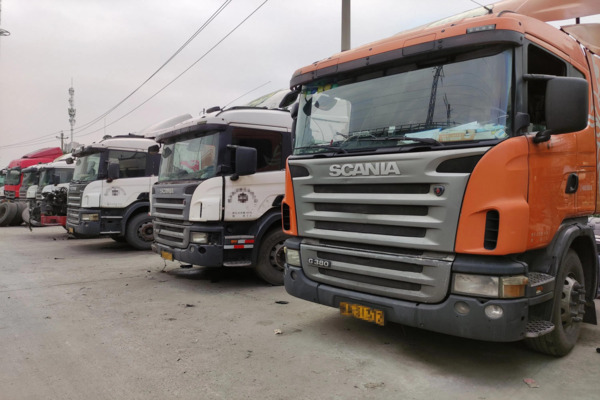
More truck buyers are considering used trucks instead of new ones because the same budget often buys a larger, better-specified fleet. A well-sourced used European truck at 300,000–500,000 km can deliver significant remaining mechanical life and superior drivetrain performance compared to an equivalent-budget new domestic alternative — provided the buyer knows what to inspect, which brands suit their market, and where to source responsibly.
That answer sounds straightforward. But the real decision is more layered than any single comparison. The right choice depends on your budget, your use case, your parts supply chain, and — critically — the inspection quality of whoever is selling you the truck. Let me walk through each of those factors honestly.
Is the Budget Math Really That Different Between New and Used?
Many buyers frame this as an affordability question. It isn't. The real issue is how much usable fleet capacity a fixed budget produces.
A fleet procurement manager working with a $300,000 USD budget faces a genuine choice: buy three new domestic-brand tractor trucks, or source five to six inspected used European trucks at comparable gross vehicle weight. Both options represent a real fleet. Only one of them puts more trucks on the road.
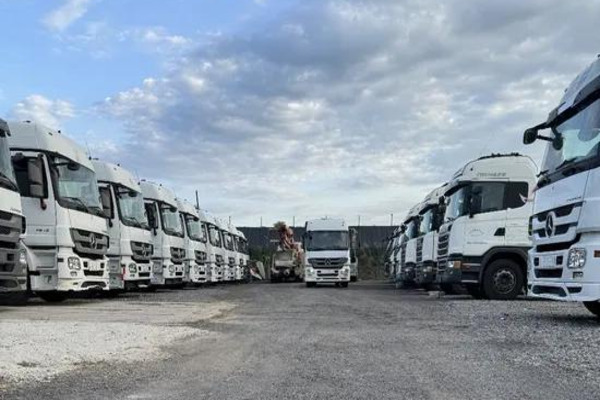
This reframe matters enormously in markets where logistics contracts are priced per vehicle or where project scope requires a minimum number of active units[1]. More trucks in the yard means more revenue-generating capacity, more redundancy when one unit needs servicing, and more negotiating leverage with logistics clients.
The Real Numbers Behind the Decision
I have seen this play out repeatedly with buyers from West Africa and Southeast Asia[2]. A buyer from one of those markets came to us initially asking about new HOWO or SHACMAN trucks. After we walked through the numbers side by side, the conversation shifted.
Here is a simplified comparison of what that budget math looks like in practice:
| Scenario | Budget | Option | Trucks Acquired | Avg. Payload Capacity |
|---|---|---|---|---|
| A | $300,000 USD | New HOWO 6×4 tractor | 3 units | ~40 tonnes GCW |
| B | $300,000 USD | Used Scania R420 (400k–500k km) | 5–6 units | ~50 tonnes GCW |
| C | $300,000 USD | Used Volvo FH (300k–450k km) | 5 units | ~50 tonnes GCW |
Note: Pricing is approximate and varies by origin market, specification, and inspection grade. Verify current pricing with your supplier.
What the Math Doesn't Include
The math alone doesn't close the deal — and it shouldn't. A buyer who acquires six trucks with no inspection history, no engine test, and no parts backup has not made a smart capital allocation. They have made a liability.
The budget advantage of used trucks is only real if sourcing discipline closes the inspection and parts gap. Otherwise, downtime costs — repair labour, lost freight revenue, spare parts at emergency pricing — erode the savings quickly.
This is why buyers who have done this before ask very different questions from buyers doing it for the first time. They ask about mileage profiles, engine compression results, gearbox history, and parts availability in their home country. First-time buyers ask about price.
What Mileage Is Actually Low Risk on a Used European Truck?
The most common misconception I encounter from buyers in markets dominated by domestic-brand trucks is that 400,000 km on a used Scania or Volvo means the truck is worn out. It doesn't — but that reassurance is meaningless without context.
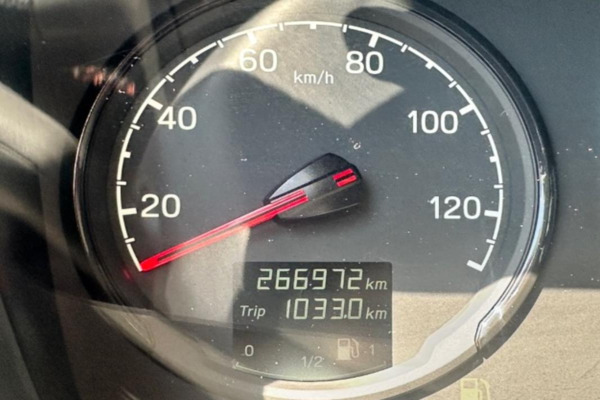
European long-haul trucks are engineered to design lifespans of 1,000,000 km or beyond on their core powertrains[3], assuming proper maintenance intervals were followed. A well-maintained Scania R-series at 450,000 km is not at end-of-life. It is at the beginning of its second working phase — often after the original European owner has completed their depreciation cycle and sold into the export market[4].
Mileage Ranges We Consider Lower Risk by Brand
Based on our inspection experience across hundreds of used European trucks prepared for export, here is how we approach mileage risk by model:
- Scania R-series (DC12, DC13 engines): 300,000–600,000 km is a reasonable working range for export, assuming engine compression holds and no signs of coolant contamination in oil. Above 700,000 km, we scrutinize the crankshaft bearings and turbo more carefully.
- Volvo FH (D13 engine): Similar profile to Scania. The D13 is known for durability in hard-road conditions[5]. We flag any units above 650,000 km for additional engine-out inspection before recommending them.
- Mercedes-Benz Actros (OM471, OM501 engines): These engines are robust, but the electronic systems require diagnostic tool access. We run a full DTC fault code scan on every Actros before purchase decision.
- MAN TGX (D20, D26 engines): Solid mid-mileage options. At 400,000–550,000 km, MAN trucks typically present well if maintained under fleet conditions. Watch for EGR-related fault codes on pre-2015 models.
Why Maintenance History Changes the Equation
Mileage is a proxy, not a verdict. The same 400,000 km means very different things on a truck that ran European motorways under a fleet maintenance contract versus one that worked unpaved construction routes without consistent service intervals.
In our inspection process, we look for:
- Oil analysis indicators: Dark, gritty engine oil at a fresh change interval is a red flag for internal wear.
- Coolant system integrity: Any sign of oil emulsification in coolant suggests head gasket issues that may not be visible during a visual inspection.
- Gearbox oil color at the drain plug: Clean amber to light brown indicates normal wear. Black, burnt-smelling gearbox oil suggests overheating history.
- Cold-start behavior: We cold-start every engine we inspect. Excessive smoke on cold start — particularly blue or white — indicates issues that a warm-engine test would mask.
These are observable checks. Any supplier who cannot show you these results during pre-shipment inspection is asking you to trust their word over evidence.
Is the Fear of High Repair Costs on Used Trucks Justified?
Yes — partially. The fear is real and grounded in experience. Buyers who have purchased unverified used trucks from unclear sources have been burned. Engines with concealed problems, gearboxes with false fluid top-ups before sale, structural repairs hidden under fresh paint[6]. These are not hypothetical risks.
The question is whether the risk is inherent to used trucks or inherent to unverified used trucks from low-accountability sources. Those are different problems with different solutions.
What a Legitimate Pre-Shipment Inspection Actually Catches
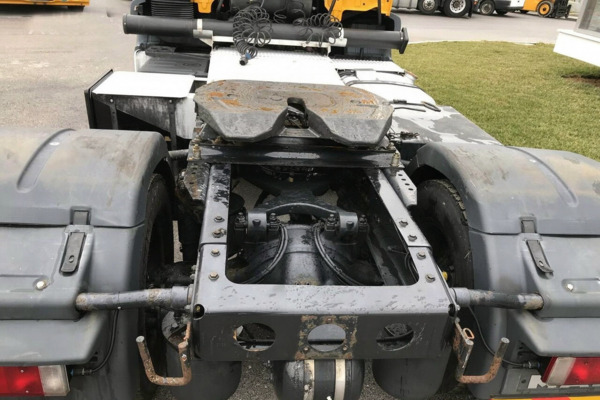
In our inspection process at Deli Auto, every truck goes through a structured evaluation before we approve it for sale or shipment. Here is what that process covers in practical terms:
Engine:
- Cold-start test with smoke and idle stability observation
- Compression test across all cylinders
- Oil pressure check at operating temperature
- Coolant system pressure test
- DTC fault code scan (European models)
- Turbocharger play check (axial and radial)
Gearbox:
- Gear selection test through all ratios under load
- Gearbox oil drain and color inspection
- Clutch engagement smoothness assessment
- Output shaft seal condition
Axles and Suspension:
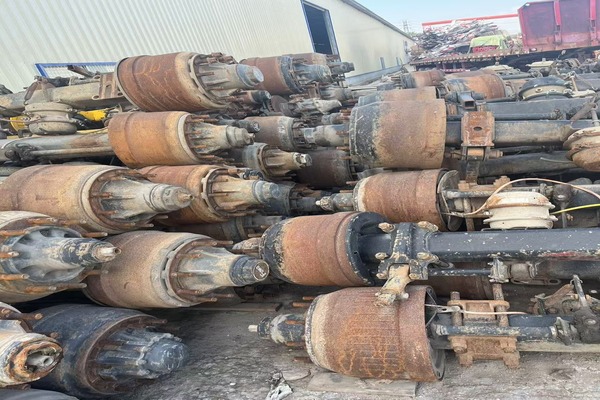
- Differential oil inspection
- Wheel bearing play check
- Leaf spring and air bag suspension integrity
- Brake lining thickness measurement
Chassis and Cab:
- Frame crack inspection (visual and magnetic where applicable)
- Cab mount integrity
- Electrical system function check
This is not a certification. It is a documented inspection record. Buyers should ask for this documentation for every unit, review it before payment, and — where possible — arrange independent third-party inspection at the supplier's yard.
When Repair Costs Are Still a Real Risk
Even well-inspected used trucks carry some repair probability. A buyer operating in a region with high dust, steep gradients, or overloaded road conditions will accelerate wear on any truck — new or used. The honest position is:
A well-inspected used truck from a reputable source carries manageable repair risk. An uninspected truck from an unknown source carries unquantifiable risk. These are not the same product at different prices — they are different products.
Build a maintenance reserve into your fleet budget. For used European trucks, a reasonable benchmark is to allocate 8–12% of purchase price annually for maintenance and consumables in the first two years of operation[7]. Adjust based on your operating environment.
Does Parts Availability Actually Differ by Brand and Region?
This is where generic reassurance fails buyers most badly. "Parts are available" means nothing without knowing which parts, in which country, at what lead time, and from which distributor network. The honest answer is that parts availability varies significantly by brand and geography, and this should directly influence which truck you buy for a specific market.
Regional Parts Availability: An Honest Overview
Here is how I would guide a buyer based on what we see in terms of parts demand, availability, and sourcing speed across our main markets:
| Region | Stronger Parts Access | More Limited Parts Access |
|---|---|---|
| East Africa (Kenya, Tanzania, Uganda) | Scania, Volvo, Mercedes-Benz, MAN | DAF, Renault (improving), Iveco |
| West Africa (Ghana, Nigeria, Senegal) | Mercedes-Benz, MAN, Volvo | Scania (growing), DAF |
| Southeast Asia (Philippines, Indonesia, Vietnam) | Hino, Isuzu, MAN | European heavies (varies by country) |
| Central Asia (Kazakhstan, Uzbekistan) | HOWO, SHACMAN, Kamaz | European brands (longer lead times) |
| Middle East (Iraq, UAE, Saudi Arabia) | Scania, Volvo, Mercedes-Benz | Chinese brands (improving) |
| South America (Chile, Peru, Colombia) | Scania, Volvo, Mercedes-Benz | Chinese brands (varies) |
Note: This reflects general observations from our buyer inquiries and shipment history. Verify current in-country distributor networks before final sourcing decision.
How We Address Parts Access for Our Buyers
We maintain a warehouse of 1,000+ engines, 1,000+ gearboxes, hundreds of axles, and thousands of genuine spare parts for both European and Chinese commercial vehicle brands. When a buyer in a market with limited local parts infrastructure purchases a truck from us, we actively discuss a co-shipment strategy — loading critical wearing parts (clutch kits, filters, sensor sets, water pumps) alongside the truck in the same container.
This is not upselling. It is field-tested logistics planning. A buyer who arrives in Dar es Salaam with a used Scania R420 and no spare oil seals or injector sets is exposed to procurement delays when something fails in year one.
When Chinese Brands Make More Sense Than European Ones
I want to be direct here: for some buyers, in some markets, a new or recent-year HOWO, SHACMAN, or SITRAK is the right answer — and I will say so.
If a buyer is operating in Central Asia or inland China-adjacent markets where HOWO dealership networks are dense, genuine parts are locally available, and local mechanics are trained on those platforms, buying a used European truck may create a parts and service gap that outweighs the brand's mechanical advantages.
The honest guidance is:
- Choose the truck your mechanics can fix and your market can supply.
- European used trucks offer the best value where European brand infrastructure exists or where the buyer can self-supply parts through an established export relationship.
- Chinese domestic brands offer better local service convenience in markets where their dealer networks are strong.
This is a sourcing decision, not a brand loyalty question.
Frequently Asked Questions
How do I verify the actual mileage on a used European truck?
Request the full service history printout and cross-reference the odometer reading with the last recorded service entry. For European trucks, the onboard ECU stores engine hours and lifetime mileage independently of the dashboard display[8]. Ask your supplier to provide the ECU mileage readout during the inspection report — this is harder to falsify than a physical odometer.
What is the minimum inspection documentation I should require before buying a used truck?
At minimum, request a written pre-shipment inspection report covering engine cold-start test results, gearbox oil condition, DTC fault code scan results, and chassis crack inspection. Photos or video of the cold-start test are a reasonable ask. If a supplier cannot provide this documentation, treat it as a sourcing risk signal.
Are used Chinese trucks like HOWO or SHACMAN worth considering alongside European options?
Yes, in specific contexts. Used HOWO and SHACMAN trucks offer lower entry prices and strong parts availability in Central Asia, parts of Southeast Asia, and Africa where Chinese brand infrastructure is established. Their mechanical life expectancy per kilometre differs from European heavies, but for buyers with reliable local service networks, they are a legitimate option — particularly for shorter-haul or construction applications.
How should I budget for maintenance on a used European truck in the first year?
A reasonable planning benchmark is 8–12% of the truck's purchase price annually for the first two operating years, covering consumables, wear parts, and minor repairs. Adjust upward for high-dust, high-gradient, or overloaded operating environments. Co-shipping a critical spares kit with the truck reduces emergency procurement exposure significantly.
What is the safest way to buy used trucks from a foreign supplier?
Establish clear inspection documentation requirements before agreeing to purchase. Use a verifiable payment structure (such as a letter of credit or a staged payment tied to inspection sign-off) rather than full upfront payment[9]. If possible, arrange an independent third-party inspection at the supplier's yard before shipment. Engage suppliers who offer pre-shipment video inspection at minimum, and who have a verifiable track record with buyers in your region.
Conclusion
The shift toward used trucks among serious fleet buyers is not a compromise — it is a capital allocation decision. For buyers who understand what to inspect, which mileage ranges carry acceptable risk on specific European models, and how to match brand choice to regional parts infrastructure, used trucks offer a compelling fleet-building path that new trucks at equivalent budget cannot match in scale or specification.
The risks are real. Uninspected trucks, mismatched brands, and inadequate parts planning can turn a smart decision into an expensive one. But those risks are manageable with sourcing discipline — specific inspection steps, documented results, and honest market-level guidance on parts availability by brand and region.
At Deli Auto, we have spent over 20 years helping fleet buyers across Africa, Southeast Asia, South America, and the Middle East make this calculation correctly. If you are evaluating whether used trucks are the right move for your next procurement cycle, we are happy to walk through the numbers, the inspection record, and the parts strategy with you directly — without the sales pressure. That conversation starts with your use case, your market, and your budget. Reach out and let us work through it together.
[1] "WPS4258 - World Bank Document", https://openknowledge.worldbank.org/bitstreams/5fb9812e-ca3b-5ca4-9903-26780e9030f8/download. Studies of freight and logistics markets in sub-Saharan Africa and Southeast Asia have documented contract structures in which operators are required to demonstrate minimum fleet capacity as a condition of tender eligibility, with revenue often tied directly to the number of active vehicles deployed. Evidence role: general_support; source type: research. Supports: That logistics and freight contracts in developing market contexts frequently specify minimum fleet sizes or price services on a per-vehicle basis, making the number of operational units a direct factor in contract eligibility and revenue. Scope note: Systematic comparative data on contract pricing structures across African and Southeast Asian logistics markets is sparse in the academic literature; the claim reflects practitioner experience that is difficult to verify through a single published source. ↩
[2] "Figure of the week: Africa's used vehicle market and the environment", https://www.brookings.edu/articles/figure-of-the-week-africas-used-vehicle-market-and-the-environment/. Reports from the United Nations Environment Programme and regional trade bodies have documented significant volumes of used vehicle imports into sub-Saharan Africa and Southeast Asia, with commercial vehicles including trucks constituting a meaningful share of these flows. Evidence role: statistic; source type: institution. Supports: That West Africa and Southeast Asia represent substantial markets for imported used commercial vehicles, including trucks. Scope note: Available statistics often aggregate passenger and commercial vehicles or focus on specific countries rather than providing region-wide used truck import figures; data currency varies by reporting body. ↩
[3] "Volvo truck engine runs 3.3 million kilometers without repair", https://www.facebook.com/groups/GreenEnergyInnovationAndTechnology/posts/32631045859843816/. Heavy-duty truck manufacturers such as Scania and Volvo have published or cited design overhaul intervals for their long-haul engines in the range of 800,000–1,200,000 km under recommended maintenance conditions, a figure referenced in fleet lifecycle analyses and manufacturer technical documentation. Evidence role: general_support; source type: research. Supports: That heavy-duty European truck powertrains are engineered for high-mileage design lives, typically cited in the range of 1,000,000 km before major overhaul. Scope note: Publicly available manufacturer specifications vary by engine variant and model year; independent verification of specific design-life figures requires access to OEM technical manuals or certified fleet lifecycle studies. ↩
[4] "Figure of the week: Africa's used vehicle market and the environment", https://www.brookings.edu/articles/figure-of-the-week-africas-used-vehicle-market-and-the-environment/. Research on used vehicle trade flows documents a well-established pattern of European fleet operators replacing vehicles at 3–5 year intervals for accounting and regulatory reasons, with retired units entering export channels to Africa, the Middle East, and Southeast Asia through specialist dealers and auction networks. Evidence role: historical_context; source type: institution. Supports: That used European trucks are systematically exported to developing markets after European fleet operators complete their depreciation cycles, creating a secondary market supply chain. Scope note: Quantitative data on the volume and value of used truck exports from Europe is fragmented across national trade statistics and industry association reports; no single authoritative global dataset consolidates this trade flow comprehensively. ↩
[5] "Volvo D13 Engine | Volvo Trucks USA", https://www.volvotrucks.us/trucks/powertrain/d13/. Industry fleet surveys and operator reviews of the Volvo FH series have generally cited the D13 engine as a reliable platform in long-haul and demanding applications, though systematic independent comparative durability studies across engine platforms are limited in the public literature. Evidence role: general_support; source type: research. Supports: That the Volvo D13 engine demonstrates durability characteristics relevant to demanding operating conditions, as reflected in fleet operator experience or independent technical assessments. Scope note: Most available assessments of engine durability derive from operator surveys or manufacturer-affiliated publications rather than controlled independent testing; performance in specific hard-road export market conditions may differ from European baseline data. ↩
[6] "Odometer Fraud", https://www.nhtsa.gov/vehicle-safety/odometer-fraud. Consumer protection and vehicle inspection research has documented practices of defect concealment in used vehicle markets, including odometer tampering, fluid top-ups to mask consumption issues, and cosmetic bodywork applied over structural damage, with cross-border transactions identified as higher-risk contexts due to reduced buyer oversight. Evidence role: general_support; source type: research. Supports: That deliberate concealment of mechanical defects, including fluid substitution and cosmetic repairs to mask structural damage, is a documented risk in used vehicle markets, particularly in cross-border transactions with limited buyer inspection access. Scope note: Most documented evidence of these practices relates to passenger vehicles rather than heavy trucks specifically; the prevalence and methods in the used truck export market are less systematically studied. ↩
[7] "Comprehensive Total Cost of Ownership Quantification for ...", https://publications.anl.gov/anlpubs/2021/05/167399.pdf. Fleet total cost of ownership analyses, including those published by transport research institutes and fleet management associations, commonly express annual maintenance expenditure as a percentage of vehicle acquisition cost, with figures for used heavy trucks varying by age, operating environment, and maintenance regime. Evidence role: general_support; source type: research. Supports: That annual maintenance costs for used heavy trucks can be reasonably estimated as a percentage of vehicle purchase price, with published fleet management studies providing benchmark ranges. Scope note: Published benchmarks vary considerably across studies and geographies; the 8–12% figure cited in the article is a supplier-derived estimate and should be validated against independent fleet cost data for specific operating contexts. ↩
[8] "Odometer Fraud", https://www.nhtsa.gov/vehicle-safety/odometer-fraud. Automotive forensic inspection literature and vehicle fraud detection research document that modern heavy vehicle ECUs store operational data including engine hours and lifetime distance in multiple independent memory locations, and that discrepancies between ECU-stored values and dashboard odometer readings are a primary indicator of odometer tampering. Evidence role: mechanism; source type: research. Supports: That modern European heavy truck ECUs record engine hours and cumulative mileage in non-volatile memory independently of the dashboard display, and that cross-referencing these values is a recognized method for detecting odometer manipulation. Scope note: ECU data can itself be manipulated by specialized tools, and the difficulty of falsification varies by manufacturer and model year; the claim that ECU readouts are categorically harder to falsify than physical odometers is generally supported but not absolute. ↩
[9] "Importing a Motor Vehicle | U.S. Customs and Border Protection", https://www.cbp.gov/trade/basic-import-export/importing-car. The International Chamber of Commerce Uniform Customs and Practice for Documentary Credits (UCP 600) establishes letters of credit as a standard instrument for buyer protection in international trade, conditioning payment release on presentation of specified documentation including inspection certificates. Evidence role: general_support; source type: institution. Supports: That documentary letters of credit and staged payment structures tied to inspection milestones are recognized trade finance instruments that provide buyer protection in international commercial transactions. Scope note: While letters of credit are well-established in international trade finance, their practical accessibility and cost-effectiveness for smaller fleet buyers in developing markets may be limited; the recommendation is sound in principle but implementation varies by buyer capacity and banking infrastructure. ↩