Choosing the wrong gearbox for your fleet doesn't just cost money — it costs you months of downtime, expensive emergency imports, and the kind of frustration that follows you into every future procurement decision. ZF vs FAST gearboxes is one of the most common questions we hear from buyers across Africa, Southeast Asia, and the Middle East. The answer matters more than most buyers expect.
The short answer: ZF and FAST are not interchangeable, and "ZF is better" is not a purchasing strategy — it's a habit. For heavy-load and mixed-duty conditions in markets like Africa and Southeast Asia, FAST gearboxes are not a budget compromise. They are frequently the correct technical and commercial choice. The real question is whether your gearbox matches your engine, your terrain, and your local parts ecosystem — not which brand sounds more prestigious.
That said, "it depends" is not a useful answer when you're placing a bulk order. So let me break this down the way I actually walk buyers through it when they ask us this question directly.
Is ZF Always the Better Gearbox for Commercial Trucks?
Most buyers arrive at this question already believing ZF is the premium choice. That belief isn't wrong — but applying it as a blanket purchasing rule creates real problems.
ZF is a world-class gearbox manufacturer with a strong reputation in heavy commercial vehicle applications[1]. But in markets where local service infrastructure is limited and budgets are fixed, the assumption that ZF always delivers better total value is not supported by what we see on the ground.
In over 20 years of handling gearbox supply and export across Africa, Southeast Asia, and the Middle East[2], we've seen the "ZF is always better" assumption lead to purchasing mistakes that hurt buyers in two specific ways.
Why the Brand Prestige Assumption Fails in Practice
First, it drives buyers toward a component that costs significantly more — without a proportional return in their specific operating environment.
Second, and more dangerously, it leads buyers to treat ZF and FAST as interchangeable. They are not.
Here is what I mean by that:
- A buyer in West Africa wants to replace a gearbox on a HOWO tractor unit. The original unit came with a FAST gearbox. They ask if we can supply a ZF instead — same specs, easier to swap.
- The answer is no. Not because ZF is worse, but because engine-to-gearbox compatibility is not a brand-level decision. It involves bell housing dimensions, PTO configurations, input shaft sizing, and vehicle-specific mounting. A ZF unit that fits a DAF or Volvo chassis does not simply bolt onto a Sinotruk platform.
This is the first question we ask when a buyer brings up ZF vs FAST: What is the engine? What is the chassis? What was originally installed?
Where ZF Genuinely Delivers Its Premium
ZF gearboxes carry real advantages in specific contexts:
- European OEM truck platforms (Volvo, Scania, DAF, MAN, Mercedes-Benz where ZF is the original equipment and service infrastructure exists
- Mixed urban-highway duty cycles where ZF's shift precision and driver ergonomics add measurable value
- Markets with established ZF dealer networks where warranty support and parts supply are reliable and fast
In these conditions, the price premium is justified. Outside of them, you are paying for brand equity — not operational value.
What Makes FAST Gearboxes a Legitimate Choice — Not a Fallback?
Many buyers treat FAST as the default when ZF is out of budget. That framing is backwards. In several of our most common export markets, FAST is not the second choice. It is the right choice from the start.
FAST (Shaanxi Fast Gear Co., Ltd.) is a Chinese gearbox manufacturer with its own independent R&D background, not a ZF clone or license copy[3]. FAST gearboxes are OEM-fitted to major Chinese truck platforms including HOWO, SHACMAN, FAW, and Dongfeng — which are the dominant commercial vehicle brands across Africa, Southeast Asia, and Central Asia[4].
This matters for several reasons that buyers sometimes underestimate.
FAST Has an Independent Engineering Foundation
FAST is not a copy of ZF. It developed its own product lines for the high-load, high-temperature, and variable road-condition requirements common in Chinese domestic commercial trucking — which overlap significantly with the conditions in Africa and Southeast Asia.
This distinction matters because:
- Counterfeit parts circulate more easily around "copy" products
- An independent OEM manufacturer maintains its own genuine parts supply chain
- Warranty and fitment claims are cleaner when the manufacturer owns its design
The Parts Ecosystem Argument Is Real — Not Just Marketing
When I talk with buyers about total cost of ownership, parts availability is never optional. A gearbox that cannot be repaired locally is not a cost-saving choice — it's a delayed cost explosion.
Here is how the parts availability picture typically looks in our key markets:
| Market Region | ZF Parts Availability | FAST Parts Availability |
|---|---|---|
| Sub-Saharan Africa | Limited; urban centers only | Widely available; local dealers present |
| Southeast Asia | Moderate; major cities | Strong; Chinese truck parts well-stocked |
| Middle East | Good in Gulf states | Moderate to good |
| Eastern Europe | Strong | Limited |
| Central Asia | Limited | Strong; Chinese brands dominant |
This table reflects what buyers report to us — not controlled market research. But the pattern is consistent. In Sub-Saharan Africa and Southeast Asia, local parts availability for FAST is a practical operational advantage that ZF simply cannot match in those regions[5].
What FAST Does Well in Heavy-Load Conditions
In mining haul roads, mixed-load intercity routes, and high-gradient terrain — which describes much of the operating environment across Africa and Southeast Asia — FAST gearboxes have demonstrated durable performance[6] when correctly matched to the engine and chassis.
The key phrase there is correctly matched. No gearbox, ZF or FAST, performs well outside its design envelope. We'll address that in the next section.
How Should Buyers Actually Match a Gearbox to Their Application?
When a buyer asks us "ZF or FAST?" — this is not actually the first question we answer. The first question is: what are you putting it in, and what is it going to do?
The correct gearbox selection framework has four variables: engine compatibility, operating terrain, load profile, and local service availability. Brand is a secondary input to these four factors — not the primary decision driver.
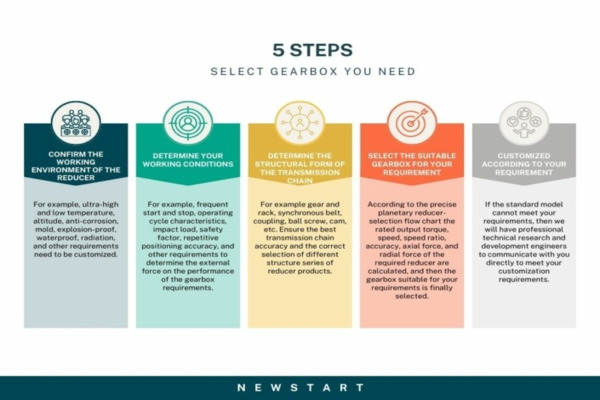
Skipping this framework is exactly how buyers end up with an expensive gearbox that either won't fit or won't survive the working conditions.
Variable 1 — Engine Compatibility
This is non-negotiable. Before any other consideration, the gearbox must be mechanically compatible with the engine it connects to.
Key compatibility checks include:
- Input shaft specification — diameter, spline count, and engagement length must match the engine flywheel housing
- Bell housing dimensions — the mounting face must align with the engine block standard (SAE sizing is common, but Chinese platforms use different standards)
- Maximum input torque rating — the gearbox must handle the peak torque of the engine without operating outside its design limit
- PTO provisions — if power take-off is required (for crane trucks, tank trucks, or tippers), the gearbox must have the correct PTO port
Compatibility warning: Do not assume that gearboxes with similar torque ratings are interchangeable across brands or platforms. Physical fitment must be verified before purchase. We always ask buyers to confirm the engine model, chassis model, and original gearbox model before we recommend a replacement.
Variable 2 — Operating Terrain
Flat highway duty is a very different mechanical environment from mountain routes or mine haul roads. High-gradient and variable-terrain operation places greater demands on gear range and durability.
For buyers in hilly or off-road conditions, selecting a gearbox with the appropriate number of forward ratios and range capability matters more than brand identity.
Variable 3 — Load Profile
A cement mixer running at or near maximum GVW every trip has different gearbox wear characteristics than a general cargo truck running at 60–70% load[7]. Buyers who run consistently heavy loads should ensure the gearbox rating matches the actual working load — not just the theoretical vehicle GVW.
Variable 4 — Local Parts and Service Availability
As covered above, this is a total cost of ownership variable. Ask your local mechanics what they can source and service before you commit to a brand.
Frequently Asked Questions
Can I replace a FAST gearbox with a ZF gearbox directly?
Not without verified compatibility checks. ZF and FAST gearboxes are designed for different truck platforms and have different mounting configurations, input shaft specs, and bell housing dimensions. Direct substitution is not safe to assume. Always confirm engine model, chassis model, and original gearbox specifications before sourcing a replacement.
Are FAST gearboxes genuinely reliable for long-haul African routes?
Based on buyer feedback we receive from our African customers, FAST gearboxes fitted to Chinese truck platforms — such as HOWO and SHACMAN — perform well in long-haul and mixed-duty conditions when correctly matched and maintained. Local parts availability across Sub-Saharan Africa is a significant practical advantage over ZF in many of these markets.
Is FAST a copy of ZF technology?
No. FAST (Shaanxi Fast Gear Co., Ltd.) is an independent Chinese gearbox manufacturer with its own R&D and product development history. It is not a licensed copy or clone of ZF. FAST gearboxes are OEM-fitted components across major Chinese commercial vehicle brands and have a distinct design lineage.
Which brands use ZF gearboxes as OEM equipment?
ZF gearboxes are OEM-fitted to many European heavy truck platforms, including Volvo, Scania, DAF, MAN, Mercedes-Benz, and Iveco[8]. If you are sourcing replacement gearboxes for these brands, ZF is frequently the correct choice — provided fitment compatibility is verified.
Where can I buy verified ZF and FAST gearboxes for export?
Reputable B2B exporters with direct stock and pre-shipment inspection are the safest source. At Deli Auto, we stock both ZF and FAST gearboxes and walk buyers through compatibility verification before confirming any order. This prevents mismatched shipments and the downtime that follows.
Conclusion
The ZF vs FAST gearboxes debate is not a question of which brand is better. It is a question of which component is correct for your engine, your terrain, your load, and your market. In our experience advising buyers across Africa, Southeast Asia, and the Middle East, the buyers who get this right are the ones who start with compatibility — not with brand preference.
FAST is not a fallback. In Chinese-platform trucks operating in markets with strong local parts ecosystems, it is frequently the more practical and cost-effective choice. ZF earns its premium in the right context — European platforms, established service networks, and operating environments where its advantages translate into real value.
The dangerous move is assuming either brand fits without checking. If you are sourcing ZF or FAST gearboxes for your fleet or your parts business, contact Deli Auto. We'll ask you the right questions first — and make sure the gearbox we supply is the one that actually fits.
[1] "ZF Friedrichshafen", https://en.wikipedia.org/wiki/ZF_Friedrichshafen. ZF Friedrichshafen AG is a German multinational automotive supplier specializing in driveline and chassis technology, with commercial vehicle transmissions among its core product lines; see ZF Friedrichshafen, Wikipedia, for a general overview of the company's product scope and history. Evidence role: general_support; source type: encyclopedia. Supports: ZF Friedrichshafen AG's standing as a major global supplier of transmissions and driveline components for commercial vehicles. Scope note: Wikipedia provides general corporate background rather than quantitative market-share data specific to heavy truck gearboxes. ↩
[2] "Middle East & North Africa Trade - WITS", https://wits.worldbank.org/countrysnapshot/en/MEA/textview. Trade data from the International Trade Centre and regional customs authorities document substantial flows of commercial vehicle components, including drivetrain parts, from manufacturing hubs to African, Southeast Asian, and Middle Eastern markets, providing industry context for the export activities described. Evidence role: historical_context; source type: research. Supports: The broader context of commercial vehicle parts export trade to Africa, Southeast Asia, and the Middle East as an established industry. Scope note: External sources can establish the existence and scale of the industry but cannot independently verify the specific experience claims of the article's author or company. ↩
[3] "Shaanxi Fast Auto Drive", https://en.wikipedia.org/wiki/Shaanxi_Fast_Auto_Drive. Shaanxi Fast Gear Co., Ltd. was established as a state-owned enterprise in China and has developed its own transmission product lines independently; corporate and institutional sources describing the company's founding and R&D activities would support this characterization. Evidence role: historical_context; source type: institution. Supports: Shaanxi Fast Gear Co., Ltd.'s establishment as an independent Chinese transmission manufacturer with its own product development lineage. Scope note: English-language institutional documentation on FAST's internal R&D independence is limited; most detailed sources are in Chinese or are company-issued materials. ↩
[4] "Africa Chinese Commercial Vehicle Market Size & Forecast 2026–2031", https://marqstats.com/reports/africa-chinese-commercial-vehicle-market/. Industry and trade research on commercial vehicle imports in Sub-Saharan Africa and Southeast Asia consistently identifies Chinese brands as holding significant or leading market share; relevant data may be found in reports from the International Organization of Motor Vehicle Manufacturers (OICA) or regional trade bodies. Evidence role: statistic; source type: research. Supports: The dominant market position of Chinese commercial vehicle brands in Sub-Saharan Africa, Southeast Asia, and Central Asia. Scope note: Aggregate export statistics may not disaggregate by brand or distinguish between truck segments, limiting direct confirmation of brand-level dominance. ↩
[5] "China's Growing Role in U.S. Automotive Supply Chains", https://www.usitc.gov/publications/332/working_papers/id-19-060_chinese_auto_parts_final_080519-compliant_0.pdf. Research on automotive aftermarket supply chains in Sub-Saharan Africa indicates that parts for Chinese commercial vehicle brands have become increasingly accessible as Chinese truck imports have grown, while European brand parts remain concentrated in urban centers; see relevant World Bank or AfDB transport sector reports for regional context. Evidence role: general_support; source type: research. Supports: The relative availability of Chinese commercial vehicle spare parts compared to European brand parts in Sub-Saharan African and Southeast Asian aftermarkets. Scope note: Published studies comparing brand-specific gearbox parts availability at the component level are scarce; available evidence typically addresses broader vehicle or parts category trends. ↩
[6] "Modelling carbon emissions of diesel trucks on longitudinal slope ... - PMC", https://pmc.ncbi.nlm.nih.gov/articles/PMC7297377/. Independent field assessments or operator surveys documenting FAST transmission performance in demanding terrain conditions would substantiate this claim; in the absence of published studies, the assertion rests on aggregated buyer feedback rather than controlled evaluation. Evidence role: case_reference; source type: research. Supports: The operational durability of FAST transmissions under heavy-load and high-gradient conditions representative of African and Southeast Asian routes. Scope note: No peer-reviewed or independently published field study specifically evaluating FAST gearbox durability in African or Southeast Asian operating conditions was identified. ↩
[7] "ANN and LEFM-Based Fatigue Reliability Analysis and Truck ...", https://pmc.ncbi.nlm.nih.gov/articles/PMC8880365/. Mechanical engineering literature on gear and transmission fatigue establishes that contact stress and wear rates in gear pairs increase with applied torque load, meaning transmissions operating consistently near maximum rated torque experience accelerated wear compared to those operating at partial load; see relevant studies in tribology and gear fatigue for quantitative treatment. Evidence role: mechanism; source type: paper. Supports: The relationship between operating load level and transmission wear rates in heavy commercial vehicles. Scope note: Published studies typically address gear fatigue in controlled laboratory or simulation conditions; field data specifically comparing cement mixer versus general cargo transmission wear rates are not widely available in open literature. ↩
[8] "List of ZF transmissions", https://en.wikipedia.org/wiki/List_of_ZF_transmissions. ZF Friedrichshafen AG supplies automated manual transmissions, including the ZF Traxon series, as original equipment to several major European heavy truck manufacturers; this is documented in ZF's own product communications and corroborated by OEM technical specifications from the respective vehicle manufacturers. Evidence role: general_support; source type: institution. Supports: ZF's role as an OEM transmission supplier to major European commercial vehicle manufacturers including Volvo, Scania, DAF, MAN, Mercedes-Benz, and Iveco. Scope note: OEM supply arrangements vary by model year and vehicle variant; a single citation may not cover all listed brands comprehensively. ↩