
Sourcing a used engine sounds straightforward until the shipment arrives and the part doesn't match, hasn't been tested, or comes with no recourse from the seller. For B2B buyers purchasing engines at volume, the wrong decision compounds fast. The best place to buy a used engine is not a location on a map — it's a supplier who can prove what they're selling.
The best place to buy a used engine is any supplier — local or overseas — who can provide disassembly records, on-site test results, a clear warranty policy, and large ready stock. Geography matters far less than supplier transparency. A warehouse in Guangzhou with 1,000+ tested engines and documented histories will consistently outperform an untraceable local source with lower prices and no accountability.
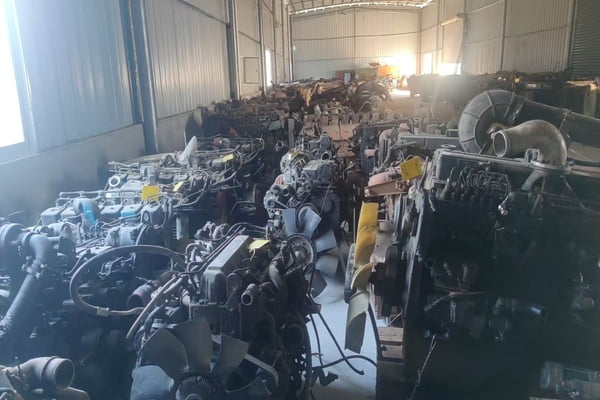
The question most buyers are really asking is: how do I avoid getting burned? That requires a different framework entirely — one built around what a supplier can prove, not where they're located. The sections below break that framework down.
Is "used engine" actually a single product category?
Many buyers treat used engines as a commodity. They request quotes, compare prices, and place orders — without realizing they're comparing entirely different products under the same label.
A used engine is not a standardized unit. It's a snapshot of a specific machine's operational history. Without knowing that history, price comparisons are meaningless. The cheapest quote is almost always the one from the seller with the least to disclose.
Why application history defines value
Two engines from the same brand, same model, and same year can be in completely different condition depending on where they spent their working lives.
Consider a Cummins 6BT engine pulled from a long-haul highway tractor versus one removed from a construction site dump truck. Both are "used Cummins engines." But the highway engine likely ran at steady RPM, received scheduled maintenance, and was pulled at a planned interval. The construction engine may have operated under heavy load cycles, dusty conditions, and inconsistent servicing[1].
We've seen buyers receive an engine that matched the stated model number but failed within weeks — because they never asked about operating environment. The spec sheet looked identical. The working life was not.
The spectrum every buyer should understand
Used engines exist on a wide spectrum:
| Condition Tier | Typical Source | Buyer Risk Level |
|---|---|---|
| Low-mileage pull from fleet renewal | Managed fleet, planned teardown | Low — if records are available |
| Accident vehicle removal | Insurance salvage yard | Medium — other systems may have stress |
| End-of-service pull | High-mileage workhorse | High — remaining life unclear |
| Unknown provenance | Middlemen with no documentation | Very high — no baseline for evaluation |
Asking which tier an engine falls into before negotiating price is not excessive due diligence. It's the minimum standard for a professional procurement decision.
Brand matters — but not in isolation
Isuzu engines, Cummins engines, and MAN engines all carry strong reputations for durability. But brand reputation reflects the original engineering — not the maintenance history of a specific unit. A well-maintained Isuzu 6HK1 will outlast a neglected one from the same production year. Buyers who rely on brand alone without asking about individual unit history are still buying blind.
What four traits separate reliable suppliers from risky ones?
Most buyer mistakes don't happen during inspection — they happen before it, during supplier selection. The instinct to compare final prices without first screening supplier quality is the single most common error we observe across B2B procurement.
Reliable used engine suppliers share four consistent traits. The absence of any one of them is worth treating as a meaningful red flag, not a detail to negotiate around later.

Trait 1: Large, organized ready stock
A supplier with deep inventory — say, 500 to 1,000+ engines across multiple brands — has fundamentally different incentives than one with a handful of units[2]. Large stock suppliers:
- Can match your exact spec without substituting a "close enough" alternative
- Have accumulated sourcing relationships that feed documented, traceable units
- Can fulfill repeat orders without gaps between shipments
We've seen smaller suppliers accept an order they couldn't fill honestly, then ship a different displacement or a different generation of the same engine family — banking on the buyer not noticing until it was too late to return. Large stock reduces that substitution risk significantly.
Trait 2: On-site engine testing
Visual inspection tells you the external condition of an engine. It tells you almost nothing about compression, oil pressure under load, or whether the unit will start reliably after installation.[3]
A qualified supplier runs engines before shipment. The test should produce a report — not just a verbal confirmation. Ask specifically:
- Was the engine cold-started or hot-started?
- What parameters were recorded? (RPM, oil pressure, temperature, smoke output)
- Is the test report included with the shipment?
If a supplier resists providing a test report, treat that resistance as informative. Transparency about results — including any minor issues found and addressed — is a sign of a supplier who stands behind their product.
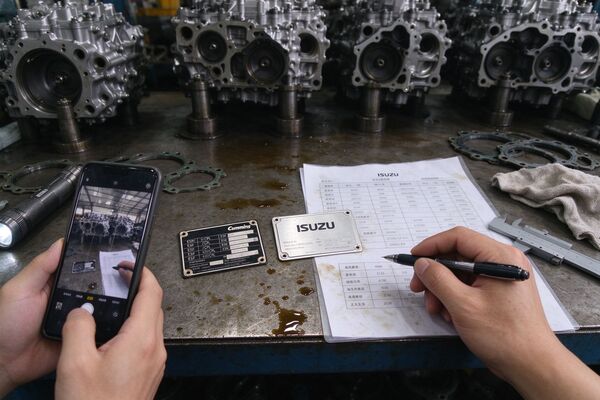
Trait 3: Clear disassembly records
Where did the engine come from? When was it removed? What was the vehicle's application and approximate mileage? These are not intrusive questions. They are the baseline for any serious procurement evaluation.
Reputable suppliers maintain records because they source through organized channels — fleet renewal programs, decommissioned government vehicles, planned maintenance pull schedules[4]. A supplier who can't answer basic provenance questions either doesn't know (because they bought through opaque chains) or doesn't want you to know (because the answer would change your decision).
Trait 4: A defined after-sales policy
What happens if the engine arrives with a defect not visible during pre-shipment inspection? What happens if it fails within 30 days of installation?
A supplier with genuine confidence in their product will define this in writing before you commit. The specific terms matter less than the fact that they exist. "We'll sort it out" is not an after-sales policy. A written exchange or compensation procedure is.
Does location matter — and why do buyers often source from Guangzhou?
The framing of "best place" implies geography is the deciding variable. It isn't. But location does influence what's available, at what price, and through what logistics chain.
For international B2B buyers sourcing used engines at volume, Guangzhou has become a significant hub — and the reasons are worth understanding rather than dismissing as marketing.
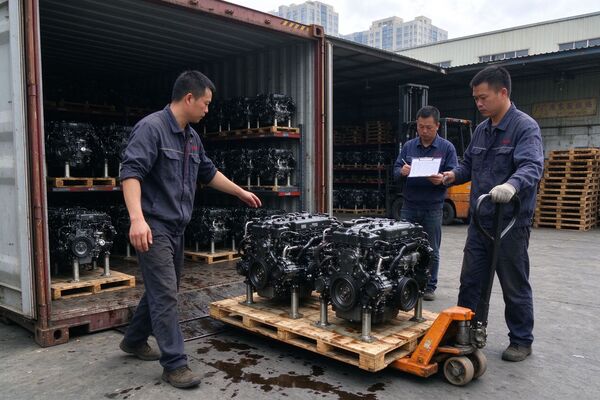
Why Guangzhou attracts serious volume buyers
Guangzhou's position as a commercial vehicle trading hub reflects several structural advantages:
- Port access. Proximity to Guangzhou Nansha Port and Yantian Port in Shenzhen gives suppliers direct container export routes to Africa, Southeast Asia, the Middle East, and South America[5] — the primary markets for used diesel engines[6].
- Aggregated inventory. Guangzhou-based suppliers often operate large consolidated warehouses — in some cases 10,000㎡ or more — stocking engines, gearboxes, axles, and spare parts under one roof. For buyers ordering mixed container loads, this matters.
- Export process familiarity. Experienced Guangzhou exporters handle customs documentation, container loading, and ocean freight as routine operations. Buyers in markets like West Africa, Central Asia, or Southeast Asia benefit from suppliers who already know their port requirements and documentation standards.
- Multi-brand availability. A single Guangzhou warehouse may carry Cummins, Isuzu, MAN, Weichai, Yuchai, and Deutz engines simultaneously. Buyers with diverse fleet needs don't have to source across multiple vendors.
Middlemen are not the problem — opacity is
Some buyers default to "buy direct from the source" as a risk-reduction strategy. This instinct is understandable but imprecise. An intermediary who maintains tested stock, documents provenance, and provides after-sales accountability is fundamentally safer than a direct source with no quality process.
The real question is not who is in the supply chain but what information flows through it. Ask any supplier — direct or intermediary — the same three questions:
- Where was this engine pulled from?
- When was it last run, and what does the test report show?
- What is your after-sales policy if we find a defect after installation?
A legitimate supplier answers all three. A supplier who deflects any one of them is telling you something important about the transaction.
Frequently Asked Questions
What should I ask before buying a used engine from an overseas supplier?
Ask for the disassembly source and vehicle application history, a pre-shipment test report with recorded parameters, photos of the actual unit (not stock images), a written after-sales policy, and confirmation of the engine's compatibility with your specific vehicle model or chassis. These questions separate credible suppliers from high-risk ones.
Is buying a used Cummins, Isuzu, or MAN engine risky?
Not inherently. Cummins, Isuzu, and MAN engines all have strong durability track records. The risk lies in the specific unit’s history, maintenance background, and whether the supplier has tested it before shipment – not in the brand itself. Buy the documentation, not just the badge.
Can I trust a used engine supplier I've never worked with before?
Trust should be earned through process, not assumed. For a first-time supplier, request a test order of one or two units before committing to a container load. Evaluate their response time, documentation quality, inspection process, and post-delivery follow-through. A supplier confident in their product will welcome this approach.
Why do so many B2B buyers source used engines from Guangzhou?
Guangzhou offers a combination of aggregated multi-brand inventory, experienced export logistics, competitive pricing, and direct port access for major B2B markets including Africa, the Middle East, and Southeast Asia. For buyers ordering container loads of mixed parts and engines, the one-stop convenience and export expertise are significant practical advantages.
What's the difference between a tested used engine and a refurbished one?
A tested used engine has been run, inspected, and confirmed functional but not mechanically rebuilt. A refurbished engine has had worn components replaced — seals, bearings, gaskets, or other parts — before resale.[7] Both can be reliable. The key is knowing which you're buying and ensuring the supplier documents what work was done or what the test confirmed.
Conclusion
The best place to buy a used engine is wherever you can find a supplier willing to answer three questions honestly: where did this engine come from, has it been tested, and what happens if something goes wrong after delivery. Brand reputation — whether you're sourcing a Cummins, an Isuzu, or a MAN — matters, but it can't substitute for supplier transparency and documented quality process.
Buyers who frame this as a geography question tend to default to the lowest quote. Buyers who frame it as a supplier verification question consistently get better outcomes. Evaluate stock depth, testing capability, disassembly records, and after-sales policy before you compare prices. The supplier who meets all four criteria is the right place to buy a used engine — regardless of where they're located.
If you're sourcing used engines for fleet repair, resale, or container-load export, contact Deli Auto to discuss your requirements. We'll answer those three questions directly — and back our answers with documentation.
[1] "Effects of duty cycles on diesel engine component life estimation", https://researchrepository.wvu.edu/cgi/viewcontent.cgi?article=2736&context=etd. Engineering studies on heavy-duty diesel engine tribology document that transient load cycles and abrasive particulate ingestion — conditions typical of construction applications — accelerate cylinder liner, piston ring, and bearing wear relative to steady-state highway operation. Evidence role: mechanism; source type: research. Supports: That variable load cycles, particulate-laden environments, and inconsistent maintenance intervals accelerate wear in diesel engines compared to steady-state highway operation.. Scope note: Quantitative wear rate comparisons between specific application types are equipment- and context-dependent; general findings may not apply uniformly to all engine models. ↩
[2] "Competitive pricing of substitute products under supply ... - PMC", https://pmc.ncbi.nlm.nih.gov/articles/PMC7236753/. Supply chain management literature on supplier opportunism and product substitution risk indicates that inventory depth reduces the incentive for specification non-compliance, as suppliers with adequate stock face lower pressure to fulfill orders with non-conforming substitutes. Evidence role: mechanism; source type: research. Supports: That suppliers with larger, more diversified inventory are less likely to substitute non-conforming products due to stockout pressure, as they have greater ability to fulfill exact specifications.. Scope note: Academic literature on this mechanism is typically framed around manufacturing supply chains rather than used parts markets specifically; direct empirical studies on used engine suppliers are not available. ↩
[3] "Visual Inspection for Aircraft", https://www.faa.gov/documentLibrary/media/Advisory_Circular/43-204.pdf. Established automotive and heavy equipment inspection protocols, including those referenced by SAE International and equipment appraisal bodies, specify that visual inspection must be supplemented by functional testing to assess internal engine condition parameters such as compression ratio and lubrication system integrity. Evidence role: expert_consensus; source type: institution. Supports: That visual inspection alone is inadequate for assessing internal diesel engine condition and that functional tests — including compression and oil pressure measurement — are necessary for reliable condition evaluation.. Scope note: Standardized inspection protocols vary by industry body and jurisdiction; no single universal standard governs used engine assessment globally. ↩
[4] "Sales of GSA Fleet vehicles", https://www.gsa.gov/buy-through-us/products-and-services/transportation-and-logistics-services/fleet-management/vehicle-leasing/sales-of-gsa-fleet-vehicles. Research on end-of-life vehicle management and secondary parts markets identifies fleet operator renewal cycles and government vehicle decommissioning programs as primary sources of used components with documented service histories, in contrast to salvage-yard or accident-vehicle sources. Evidence role: general_support; source type: research. Supports: That fleet renewal programs and planned decommissioning of government and commercial vehicles are documented sources of used engines entering the secondary parts market with traceable service histories.. Scope note: The relative volume of engines entering the secondary market through each channel varies significantly by country and is not uniformly tracked in public datasets. ↩
[5] "Pearl River Delta", https://en.wikipedia.org/wiki/Pearl_River_Delta. Port authority data and China's Ministry of Transport statistics document Nansha and Yantian as major Pearl River Delta container terminals handling substantial export volumes to developing-market destinations including sub-Saharan Africa, Southeast Asia, and the Middle East. Evidence role: general_support; source type: government. Supports: That Nansha Port (Guangzhou) and Yantian Port (Shenzhen) are significant container export terminals with established shipping routes to Africa, Southeast Asia, the Middle East, and South America.. Scope note: Publicly available port statistics report aggregate container throughput; commodity-level breakdowns for used automotive parts are not typically disaggregated in official port data. ↩
[6] "To decarbonize transport, help developing countries deal ...", https://blogs.worldbank.org/en/transport/decarbonize-transport-help-developing-countries-deal-junkers-clunkers-and-jalopies. Trade flow analyses from organizations such as the International Trade Centre and UN Comtrade data indicate that developing economies in sub-Saharan Africa, Southeast Asia, and the Middle East are significant importers of used diesel engines and commercial vehicle components, reflecting demand driven by aging fleet maintenance and cost constraints. Evidence role: statistic; source type: institution. Supports: That sub-Saharan Africa, Southeast Asia, the Middle East, and South America represent major destination markets for used diesel engines and commercial vehicle parts exported from China.. Scope note: UN Comtrade and similar databases classify used engine exports under broad HS codes that may include new and remanufactured units; country-level breakdowns specific to used diesel engines are not always separately reported. ↩
[7] "Motor & Equipment Manufacturers Association", https://www.ftc.gov/sites/default/files/documents/public_comments/16-cfr-part-20-guides-rebuilt-reconditioned-and-other-used-automobile-parts-industry-project-no.p127702-560948-00012/560948-00012-83343.pdf. Industry bodies including the Automotive Parts Remanufacturers Association (APRA) and SAE International define remanufactured, rebuilt, and used engine categories with distinct criteria; a remanufactured engine is restored to original performance specifications, while a used engine is resold in its as-removed condition, with 'refurbished' occupying an intermediate, less formally defined category. Evidence role: definition; source type: institution. Supports: That the automotive industry distinguishes between used (tested but unmodified), refurbished (partially restored), and remanufactured (rebuilt to original specifications) engines as distinct product categories.. Scope note: Terminology is not uniformly standardized across all markets and jurisdictions; definitions used by individual suppliers may not align precisely with formal industry classifications. ↩