Buying a used Hino truck raises a question that trips up a lot of procurement managers: is this a trusted workhorse or a brand you settle for when European trucks are out of budget? The wrong answer costs you months of downtime and a parts hunt across three countries. The right framework saves you from both mistakes.
Used Hino trucks are a strong buy for the right buyer in the right context. The Hino 700 Series with the E13C engine is a proven heavy-duty platform with a strong field record in tropical and rough-road markets. Spare parts — including engines, gearboxes, and axles — are widely available through Chinese supply channels. The key is selecting the right model, year, and specification, then inspecting the unit properly before shipment.

The short answer above tells you what the conclusion is. But it doesn't tell you how to act on it — which generation to target, what fails first, and whether you can actually source parts once the truck is in your country. That's what the rest of this article covers.
Does Hino Have a Reliable Track Record in Developing Markets?
Many buyers from Africa and the Middle East have heard of Scania and Volvo but ask whether Hino is really "proven." The concern is fair. Choosing an unfamiliar brand in a market with thin workshop coverage feels like a gamble.
Hino is not a second-tier brand taking market share from European trucks. It is the dominant heavy-duty truck manufacturer in Japan and one of the top-selling commercial vehicle brands across Southeast Asia, parts of the Middle East, and East Africa. That means its field track record in hot climates, unpaved roads, and demanding load cycles already exists — you don't need to test it from scratch.
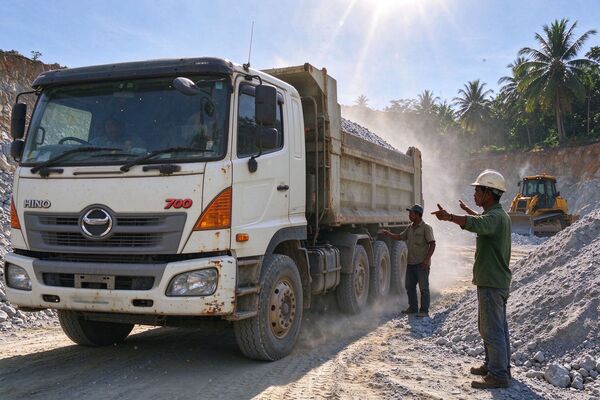
The brand-reputation gap between Hino and European trucks is mostly a market education gap, not a quality gap. Buyers who haven't worked in Japanese-brand markets default to European names because they've heard them more often. But in markets like Thailand, Indonesia, Kenya, and the UAE, Hino has been running heavy freight for decades[1]. I've exported used Hinos to customers in these regions for years, and the feedback on trucks that were properly inspected and correctly specced before shipment has been consistently solid.
Where Hino's Reputation Is Strongest
- Japan and Southeast Asia: Hino dominates the domestic heavy-duty segment in Japan. Thailand, Indonesia, and Malaysia all have strong Hino dealer and workshop networks.
- East Africa and the Middle East: Hino has a growing installed base, which means local mechanics are increasingly familiar with the platform[2].
- Construction and logistics routes: Hino's heavy trucks perform well in mixed highway-and-rough-road operations, which describes most freight corridors in developing markets.
Where the Perception Problem Comes From
Buyers in markets where European trucks arrived first — particularly West Africa and parts of South America — often have more familiarity with Scania, Volvo, and Mercedes workshop networks. That familiarity matters for parts and service. But it's a network access question, not a truck quality question. I'll address that directly in the parts section below.
Bottom line: If a customer tells me they've heard Hino isn't reliable, I ask them where that information came from. In my experience, it rarely comes from someone who actually operated a properly maintained Hino — it comes from brand reputation by default. The trucks that fail are usually units with deferred maintenance, not Hino-specific design problems.
Which Used Hino Model Should You Buy?
Not every used Hino generation is equal. Buying the wrong year or the wrong specification introduces unnecessary mechanical risk. Buyers who ask "is Hino a good truck?" are often really asking "which Hino should I be buying?"
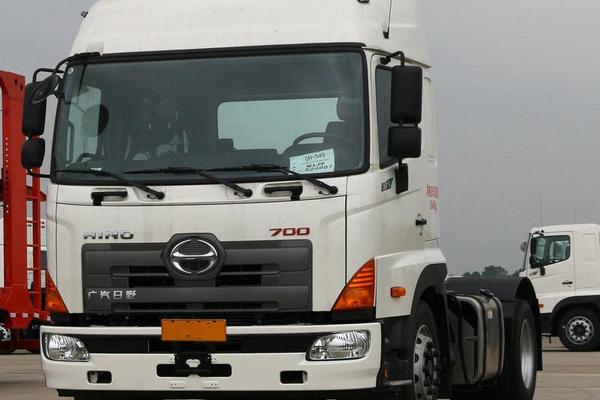
The Hino 700 Series is the benchmark for heavy-duty used Hino procurement. It is the model I recommend most often to dealers and fleet buyers looking for a reliable platform with manageable maintenance costs.
For lighter-duty applications, the Hino 300 Series is worth considering — it's a medium-duty platform with strong availability across Southeast Asia and East Africa.
Hino 700 Series: The Core Recommendation
The Hino 700 Series is a full heavy-duty platform built for long-haul and construction applications. Its most important powertrain component is the E13C engine — a 13-liter inline-6 diesel that has earned a strong reputation for durability in high-load, high-temperature conditions.
| Specification | Detail |
|---|---|
| Engine | Hino E13C (13.0L inline-6 diesel) |
| Power output | 380–460 hp depending on variant |
| GVW | Up to 25 tonnes (tractor variants higher) |
| Transmission | Manual or automated, including ZF options |
| Primary markets | Japan, Southeast Asia, Middle East, East Africa |
| Recommended year bracket | 2010 onwards (confirm condition before purchase) |
Why the E13C matters: In our pre-shipment checks, the engine is always the first thing we evaluate. The E13C is a well-documented unit with widely available parts. Customers who have operated Hino 700s with this engine in hot-climate freight routes report consistent performance when oil changes and cooling system maintenance are followed. Units with the earlier E13C-T or modified emissions variants require more careful inspection — confirm the spec before you buy.
Year Brackets and Risk Levels
Based on field experience — confirm with a qualified mechanic before committing to any specific unit:
| Year Range | Assessment |
|---|---|
| 2010–2015 | Good sweet spot: lower price, parts available, major systems mature |
| 2016–2019 | Strong units; look for documented service history |
| 2008–2009 | Higher mileage risk; inspect engine and transmission carefully |
| Pre-2008 | Increased risk of deferred maintenance; parts availability varies |
Transmission: ZF 16-Speed Gearbox
Many Hino 700 Series units export with the ZF 16-speed gearbox — one of the most reliable heavy-duty manual transmissions on the market. If your buyer's mechanics are already familiar with ZF units from European trucks, this is an advantage: the skill set transfers.
For procurement managers sourcing ZF gearbox spare parts, we stock ZF 16-speed gearbox components and can supply ZF transmission parts for Hino applications separately if needed. This matters — knowing you can source the gearbox parts independently reduces your total ownership risk on the truck.
Are Hino Spare Parts Available Outside Japan?
This is the objection I hear most often, and it's the one that kills Hino deals before they start. Buyers assume that Japanese-brand parts are only available through Japanese dealer channels — expensive, slow, and impractical once the truck is in Nigeria or Bangladesh.
That assumption is outdated. China is a major supply hub for genuine and compatible Hino parts[3]. Engines, gearboxes, axles, cylinder heads, fuel pumps, and drivetrain components for the Hino 700 Series are available from Chinese suppliers — including from our own warehouse in Guangzhou.

What Parts Are Actually Available
In our 12,000㎡ warehouse, we stock Hino-compatible parts including:
- Engines: Complete units and long-blocks for the E13C and related Hino engines
- Gearboxes: ZF 16-speed units and component parts
- Axles: Front and rear axle assemblies
- Cylinder heads, gaskets, and valve kits
- Fuel system components: pumps, injectors, and related parts
- Cooling system parts: radiators, thermostats, water pumps
This isn't comprehensive coverage of every Hino variant ever built — but for the Hino 700 Series from 2010 onwards, the key wear items and failure-point components are routinely available for export.
Genuine vs. Compatible Parts: What to Specify
When ordering spare parts for used Hinos, buyers should clarify:
- Genuine OEM parts sourced through Japanese supply chains — highest confidence, higher price, longer lead time
- Genuine Chinese-made compatible parts — many components for Hino platforms are manufactured in China for the domestic market; quality varies by supplier
- Remanufactured units — valid option for gearboxes and engines if the remanufacturer is qualified; always ask for inspection records
My recommendation: For critical powertrain parts (engine, gearbox, differential), specify genuine OEM or verified-quality compatible parts. For consumables and wear items, compatible Chinese-sourced parts are typically sufficient if the supplier can provide part numbers and fitment confirmation.
Parts Availability by Market
| Market | Hino Parts Access | Notes |
|---|---|---|
| Southeast Asia (Thailand, Indonesia) | Strong | Active Hino dealer network |
| East Africa (Kenya, Tanzania) | Moderate and growing | Increased Hino installed base |
| West Africa | Variable | Depends on importer relationships; China supply fills gaps |
| Middle East | Moderate | Strong for UAE and Saudi; thinner in smaller markets |
| South America | Limited direct | China export supply most practical option |
What Goes Wrong With Used Hino Trucks — and How to Screen for It?
This is the section most articles skip. Brand reputation doesn't tell you what to inspect. Direct handling of customer complaints does.
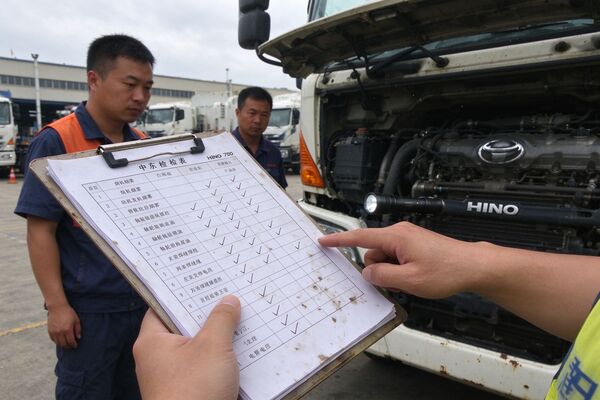
In over 20 years of exporting used trucks and handling post-delivery feedback, these are the failure patterns I've seen most often on used Hino units. I'm sharing them because a buyer who knows what to look for can screen them out before purchase — and a buyer who doesn't know will find out after the truck arrives.
Common Failure Patterns in Used Hino Trucks
1. Engine overcooling system neglect
The E13C engine is sensitive to cooling system condition[4]. Customers who've reported issues with used Hinos typically saw early overheating symptoms traced back to a neglected radiator or a thermostat that was bypassed during a previous repair. In our pre-shipment checks, we flush and pressure-test the cooling system on every Hino unit we prepare for export.
What to check: Radiator condition, coolant color and history, thermostat function, water pump seal.
2. Gearbox wear on high-mileage units
Hino 700s used in construction or heavily loaded routes accumulate gearbox wear faster than highway-spec units. The ZF 16-speed gearbox is durable but not immune to synchromesh wear if the previous operator drove with poor gear selection habits.
What to check: Shift quality through all gears under load, no grinding on 1st and 2nd, no jumping out of gear on downhill runs.
3. Frame stress cracks on dump truck variants
Dump truck Hino 700s operated with overloaded bodies develop stress cracks at frame cross-member joints[5]. This is not unique to Hino — it affects any truck operated above rated payload — but it appears in used Hino units we've inspected, particularly in trucks from Southeast Asian construction sites.
What to check: Full frame inspection, especially at rear cross-members and sub-frame mounting points.
4. Electrical system corrosion on coastal-operation units
Units previously operated in coastal or high-humidity environments — including many Southeast Asian trucks — show accelerated corrosion in wiring harnesses and connector blocks. This becomes a diagnostic nightmare once the truck is in a market with less-equipped workshops.
What to check: Inspect fuse boxes, connector plugs at the ECU, and sensor wiring near the engine bay.
Our Pre-Shipment Inspection Protocol
For every used Hino we prepare for export, our engineers check:
- Engine start, idle quality, and cold-start smoke test
- Full gear shift cycle under load
- Brake system: air pressure build, hold test, ABS function
- Frame and cab structural inspection
- Fluid condition: engine oil, transmission oil, coolant, hydraulic (where applicable)
- Electrical system: lights, sensors, fault code scan
We document findings and share them with the buyer before shipment confirmation. If a unit doesn't pass, we either repair it or pull it from the export batch.
Frequently Asked Questions
Is Hino better than Scania or Volvo for developing markets?
There is no universal answer. Scania and Volvo have stronger brand recognition in some markets and deeper dealer networks in parts of Africa[6]. Hino often offers a better price-to-condition ratio at the same mileage bracket and has stronger parts availability from China. The right choice depends on your route, payload, and local parts access.
What is the best year for a used Hino 700 to buy?
Based on field experience, Hino 700 Series units from 2010 to 2018 represent the most practical procurement window. They offer a balance of lower acquisition cost, mature E13C engine reliability, and strong parts availability. Always verify the specific unit's service history — year alone is not a sufficient screening criterion.
Can I source Hino spare parts directly from China?
Yes. China is an active supply hub for genuine and compatible Hino parts, particularly for the 700 Series. Engines, gearboxes, axles, and common wear items are available for export. Specify part numbers and confirm fitment with your supplier before ordering to avoid compatibility mismatches.
Is the ZF gearbox in Hino 700 trucks easy to maintain?
The ZF 16-speed gearbox is a well-understood platform used across many European truck brands. Mechanics familiar with ZF units from Mercedes-Benz, MAN, or DAF trucks can service it[7]. Parts are available through ZF-authorized channels and from Chinese aftermarket suppliers. It is one of the more maintainable transmissions in the used heavy truck market.
What should I ask a used Hino supplier before buying?
Ask for the engine hours or odometer reading, the last major service records, a fault code scan result, cooling system and gearbox condition reports, and photos or video of the truck running. A supplier who cannot provide these is a supplier who hasn't done the inspection — and that is your risk, not theirs.
Conclusion
Used Hino trucks — particularly the Hino 700 Series with the E13C engine — are a credible, practical choice for fleet buyers and dealers in Africa, Southeast Asia, and the Middle East. The brand's perception gap is a market education issue, not a quality verdict. Spare parts, including engines, ZF gearboxes, and axles, are available through Chinese supply channels for export to your market. The trucks that fail are almost always units that were poorly inspected, incorrectly specced, or bought on price alone with no pre-shipment verification.
Before you commit to any used Hino unit, confirm the model year and engine variant, request a fault code scan and cooling system report, inspect the frame for stress cracks if it's a dump truck, and verify that your supplier stocks or can source the key wear parts. That checklist will protect you far more than any brand reputation comparison.
If you're evaluating used Hino trucks or need Hino-compatible spare parts for export, contact Deli Auto directly. We'll tell you what's in stock, what we've inspected, and what we'd recommend for your specific route and load requirement.
[1] "Hino Motors", https://en.wikipedia.org/wiki/Hino_Motors. Corporate histories of Hino Motors and records from the Japan Automobile Manufacturers Association document the company's international commercial vehicle operations dating to the mid-twentieth century, with export programs to Southeast Asia and Africa established over several decades. Evidence role: historical_context; source type: encyclopedia. Supports: The timeline of Hino Motors' commercial vehicle operations and export activity in Southeast Asia, East Africa, and the Middle East. Scope note: Publicly available historical records vary in granularity by market; the depth of Hino's presence in smaller markets such as Kenya or the UAE may be less thoroughly documented than its core ASEAN operations. ↩
[2] "Hino Motors", https://en.wikipedia.org/wiki/Hino_Motors. Vehicle import and registration statistics from national transport authorities in Kenya, Tanzania, and Gulf Cooperation Council member states, as well as JAMA export data, provide a basis for assessing the growth of Japanese commercial vehicle fleets in these regions. Evidence role: statistic; source type: government. Supports: Growth in Hino commercial vehicle imports and registrations in East African and Middle Eastern markets. Scope note: Mechanic familiarity is not directly measurable from registration data; the inference that a larger installed base produces greater technician familiarity is logical but not empirically verified in the cited sources. ↩
[3] "Automotive industry in China", https://en.wikipedia.org/wiki/Automotive_industry_in_China. Chinese customs export statistics and reports from the China Association of Automobile Manufacturers document substantial volumes of automotive parts exports, including components for commercial vehicles, to markets in Africa, Southeast Asia, and the Middle East. Evidence role: general_support; source type: government. Supports: China's role as a significant exporter of automotive and commercial vehicle spare parts, including components compatible with Japanese truck platforms. Scope note: Aggregate export data does not distinguish between Hino-specific compatible parts and other automotive components; the claim that China is specifically a major hub for Hino parts requires inference from broader automotive parts trade data. ↩
[4] "Why is my Hino E13C truck engine losing water every trip?", https://www.quora.com/Why-is-my-Hino-E13C-truck-engine-losing-water-every-trip. Hino Motors service documentation and general diesel engine engineering literature establish that large-displacement turbocharged diesel engines operating in high-ambient-temperature environments require rigorous cooling system maintenance to prevent thermal stress and premature component wear. Evidence role: mechanism; source type: other. Supports: That the Hino E13C engine's performance and longevity are materially affected by cooling system maintenance, consistent with general high-displacement diesel engine thermal management requirements. Scope note: Publicly available Hino service bulletins specific to E13C cooling sensitivity are not uniformly accessible; the characterization draws on general diesel engine thermal management principles rather than a published E13C-specific failure study. ↩
[5] "Truck Frame Crack Inspection & Crossmember Guide - HVI App", https://heavyvehicleinspection.com/blog/post/truck-frame-crossmember-crack-inspection. Engineering literature on heavy vehicle chassis fatigue documents that cyclic overloading accelerates crack initiation at stress concentration points including cross-member welds and sub-frame mounting interfaces, consistent with the failure pattern described for overloaded dump truck variants. Evidence role: mechanism; source type: research. Supports: That repeated overloading of heavy truck frames causes fatigue-related stress cracking at structural joints such as cross-members. Scope note: Published studies typically address generic chassis fatigue mechanics rather than Hino-specific frame geometry; the cited failure pattern is consistent with general principles but not directly validated for the Hino 700 platform in the reviewed literature. ↩
[6] "Scania AB", https://en.wikipedia.org/wiki/Scania_AB. Commercial vehicle market analyses covering sub-Saharan Africa document the historical presence of European OEM dealer networks, particularly in anglophone and francophone West Africa, reflecting earlier market entry and fleet procurement patterns by regional operators. Evidence role: general_support; source type: research. Supports: That European truck brands including Scania and Volvo have established dealer and after-sales service networks in African markets that differ in coverage from Japanese brand networks. Scope note: Comparative network depth assessments are rarely published in neutral academic form; available data typically comes from industry consultancies or OEM-affiliated sources, which may reflect commercial interests. ↩
[7] "List of ZF transmissions", https://en.wikipedia.org/wiki/List_of_ZF_transmissions. ZF Friedrichshafen's OEM supply documentation indicates that variants of the 16S transmission series are supplied to multiple commercial vehicle manufacturers, which underpins the assertion that technician familiarity with the unit in one brand context is transferable to another. Evidence role: mechanism; source type: institution. Supports: That ZF 16-speed transmission variants are shared across multiple OEM truck platforms, enabling skill and parts transferability. Scope note: Specific variant differences between OEM applications may require model-specific calibration or tooling; full skill transferability depends on the exact sub-variant installed. ↩