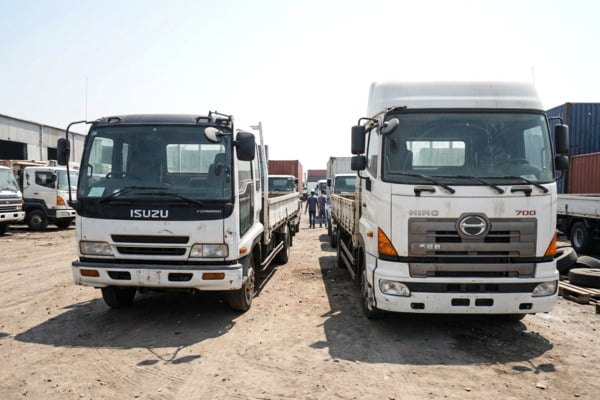
Buyers comparing Isuzu and Hino trucks face a deceptively simple question. On the surface, it looks like a head-to-head product test. In practice, it is a procurement decision with real downstream risk — choose the wrong brand for your market, and you are sitting on slow-moving inventory while your customers complain about parts availability.
There is no universal answer to whether Isuzu or Hino is the better truck. The right answer depends on your target market, the specific model and year range you are sourcing, and which brand's parts ecosystem is actually functioning in the region where your end-buyers operate. For most used truck dealers sourcing containers for East, Southern, or West Africa, those three variables matter far more than brand prestige or factory specifications.
That answer is technically correct, but it is not yet useful. What makes it useful is understanding which variables to interrogate, in which order, before you commit to a container order. The sections below break that down in the same sequence we work through it with buyers who contact us with this exact question.
When buyers ask us "Isuzu or Hino," what do we actually ask back?
Most buyers who raise this comparison have already seen conflicting opinions online or from other dealers. One contact told them Hino is more reliable. Another said Isuzu is cheaper to maintain. Neither framing is actionable without knowing the destination market and the specific units being discussed.
When a procurement inquiry comes in comparing these two brands, the first thing we ask is: what is your end market, and what models are your downstream buyers already running? That single question eliminates roughly half the confusion, because it shifts the conversation from brand preference to market fit — which is the only metric that actually affects resale speed and post-sale reputation.
Understanding why we ask that question first requires understanding how parts ecosystems work in practice — and how dramatically they vary by country, corridor, and even city. Brand quality rankings mean very little if a truck breaks down on a highway and the nearest workshop has never serviced that model.
The parts ecosystem question comes before the brand quality question
In East Africa — Kenya, Tanzania, Uganda, Ethiopia — Hino has built significant parts penetration over decades. Many roadside mechanics in these markets know Hino engines well. Parts for common models like the Hino 300 and Hino 500 series are stocked by multiple local suppliers[1], not just authorized dealers.
Isuzu is also well-represented in East Africa, particularly in the light-to-medium segment. The NPR and NQR series have long histories in these markets. But the overlap is not symmetrical across all locations. In some corridors, one brand has meaningfully deeper parts coverage than the other — and that imbalance directly affects what an end-buyer is willing to purchase.
In Southern Africa — Zambia, Zimbabwe, Mozambique — the picture shifts again. Isuzu has historically strong presence, partly through local assembly operations that have reinforced parts supply chains in the region for years[2]. Dealers sourcing for Southern African markets report that Isuzu units can be easier to move in certain sub-markets, not because the trucks are engineered differently, but because the local parts confidence is higher.
In West Africa — Nigeria, Ghana, Côte d'Ivoire — the dynamic is different again. Both brands operate in these markets[3], but buyer preferences can be heavily influenced by which importer or distributor has been most active in a given period[4]. A dealer without current, on-the-ground intelligence about their specific target country is making a brand choice on incomplete information.
The practical implication for procurement:
- Before finalizing a brand decision, contact your in-market partners and ask which workshops in your city actively stock parts for each brand.
- Ask your end-buyers directly: what are you already running, and what would you buy again?
- Treat parts availability as a deal variable, not a footnote.
Is Isuzu actually cheaper than Hino, or is that comparison misleading?
Price comparisons between Isuzu and Hino trucks come up in almost every sourcing conversation we handle. The pattern is consistent: a buyer says one brand is cheaper, usually based on a quote they received or a price list they found. When we look at the actual units being compared, they are almost never equivalent.
Price comparisons between used Isuzu and Hino trucks are almost always misleading unless they control for vehicle age, mileage, engine configuration, cab type, and mechanical condition. A 2015 Hino 700 and a 2010 Isuzu FVR are not comparable units, regardless of what their listed prices suggest. Uncontrolled price comparisons lead directly to margin miscalculations and procurement errors.
This is one of the more costly mistakes buyers make early in their procurement process — and it is worth examining in detail.
Why uncontrolled price comparisons cause real margin errors
| Variable | Why It Affects Price | Common Buyer Mistake |
|---|---|---|
| Year of manufacture | Newer units command higher prices regardless of brand | Comparing a late-model to an older unit |
| Engine configuration | Turbocharged, intercooled, Euro emission standard | Assuming all models of the same name are equivalent |
| Mileage and service history | High-mileage units need more pre-shipment work | Ignoring odometer readings when comparing quotes |
| Cab type | Day cab vs. sleeper cab; single vs. double cab | Not specifying cab requirements before price comparison |
| Refurbishment level | Some units are sold as-is; others are inspected and repaired | Comparing refurbished and unrefurbished units at face value |
When a buyer tells us "Hino is more expensive than Isuzu," we immediately ask them to share both quotes with the unit details. In most cases, the price difference disappears — or reverses — once the specs are aligned.
What a fair like-for-like comparison looks like
A genuine comparison between Isuzu and Hino for a specific procurement decision should specify:
- Gross Vehicle Weight (GVW) class — light (under 6 tons), medium (6–14 tons), or heavy (above 14 tons)
- Year range — for example, 2014–2018 production years only
- Engine type — naturally aspirated vs. turbocharged, and which emission standard
- Intended use — cargo, tipper, refrigerated, tanker
- Target destination — because refurbishment and pre-shipment requirements vary by port and import regulations
Once those five variables are fixed, a genuine price and value comparison becomes possible. Without them, you are not comparing trucks — you are comparing categories.
Can you mix Isuzu and Hino in the same container order?
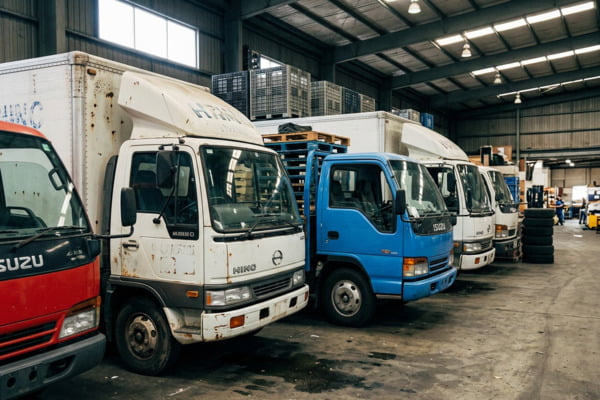
Logistically, mixing brands in a container order is common practice. From a pure shipping standpoint, there is no barrier. But the commercial question is whether mixing brands serves your downstream market — and here, many dealers make an assumption that creates problems after the container arrives.
Mixing Isuzu and Hino units in a single container order is logistically feasible but commercially risky if you have not confirmed that your end-buyers are willing to purchase both brands. In many markets, end-buyers have strong brand loyalty driven by local parts availability and workshop familiarity — substituting one brand for another without verifying downstream demand is a procurement risk, not just a preference issue.
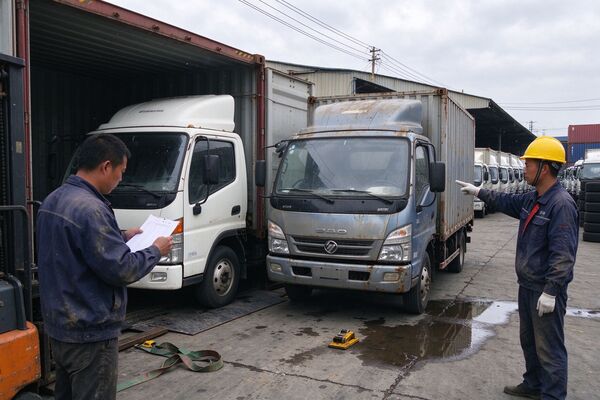
This is a pattern we see regularly from dealers who are sourcing opportunistically — buying whatever is available at the right price point and assuming the market will absorb it. That approach works in some markets and creates inventory problems in others.
The brand loyalty dynamic in used truck markets
End-buyers in used truck markets are often not choosing between brands abstractly. They are choosing based on:
- Which parts their regular mechanic stocks and knows how to fit
- Which brand their existing fleet runs (owners running five Isuzus will almost always prefer a sixth Isuzu[6])
- Which brand has better resale value in their local secondary market
- Which importer or agent they have a relationship with
A dealer who mixes brands without understanding these dynamics may find that half their container sells quickly and half sits unsold. The units that sit are not necessarily lower quality — they are simply the wrong brand for that specific buyer pool.
How to reduce brand-mix risk
- Survey your confirmed buyers before you finalize sourcing. A simple question — "would you purchase both Isuzu and Hino, or do you have a strong preference?" — can save you from a slow-moving inventory problem.
- Start with single-brand containers for new markets. Until you have clear data on what your market absorbs, mixed containers increase uncertainty.
- Use a supplier with enough stock depth to fill single-brand orders. This is one reason buyers working with us prefer having access to a physical yard with 200+ units — it makes single-brand or single-model ordering possible without long lead times.
Which specific models and year ranges actually move in African markets?
This is the question we encourage buyers to ask instead of "which brand is better." It is a more precise question, and it produces answers that are directly actionable for sourcing.
Rather than asking whether Isuzu or Hino is the better truck, the most productive procurement question is: which specific models, year ranges, and engine configurations have demonstrated demand in my target market? This reframes the brand debate into a sourcing brief — and a supplier with real market exposure can answer it with specific unit recommendations rather than general brand opinions.

Based on the inquiries we handle from buyers across East, Southern, and West Africa, certain model lines come up with notably higher frequency than others.
Models that generate consistent inquiry volume
Hino:
- Hino 300 series — light-duty segment, popular in urban logistics and small cargo operations across East Africa
- Hino 500 series — medium-to-heavy segment, strong in general freight, popular in Kenya, Tanzania, and Ethiopia
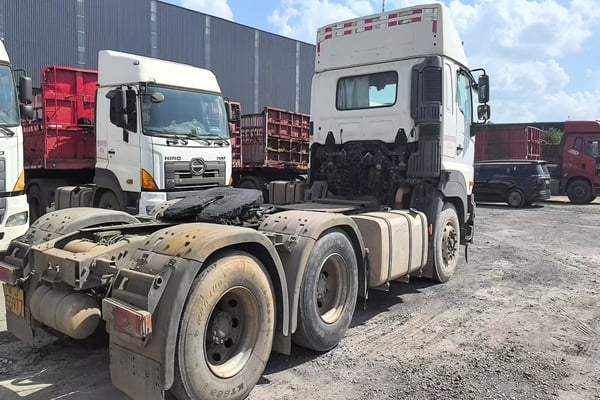
- Hino 700 series[7] — heavier long-haul applications, less volume but consistent inquiry from fleet operators
Isuzu:
- Isuzu NPR / NQR[8] — light-to-medium duty, among the most frequently requested models we handle for East and Southern Africa
- Isuzu FRR / FSR / FVR — medium-duty segment, strong inquiry from cargo and refrigerated transport operators
- Isuzu EXZ / GXZ — heavy-duty, requested by buyers in Southern Africa for mining-adjacent logistics
Year ranges and why they matter
For most African import markets, the sweet spot for used trucks falls roughly in the 2012–2019 production year range. Units older than 2012 may face import restrictions based on emission standards or vehicle age limits enforced by certain customs authorities. Units newer than 2019 often carry prices that compress margins too tightly for resale.
Within that range, 2014–2018 units tend to offer the best balance of:
- Availability in sufficient volume for container orders
- Mechanical condition that allows cost-effective pre-shipment inspection and repair
- Price points that support profitable resale in target markets
These are observations from our sourcing experience — they are starting points for a conversation with your supplier, not rigid rules. Any reputable exporter should be able to refine these recommendations based on your specific destination country and buyer segment.
Frequently Asked Questions
Is Hino more reliable than Isuzu for African road conditions?
Both brands have proven track records in African markets over decades of use. Reliability in the used vehicle context depends heavily on the individual unit's maintenance history and pre-shipment condition, not brand alone. A well-maintained Isuzu will outperform a neglected Hino every time[9]. Have any unit professionally inspected before purchase.
Which brand has better parts availability in East Africa?
Hino has strong parts penetration in major East African markets, particularly Kenya and Tanzania. Isuzu also has established parts channels in the region. The practical answer varies by city and corridor — verify with your in-market contacts which brand's parts are actively stocked by local suppliers near your buyers' operating area.
Can I order both Isuzu and Hino in the same container?
Yes, mixed-brand containers are logistically straightforward. The commercial risk is whether your end-buyers will accept both brands. In markets where buyers have strong brand preferences driven by local parts availability and workshop familiarity, mixed containers can result in slower turnover for one brand. Confirm downstream demand before mixing.
What year range should I source for African import markets?
The 2012–2019 production year range is generally workable for most African markets, with 2014–2018 being a common sweet spot for price, condition, and import compliance. However, import age and emission restrictions vary by country — verify your destination country's current regulations before finalizing year range requirements with your supplier.
How should I evaluate a supplier's claims about Isuzu or Hino quality?
Look for suppliers who can show you physical inventory, provide pre-shipment inspection reports, and give you model-specific sourcing recommendations based on your target market — not generic brand endorsements. Ask for engine test results, service history documentation where available, and references from buyers in comparable markets.
Conclusion
The Isuzu vs. Hino question is worth asking — but only if you ask it the right way. For used truck dealers sourcing containers for African markets, Isuzu and Hino are both credible options. The procurement decision hinges on your target market's parts ecosystem, a genuine like-for-like price comparison, and verified downstream demand for the specific brand you are sourcing.
The dealers who avoid slow inventory and post-sale complaints are not the ones who picked the "better brand." They are the ones who asked the right questions before loading a container.
If you are preparing a sourcing brief for your next order, contact the Deli Auto team directly. We will work through your target market, recommend specific models and year ranges from our available stock, and help you build a container order matched to what your buyers actually want — not just what happens to be available.
[1] "Hino Motors Enters Kenyan Market | News", https://www.hino-global.com/corp/news/2013/20130607.html. Studies on commercial vehicle aftermarket supply chains in sub-Saharan Africa document the correlation between brand longevity in a market and local parts stocking depth, a pattern consistent with Hino's multi-decade presence in East Africa. Evidence role: general_support; source type: research. Supports: Hino's aftermarket parts network depth and mechanic familiarity in East African markets. Scope note: Direct, country-level data on Hino parts stocking density by supplier type is not publicly aggregated; regional trade reports provide only partial coverage. ↩
[2] "Isuzu Trucks South Africa", https://en.wikipedia.org/wiki/Isuzu_Trucks_South_Africa. Isuzu Motors has maintained assembly or knock-down operations in parts of Southern Africa; industry analyses of automotive localisation in the region note that local assembly agreements typically include provisions for local parts stocking and dealer network development. Evidence role: historical_context; source type: institution. Supports: Isuzu's local assembly presence in Southern Africa and its downstream effect on parts availability. Scope note: The specific causal link between assembly operations and parts supply chain depth in Zambia and Zimbabwe specifically has not been independently quantified in publicly available research. ↩
[3] "Nigeria - Automotive Sector", https://www.trade.gov/country-commercial-guides/nigeria-automotive-sector. Trade statistics from the Japan Automobile Manufacturers Association and West African port import records confirm that Japanese commercial vehicles, including both Isuzu and Hino models, constitute a substantial share of used truck imports into Nigeria and Ghana, reflecting the dominance of Japanese-origin used vehicles in the broader West African commercial vehicle market. Evidence role: general_support; source type: institution. Supports: That both Isuzu and Hino trucks are present and traded in West African markets including Nigeria, Ghana, and Côte d'Ivoire. Scope note: Publicly available data typically aggregates by country of origin rather than by brand, making precise brand-level market share figures for individual West African countries difficult to isolate. ↩
[4] "Key drivers of automobile brand choice in sub-Saharan Africa", https://www.academia.edu/8083436/Key_drivers_of_automobile_brand_choice_in_sub_Saharan_Africa_the_case_of_Ghana. Studies of automotive market structure in West Africa document that brand market share is closely correlated with the strength and continuity of authorised distributor networks, as parts supply, warranty support, and financing options are channelled through these intermediaries rather than through open aftermarket competition. Evidence role: mechanism; source type: research. Supports: That distributor and importer network activity is a primary driver of brand market share in West African commercial vehicle markets. Scope note: Published research on this dynamic focuses primarily on new vehicle markets; the used vehicle import segment, which operates through different channels, is less thoroughly documented. ↩
[5] "Vehicle Residual Value Analysis by Powertrain Type and ...", https://publications.anl.gov/anlpubs/2022/07/176711.pdf. Hedonic pricing studies of used commercial vehicles identify vehicle age, odometer reading, engine displacement, and documented service history as the primary price determinants, with brand contributing a secondary fixed effect that is often smaller in magnitude than the interaction between age and mileage. Evidence role: mechanism; source type: research. Supports: That used commercial vehicle prices are determined by a combination of age, mileage, specification, and condition variables rather than brand identity alone. Scope note: Most hedonic pricing studies are conducted in high-income country auction markets; their coefficient estimates may not transfer directly to informal used vehicle markets in Africa where information asymmetry is higher.
[6] "Understanding advanced vehicle technology adoption ...", https://www.osti.gov/servlets/purl/3505052. Fleet management literature documents that operators in cost-sensitive environments favour brand standardisation to reduce spare parts inventory breadth, simplify driver and mechanic training, and leverage volume purchasing with a single supplier network. Evidence role: general_support; source type: research. Supports: That commercial fleet operators prefer brand-homogeneous fleets to reduce parts inventory complexity and mechanic training costs. Scope note: Quantitative studies on this preference are more common in high-income country contexts; direct evidence from African small-fleet operators is limited in peer-reviewed literature. ↩
[7] "Hino Profia", https://en.wikipedia.org/wiki/Hino_Profia. The Hino 700 series is classified as a heavy-duty truck line produced by Hino Motors, Ltd., a Toyota Group subsidiary, and is engineered for long-distance freight and high-payload applications; technical and market documentation is available through Hino Motors' official product resources and regional distributor publications. Evidence role: general_support; source type: institution. Supports: The Hino 700 series is a heavy-duty truck platform designed for long-haul freight applications, with technical specifications confirming its GVW class and powertrain configuration. Scope note: Official manufacturer specifications describe design intent but do not directly confirm actual demand patterns or fleet adoption rates in specific African sub-markets. ↩
[8] "Isuzu NPR Vs. NQR: Key Differences And Similarities", https://www.nimnichtisuzutrucks.com/isuzu-npr-vs-nqr/. Market penetration of specific light-to-medium duty truck models in Sub-Saharan Africa is shaped by long-standing import patterns, parts ecosystem depth, and fleet operator familiarity; the Isuzu N-series has been documented as a prominent segment participant across East and Southern African corridors (see, e.g., regional automotive market analyses published by industry bodies such as the African Association of Automotive Manufacturers or equivalent national vehicle import statistics). Evidence role: general_support; source type: research. Supports: The Isuzu NPR/NQR series holds significant market presence in the light-to-medium duty commercial vehicle segment across East and Southern Africa. Scope note: Comprehensive, publicly available model-level sales or import data for used commercial vehicles in Sub-Saharan Africa is limited; claims about relative inquiry volume reflect exporter experience rather than independently verified market statistics. ↩
[9] "Which Brands Have the Best Long-Term Car Reliability?", https://www.consumerreports.org/cars/which-brands-make-the-best-used-cars-a2811658468/. Vehicle reliability research consistently finds that adherence to manufacturer-recommended service intervals and quality of repair work are stronger predictors of used vehicle longevity than brand origin, particularly for diesel commercial vehicles where engine wear is closely correlated with oil change frequency and filter maintenance. Evidence role: expert_consensus; source type: research. Supports: That individual vehicle maintenance history is a stronger predictor of used vehicle reliability than brand or manufacturer. Scope note: Most reliability studies focus on passenger vehicles or high-income market fleets; direct evidence from used commercial trucks operating in African road conditions is sparse in peer-reviewed literature. ↩