If you're searching for second hand tractor trucks for sale "near" you, you're already asking the wrong question. Buyers in Africa, Southeast Asia, and the Middle East often spend weeks circling thin local markets with inflated prices and no inspection infrastructure — while a more reliable, inspectable, and exportable source sits a container shipment away.
The honest answer is that "near" is not a geography problem — it's a supply chain problem. For B2B buyers sourcing multiple units, the most accessible source is often a Chinese exporter with ready stock, pre-shipment inspection, and full export documentation. Local markets in many target regions simply cannot match the inventory depth, price transparency, or mechanical verification that a well-established export supplier provides.

That reframe matters more than it sounds. Once you stop filtering by postal code and start filtering by inspection quality, documentation reliability, and logistics capability, your sourcing options expand significantly — and so does your ability to negotiate on price, specification, and volume.
Why Does "Near Me" Fail B2B Buyers of Second Hand Tractor Trucks?
Most fleet buyers and procurement managers default to local search out of reasonable caution. You want to see the trucks. You want to avoid customs. You want to pay in local currency and drive them home. Those instincts make sense for a single retail purchase. They break down fast when you need 5, 10, or 20 units on a deadline.
Local used truck markets in many emerging markets suffer from three structural problems: thin inventory that rarely matches your exact specification, prices inflated by limited competition, and no standardised mechanical inspection process. What looks "near" on a map is often the furthest thing from a dependable procurement channel.
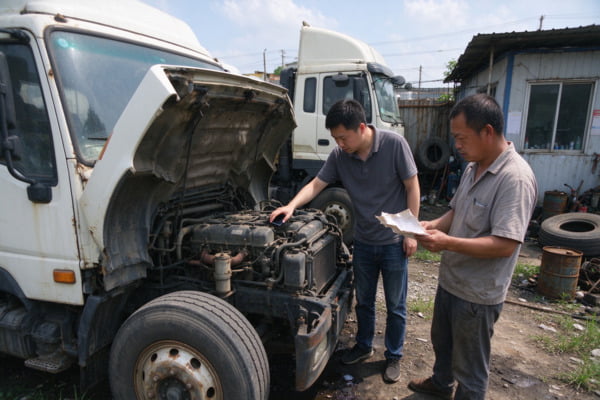
The buyers we work with most frequently — fleet operators in West Africa, construction contractors in Southeast Asia, logistics companies in the Middle East — almost all start the same way. They exhaust local options first. They find three or four trucks that might work. The prices are high. The documentation is thin. Mechanical history is verbal at best.
The Inventory Gap Is Real
In our experience handling export inquiries, buyers from markets like Nigeria, Kenya, Tanzania, and Vietnam consistently tell us the same thing: local dealers are selling 10–15 trucks and calling it a market. That's not inventory depth. That's a consignment lot.
By contrast, our warehouse and yard in Guangzhou currently holds 200+ used tractor trucks across brands including Scania, Volvo, Mercedes-Benz, MAN, HOWO, SHACMAN, SITRAK, and more. When a buyer needs eight Scania R-series units within a specific year range and horsepower band, we can often match that. A local dealer in Dar es Salaam or Jakarta simply cannot.
The Price Logic Is Inverted
This surprises first-time importers. They assume buying locally saves money because it avoids shipping costs. It often doesn't, for two reasons:
- Shipping cost is distributed across a batch. When you load 4–6 units into a container or RoRo shipment, the per-unit freight cost drops to a level that most local price premiums easily exceed.
- Local dealers are importing anyway. Many domestic dealers in these markets are themselves sourcing from China, Japan, or Europe and marking up for their risk, storage, and financing costs[1]. You're paying that margin without the transparency.
What "Near" Should Actually Mean
For B2B procurement, proximity should be measured in:
| Proximity Factor | Local Dealer | Chinese Export Supplier |
|---|---|---|
| Inventory match for your spec | Often poor | Typically much stronger |
| Pre-shipment inspection | Rare, informal | Formal process, documented |
| Mechanical history | Verbal/unknown | Engine test + visual inspection |
| Export documentation | N/A | Bill of lading, CO, customs docs |
| Batch purchasing | Difficult | Standard — 3 to 20+ units |
| After-sales support | Variable | Contractual, remote |
What Should a Pre-Shipment Inspection of a Used Tractor Truck Actually Cover?
This is where most buyers get burned — not by the price, not by the logistics, but by what wasn't disclosed before money changed hands. A truck that looks clean in photos can carry a rebuilt engine, a cracked frame, or a manipulated odometer[2]. I've seen buyers receive units that matched the photos exactly and still weren't what they ordered, because no one checked beneath the surface.
A credible pre-shipment inspection for second hand tractor trucks should cover at minimum: engine start and load test, oil and coolant condition, chassis and frame integrity, cab condition, gearbox engagement, axle and brake function, tyre condition, and mileage plausibility check. Buyers should require a written inspection report with photos before approving shipment.
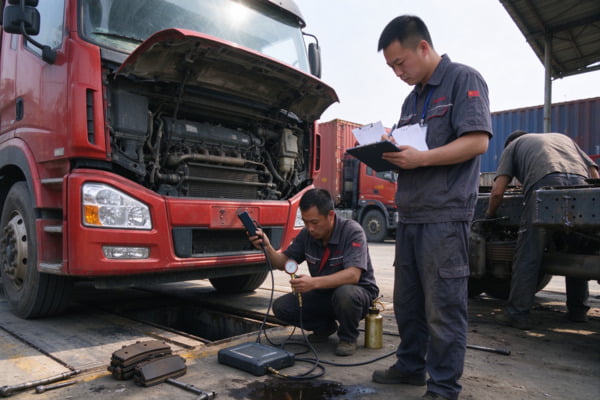
At Deli Auto, our inspection team checks each unit before quoting it to a buyer. That doesn't mean we guarantee zero defects — used trucks are used trucks. What it means is that we document what we find and communicate it honestly, so the buyer can make an informed decision.
What Our Inspection Covers
When we inspect a used Scania, Volvo, or HOWO tractor unit before shipment, the process typically includes:
Engine:
- Cold start and warm-up observation
- Load test under operating conditions
- Oil pressure, coolant temperature, and smoke behaviour
- Oil sample condition (colour, viscosity, contamination check)
Drivetrain:
- Gearbox engagement across all gears
- Clutch response
- Axle condition, differential operation
- Brake system pressure test
Chassis and Structure:
- Frame inspection for cracks, repairs, or stress fractures
- Suspension condition
- Cab mounting and tilt function
Documentation Cross-Check:
- Engine number and VIN against title documents
- Mileage plausibility against wear patterns
- Ownership history where available
We provide buyers with an inspection report and a set of condition photos. For buyers who want independent verification, we can accommodate third-party inspection agencies — and in our experience, buyers making first purchases often should arrange that.
What Inspection Cannot Guarantee
I want to be direct here. Pre-shipment inspection reduces risk. It does not eliminate it. Used trucks may have intermittent electrical faults that don't appear during a static test. Internal engine wear may not surface until extended operation[3]. Buyers should factor this into their pricing expectations and spare parts planning. Buying used equipment at the right price, with honest disclosure, is very different from buying new.
How Does Batch Purchasing from a Chinese Exporter Change the Economics?
Most first-time cross-border buyers think in single-unit terms. That's retail logic applied to a wholesale channel, and it produces the wrong conclusions. The entire cost and risk structure of importing second hand tractor trucks from China shifts meaningfully when you buy in batch.
Buying 5–20 second hand tractor trucks per shipment from a Chinese export supplier reduces per-unit freight cost, spreads inspection and documentation fees, and unlocks supplier pricing tiers that single-unit buyers never access. Buyers who understand this shift from retail logic to wholesale logic consistently get better outcomes.
The Container Math
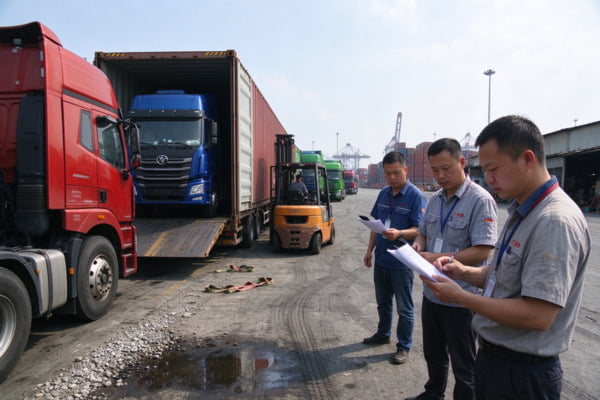
Used tractor trucks are typically shipped RoRo (Roll-on Roll-off) or in flat-rack containers depending on destination port capability. A standard RoRo vessel shipment from China to West Africa or Southeast Asia carries multiple units per booking[4]. Here is a simplified cost structure:
| Shipment Size | Ocean Freight (Approximate) | Per-Unit Freight Cost | Price Leverage |
|---|---|---|---|
| 1 unit | $1,800–$2,500 | $1,800–$2,500 | Minimal |
| 5 units | $6,000–$9,000 | $1,200–$1,800 | Moderate |
| 10 units | $10,000–$15,000 | $1,000–$1,500 | Strong |
| 20 units | $16,000–$24,000 | $800–$1,200 | Best available |
These are directional figures for illustration. Actual rates vary by destination, vessel type, and market conditions. Always confirm current freight rates with your freight forwarder.
One-Stop Export Service Reduces Hidden Costs
This matters more than buyers expect. Cross-border truck procurement involves more than buying a truck. It involves:
- Export customs declaration in China
- Certificate of Origin
- Bill of Lading
- Commercial Invoice and Packing List
- Fumigation certificate (for some markets)
- Pre-shipment inspection certificate
- Destination import clearance coordination
Each of these has a cost and a failure mode. Buyers who piece this together from multiple vendors — a separate trading company, a separate freight forwarder, a separate inspection agency — absorb coordination risk at every handoff. A supplier who handles these steps in-house, as we do at Deli Auto, reduces that risk and compresses the timeline.
Spare Parts Alongside Trucks
Another advantage of sourcing directly from a stocked exporter: you can ship critical spare parts in the same container as the trucks. Buyers in markets with limited parts availability — parts for a Volvo FH or Scania R-series are not always findable locally[5] — can pre-position engines, gearboxes, and consumables with the initial order. This is not something a local used truck dealer offers.
What Export Documentation Should You Require Before Payment?
Documentation failures are one of the most common causes of buyer losses in cross-border used truck procurement. I've spoken with buyers who paid for trucks that were held at destination customs for months because the supplier couldn't produce a clean title or a correct certificate of origin. The trucks weren't stolen. The paperwork was just incomplete.
Before releasing payment for second hand tractor trucks, buyers should require: a copy of the Chinese vehicle title, VIN and engine number matching the inspection report, a proforma invoice with full specification, the supplier's export licence, and confirmation of the shipment method and documentation package. Verify documents with your import agent before paying.
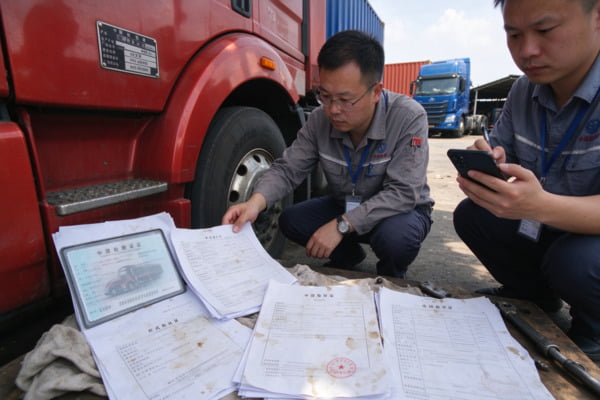
Documents to Request Before Final Payment
- Chinese vehicle registration certificate: Confirms legal ownership and matches VIN
- Proforma Invoice: Full specification, unit price, total value, payment terms
- Certificate of Origin: Required by most destination customs authorities
- Pre-shipment inspection report: Third-party or supplier-issued, with photos
- Bill of Lading (after shipment): Confirms cargo, vessel, and destination
- Commercial Invoice and Packing List: Required for import clearance
Buyers should cross-check the VIN and engine numbers on the registration certificate against the inspection report and physical photos. Discrepancies are a red flag — not necessarily fraud, but always worth clarifying before payment.
Practical note: We recommend that first-time buyers engage a local import agent at the destination who can advise on country-specific import requirements, duty rates, and customs procedures. We handle the China side of documentation; the local regulatory environment is the buyer's territory to verify.
Frequently Asked Questions
Can I really source second hand tractor trucks from China without visiting in person?
Yes, and many of our repeat buyers never visit before their first shipment. We provide detailed inspection reports, condition photos, engine test videos, and VIN documentation. For buyers making a first purchase, arranging an independent third-party inspection through a recognised agency — such as SGS or Bureau Veritas — is a reasonable step we can accommodate.
What brands of second hand tractor trucks do Chinese exporters typically stock?
Established exporters in Guangzhou typically stock both European brands — Scania, Volvo, Mercedes-Benz, MAN, DAF — and Chinese brands including HOWO, SHACMAN, SITRAK, FAW, and Dongfeng. European units tend to carry higher prices but are often preferred in markets with existing parts networks[6]. Chinese brands offer lower entry cost and, increasingly, comparable reliability for highway haulage.
How long does it take to ship used tractor trucks from China to Africa or Southeast Asia?
Transit time varies by destination. Guangzhou to West Africa (Lagos, Tema, Dar es Salaam) is typically 25–40 days by sea[7]. Guangzhou to Southeast Asia (Bangkok, Jakarta, Manila) is typically 10–20 days. Add 7–14 days for pre-shipment preparation, inspection, and container loading. A complete order-to-delivery timeline of 45–60 days is realistic for most destinations.
What is the minimum order quantity for used tractor trucks from a Chinese exporter?
This varies by supplier. At Deli Auto, we work with buyers ordering from a single unit upward, though the economics improve meaningfully at 5 units or more. Buyers with larger requirements — 10 to 50 units — can access better pricing, priority inspection scheduling, and dedicated logistics coordination.
How do I verify that a Chinese used truck supplier is legitimate before paying?
Check for a physical address and warehouse — not just a web listing. Ask for a video walkthrough of the yard. Request references from buyers in your region. Verify business registration. Use escrow or letter of credit payment terms on a first transaction rather than full advance payment. Legitimate exporters with operating stock will accept third-party inspection.
Conclusion
The search for second hand tractor trucks for sale "near me" is a natural starting point — but for B2B buyers sourcing multiple units, it's rarely the right endpoint. Local markets in most target regions offer limited inventory, limited inspection, and limited documentation. A Chinese export supplier with ready stock, structured pre-shipment inspection, and complete export logistics often delivers more certainty, not less, despite the distance.
The decision comes down to four things: Is the inventory real and available? Is the inspection honest and documented? Is the export process handled end-to-end? And can the supplier support you after the trucks land? At Deli Auto, we've spent 20 years building the answer to those four questions[8].
If you're evaluating second hand tractor trucks for your fleet or dealership, contact us with your specification — brand, year range, horsepower, drive configuration, and quantity — and we'll tell you directly what we have available and what it will take to get it to your port.
[1] "Figure of the week: Africa's used vehicle market and ...", https://www.brookings.edu/articles/figure-of-the-week-africas-used-vehicle-market-and-the-environment/. UN Comtrade and UNEP reports on used vehicle trade document substantial flows of second-hand commercial vehicles from Japan, China, and Europe to sub-Saharan Africa and Southeast Asia, consistent with the presence of intermediary dealer layers that add cost between origin and end buyer. Evidence role: general_support; source type: government. Supports: The flow of used commercial vehicles from China and Japan to African and Southeast Asian markets through intermediary dealers. Scope note: Published trade data captures cross-border shipment volumes but does not directly measure dealer markup margins applied in destination markets. ↩
[2] "Odometer Fraud", https://www.nhtsa.gov/vehicle-safety/odometer-fraud. Regulatory investigations by the European Commission and the US National Highway Traffic Safety Administration have documented odometer fraud as a widespread practice in used vehicle markets, with studies estimating that a significant share of used vehicles sold across borders carry manipulated mileage readings. Evidence role: general_support; source type: government. Supports: Odometer manipulation as a documented and prevalent risk in used vehicle markets. Scope note: Most published enforcement data concerns passenger vehicles in North American and European markets; equivalent systematic studies for used commercial truck exports from China are not widely available in English-language literature. ↩
[3] "A Guide to California's Clean Air Regulations for Heavy-Duty ...", https://ww2.arb.ca.gov/sites/default/files/truckstop/pdfs/truck_bus_booklet.pdf. Engineering literature on used diesel engine condition assessment documents that static and short-duration load tests have limited sensitivity to progressive internal wear mechanisms such as cylinder liner scoring, bearing fatigue, and valve seat recession, which may not produce detectable symptoms until cumulative operating hours exceed those achievable in a pre-shipment test cycle. Evidence role: mechanism; source type: research. Supports: The diagnostic limitations of pre-shipment inspection in detecting latent internal engine wear in used diesel engines. Scope note: Oil spectrometric analysis can improve detection of metallic wear particles indicative of internal degradation, but this technique is not universally applied in pre-shipment inspection protocols for used commercial vehicles. ↩
[4] "SHL RORO Shipping-Delivered over 10000units plus", https://www.facebook.com/sen.sukanto/posts/shl-roro-shipping-already-delivered-10000-units-of-vehicles-we-keep-expanding-ou/23950497021319678/. UNCTAD and shipping industry analyses of vehicle carrier trade identify RoRo vessels as the primary mode for bulk used vehicle exports from East Asian ports to African and Southeast Asian destinations, owing to lower handling costs and faster loading relative to containerisation for wheeled cargo. Evidence role: general_support; source type: institution. Supports: RoRo shipping as a standard logistics method for used vehicle exports from East Asia to Africa and Southeast Asia. Scope note: Specific modal share data for used trucks as distinct from passenger vehicles on China–Africa lanes is not consistently disaggregated in public shipping statistics. ↩
[5] "Top10 Fast-Moving European Truck Spare Parts-Ultimate ...", https://cascadeoverseas.com/top-10-fast-moving-european-truck-spare-parts-ultimate-guide. Studies on automotive aftermarket development in sub-Saharan Africa identify spare parts availability for European commercial vehicle brands as a persistent constraint, with formal authorised dealer networks concentrated in major urban centres and counterfeit or incompatible parts prevalent in informal supply chains. Evidence role: general_support; source type: research. Supports: Limited availability of genuine spare parts for European commercial vehicle brands in sub-Saharan African and Southeast Asian markets. Scope note: Parts availability varies significantly by country and city; the claim applies most strongly to rural and secondary markets rather than major commercial hubs where authorised distributors may operate. ↩
[6] "Used Trucks for Export: Prices, Sources, and What to Know", https://www.facebook.com/fb-answers/used-trucks-for-export/. Market analyses of used commercial vehicle trade in sub-Saharan Africa document persistent price premiums for European-origin trucks from brands such as Volvo, Scania, and Mercedes-Benz relative to Chinese-manufactured equivalents, attributed to buyer perceptions of durability, established parts networks, and resale value in fleet operator segments. Evidence role: general_support; source type: research. Supports: Price premiums for European-brand used commercial vehicles relative to Chinese-brand equivalents in African and Southeast Asian markets. Scope note: Systematic price comparison data across brands and markets is not consistently published; available evidence is largely drawn from trade press and importer surveys rather than controlled pricing studies. ↩
[7] "Guangzhou to Lagos By Air freight, Container ship or Road", https://www.fluentcargo.com/routes/guangzhou-cn/lagos-ng. Port authority and freight forwarder industry data indicate that ocean transit from South China ports to major West African hubs such as Lagos (Apapa) and Tema typically ranges from 25 to 40 days depending on vessel routing, port calls, and seasonal scheduling, with East African ports such as Dar es Salaam adding additional transit time. Evidence role: general_support; source type: institution. Supports: Approximate sea transit times between South China ports and major West and East African ports. Scope note: Transit times are subject to variation based on carrier, routing, port congestion, and seasonal factors; published estimates should be confirmed with a freight forwarder at time of booking. ↩
[8] "China - Standards for Trade", https://www.trade.gov/country-commercial-guides/china-standards-trade. China's State Administration for Market Regulation (SAMR) maintains a publicly accessible National Enterprise Credit Information Publicity System through which buyers can verify a Chinese company's registration date, legal status, and business scope, providing an independent means of corroborating supplier claims about operating history. Evidence role: general_support; source type: government. Supports: Methods available to buyers for independently verifying the registration history and operating tenure of Chinese export companies. Scope note: The SAMR database confirms registration records but does not independently validate operational claims such as export volume or years of active trading in a specific product category. ↩