Finding overhauled semi trucks for sale sounds like a sourcing problem. But after years of handling export inquiries from buyers across Africa, Southeast Asia, and South America, I've learned the harder truth: the real challenge is not where to look — it's how to verify what you're actually buying once you find it.
"Overhauled" means different things to different sellers. To one dealer, it means a full engine replacement and brake overhaul with documented parts. To another, it means a pressure wash, a coat of paint, and fresh cab upholstery. Buyers who understand this distinction before signing a purchase order protect their fleets and their margins. Those who don't often spend the first six months dealing with breakdowns that should have been caught before shipment.
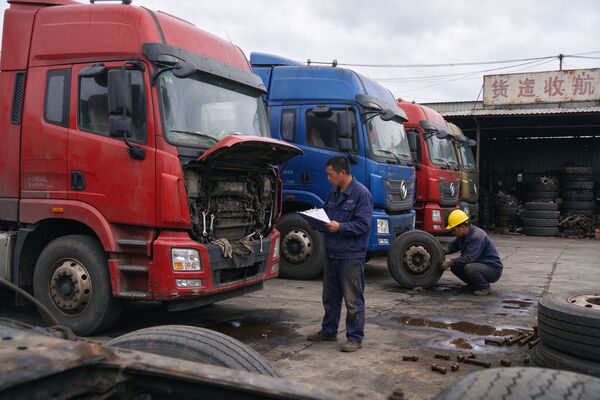
This article covers the main sourcing channels, how to evaluate overhaul claims in each one, and what a credible pre-shipment inspection should actually include. If you are buying 3–10 units for fleet operations or sourcing in bulk for resale, the sections below are written with your risk profile in mind.
What Does "Overhauled" Actually Mean When Buying Used Semi Trucks?
Buyers often assume "overhauled" is an industry-standard term. It is not. This creates a dangerous gap between what sellers advertise and what buyers receive — and the breakdown usually happens thousands of kilometers away from where the truck was purchased.
An overhauled semi truck should have documented mechanical work on its core systems: engine, gearbox, axles, brakes, and frame. The word "overhauled" by itself proves nothing. What matters is whether each system has been inspected, repaired or replaced as needed, and supported by verifiable documentation — service records, replaced parts receipts, or a third-party inspection report.
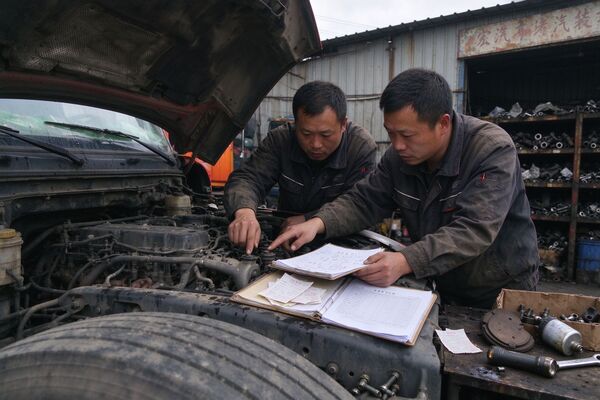
Understanding what "overhauled" should cover — and what sellers often skip — gives buyers a practical checklist to apply across any sourcing channel.
The five systems that define a real overhaul
When we inspect used semi trucks before export, we evaluate each of these systems independently. A truck that passes on three but fails on two is not "overhauled" — it is partially repaired.
| System | What a genuine overhaul includes | Red flags to watch for |
|---|---|---|
| Engine | Test run, oil pressure check, no visible leaks, records of major work | Freshly painted block hiding cracks or leaks |
| Gearbox | Smooth shifting through all ranges, no abnormal noise, oil condition check | Slipping gears dismissed as "normal wear" |
| Axles | Hub bearing condition, differential function, no oil seepage | Worn or mismatched axle components |
| Brakes | Full brake system inspection, lining thickness, air pressure hold | Spongy pedal feel, air leaks in the system |
| Frame & chassis | Visual inspection for cracks, welds, and corrosion | Fresh undercoat paint applied over rust or repair welds |
Why cosmetic refurbishment gets sold as a full overhaul
Cosmetic refurbishment is cheaper and faster than mechanical overhaul. A truck that costs significantly less to refresh visually can still command a higher asking price when it is described as "overhauled." In export markets where buyers cannot inspect in person, this gap is easy to exploit.
In my experience handling pre-shipment preparations, the most commonly skipped items are gearbox fluid replacement, brake lining inspection, and frame underside checks[1]. These are also the systems most likely to cause failures within the first 10,000–20,000 km of operation[2].
Which Sourcing Channels Carry What Risks?
The question "where can I find overhauled semi trucks" has several valid answers. Each sourcing channel comes with a different risk profile — not necessarily a better or worse one, but a different one that requires different verification capacity from the buyer.
The main sourcing channels for overhauled semi trucks include OEM-affiliated dealers, local auction yards and independent dealers, B2B exporters in China, and online marketplaces. Each channel differs in traceability, inspection access, and parts documentation. Buyers should match their verification capability to the channel they choose — not assume any single channel is universally safer.
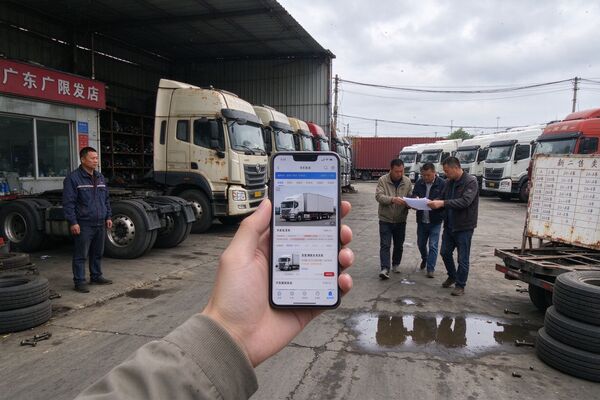
Here is how each channel typically performs on the variables that matter most to bulk B2B buyers.
OEM-affiliated dealers and certified used programs
Brands like Volvo, Scania, Mercedes-Benz, and MAN operate certified pre-owned or approved used programs in some markets[3]. These programs tend to offer the most structured documentation — inspection checklists, service histories, and sometimes limited warranties.
Key trade-offs:
- Higher unit costs compared to independent channels
- Limited inventory depth for bulk purchases
- Primarily available in Europe and North America, with limited presence in developing markets
- Better suited for buyers with high documentation requirements and lower price sensitivity
For buyers sourcing one or two trucks for a specific application, this channel often makes sense. For buyers needing 10+ units with competitive pricing for resale, the volume and cost constraints are usually prohibitive.
Local auction yards and independent dealers
Auction yards in Europe, Japan, and the United States offer large inventories and competitive pricing. Independent dealers in secondary markets often carry trucks already destined for export.
Key trade-offs:
- Inspection access is often limited to visual walkarounds at auction
- Documentation varies widely — some trucks have full service records; many have none
- Buyers need either local representation or a trusted buying agent to verify condition before bidding
- Risk of buying cosmetically prepared trucks without mechanical documentation is highest here
In my experience, buyers who succeed with this channel have either visited in person, hired a local inspection service, or worked repeatedly with a known dealer who has a reputation stake in repeat business.
B2B exporters in China
Chinese exporters supply a significant share of the used trucks operating in Africa, Southeast Asia, Central Asia, and South America[4]. The inventory typically includes both European brands (Scania, Volvo, MAN, Mercedes-Benz) and Chinese domestic brands (HOWO, SHACMAN, SITRAK, Dongfeng, FAW).
This channel is where we operate at Deli Auto, so I will be direct about what distinguishes reliable exporters from unreliable ones rather than describing our own process as the standard.
What credible Chinese exporters should provide:
- Pre-shipment inspection reports covering engine, gearbox, brakes, axles, and frame
- Engine test run documentation (oil pressure readings, idle behavior, smoke assessment)
- Photos and video of the specific unit — not stock images
- Spare parts availability confirmation for the brand and model in your target market
- Clear documentation of what overhaul work was performed and what was not
Red flags in this channel:
- Catalog-style listings with no unit-specific photos
- Inspection reports that are one page with no system-by-system breakdown
- Sellers who cannot clarify what "overhauled" specifically means for the unit being sold
- No ability to arrange third-party inspection before payment
Online B2B marketplaces
Platforms such as Alibaba, Truckscout24, Mascus, and others aggregate listings from dealers and exporters globally[5]. They offer reach and comparison shopping but provide almost no inherent verification.
Listings on these platforms are only as reliable as the seller behind them. The marketplace itself does not verify overhaul claims. Buyers should treat these platforms as discovery tools, then apply the same verification standards they would use with any other channel before committing funds.
How Do I Verify an Overhaul Claim Before Buying Remotely?
Most B2B buyers purchasing used semi trucks for markets in Africa, Southeast Asia, or South America cannot inspect in person. This makes pre-shipment inspection the most critical step in the entire transaction — and the step most frequently treated as a formality.
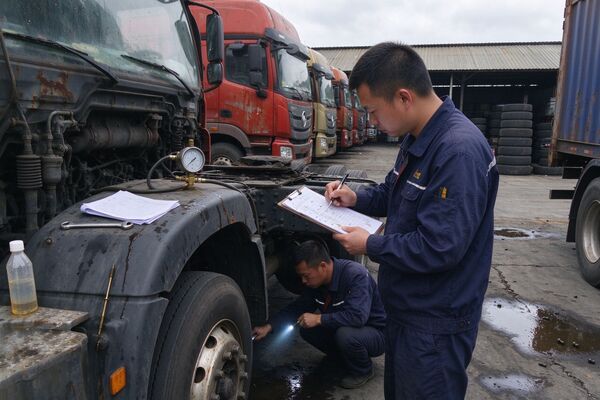
A credible pre-shipment inspection for an overhauled semi truck covers engine test run results, oil pressure readings, brake system function, gearbox shift behavior, frame condition (including underside), fluid condition, and documentation of any work performed. An inspection report that lacks system-specific findings and relies only on photos is not a functional verification document.
What a weak inspection report looks like
I have seen inspection reports that amount to a set of exterior photos and a statement that the truck "started and ran well." This tells a buyer almost nothing about the condition of the components that are most likely to fail.
A weak inspection report typically:
- Contains only photos, no written findings
- Describes the truck as "good condition" without specifying which systems were checked
- Makes no mention of the engine oil condition, coolant, or brake air pressure
- Includes no documentation of overhaul work or replaced parts
What a credible inspection report should include
A useful pre-shipment inspection report documents findings system by system. At minimum, buyers should request:
- Engine: Start-up behavior, idle stability, exhaust color, oil pressure reading, visible leaks
- Gearbox: Gear engagement through all ranges, oil condition, abnormal noise
- Axles and differentials: Oil seepage, bearing noise, function check
- Brakes: Air pressure build and hold test, lining condition if accessible, hand brake function
- Frame and chassis: Underside photos, crack and weld inspection, corrosion assessment
- Cab and electrical: Dashboard function, lights, mirrors, horn, windows
- Overhaul documentation: What specific work was done, what parts were replaced, what was left as-is
Third-party inspection as a verification layer
For buyers without an existing supplier relationship, engaging an independent third-party inspection company — such as SGS, Bureau Veritas, or a local inspection service in the exporting country — adds a layer of verification that no seller can provide for themselves.
This is especially relevant for first-time purchases from a new supplier, high-value orders, and any purchase where the overhaul scope is described in general terms rather than specific documented work.
Does Brand Choice Affect Where You Should Source?
Brand and model selection is often treated as a preference question. In practice, it is a parts availability question — and it directly affects which sourcing channel makes the most sense.
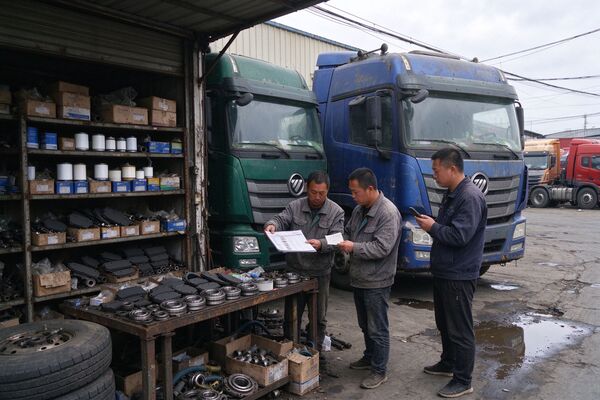
The best overhauled semi truck for your operation is not necessarily the most recognized brand. It is the brand for which spare parts are reliably available in your operating market. A Scania with a rebuilt engine is only as good as your ability to source Scania parts locally when something fails six months later[6].
European brands vs. Chinese brands in developing markets
| Brand type | Typical strengths | Parts availability consideration |
|---|---|---|
| Scania, Volvo, MAN | High durability, strong resale value, well-documented engineering | Parts are available but often imported — higher cost, longer lead time in some markets |
| Mercedes-Benz, DAF, Renault | Wide European used market availability | Parts networks vary significantly by country |
| HOWO, SHACMAN, SITRAK | Competitive pricing, strong availability from China, large install base in Africa and Asia | Local parts networks are well-developed in many target markets; lower parts cost |
| Dongfeng, FAW, Hino, Isuzu | Reliable mid-range options with established regional presence | Parts availability is market-specific — verify before committing |
In markets like West Africa, East Africa, and parts of Southeast Asia, HOWO and SHACMAN trucks are operated in large numbers. Local mechanics are familiar with them, and spare parts are stocked by local distributors[7]. A buyer operating in one of these markets who insists on sourcing only European brands may face significantly higher per-incident repair costs, even if the trucks themselves are in better initial condition.
The right answer depends on your operating environment. I typically ask buyers about their local parts ecosystem before recommending a brand — not because one brand is universally better, but because a truck that can be maintained locally is always more valuable than one that cannot.
Frequently Asked Questions
What is the difference between "overhauled" and "refurbished" in used semi trucks?
In practice, the terms overlap — and neither is a regulated standard[8]. "Overhauled" typically implies mechanical work on core systems like the engine, gearbox, and brakes. "Refurbished" more often refers to cosmetic or surface-level work. Always ask sellers to specify exactly what was done and request supporting documentation.
Is it safe to buy overhauled semi trucks from China without visiting in person?
It is possible, but it requires a structured verification process. You need unit-specific photos and video, a detailed pre-shipment inspection report covering all major systems, and ideally a seller with verifiable references or a track record in your market. For first-time purchases, consider engaging a third-party inspection service.
How many kilometers is too many for an overhauled semi truck?
Mileage alone is not a reliable indicator of condition after an overhaul. A high-mileage truck with a documented engine rebuild and strong inspection results can outperform a lower-mileage truck with no service history. Focus on verified overhaul scope and current mechanical condition rather than odometer readings.
Which truck brands have the best parts availability in Africa?
Parts availability varies by country and region. HOWO, SHACMAN, and Dongfeng have well-established supply chains across much of sub-Saharan Africa. Scania and Volvo parts are available but typically cost more and take longer to source locally[9]. Confirm your specific country's parts market before choosing a brand.
What should I ask a seller before agreeing to buy an overhauled semi truck?
Ask for a system-by-system inspection report, documentation of all overhaul work performed, photos and video of the specific unit, confirmation of parts availability for your market, and the seller's process if issues arise after shipment. Any seller who cannot or will not provide these items is a risk, regardless of price.
Conclusion
Finding overhauled semi trucks for sale is straightforward. Verifying that a truck has been genuinely overhauled — before you pay and before it ships — is the harder and more important task. The sourcing channel matters less than your ability to verify overhaul claims through documentation, inspection reports, and supplier accountability.
Match your verification capacity to the channel you choose, confirm parts availability in your operating market before committing to a brand, and treat a credible pre-shipment inspection as the decision gate — not a formality after the deal is done. Whether you are buying European brands or Chinese trucks like HOWO and SHACMAN, these principles apply equally.
At Deli Auto, we work with B2B buyers across Africa, Southeast Asia, South America, and beyond — sourcing, inspecting, and exporting used semi trucks and spare parts from our 12,000㎡ facility in Guangzhou. If you are evaluating overhauled semi trucks for your fleet or for resale, contact us to discuss your requirements, available inventory, and how we handle pre-shipment inspection for your specific market.
[1] "5.2.2 Vehicle Inspections", https://csa.fmcsa.dot.gov/safetyplanner/MyFiles/SubSections.aspx?ch=22&sec=65&sub=148. Studies of pre-purchase and pre-shipment inspections on used commercial vehicles consistently identify brake system deficiencies, drivetrain fluid degradation, and structural corrosion as among the most frequently documented defects, supporting the claim that these systems are commonly under-addressed in cosmetic refurbishment workflows. Evidence role: general_support; source type: research. Supports: That brake, drivetrain, and structural systems are disproportionately represented among defects found during used commercial vehicle inspections. Scope note: Direct empirical data specifically quantifying skip rates for individual overhaul steps across export-oriented used truck dealers is limited in published literature. ↩
[2] "Heavy-Duty Engine Rebuilding Practices", https://nepis.epa.gov/Exe/ZyPURL.cgi?Dockey=P100UN50.TXT. Fleet maintenance research indicates that latent mechanical defects in used commercial vehicles — particularly those involving brake systems and drivetrain components — frequently present within the initial operational period after acquisition, though the precise mileage threshold varies by component type, load conditions, and operating environment. Evidence role: general_support; source type: research. Supports: That inadequately serviced drivetrain and brake components in used heavy vehicles tend to manifest failures within a relatively short operational period following purchase. Scope note: The specific 10,000–20,000 km figure cited in the article is not directly corroborated by a single published source; the claim is directionally supported but the numeric range should be treated as illustrative rather than empirically established. ↩
[3] "Search Certified Volvo Trucks for Sale", https://www.volvotrucks.us/purchasing-a-truck/volvo-certified/. Major European commercial vehicle manufacturers including Volvo Trucks, Scania, Mercedes-Benz Trucks, and MAN operate certified or approved used vehicle programs that typically include standardized inspection protocols, service history requirements, and in some cases limited warranty coverage, though program availability and scope vary by market and model year. Evidence role: general_support; source type: institution. Supports: That major European truck OEMs maintain structured certified used vehicle programs with defined inspection and documentation standards. Scope note: Program terms, geographic availability, and inspection standards differ across manufacturers and are subject to change; buyers should consult current OEM documentation for their specific market. ↩
[4] "US International Trade in Goods and Services, August 2026", https://www.bea.gov/data/intl-trade-investment/international-trade-goods-and-services. Chinese customs and international trade data indicate that China has become one of the leading exporters of commercial vehicles to sub-Saharan Africa, Southeast Asia, and South America, with export volumes growing substantially over the past decade, though precise used-vehicle-specific breakdowns are less consistently reported than new vehicle figures. Evidence role: statistic; source type: government. Supports: That China is a major exporter of commercial vehicles, including used trucks, to developing markets in Africa, Southeast Asia, and South America. Scope note: Publicly available trade statistics often aggregate new and used vehicle exports differently across reporting agencies, making precise used-truck-specific market share figures difficult to isolate from general commercial vehicle export data. ↩
[5] "Bureau of Consumer Protection", https://www.ftc.gov/about-ftc/bureaus-offices/bureau-consumer-protection. Research on B2B e-commerce platforms documents that while many marketplaces implement seller identity verification and feedback mechanisms, the substantive accuracy of product condition claims — including mechanical condition descriptions for used vehicles — is generally not independently verified by the platform, placing the burden of due diligence on the buyer. Evidence role: general_support; source type: research. Supports: That B2B online marketplaces for used commercial vehicles do not independently verify the mechanical condition claims made in seller listings. Scope note: Platform policies vary and evolve; some marketplaces offer optional third-party inspection integration or escrow services that partially address this gap, and buyers should review current platform terms rather than assuming a uniform absence of verification tools. ↩
[6] "Economic Analysis of Vehicle Technologies", https://www.anl.gov/esia/economic-analysis-of-vehicle-technologies. Research on commercial vehicle fleet operations in developing markets identifies spare parts availability as a primary determinant of vehicle downtime and total operating cost, with fleets operating brands lacking local supply chains experiencing disproportionately longer out-of-service periods and higher per-repair costs compared to fleets using brands with established local parts distribution. Evidence role: mechanism; source type: research. Supports: That spare parts availability in the operating market is a significant driver of total cost of ownership and vehicle downtime for commercial truck fleets. Scope note: Quantitative comparisons between specific brands on this metric are limited in peer-reviewed literature; much of the available evidence is drawn from fleet operator surveys and development finance institution project reports rather than controlled studies. ↩
[7] "HOWO vs SHACMAN which is better for Africa", https://www.shacman-group.com/news/howo-vs-shacman-which-is-better-for-africa/. Industry analyses of the African commercial vehicle market document the rapid expansion of Chinese truck brands, including Sinotruk (HOWO) and SHACMAN, with after-sales and parts distribution networks established in multiple sub-Saharan African countries, contributing to their growing share of the working truck fleet in those regions. Evidence role: general_support; source type: research. Supports: That Chinese truck brands, particularly HOWO and SHACMAN, have developed substantial distribution and after-sales infrastructure in African and Southeast Asian markets. Scope note: The depth and reliability of these networks varies significantly by country and urban versus rural location; the claim of broad local availability should be verified for specific operating markets rather than assumed uniformly. ↩
[8] "5.2 Inspection, Repair, and Maintenance (Part 396) - CSA", https://csa.fmcsa.dot.gov/safetyplanner/myfiles/Sections.aspx?ch=22&sec=65. No internationally harmonized standard governing the use of condition descriptors such as 'overhauled' or 'refurbished' for used commercial vehicles in export trade has been adopted by major standards bodies including ISO or SAE International, leaving these terms subject to seller-defined interpretation in the absence of contractual specification. Evidence role: definition; source type: institution. Supports: That there is no universally adopted regulatory or industry standard defining 'overhauled' or 'refurbished' for used commercial vehicles in cross-border trade. Scope note: Some national markets and OEM certified used programs apply internal definitions to these terms; the absence of a universal standard does not preclude the existence of market-specific or contractual definitions that buyers can negotiate. ↩
[9] "Chinese language", https://en.wikipedia.org/wiki/Chinese_language. Assessments of commercial vehicle operating costs in sub-Saharan Africa document that spare parts for European truck brands are predominantly imported through multi-tier distribution chains, resulting in higher landed costs and longer availability lead times compared to Chinese brand parts supplied through direct distribution networks established in the region. Evidence role: general_support; source type: research. Supports: That European truck brand spare parts in sub-Saharan African markets are generally more costly and subject to longer procurement lead times than parts for Chinese brands with local distribution. Scope note: Cost and lead time differentials vary substantially by country, specific part category, and proximity to major distribution hubs; the generalization may not hold uniformly across all African markets or for all part types. ↩