Sourcing used trucks in China sounds straightforward until you realize the real problem isn't finding sellers — it's knowing which sellers can actually deliver what they promise. Buyers who jump straight to price comparisons often discover the hard way that hidden mechanical problems, incomplete export documentation, and zero post-sale support cost far more than any initial discount.
Finding used trucks for sale in China is not a directory problem. It is a risk-filtering problem. The main sourcing channels include online B2B marketplaces, domestic trading companies, manufacturer-direct outlets, specialty export suppliers, and physical auction yards. Each channel type offers different levels of inspection depth, export capability, and after-sales accountability. Choosing the wrong channel — not just the wrong truck — is where most overseas buyers lose money.
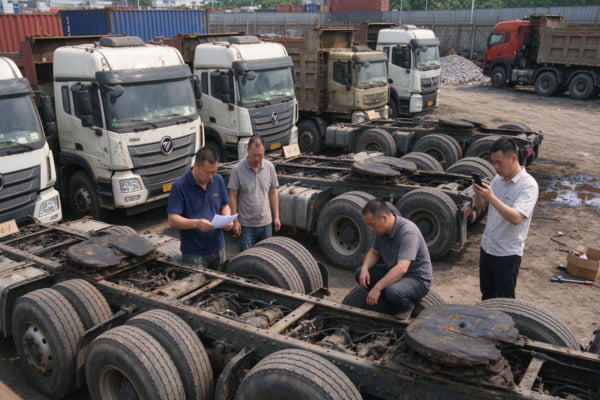
The channel you use shapes every variable that follows: what inspection is possible, who handles ocean freight, and who answers the phone six months later when a gearbox fails. Understanding each option in depth is the only way to make a sourcing decision that holds up beyond the invoice.
What sourcing channels exist for used trucks in China?
Most buyers arrive with a single question: "Who sells used trucks in China?" That question almost always reveals a bigger gap. The real variables — inspection access, export licensing, parts availability, shipping experience — differ dramatically depending on where you source, not just who you source from.
Each channel type in China's used truck market comes with a different risk profile. Understanding those profiles before you contact any supplier will sharpen every question you ask and protect your procurement budget.
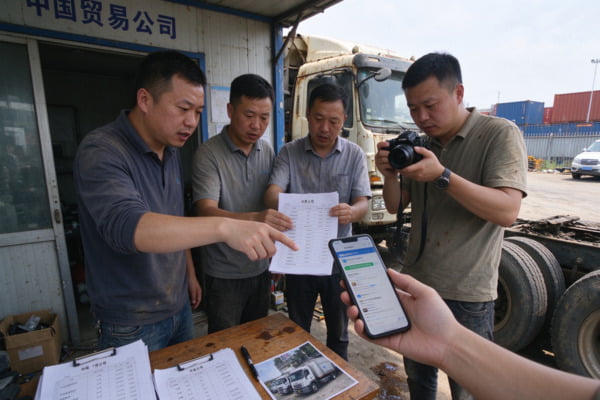
Here is a breakdown of the five main channels international B2B buyers use, along with what each one typically can and cannot offer.
1. Online B2B Marketplaces
Platforms like Alibaba, Made-in-China, and Global Sources list hundreds of used truck suppliers[1]. They are a reasonable starting point for identifying potential suppliers, but they are not a substitute for due diligence.
What these platforms cannot tell you:
- Actual engine hours versus listed mileage
- Frame repair history or structural damage
- Whether the seller has a valid export license
- Whether the listing photo matches the actual vehicle in stock
Buyers who treat a marketplace listing as a specification sheet — rather than as a lead-generation tool — consistently run into problems. Use these platforms to find candidates, not to make final procurement decisions.
2. Domestic Chinese Trading Companies
Trading companies act as intermediaries. They source trucks from various yards and resellers, then mark up and resell to international buyers. Some have genuine sourcing relationships and logistics networks. Others are small operations with no fixed inventory, no inspection capability, and no ability to manage container loading independently.
The practical risk: if a trading company cannot show you a physical yard, a consistent inspection process, or a track record of completed exports, you are essentially paying a margin for nothing but an introduction.
3. Manufacturer-Direct Used Vehicle Outlets
Some major truck manufacturers — particularly Chinese brands like HOWO, SHACMAN, FAW, and Dongfeng — operate official used vehicle trade-in programs or certified pre-owned outlets. These can offer documented service histories for vehicles originally sold through their dealer network.
The limitation is that these programs primarily serve the domestic Chinese market. Export packaging, international shipping coordination, and destination-country compliance are typically outside their scope. A buyer expecting turnkey export service from a manufacturer outlet will likely face significant gaps.
4. Specialty Export Suppliers
Specialty exporters focus specifically on international B2B buyers. They typically maintain a physical yard, offer pre-shipment inspection, handle container loading, manage customs documentation, and have established relationships with freight forwarders.
From what we see in export inquiries at Deli Auto, this is the channel type that generates the fewest post-shipment disputes — not because exporters are inherently more honest, but because their entire operation is structured around the requirements of cross-border transactions. They have reputational and operational skin in the game.
5. Physical Auction Yards and Liquidation Sales
China has regional auction markets where fleet operators, leasing companies, and logistics firms liquidate used vehicles[2]. Prices can be attractive. However, auction purchases typically offer no inspection window, no warranty, and no export support. For experienced buyers with local representation and independent inspection teams, auctions can work. For overseas buyers operating remotely, the risk profile is very high.
Channel Comparison at a Glance
| Channel | Physical Inventory | Inspection Depth | Export Capability | After-Sales Support |
|---|---|---|---|---|
| Online Marketplace | Variable | None provided | Verify separately | Rare |
| Trading Company | Often indirect | Limited | Variable | Uncommon |
| Manufacturer Outlet | Yes (limited range) | Partial | Minimal | Domestic only |
| Specialty Exporter | Yes | Structured | Full-service | More common |
| Auction Yard | Yes | None | None | None |
Why do truck listings in China rarely tell the full story?
This is one of the questions we hear most often from buyers doing their first sourcing run in China: "The photos look fine — what else do I need to check?" That question, while understandable, signals a gap in how used truck procurement risk is distributed.
A listing shows you what the seller wants you to see. It cannot show you what the seller either doesn't know or isn't volunteering.
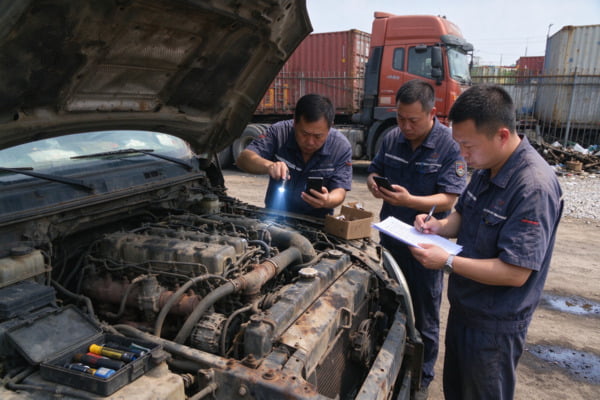
The mechanical variables that determine a used truck's actual value — and its total cost of ownership for your fleet — are almost never visible in a listing.
What a Listing Cannot Reveal
Engine condition beyond mileage figures. Odometer readings on used trucks in emerging-market resale channels are frequently unreliable[3]. Engine hours, oil consumption patterns, compression test results, and recent major overhaul history are the meaningful data points. These require physical inspection, not a product page.
Gearbox and drivetrain wear. Gearbox condition is one of the most common hidden cost sources in used truck procurement[4]. A gearbox that shifts acceptably during a brief test drive may still have worn synchros, bearing play, or oil seal failures that appear within the first 10,000 km of operation. Without bench testing or an inspection by an experienced technician, this risk is simply not visible.
Frame and structural history. Trucks that have been in accidents, overloaded, or operated on rough terrain may carry frame stress, weld repairs, or alignment issues that are cosmetically obscured. Rust treatment and fresh paint can hide significant structural concerns. A competent pre-shipment inspection will include a frame walk and documentation of any repairs.
Destination-country compliance. Emission standards, axle load limits, lighting configurations, and documentation requirements vary by country[5]. A truck that is legal to operate in China may require modification, re-registration documentation, or technical certification to operate legally in your market. Suppliers who primarily serve domestic Chinese buyers may have no familiarity with these requirements.
What to Ask Instead of Just Reviewing Photos
When evaluating a supplier, shift your questions away from the listing and toward the inspection process:
- Do you provide a pre-shipment inspection report with engine test results?
- Can you supply video of the engine running under load?
- What is your process for identifying and disclosing prior accident or repair history?
- Have you exported to my destination country before? What documentation did you prepare?
- What happens if a major mechanical issue is discovered after arrival?
Suppliers who answer these questions with specific, documentable processes are meaningfully different from suppliers who answer with reassurance.
Is export capability the same as having trucks in stock?
No — and conflating the two is one of the most common and expensive mistakes international buyers make.
A supplier can have a yard full of trucks and still be completely unable to manage a compliant, on-time international shipment. These are separate operational competencies. Buyers who discover this gap after payment has been made face delays, customs holds, and sometimes loss of cargo.
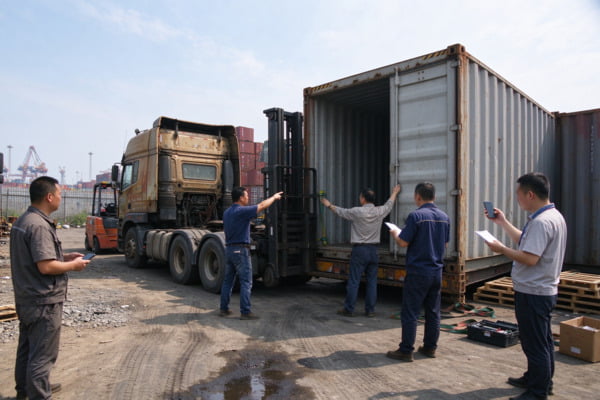
Export capability is a specific, verifiable cluster of skills and resources that goes well beyond having inventory.
What Full Export Capability Actually Involves
Container loading engineering. Loading trucks onto flat-rack or open-top containers requires knowledge of weight distribution, tie-down standards, and cargo dimensions[6]. Improper loading causes shipping damage and can result in rejection at the destination port. Ask whether the supplier manages loading in-house or subcontracts it.
Customs documentation. China's export documentation requirements include customs declarations, commercial invoices, packing lists, certificates of origin, and in some cases additional compliance certificates[7]. Errors or omissions in these documents cause delays and fines. A supplier who handles this in-house, with experienced staff, reduces this risk substantially.
Freight forwarding relationships. Reliable export suppliers maintain long-term relationships with freight forwarders and shipping lines. This means better visibility on vessel schedules, faster resolution of booking problems, and more accurate ETAs for your planning.
Destination-country experience. Exporting to West Africa requires different documentation, different Incoterms awareness, and different preparation than exporting to Southeast Asia or Eastern Europe. Suppliers with experience in your target market understand the compliance requirements in advance, not after a problem arises.
At Deli Auto, we handle container loading, customs clearance, and ocean shipping as integrated services — not as separate subcontracted steps. In my experience, buyers who try to piece these together from separate vendors are assembling risk rather than reducing it.
What happens after the trucks ship?
Most sourcing searches focus entirely on the transaction: price, condition, shipment date. After-sales support is rarely the first question buyers ask. In almost every case where we have seen a procurement relationship break down, it was not the initial purchase that caused the problem — it was the absence of technical support when something needed attention after arrival.
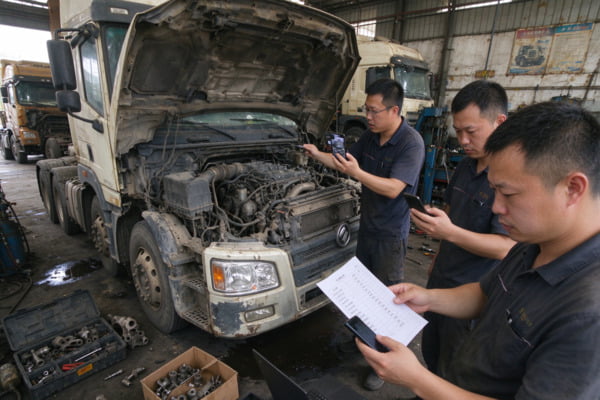
The total cost of operating a used truck fleet is not determined by the purchase price. It is determined by how quickly you can diagnose problems, source correct parts, and get vehicles back into service.
After-Sales Variables Worth Evaluating Before You Buy
Spare parts availability. A supplier with physical stock of engines, gearboxes, axles, and genuine spare parts can reduce your downtime when a component fails. Ask specifically whether your supplier carries parts inventory for the brands and models you are purchasing — and whether those parts can be shipped to your location.
Technical consultation access. Can you contact a qualified engineer at your supplier after shipment if a mechanical issue arises? This sounds basic, but many buyers discover post-purchase that their supplier's technical knowledge ends at the sales call. We offer lifetime technical consultation to buyers specifically because this gap is so common and so costly.
Documentation for local maintenance. Buyers operating trucks in markets where OEM service networks are thin need detailed maintenance documentation, parts diagrams, and service records. Ask what documentation ships with the vehicles.
Warranty terms in writing. Be specific about what is and is not covered, for how long, and what the claims process looks like. Vague reassurances about "quality guarantees" are not warranty terms.
Frequently Asked Questions
How do I verify that a used truck supplier in China is legitimate?
Request verifiable documentation: business registration, export license, and a physical yard address. Ask for video walkthroughs of their inventory and warehouse. Check whether they can provide inspection reports from previous exports. Suppliers with real operational depth can demonstrate it specifically — they do not need to rely on general claims.
What brands of used trucks are typically available from Chinese exporters?
Both European and Chinese brands are widely available. Common European brands include Scania, Volvo, Mercedes-Benz, MAN, DAF, Renault, and Iveco. Chinese brands include HOWO, SHACMAN, SITRAK, FAW, Dongfeng, and others. Availability depends on the supplier's sourcing region and inventory depth. Confirm live stock before assuming availability.
Can I inspect used trucks in China before I pay?
Yes — and you should. Reputable export suppliers welcome pre-shipment inspection, either by the buyer's own agent or through a third-party inspection company. Suppliers who resist or delay inspection access should be treated as a significant red flag.
What documents should I receive with a used truck export from China?
At minimum: commercial invoice, packing list, bill of lading, certificate of origin, and customs clearance documents. Depending on your destination country, you may also need an export certificate, vehicle inspection certificate, or specific compliance documentation. Confirm requirements with your local customs authority before ordering.
How long does shipping typically take from China to my country?
Transit times vary by destination. General ranges: Africa 25–45 days, Southeast Asia 10–20 days, Middle East 15–25 days, South America 30–50 days[8]. Factors include port of loading, vessel schedule, transshipment requirements, and destination port efficiency. A supplier with active freight forwarding relationships can provide more accurate estimates for your specific route.
Conclusion
Finding used trucks for sale in China is not the hard part. The hard part is identifying which sourcing channel gives you inspection access, genuine export capability, and reliable after-sales support — not just an attractive price on a listing. Every channel carries a different risk profile, and every gap in inspection or logistics documentation carries a real cost that arrives after payment, not before.
At Deli Auto, we work with international B2B buyers across Africa, Southeast Asia, the Middle East, and beyond — managing sourcing, inspection, container loading, customs clearance, and long-term technical support from a single operation in Guangzhou. If you are evaluating suppliers for your next used truck procurement, contact us directly to discuss your requirements, review our current inventory, and understand exactly what our inspection and export process covers.
[1] "B2B Supplier Capacity Verification: A Practical Guide for ...", https://seller.alibaba.com/blogs/2026/southeast-asia/personal-care-appliances/supplier-capacity-verification-guide-alibaba-b2b. Research on B2B e-commerce platforms has found that supplier self-reported information on listing pages is not independently verified by the platform in most cases, placing the burden of due diligence on the buyer. Evidence role: general_support; source type: research. Supports: That B2B marketplaces provide limited verification of supplier claims and should not substitute for independent due diligence. Scope note: Platform verification policies change over time; the degree of vetting varies by platform tier and membership level. ↩
[2] "China Commercial Vehicle Industry Report, 2021-2026", https://uk.finance.yahoo.com/news/china-commercial-vehicle-industry-report-114400603.html. Industry analyses of China's used commercial vehicle market have identified regional auction yards as an established liquidation channel for fleet operators, leasing companies, and logistics firms, particularly in major logistics hubs. Evidence role: historical_context; source type: research. Supports: That China has a functioning used commercial vehicle auction sector used by fleet operators and leasing companies for vehicle liquidation. Scope note: Comprehensive English-language academic sources on China's used truck auction sector are limited; available data is largely from industry reports rather than peer-reviewed research. ↩
[3] "Odometer Fraud", https://www.nhtsa.gov/vehicle-safety/odometer-fraud. Studies on used vehicle markets in China and other emerging economies have documented odometer manipulation as a common form of misrepresentation, with discrepancies between recorded mileage and actual engine wear frequently identified during independent inspections. Evidence role: general_support; source type: research. Supports: That odometer tampering is a documented and widespread problem in used vehicle resale markets. Scope note: Most published research focuses on passenger vehicles; direct evidence specific to commercial truck resale channels in China may be limited. ↩
[4] "Deterioration Digital Twins of Commercial Trucks and ...", https://rosap.ntl.bts.gov/view/dot/68550/dot_68550_DS1.pdf. Technical analyses of used heavy truck maintenance costs have identified drivetrain components, including gearboxes, as among the highest-cost failure categories, with wear often not detectable through visual inspection or brief operational testing alone. Evidence role: general_support; source type: research. Supports: That drivetrain and gearbox failures represent a significant and frequently underestimated cost in used commercial truck ownership. Scope note: Published data on failure frequency is typically drawn from fleet maintenance records in specific markets and may not generalize across all truck brands or operating environments. ↩
[5] "World Forum for Harmonization of Vehicle Regulations", https://en.wikipedia.org/wiki/World_Forum_for_Harmonization_of_Vehicle_Regulations. The United Nations Environment Programme and regional regulatory bodies have established that used vehicle imports are subject to destination-country standards covering emissions, safety equipment, and axle load limits, which frequently differ from Chinese domestic requirements. Evidence role: general_support; source type: institution. Supports: That imported used vehicles must meet destination-country technical and emissions standards that differ from the country of origin. Scope note: Specific compliance thresholds vary by country and are subject to change; the cited source provides a general framework rather than country-specific current requirements. ↩
[6] "Cargo Securement Rules | FMCSA", https://www.fmcsa.dot.gov/regulations/cargo-securement/cargo-securement-rules. The IMO/ILO/UNECE Code of Practice for Packing of Cargo Transport Units (CTU Code) establishes requirements for weight distribution, lashing, and securing of cargo including vehicles loaded onto flat-rack and open-top containers. Evidence role: definition; source type: institution. Supports: That loading vehicles into shipping containers must comply with international standards governing weight distribution, securing, and cargo dimensions. Scope note: Compliance with the CTU Code is recommended rather than universally mandated; enforcement depends on the shipping line, port authority, and flag state regulations applicable to a given shipment. ↩
[7] "Chapter 6 - Certificate of Origin", https://www.cbp.gov/trade/nafta/guide-customs-procedures/cert-origin. China's General Administration of Customs regulations specify that export shipments must be accompanied by a customs declaration form, commercial invoice, packing list, and certificate of origin, with additional certificates required for certain regulated goods categories. Evidence role: definition; source type: government. Supports: That Chinese export shipments require customs declarations, commercial invoices, packing lists, and certificates of origin as standard documentation. Scope note: Specific documentation requirements for used vehicles may include additional certificates depending on destination country agreements and the vehicle's classification; requirements are subject to regulatory revision. ↩
[8] "UN Trade and Development", https://en.wikipedia.org/wiki/UN_Trade_and_Development. Shipping industry data and UNCTAD maritime transport reports indicate that container transit times from major Chinese ports to sub-Saharan Africa, Southeast Asia, the Middle East, and South America are broadly consistent with the ranges cited, subject to variation by specific port pair, vessel service, and transshipment requirements. Evidence role: general_support; source type: institution. Supports: That ocean freight transit times from Chinese ports to the stated destination regions fall within the approximate ranges given. Scope note: Transit times fluctuate with vessel schedules, port congestion, and seasonal demand; the ranges cited represent typical conditions rather than guaranteed service levels. ↩