Wrong gearbox orders are more expensive than most buyers expect. A mismatched used gearbox doesn't just cause a return — it causes a delayed project, a stranded container, and a supplier relationship under strain. The question isn't simply which gearbox fits which truck. It's which parameters you must verify before you approve the purchase.
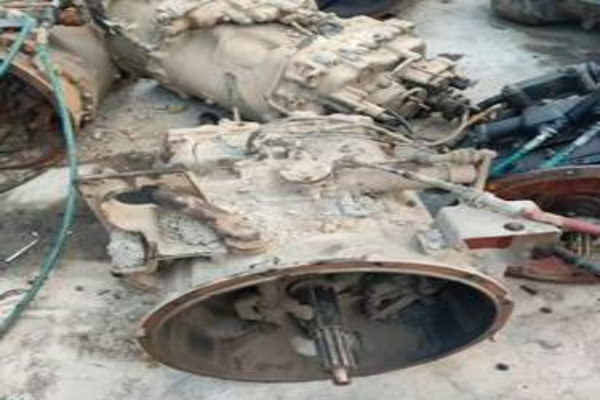
Matching a used gearbox with a truck engine requires verifying four parameters in sequence: the engine's maximum output torque (Nm), the gearbox's rated input torque capacity, the transmission type (manual or automated), and the number of forward gears. Brand recognition alone — matching FAST to HOWO or ZF to Scania — is not sufficient and is the leading cause of mismatch returns in bulk procurement. Every used unit must be individually cross-checked against the specific engine model number, not assumed from catalog data.
The four-parameter check is the framework. But each parameter carries its own failure pattern — and some of those patterns are market-specific. What works in a European workshop spec doesn't always work in Nairobi, Jakarta, or Dubai. Let's break this down section by section.
Why Does Brand Name Alone Cause So Many Wrong Orders?
Buyers with years of procurement experience still get this wrong. The assumption is natural: a FAST gearbox goes with a HOWO, a ZF goes with a Scania. The brand logic feels solid — until the unit arrives and can't be installed.
Brand recognition creates false confidence in gearbox procurement. Within any major brand, multiple model variants exist with incompatible input torque ratings, bell housing configurations, and gear counts. Confirming brand only — without confirming the specific model number — is the single most common cause of mismatch cases we process.
In our experience handling these orders, buyers who contact us with a mismatch problem almost always made the same mistake: they confirmed the brand, sometimes confirmed the truck model year, and stopped there. When we ask for the engine model number or the original gearbox part number, they often don't have it. That's where the risk lives.
FAST Gearboxes and Chinese Truck Engines
FAST is China's dominant heavy-duty gearbox manufacturer. Their product range is wide: 8-speed, 9-speed, 10-speed, 12-speed, and 16-speed manual variants, plus automated options. Torque capacity across the FAST lineup ranges broadly — some models are rated for under 1,600 Nm, others for 2,500 Nm and above.
HOWO trucks are commonly paired with FAST gearboxes[1], but the match is never automatic. HOWO models use different Sinotruk engines across production years — a WD615 engine has a different maximum torque output than an MC11 or MC13[2]. The FAST model number must be verified against the actual engine's output torque, not the truck model name.
Key model-matching steps for FAST + HOWO:
- Obtain the engine model number from the engine nameplate or VIN record — not from the buyer's description
- Confirm the engine's rated maximum torque (Nm) from the OEM spec sheet
- Cross-check that the FAST model's rated input torque capacity meets or exceeds the engine output
- Confirm gear count and shift pattern match the original gearbox specification
ZF Gearboxes and European Truck Engines
ZF is the benchmark gearbox supplier for European trucks. Scania, Volvo, MAN, and Mercedes-Benz all use ZF units in various configurations. But within the ZF product family, differences in torque rating, input shaft specification, and control system integration mean that a ZF gearbox from one Scania model does not automatically fit another.
Scania engines — particularly the DC9, DC13, and DC16 families — have significantly different torque outputs. A DC13 running at 500 hp produces a different torque curve than the same displacement engine tuned to 420 hp. The ZF unit must be matched to the engine's actual output torque and the vehicle's original configuration.
This matters especially for buyers sourcing Scania or MAN spares for fleets in the Middle East or Eastern Europe, where ZF is the dominant gearbox platform. A wrong ZF variant means incompatible mounting, incompatible control wiring, and a non-functional installation.
Why Is Torque Rating the Parameter Buyers Most Often Skip?
Many procurement buyers use engine displacement as a proxy for gearbox load requirements. A 12-liter engine sounds like a 12-liter engine. The assumption is that displacement predicts torque, so a gearbox that worked on one 12L engine should work on another. This logic is wrong and leads to mechanical failure.
Displacement is not a reliable indicator of maximum output torque. Two engines with identical displacement can have torque outputs that differ by 400 Nm or more depending on tune, turbocharging, and application. The only reliable check is matching the engine's rated maximum torque against the gearbox's rated input torque capacity.
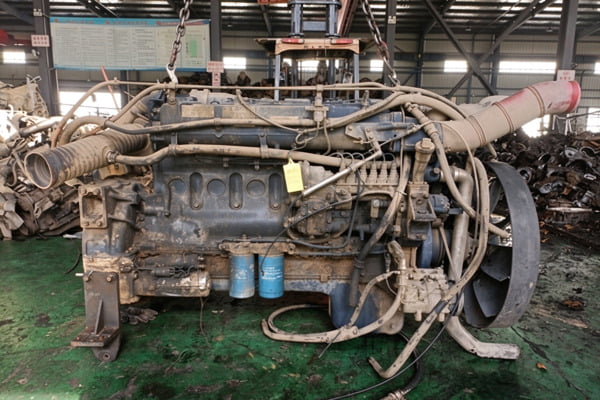
A gearbox operating above its rated input torque doesn't fail immediately — it fails under load, often after weeks or months of operation[3]. By the time failure occurs, the buyer has long moved on from the procurement decision. The connection back to the original mismatch is rarely made cleanly.
How to Read the Numbers Correctly
The two numbers that matter are:
| Parameter | Where to Find It | What It Tells You |
|---|---|---|
| Engine max output torque (Nm) | Engine nameplate, OEM spec sheet | The force the gearbox input must handle |
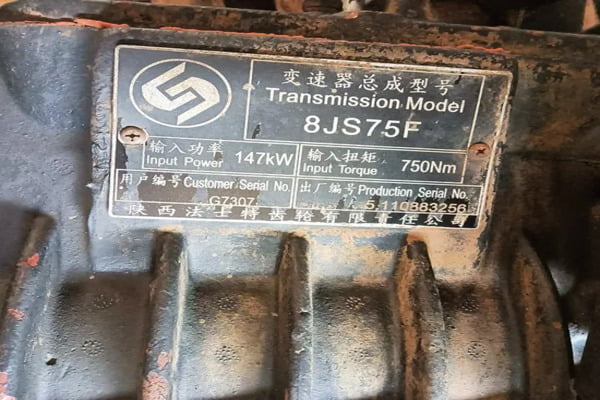
| Gearbox rated input torque (Nm) | Gearbox model specification / ID plate | The maximum the gearbox is designed to accept |
The gearbox rated input torque must meet or exceed the engine's maximum output torque. If the engine produces 2,200 Nm and the gearbox is rated for 1,800 Nm, the installation will fail under full load. This is not a marginal risk — it is a guaranteed outcome.
Engine-Specific Torque Ranges Buyers Should Know
The following ranges are indicative only. Used units must be individually verified — do not source by these figures without confirming the specific engine and gearbox part numbers.
- Isuzu 6HK1 / 6WG1: Common in Southeast Asian markets. Output torque typically in the 700–1,400 Nm range depending on tune and application. Usually matched with Isuzu OEM gearboxes or compatible Japanese-spec units. ZF and FAST are not standard fits without adaptation.
- Cummins ISM / ISX / X15: Common across Africa, the Middle East, and South America. Torque output varies widely — ISX variants can exceed 2,700 Nm at peak. FAST 12-speed and 16-speed units are used in Chinese truck applications with Cummins engines, but the specific pairing must be confirmed.
- MAN D26 / D38: European platform common in the Middle East. Output torque in the 2,000–3,000 Nm range on heavier variants. Matched with ZF TraXon or ZF 16S series. Any ZF sourcing for MAN engines must confirm the exact ZF model and bell housing specification.
- Scania DC13 / DC16: High-output engines standard in Scania long-haul and construction trucks. DC16 variants can exceed 3,300 Nm. ZF AS Tronic and Scania's own Opticruise gearboxes are used in these configurations. These are not interchangeable with standard ZF units from lower-output platforms.
What Transmission Type and Gear Count Decisions Cannot Be Assumed?
Buyers often order "a 12-speed FAST" or "a ZF for a Scania" without specifying manual or automated. These are not interchangeable. A manual gearbox installation requires a clutch system. An automated manual transmission (AMT) requires an electronic control unit, sensors, and an actuator system[4]. Installing the wrong type is not a matter of adjustment — it's a full incompatibility.
Transmission type and gear count must be confirmed before purchase, not inferred from truck model or fleet history. This is especially true when sourcing used units, where the gearbox fitted to a vehicle may not be the original OEM specification.
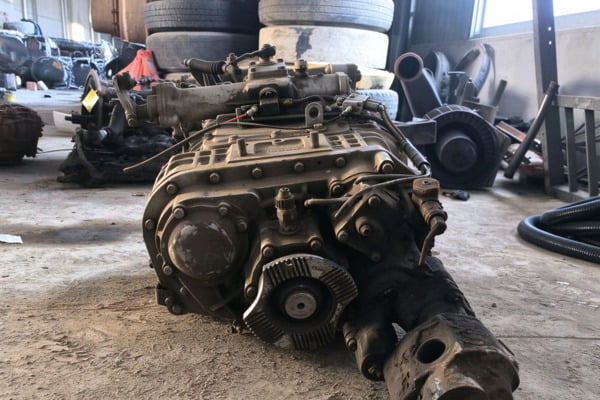
In our order-handling experience, buyers who "already know what they need" based on a previous successful purchase are the most likely to skip this verification step — and the most likely to place an order that creates a problem.
Manual vs. Automated: The Installation Difference
| Specification | Manual Gearbox | Automated Manual Transmission (AMT) |
|---|---|---|
| Clutch system | Required — driver-operated | Electronically actuated — no manual pedal |
| ECU dependency | None | Requires compatible ECU and wiring harness |
| Gear selection | Manual shift lever | Electronic actuator / shift-by-wire |
| Maintenance profile | Simpler, lower tech | Requires diagnostic tools for fault codes |
| Market suitability | Africa, South America — wider serviceability | Middle East, Southeast Asia — where infrastructure supports it |
Gear Count: Why It Matters for the Destination Market
A higher gear count gives the driver finer control over engine load — important for heavy-haul and mountainous routes. But gear count also affects:
- Gearbox length and mounting point position — a 16-speed FAST is physically longer than a 9-speed unit and may not fit without driveline modification
- Spare parts availability downstream — in many African markets, 12-speed FAST parts are widely available; 16-speed parts are harder to source locally[5]
- Driver training requirements — a driver trained on a 9-speed manual faces a real adaptation challenge on a 16-speed unit
How Does the Destination Market Change the Matching Decision?
A gearbox that passes all four technical parameters on paper may still be the wrong procurement choice for a specific buyer. The destination market shapes what is actually serviceable, what spare parts are available locally, and what the fleet's maintenance team can realistically work with.
Ignoring the destination market when matching a used gearbox to a truck engine is the difference between a specification decision and a real-world procurement decision. We see this play out differently in three core markets.

The specification may be correct. The market fit may still be wrong. Both must be evaluated before confirming an order.
Africa: HOWO + FAST Is the Standard — But Which FAST?
In Sub-Saharan Africa, HOWO trucks with FAST 9-speed and 12-speed manual gearboxes are the dominant heavy commercial vehicle platform[6]. Local mechanics know these units. Spare parts are distributed through established networks in Nairobi, Lagos, Kampala, and Dar es Salaam.
For buyers in this market, specifying a FAST gearbox means confirming:
- The FAST model number, not just the speed count
- That the model is one of the widely distributed variants — not an uncommon production variant that creates parts sourcing problems downstream
- That the engine's torque output is within the specific model's rated input capacity
A FAST 9JS150 and a FAST 9JS200 are both 9-speed units. Their torque ratings are different. Ordering the wrong one — because "a 9-speed FAST" was specified — is a real scenario. We have handled it.
Southeast Asia: Isuzu and Hino Demand Japanese-Platform Verification
In Southeast Asia, Isuzu and Hino dominate the medium and heavy commercial segments[7]. These trucks use Japanese-specification drivetrains that are not directly interchangeable with Chinese or European platforms.
Buyers sourcing gearboxes for Isuzu 6WG1 engines or Hino E13C engines should not assume FAST or ZF compatibility without engineering verification. The Japanese platform has specific input shaft dimensions, bell housing bolt patterns, and shift mechanism configurations. We recommend that buyers in this market supply us with the original gearbox model number and engine model number simultaneously — cross-matching both before confirming any order.
Cummins engines are also common in this market in Hino and local assembly trucks. Cummins-to-gearbox matching requires the same torque verification process, but also requires confirming the flywheel housing SAE size, which determines the bell housing compatibility[8].
Middle East: ZF + Scania or MAN — Service Infrastructure Exists, But Model Variants Matter
The Middle East is a strong ZF market. Scania and MAN trucks are widely operated in logistics, construction, and oil-field transport. ZF service capability exists in major cities, and genuine ZF parts are available through authorized channels.
This means ZF is a defensible choice for Middle Eastern buyers — but the variant must still be correct. The Middle East market uses high-output, long-haul configured trucks. Sourcing a ZF unit rated for a lighter European regional delivery truck and installing it in a fully loaded GCC construction application is a torque-rating risk, not a brand-recognition success.
For this market, we verify:
- The specific ZF model number (e.g., ZF 16S2220, ZF 16S2520)
- The rated input torque of the unit
- Whether the unit is configured for manual or Astronic/automated operation
- Compatibility with the specific Scania or MAN engine series in the buyer's fleet
Frequently Asked Questions
Can I match a gearbox using the truck model year and brand alone?
No. Truck model year and brand tell you the platform, not the specific engine and gearbox combination. Within a single model year, multiple engine configurations and gearbox options may be fitted. The only reliable match method is cross-verifying the engine model number with the gearbox part number and torque specifications.
What documents should I request from a supplier before confirming a used gearbox order?
Request the gearbox ID plate photograph, the model number, the rated input torque figure, and the transmission type confirmation (manual or AMT). Where available, request the original vehicle's engine model to confirm the pairing. A supplier who cannot provide these details before shipment is a sourcing risk.
Is a FAST gearbox compatible with a Cummins engine?
Some FAST gearbox models are used in Chinese truck applications fitted with Cummins engines. Compatibility depends on the specific FAST model number, the Cummins engine variant's output torque, and the flywheel housing SAE size. Brand co-existence in the market does not confirm interchangeability — individual model cross-verification is required.
Why do used gearboxes need individual verification rather than catalog matching?
Used units may have been refitted, repaired, or sourced from a different vehicle than their original application. The nameplate or ID plate must be physically confirmed against the unit in stock. Catalog matching assumes original configuration — used units cannot be assumed to match catalog specifications without physical verification.
How do I know if a ZF gearbox is compatible with my Scania or MAN engine?
You need the ZF model number and the rated input torque, then cross-reference against your Scania or MAN engine's maximum output torque and flywheel housing specification. If you are buying from us, provide your engine model number and the original gearbox part number — this is what we verify before confirming any ZF order for Scania or MAN applications.
Conclusion
Matching a used gearbox with a truck engine is a parameter decision, not a brand recognition task. The four checks — engine output torque, gearbox input torque rating, transmission type, and gear count — must all be confirmed individually, against the specific units in question, before purchase. Skipping any one of them is the pattern behind most mismatch returns and replacement shipments we process.
Beyond the technical parameters, the destination market matters. A gearbox that fits the numbers may still be a liability in a market where its spare parts are unavailable or its maintenance profile exceeds local service capability. Africa, Southeast Asia, and the Middle East each have distinct platform norms that shape what a correct match looks like in practice.
If you are sourcing used gearboxes — FAST, ZF, or otherwise — for multi-unit orders or container-load procurement, contact the Deli Auto team with your engine model number and original gearbox part number before confirming your order. We verify before we ship. That's how we keep replacement cases off both our desks.
[1] "Genuine vs. OEM vs. Aftermarket Sinotruk HOWO Parts", https://www.truckragreat.com/news-insights/genuine-vs-oem-vs-aftermarket-sinotruk-howo-parts.html. Sinotruk's published vehicle specifications and technical documentation for HOWO series trucks list FAST gearbox variants among standard drivetrain configurations; buyers should consult OEM build records for the specific production year and model. Evidence role: general_support; source type: institution. Supports: FAST gearboxes are a standard or common OEM fitment in Sinotruk HOWO heavy trucks. Scope note: OEM configurations vary by model year and export market; this pairing cannot be assumed universal across all HOWO variants. ↩
[2] "WD615 Engine Operation Manual | PDF | Piston", https://www.scribd.com/document/360688982/Spesipikasi-Engine-Howo. Sinotruk's published engine technical specifications document distinct rated torque outputs for the WD615, MC11, and MC13 engine families, confirming that gearbox selection cannot be assumed constant across HOWO models using different engine variants. Evidence role: statistic; source type: institution. Supports: Sinotruk WD615, MC11, and MC13 engines produce different rated maximum torque outputs. Scope note: Torque figures vary by tune and application within each engine family; OEM spec sheets for the specific engine serial number should be consulted rather than family-level summaries. ↩
[3] "Gear Failure Modes: Types, Causes and Preventive ...", https://www.chamolgear.com/gear-failure-modes/. Engineering principles of mechanical fatigue establish that components cyclically loaded above their design limits accumulate damage progressively, with failure typically manifesting under high-load operating conditions after a period that may extend from days to months depending on load magnitude and frequency. Evidence role: mechanism; source type: education. Supports: Drivetrain components subjected to loads exceeding their rated capacity typically fail through progressive fatigue rather than immediate fracture, with failure occurring under peak load conditions after a period of cumulative damage. Scope note: The specific failure timeline of weeks to months is illustrative; actual time-to-failure depends on the degree of overload, duty cycle, and operating conditions and cannot be predicted without detailed fatigue analysis. ↩
[4] "Understanding the Tech Behind Automated Manual ...", https://www.facebook.com/gilbert.nyamberi.5/posts/understanding-the-tech-behind-automated-manual-transmissions-amt-%EF%B8%8Fthis-diagram-p/1406716814522214/. Technical references on automated manual transmissions describe them as mechanically similar to manual gearboxes but distinguished by the addition of electronic control modules, gear-selection actuators, and clutch automation systems, rendering them incompatible with vehicle wiring and control architectures designed for conventional manual units. Evidence role: definition; source type: encyclopedia. Supports: Automated manual transmissions differ from manual gearboxes in requiring electronic control units, electro-hydraulic or electro-pneumatic actuators, and sensor arrays that are absent in conventional manual transmission installations. Scope note: Specific ECU and actuator configurations vary by manufacturer and model; the general incompatibility principle holds, but installation feasibility in a specific vehicle should be assessed by a qualified technician. ↩
[5] "China truck parts and heavy equipment supplier", https://www.facebook.com/BlueEnergyAndTrucksSolutionOPC/posts/all-kinds-of-china-truck-parts-availabletransmission-assembly-for-faw-light-truc/629674942701246/. Research on Chinese commercial vehicle penetration in Sub-Saharan Africa notes that aftermarket parts availability is concentrated around the most widely deployed drivetrain configurations, with less common variants presenting downstream serviceability challenges for fleet operators. Evidence role: general_support; source type: research. Supports: Spare parts availability for FAST gearbox variants in Sub-Saharan African markets is uneven, with higher-speed or less common variants less readily stocked than standard configurations. Scope note: Parts availability varies significantly by country and city; this claim reflects a general pattern rather than a verified inventory survey of specific markets. ↩
[6] "Sub-Saharan Africa Accounted for 55% of SINOTRUK ...", https://m.chinatrucks.org/news/6763.html. Trade and automotive industry analyses of Sub-Saharan African commercial vehicle markets document the significant and growing share held by Chinese manufacturers, with Sinotruk HOWO frequently cited as a leading platform in heavy haulage applications across the region. Evidence role: statistic; source type: research. Supports: Chinese-manufactured heavy trucks, particularly Sinotruk HOWO models, hold a dominant or leading market position in Sub-Saharan Africa's heavy commercial vehicle segment. Scope note: Market share figures vary by country and year; dominance in specific national markets such as Kenya or Nigeria does not necessarily reflect the position across all Sub-Saharan African markets. ↩
[7] "Southeast Asia Box Truck Market Growth Report 2030", https://www.mordorintelligence.com/industry-reports/southeast-asia-box-truck-market. Commercial vehicle market analyses for the ASEAN region consistently identify Isuzu and Hino as leading brands in medium and heavy truck segments, reflecting long-established distribution networks, local assembly operations, and fleet operator preference for Japanese-platform drivetrains. Evidence role: statistic; source type: research. Supports: Isuzu and Hino hold leading market positions in the medium and heavy commercial vehicle segments across Southeast Asian markets. Scope note: Market positions vary by country within Southeast Asia and by vehicle weight class; dominance in Thailand or Indonesia may not apply equally to all regional markets. ↩
[8] "SAE Housing and Flywheel Sizing Guides | Complete List", https://www.wpowerproducts.com/power-generation-resources/sae-housing-flywheel-sizing-guide/. SAE International standards for flywheel housings (including SAE J617) specify dimensional classifications that govern the physical interface between an engine's flywheel housing and a gearbox bell housing, making SAE size confirmation a prerequisite for verifying mechanical compatibility in engine-to-gearbox matching. Evidence role: definition; source type: institution. Supports: SAE flywheel housing standards define dimensional specifications that determine whether a gearbox bell housing is physically compatible with a given engine. Scope note: Specific SAE standard revisions and applicability to non-North American engine platforms should be confirmed; some Asian and European manufacturers use proprietary or adapted interface specifications. ↩