Searching for the "better" truck between HOWO and Shacman is a common shortcut — and a risky one. Buyers who skip straight to brand comparison often end up with the wrong truck for their terrain, their cargo, or their local repair infrastructure. The real question is not which brand wins. It is which truck fits your specific operation.
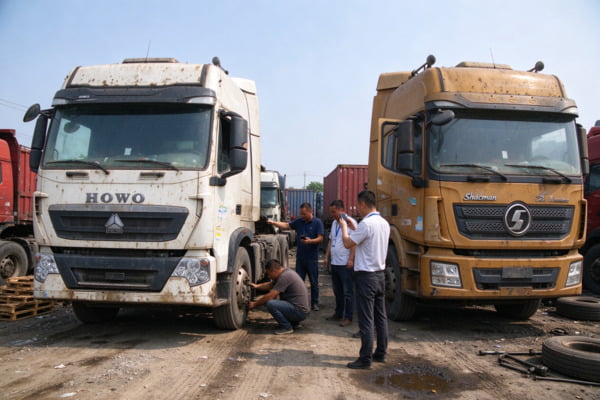
HOWO and Shacman are both proven Chinese heavy truck brands with genuine strengths. Neither is universally better. HOWO carries a broader global parts network, which lowers downtime risk in markets where supply chains are thin[1]. Shacman's F3000 and X3000 series have earned strong reputations in heavy-haul and self-loading applications in specific markets. The right choice depends on what you are hauling, where you are operating, and who fixes your truck when it breaks.
The brand question matters — but it is the second question, not the first. Before you compare specifications or prices, you need to anchor the decision to your operating context. The sections below break that down.
Are HOWO and Shacman Actually Comparable Trucks?
Buyers sometimes treat this as a competition between a dominant brand and a challenger. That framing causes real purchasing mistakes.
HOWO and Shacman are both full-range heavy truck manufacturers producing tractor trucks, dump trucks, cargo trucks, and mixer trucks. Both brands export heavily into Africa, the Middle East, Southeast Asia, and Central Asia[2]. In most payload categories, they are genuine alternatives — which means the decision should rest on fit, not prestige.
What Makes Them Similar
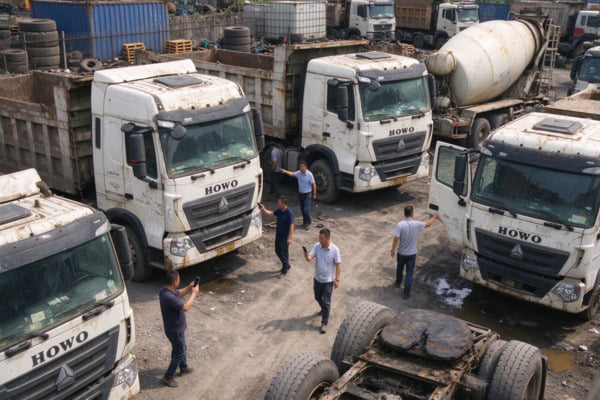
Both brands operate in the same commercial weight classes — typically 25 to 50 tonne GVW configurations. Both use Chinese-manufactured powertrain components, many sourced from Weichai, Yuchai, and FAST or Hande driveline suppliers. Both have established export channels and active dealer networks in developing markets.
From a buyer's perspective, price points for comparable configurations are often within 5–10% of each other in the used market[3]. Neither brand holds a systematic engineering advantage over the other at the product category level.
Where They Diverge
The divergence is not in base capability. It is in:
- Parts ecosystem breadth — HOWO has wider global distribution
- Application reputation — Shacman has stronger recognition in specific heavy-haul segments
- Local service infrastructure — varies significantly by country and region
- Resale liquidity — depends on which brand dominates your local secondary market
When buyers ask us "which is better," the first thing we ask back is: What are you hauling, where, and who fixes it when it breaks? Those three questions answer the HOWO vs. Shacman decision far more reliably than any specification comparison.
What Is HOWO's Real Competitive Advantage?
Many buyers default to HOWO because it is the more familiar name. Familiarity alone is not a purchasing argument — but the underlying reason for that familiarity is.
HOWO's primary advantage for export buyers is parts ecosystem breadth. In markets across Sub-Saharan Africa, the Middle East, and Southeast Asia, HOWO components — engines, gearboxes, axles, cabin parts — are more widely stocked by local distributors than Shacman parts. That difference directly affects fleet uptime and total cost of ownership.
Why Parts Availability Is a Fleet Economics Argument
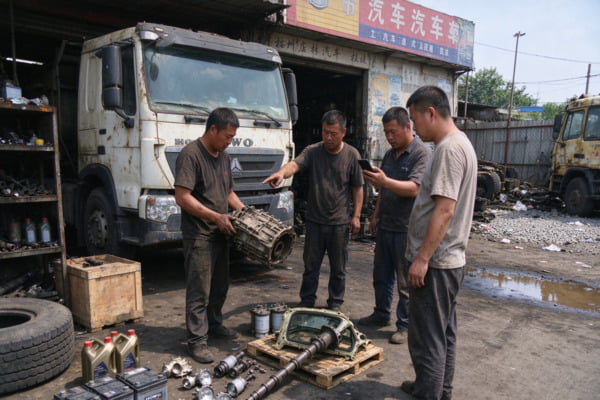
A truck sitting idle waiting for a spare part costs money every day[4]. For a fleet operator running 20 or 30 trucks in a market with limited logistics infrastructure, local parts availability is not a convenience — it is a financial variable.
From the used truck inquiries we handle, buyers in markets like Nigeria, Kenya, Tanzania, Ghana, and parts of Southeast Asia consistently report that HOWO parts are easier to source locally than Shacman equivalents. This observation aligns with HOWO's longer export history and higher export volumes in those regions.
The practical implication:
| Factor | HOWO | Shacman |
|---|---|---|
| Global parts distribution | Broader | Narrower in many export markets |
| Local stockists (Africa, SE Asia) | More common | Less consistent |
| Downtime risk (parts shortage) | Generally lower | Varies by country |
| Resale liquidity (used market) | Higher in most markets | Strong in select markets |
When HOWO Is the Safer Default
HOWO makes more commercial sense when:
- Your market has thin Shacman service coverage. If your local mechanics are unfamiliar with Shacman components, training time and diagnostic errors add hidden cost.
- You are building a mixed fleet. A HOWO-dominant fleet simplifies parts stocking, cross-vehicle maintenance, and driver familiarity.
- You prioritise resale value. In most export markets we supply, HOWO trucks are easier to resell in the secondary market because buyer recognition is higher.
Important: Parts availability varies by country and changes over time as brands expand their networks. Verify current local distributor coverage before making a final decision based on this criterion.
HOWO Powertrain Notes
Most HOWO trucks in the 336–430HP range use Weichai, Sinotruk MC, or WD615 series engines paired with FAST or HW series gearboxes[5]. These are well-documented powertrains with wide repair knowledge across export markets. Replacement components for these systems are generally accessible and competitively priced.
What Is Shacman's Real Competitive Advantage?
Shacman does not win on ecosystem breadth. It wins on application-specific fit in segments where it has built genuine operational credibility.
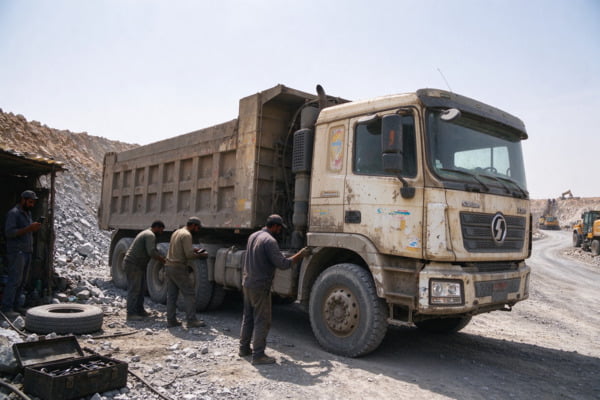
Shacman's F3000 and X3000 series trucks have developed strong reputations in heavy-haul mining, self-loading dump applications, and long-distance traction in markets including parts of the Middle East, Central Asia, and certain African mining corridors. Buyers in those segments with established Shacman service networks should not default to HOWO simply because it is more common.
The Service Infrastructure Matching Principle
The most underrated variable in this decision is whether your local repair infrastructure matches the brand you buy. A Shacman truck maintained by a workshop with Shacman-trained technicians and genuine Shacman parts stocked on the shelf will outperform a HOWO truck maintained by mechanics who are guessing at procedures.
This is not a brand quality argument. It is a systems argument. The truck that fits your ecosystem performs better in practice — regardless of what the specification sheet says.
When Shacman Makes More Sense
Consider Shacman when:
- Your local market already has Shacman infrastructure. If established dealers, stocked parts, and trained mechanics are present, Shacman's application strengths become accessible.
- Your application matches Shacman's strong suits. Heavy mining dump, self-loading, and high-torque haul applications where the X3000 series has earned field credibility.
- You are sourcing for a market where Shacman has strong resale demand. In some Central Asian and Middle Eastern markets, Shacman commands equal or better secondary market pricing than HOWO[6].
Shacman Powertrain Notes
Shacman trucks commonly use Weichai WP series engines, Cummins-licensed engines in certain configurations, and FAST gearboxes[7] — many of the same component families as HOWO. This overlap means that in markets where Weichai or FAST parts are available, powertrain servicing may be less brand-specific than buyers expect.
Does Truck Condition Matter More Than Brand?
For used truck buyers specifically, this question needs to be asked directly: does the brand decision even matter as much as the individual truck's condition?
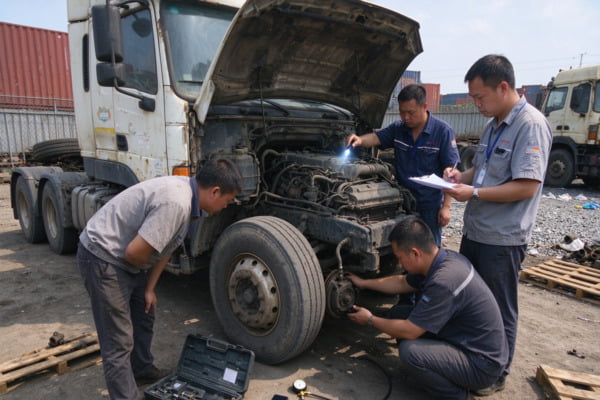
In most used truck purchases, pre-shipment inspection quality, mileage authenticity, engine test results, and refurbishment standard will determine real-world reliability more than the brand nameplate. A well-maintained HOWO with documented inspection records will outperform a poorly maintained Shacman every time — and vice versa.
What Inspection Should Cover
When sourcing used HOWO or Shacman trucks for export, buyers should require documented evidence of:
- Engine test results — compression, oil pressure, smoke output, idle and load behaviour
- Gearbox condition — shift quality across all gears, no oil leaks, bearing noise assessment
- Frame and chassis inspection — crack inspection at high-stress joints, suspension component condition
- Mileage verification — cross-reference odometer reading with engine wear indicators and service records where available
- Refurbishment scope — what was replaced, what was repainted versus repaired, which components are original
Why We Raise This Point
At Deli Auto, we inspect and test both HOWO and Shacman trucks before export. From our inspection records, we consistently see that individual truck condition varies far more within a brand than between brands[8]. Two HOWO trucks from the same model year can have dramatically different engine condition depending on their operating history.
Buyers who spend all their energy on brand selection and none on inspection criteria are misallocating their due diligence. The brand decision matters. The inspection matters more.
A Practical Checklist for Used Truck Evaluation
Before committing to either brand, ensure your supplier can provide:
- Pre-shipment inspection report with photographic documentation
- Engine running test video or live inspection access
- Clear disclosure of any known mechanical issues or recent repairs
- Accurate mileage and year information with supporting documentation
- Post-shipment support and parts sourcing assistance
Frequently Asked Questions
Which brand has better spare parts availability in Africa?
Based on buyer feedback and supply chain data we see across our export markets, HOWO generally has wider parts distribution in Sub-Saharan Africa. However, availability varies significantly by country. Verify with local distributors in your specific market before using parts availability as a primary decision factor.
Are HOWO and Shacman engines the same?
Not exactly, but there is significant overlap. Both brands commonly use Weichai and FAST drivetrain components. This means some powertrain parts are interchangeable or similarly sourced, which can simplify servicing in markets where these components are stocked. Check specific model configurations with your supplier before assuming compatibility.
Is Shacman X3000 better than HOWO for mining dump trucks?
The Shacman X3000 has earned strong field credibility in heavy-haul and mining dump applications in specific markets. Whether it is the better choice depends on your local service infrastructure, terrain conditions, and whether Shacman support is established in your operating area. Do not treat mining application reputation as a universal advantage.
How do I verify the mileage of a used HOWO or Shacman truck?
Odometer readings alone are not reliable verification. A qualified pre-shipment inspection should cross-reference the odometer with physical wear indicators — engine internals condition, clutch wear, cab interior wear, and maintenance record history where available. Request an independent mechanical inspection if you cannot conduct one directly.
Can Deli Auto supply both HOWO and Shacman trucks?
Yes. We maintain stock of both HOWO and Shacman trucks across multiple configurations — including tractor trucks, dump trucks, and cargo trucks. We conduct pre-shipment inspection and engine testing on all units before export and can advise on which configuration fits your application and market based on the inquiries we handle.
Conclusion
The HOWO vs. Shacman question does not have a universal answer — and any supplier who gives you one without asking about your application, market, and service infrastructure is cutting corners. HOWO's strength is ecosystem breadth and parts availability across most export markets, which reduces downtime risk for buyers in regions with thin supply chains. Shacman's strength is application-specific credibility in heavy-haul and mining segments where its infrastructure is established. For used truck buyers specifically, individual truck condition and pre-shipment inspection quality will determine real-world performance more than brand preference alone.
If you are evaluating HOWO or Shacman trucks for a multi-unit purchase, contact Deli Auto directly. We have both brands in stock, conduct mechanical inspection and engine testing on every unit, and can match the right truck configuration to your specific operating requirements and destination market.
[1] "Five Reputable HOWO Dump Truck Trading Companies in ...", https://www.einpresswire.com/article/928472804/five-reputable-howo-dump-truck-trading-companies-in-china-2026-delivering-reliable-heavy-duty-vehicle-export-solutions. Export and market share data from industry bodies or trade statistics would substantiate the claim that HOWO maintains a wider parts distribution footprint in key export markets; direct comparative parts-network data is not publicly standardised across these brands. Evidence role: general_support; source type: research. Supports: HOWO/Sinotruk's export volumes and market penetration in Sub-Saharan Africa and other developing regions relative to Shacman. Scope note: Publicly available data typically covers vehicle export volumes rather than downstream parts distributor density, making direct network-breadth comparisons difficult to verify independently. ↩
[2] "Chinese Vehicle Exports: Electrified", https://www.usitc.gov/publications/332/executive_briefings/ebot_china_ev_exports.pdf. China Association of Automobile Manufacturers (CAAM) and China customs export statistics document the volume of Chinese commercial vehicles exported to developing regions, providing context for the market presence of brands such as HOWO and Shacman. Evidence role: statistic; source type: government. Supports: China's heavy truck export volumes to Africa, the Middle East, Southeast Asia, and Central Asia, indicating the scale of Chinese brand presence in these markets. Scope note: Aggregate national export data does not disaggregate volumes by individual brand, so brand-level market share in each region requires supplementary industry sources. ↩
[3] "HOWO Trucks vs. Shacman Trucks: Which Chinese Hauler ...", https://carused.jp/blog/howo-trucks-vs-shacman-trucks-which-chinese-hauler-fits-you/?srsltid=AU7gw4XXIHMifhgRUu9OtIVwxmnisNZ6_tUGVGo1iMiZMOA9RZqjVjU5. Independent used vehicle valuation data or auction price records from export markets would substantiate the claimed 5–10% price differential between comparable HOWO and Shacman configurations. Evidence role: statistic; source type: research. Supports: The approximate price parity between HOWO and Shacman trucks in used export markets. Scope note: Used truck pricing is highly variable by condition, model year, configuration, and destination market; a single percentage range may not reflect the full distribution of observed prices. ↩
[4] "The Hidden Cost of Delaying Truck Replacement", https://www.truckinginfo.com/articles/the-hidden-cost-of-delaying-truck-replacement. Fleet management and total cost of ownership research documents the relationship between parts availability, vehicle downtime, and operational costs in commercial trucking, with studies in developing market contexts showing elevated downtime costs where supply chains are constrained. Evidence role: mechanism; source type: research. Supports: The financial impact of parts-related downtime on commercial truck fleet operations, particularly in markets with limited supply chain infrastructure. Scope note: Quantified downtime cost figures vary substantially by fleet size, cargo type, and market; general research findings may not translate directly to specific operating contexts. ↩
[5] "Weichai WD615 vs WP10: Which Engine Is Right for Your ...", https://www.truckragreat.com/news-insights/weichai-wd615-vs-wp10-which-engine-is-right-for-your-heavy-truck.html. Manufacturer technical documentation from Weichai Power and FAST Group, or independent engineering references, would confirm the standard powertrain pairings used in HOWO trucks across the 336–430HP output range. Evidence role: general_support; source type: institution. Supports: The use of Weichai and FAST drivetrain components as standard powertrain configurations in HOWO heavy trucks. Scope note: Powertrain configurations vary by model year, specification tier, and export market; a general statement may not apply uniformly across all HOWO variants in this power range. ↩
[6] "What Is the Resale Value of SAGMOTO Trucks in Export ...", https://sagmoto-trucks.com/blog/sagmoto-truck-resale-value-export.html. Used vehicle auction data or independent market research covering Central Asian and Middle Eastern commercial truck markets would substantiate the claim that Shacman achieves competitive or superior resale values relative to HOWO in these specific regions. Evidence role: statistic; source type: research. Supports: Shacman's secondary market pricing relative to HOWO in Central Asian and Middle Eastern used truck markets. Scope note: Publicly available secondary market pricing data disaggregated by brand for Central Asian and Middle Eastern heavy truck markets is limited; this claim is difficult to verify independently without access to regional dealer or auction records. ↩
[7] "Weichai Group", https://en.wikipedia.org/wiki/Weichai_Group. Manufacturer specifications from Shaanxi Heavy Duty Automobile Co. and supplier documentation from Weichai Power and FAST Group would confirm the powertrain configurations available across Shacman's F3000 and X3000 series. Evidence role: general_support; source type: institution. Supports: The use of Weichai WP series, Cummins-licensed, and FAST drivetrain components in Shacman heavy truck configurations. Scope note: Licensing arrangements and component sourcing can change across model years and export specifications; the presence of Cummins-licensed engines may be limited to specific variants or markets. ↩
[8] "Deterioration Digital Twins of Commercial Trucks and ...", https://rosap.ntl.bts.gov/view/dot/68550/dot_68550_DS1.pdf. Vehicle reliability and used truck valuation research generally supports the principle that maintenance history and operating conditions are primary determinants of individual vehicle condition, often exceeding the influence of brand-level manufacturing variation. Evidence role: general_support; source type: research. Supports: That individual vehicle operating history and maintenance quality produce greater condition variance than brand-level manufacturing differences in used commercial trucks. Scope note: This principle is well-established in automotive reliability literature but direct comparative studies specifically contrasting HOWO and Shacman within-brand condition variance are not available in the public literature. ↩