Semi-trucks carry the global economy on their axles — but buyers who treat "semi-truck" as a single product category routinely end up with the wrong vehicle for their job. The wrong configuration on the wrong terrain, with the wrong cargo type, turns a cost-saving purchase into an expensive operational problem. The right question is not what semi-trucks are used for in general — it is what your application demands.
Semi-trucks are used for a wide range of commercial and industrial transport tasks, including long-haul freight, bulk material haulage, liquid cargo transport, construction logistics, and heavy equipment movement. Each application requires a different vehicle configuration — different axle loads, engine torque curves, transmission types, and chassis specs. The term "semi-truck" covers this entire spectrum, which is why application-matching must come before any procurement decision.
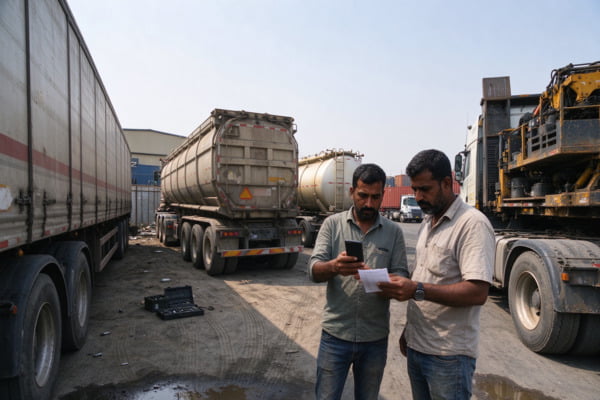
Understanding what semi-trucks are used for is not a trivial question. For B2B buyers, it is a procurement framework. The use case determines the spec, the spec determines the shortlist, and the shortlist determines the supplier conversation. Skip the first step and every decision downstream carries compounded risk.
Are All Semi-Trucks Designed for Long-Haul Freight?
Many buyers assume semi-trucks are essentially highway freight vehicles with minor variations. That assumption leads directly to the most common mismatches we see in international sourcing inquiries.
Long-haul freight is one major application for semi-trucks — but it is one cluster among several. A tractor-trailer optimized for European motorways shares almost no operational logic with a tipper truck serving a West African quarry. Both are "semi-trucks." Neither can substitute for the other.
Long-Haul Tractor-Trailer: The Freight Mover
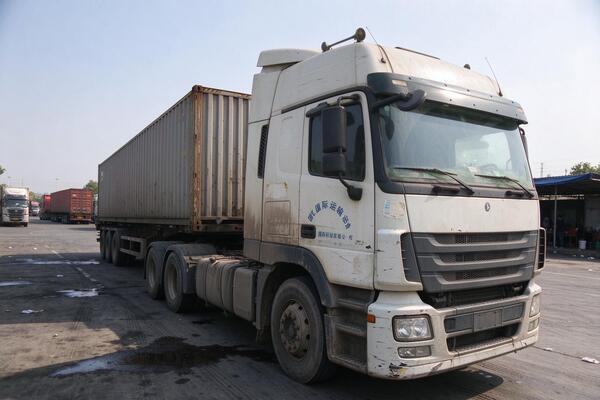
Long-haul tractor trucks are the vehicles most buyers picture when they hear "semi-truck." These are high-cab tractor units — brands like Scania, Volvo, MAN, Mercedes-Benz, DAF — pulling 40-foot or 45-foot trailers across highway networks.
Key operational characteristics:
- High-torque diesel engines tuned for sustained highway cruising (typically 400–560 hp)
- 12- to 16-speed gearboxes (manual, automated manual, or fully automatic)
- Aerodynamic sleeper cabs designed for multi-day runs
- Optimized for fuel efficiency at 80–120 km/h highway speeds
Buyer profile: Logistics companies, freight forwarding operators, and regional distribution networks. In markets like Southeast Asia, Central Asia, and South America, buyers often source used European tractor trucks because the powertrain longevity at highway loads justifies the import cost[1].
What we typically ask buyers in this segment:
- What are the road surface conditions on the primary route?
- Is this urban delivery, regional relay, or true long-distance haulage?
- What is the local diesel quality (Euro 2 vs. Euro 5 vs. unregulated)?
That last point matters significantly. Running a Euro 5-spec engine in a market with Euro 2-equivalent diesel is a maintenance liability[2], not just a compliance issue. We flag this in every pre-shipment consultation for long-haul units heading to fuel-quality-constrained markets.
What Are Semi-Trucks Used for in Construction and Mining?
Construction and mining logistics represent a completely different use-case cluster — and one where application mismatches carry the highest operational cost.
Semi-trucks deployed at quarries, mine sites, and large infrastructure projects face short distances, extreme loads, unpaved or unstable surfaces, and near-continuous duty cycles. These conditions demand entirely different specifications than highway freight.
Dump Trucks and Tippers: Bulk Material Movement
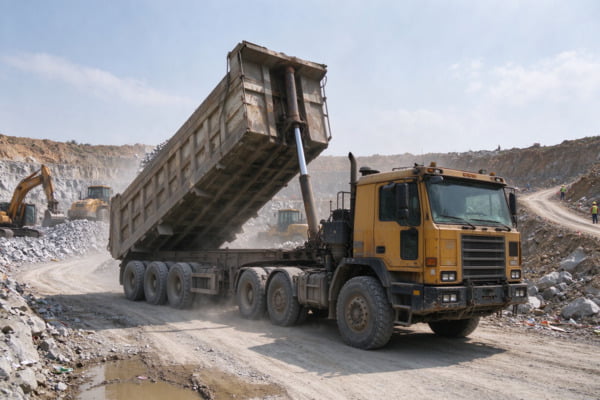
Dump trucks — also called tipper trucks — are semi-trucks configured to carry and discharge loose bulk materials: sand, gravel, crushed stone, ore, and demolition rubble.
Configuration requirements:
- Reinforced chassis and sub-frame rated for repeated high-stress loading[3]
- Hydraulic tipping mechanisms (rear-tip or side-tip depending on site layout)
- Higher axle load ratings to handle dense cargo
- Shorter wheelbases for tighter site maneuverability
- Robust suspension systems suited for unpaved haul roads
Common brands we source for this application: HOWO, SHACMAN, and SITRAK for cost-effective options in African and Southeast Asian markets; MAN and Mercedes-Benz Actros for buyers prioritizing drivetrain longevity in intensive-use scenarios.
Buyer patterns we observe: Buyers transporting aggregates or earth in West and East Africa frequently inquire about 6×4 and 8×4 dump trucks with Weichai or Cummins engines — partly because local repair workshops are already familiar with those powertrains. Familiarity with local service networks is a real selection criterion, not just a preference.
Important distinction: A dump truck optimized for mine haulage on a 5 km internal road is not the same vehicle as a tipper used for urban construction material delivery. Axle configuration, tipping angle, and bed volume differ. Buyers should confirm the primary use scenario before specifying.
Heavy-Haul and Lowboy Applications
For moving heavy equipment — excavators, bulldozers, large generators — semi-trucks configured as heavy-haul tractors paired with lowboy or extendable trailers are the appropriate configuration. These are high-torque, low-speed units with multi-axle load distribution. They rarely appear in standard freight discussions but represent a significant procurement category for construction project contractors.
How Are Semi-Trucks Used for Liquid and Specialized Cargo?
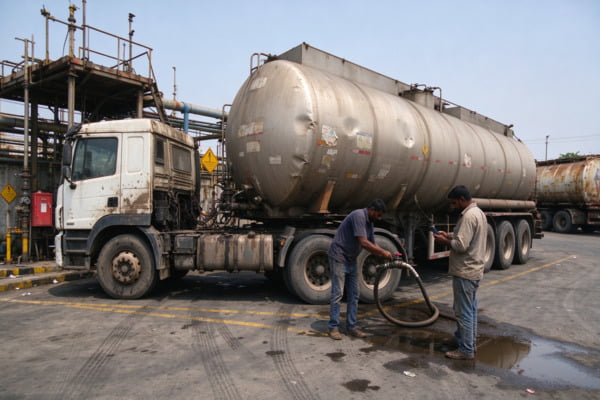
Liquid cargo transport is a specialized application that requires purpose-built semi-truck configurations. A standard tractor-trailer or dump truck cannot substitute for a tanker without significant risk.
Tank trucks are semi-trucks carrying liquid or gaseous cargo in sealed, pressure-rated, or vacuum-maintained tanks. The application — fuel, water, chemicals, food-grade liquids, LPG — determines the tank material, pressure rating, and loading/discharge system.
Why Application Detail Matters for Tanker Procurement
Each liquid cargo type introduces unique requirements:
| Cargo Type | Tank Material | Special Requirements |
|---|---|---|
| Petroleum / fuel | Carbon steel or aluminum | Grounding systems, flame arrestors |
| Food-grade liquids | Stainless steel | Sanitary fittings, CIP cleaning ports |
| Chemicals (corrosive) | Lined steel or HDPE | Chemical-resistant seals, pressure relief |
| Water (potable) | Stainless or food-grade lined | Certification for potable water contact |
| LPG / compressed gas | High-pressure rated steel | Pressure gauges, safety valves |
In our experience matching tanker trucks for buyers in Sub-Saharan Africa and the Middle East, the most common oversight is specifying tank volume without confirming the discharge method. Gravity-fed discharge works for fuel on flat terrain but fails for viscous products or sloped delivery points. Buyers should verify pump type, hose length, and flowmeter requirements before finalizing a specification.
Mixer Trucks: Construction's Chemical Logistics
Concrete mixer trucks represent another specialized semi-truck application. These carry ready-mix concrete from batching plants to pour sites — with a strict time constraint (concrete cures during transport[4]). The drum rotation system, water addition port, and discharge chute are as important as the chassis specification. Buyers procuring mixer trucks for infrastructure projects should confirm drum volume against their typical pour size and the drive cycle (distance from batching plant to site).
What Are Semi-Trucks Used for in Passenger and Multi-Purpose Transport?
In many markets — particularly across Africa, Southeast Asia, and Central Asia — the commercial vehicle category overlaps with passenger and multi-purpose transport in ways that don't exist in mature Western markets.
Buses built on semi-truck chassis are a significant category. These include large intercity coaches, school buses, and worker transport vehicles. The shared platform logic (engine, gearbox, axle architecture) means buyers already familiar with truck sourcing can often extend their procurement framework to buses.
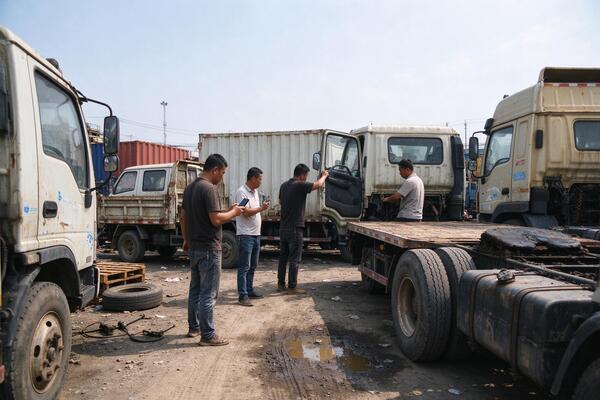
Common chassis brands for bus applications we supply: Yutong, King Long, and Higer for complete bus units; Volvo, Scania, and Mercedes-Benz for chassis-cab configurations where local body building is the norm.
Procurement consideration: For buyer markets where bus bodies are fabricated locally on imported chassis, verifying chassis-to-body mounting compatibility is a critical pre-shipment step. We include this in the technical documentation package for chassis exports.
Frequently Asked Questions
What is the difference between a semi-truck and a full truck?
A semi-truck (or articulated truck) consists of a tractor unit and a detachable semi-trailer, which transfers part of its load onto the tractor's fifth wheel[5]. A full truck is a single rigid vehicle carrying its own load. Semi-trucks offer greater payload flexibility but require more infrastructure for trailer management.
Can one semi-truck be used for multiple applications?
A tractor unit can pull different trailer types — flatbed, curtainsider, refrigerated, or tanker — giving it multi-application flexibility. However, purpose-built semi-trucks like dump trucks, mixer trucks, and tank trucks are not interchangeable. Application-specific configurations should always be matched to primary use before purchase.
Why does road condition matter when choosing a semi-truck?
Road condition directly affects axle load distribution, suspension requirements, ground clearance, and tyre specification[6]. A European highway tractor deployed on unpaved African haul roads faces accelerated frame fatigue, suspension failure, and differential damage. Buyers should always declare primary road surface conditions when consulting a supplier.
What engine brands are most commonly sourced for semi-trucks in emerging markets?
Cummins, Weichai, Yuchai, and Perkins are widely used in emerging market semi-trucks because parts availability and local workshop familiarity reduce maintenance downtime. European engines (Scania DC, Volvo D-series, MAN D20) offer longevity advantages but require more sophisticated servicing infrastructure.
How does diesel quality affect semi-truck selection?
Diesel sulfur content and cetane rating affect injector longevity, DPF compatibility, and emissions system performance[7]. High-spec Euro 5 or Euro 6 engines can suffer accelerated injector wear in low-quality fuel environments. Buyers sourcing trucks for markets with unregulated or low-grade diesel should confirm the engine's fuel tolerance specification before purchase.
Conclusion
Semi-trucks are used for long-haul freight, bulk material haulage, liquid cargo transport, construction logistics, heavy equipment movement, and passenger transport — but the category only becomes useful when it is matched to a specific application. The vehicle type, axle configuration, engine spec, and transmission choice are all outputs of the use case, not starting points. Buyers who anchor their selection in the application first — route, cargo, terrain, local service infrastructure — consistently make better procurement decisions and face fewer operational surprises after delivery.
At Deli Auto, we work with fleet operators, construction companies, logistics managers, and spare parts distributors across Africa, Southeast Asia, the Middle East, and beyond. Our first question is always about the job, not the brand. If you are evaluating semi-trucks for a specific application and want to discuss configuration matching, available inventory, or export logistics, contact our team for a no-obligation consultation.
[1] "Europe & Central Asia Trade Summary | WITS Data", https://wits.worldbank.org/CountryProfile/en/Country/ECS/Year/LTST/Summary. Reports from the United Nations Environment Programme and trade bodies on used vehicle exports document substantial flows of second-hand commercial vehicles from Europe to developing markets, driven by price differentials and the residual service life of European-specification powertrains. Evidence role: general_support; source type: institution. Supports: Used commercial vehicles, including tractor trucks, are exported from Europe to developing markets in Asia, Africa, and South America in significant volumes. Scope note: Available data typically covers aggregate used vehicle trade rather than tractor trucks specifically, and may not capture informal or indirect trade routes. ↩
[2] "Evaluation of NOx emissions of a retrofitted Euro 5 passenger ...", https://pmc.ncbi.nlm.nih.gov/articles/PMC6143387/. Research by emissions and engine standards bodies, including the International Council on Clean Transportation (ICCT), documents that high-sulfur diesel fuel degrades diesel particulate filters and fuel injectors in engines designed for ultra-low-sulfur fuel, resulting in premature component failure. Evidence role: mechanism; source type: institution. Supports: High-sulfur or low-grade diesel fuel causes accelerated wear and damage to fuel injection systems and aftertreatment components in Euro 5-specification engines. Scope note: Studies typically focus on emissions system degradation; direct maintenance cost quantification in specific emerging-market contexts may require supplementary field data. ↩
[3] "Structural Analysis of Truck Chassis Frame and Design ...", https://www.academia.edu/8039947/Structural_Analysis_of_Truck_Chassis_Frame_and_Design_Optimization_for_Weight_Reduction. Structural engineering analyses of tipper and dump truck applications document that repeated loading and unloading cycles, combined with dynamic impact loads from bulk material discharge, impose fatigue demands on chassis and sub-frame components that necessitate reinforced design relative to standard freight vehicle structures. Evidence role: mechanism; source type: research. Supports: Dump truck and tipper applications subject chassis and sub-frame structures to repeated high-magnitude load cycles that require purpose-designed reinforcement beyond standard freight truck specifications. Scope note: Specific reinforcement standards vary by manufacturer and regional regulation; no single universal standard governs all dump truck chassis specifications globally. ↩
[4] "Batching, Mixing & Transporting Concrete.", https://www.nrc.gov/docs/ML1215/ML12153A346.pdf. Standards such as ASTM C94 specify maximum allowable discharge times and drum revolution limits for ready-mixed concrete, reflecting the progressive hydration that reduces workability during transport. Evidence role: mechanism; source type: institution. Supports: Ready-mix concrete begins hydration immediately after mixing, and industry standards impose maximum transit time and drum rotation limits to ensure workability at the point of discharge. Scope note: Specific time limits vary with ambient temperature, cement type, and admixture use; the cited standard applies primarily to North American practice, though similar principles govern international specifications. ↩
[5] "Fifth-wheel coupling", https://en.wikipedia.org/wiki/Fifth-wheel_coupling. Standard transport engineering references define a semi-trailer truck as a combination vehicle in which a semi-trailer — lacking a front axle — transfers a portion of its weight onto the rear of the tractor unit through a fifth-wheel coupling. Evidence role: definition; source type: encyclopedia. Supports: A semi-truck consists of a tractor unit coupled to a semi-trailer via a fifth-wheel hitch, with the trailer's front axle load borne by the tractor. ↩
[6] "Analysis of Experimental Results Regarding the ... - PMC", https://pmc.ncbi.nlm.nih.gov/articles/PMC8874943/. Vehicle dynamics and road transport research documents that unpaved haul roads generate substantially higher vertical and lateral dynamic load factors than paved highways, accelerating fatigue in chassis frames, suspension components, and axle assemblies and requiring purpose-adapted specifications. Evidence role: mechanism; source type: research. Supports: Unpaved and rough road surfaces impose significantly higher dynamic loads on truck chassis, suspension, and axle components compared to paved highway operation, necessitating different vehicle specifications. Scope note: Quantitative load factor data varies widely with road profile, vehicle speed, and load; general findings may not translate directly to specific route conditions without site-specific assessment. ↩
[7] "Study of the Effects of Reduced Diesel Fuel Sulfur Content ...", https://nepis.epa.gov/Exe/ZyPURL.cgi?Dockey=9100Y3SE.TXT. Technical assessments by the International Council on Clean Transportation and engine manufacturers document that elevated sulfur content in diesel fuel poisons diesel oxidation catalysts and diesel particulate filters, while low cetane ratings impair combustion quality and increase injector deposit formation. Evidence role: mechanism; source type: institution. Supports: Diesel fuel sulfur content and cetane number measurably affect fuel injector service life, diesel particulate filter regeneration efficiency, and overall emissions control system durability. Scope note: Effects are engine- and system-specific; published data primarily covers controlled laboratory conditions or specific engine families rather than all commercial truck powertrains. ↩