Every B2B buyer asks this question eventually. The problem is that "top 3 truck brands" sounds like a ranking question — but experienced procurement teams know it's actually a risk management question. Pick the wrong brand for your market, your road conditions, or your parts ecosystem, and reputation alone won't save your fleet.
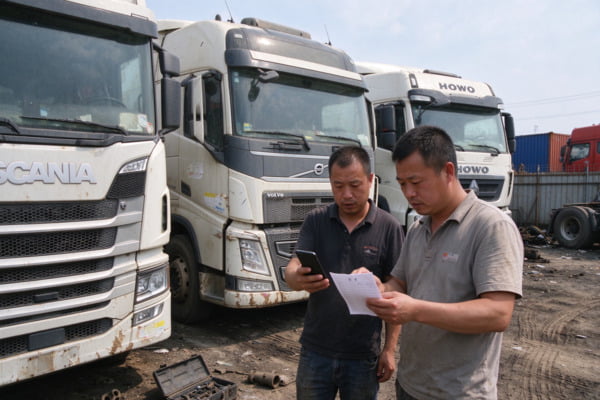
There is no single answer to "what are the top 3 truck brands" that applies across every market, use case, or budget. The honest answer is that the right brand depends on where the trucks operate, what they carry, how they're maintained, and whether parts and service are actually available in your region. Based on our 20+ years sourcing and inspecting used trucks for buyers across Africa, Southeast Asia, the Middle East, and South America, the brands that consistently perform for our customers are Scania, Volvo, and HOWO — but only when matched correctly to the job.
That three-brand shortlist is a starting point, not a verdict. The sections below explain the conditions under which each brand earns its place — and where it can let you down. We'll also address why Chinese brands like SHACMAN and SITRAK deserve serious evaluation alongside European names.
Many buyers in our network arrive with the same assumption: Scania is the best truck money can buy. That reputation is earned. But in used truck procurement, reputation is only the beginning of the evaluation — and "best" is always relative to operating context.
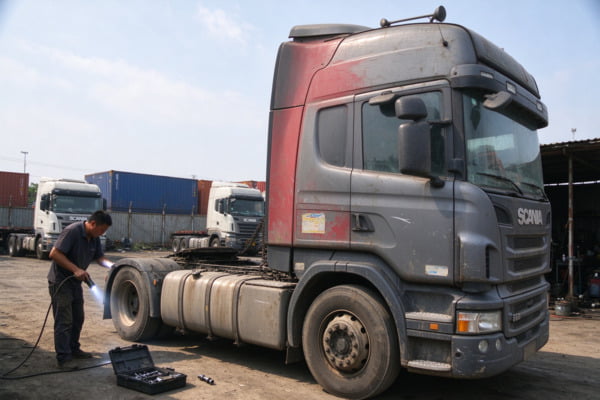
Based on our sourcing and inspection experience, Scania is the stronger choice for buyers running long-haul routes who have access to trained technicians and a reliable parts supply chain in their country. Its fuel efficiency, engine longevity, and driver comfort are genuine advantages — but only when the truck is maintained correctly and consistently.
What makes Scania a strong procurement choice?
Scania's reputation in long-haul trucking is built on a few consistent engineering principles: modular construction, a focus on drivetrain efficiency, and engines — particularly the DC series — known for extended service intervals when maintained properly.
In markets where Scania dealer networks exist, such as parts of Southern Africa, the Middle East, and Southeast Asia, these trucks have strong resale value and predictable maintenance schedules. That makes them attractive not just operationally, but financially.
However, here is what we observe regularly from customer inquiries:
- Parts availability varies dramatically by country. A buyer in a major city with a Scania-authorized dealer nearby faces a very different cost structure than a buyer operating in a remote mining region.
- Mileage matters more than brand. We inspect used Scanias that have covered 800,000+ km with well-documented service records. We also see units with 400,000 km that have been severely neglected. The brand name tells you the ceiling — the inspection tells you the floor.
- European long-haul trucks are not always suited to rough terrain. Scania's strengths are on paved highways under controlled loads. Buyers using trucks on unpaved construction sites or heavily rutted roads should reconsider the spec before the brand.
When Scania is the right choice
| Condition | Scania Fit |
|---|---|
| Long-haul highway freight | Strong |
| Access to authorized service center | Strong |
| Remote off-road operations | Weak |
| Budget-constrained procurement | Weak |
| Resale value in established markets | Strong |
If your operation fits the top three rows, Scania earns its premium. If it fits the bottom two, the premium may not translate to performance.
Does Volvo compete with Scania — or serve a different buyer?
This is one of the most common questions we receive from fleet procurement managers comparing European brands. Buyers often treat Scania and Volvo as interchangeable because both carry strong European reputations. They are not interchangeable — and understanding why saves procurement teams significant money.
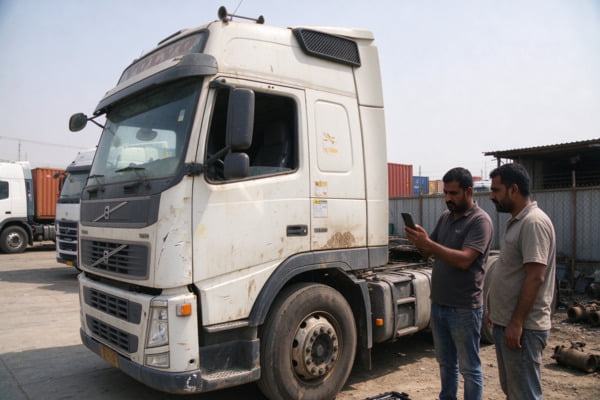
Volvo trucks are the stronger choice when a buyer prioritizes driver safety systems, advanced electronics, and operator comfort alongside raw durability. In markets where fleet operators manage drivers across long distances and need vehicles that reduce accident risk and driver fatigue, Volvo's safety architecture is a genuine differentiator.
Volvo's real procurement advantage
Volvo's global parts network is arguably broader than Scania's across our core export markets.[1] We've observed this directly when helping buyers in East Africa and Southeast Asia compare support availability. Volvo dealers and distributors tend to be more widely distributed in emerging markets, which lowers the operational risk of running these trucks in regions with less-developed service infrastructure.
Key considerations for used Volvo procurement:
- Electronics complexity increases maintenance dependency. Newer Volvo models with advanced driver assistance systems require diagnostic tools that many regional workshops don't carry. Buyers should confirm workshop capability before purchasing later-generation units.[2]
- FH-series vs FM-series matters for your application. The FH series targets long-haul tractor operations. The FM series covers construction and distribution work. Buying the wrong series is a spec mismatch, not a brand failure.
- Engine condition is the primary inspection priority. Used Volvos with D13 or D16 engines can deliver exceptional service life — but only if the cooling system, turbo, and injectors have been properly maintained. We test these systems before any unit leaves our facility.
Scania vs Volvo: a simplified comparison
| Factor | Scania | Volvo |
|---|---|---|
| Long-haul fuel efficiency | Excellent | Very Good |
| Driver safety systems | Good | Excellent |
| Parts network in Africa | Moderate | Broader |
| Electronics complexity | Moderate | High |
| Resale value | High | High |
| Best application | Highway freight | Mixed fleet, long-haul + safety focus |
Neither brand is universally superior. The choice depends on your network, your drivers, and your technical support capacity.
Are Chinese trucks like HOWO genuinely competitive?
This is the question experienced buyers ask — and the question less-experienced buyers often avoid, because they're still operating on outdated assumptions about Chinese manufacturing quality. Based on what we source, inspect, and ship every week, dismissing HOWO, SHACMAN, and SITRAK as budget fallbacks is a procurement mistake.
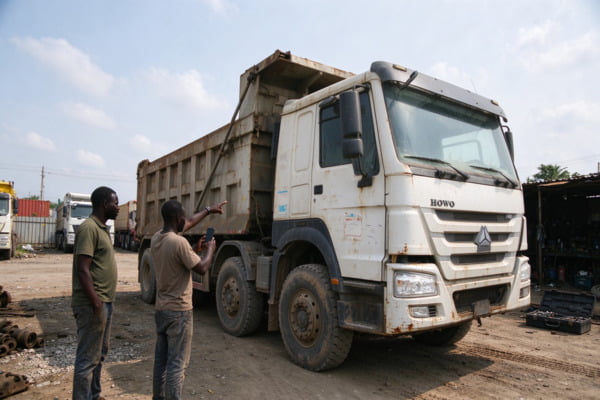
HOWO is the stronger choice for buyers running dump trucks, construction vehicles, or short-to-medium haul freight in markets where Chinese parts ecosystems are well-established — particularly across Africa, Southeast Asia, and Central Asia. The total cost of ownership in those markets is often lower than comparable European units.
Why Chinese brands have closed the gap
This isn't brand advocacy — it's market observation. Here is what we see consistently:
Parts availability and cost: In many of our core export markets, HOWO and SHACMAN parts are significantly cheaper and faster to source than European equivalents. For a fleet operator running 20 trucks, that differential compounds over 12 months into a material cost advantage.
Duty cycles that match the application: Chinese heavy trucks are increasingly engineered for the road and load conditions common in developing markets — rough terrain, high ambient temperatures, variable fuel quality.[3] European trucks are often engineered to European road standards first.[4]
SITRAK as a premium segment shift: SITRAK, the joint-venture brand between CNHTC and MAN, represents a meaningful step up in engineering quality within the Chinese truck segment.[5] Several of our buyers who previously purchased European brands exclusively have switched part of their fleet to SITRAK for medium-haul operations and reported positive outcomes.
Where Chinese brands still carry risk
We are not advising buyers to purchase Chinese trucks without scrutiny. The same inspection discipline applies:
- Verify which parts ecosystem is available in your country. HOWO parts in Tanzania are very different from HOWO parts in a country without an established importer network.
- Used Chinese trucks vary significantly by original operator. Fleet-managed units with documented maintenance are strong candidates. Trucks sourced from informal markets without records carry higher risk.
- Don't compare new-truck specs to used-truck realities. A specification sheet from the factory and the condition of a three-year-old unit after operating in a mining environment are two different conversations.
Chinese vs European brands: procurement fit
| Application | European Brand Advantage | Chinese Brand Advantage |
|---|---|---|
| Highway long-haul | Strong | Moderate (improving) |
| Dump/construction | Moderate | Strong |
| Parts cost in Africa, SE Asia | High cost | Low cost |
| Resale value in EU-adjacent markets | Strong | Moderate |
| Short-medium haul freight | Competitive | Very competitive |
| Advanced electronics support | Available | Limited in some regions |
Frequently Asked Questions
Which truck brand is best for Africa?
No single brand is universally best for Africa. Based on our export experience, HOWO and SHACMAN offer strong value in markets with established Chinese parts networks. Volvo and MAN perform well where authorized service centers exist.[6] The right choice depends on route type, load, and local support infrastructure — not brand reputation alone.
Is a used European truck better than a new Chinese truck?
Not automatically. A used European truck with poor maintenance history and no local parts support can be a worse investment than a new Chinese truck in a region with a strong parts ecosystem. Buyers should evaluate total cost of ownership, including parts, service, and downtime risk, rather than comparing brands in isolation.
What should I inspect before buying a used truck from China?
Prioritize engine condition (start-up, oil pressure, smoke color), gearbox function, frame integrity, mileage documentation, and service records. Ask the supplier for an engine test video and a full pre-shipment inspection report. Brands matter less than documented mechanical condition.
Do used Scania and Volvo trucks hold their resale value?
Generally, yes — in markets where those brands have established dealer networks. Resale value depends heavily on regional demand. In markets where Chinese brands dominate, European used trucks may have narrower resale appeal. Buyers planning multi-year fleet rotation should consider resale dynamics in their specific country.
How do I choose between HOWO and SHACMAN for construction work?
Both brands are competitive for dump truck and construction applications. HOWO has broader brand recognition and a larger installed base in most African markets.[7] SHACMAN is considered by many operators to offer slightly heavier construction specs in comparable models. We recommend requesting specifications for your specific load and axle configuration and comparing against local parts availability.
Conclusion
The question "what are the top 3 truck brands" has a real answer — but only once you define the operating conditions. Based on our experience sourcing, inspecting, and exporting used trucks to buyers across Africa, Southeast Asia, the Middle East, and South America, Scania, Volvo, and HOWO consistently appear at the top of performance-to-value assessments — each in its own context. Scania leads in long-haul efficiency, Volvo in safety and network reach, and HOWO in cost-effective construction and freight applications where Chinese parts ecosystems are strong. The right brand is the one that survives Year 1 in your operating environment, not the one that ranks highest in a global survey.
If you're evaluating used trucks or bulk spare parts for your fleet or distribution business, contact Deli Auto to discuss your specific requirements. We'll match your application, route, and market to the right brand and specification from our in-stock inventory.
[1] "To Be or Not to Be Transparent? How Scania and Volvo Deal ...", https://cmr.berkeley.edu/2025/10/to-be-or-not-to-be-transparent-how-scania-and-volvo-deal-with-data-transparency-paradox-and-manage-compliance/. Industry analyses of commercial vehicle aftermarket infrastructure in emerging markets have noted variation in authorized service center density among European OEMs, though comprehensive comparative data by country is limited in publicly available literature. Evidence role: general_support; source type: research. Supports: Comparative dealer and service network coverage of major European truck brands in sub-Saharan Africa and Southeast Asia. Scope note: Network coverage changes over time and varies significantly by sub-region; no single public source provides a current, comprehensive comparison. ↩
[2] "Testing of Advanced Driver-Assistance Systems for ... - FMCSA", https://www.fmcsa.dot.gov/research-and-analysis/testing-advanced-driver-assistance-systems-commercial-motor-vehicles. Research on automotive technology transfer and aftermarket service capacity in developing economies has identified diagnostic tool availability and technician training as constraints on the effective maintenance of electronically complex vehicles, a challenge documented across multiple sub-Saharan African and Southeast Asian markets. Evidence role: general_support; source type: research. Supports: The gap between advanced electronics diagnostic requirements in modern commercial vehicles and workshop technical capacity in emerging markets. Scope note: Workshop capability varies significantly by city versus rural location and by country; the claim applies more strongly to remote or lower-income markets than to major urban centers. ↩
[3] "The Chinese automobile industry's research and development ...", https://pmc.ncbi.nlm.nih.gov/articles/PMC9851650/. Research on China's commercial vehicle export strategy has documented efforts by manufacturers to adapt product specifications for African and Southeast Asian markets, including modifications related to heat management and road tolerance, though independent technical validation of specific claims remains sparse. Evidence role: general_support; source type: research. Supports: Engineering adaptations by Chinese heavy truck manufacturers targeting operating conditions prevalent in developing markets. Scope note: Much available literature originates from industry trade bodies or manufacturers; peer-reviewed engineering assessments of these adaptations are limited. ↩
[4] "World Forum for Harmonization of Vehicle Regulations", https://en.wikipedia.org/wiki/World_Forum_for_Harmonization_of_Vehicle_Regulations. European heavy commercial vehicles must comply with UNECE and EU type-approval regulations governing emissions, safety systems, and structural requirements, frameworks developed primarily around European infrastructure and operating conditions; these standards are documented by the United Nations Economic Commission for Europe and the European Commission. Evidence role: mechanism; source type: government. Supports: That European heavy trucks are designed and type-approved to European regulatory and road standards, which differ from conditions in many developing markets. Scope note: Compliance with European standards does not preclude operation in other environments, and many European OEMs offer market-specific variants; the degree of mismatch varies by application and region. ↩
[5] "China National Heavy Duty Truck Group", https://en.wikipedia.org/wiki/China_National_Heavy_Duty_Truck_Group. SITRAK is a product of the strategic partnership between Sinotruk (CNHTC) and MAN Truck & Bus, formalized through equity investment and technology licensing agreements; the arrangement is documented in corporate filings and has been reported in automotive industry trade publications. Evidence role: historical_context; source type: institution. Supports: The corporate structure of SITRAK as a joint venture between China National Heavy Duty Truck Group (CNHTC/Sinotruk) and MAN Truck & Bus. Scope note: The degree to which MAN technology is incorporated into specific SITRAK models varies by generation and has evolved since the partnership's inception. ↩
[6] "MAN Truck & Bus", https://en.wikipedia.org/wiki/MAN_Truck_%26_Bus. MAN Truck & Bus, a subsidiary of TRATON Group, maintains an authorized dealer and service network across select African markets; the geographic scope of this network is documented in corporate regional publications and has been referenced in commercial vehicle industry reports covering the African transport sector. Evidence role: general_support; source type: institution. Supports: MAN Truck & Bus's authorized service and dealer network presence in African markets. Scope note: Network coverage is concentrated in specific countries and urban centers; performance outcomes for operators in areas without nearby authorized service points may differ substantially from those with full dealer access. ↩
[7] "HOWO Trucks 2025 Market Share Analysis | Journal", https://vocal.media/journal/howo-trucks-2025-market-share-analysis. Trade and industry analyses of Chinese commercial vehicle exports to Africa have consistently identified Sinotruk (HOWO) among the highest-volume Chinese truck brands on the continent, with export data from China's customs authorities and African vehicle registration records providing partial evidence of its installed base. Evidence role: statistic; source type: research. Supports: HOWO's relative market presence and installed base compared to SHACMAN in African commercial vehicle markets. Scope note: Comprehensive, country-level market share data for Chinese truck brands in Africa is not uniformly published; available figures often reflect export volumes rather than in-service fleet counts. ↩