Buyers sourcing a used MAN D0836 engine face a problem that isn't obvious at first: the name "D0836" covers a family of engines, not a single interchangeable unit. Buy the wrong sub-variant and you may receive an engine that doesn't match your chassis, fails local emissions checks, or requires conversion work that erases any cost advantage.
The MAN D0836 is a 6-cylinder inline diesel engine produced in multiple sub-variants — including LF, LE, and LOH configurations — with power outputs roughly ranging from 220 hp to over 300 hp[1] depending on rating and emissions standard. Buyers evaluating used units must identify the correct suffix code for their application, verify emissions compliance for their market, and require documented pre-shipment inspection results before committing to a purchase.
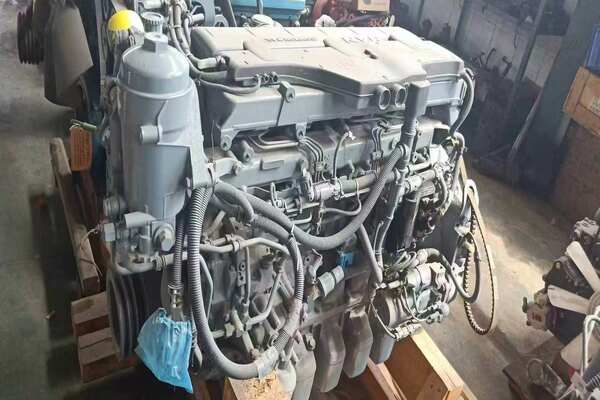
Knowing the rated output from a brochure is a starting point — not a conclusion. The more useful questions are about which sub-variant fits your chassis, what condition the specific unit is in, and what a qualified inspector actually found when they ran it. The sections below address each of those questions in turn.
What Are the Main MAN D0836 Sub-Variants and Why Do They Matter?
Buyers often contact us asking for "a D0836" as if the designation identifies a single bolt-in replacement. It doesn't. The suffix code controls output rating, emissions calibration, and fitment geometry — and picking the wrong one is the most common sourcing mistake we see.
The D0836 suffix codes — most commonly LF, LE, and LOH — distinguish between vehicle applications (truck vs. bus vs. industrial), emissions tiers (Euro II through Euro V), and power ratings. These variants share a common block architecture but differ in injection system hardware, ECU calibration, and mounting configuration. They are not freely interchangeable.
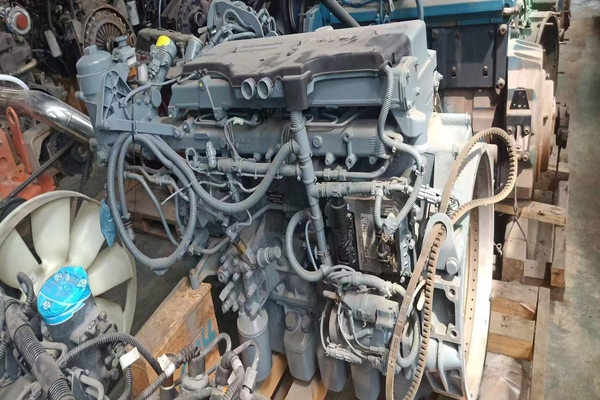
Understanding what the suffix actually controls — not just what the letters stand for — is the first filter a buyer should apply before looking at anything else.
Breaking Down the Suffix Codes
Here is how the most common suffixes map to real-world differences:
| Suffix | Primary Application | Typical Power Range | Notes |
|---|---|---|---|
| LF | Trucks (Lastkraftwagen / truck-fitted) | ~220–300 hp range | Most common variant in truck chassis |
| LE | Trucks, lighter-duty or specific ratings | Varies by sub-number | Different ECU calibration in some variants |
| LOH | Buses and coaches | Varies by installation | Different oil pan, cooling routing, mounting points |
| Other variants | Industrial and specialty | Application-specific | Require individual verification |
Important: The table above reflects general application categories based on units we have inspected and buyer inquiries we handle regularly. Always verify the specific sub-number (e.g., D0836 LF 45, LF 46) against your chassis documentation before purchase.
Why Emissions Standard Is Not Optional Information
This is the point where many buyers in Africa, Southeast Asia, and the Middle East underestimate the risk.
A Euro III D0836 and a Euro V D0836 are fundamentally different engines under the valve cover. The Euro V unit uses a high-pressure common rail injection system with a more complex ECU and may require SCR (selective catalytic reduction) aftertreatment. The Euro III unit uses a different injection architecture that is simpler to service in markets where Euro V-compatible tooling and AdBlue supply chains are not established.
This matters for two practical reasons:
- Market compliance. Some buyer markets are tightening emissions regulations. Receiving a Euro III unit when your fleet or tender requires Euro V creates a compliance problem you cannot fix with a repair[2].
- Serviceability. A Euro V common rail system requires specific diagnostic tools and injector calibration equipment. In many parts of Africa and South America, Euro III engines remain significantly easier to maintain locally[3].
From the buyer inquiries we handle regularly, emissions standard confusion is most common when buyers source from mixed-stock suppliers who list multiple variants under a single product heading. Always ask for the full engine designation — including the sub-number — and cross-reference it against the original vehicle's data plate.
The Sub-Number Inside the Suffix
Within the LF suffix alone, there are multiple numbered variants (such as LF 45 or LF 46) that differ in rated output and production year. These sub-numbers matter when replacing an engine in-situ because the mounting bracket positions, turbocharger type, and ECU connector pinout may differ.
If you are sourcing a used D0836 as a replacement for an existing installation, the correct process is:
- Record the full engine code from the original unit's data plate — not from the vehicle model documentation.
- Match the used unit's data plate to that code before agreeing to purchase.
- If the codes differ in any character, require a written technical explanation from the supplier before proceeding.
Which Vehicles and Applications Was the MAN D0836 Factory-Fitted To?
One of the most practical questions buyers ask us is: "Will this engine fit my truck?" The honest answer is that factory fitment and retrofit fitment are two different categories — and the risk level is different for each.
The MAN D0836 was factory-fitted primarily to MAN's own medium-duty and heavy commercial vehicle range, including the MAN TGL, TGM, and selected bus chassis. It also appeared in certain industrial and municipal vehicle applications. Cross-brand fitment and retrofits exist but require individual technical verification — no blanket compatibility claim applies.
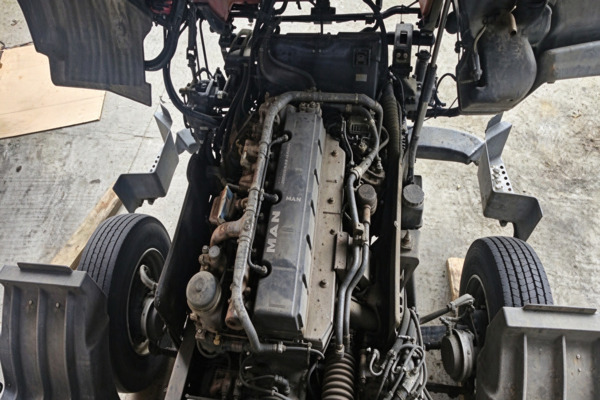
Understanding the original design context helps buyers assess fit risk more realistically.
Primary Factory Applications
The D0836's displacement and power band positioned it as a medium-duty workhorse. Factory-documented applications include:
- MAN TGL series — light-to-medium truck range, typically 7.5–12 tonne GVW configurations
- MAN TGM series — medium-duty trucks in the 12–26 tonne range, one of the more common platforms where we see D0836 units pulled during refurbishment
- MAN bus and coach chassis — where the LOH variant with revised cooling and mounting geometry was used; these are not direct drop-in equivalents for truck installations
- Selected municipal and industrial vehicles — sweepers, fire appliances, and similar specialist platforms in certain markets
Where Retrofit Fitment Gets Complicated
We regularly receive inquiries from buyers who want to fit a D0836 into a non-MAN chassis — sometimes a Chinese heavy truck, sometimes an older European platform. This is not impossible, but it involves considerations that go beyond the engine itself:
- Bellhousing and gearbox compatibility. The D0836 flywheel housing dimensions must match the gearbox input, or an adapter plate is required.
- ECU integration. Later D0836 variants with electronic fuel management require the vehicle's wiring harness and instrument cluster to communicate with the engine ECU. A chassis not originally designed for this will need significant electrical engineering work.
- Cooling system capacity. The D0836 has specific coolant flow requirements. Installing it in a chassis with an undersized radiator is a common cause of post-installation overheating problems.
- Engine mount geometry. Even within MAN's own lineup, mount positions varied across model years and cab types.
Our recommendation to buyers considering a retrofit: Before purchasing the engine, engage a qualified mechanical engineer familiar with the target chassis to assess fitment feasibility. We can provide technical documentation on the units we hold, but application engineering for non-standard installations is outside the scope of what a parts exporter should be advising on.
What Do MAN D0836 Specifications Actually Tell a Used Engine Buyer?
Specification data is useful context — but in a used engine evaluation, it functions as a baseline, not a verdict. I want to be direct about this because it changes how buyers should approach the conversation with any supplier.
Published D0836 specifications — displacement of approximately 6.9 litres, 6 cylinders in-line, power ratings broadly between 220 hp and 310 hp depending on variant[4] — describe the design intent of a new engine. A used unit's actual condition determines whether it performs anywhere near those figures. Buyers should treat published specs as reference data for variant identification, not as a performance guarantee.
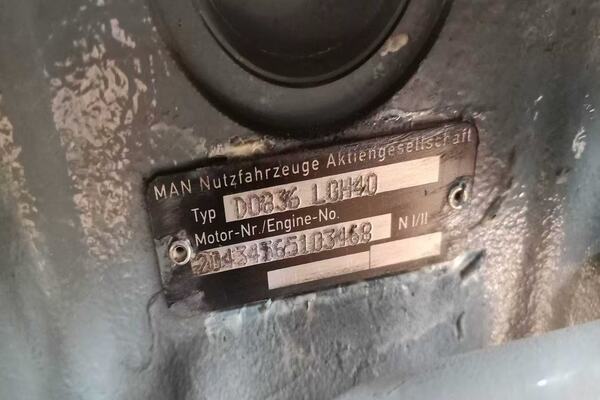
The specifications that actually matter during a used engine evaluation are the ones produced by an inspection — not the ones printed on a brochure.
Key Reference Specifications by Common Variant
The following figures are approximate reference ranges based on units we have handled and publicly available technical information. They are provided for variant identification purposes — actual output from a specific used unit will depend on condition, maintenance history, and emissions calibration.
| Parameter | Approximate Value | Notes |
|---|---|---|
| Displacement | ~6,871 cc | 6-cylinder inline |
| Bore × Stroke | ~108 mm × 125 mm | Consistent across most variants |
| Power output range | ~220–310 hp | Varies significantly by sub-variant and emissions tier |
| Torque range | ~900–1,200 Nm | Dependent on rating and injection calibration |
| Emissions compliance | Euro II through Euro V | Critical to verify for target market |
| Cooling system | Water-cooled | Standard across variants |
Why Mileage Alone Is a Poor Condition Indicator
This is something I find myself explaining frequently in buyer consultations. Two D0836 units might both show 350,000 km on record. One was used in long-haul highway service with regular oil changes. The other ran short-cycle urban delivery routes with extended service intervals. Their internal condition will be completely different.
The variables that actually predict remaining service life better than mileage include:
- Compression test results across all six cylinders — pressure drop between cylinders indicates ring wear or valve seat condition
- Crankcase oil pressure at idle and at load — low pressure at load suggests main bearing wear
- Blow-by measurement — excessive crankcase pressure indicates ring and cylinder wear
- Visual inspection of the oil filler cap and dipstick — emulsification or sludge indicates coolant contamination or poor maintenance
- Turbocharger shaft play — excessive axial play predicts early failure
- Block and head surface condition — cracks, prior weld repairs, or stud thread damage indicate a difficult service history
How Should Buyers Evaluate Used MAN D0836 Engine Condition Before Purchase?
The concern we hear most often from buyers is not about specifications — it's about condition. "How do I know the engine is good?" It's a fair question, and the honest answer is that you can't know without a structured inspection. The good news is that a qualified inspection process makes used quality largely controllable.
A properly inspected used MAN D0836 should be evaluated through: a visual inspection of the external block, head, and ancillaries; a compression test across all cylinders; an oil pressure check at idle and operating RPM; a test run under load; and a review of the injection system condition. Buyers should request documented results for each of these steps from any supplier before agreeing to purchase.
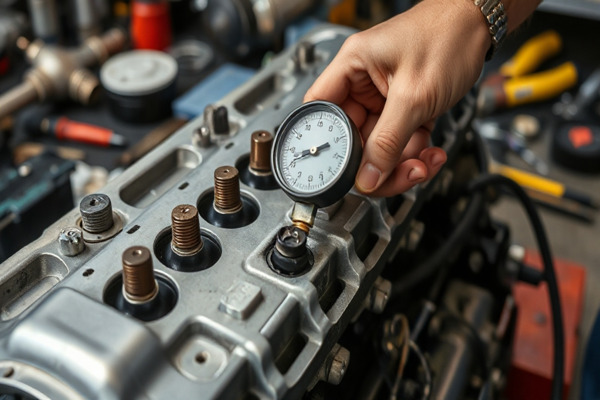
At Deli Auto, the engines we prepare for export go through a defined inspection sequence before we quote them as shippable. Here is what that process looks like in practice.
Our Pre-Shipment Inspection Process for Used D0836 Units
Step 1: External Visual Inspection
We examine the block for visible cracks, particularly around the cylinder head mating surface and around the main bearing caps. We check for evidence of prior weld repairs, damaged threaded inserts, and corrosion on the coolant passages. The turbocharger is removed and inspected for blade condition and shaft play. Any unit showing significant external damage is set aside for further assessment.
Step 2: Oil System Check
We drain and inspect the oil for signs of coolant contamination (milky or emulsified oil), metallic particles, or carbon deposits that suggest extended oil change intervals. We then fill with fresh oil and run the engine to check pressure at idle and at approximately 1,500–2,000 RPM. From units we inspect regularly, an oil pressure reading well below the typical operating range at load is a consistent disqualifying indicator.
Step 3: Compression Testing
Each cylinder is tested individually. We look for consistent pressure across all six cylinders. A significant pressure drop in one or more cylinders indicates either ring wear or a valve seating problem. This test, more than any other, tells us the actual mechanical state of the core engine.
Step 4: Test Run
We start the engine cold and observe startup behaviour — excessive smoke (white, blue, or black), unusual noise, or erratic idle speed are each meaningful signals. We then run the engine warm and observe it under load conditions where possible. We listen specifically for bearing knock at varying RPM, which is not always audible at idle.
Step 5: Documentation
We record the data plate information (full engine code, production year), the compression test readings, oil pressure readings, and any observations from the test run. Buyers can receive this documentation before shipment.
What Buyers Should Ask Any Supplier
If you are evaluating a used D0836 from any source, these are the minimum questions worth asking:
- Can you provide the full engine code from the data plate (not just "D0836")?
- Has a compression test been performed? What were the cylinder-by-cylinder readings?
- Was the engine test-run before listing? For how long and under what conditions?
- Is the injection system intact and tested, or is it listed as "unknown condition"?
- What is the documented mileage source — odometer, service records, or estimated?
- What refurbishment work, if any, has been performed and what parts were replaced?
A supplier who cannot answer these questions in writing is a supplier whose stock has not been inspected.
Frequently Asked Questions
Is the MAN D0836 LF the same engine as the D0836 LOH?
No. The LF variant was designed for truck installations, while the LOH variant was engineered for bus and coach chassis — with differences in oil pan design, coolant routing, and mounting geometry. These are not interchangeable without significant modification. Always verify the specific suffix and sub-number against your chassis before purchasing.
Can a used MAN D0836 from China meet Euro V emissions requirements?
It depends on which D0836 variant was originally manufactured to Euro V standards. Some used D0836 units in circulation are Euro III-specification engines, which will not meet Euro V requirements regardless of condition or refurbishment. Emissions standard is determined by the injection system and ECU calibration — it is a hardware-level characteristic, not something that can be upgraded through servicing.
What mileage range is typical for a used MAN D0836 entering the export market?
Based on units we regularly handle, used D0836 engines entering the export market commonly have recorded mileages ranging from around 200,000 km to over 600,000 km[5]. Mileage alone is not a reliable condition indicator — a 300,000 km unit with consistent highway use and proper maintenance can be in significantly better condition than a 200,000 km unit that ran in arduous short-cycle service. Inspection results matter more than the odometer reading.
How difficult is it to find spare parts for the MAN D0836 in Africa or Southeast Asia?
The D0836 is a widely distributed engine and many common wear parts — injectors, gasket sets, turbochargers, and filtration components — are available through MAN's parts network and third-party suppliers in major markets[6]. That said, availability varies meaningfully by country. Buyers in markets with established MAN dealer presence will have better access than those in more remote areas, and Euro V-specific components (particularly injectors and SCR system parts) can be harder to source than Euro III equivalents.
What is the typical freight packaging for a used D0836 engine for export?
Used engines for export are typically palletised, drained of fluids, wrapped, and placed in wooden crates suitable for container loading. At Deli Auto, we handle the full container loading process and can consolidate multiple engines or a mix of engines and spare parts into a single container shipment to reduce freight cost per unit.
Conclusion
The MAN D0836 is a proven medium-duty engine with a long service record across truck, bus, and industrial applications. For buyers sourcing used units, the central challenge is not finding a D0836 — it is finding the right sub-variant in verified condition from a supplier with a credible inspection process.
Three things worth taking away from this guide: first, the suffix code is not a minor detail — LF, LE, LOH, and their sub-numbers define fitment and emissions compliance, and treating them as equivalent is a costly mistake. Second, published specifications describe a new engine; a used D0836's actual performance depends on what an inspection shows, not what a brochure says. Third, used engine quality is manageable when the buyer asks the right questions and demands documented results before committing.
At Deli Auto, we hold used MAN D0836 engines in stock, conduct on-site inspection and test runs, and provide documentation before shipment. If you are evaluating a D0836 for a specific application, contact us with your chassis details and the full engine code you need — we will give you a straight answer about what we have and whether it matches your requirements.
[1] "MAN D0836 Diesel Engine Specifications | PDF", https://www.scribd.com/document/354323681/D0836-Truck-Engine-En. MAN Truck & Bus technical documentation for the D0836 engine series specifies a 6-cylinder inline configuration with variant-dependent power ratings; independent technical databases such as those maintained by engine parts suppliers corroborate the approximate 220–310 hp output range across emissions tiers. Evidence role: general_support; source type: institution. Supports: The D0836 engine family's displacement, cylinder configuration, and power output range across variants. Scope note: Publicly accessible OEM technical data sheets for the D0836 may be limited to dealer networks; figures cited in secondary sources should be cross-referenced against the engine data plate of any specific unit. ↩
[2] "An Overview of Vehicular Emission Standards - PMC - NIH", https://pmc.ncbi.nlm.nih.gov/articles/PMC9098155/. The United Nations Environment Programme (UNEP) and the Global Fuel Economy Initiative have documented the progressive adoption of Euro-equivalent emissions standards across developing markets, including sub-Saharan Africa and Southeast Asia, as part of efforts to reduce urban air pollution from the vehicle fleet. Evidence role: historical_context; source type: institution. Supports: Developing markets in Africa, Southeast Asia, and the Middle East have been progressively adopting stricter vehicle emissions standards aligned with Euro III, IV, or V equivalents. Scope note: Regulatory timelines and enforcement vary significantly by country; buyers must verify the specific emissions requirements of their target market with local authorities rather than relying on regional generalisations. ↩
[3] "European emission standards", https://en.wikipedia.org/wiki/European_emission_standards. Research on automotive aftermarket development in sub-Saharan Africa and Latin America has noted that the adoption of electronically controlled common rail injection systems outpaces the availability of compatible diagnostic tooling and trained technicians in many markets, creating serviceability gaps relative to older mechanical or unit injector systems. Evidence role: general_support; source type: research. Supports: Advanced diesel injection systems such as high-pressure common rail require specialised diagnostic and calibration equipment that may have limited availability in markets with less developed automotive service infrastructure. Scope note: Peer-reviewed studies specifically quantifying this gap for Euro V common rail systems in the D0836 context are limited; the claim is supported by general findings on technology adoption in developing automotive markets rather than engine-specific data. ↩
[4] "MAN D0836 Diesel Engine Specifications | PDF", https://fr.scribd.com/document/354323681/D0836-Truck-Engine-En. Technical reference sources for the MAN D0836 engine family, including parts catalogues and engine identification databases, consistently cite a swept volume of approximately 6,871 cc for the six-cylinder configuration, corresponding to the stated bore and stroke dimensions. Evidence role: definition; source type: institution. Supports: The D0836 engine displacement of approximately 6,871 cc derived from a bore of approximately 108 mm and stroke of approximately 125 mm. Scope note: Minor dimensional variations may exist across production years; the data plate of any specific unit remains the authoritative source for variant identification. ↩
[5] "Diesel fuel explained Use of diesel", https://www.eia.gov/energyexplained/diesel-fuel/use-of-diesel.php. Trade data on used vehicle and component exports from European markets to Africa and Asia, as reported by organisations such as UNEP and national customs authorities, indicates that used commercial vehicle powertrains typically originate from vehicles at or near end-of-first-life in the source market, corresponding to high accumulated mileages. Evidence role: general_support; source type: institution. Supports: Used commercial vehicle engines entering export markets from Europe commonly have accumulated mileages in the range of several hundred thousand kilometres. Scope note: The specific mileage range of 200,000–600,000 km for D0836 units reflects the article author's stated sourcing experience rather than independently verified market statistics; no published dataset specifically tracks mileage distributions for this engine model in export trade. ↩
[6] "MAN Truck & Bus", https://en.wikipedia.org/wiki/MAN_Truck_%26_Bus. MAN Truck & Bus, as a subsidiary of TRATON Group, operates an international service and parts distribution network; the D0836 engine's extended production run across multiple vehicle platforms has supported the development of third-party aftermarket supply for high-turnover components including injectors, turbochargers, and gasket sets. Evidence role: general_support; source type: institution. Supports: MAN Truck & Bus maintains an international dealer and parts distribution network, and the D0836 engine's production volume supports third-party aftermarket parts supply. Scope note: Network coverage and parts availability vary significantly by country and region; the claim of wide availability in Africa and Southeast Asia requires verification against MAN's current dealer locator and local aftermarket supplier inventories. ↩