Which Truck Is Best for Commercial Use?
Choosing the right truck for commercial use can feel overwhelming — especially when dozens of brands, models, and price points compete for your attention. Make the wrong call, and you risk costly downtime, inflated maintenance bills, and angry clients waiting on delayed cargo. The right decision starts with knowing what actually separates a reliable commercial truck from an expensive mistake.
The best truck for commercial use depends on your specific application, operating conditions, and total cost of ownership — not just the sticker price. European brands like Scania, Volvo, and Mercedes-Benz consistently deliver high durability and strong resale value for long-haul and heavy-duty work. Chinese brands like HOWO and SHACMAN offer competitive entry pricing with improving quality, making them strong candidates for cost-sensitive emerging markets1.

Picking the right commercial truck is rarely a single-variable decision. Brand reputation, parts availability, inspection history, and long-term support all feed into the equation. The sections below break down each factor so you can evaluate options with confidence — whether you are buying one unit or a full container load.
Does purchase price really reflect a truck's commercial value?
Many buyers I have spoken with come to the table fixated on upfront cost. It is understandable — budget is real, and margins in logistics and contracting are tight. But focusing purely on the lowest purchase price often leads to a financial trap that costs far more down the road.
Purchase price alone does not reflect a commercial truck's true value. A cheaper truck with poor maintenance history or high mileage can generate repair costs within the first few months that easily exceed the initial saving2. Total cost of ownership — including fuel consumption, parts costs, downtime, and resale value — is the correct metric for commercial truck evaluation.
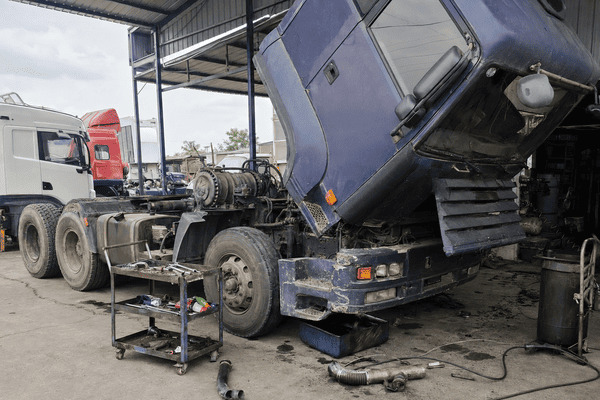
One pattern I have seen repeated across multiple customer purchases is the "cheap truck spiral." A buyer secures a low-priced unit, feels confident at handover, and then faces a major engine or gearbox failure within the first operating season. The repair wipes out the initial saving — and then some.
What does total cost of ownership actually include?
When evaluating any commercial truck for purchase, buyers should calculate across at least five cost categories:
- Purchase price — the initial outlay
- Fuel consumption — varies significantly between engine generations and brands
- Scheduled maintenance — service intervals, filter costs, fluid specifications
- Unscheduled repairs — the unpredictable cost that destroys budgets
- Resale value — what the asset returns when the fleet upgrades
A truck priced 20% below market average can still be the worse financial decision if its annual repair cost is 35% higher than a well-maintained alternative.
How does mileage affect commercial truck cost?
Mileage is a useful indicator but not the whole story. Engine condition, service records, and how those kilometers were accumulated (highway versus construction site, loaded versus empty) matter just as much as the odometer reading.
| Mileage Range | Typical Engine Condition | Risk Level | Recommended Action |
|---|---|---|---|
| Under 300,000 km | Usually low wear | Low–Medium | Standard inspection |
| 300,000–600,000 km | Moderate wear expected | Medium | Full mechanical inspection + engine test |
| 600,000–900,000 km | Significant wear likely | Medium–High | Engine compression test mandatory |
| Over 900,000 km | High wear; overhaul probable | High | Detailed assessment; price accordingly |
These are general reference ranges. A Scania or Volvo engine serviced meticulously at 700,000 km may outperform a neglected unit at 300,000 km. Professional inspection always takes precedence over raw numbers.
Which commercial truck brands are most reliable for B2B buyers?
Brand selection is where I see the sharpest disagreements among procurement managers. Some insist on European marques. Others point to Chinese brands as the rational choice for cost-sensitive markets. Both camps have valid arguments — but the conversation often lacks clarity about why brands differ and what those differences mean operationally.
European brands — Scania, Volvo, Mercedes-Benz, MAN, and DAF — are widely regarded as the most durable commercial trucks for demanding long-haul and heavy-duty applications. They carry higher acquisition costs but offer longer service intervals, stronger resale value, and more predictable maintenance schedules. Chinese brands like HOWO, SHACMAN, SITRAK, and FAW deliver competitive pricing with steadily improving build quality, making them well-suited for markets where parts availability and lower operating costs are priorities.
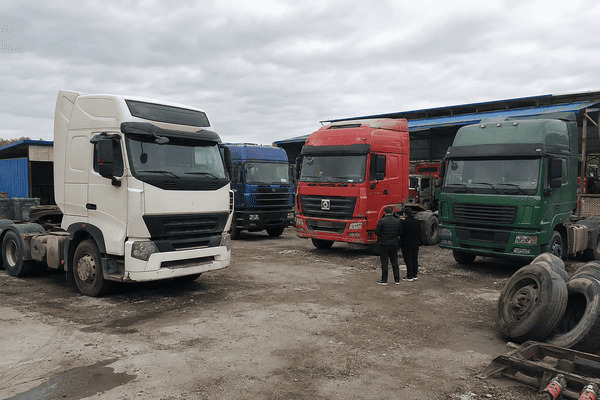
Understanding these differences in concrete terms helps buyers match brand choice to their actual operating environment rather than defaulting to brand prestige or price alone.
How do European and Chinese brands compare across key factors?
| Evaluation Factor | European Brands (Scania, Volvo, MAN) | Chinese Brands (HOWO, SHACMAN, SITRAK) |
|---|---|---|
| Engine durability | Very high; 1M+ km lifespan achievable | Improving; typically 500,000–800,000 km |
| Parts availability | Strong in established markets; variable in remote areas | Widely available in Africa, SE Asia, Middle East |
| Purchase cost (used) | Higher | Lower to mid-range |
| Resale value | Strong; retains value well | Moderate; improving in key markets |
| Service interval | Longer; lower service frequency | Shorter; more frequent maintenance required |
| Driver familiarity | Common in European-trained fleets | Dominant in China-influenced markets |
Which brand suits which application?
Different commercial operations have different priorities. Based on what I have observed across buyers in Africa, Southeast Asia, and the Middle East, here are general use-case alignments:
- Long-haul tractor trucks — Scania, Volvo, Mercedes-Benz Actros for reliability over high-mileage routes
- Heavy construction and mining dump trucks — HOWO, SHACMAN, and Dongfeng offer strong payload capacity at accessible prices
- Urban cargo distribution — Isuzu, Hino, and FAW light-to-medium trucks balance fuel economy with load capacity
- Bulk liquid transport — SITRAK and Volvo FH tank trucks are commonly specified for their chassis strength
- Mixed-fleet operations on a budget — SHACMAN X3000 and HOWO T7H represent strong value propositions with modern cab specifications
These are reference points, not absolute rules. Application-specific decisions should involve a qualified technical evaluation of the available units.
How should buyers inspect a used commercial truck before purchase?
This is the section where I see the most risk taken carelessly. A buyer visits a yard, walks around a truck, kicks the tires — metaphorically or literally — and makes a judgment call based on visual impression and the seller's verbal assurances. I have watched experienced logistics managers make this mistake, and I have seen the repair invoices that followed.
Visual inspection alone is insufficient for evaluating a used commercial truck. A proper pre-purchase inspection must include engine compression testing, gearbox operation checks, axle and differential assessment, frame and chassis inspection, brake system evaluation, and a review of any available service documentation. Relying on appearance without mechanical testing creates significant financial risk.
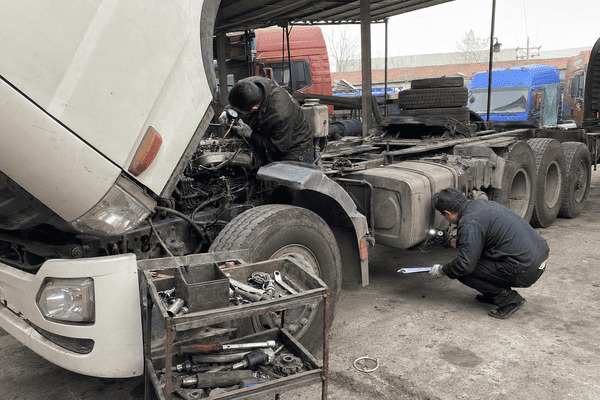
Systematic mechanical inspection is not a luxury for large fleet buyers. It is the minimum standard for any serious B2B procurement — whether you are buying one truck or twenty.
What does a professional commercial truck inspection cover?
A credible pre-shipment inspection should address at minimum the following systems:
Engine Assessment
- Compression test across all cylinders
- Oil pressure and temperature monitoring under load
- Turbocharger condition and boost pressure
- Smoke color and exhaust analysis
- Coolant condition and leak check
Drivetrain and Transmission
- Gearbox shift quality through all ratios
- Clutch engagement and wear assessment
- Driveshaft condition and universal joint play
- Differential oil condition and noise check
Chassis and Structural
- Frame rail inspection for cracks, repairs, and straightness
- Suspension bush and spring condition
- Cab mount integrity
- Fifth wheel condition (for tractor trucks)
Electrical and Safety Systems
- ABS and brake system functionality
- Lighting, instrumentation, and ECU fault code reading
- Air system pressure retention (for air-brake trucks)
Why do buyers underestimate hidden mechanical faults?
Hidden faults are, by definition, not visible. Common concealed problems in used commercial trucks include:
- Repaired cracks in the chassis covered with fresh paint or undercoat
- Worn cylinder liners that pass low-load visual checks but fail under working conditions
- Leaking injector seals masked by a recent engine clean
- Gearbox bearing noise suppressed by fresh oil added just before inspection
- Electronic fault codes cleared from the ECU before the buyer's visit
Professional inspection with engine testing, fault code reading, and experienced mechanical assessment addresses these specifically. At Deli Auto, our team of experienced truck engineers conducts pre-shipment inspections on every unit — testing engines, checking gearboxes and axles, and documenting findings before any vehicle ships. Buyers receive inspection reports so the condition of each truck is transparent before purchase.
Frequently Asked Questions
What is the most durable truck for long-haul commercial use?
Scania and Volvo consistently rank among the most durable long-haul commercial trucks globally3. Their engines are engineered for high-mileage operation, and both brands have strong service networks in major markets. That said, durability depends heavily on maintenance history — a well-serviced HOWO can outperform a neglected Scania.
Are Chinese trucks reliable enough for African or Southeast Asian markets?
Yes, in many cases. Chinese brands like HOWO, SHACMAN, and SITRAK have established strong market presence in Africa and Southeast Asia, partly because spare parts are widely available and affordable4. Build quality has improved significantly in recent years. Buyers should still conduct mechanical inspections and verify parts supply chains before committing to a fleet purchase.
How many kilometers is too many for a used commercial truck?
There is no universal cutoff. A truck at 700,000 km with full service records and a recent overhaul may be a better buy than one at 300,000 km with gaps in its maintenance history. Engine type, brand, and operating conditions all affect how meaningful the mileage figure is. Professional inspection matters more than odometer reading alone.
What documents should a used commercial truck come with?
At minimum, buyers should expect: vehicle registration and title, engine and chassis number verification, any available service history, export customs documentation, and a pre-shipment inspection report. For international B2B purchases, certificate of origin and bill of lading are also standard export documents.
Can I source commercial trucks and spare parts from the same supplier?
Yes — and doing so offers real logistical advantages. Working with a supplier who stocks both used trucks and genuine spare parts simplifies procurement, reduces lead times, and enables better technical matching. Deli Auto supplies both used commercial vehicles and parts from brands including Cummins, Weichai, ZF, FAST, and BPW from a single operation.
Conclusion
Choosing the best truck for commercial use requires more than comparing price tags. Brand durability, total cost of ownership, application fit, and pre-purchase inspection quality are all critical variables that experienced buyers evaluate together. European brands like Scania, Volvo, and Mercedes-Benz lead in long-haul reliability and residual value. Chinese brands like HOWO and SHACMAN offer strong value in cost-sensitive markets with good parts availability. But regardless of brand, no commercial truck purchase should move forward without a thorough mechanical inspection — hidden faults are real, and they are expensive.
At Deli Auto, we have spent over 20 years helping B2B buyers source, inspect, and export commercial trucks and spare parts to markets across Africa, Southeast Asia, the Middle East, South America, and beyond. If you are evaluating used commercial trucks or sourcing parts in bulk, contact our team for stock availability, inspection reports, and export quotations.
"How Chinese Companies are Dominating Electric Vehicle ...", https://cmr.berkeley.edu/2024/03/how-chinese-companies-are-dominating-electric-vehicle-market-worldwide/. Trade and industry analyses of Chinese commercial vehicle exports document significant growth in African and Southeast Asian markets, with manufacturers investing in quality certification and after-sales infrastructure to support this expansion. Evidence role: general_support; source type: research. Supports: That Chinese commercial truck manufacturers have expanded market share in emerging economies alongside documented improvements in build quality and reliability. Scope note: Quality improvement is a relative and ongoing process; independent third-party durability benchmarks for Chinese truck brands in commercial fleet use remain less systematically published than for European counterparts. ↩
"Life-Cycle Cost of Transportation Services | Stanford Graduate ...", https://www.gsb.stanford.edu/faculty-research/working-papers/life-cycle-cost-transportation-services. Fleet lifecycle cost research demonstrates that unscheduled repair and downtime costs in poorly maintained commercial vehicles frequently offset or exceed the savings realized from lower acquisition prices, particularly in the first operational year. Evidence role: mechanism; source type: research. Supports: That deferred or inadequate maintenance in commercial vehicles leads to repair expenditures that can exceed initial acquisition cost savings. Scope note: Specific cost ratios vary considerably by vehicle type, operating environment, and maintenance regime; the claim reflects a general pattern rather than a universally quantified outcome. ↩
"Euro NCAP Truck Safety Ratings: Scania and Volvo FH Earn Five Stars", https://www.iaa-transportation.com/en/newsroom/euro-ncap-truck-safety-ratings-scania-volvo-fh-earn-five-stars. Recurring fleet operator surveys and transport industry assessments in European and international markets have placed Scania and Volvo among the highest-rated manufacturers for long-haul reliability, engine longevity, and operator satisfaction. Evidence role: expert_consensus; source type: research. Supports: That Scania and Volvo are recognized among the leading brands for long-haul commercial truck durability in international fleet assessments. Scope note: Rankings differ across survey methodologies, geographic markets, and the specific metrics used to define durability; no single universally authoritative global ranking exists. ↩
"A new era: Trends shaping China's heavy-duty trucking industry", https://www.mckinsey.com/industries/automotive-and-assembly/our-insights/a-new-era-trends-shaping-chinas-heavy-duty-trucking-industry. Trade statistics from Chinese customs authorities and regional automotive market reports document substantial growth in Chinese commercial vehicle exports to sub-Saharan Africa and Southeast Asia, with Chinese brands accounting for a significant proportion of new heavy truck registrations in several of these markets. Evidence role: statistic; source type: government. Supports: That Chinese commercial vehicle manufacturers hold significant and growing market share in African and Southeast Asian markets. Scope note: Market share figures vary by country and year; comprehensive and consistently updated regional data is not always publicly available from a single authoritative source. ↩