Buying a used SHACMAN X3000 without a structured checklist is one of the most expensive mistakes an overseas dealer can make. A freshly repainted cab and a cleaned-up chassis can hide tens of thousands of kilometres of drivetrain wear — and by the time your customer in Nairobi or Karachi discovers the problem, the container ship sailed weeks ago.
The used SHACMAN X3000 buying checklist covers seven critical verification areas: engine condition (Weichai WP series), gearbox integrity (FAST 10/12-speed), drivetrain and axles, frame and chassis, cab and electrical systems, odometer credibility, and configuration matching. Each area targets failure patterns we see repeatedly in pre-shipment inspections — not generic truck checks. Completing this checklist before payment reduces the risk of buying a cosmetically refurbished unit with serious mechanical faults hidden underneath.
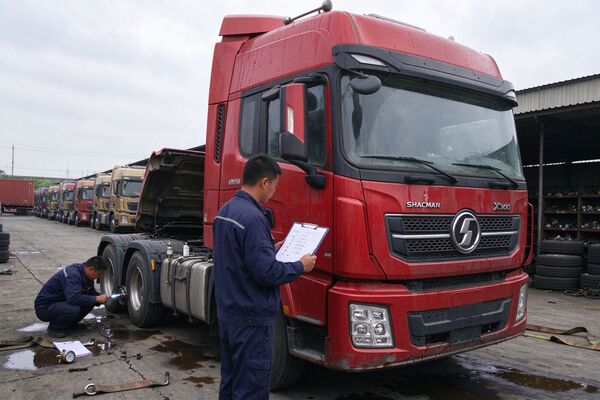
The detail behind each checklist item is what separates a useful inspection from a walk-around. Let's go through every section in the order our engineering team actually works — drivetrain first, cosmetics last.
What Makes the SHACMAN X3000 a High-Risk Buy Without Inspection?
The SHACMAN X3000 is one of the most traded heavy-duty trucks in export markets — and that popularity creates a problem. High transaction volume attracts sellers who know that buyers, especially remote ones buying in bulk, rely on photos and stated mileage rather than hands-on inspection. The result is a market where cosmetically refurbished units circulate alongside genuinely well-maintained trucks, and the price difference between them is often invisible at the inquiry stage.
Based on inspections our engineering team conducts before every X3000 export, the trucks that cause the most post-delivery complaints share one pattern: the exterior looks clean, but the drivetrain has not been touched. A repaint takes two days. Fixing a worn Weichai turbocharger or a FAST gearbox with damaged synchronizers in Lagos or Dhaka takes weeks — if parts are even available locally.
Why Bulk Buyers Carry More Risk
Single-unit buyers take a single risk. Dealers buying five, ten, or twenty units in one batch multiply that risk by every truck they accept without proper verification. One bad unit is a complaint. Three bad units in the same batch is a reputation problem. That is the commercial context this checklist is written for.
Why Cosmetic Refurbishment Is the Primary Deception Vector
We've seen this pattern dozens of times: a unit arrives with a fresh cab respray, clean upholstery, and a polished chassis. The buyer assumes this reflects overall care and skips the engine bay. What they find six weeks later is blue exhaust smoke at startup and a turbo with visible shaft play.
Cosmetic work is cheap and fast. Mechanical work is expensive and takes time. Sellers who are not invested in long-term relationships choose cosmetics. This is not speculation — it is a consistent pattern in the units we reject during sourcing.
How Do You Inspect the Weichai Engine on a Used X3000?
The engine is the first thing our team checks, and it is the area where high-mileage X3000 units fail most often. The X3000 typically runs a Weichai WP12 or WP13 series engine, both of which are capable, well-supported powerplants — but they develop specific wear patterns at higher mileage that are invisible without running the engine under load.
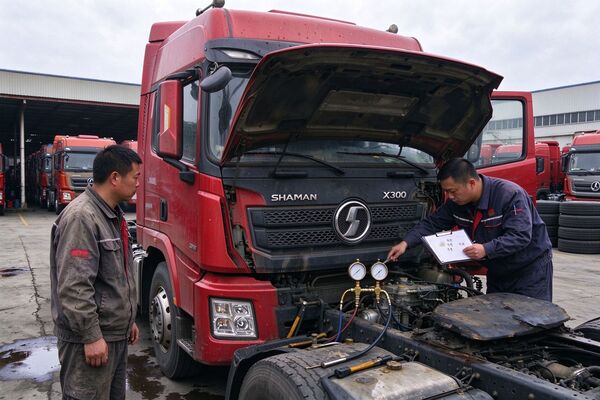
A proper Weichai engine inspection on a used X3000 includes: a cold-start observation for blue or white smoke, a warm idle check for oil pressure stability, a turbocharger shaft play test, a visual inspection of the head gasket area for coolant seepage, and an oil condition analysis. Static visual inspection alone is not sufficient — the engine must be started and run.
Cold Start: What to Watch in the First 30 Seconds
A cold start reveals what a warm engine can temporarily mask. We watch for:
- Blue smoke at startup — indicates oil burning, typically from worn valve stem seals or piston rings on high-mileage WP12/WP13 units
- White smoke that persists beyond two minutes — suggests coolant entering the combustion chamber, pointing to a head gasket issue
- Knocking or tapping sounds — on worn units, this can indicate bearing clearance problems or injector wear
Blue smoke that disappears once the engine warms up is sometimes dismissed as condensation. We do not dismiss it. On a WP12 or WP13 with real mileage, it is almost always oil consumption.
Turbocharger Shaft Play Test
This is a non-negotiable step. With the engine off and cooled down, we physically check the turbocharger shaft for radial play by hand. Any perceptible lateral movement indicates worn bearings. A turbo replacement on a Weichai WP13 is not a minor repair — and in markets where Weichai parts availability is limited, the downtime cost multiplies.
Oil Pressure and Condition Check
We pull the dipstick and examine:
- Oil colour and viscosity — milky or foamy oil indicates coolant contamination
- Oil level — significantly low oil on a "maintained" truck is a red flag
- Oil pressure at warm idle — should hold steady, not fluctuate
We also check for oil seepage around the valve cover gasket, the front crankshaft seal, and the rear main seal. Minor seepage is common on older units. Active leaks are not acceptable for export.
Engine Data Plate Verification
The WP12 and WP13 are different engines in terms of displacement, output, and application. We verify the engine serial number against the vehicle documentation to confirm the engine in the truck is the one listed in the papers — and that it is original to that truck, not a replacement unit of unknown provenance.
How Do You Inspect the FAST Gearbox on a Used X3000?
Gearbox issues are the most common post-delivery complaint we hear from X3000 buyers. The X3000 is typically paired with a FAST 10-speed or 12-speed manual gearbox, a proven unit in Chinese heavy trucks – but one that develops specific fault patterns that are easy to miss without a full gear engagement test.
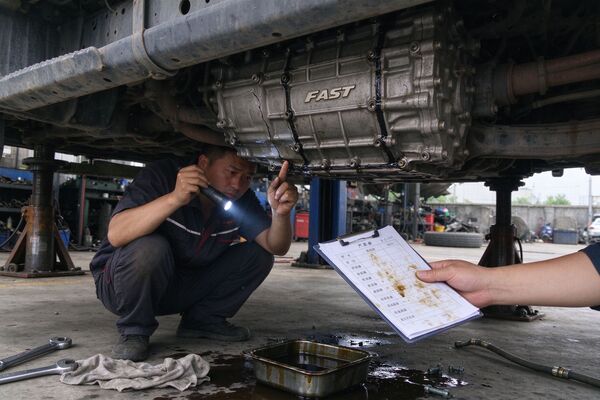
A FAST gearbox inspection on a used X3000 must include: a full gear engagement test through all forward positions and reverse, a listening check for grinding or hesitation between gears, a check for gear slippage under simulated load, an inspection of the gear lever for excessive play, and an examination of the gearbox casing exterior for cracks or fresh sealant (which can indicate recent repair or leak patching).
Synchronizer Wear: The Hidden Post-Delivery Problem
The most common FAST gearbox issue we find on high-usage X3000 units is worn synchronizers, particularly on the mid-range gears (3rd, 4th, 5th) that see the most engagement in urban or mixed-use haul cycles[1]. The symptom is gear engagement hesitation or a brief grinding sensation when shifting at normal speed.
This is almost never apparent in a static inspection or a brief drive around a yard at low speed. It appears when the truck is operated under load at realistic road speeds. Buyers who only conduct a yard drive — which is the industry norm in many informal transactions — frequently miss it entirely.
The Reverse Gear Test
We always test reverse. This sounds obvious, but many buyers skip it. Reverse gear failures are disproportionately common on FAST units that have been operated in construction or yard applications, where repeated short-distance reversing accelerates synchronizer and hub wear.
Fresh Sealant on the Gearbox Casing
A consistent finding on units that have had recent gearbox work — or gearbox oil leaks temporarily patched — is fresh RTV sealant around the casing joints. Fresh sealant on an otherwise aged drivetrain is a specific red flag. We note it, investigate the reason, and apply additional scrutiny to the gear engagement test.
Gearbox Oil Condition
We check the gearbox oil where accessible:
- Black, thick oil with metallic sheen — indicates advanced internal wear
- Oil level below minimum — suggests either a leak or neglected maintenance
- Milky or contaminated oil — rare but serious if present
How Do You Evaluate the Drivetrain and Axles?
The X3000 in its most common export configuration is a 6×4 tractor truck, which means two rear drive axles both need evaluation. Axle condition is closely tied to the load history of the truck — a unit used on overloaded routes shows wear patterns that differ from highway-haul applications.
Drivetrain and axle inspection on a used X3000 should cover: differential oil condition and level on both rear axles, propeller shaft U-joint play, hub bearing noise (tested by rocking each wheel), brake lining thickness on all axles, and a visual check for axle housing cracks or weld repairs — which indicate prior overload or impact damage.

What Overloaded Axle History Looks Like
On X3000 units that have operated in mining or quarry applications — common in Africa-destined stock — we see:
- Cracked or weld-repaired axle housings, sometimes cosmetically touched up with paint
- Worn hub splines, detectable only when the wheel is removed
- Differential gear noise audible on a slow turning test
We pay particular attention to the rear-rear axle (the trailing axle on a tandem setup), which consistently shows more wear in overload applications.
Brake System Condition
We check brake lining thickness on all axles. On worn units, we've found linings at or below minimum thickness with no visible external indication — the brake drums looked clean and undamaged. Brake lining replacement is straightforward, but discovering it post-delivery in a market with limited service support is a problem.
How Do You Verify Odometer Readings on a Used X3000?
Odometer readings on used Chinese trucks are a starting hypothesis, not a conclusion. This is not unique to SHACMAN — it is an industry-wide reality in the used truck market.[2] We treat the odometer as one data input among several, and we actively look for physical evidence that either supports or contradicts it.
To cross-check an X3000 odometer reading, examine: cab wear patterns (seat, steering wheel, gear lever contact points), engine wear correlated to stated mileage, suspension bush condition, and service record documentation. An odometer reading unsupported by at least two independent physical indicators should be treated as unverified.

Physical Wear Indicators vs. Stated Mileage
Here is how we cross-reference wear against mileage:
| Physical Indicator | Low-Mileage Expectation | High-Mileage Indicator |
|---|---|---|
| Driver's seat bolster wear | Minimal surface wear | Significant foam compression, fabric thinning |
| Steering wheel grip | Texture intact | Smooth, worn through coating |
| Gear lever knob | Logo/markings readable | Worn smooth |
| Suspension bushes | Firm, no cracking | Soft, cracked, visibly deflected |
| Cab step tread | Pattern intact | Ground flush |
| Weichai engine mounts | Firm, no cracking | Soft, oil-saturated |
When a truck shows a 250,000 km odometer reading but a seat and steering wheel that look like 600,000 km, we treat the physical evidence as the more reliable indicator.
How Do You Verify X3000 Configuration Before Buying?
This is a step many buyers skip, and it causes specific problems in batch purchases. The SHACMAN X3000 production run includes multiple configuration variants: different engine displacements (WP12 vs. WP13), different axle ratios suited to different load and terrain applications, standard cab versus high-roof sleeper cab, and varying emissions specifications (National IV vs. National V).[3] Two trucks listed as "X3000" in the same year of manufacture may not be interchangeable in terms of spare parts or resale positioning.
Configuration verification for a used X3000 batch requires: checking the VIN against the specification sheet, confirming engine model and serial number, noting the cab type, verifying the rear axle ratio on the identification plate, and checking the emissions certification sticker for compliance class. Do not assume uniformity within a batch without checking each unit individually.
Why Configuration Mismatch Hurts Dealers
We've spoken with dealers who accepted a batch of X3000 units assuming uniform specification and later found two distinct axle ratios in the same delivery. For a dealer stocking spare parts or offering maintenance support to their customers, this doubles the parts inventory requirement. For resale, it creates inconsistent product positioning that complicates pricing.
The most common configuration split we see in export stock:
| Variant | Common Application | Key Difference |
|---|---|---|
| WP12 + standard cab | General freight, lighter haul | Lower displacement, narrower parts list |
| WP13 + high-roof cab | Long-haul tractor, heavy freight | Higher output, larger turbo assembly |
| National IV emissions | Older stock, price-sensitive markets | Broader buyer base in some markets |
| National V emissions | Newer stock, tighter regulation markets | Fewer interested buyers in some regions |
Frequently Asked Questions
What is the most common mechanical fault found on used SHACMAN X3000 trucks?
Based on our pre-shipment inspections, the most common fault cluster is the combination of FAST gearbox synchronizer wear and Weichai WP engine oil consumption. Both develop gradually under heavy use and are easily hidden by cosmetic refurbishment. They are also the faults buyers most frequently discover after delivery.
Is a SHACMAN X3000 with high mileage worth buying?
High mileage is not automatically disqualifying. A well-maintained WP12 or WP13 engine with documented service history can still have significant service life remaining. What matters is whether the wear is uniform and consistent with stated usage — verified through physical inspection, not just the odometer reading. High mileage with coherent physical wear is more acceptable than low mileage with inconsistent wear indicators.
How long does a proper pre-shipment inspection take for one X3000 unit?
A thorough inspection covering all drivetrain, structural, electrical, and documentation checks typically takes two to four hours per unit for an experienced inspection team.[4] Rushing this process is a false economy — the cost of missing a critical fault on a truck that will ship to an overseas market is significantly higher than the time invested.
Can I rely on photos and video instead of a physical inspection?
Photos and video are useful for initial screening but cannot substitute for a physical inspection. Blue exhaust smoke, turbocharger shaft play, synchronizer hesitation, and axle housing cracks are not reliably captured in seller-provided media. For bulk orders, appointing a trusted local agent or experienced exporter to conduct physical inspection on your behalf is strongly recommended.
Which export markets have the most difficulty sourcing SHACMAN X3000 spare parts?
Buyers in markets where Weichai and FAST have limited official distribution — some West African countries, parts of Central Asia, and certain Middle Eastern markets — should factor parts availability into their risk assessment. Buying trucks in poor mechanical condition for markets with limited service infrastructure increases the downside significantly. Prioritising mechanically sound units over low-price units is especially important for these destinations.
Conclusion
The used SHACMAN X3000 buying checklist comes down to one core discipline: do not let cosmetic condition distract you from drivetrain condition. Start with the Weichai WP12 or WP13 engine, work through the FAST gearbox, verify the axles and frame, then treat the odometer as a hypothesis to be tested against physical evidence. Confirm the exact configuration of every unit in the batch before committing.
No checklist eliminates risk entirely. What it does is close the verification gap between what a truck looks like and what it actually is — which is the gap where expensive post-delivery problems live. For buyers purchasing X3000 units in volume for markets where parts and service support are not guaranteed, that gap is the difference between a profitable batch and a damaging one.
If you are sourcing used X3000 trucks for export and want to discuss what our pre-shipment inspection process covers in detail, contact our team — we are happy to walk through the inspection criteria before any purchase commitment is made.
[1] "Synchronization processes and synchronizer mechanisms ...", https://upcommons.upc.edu/entities/publication/88a44f37-6c3d-42ab-8d59-0a185a33ed05. Research on manual transmission wear patterns in commercial vehicles indicates that synchronizer degradation is correlated with shift frequency and torque loading; mid-range gears used most frequently during acceleration and deceleration phases in urban or mixed-use duty cycles are consequently subject to accelerated synchronizer wear relative to top gears used in sustained highway operation. Evidence role: mechanism; source type: research. Supports: Synchronizer wear in manual transmissions is influenced by shift frequency and load, with mid-range gears subject to higher engagement frequency in stop-and-go or mixed-use duty cycles. Scope note: Published research on this topic may be based on passenger vehicle or light commercial vehicle transmissions; direct studies on heavy-duty multi-speed manual gearboxes of the type used in Chinese trucks are less commonly available in open literature. ↩
[2] "Odometer Fraud", https://www.nhtsa.gov/vehicle-safety/odometer-fraud. Odometer fraud in used vehicle markets has been documented by regulatory bodies in multiple jurisdictions; for example, the U.S. National Highway Traffic Safety Administration has reported that odometer fraud affects hundreds of thousands of vehicles annually, indicating the problem is not confined to any single manufacturer or country of origin. Evidence role: general_support; source type: government. Supports: Odometer fraud is a documented and widespread problem in used vehicle markets internationally. Scope note: Available government data on odometer fraud predominantly covers passenger vehicles in regulated markets; direct statistics on heavy commercial trucks or Chinese export markets are less readily available. ↩
[3] "China Auto Industry National VI B Emission Standard", https://www.trade.gov/market-intelligence/china-auto-industry-national-vi-b-emission-standard. China's Ministry of Ecology and Environment has implemented a staged emissions standard framework for heavy-duty vehicles, with National IV (GB17691-2005 Phase IV) and National V (GB17691-2005 Phase V) representing successive tiers with progressively stricter limits on NOx and particulate matter; vehicles certified to different national standards are not interchangeable for regulatory compliance purposes in markets that enforce specific emissions tiers. Evidence role: definition; source type: government. Supports: China's National IV and National V emissions standards for heavy-duty vehicles represent distinct regulatory tiers with different technical requirements. Scope note: The article's claim about specific X3000 configuration variants requires verification against SHACMAN's official product documentation, which is not addressed by emissions standard references alone. ↩
[4] "5.2.2 Vehicle Inspections - fmcsa csa", https://csa.fmcsa.dot.gov/safetyplanner/MyFiles/SubSections.aspx?ch=22&sec=65&sub=148. International inspection bodies and automotive inspection standards generally recognize that a comprehensive mechanical and documentation inspection of a heavy commercial vehicle — covering drivetrain, structural integrity, electrical systems, and compliance documentation — requires multiple hours per unit; the specific duration varies by inspection scope, vehicle condition, and inspector experience. Evidence role: general_support; source type: institution. Supports: Comprehensive pre-shipment inspections of heavy commercial vehicles require several hours to complete when covering mechanical, structural, and documentation checks. Scope note: The two-to-four-hour figure cited in the article is the author's operational estimate; no universally adopted industry standard specifying exact inspection durations for used heavy trucks was identified. ↩